How To Clean Tarnished Silver
Tarnished silver can be restored to its original shine using simple home methods. For example, soaking silver in a hot baking soda solution transfers the black tarnish to a foil lining the container. This guide explains why silver tarnishes and provides step-by-step cleaning methods you can do at home, as well as tips for cleaning stronger tarnish on silver or preventing tarnish on silver to begin with.
Key Takeaways
- Silver tarnishes through a chemical reaction: Airborne sulphur reacts with silver to form silver sulphide (Ag₂S), the black tarnish. Sterling silver (alloyed with copper) tarnishes faster because copper oxide/sulphide also forms on the surface.
- DIY cleaning: A popular method for cleaning tarnish on silver is to line a bowl with aluminum foil and soak the silver in hot water mixed with baking soda. The tarnish will transfer to the foil, leaving your silver shiny.
- Gentle cleaning: For light tarnish, wash silver with warm soapy water or a baking soda paste and buff gently with a soft cloth. Even non-gel toothpaste on a cloth can polish minor tarnish.
- Specialist cleaners: For heavily tarnished pieces, use a commercial silver polish or cream. These products clean, polish, and add a protective layer in one step.
- Prevent future tarnish: Store silver in dry, airtight containers with anti-tarnish strips or silica gel to keep moisture low. Remove jewellery before swimming or using household chemicals, and handle it with cotton gloves to avoid fingerprints and oils.
Can Silver Tarnish?
Yes, silver can tarnish. All ordinary silver (especially sterling silver, which is 92.5% silver and 7.5% copper) will develop a dull grey or black film when exposed to the air over time. Tarnish is basically silver sulphide (Ag₂S) forming on the surface, often mixed with copper oxides if copper is present. Pure silver (99.9%) is less prone to tarnishing because it has no copper, but it can still slowly form silver sulphide in the presence of sulphur compounds. In everyday terms, most silver items (jewellery, cutlery, etc.) will eventually tarnish from humidity and pollutants in the air.
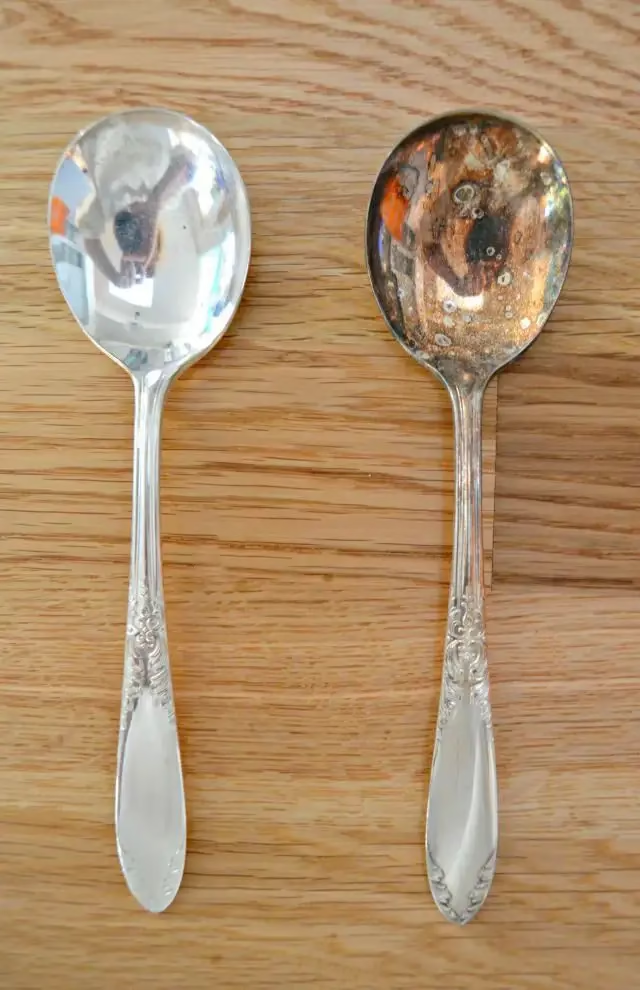
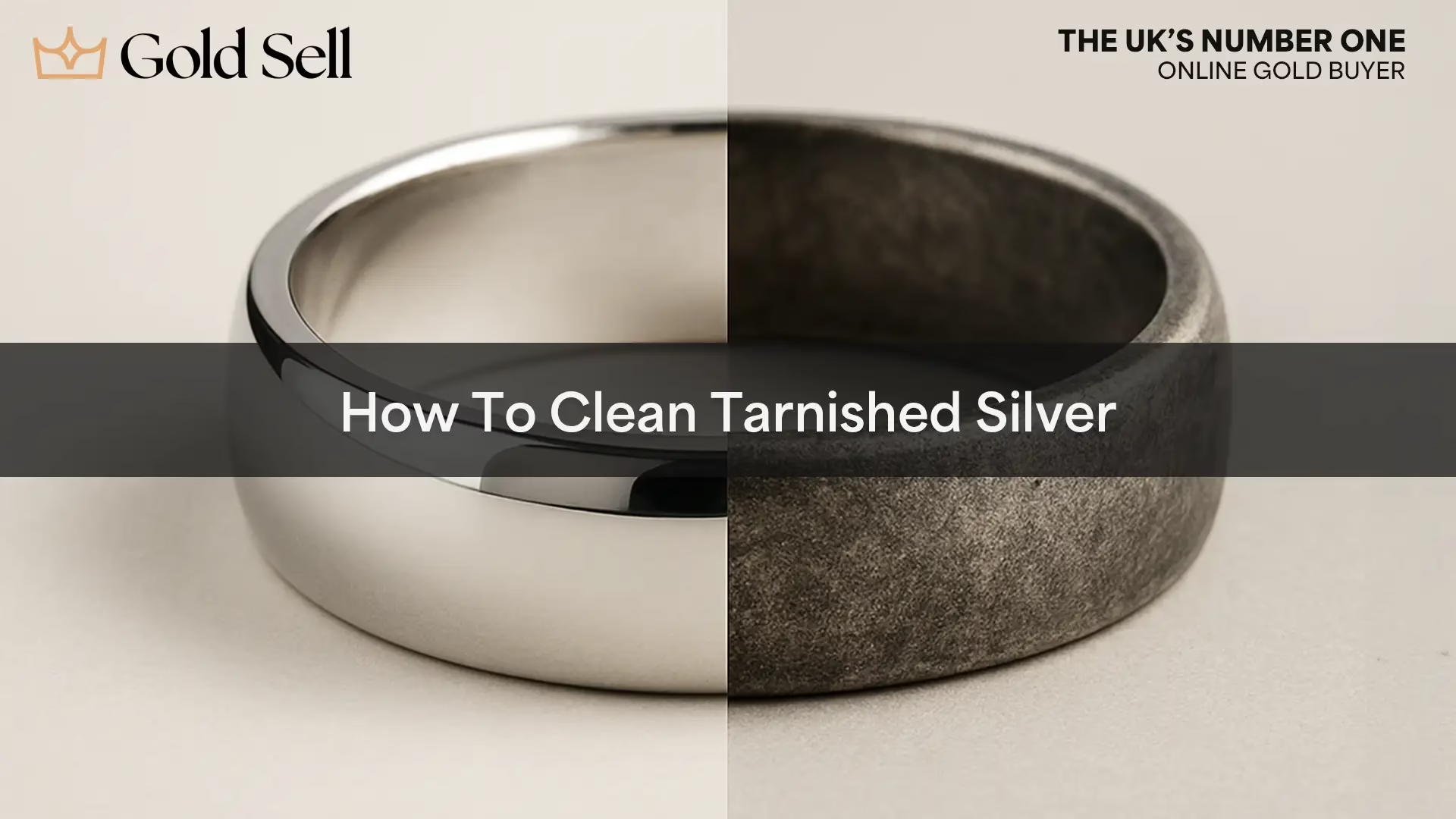
This side-by-side comparison shows how tarnish on silver can dramatically dull its surface, while proper cleaning restores a bright reflective shine. The contrast illustrates the effectiveness of at-home silver cleaning methods like baking soda and foil, this is what successful tarnish removal should look like.
Why Does Silver Tarnish?
Silver tarnishes through a chemical reaction with elements in its environment. Specifically, sulphur compounds (like hydrogen sulphide in the air) react with silver to create silver sulphide, the dark tarnish layer. In sterling silver, the copper alloy accelerates this: copper in the metal oxidises and can produce copper sulphides or oxides, making tarnish appear more quickly. The first sentence answers that the tarnish is caused by these reactions. Over time, even clean air and humidity will slowly oxidise and sulfidise silver. To slow down tarnishing, handle and store silver properly: wear or polish it regularly (skin oils can actually help clean it), use a soft anti-tarnish cloth, and keep it in a low-humidity environment. Removing fingerprints, sweat, and chemicals after use will also prevent the chemical attack that causes tarnish.
How To Clean Tarnished Silver
To clean tarnished silver at home, follow these steps using common household items:
- Assess and prepare: Lay down some paper towels and gather soft cloths, mild dish soap, baking soda, and (if available) a silver polishing cloth. Fill a bowl with warm soapy water and briefly soak the silver to remove surface grease and dust. This simple step can restore light tarnish. Rinse and pat dry.
- Baking-soda paste (optional): For mildly tarnished pieces, make a paste of baking soda and a little water. Apply it gently with a soft cloth, rub the tarnished areas, then rinse thoroughly. The mild abrasive action will buff away tarnish without scratching fine silver.
- Aluminium-foil soak (see next section): For heavier tarnish, line a container with aluminium foil, put the silver item inside, sprinkle baking soda into hot (not boiling) water, and immerse the silver so it touches the foil. Let it sit.
- Rinse and polish: After cleaning, rinse the silver in clean water. Dry it immediately and buff with a soft microfibre cloth. For any remaining spots, a commercial silver polish or cream can be applied according to its instructions. These products clean, polish, and leave a protective coating. Finish by thoroughly buffing until the metal shines.
- Professional or specialty products: If tarnish is very stubborn or the item is antique/valuable, consider specialty silver dip solutions (such as ammonia-free silver dips) or take the piece to a professional. These solutions often use strong yet controlled chemistry to remove deep tarnish.
The key is to use gentle methods first (soap, paste, foil soak) and escalate to a silver-specific polish or professional service if needed for badly tarnished silver.
Cleaning Silver With Aluminum Foil
Using aluminium foil and baking soda is a popular eco-friendly cleaning hack. Here’s how and why it works:
- Method: Line a non-metallic bowl or pan with a sheet of aluminium foil (shiny side up). Place the tarnished silver on the foil and pour over enough hot (nearly boiling) water to cover the piece. Add baking soda (about 1–2 tablespoons per litre of water) and optional salt, and stir to dissolve. Make sure the silver touches the foil. Within minutes you’ll see fizzing, the tarnish begins to lift off the silver and attach to the foil. Remove the silver, rinse it clean, and dry/buff it. Repeat if some tarnish remains.
- Why it works: This is a small electrochemical reaction. As chemistry educator MEL Science explains, the aluminium foil acts as a more reactive metal that donates electrons to the silver sulphide (tarnish), converting it back to metallic silver. In effect, the sulphur from the silver sulphide migrates to the aluminium, forming aluminium sulphide and leaving the silver bright and clean. Salt (electrolytes) speeds up the electron flow. Importantly, this method is safe for silver because it does not involve strong abrasives or acids, it simply reverses the tarnishing chemical reaction.
- Tip: Always ensure the silver is fully touching the foil for the reaction to occur. Use boiling water carefully and wear gloves if needed. The foil can be recycled after use.
The foil method is very effective for most types of silverware and jewellery, and it has the added benefit of being nontoxic. Just be cautious with pieces that have delicate gemstones or coatings, they may need gentler care.
Will Silver Tarnish In Water?
Silver itself is relatively inert in pure water, but practical water exposures can cause tarnish. Sterling silver (with copper) will tarnish in water that contains chemicals or minerals. In particular, saltwater or chlorinated water (like pools) can react with the copper and silver to form dulling oxides or silver chloride. Sterling silver exposed to saltwater or chlorinated pools will tarnish, so it’s wise to remove jewellery before swimming. Plain tap water might have chlorine or sulphur traces, and so may gradually tarnish silver; distilled or purified water would have much less effect. In short, water alone is not very aggressive, but real-world waters (sea, pools, even hard tap water) can speed up tarnishing. After getting silver wet, dry it promptly to prevent any moisture from lingering on the surface.
What Causes Silver To Tarnish?
Tarnish on silver is mainly caused by sulphur and moisture in the air. The black tarnish is silver sulphide (Ag₂S) formed from reactions with sulphur-containing gases. Sterling silver also forms copper sulphide and copper oxide because of its copper alloy content. Factors that accelerate tarnishing on silver include:
- Sulphur gases and humidity: Hydrogen sulphide (often from pollutants or even eggs/onions) reacts with silver, and this reaction goes faster in humid air. Higher humidity means more moisture to carry sulphur to the surface, so damp environments speed up tarnish.
- Salt and chemicals: Salts (from sweat, for example) can form silver chloride on the surface, which looks like uneven dark spots. Chlorine and chemicals (bleach, oven cleaners, pool disinfectants) attack silver quickly and cause tarnish or corrosion.
- Rubber and certain foods: Rubber bands, wool, eggs, onions, and some foods release sulphur compounds that rapidly tarnish silver. It’s best not to store silver near these items.
- Storage materials: Ordinary paper, cardboard, and some plastics can emit sulphur or formaldehyde as they age, which tarnishes nearby silver. Keeping silver in anti-tarnish bags or wrapped in acid-free tissue helps.
In summary, any environmental sulphur or harsh chemical will trigger tarnishing. Ventilating silver items and keeping them away from high-sulphur materials is key to preventing fast tarnish.
Frequently Asked Questions
How to remove tarnish from silver?
You can remove tarnish from silver by dissolving the dark silver sulphide layer through chemical or gentle abrasive cleaning. A reliable method is soaking silver in hot water mixed with baking soda while it touches aluminum foil because this reverses the tarnish back into silver. Light tarnish can also be removed with a baking soda paste, a silver polishing cloth, or a commercial silver cleaner designed to restore shine safely.
Can silver tarnish?
Yes, silver can tarnish because it reacts with sulphur compounds and oxygen in the air, forming a dark layer called silver sulphide. Sterling silver tarnishes faster than pure silver because its copper content also oxidises. Everyday exposure to humidity, pollution, sweat, rubber, cosmetics and cleaning chemicals increases tarnish buildup. Even stored pieces eventually tarnish unless kept in anti-tarnish containers or regularly polished to remove the surface reactions as they form.
Can you clean silver with aluminum foil?
Yes, you can clean silver with aluminum foil by using a hot water and baking soda solution that triggers a chemical reaction which transfers tarnish from the silver onto the foil. This method reverses silver sulphide back into silver without abrasion which makes it safe for most silver items. It is especially effective for chains, cutlery and textured pieces where polishing cloths cannot reach. Avoid this method for fragile gemstone jewellery.
Can you clean silver with baking soda?
Yes, you can clean silver with baking soda because it acts as a gentle abrasive and also supports chemical tarnish removal when used in hot water with aluminum foil. A baking soda paste works well for lightly tarnished pieces if applied carefully with a soft cloth. It should be rinsed thoroughly to avoid residue. Baking soda is safe for most solid silver although it may be too abrasive for plated items or soft gemstones.
Can you clean silver with vinegar?
Yes, you can clean silver with vinegar because its mild acidity helps dissolve tarnish. A common method involves soaking silver in white vinegar mixed with baking soda which lifts oxidation effectively. Vinegar is useful for moderately tarnished pieces although it should not be used on jewellery with porous gemstones or glued settings because the acidity can weaken adhesives and damage stones. Always rinse the silver thoroughly afterward to neutralise the acid.
What is the best way to clean tarnished silver?
The best way to clean tarnished silver is to use an aluminum foil and baking soda soak because it removes tarnish chemically without abrasion. This works for most household silver and reaches crevices that cloths cannot. For delicate antiques or highly valuable items the best method is a professional-grade silver polish that cleans and leaves a protective layer. Regular gentle polishing helps prevent heavy tarnish from forming and keeps silver bright longer.
Does silver tarnish in water?
Yes, silver can tarnish in water when minerals, chlorine or salts are present because these substances react with silver and its copper alloy to form dark compounds. Saltwater and chlorinated pool water tarnish silver quickly. Ordinary tap water can also contribute to tarnish if it contains chlorine or sulphur. Pure distilled water rarely causes tarnish but moisture itself accelerates tarnish formation. Silver should always be dried thoroughly after getting wet.
How to clean badly tarnished silver?
You can clean badly tarnished silver by using a strong tarnish removal method such as the aluminum foil and baking soda reaction in very hot water which reverses deep silver sulphide. Repeat the process if the tarnish layer is heavy. After that you can use a commercial silver polish to refine the shine and add protection. Intricate or highly valuable items may require professional cleaning to avoid abrasion or accidental damage.
What causes silver to tarnish?
Silver tarnishes because it reacts with sulphur compounds in the air which creates silver sulphide, the dark layer visible on the surface. Sterling silver tarnishes faster because copper in the alloy also reacts with oxygen and pollutants. Humidity, sweat, rubber, cosmetics, cleaning chemicals, hard water and certain foods accelerate tarnish formation. Storage materials that release sulphur such as cardboard or wool can also cause rapid discolouration if silver is kept nearby.
Does silver tarnish in chlorine?
Yes, silver tarnishes in chlorine because chlorine reacts with silver to form silver chloride which appears dull and cloudy. Swimming pool water and household bleach contain enough chlorine to cause rapid discolouration, especially on sterling silver where copper also reacts. Frequent exposure can create pitting that becomes difficult to remove. Silver jewellery should always be removed before swimming, hot tubs or any activity that involves harsh chemical disinfectants.
Can you clean silver in coke?
Yes, you can clean silver in coke although it is not the most effective method. Coke contains phosphoric acid which can loosen very light tarnish, but it rarely removes deeper silver sulphide. The sugar and colouring can also leave residue that needs cleaning afterward. More effective methods include baking soda paste, silver polish or the aluminum foil and baking soda reaction. Coke can be used in a pinch but offers limited results.
What is the fastest way to clean tarnished silver?
The fastest way to clean tarnished silver is the aluminum foil and baking soda method because it removes tarnish chemically within minutes without heavy polishing. Hot water activates the reaction which converts silver sulphide back into silver while the sulphur transfers to the foil. It works quickly for almost any shape or texture and cleans multiple items at once. After rinsing and drying, a quick buff restores a bright polished finish.
Interested in selling gold with the UK’s highest paying gold buyer? Visit our Sell Gold page to get a competitive valuation – we provide fully insured postage and fast payment.
For more insights and the latest gold price today, keep an eye on our live charts and blog updates.