Is White Gold Magnetic?
White gold itself isn’t typically magnetic, because pure gold is not magnetic and most white gold alloys don’t include enough magnetic metals to attract a magnet. However, there are exceptions: if a piece of white gold jewellery does respond to a magnet, it’s usually due to other metals in the alloy (like nickel) or because the item is only gold-plated over a magnetic metal. In other words, a magnet test can sometimes reveal a fake or heavily alloyed “white gold” item, but a non-magnetic result doesn’t guarantee the piece is real gold
Key Takeaways
- Most white gold is not magnetic: Pure gold is diamagnetic (non-magnetic), and although white gold can contain nickel (a magnetic metal), the amount is usually too small to create any strong magnetism.
- If a “white gold” piece sticks to a magnet, beware: A genuine white gold alloy would rarely cling strongly to a magnet. Strong attraction often means the item has a high ferrous or nickel content or is gold-plated on steel.
- The magnet test is not foolproof: While a magnetic reaction can expose fake or plated gold, the absence of magnetism doesn’t prove authenticity. Many non-gold metals are also non-magnetic, so professional testing is recommended if in doubt.
Is White Gold Magnetic?
White gold is generally not magnetic. In most cases, a white gold ring or necklace will not be attracted to a magnet at all. This is because white gold is an alloy mostly made up of gold, and gold is not magnetic. Even though white gold often includes a metal like nickel which is magnetic, the proportion of nickel is usually very low, so the overall alloy doesn’t respond to magnets. High-quality white gold alloys (especially those used by reputable jewellers) are formulated to be non-magnetic.
That said, if you do notice a white gold item being drawn to a magnet, it’s a possible red flag. A slight weak pull could occur if the piece contains an unusually high amount of nickel or another magnetic metal, but a strong snap to the magnet likely means the item isn’t solid white gold. It might be a piece of costume jewellery with a thick rhodium-plated finish over a base metal like steel or iron. Jewellers sometimes use the magnet test to quickly check if an item is potentially fake or plated: real gold (white or yellow) shouldn’t cling to a magnet, so a magnetic reaction can reveal imposters. However, remember that if it doesn’t stick, that doesn’t prove it’s real, many counterfeit or lower-value metals (such as copper, brass, or stainless steel) are also non-magnetic. In short, a magnet test is useful for detecting obvious fakes (magnetic = not solid gold), but non-magnetic results should be followed up with other tests for certainty
Also, note that parts of a genuine jewellery piece like clasps or springs often contain steel for strength, so a clasp might stick to a magnet even if the rest is real white gold. Always test the main portions of the metal. If you’re unsure about the composition of your white gold item, consider having it appraised or tested by a professional. They can verify the metal content, because while magnetism can hint at the presence of ferrous metals, it’s not a definitive test of gold purity.
What Is White Gold?
White gold is an alloy made by combining pure gold with white-toned metals such as nickel, palladium, and silver. In other words, it’s real gold that’s been mixed with other metals to give it a pale, silvery-white colour. Pure gold on its own is a rich yellow colour and very soft; by mixing it with certain white metals, we not only change the colour to a fashionable white hue but also make the gold harder and more durable for use in jewellery. The exact mixture can vary, but common alloys for white gold might include a percentage of gold along with nickel and copper (in more traditional white gold), or gold with palladium and silver (in higher-end or nickel-free white gold). Like other gold alloys, the purity of white gold is measured in carats (K). For example, 18-karat white gold is about 75% gold, while 14-karat white gold is about 58% gold, the rest is the other metals in the mix that give white gold its colour and strength.
Visually, white gold looks very similar to other “white” metals like platinum or sterling silver, but it is distinct. In fact, white gold often has a slightly warmer, more lustrous look compared to silver. Silver is a pure element that can tarnish and is softer, whereas white gold’s mixture of metals makes it resistant to tarnish and a bit harder. To the naked eye, a well-polished piece of white gold jewellery has a brilliant icy-white shine. This shine is often enhanced by a process called rhodium plating, most white gold jewellery on the market is coated with a thin layer of rhodium (a platinum-family metal) to give it a reflective, pure white surface. Rhodium plating not only makes white gold look brighter (masking any slight yellow tint from the underlying alloy) but also adds a layer of protection against scratches. Over time this rhodium layer can wear off, which is why an older white gold ring might start to show a faint yellowish tone and may need re-plating to restore its original white shine.
In terms of durability, white gold is quite robust for everyday wear. The alloying metals (like nickel) contribute to hardness, for example, a nickel-based white gold is often harder and good for rings and prongs, whereas a palladium-based white gold is a bit softer and more malleable, excellent for intricate gemstone settings. All white gold, however, is harder than 24k pure gold, making it less prone to bending or scratching than pure yellow gold would be. This is a big reason gold is rarely used in 24k form for jewellery; alloying for white gold achieves both a desired colour and a practical strength.
One important consideration with white gold is allergies. Some white gold contains nickel, and nickel can cause skin irritation for a significant number of people (roughly 1 in 8 people have a nickel allergy). In regions like Europe, there are strict standards limiting nickel release in jewellery. Many jewellers offer “nickel-free” white gold alloys, often using palladium as the primary whitening metal, to be hypoallergenic. These nickel-free white gold pieces are a bit more expensive (palladium costs more than nickel), but they are gentler on the skin. Always check with your jeweller if you have a metal allergy; they can tell you what alloy a white gold piece is made of or offer a hypoallergenic option.
In summary, white gold is real gold that has been modified in colour and improved in hardness by the addition of other metals. It has become a popular choice for engagement rings, wedding bands, and other jewellery because it offers the prestige and intrinsic value of gold with a stylish silvery appearance that complements diamonds and gemstones beautifully.
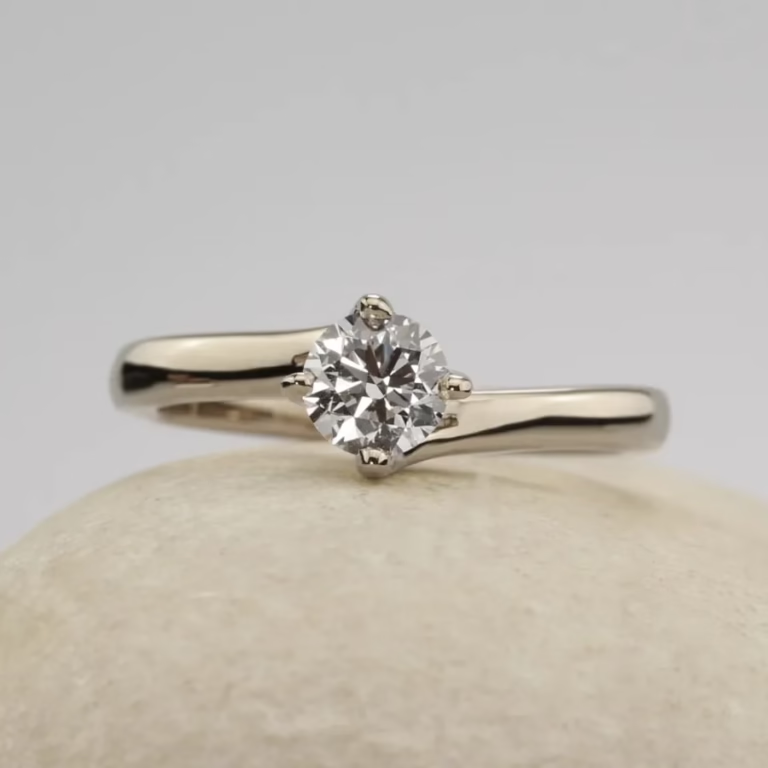
This 18ct white gold ring showcases the bright, silvery finish achieved through alloying gold with white metals and applying a rhodium plating. The subtle warm undertone beneath the surface hints at the natural colour of the underlying gold alloy, distinguishing white gold from platinum or silver.
How Is White Gold Made?
White gold is made by alloying (mixing) pure yellow gold with specific white metals to create a pale-coloured gold alloy, which is then usually coated with rhodium to enhance its white shine. The manufacturing process starts with pure gold, which is 24 karat (24K) and bright yellow. This gold is melted down, and while molten, it’s blended with predetermined amounts of other metals like nickel, palladium, silver, and sometimes zinc. The metals are carefully chosen and measured to achieve not only the right colour but also the right properties (hardness, malleability, etc.) for the intended use of the gold.
For example, to produce 14K white gold, metallurgists would melt 58.5% pure gold and mix it with 41.5% of the other metals (such as nickel, copper, and zinc) until they fuse into a uniform alloy. For 18K white gold, 75% is pure gold and 25% alloy metals (often a mix like gold–palladium–silver or gold–nickel–zinc). The molten mixture is stirred to distribute the metals evenly, then it’s poured into moulds or cast into bars and allowed to solidify. The resulting solid alloy has a muted greyish or off-white tone, not quite the vibrant white of platinum, but much less yellow than pure gold.
After casting, the white gold alloy will be formed into the desired jewellery pieces by traditional goldsmithing techniques: rolling into sheets, drawing into wires, or casting into detailed shapes. The crucial finishing step that gives white gold its signature look is rhodium plating. Jewellers take the crafted white gold piece and plate it in a very thin layer of rhodium, an extremely bright and hard white metal. Rhodium plating is done via electroplating: the white gold item is dipped into a rhodium solution and an electric current bonds a microscopically thin layer of rhodium onto the surface. This rhodium layer is what makes new white gold jewellery look so brilliantly white and reflective, it effectively masks any slight natural tint from the alloy underneath and also provides a protective coat.
It’s interesting to note that white gold was originally developed in the early 20th century as a more affordable substitute for platinum. Platinum was prized for its white colour and strength, but it was scarce and costly. By alloying gold with metals like nickel or palladium, manufacturers achieved a similar white appearance. The process of making white gold has been refined over the years; for instance, modern white gold often uses palladium in higher karat alloys to get a good white colour without the need for too much nickel (beneficial for those with allergies). Lower karat white gold (like 9K or 10K, more common in some countries) might rely on heavier doses of nickel and zinc to appear white.
In summary, making white gold involves melting pure gold and mixing it with white metals, then cooling and working that alloy into jewellery, and finally plating the piece with rhodium to give it a bright, platinum-like white finish. The result is a piece of jewellery that has the underlying value and majority content of real gold, with a fashionable silvery-white look and enhanced durability.
Is White Gold Real?
Yes, white gold is real gold. Despite the difference in colour, white gold is not a fake or a substitute for gold; it contains real, pure gold, just like yellow or rose gold does. The term “white gold” simply refers to the gold alloy that has been created to have a white appearance. For example, if you have an 18K white gold ring, it is about 75% actual gold (Au), blended with 25% other metals. That 75% gold is the same gold that would be in an 18K yellow gold ring, the only difference is the additional metals that change the colour and properties.
Because white gold contains a significant percentage of pure gold, it has intrinsic value and is considered a precious metal. It will usually be hallmarked or stamped with its karat fineness (e.g., 14K, 18K) just like any other gold jewellery, which confirms the proportion of gold content. The white aspect comes from those alloy metals like nickel, palladium, or silver that are mixed in, they dilute the rich yellow tint of gold, making the alloy look light greyish-white. In most cases, after the alloy is made, the jewellery is plated with rhodium to give it an extra white, shiny surface. It’s worth noting that the rhodium plating is not “fake gold” either, it’s a standard finishing technique for white gold and doesn’t detract from the item’s value. The gold is all still there underneath.
Some people wonder if white gold is “as real” as platinum or as yellow gold. The answer is that the gold content in white gold is just as real as in yellow gold of the same karat. For instance, both an 18K white gold ring and an 18K yellow gold ring contain 75% pure gold by weight. They’re just different colours because of the 25% of other metals in each alloy. So when you buy white gold, you are buying genuine gold, just gold that’s been styled in a different colour.
One thing to be aware of is that over time the rhodium plating on white gold can wear off (since it’s a thin outer layer). When that happens, your jewellery might start to show the slight natural colour of the white gold alloy beneath, which can be a very pale yellow or light “champagne” tone. This doesn’t mean the gold isn’t real, it’s just the real colour of un-plated white gold coming through, as the rhodium wears. At that point, you can take the piece to a jeweller for re-polishing and re-plating with rhodium, and it will look as white and shiny as new again. This maintenance is common for white gold jewellery, usually needed every couple of years or so depending on wear.
In conclusion, white gold is authentic gold jewellery. It has the same heritage and value as traditional gold, only difference is the colour and alloy. You get the benefit of gold’s rarity and value, combined with a contemporary silver-white look. So if you’re hesitating between white gold and other metals: you can rest assured that white gold gives you real gold content, just in a different hue that many find elegant and versatile.
Frequently Asked Questions
Is white gold magnetic?
White gold is generally not magnetic. While some white gold alloys contain trace amounts of nickel, which is a magnetic metal, the concentration is usually too low to react to a magnet. If a white gold item sticks to a magnet, it may be gold-plated over a magnetic core or made from non-gold metals. A magnet test can detect fakes, but non-magnetism doesn’t guarantee authenticity. Professional testing is needed for accurate results.
What is white gold?
White gold is a precious metal alloy made by combining pure yellow gold with white metals such as nickel, palladium, or silver. This mixture lightens the natural yellow colour of gold and enhances its durability. Most white gold jewellery is plated with rhodium to achieve a bright white finish. It offers the same intrinsic value as yellow gold but with a modern, silvery look that pairs beautifully with diamonds and coloured gemstones.
What is the white gold hallmark?
White gold is hallmarked the same way as other gold types, based on its purity. In the UK, common hallmarks include 375 for 9ct, 585 for 14ct, and 750 for 18ct gold. These numbers indicate the percentage of pure gold in the alloy. There is no unique hallmark for white gold specifically, but a white gold item will carry a standard gold hallmark along with any optional marks for origin, metal type, or assay office.
How is white gold made?
White gold is made by alloying pure yellow gold with white-toned metals like palladium, nickel, or silver. These metals lighten the natural colour of gold and add strength. Once the metals are melted and combined, the alloy is formed into jewellery. Most white gold pieces are then rhodium plated to enhance brightness and protect the surface. This process gives white gold its distinctive silvery-white appearance and improves resistance to scratches and wear.
Should white gold turn yellow?
Yes, white gold can appear yellowish over time as the rhodium plating wears off. Rhodium is a bright white metal used to coat white gold and enhance its shine. With regular wear, especially on rings, this layer gradually fades, revealing the slightly off-white or warm hue of the gold alloy beneath. This colour change is normal and reversible. Most jewellers can easily reapply rhodium plating to restore the original white finish.
Is white gold real?
Yes, white gold is real gold. It contains a percentage of pure gold alloyed with white metals such as nickel, palladium, or silver to give it a pale colour and greater durability. The karat value, such as 14K or 18K, indicates how much pure gold is present. White gold is often rhodium plated for a bright finish. Though it looks different from yellow gold, it holds the same intrinsic value and authenticity.
What is white gold made of?
White gold is made from a combination of pure yellow gold and white-coloured metals like palladium, nickel, silver, and zinc. These metals reduce the gold’s natural yellow tone and enhance strength. A typical 18K white gold alloy contains 75% gold and 25% other metals. The final jewellery piece is often coated with rhodium, a platinum-group metal, to create a bright white finish and add durability, especially for rings and everyday wear.
What is the difference between white gold and yellow gold?
The main difference is colour and composition. Yellow gold retains its natural colour and is alloyed with copper and silver, while white gold is alloyed with white metals like nickel or palladium to reduce its yellow hue. Both types contain the same percentage of pure gold at a given karat, such as 18K. White gold is typically rhodium plated for brightness and scratch resistance. The choice often comes down to style and skin tone.
Is white gold more expensive?
White gold is not significantly more expensive than yellow gold when comparing the same karat and weight. Both have equal gold content and intrinsic value. However, white gold may cost slightly more due to rhodium plating and the use of metals like palladium in premium alloys. Maintenance costs can also add up, as white gold jewellery may need re-plating over time. These differences are usually minor and often depend on the jeweller and design.
Is white gold platinum?
No, white gold is not platinum. White gold is an alloy of pure gold and white metals like nickel or palladium, while platinum is a naturally white, dense, and rare metal used in nearly pure form for jewellery. Although they appear similar, platinum is heavier, more durable, hypoallergenic, and usually more expensive. White gold is plated with rhodium for its white look, whereas platinum retains its natural colour without plating. They are distinct metals.
Is white gold silver?
No, white gold is not silver. White gold is a gold alloy made by mixing pure gold with white metals like nickel or palladium. Silver, by contrast, is a separate, naturally white element that is softer and more prone to tarnishing. While both can appear similar when polished, white gold is more durable, valuable, and resistant to oxidation. White gold is often rhodium plated for extra brightness, whereas silver does not require this coating.
Is white gold expensive?
White gold is considered a luxury metal and is priced similarly to yellow gold of the same karat. The main factor in cost is the gold content, so 18K white gold will cost more than 14K. Additional costs may come from rhodium plating or using premium white metals like palladium in the alloy. Over time, re-plating may be needed for maintenance. Despite these extras, white gold remains less expensive than platinum while offering a similar look.
Is 14k white gold magnetic?
14K white gold is not typically magnetic, but it may show a weak response if it contains enough nickel, which is a magnetic metal. However, the amount of nickel used in jewellery alloys is usually too low to produce a strong magnetic reaction. If a 14K white gold piece sticks firmly to a magnet, it may be plated over a base metal or not genuine. A professional jeweller can confirm the metal’s composition.
Is 18k white gold magnetic?
18K white gold is rarely magnetic. It contains 75% pure gold and only 25% alloy metals, usually including non-magnetic metals like palladium or silver. Some alloys may include small amounts of nickel, but not enough to cause noticeable magnetism. If an item advertised as 18K white gold is strongly magnetic, it could be fake or gold-plated over a magnetic core. Proper testing by a jeweller is the best way to confirm authenticity.
Can white gold tarnish?
White gold does not tarnish like silver because gold and most white alloy metals resist corrosion. However, white gold is often plated with rhodium, and as this plating wears down, the jewellery may appear dull or slightly yellow. This change is not true tarnishing but a result of the rhodium layer thinning. Regular re-plating restores the original brightness. White gold is considered low-maintenance and tarnish-resistant compared to silver or other base metals.
Can yellow gold be turned to white gold?
Yellow gold cannot be chemically turned into white gold, but its appearance can be changed. Jewellers can apply a rhodium plating to yellow gold jewellery, giving it the bright white finish typical of white gold. This process is purely cosmetic and temporary, as the plating will wear off over time. The base metal remains yellow gold underneath. For a permanent colour change, the gold must be re-alloyed, which involves melting and reforming.
Interested in selling gold with the UK’s highest paying gold buyer? Visit our Sell Gold page to get a competitive valuation – we provide fully insured postage and fast payment.
For more insights and the latest gold price today, keep an eye on our live charts and blog updates.