Silver Hallmarks Guide – Identify Silver Hallmarks
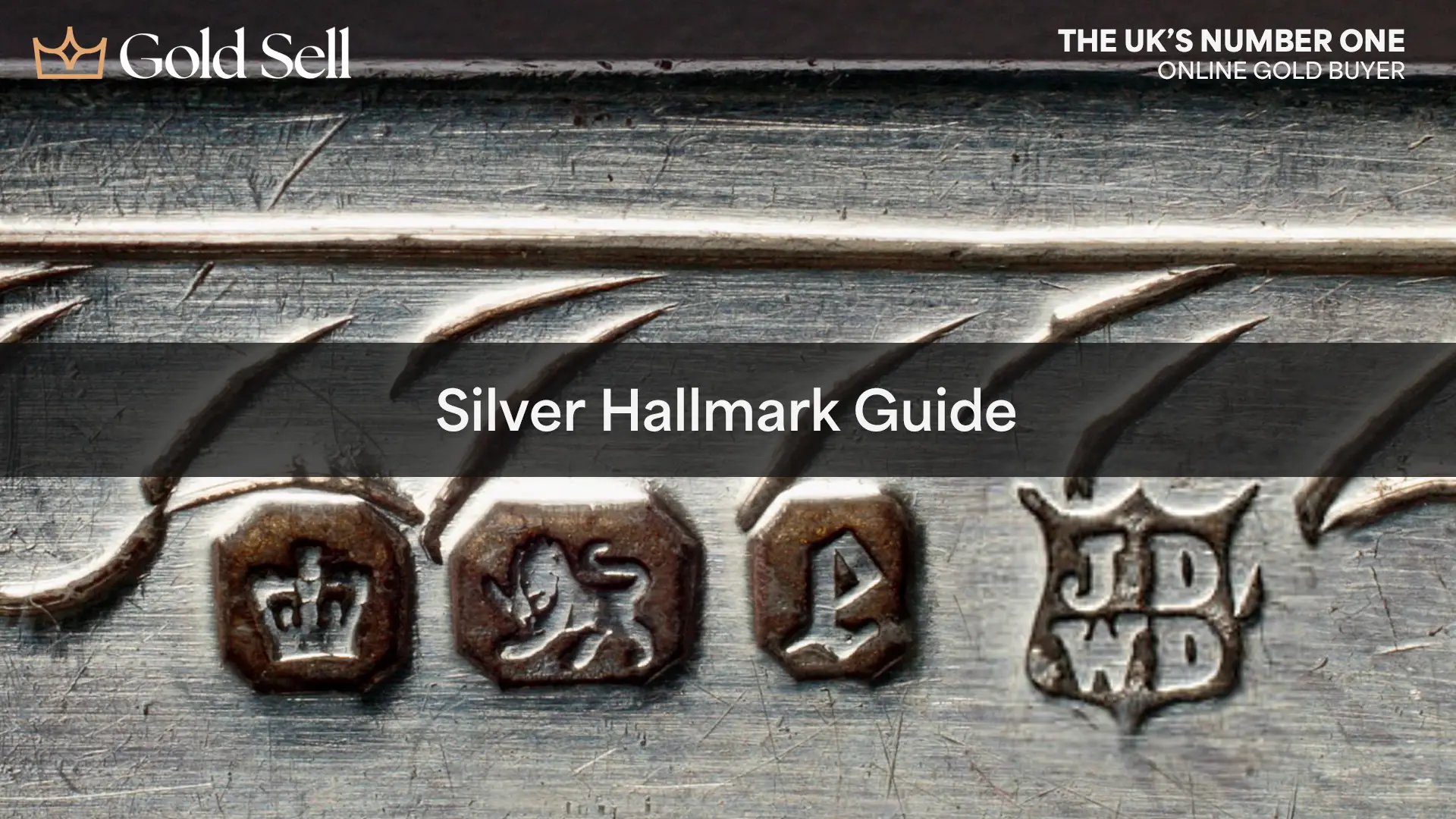
To identify silver hallmarks, look for stamps indicating the purity, maker, and assay office. In the UK, common marks include the Lion Passant for sterling silver, the maker’s initials, and symbols like the leopard’s head for London or the thistle for Edinburgh. International marks vary, such as the Minerva head in France or the “925” stamp denoting 92.5% silver content.
Key Takeaways
- Purity Marks: Indicate the silver content, e.g., “925” or “Sterling” for 92.5% silver.
- Assay Office Marks: Symbols representing the city where the item was tested, e.g., the leopard’s head for London.
- Maker’s Marks: Initials or logos identifying the silversmith or manufacturer.
- Date Letters: A letter indicating the year of hallmarking, varying by assay office.
- Optional Marks: Additional symbols like duty marks or commemorative marks, especially on older pieces.
Identify Silver Hallmarks With Our Free Silver Hallmark Identification Chart
Use our silver hallmark identification tool to identify silver hallmarks on any UK piece in seconds. Learn how to identify hallmarks on silver by stepping through the assay office, fineness, date letter and year to decode the exact UK silver hallmark, including import marks struck on overseas-made silver from 1700 to the present day.
Silver Hallmarks Guide
In this silver hallmarks guide, we’ll walk you through everything you need to know about identifying British and international silver hallmarks. Silver hallmarks are those tiny stamped symbols on silver items that reveal a wealth of information. This complete guide will explain what hallmarks are, how to read them, where to find them on different items, and even how to decipher foreign silver marks. By the end, you’ll be able to confidently perform silver hallmarks identification on your own treasures, in a clear and accessible way. Let’s dive in!

(Example of British silver hallmark on antique silverware)
Silver Hallmarks Identification
Silver hallmarks are a form of consumer protection dating back centuries. In the UK, a hallmark is a series of symbols stamped on a silver item to certify its purity, origin, and maker. Under British law, any sterling silver object above a certain weight must be tested (assayed) and marked by an official Assay Office. These marks tell us who made the piece, what its silver purity is, and where/when it was hallmarked. In other words, the hallmarks on silver mean the item has been independently verified to meet legal standards of fineness and is not a lower-grade metal.
How UK Hallmarks Work: A full British silver hallmark traditionally has 4 or 5 symbols:
- Maker’s Mark: One or more initials identifying the silversmith or company that made (or sponsored) the item.
- Purity Mark (Fineness): A symbol or number indicating the silver purity (e.g. the lion passant for 92.5% sterling silver).
- Assay Office Mark (Town Mark): A symbol for the city/office that tested and hallmarked the item (e.g. leopard’s head for London).
- Date Letter: A letter of the alphabet corresponding to the year of hallmarking (font and case vary by office and year).
- (Optional) Duty Mark or Commemorative Mark: Older pieces (1784–1890) may have a monarch’s head duty mark showing tax was paid.
Most silver hallmarks identification starts with finding the purity and assay office marks. Below is a quick-reference table of common UK hallmark symbols:
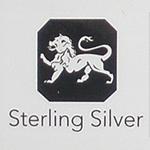
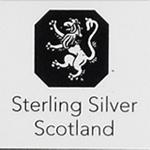
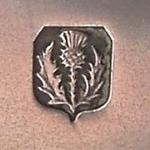
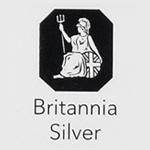
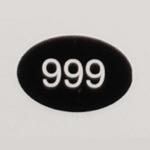
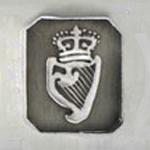
How to Read UK Hallmarks: When identifying a hallmark, first look for the assay office mark (town symbol). That tells you where it was hallmarked, which is key to decoding the rest. For example, a leopard’s head means London, an anchor means Birmingham, etc. Next, find the purity mark – usually the lion passant for sterling. If there’s no lion and instead a figure of Britannia, the item is Britannia silver (.958). The combination of the office symbol and purity mark confirms it’s a genuine British hallmark. From there, you can note the maker’s initials (to trace the silversmith) and the date letter (to find the year). Don’t worry, we’ll explain the date letters and makers in the sections ahead.
Key UK Assay Office Symbols: Britain has (and had) several assay offices, each with its own emblem:
- London – Leopard’s Head (crowned leopard’s head before 1820, uncrowned after 1820).
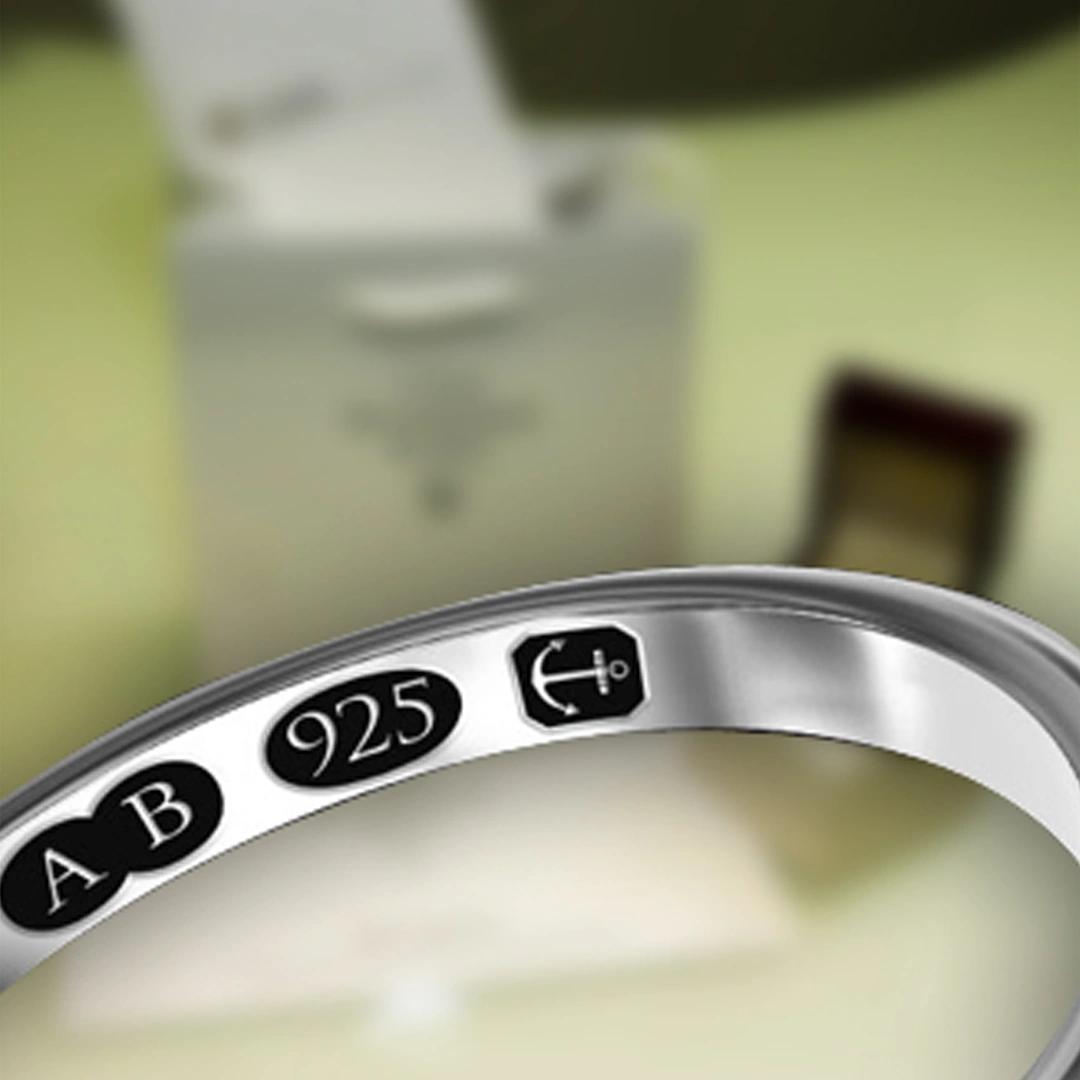
- Birmingham – Anchor (symbol of Birmingham Assay Office).
- Sheffield – Crown (1773–1974), replaced by Yorkshire Rose from 1975 onward.
- Edinburgh – Castle (Edinburgh’s coat of arms; often accompanied by a thistle pre-1975).
- Chester (closed 1962) – Three Wheat Sheaves & Sword (often called the “Chester shield”).
- Other historic offices included Glasgow (tree, fish, and bell arms), York (five lions on cross), Newcastle (three castles), etc., each with their unique town mark.
Every complete UK hallmark will feature one of these town marks to identify the assay office. This system has been in place for hundreds of years. For example, if you see a little anchor stamp on your silver candlestick, you now know it was hallmarked in Birmingham. If you see a castle, that’s Edinburgh, and so on. These symbols, combined with the lion passant (or Britannia figure), are the foundation of British silver hallmarks identification.
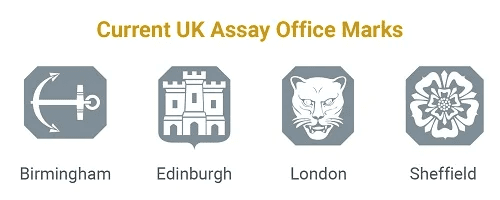
(Infographic explaining UK silver hallmark symbols – each assay office has its own town mark)
Identify Silver Hallmarks By Location On Items
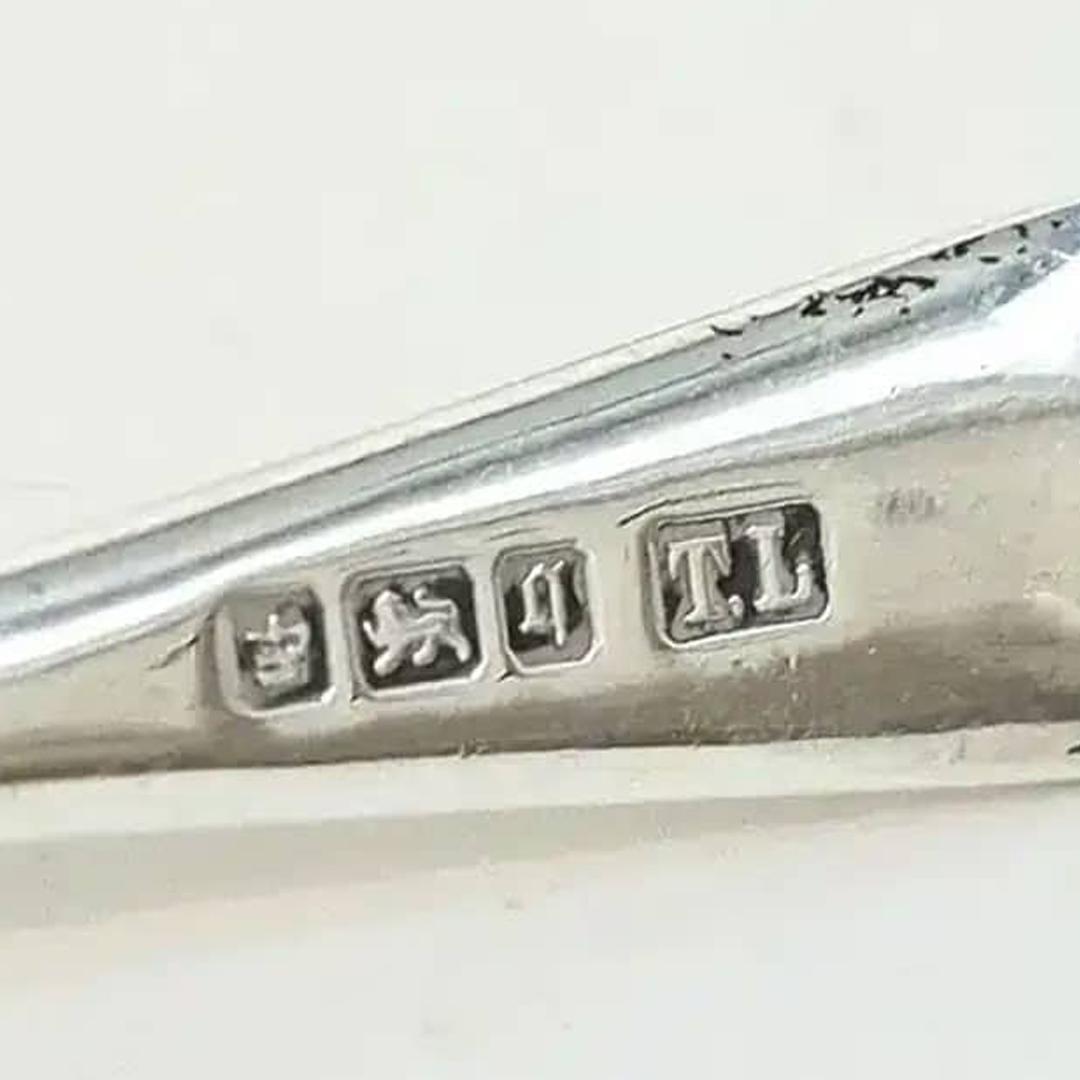
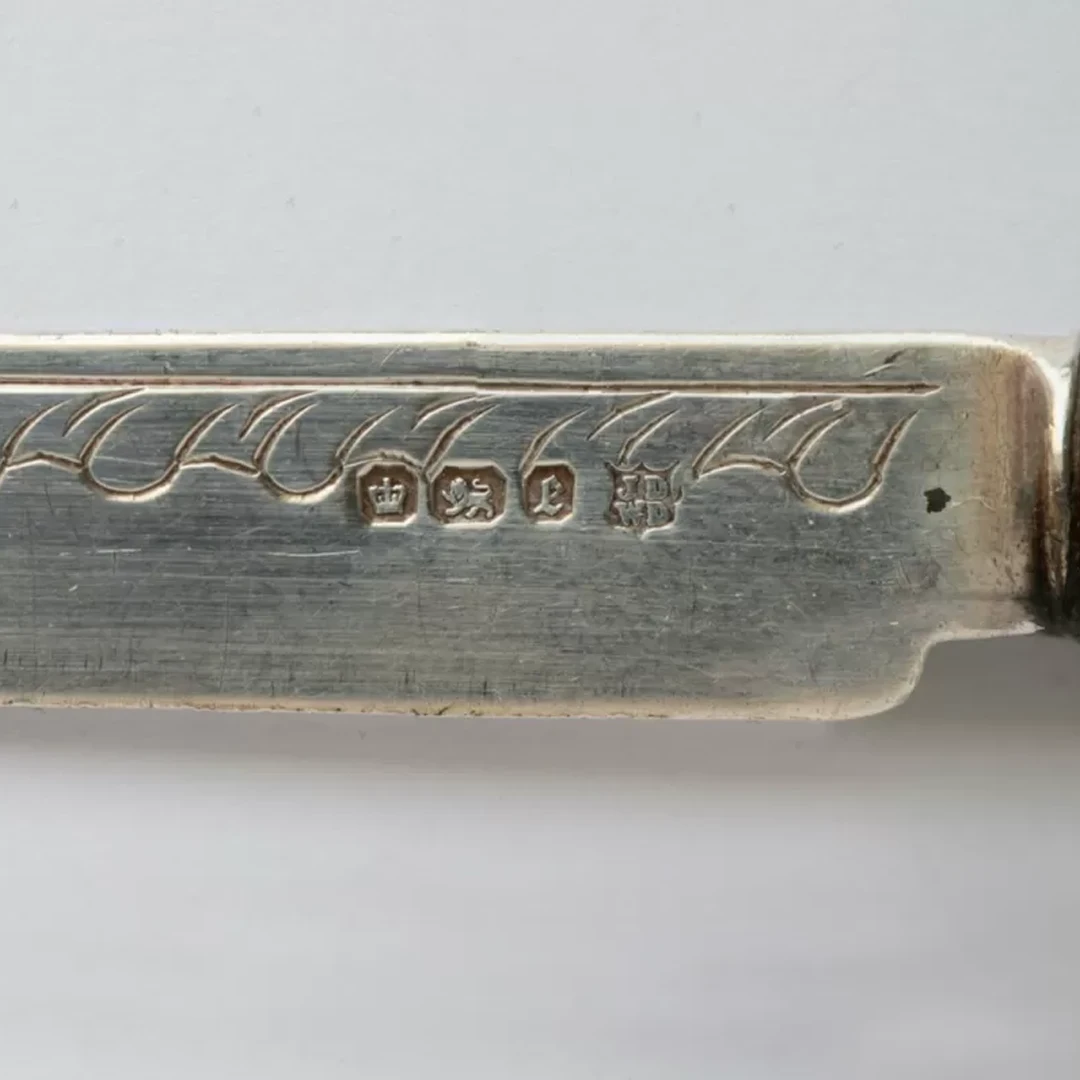
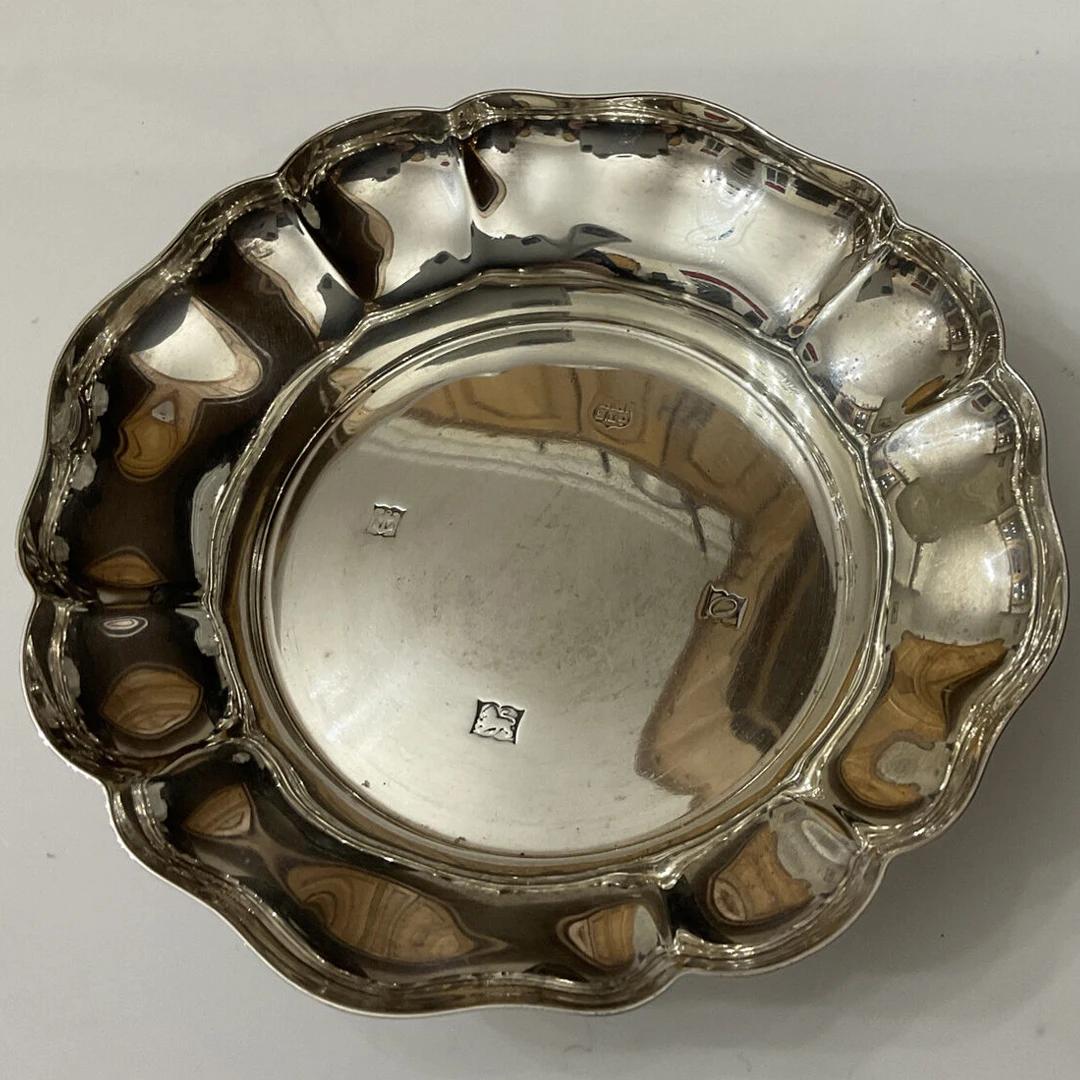
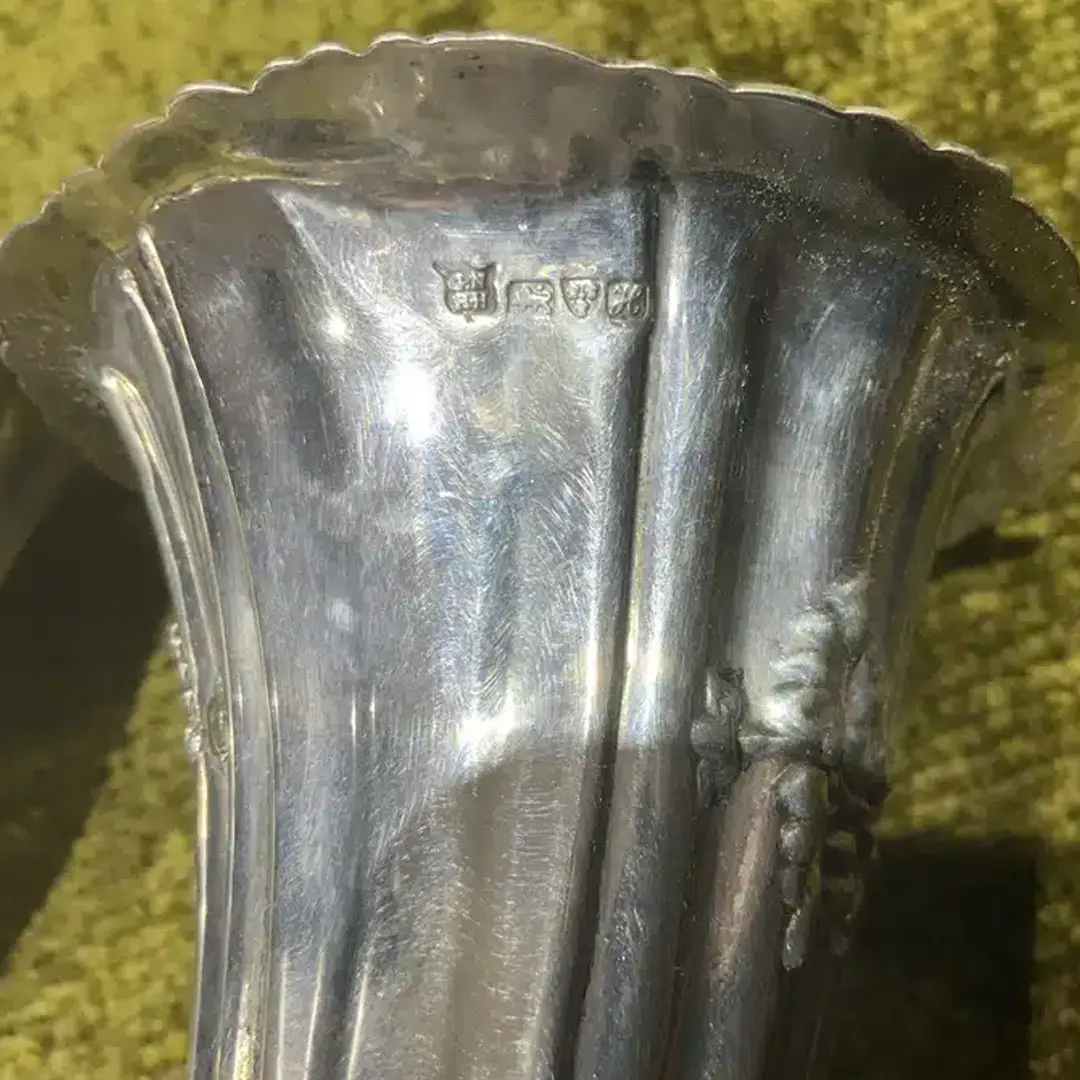
Knowing where to look for the hallmark on a piece of silver is half the battle. Different types of silver items tend to have their hallmarks in particular spots. Here we’ll identify silver hallmarks locations on common items, so you don’t miss those tiny stamps:
When searching for hallmarks, good lighting and magnification help – these marks can be tiny and sometimes worn. Gently polishing the area can make a faint stamp clearer (tarnish in the recessed hallmark can create contrast. Once you locate the hallmark, you can then proceed to decode its meaning using the guides in this post.
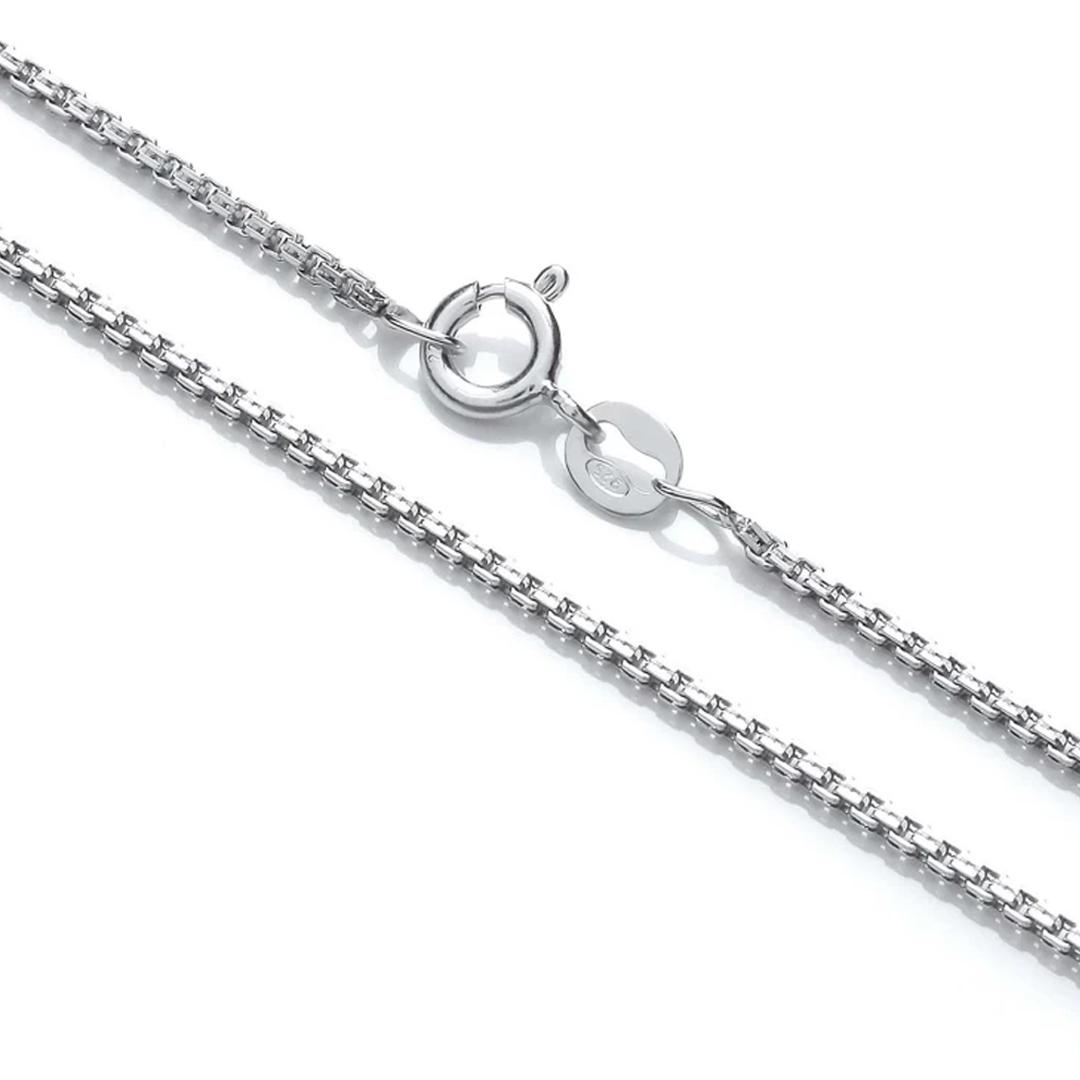
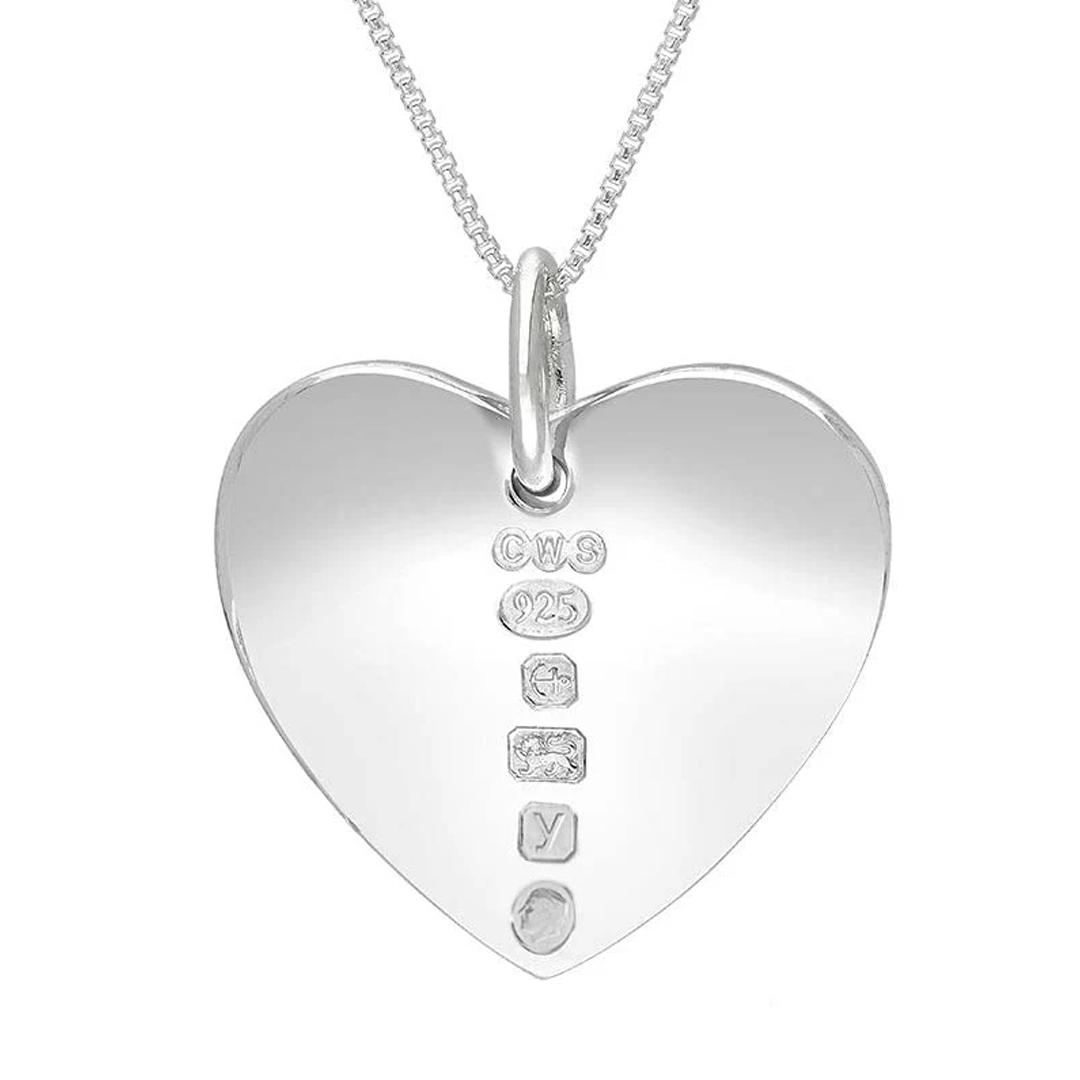
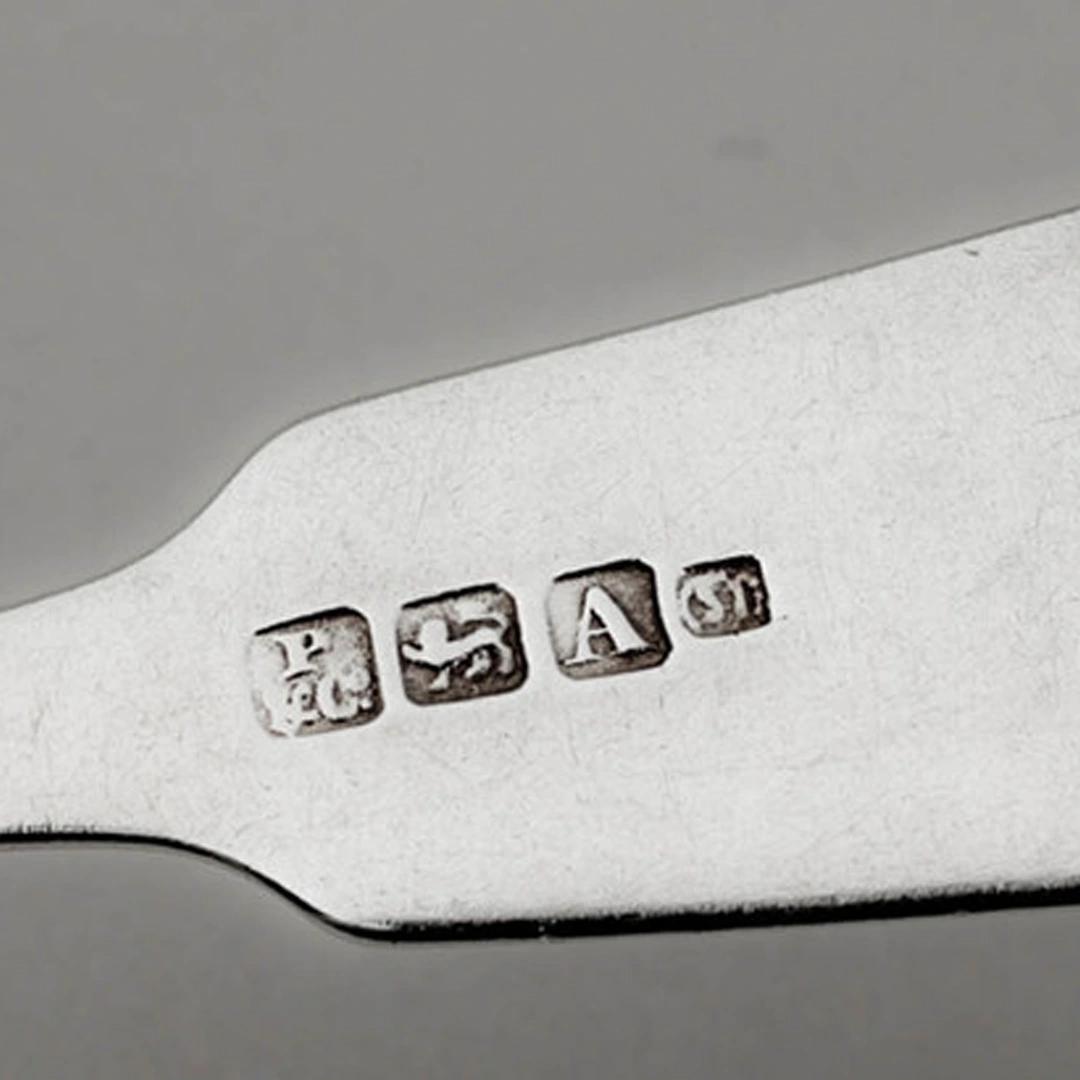
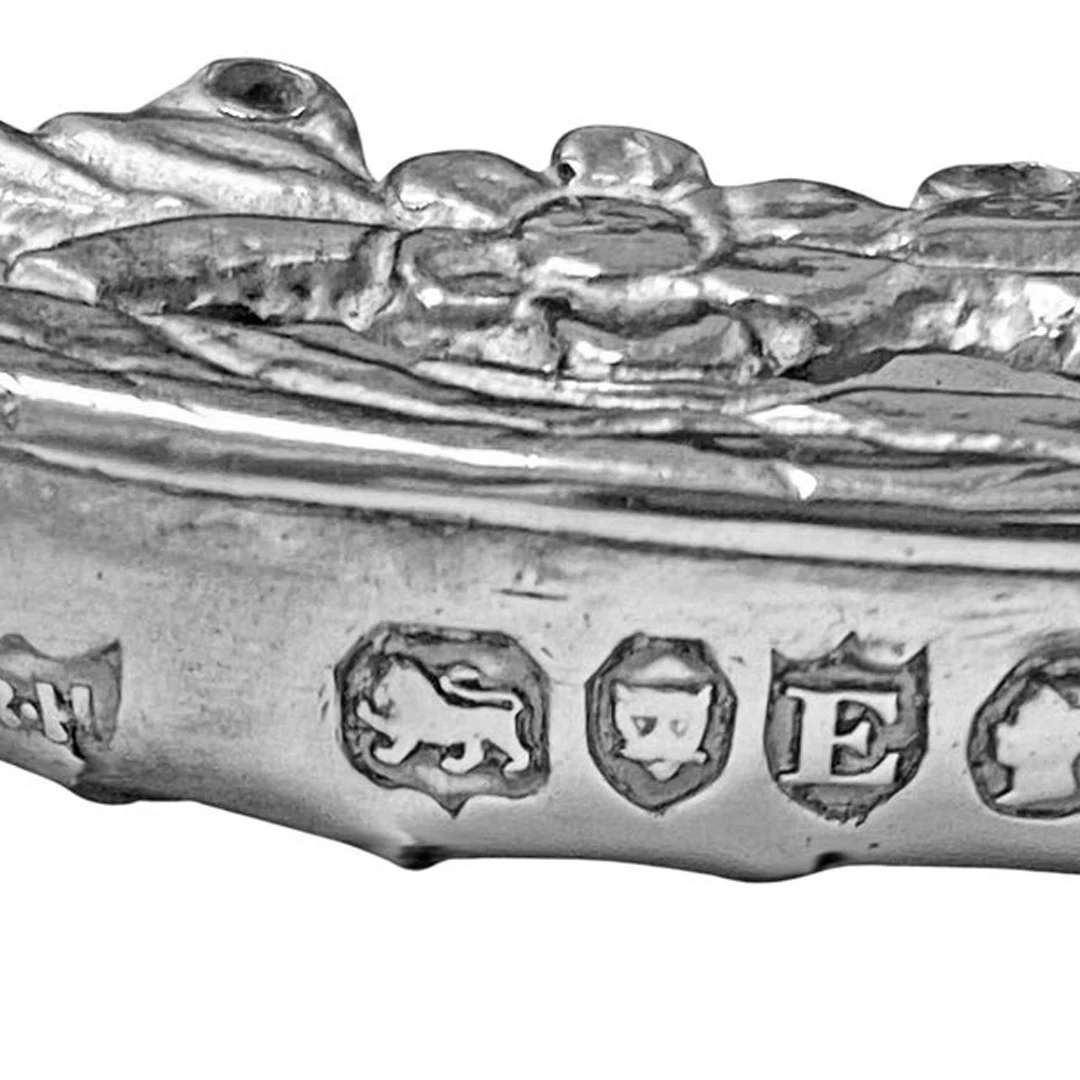
Silver Hallmarks And Dates (Decoding Date Letters)
One of the most intriguing aspects of hallmarks is that they allow you to date your silver piece. Silver hallmarks and dates go hand-in-hand thanks to the date letter system. A date letter is a letter of the alphabet (sometimes in a fancy font or a particular shape shield) stamped on the item to indicate the year it was assayed. Decoding these letters can tell you the year (or exact date range) your piece was hallmarked.
How Silver Date Letters Work: Each assay office has historically used its own sequence of letters, cycling through the alphabet over a span of years. For example, the London Assay Office might use ‘a’ for one year, ‘b’ for the next, etc., with a specific font and shape, then after reaching ‘z’ they start a new cycle with a different style or case. It’s important to note that the date letter indicates the year of hallmarking (assay), not necessarily the exact year of manufacture. To interpret it, you must know which assay office’s system it is (hence why identifying the town mark first is crucial).
Variations by Assay Office: Each office had its own calendar and lettering schedule, especially in older times. For instance:
- In 1911, the date letter was “q” in London, “t” in Sheffield, and “F” in Edinburgh – all for the same calendar year. They were different because each city ran a distinct cycle.
- Some letters are skipped to avoid confusion. It’s common for “I”, “J”, and “L” (and sometimes “O”) to be omitted so they aren’t mistaken for each other.
- Prior to the 20th century, date cycles didn’t always align with calendar years; originally they were tied to the term of wardens of the Goldsmiths’ Company. Modern hallmarking has since standardised date letters more across the UK, but antique silver requires using the right chart for the correct city and era.
To decode a date letter, you typically consult a reference chart (often published by the assay offices or in guides like Bradbury’s Book of Hallmarks). You match the letter’s appearance (uppercase/lowercase and font) and the shape of its surrounding shield to the known tables for that assay office.
The image illustrates a range of date letters used by the London Assay Office between 1696 and 1935. Each column represents a cycle of letters with its associated years. For example, a lowercase Gothic “q” in a specific cartouche might correspond to 1831, whereas an uppercase “A” in a shield might indicate 1856, and so on. By identifying the exact style of the letter on your silver and knowing the assay office, you can pinpoint the hallmarking year.
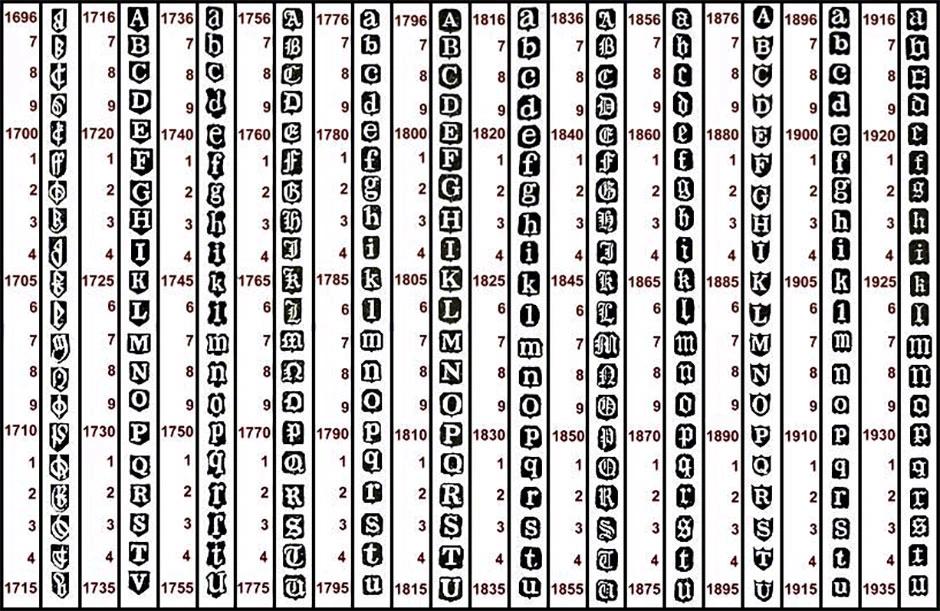
Chart showing silver hallmark date letters and corresponding years (London Assay Office example).
Quick Tips for Date Letters:
- Always identify the town mark first, since “a” in London could be a different year than “a” in Birmingham.
- Note the case (uppercase vs lowercase) and any decorative font style of the letter.
- Observe the shield shape or background around the letter (different cycles use different shaped surrounds – e.g., a square, circle, trefoil, etc.).
- Compare these features to a trusted date letter chart for that assay office. Many online resources and reference books list date letters for London, Birmingham, Sheffield, Edinburgh, etc., by year.
Using date letters, you can often date an antique silver piece to an exact year (or within a year range). This adds historical context – for example, you might discover a family heirloom spoon was assayed in 1875 by finding its date mark on the spoon handle and matching it to the records. Silver hallmarks and dates thus allow even a novice to become a bit of a detective in uncovering the age of silverware.
Silver Hallmarks and Makers’ Marks
Aside from purity and date, hallmarks also tell us who made the silver item. Silver hallmarks and makers’ marks are closely related: the maker’s mark (also called sponsor’s mark) is one of the required symbols on hallmarked silver. This mark usually consists of the initials or name of the silversmith or company. Identifying a maker’s mark can significantly increase the interest and value of a piece, especially if it’s a famous maker.
What is a Maker’s Mark? It’s a unique stamp registered by a silversmith or manufacturer with the assay office. Historically, British silversmiths used symbols or full surnames, but by the late 17th–18th century it became common to use initials (often two or three letters). For example, “HB” in script is the mark of Hester Bateman, a renowned 18th-century London silversmith. The maker’s mark tells us who submitted the item for assay. It’s like the artist’s signature on the work.
Importance of Maker’s Marks: Knowing the maker can:
- Help date the piece (many makers worked in specific periods).
- Verify authenticity (to spot fakes or reproductions, since famous marks are sometimes forged).
- Add value for collectors – certain makers (Paul Storr, Hester Bateman, etc.) are highly prized.
- Provide historical provenance and context (e.g., a piece by a known Royal silversmith or a famous workshop).
Below is a table of major makers’ marks in silver, with a brief description and example items they produced. These are some of the most famous names in British (and a bit of international) silver history:
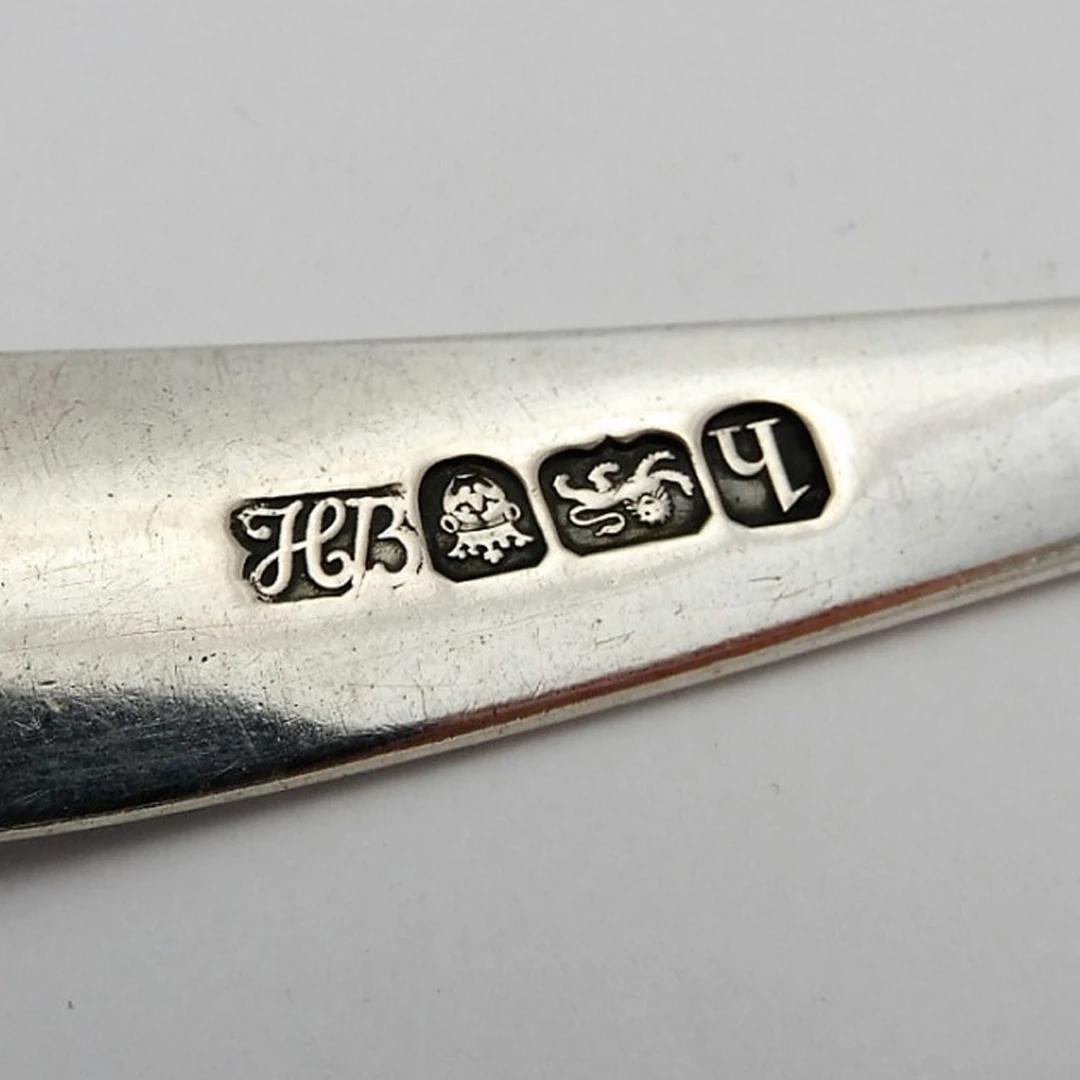
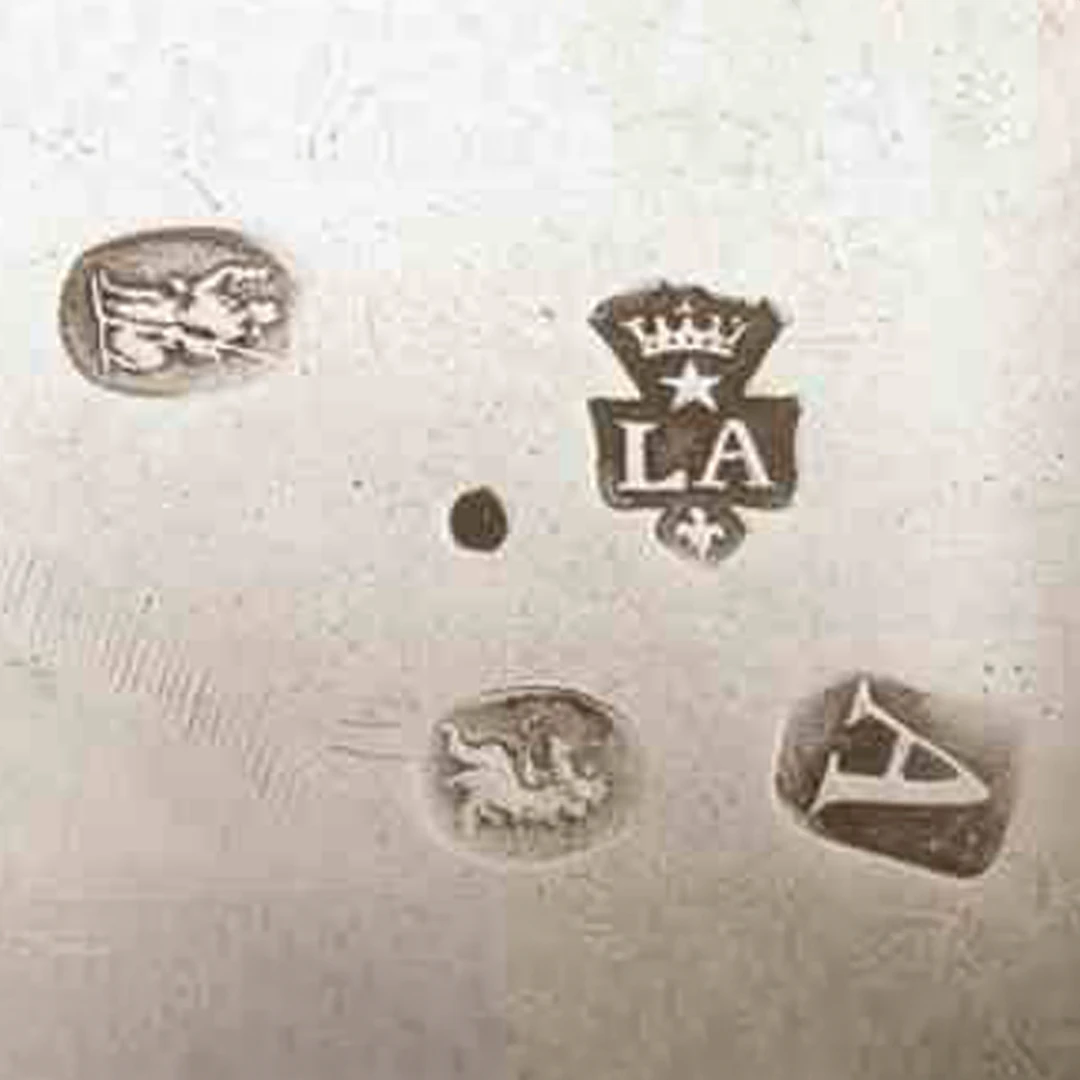
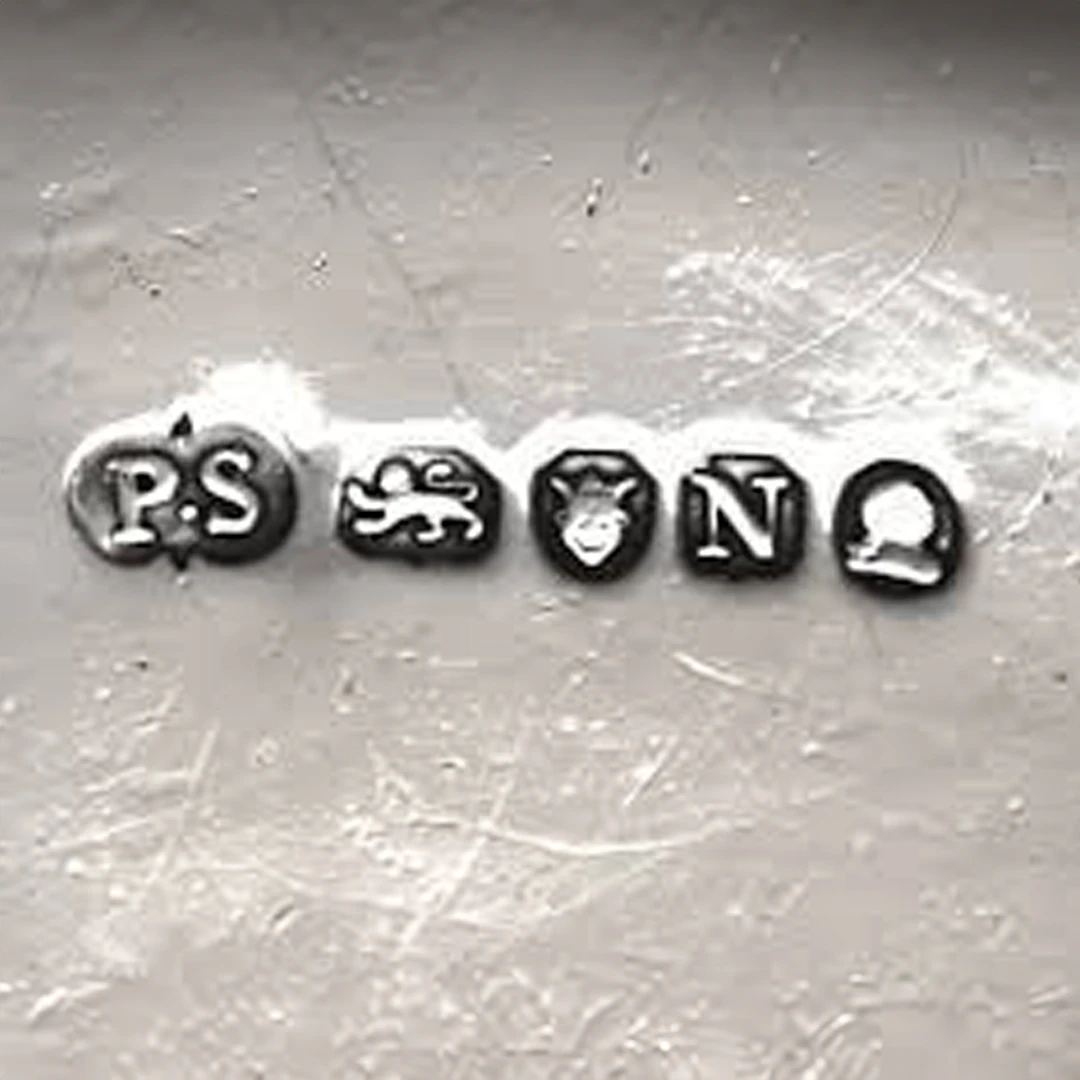
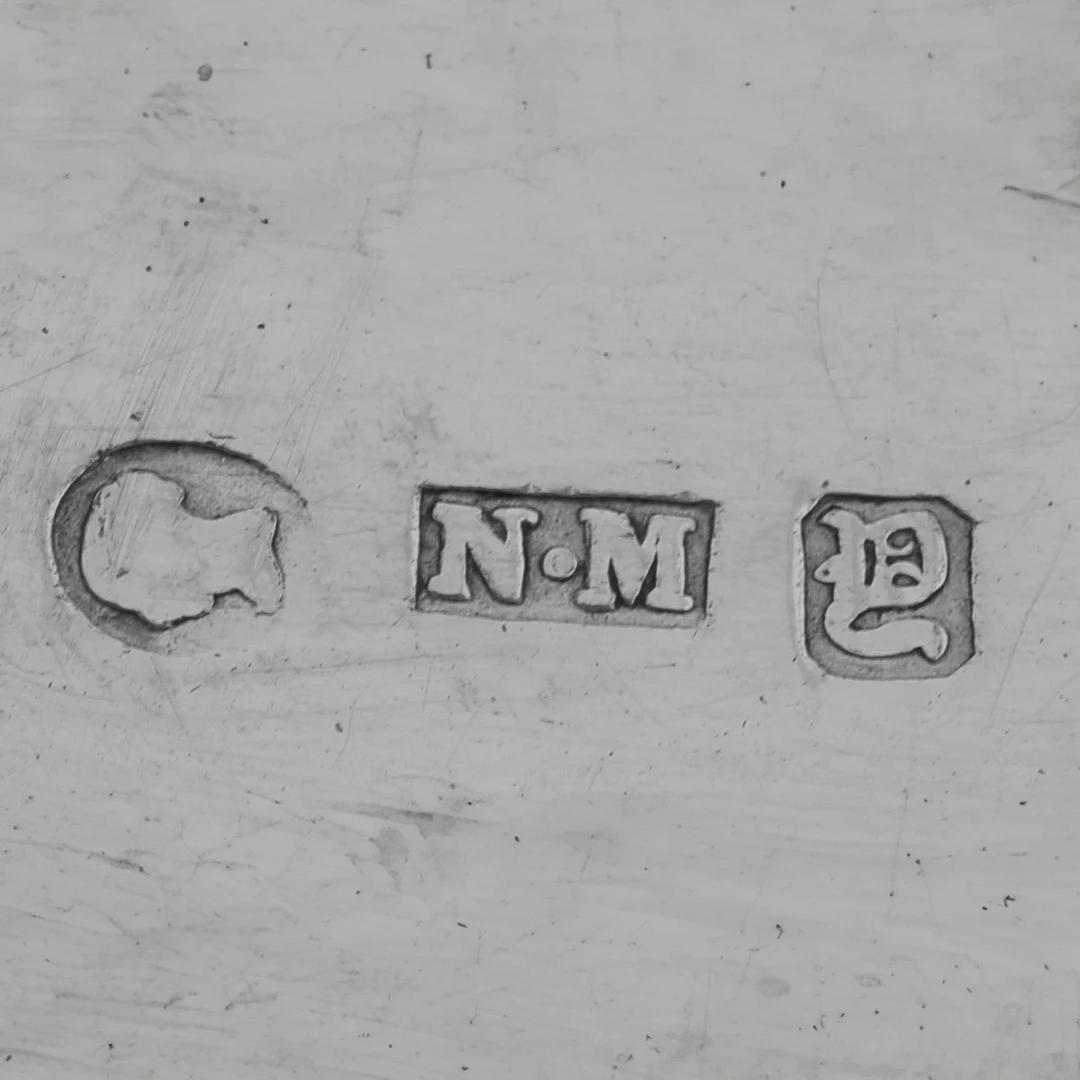
These are just a few examples – countless makers’ marks exist, each with their own story. If you encounter a maker’s mark, you can look it up in a reference (there are online databases and books organised by initials and city). For instance, a mark “T&Co” might lead you to Tiffany & Co. (for American silver), or “GJ” could point to Georg Jensen (for Danish silver). In British silver, common makers like “WC” (William Comyns), “EL” (Edward Learner), “GF” (George Fox) and many others appear regularly. The assay office usually requires each maker’s mark to be unique, so it’s a reliable identifier.
Makers vs. Assay Office Mark: Don’t confuse the maker’s mark with the assay office mark. For example, Birmingham’s anchor is often mistakenly called the “Birmingham maker’s mark” – but the anchor is the hallmark for the city, not a specific maker. Each Birmingham silversmith (such as Nathaniel Mills, above) had their own initials as their mark, with the anchor stamp added by the assay office to denote location. The combination of the two is what fully identifies a piece (e.g. “N.M” + anchor tells us Nathaniel Mills in Birmingham).
By recognising major silver hallmarks and makers’ marks, you not only learn the silver’s purity and age, but also gain insight into its creator. This makes collecting and appreciating silver all the more fascinating – it’s like holding a piece of history with a signature attached.
Foreign Silver Hallmarks
So far, we’ve focused on British hallmarks, but what about silver from other countries? Many nations have their own hallmarking systems. In this bonus section, we’ll look at foreign silver hallmarks for a few common non-British silver sources: Dutch, German, and Russian silver. Understanding these can help you identify the origin and purity of international pieces.
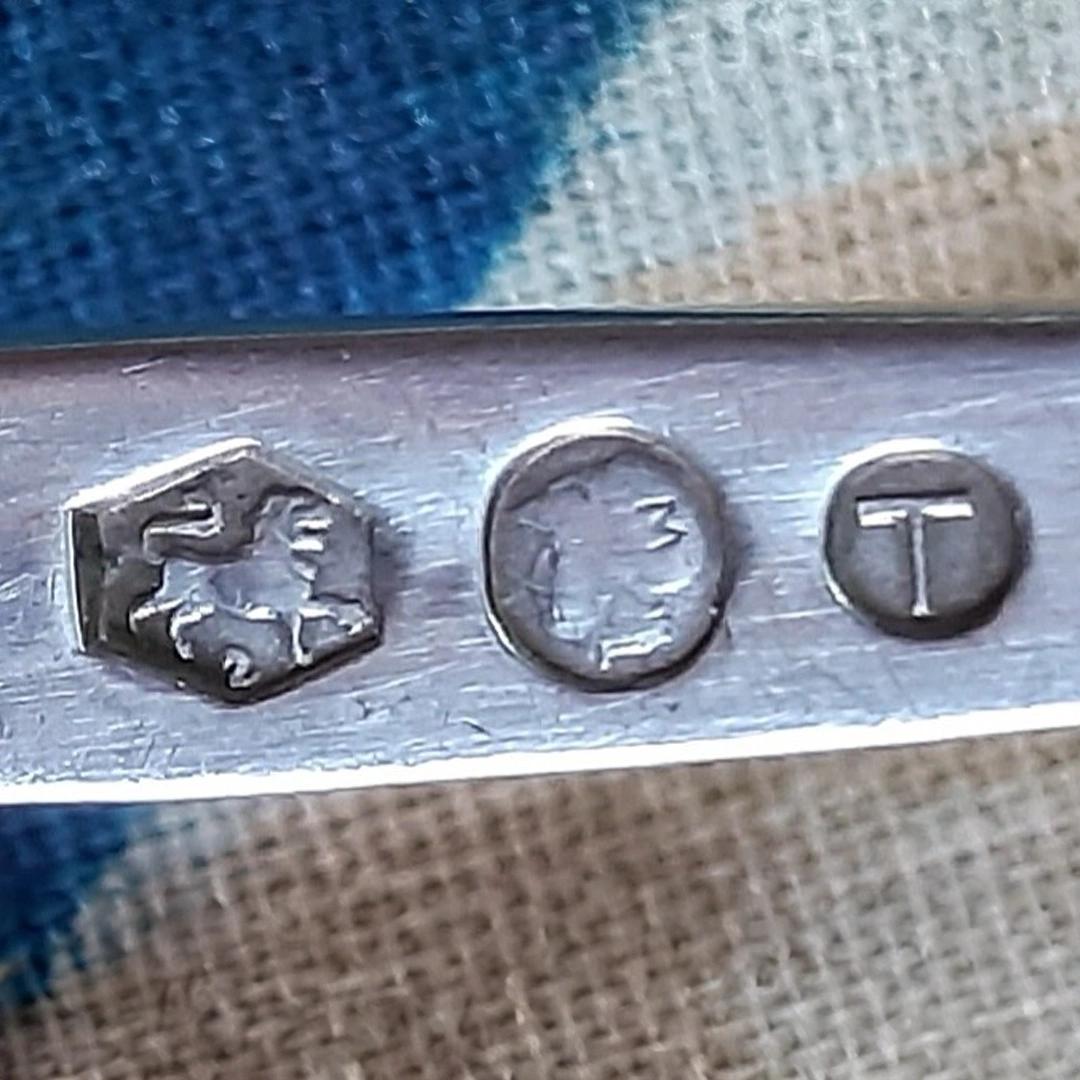
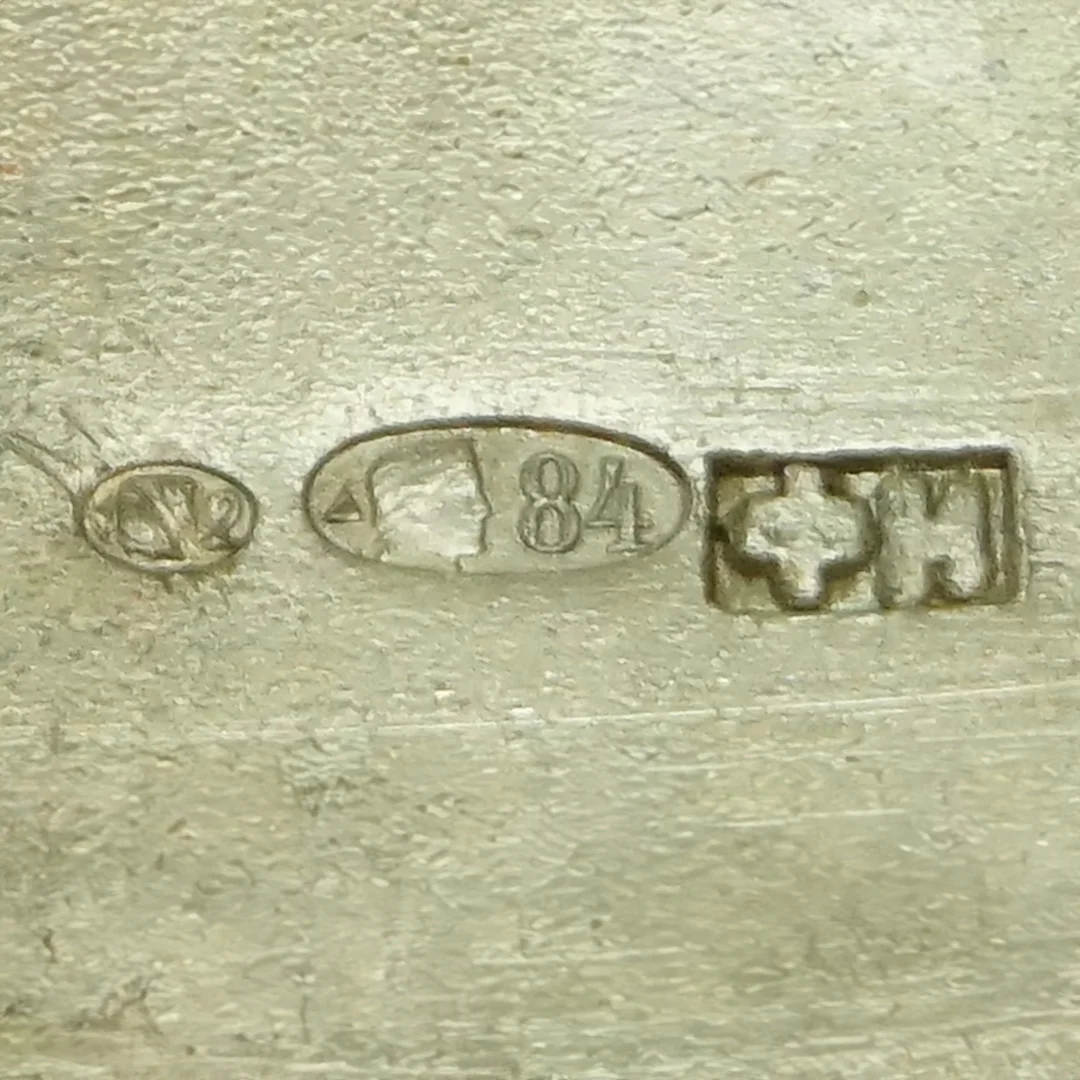
Of course, many other countries have interesting hallmark systems: France uses the Minerva head for silver (with a number “1” or “2” for .950 or .800), Italy has a number and two-letter province code, Scandinavia often uses “830S” or “925S” with maker marks, etc. But the Dutch, German, and Russian are frequently encountered by collectors of antique silver, and now you have a primer on those.
If you come across a foreign hallmark, try to identify any numeric fineness mark (like 800, 925, 84) and any distinctive symbol. A quick internet search or hallmark reference book for that country can usually decode it. Thanks to international hallmarking conventions (like the Common Control Mark system since 1972), many countries now also recognise each other’s marks, so modern pieces might carry a standard “scales” symbol plus fineness. But for antique silver, it’s all about recognising those unique national marks.
Frequently Asked Questions
What are silver hallmarks?
Silver hallmarks are official stamps on silver objects that certify important information about the piece. In the UK, a hallmark tells you the maker (who made it), the fineness (purity of the silver), the assay office (where it was tested), and usually the year of assay.
What is the hallmark for silver?
The hallmark for silver is a set of stamped symbols that confirm the metal’s purity and legal authenticity. In the UK this usually includes a sponsor’s mark, a fineness mark such as 925 for sterling, and an assay office symbol that identifies where the item was tested. These marks protect buyers by proving the silver content meets regulated standards.
What does the lion silver hallmark mean?
The lion hallmark indicates sterling silver and is the most recognisable purity mark used by UK assay offices. Known as the Lion Passant, it certifies that the item contains 92.5 percent pure silver. This symbol has been used for centuries and helps distinguish genuine sterling pieces from lower-grade or untested silver.
What are the silver hallmark symbols?
Silver hallmark symbols include the maker’s mark, a fineness number such as 925, the assay office emblem, and sometimes a date letter. Each symbol serves a different purpose and together they verify who made the item, its purity level, where it was tested, and the year it was hallmarked. Different countries use their own systems but most rely on similar combinations of marks.
Birmingham hallmarks date letters?
Birmingham date letters are alphabetical stamps that show the year an item was assayed at the Birmingham Assay Office. Each letter has a unique font and shape that changes annually, which prevents confusion across decades. These letters help collectors identify the exact production period of silver items and are used alongside Birmingham’s anchor symbol.
What is the British hallmark for sterling silver?
The British hallmark for sterling silver is the 925 fineness mark, which certifies the metal contains 92.5 percent pure silver. This is usually accompanied by a maker’s mark and the emblem of the assay office such as a leopard’s head for London or an anchor for Birmingham. Together these symbols confirm purity, authenticity and legal compliance.
What does a silver hallmark look like?
A silver hallmark appears as a small series of stamped symbols, usually grouped in a straight line or small cluster. These may include letters, numbers and pictorial icons that represent purity, origin and the manufacturer. Although often tiny, they are struck deeply enough to remain visible even after years of wear and polishing, making them reliable identifiers for valuers and collectors.
What is Birmingham’s silver maker’s mark?
Birmingham doesn’t have one specific “maker’s mark” for all silver – the term actually refers to the individual silversmith’s stamp. However, Birmingham’s hallmark symbol is the anchor, which indicates the piece was assayed in the Birmingham Assay Office. So if someone asks about a “Birmingham silver maker’s mark,” they likely mean the anchor town mark for Birmingham silver. Each Birmingham silversmith (maker) has their own unique initials registered, in addition to that anchor stamp.
What is the silver hallmark for London?
The hallmark for London silver is the leopard’s head. This has been the symbol of the London Assay Office since hallmarking began. Historically the leopard’s head was crowned until 1820; after 1821 the leopard’s head appears uncrowned. So a leopard’s head on your silver indicates it was hallmarked in London (crowned = older piece, uncrowned = 1822 onward).
What is the silver hallmark for Sheffield?
The traditional hallmark for Sheffield is the crown. From the establishment of the Sheffield Assay Office in 1773 up to 1974, Sheffield-marked silver bore a crown symbol. In 1975, Sheffield changed its mark to the rose (Tudor rose), which is the current symbol. So older Sheffield silver = crown mark; modern Sheffield silver = rose mark.
What is the anchor on silver hallmarks?
The anchor is the town mark of the Birmingham Assay Office. If you see an anchor symbol stamped on a silver item, it means the item was hallmarked in Birmingham, England. It’s not the purity mark or maker’s mark – it’s the assay office (city) hallmark. (Fun fact: The anchor was chosen for Birmingham’s mark by random draw in 1773, paired with Sheffield’s crown.)
What are the silver hallmarks for Chester?
Silver assayed at Chester (an assay office operational until 1962) is marked with the emblem of three wheat sheaves and a sword (often just described as “wheat sheaves with sword”). This Chester hallmark is usually in a shield shape. If you find this mark, your piece was assayed in Chester. (Chester hallmarks ceased after the office closed in 1962, so it also indicates a piece is pre-1960s.)
What is the lion mark on silver?
The lion mark is the famed “lion passant” – a walking lion with one paw raised – which signifies sterling silver (925 purity) in British hallmarks. This symbol, a lion, guarantees the silver is at least 92.5% pure. It’s found on most English silver from the mid-16th century onward. (In Scotland a rampant lion or thistle was used instead, but the concept is the same – a lion = sterling standard.)
What is the crown mark on silver?
A crown mark on silver typically indicates the piece was assayed in Sheffield, England (pre-1975). The crown was the town hallmark for Sheffield. Be careful not to confuse this with a crown stamp on silverplate (some silver-plated wares use a pseudo-crown). If it’s a sterling item and you see a crown hallmark, it’s from Sheffield (from 1773 up to 1974, after which Sheffield adopted the rose).
What are the Dutch silver hallmarks?
Dutch silver hallmarks feature a lion with a number and the Minerva’s head. The lion denotes the purity: a lion with a “1” below it means first standard .934 silver, and a lion with “2” means .833 silver. The Minerva head mark (helmeted figure) contains a letter indicating the assay office (e.g., “A” for Amsterdam, “R” for Rotterdam, etc.). Dutch silver also uses date letter codes. So a Dutch hallmark will typically have the lion+number (purity), Minerva head (office), a year letter, and a maker’s mark. For instance, “Lion 2” + Minerva with “A” might be Amsterdam 83.3% silver.
What are the silver hallmarks for Germany?
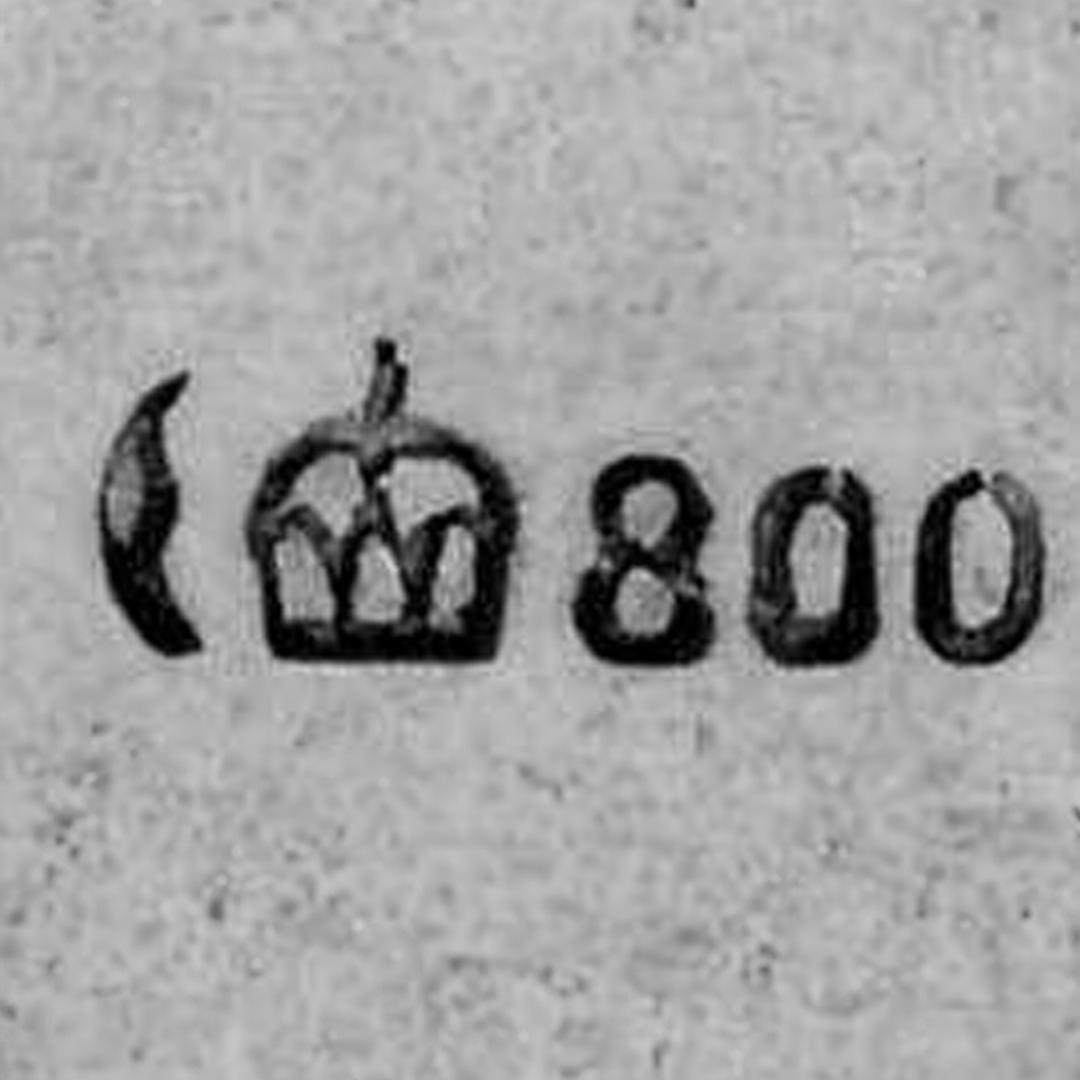
German silver hallmarks usually consist of the crescent moon and crown national symbols followed by a numeric fineness. After Germany unified its hallmarking (1888 law), all German-made silver carries the crescent & crown mark. Alongside that, you’ll see a number like 800, 835, 900, 925, etc., which tells you the purity in parts per thousand (800 is 80% silver, the minimum standard in Germany). You’ll also find a maker’s mark (often initials or a logo). So if you have, say, a German spoon stamped “800” with the moon and crown, it’s 80% silver made in Germany. Higher grades like 835 or 925 were also used for finer German silver.
What are the Russian silver hallmarks?
Russian silver, especially from the Imperial era (pre-1917), is marked with the zolotnik number and often an assay symbol. The most common hallmark is “84”, which denotes 84 zolotniki = .875 purity silver. You’ll usually see this number alongside a regional assay mark. In late Imperial Russia (after 1896), the assay mark was the Kokoshnik – a lady’s head in a traditional headdress – facing left or right, with a letter for the city (like Moscow or St. Petersburg). Earlier 19th-century pieces might show a St. George slaying the dragon (for Moscow) or double-headed eagle (for imperial warrant), again with “84”. In summary, Russian hallmarks = purity number (84, 88, 91, etc.) + assay office/assayer mark + usually initials of maker in Cyrillic. Post-1917 Soviet marks changed style (hammer & sickle with star plus numbers), but the question likely refers to the classic 84 and Kokoshnik marks for Imperial Russian silver.
Interested in selling gold with the UK’s highest paying gold buyer? Visit our Sell Gold page to get a competitive valuation – we provide fully insured postage and fast payment.
For more insights and the latest gold price today, keep an eye on our live charts and blog updates.