What Is Platinum Used For?
Platinum is a rare, valuable metal used in a wide range of applications, from vehicle catalytic converters and fine jewellery to electronics, medical devices, chemical manufacturing, and even investment coins. Its unique properties, resistance to corrosion, high melting point, and excellent catalytic activity, make platinum indispensable in industry while also prized for luxury goods.
Key Takeaways
- Largest use in cars: Platinum is primarily used in automotive catalytic converters to reduce exhaust emissions. These platinum-based catalysts help convert toxic gases into less harmful substances, cleaning the air.
- Jewellery demand: The second-biggest use of platinum is in fine jewellery, thanks to its strength and resistance to tarnish. Platinum’s naturally white lustre and durability make it ideal for engagement rings, wedding bands, and high-end watches.
- Mined mostly in South Africa: Platinum is extremely rare and is mostly found in South Africa, which produces about 75% of the world’s supply and holds the largest reserves. Smaller amounts come from Russia, Zimbabwe, Canada, and the U.S., often as a by-product of nickel mining.
- Rarity vs price: Platinum is about 30 times rarer than gold, yet it has often been cheaper than gold in recent years. Gold’s strong investor and central bank demand as a safe-haven asset keeps gold prices higher, whereas platinum’s price depends more on industrial demand.
- No tarnish, high durability: Unlike silver, platinum does not tarnish or oxidise, maintaining its shine over time. It is dense and durable, so platinum jewellery can endure decades of daily wear without thinning out, making it a lasting choice for heirloom pieces.
What Is Platinum Used For?
Platinum is used for a surprisingly broad array of purposes, with its largest applications in the automotive, jewellery, industrial, and medical sectors. In cars and trucks, platinum is the critical active ingredient in catalytic converters, devices that scrub toxic pollutants from exhaust fumes. In fact, catalytic converters are the single biggest demand for platinum worldwide. Both petrol and diesel vehicles rely on platinum-group metal catalysts to reduce harmful emissions, converting over 90% of carbon monoxide and hydrocarbons into carbon dioxide and water. As emission standards tightened, the automotive sector’s platinum consumption has grown, reaching an estimated 3.17 million ounces in 2024, and it is forecast to hit an eight-year high of 3.25 million ounces in 2025. Even as electric vehicles emerge, conventional cars still ensure strong platinum demand for emissions control.
The next major use of platinum is in jewellery. Platinum’s enduring shine, strength, and hypoallergenic purity have made it one of the most prestigious jewellery metals. It is a popular choice for engagement rings, wedding bands, and luxury watches. Unlike white gold, which is mixed with other metals, platinum used in jewellery is usually 90–95% pure, giving it a naturally bright white colour that never needs re-plating. Its density and hardness mean that platinum rings hold gemstones very securely, and the metal resists wear. When scratched, platinum tends to displace rather than lose material. This makes platinum jewellery extremely durable for everyday wear. Globally, platinum jewellery accounts for roughly a quarter of annual platinum demand. Notably, China is the largest market for platinum jewellery today, and this continues a long history of platinum adornment that dates back to pre-Columbian South America and ancient Egypt.
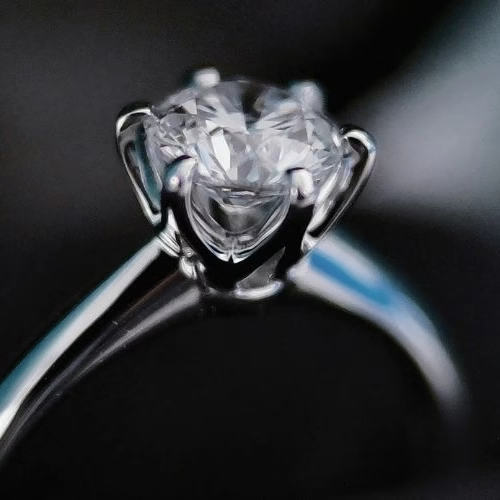
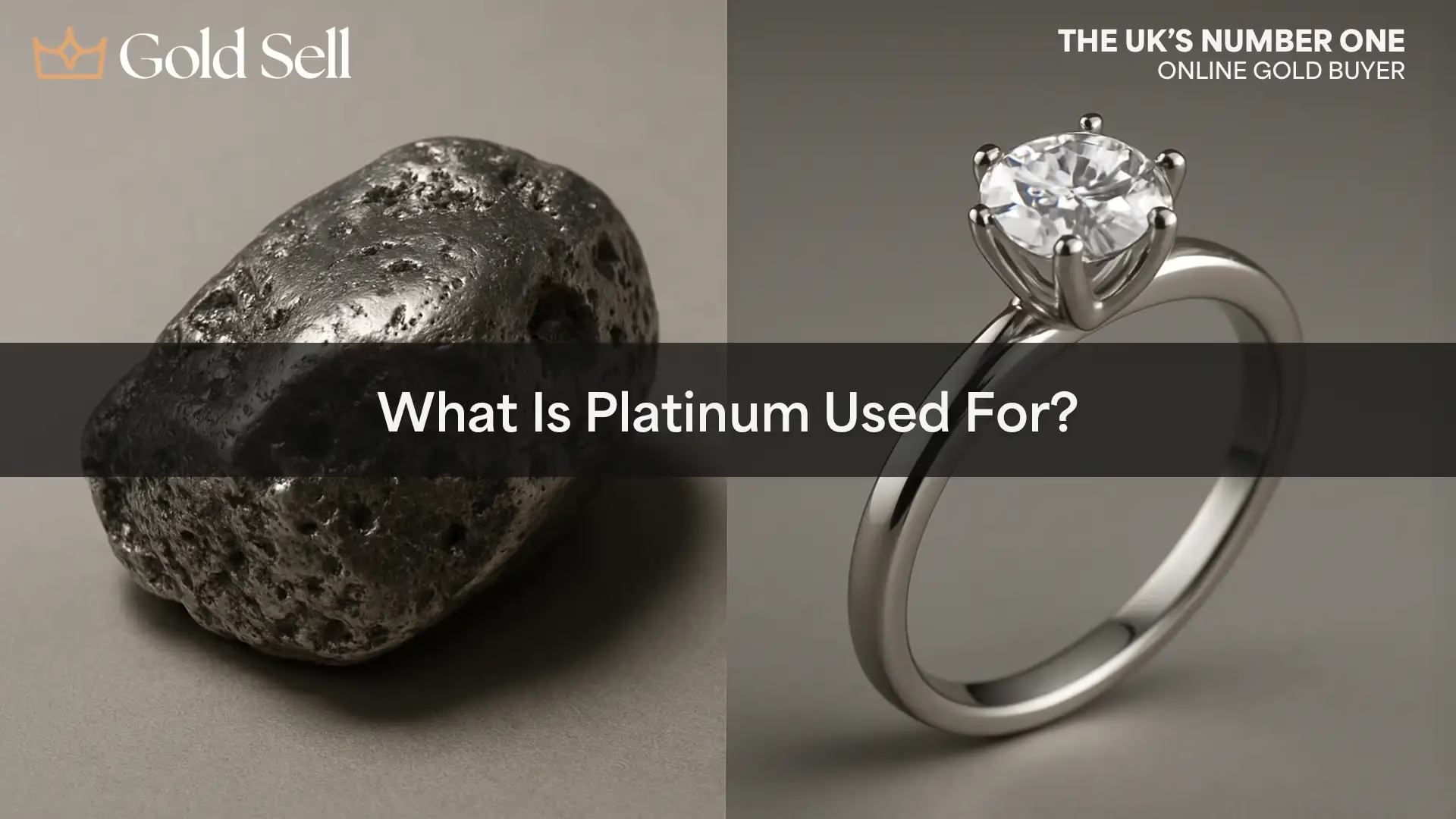
Platinum’s bright white luster and strength make it a popular metal for fine jewellery. Platinum rings (like the diamond engagement ring pictured) are valued for their durability, purity (often 95% platinum), and tarnish-free shine.
Beyond cars and jewellery, platinum serves numerous industrial and medical purposes. As an industrial catalyst, platinum is indispensable in producing chemicals and in refining petroleum. For example, platinum catalysts are used to manufacture fertiliser ingredients such as nitric acid, and to produce high-octane fuels. In the glass industry, platinum, often alloyed with rhodium, lines equipment that produces high-purity glass for LCD screens and fibreglass. Platinum’s stability at high temperatures and its resistance to corrosion make it ideal for laboratory equipment such as crucibles and thermocouples, and for electronics. It is used in hard disk drives with high storage densities, in sensors for detecting gases, including oxygen sensors in cars, and in flame detectors and other safety devices.
Platinum also has critical medical applications. Compounds of platinum, such as cisplatin and carboplatin, are powerful chemotherapy drugs used to treat cancers. Metallic platinum is biocompatible, meaning non-toxic inside the body, so it is used in surgical tools, pacemakers, neural stimulators, and dental alloys. Platinum-iridium alloys were historically used in biomedical implants, and pure platinum is used for electrodes in devices such as defibrillators. Platinum demand in medicine has been rising, reaching over 300,000 ounces in 2024. Platinum is also essential in emerging clean energy technology because it is a key catalyst in hydrogen fuel cells that generate electricity in fuel-cell vehicles. As the world shifts toward green energy and hydrogen economy solutions, platinum’s role in fuel cells could create new demand.
Finally, platinum is used for investment and in luxury goods. Many governments mint platinum bullion coins, including the American Platinum Eagle and the Canadian Platinum Maple Leaf, and platinum bars for investors who wish to hold the metal. While smaller compared to gold and silver, platinum investment demand does exist, especially when platinum prices are viewed as low. Collectors and industry also use platinum for high-end applications such as platinum pens, premium watches, and specialised components in the aerospace and defence sectors. In summary, platinum’s exceptional properties enable its use in everything from car exhaust systems and cancer treatments to wedding rings, and very few other metals can match this level of versatility.
Where Is Platinum Found?
Platinum is found primarily in a few countries, with South Africa overwhelmingly dominating global platinum reserves and production. The richest platinum deposits in the world lie in South Africa’s Bushveld Igneous Complex, a geologic formation that alone contains around 75% of the world’s known platinum reserves. South Africa has several large platinum mines (e.g. Impala, Marula, Mogalakwena, and Marikana mines) clustered around this region. In 2024 South Africa mined about 120,000 kilograms of platinum (3.86 million ounces), accounting for roughly 74% of global platinum output that year. The country’s platinum resources are so vast that it also leads in reserves, an estimated 63 million kilograms of platinum-group metals, over 75% of known world platinum group metal reserves. Most South African platinum comes from deep underground mines (hundreds of meters to >2 km deep) in ore reefs like the Merensky Reef and UG2 Reef in the Bushveld Complex.
Other significant sources of platinum are Russia and Zimbabwe. Russia is the second-largest producer: its platinum mainly comes as a by-product of nickel and copper mining in Siberia. The huge Norilsk Nickel mining complex in northern Russia extracts palladium and nickel as primary products, with platinum as a secondary product. In 2024, Russia produced about 18,000 kg of platinum (~580,000 oz), around 11% of world production. Russia also has sizable platinum reserves (16 million kg) in deposits like Norilsk and the Ural Mountains. Zimbabwe is the third-largest source, with geologically rich platinum deposits in the Great Dyke region. Zimbabwe produced roughly 19,000 kg of platinum in 2024 (over 600,000 oz). Mines like Zimplats’ operations on the Great Dyke make Zimbabwe a notable platinum supplier, holding about 1.2 million kg of PGM reserves.
Beyond these top three, Canada and the United States have smaller platinum outputs. Canada produced ~5,200 kg in 2024, about 3–4% of world supply. Most Canadian platinum is mined as a by-product of nickel mining in the Sudbury Basin (Ontario) and nickel-copper mines in Manitoba and Quebec. In fact, Canada’s only primary platinum mine is the Lac des Iles mine in Ontario; all other platinum from Canada comes out of nickel ores where platinum-group metals are present in small quantities. The United States has one primary platinum-producing site: the Stillwater Complex in Montana. Stillwater (owned by Sibanye-Stillwater) is the only dedicated PGM mine in the US, yielding about 2,900 kg of platinum in 2024 (plus more palladium). The US also recycles platinum from spent catalytic converters, which contributes to supply. Historically, platinum has also been found in smaller quantities in places like Colombia (alluvial platinum in river gravels) and Alaska (placer deposits that were mined in the early 20th century), though these are minor today.
In summary, platinum is geographically concentrated. About three-quarters comes from South Africa alone, with most of the rest from Russia and Zimbabwe, and minor portions from North America. This concentration means platinum supply can be vulnerable to regional issues (strikes, power shortages in South Africa, geopolitical factors in Russia). But it also means countries rich in platinum enjoy a significant share of this precious resource.
Where Was Platinum Discovered?
Platinum has been known to humans for centuries, but it was first encountered by indigenous South Americans and later “discovered” by European scientists in the 16th–18th centuries. Long before European involvement, pre-Columbian peoples in South America (notably in present-day Colombia and Ecuador) used platinum alloys in jewellery and ceremonial objects. When Spanish conquistadors arrived in the 1500s, they found small heavy white metal nuggets in the gold-rich rivers of Colombia. The Spanish colonists called this strange metal “platina,” meaning “little silver,” because it looked like silver but was frustratingly hard to melt. Early Spanish gold miners saw platina as a nuisance, an impurity mixed with gold, and often discarded it. In fact, the Spanish crown at one point forbade miners from mixing platinum into gold, underscoring how little they valued it at the time.
The first European reference to platinum came in 1557. Italian scholar Julius Caesar Scaliger described an enigmatic metal from the New World that “no fire nor any Spanish artifice has yet been able to liquefy,” clearly referring to platinum’s extremely high melting point. Scaliger’s account is considered the earliest documentation of platinum in European literature. However, it wasn’t until the 18th century that platinum was studied in depth. In 1735, a Spanish naval officer and scientist Antonio de Ulloa encountered platinum while on an expedition in Colombia and Peru. Ulloa observed Native Americans working with the heavy white metal. Upon returning to Europe, he published a report in 1748 providing the first scientific description of platinum. In his writings, Ulloa noted platinum’s resistance to heat (it could not be calcined or melted by common methods) and speculated on the existence of platinum mines. Because he brought samples back and documented its properties, Ulloa is often credited in history as the official “discoverer” of platinum in the European scientific community.
Around the same time, other European chemists got their hands on platinum. In 1741, British metallurgist Charles Wood obtained platinum samples (likely from Jamaica) and passed them to William Brownrigg, who investigated the metal further. By 1750, Brownrigg presented a paper to the Royal Society describing this unusual noble metal, noting its high melting point and density. Chemists in France and Sweden (such as Pierre Macquer and Henrik Scheffer) also studied platinum in the 1750s, finding ways to melt it by alloying with arsenic and noting its “white gold” appearance.
In summary, platinum’s discovery was a gradual process: first observed by South American civilisations, then noted by a European in 1557, and finally investigated thoroughly in the mid-1700s. The name “platinum” itself originates from the Spanish platina (“little silver”). By the late 18th century, platinum had gone from an unwanted byproduct to a scientific curiosity and soon after to a valued precious metal. Spain even began a “platinum age” in the late 1700s, using purified platinum to mint coins and fabricate laboratory equipment once chemists like Chabaneau learned how to refine and work the metal. Thus, platinum’s path to recognition was slow, but it has long since taken its place among the world’s most prized metals.
How Is Platinum Found?
Platinum in the Earth is typically found in certain geological settings: either deep underground in ore deposits (often alongside nickel and copper) or as native platinum nuggets in alluvial (river) deposits. Most platinum comes from primary deposits, which are mineral ores located in mafic/ultramafic igneous rock complexes. For example, the richest ore body is the Merensky Reef of South Africa’s Bushveld Complex, where platinum occurs in thin layers of sulphide-rich rock formed by ancient magma cooling. These ores contain platinum in combination with other platinum-group metals (palladium, rhodium, etc.) and base metals. Common platinum-bearing minerals include sperrylite (platinum arsenide, PtAs₂) and cooperite (a platinum-palladium-nickel sulphide). In places like the Sudbury Basin in Canada or Norilsk in Russia, platinum is found mixed in with large nickel and copper sulphide deposits, essentially as a by-product of those base metal mines. The Bushveld Igneous Complex in South Africa, Norilsk-Talnakh in Russia, and Sudbury in Canada are three of the primary geological environments where platinum is concentrated on Earth.
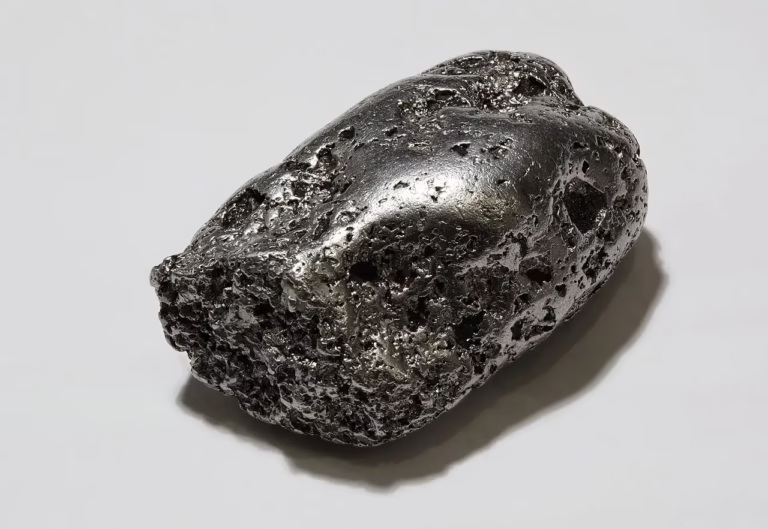
A rare native platinum nugget from an alluvial deposit (Kondyor mine in Khabarovsk Krai, Russia). Platinum can occur naturally as metallic nuggets in river sands, although most platinum is mined from deep underground sulphide ores.
In addition to these deep hard-rock sources, platinum is sometimes found in placer deposits. Over geological time, weathering can release platinum particles from primary rocks, and rivers can concentrate the heavy platinum grains in alluvial gravels. Historically, the Chocó region of Colombia yielded platinum from placer mining, the indigenous peoples and Spanish miners recovered native platinum nuggets from streambeds. The Ural Mountains in Russia were another famous locale for placer platinum; in the 19th century, Russia sourced significant platinum by panning alluvial deposits there. Even in Alaska’s Tuluksak River, platinum nuggets were mined in the early 20th century (the town of Platinum, Alaska is named after its placer platinum discovery). Today, alluvial platinum mining is relatively minor, but it underscores that platinum does exist in metallic form in nature (often alloyed with iron or other platinum group metals) and can be found at the Earth’s surface in certain locations.
Whether from primary ores or placers, extracting platinum is difficult and resource-intensive. In a primary platinum mine, such as those in South Africa, miners must follow platinum-rich seams deep underground, drill and blast the ore, and haul it to the surface. The ore often contains only a few grams of platinum per ton of rock (along with other metals), so huge volumes of ore are processed to collect small amounts of platinum. The general process involves crushing and milling the ore to a fine powder, then using flotation (a technique that makes sulphide minerals float) to produce a concentrated material enriched in platinum-group metals. This concentrate is then smelted at high temperature, separating the metal-rich matte from slag. Further refining is done by chemical processes: for example, dissolving the matte in acids and precipitating individual metals. Platinum is usually separated via a series of chemical extractions and then reduced to metallic form. Because platinum is resistant to common acids, refiners often use a combination of aqua regia (a special acid mixture) and other reagents to dissolve and isolate it. Interestingly, in copper refineries, platinum and other precious metals end up in the “anode mud” at the bottom of electrorefining cells, since they don’t dissolve in the copper sulphate solution. This anode sludge is later processed to extract platinum, palladium, gold, and silver.
Once pure platinum is obtained, it can be melted and cast into ingots or powdered and sintered, though its melting point of 1,768 °C makes it challenging to work. Early metallurgists struggled to melt platinum until they learned to add small amounts of other metals or use high-temperature torches. Today, electric arc furnaces or induction furnaces can melt platinum for industrial use.
In summary, finding and producing platinum is a complex endeavor. Geologically, it requires the rare coincidence of processes that concentrate this scarce element, such as the slow cooling of metal-rich magma, or the weathering of ore into rivers. Practically, it involves heavy mining and sophisticated refining. Platinum’s rarity is evident from the fact that only ~160–200 metric tons are mined globally per year, far less than annual gold or silver production. This scarcity and effort in extraction contribute to platinum’s high value and esteemed status among metals.
Is Platinum Better Than Gold?
Whether platinum is “better” than gold depends on the context, platinum outperforms gold in some ways (durability, industrial use), while gold is superior in others (malleability, monetary value). In terms of physical robustness and applications, platinum has some clear advantages. For one, platinum is denser and harder than gold, which makes it more durable for everyday wear. For example, in fine jewellery, a platinum ring will not wear down as quickly as a gold ring. Platinum is so durable that it’s considered one of the longest-lasting natural materials on earth. When platinum scratches, it tends to form a slight patina (the metal is displaced but not lost), so over time a platinum ring remains virtually the same weight and can be polished back to a shine. Gold, by contrast, is softer (pure gold is very soft, and even alloyed 18k gold is more prone to scuffs), when gold scratches, tiny bits of metal are actually worn away. This means platinum prongs holding a diamond are less likely to break or thin out, offering extra security for gemstones. Platinum is also naturally white and never needs re-plating, whereas white gold is actually yellow gold mixed with other metals and coated with rhodium that can wear off. Furthermore, platinum is highly inert and hypoallergenic, so it won’t tarnish or irritate skin; white gold often contains nickel which can cause allergic reactions. In industrial settings, platinum’s high melting point and catalytic properties make it better than gold for certain tasks, for instance, you wouldn’t use gold in a catalytic converter or a glass furnace, but platinum excels there due to its stability and activity as a catalyst.
On the other hand, gold has its own strengths. Gold is much more abundant (and easier to refine in bulk), and it has been the foundation of currency and wealth storage for millennia. As an investment or monetary asset, gold is generally considered “better” or at least more important than platinum. Central banks hold large gold reserves; they do not hold platinum reserves. Gold’s price is driven by investor and cultural demand (for jewellery in India/China, etc., and as a safe-haven asset globally), which tends to be consistently strong. Platinum’s price, in contrast, is more influenced by industrial cycles (like the automotive industry’s health or jewellery trends). In fact, although platinum is far rarer than gold, it often trades at a lower price than gold (since about 2015) because gold’s status as a financial safe haven keeps its value higher during economic uncertainties. Gold is also more malleable, it’s the most malleable metal, which is why it’s easy to work into intricate jewellery and gold leaf. Platinum is more dense and can be more challenging to cast or shape (jewellers often have to work with higher temperatures and stronger tools for platinum). So for certain creative designs or ornate decorations, gold might be easier to handle.
In summary, platinum is “better” than gold for durability, chemical stability, and specialised uses, while gold is “better” for liquidity, universal value recognition, and ease of fabrication. Platinum truly shines in high-wear jewellery and critical industrial applications, whereas gold remains the unrivalled choice for investment and wide ornamental use. Many people consider platinum more prestigious for jewellery (due to its purity and rarity), and indeed platinum jewellery often commands a higher price point than equivalent gold jewellery. But if the question is about investment or value retention, gold’s track record and global demand give it the edge. Ultimately, each metal has its place, rather than one being categorically better, they serve different purposes. Some situations highlight platinum’s strengths (e.g. a platinum catalyst or a ring that needs to last generations), and others highlight gold’s (e.g. coins for wealth storage or intricate filigree work in jewellery).
Can Platinum Tarnish?
No, platinum does not tarnish under normal conditions, which is one of the reasons it’s prized in jewellery. Tarnish is a surface discolouration that affects metals like silver (which turns dark due to silver sulphide) or copper (which forms green verdigris). Platinum, however, is a “noble” metal, meaning it is highly resistant to reacting with chemicals in the air. Pure platinum does not oxidise or corrode in air, so it won’t develop a tarnish layer or rust. Even over many years, platinum will remain essentially the same colour and shine as when new, aside from superficial surface scratches.
In practical terms, this means platinum jewellery maintains its bright white lustre without requiring special cleaning to remove tarnish. By contrast, sterling silver items might need frequent polishing because they darken over time, and white gold may yellow as its rhodium plating wears off, but platinum will keep its colour. Platinum’s resistance to tarnish also makes it useful in laboratory instruments and electronics that need long-term stability.
It’s worth noting that while platinum doesn’t tarnish, platinum jewellery can develop a patina after years of wear. Patina is a slight dulling or matte finish that comes from tiny scratches on the surface. This patina is not a chemical tarnish or grime; it’s more like an accumulation of microscopic scuffs that many platinum enthusiasts actually appreciate for the character it gives. The patina can make engraved details in the metal more visible and gives older platinum rings a softer glow. Importantly, this patina is easily reversible, a quick polish by a jeweller will restore full mirror shine if desired. But again, this is not tarnish (no colour change or compound on the surface), just a textural change.
In summary, platinum’s inertness means it will not tarnish or turn colour. This is a big advantage, especially for items like heirloom jewellery, a platinum heirloom ring from 50 years ago can be cleaned and will look as white and brilliant as a new ring. You won’t see a platinum ring leaving black marks on your finger or black tarnish rub-off on a cloth (which silver often does). Platinum’s untarnishing nature is part of why it’s called a noble metal and why it’s used in critical applications (for instance, platinum electrodes or contacts remain conductive over time without forming insulating oxide layers). So if you’re worried about maintenance, platinum is a very low-maintenance metal, essentially immune to the tarnishing that affects many other metals.
Platinum vs Silver
Platinum and silver are both white metals, but platinum is far more expensive and durable, while silver is more common, softer, and prone to tarnish. At first glance, a polished piece of platinum and a polished silver piece might look similar, both have a bright, silvery-white shine. However, their properties and value differ greatly:
- Price and Rarity: Platinum is extremely rare and commands a much higher price per ounce than silver. In the market, platinum often costs dozens of times more than an equal weight of silver. Silver is relatively abundant (mined in many countries in large quantities), whereas platinum’s annual global production is tiny by comparison. This rarity makes platinum jewellery and coins significantly more expensive than silver ones. Silver is considered affordable for most jewellery or utensil uses, but platinum is a premium choice.
- Durability and Strength: Platinum is much harder and more durable than silver. Platinum is dense and resistant to wear; it doesn’t bend or get scratched easily, making it ideal for items like ring bands and prongs that must hold stones securely. Silver, in contrast, is a fairly soft metal (pure silver is soft, and even sterling silver, 92.5% silver alloy, is relatively soft). Silver items can bend, scratch, or dent with daily wear. A silver ring will show nicks and deformation much sooner than a platinum ring. Because of this, platinum is favoured for high-end settings (e.g. diamond rings that need longevity), while silver is used for lower-cost jewellery or pieces not intended for constant wear.
- Tarnish and Maintenance: Platinum does not tarnish, whereas silver tarnishes readily. Over time, silver reacts with sulphur compounds in air (or from contact with skin, perfumes, etc.) and develops a dark grey or black surface tarnish (silver sulphide). This means silver jewellery or cutlery needs periodic polishing to restore its shine. Platinum, as mentioned earlier, remains white and shiny without special care, no tarnish cleaning required. In terms of maintenance, silver is higher-effort (you have to regularly polish it or store it carefully to slow tarnishing), whereas platinum is low-maintenance and will look good with just basic cleaning.
- Colour and Appearance: Platinum has a naturally bright white-grey hue that doesn’t change. Silver is initially extremely shiny and reflective when polished (in fact, silver is the most reflective metal), but silver’s shine can quickly diminish as tarnish forms or fine scratches accumulate. Platinum’s sheen is more subdued, often described as an “elegant silvery-white” with a slight greyish undertone, while silver is a cooler white when freshly polished. Over years, platinum might develop a soft patina (satiny finish), while silver might darken if not cleaned. Visually, new platinum and new silver can be hard to tell apart, but platinum jewellery will retain its colour and finish longer.
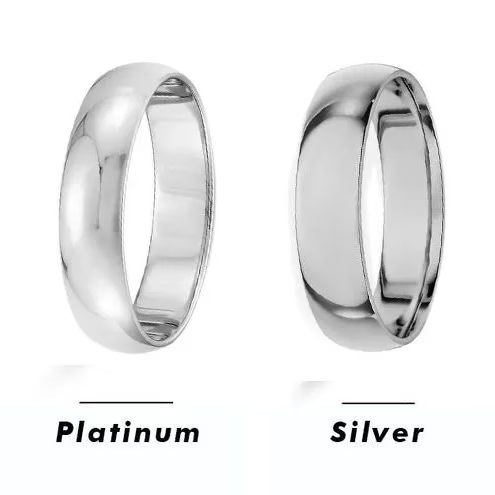
This side-by-side comparison highlights the colour difference between platinum and silver rings. Platinum has a naturally whiter, brighter appearance that maintains its tone over time without tarnishing. Silver, while initially similar in shine, tends to develop a darker patina and requires regular polishing to maintain its look. For buyers prioritising low maintenance and lasting brightness, platinum offers a clear aesthetic advantage.
- Hypoallergenic: Platinum is completely hypoallergenic, because it’s usually 95% pure and even its alloys (iridium, ruthenium) are noble metals that don’t cause reactions. Silver is generally safe for most people, but sterling silver contains 7.5% copper (and sometimes small traces of nickel), for a minority of people with metal allergies, those alloy metals can irritate skin. Some individuals who can’t wear silver or cheap jewellery find they can wear platinum with no issues. Overall, platinum is one of the safest metals for sensitive skin, whereas silver is mostly fine but not in every case.
- Weight and Feel: Platinum is very dense (about 21.5 g/cc) compared to silver (10.5 g/cc). As a result, a platinum ring feels much heavier and more substantial than a similar-sized silver ring. This heft lends a feeling of quality and luxury to platinum pieces. Silver is lighter, which some may find more comfortable for large earrings or necklaces, but it also can feel less “solid.”
- Uses and Market: Silver’s lower price means it’s widely used in things like fashion jewellery, larger accessories, and functional objects (silverware, coins, etc.). Platinum is reserved for high-end uses, not just jewellery and coins, but also industrial uses where silver wouldn’t work (e.g. platinum in catalysts or high-temperature crucibles). In jewelry stores, you’ll see many silver pieces because they’re affordable, and only select pieces (usually premium lines) in platinum. Silver is also heavily used in industry (electronics, solar panels, photography), but in ways quite different from platinum’s industrial uses.
In summary, platinum vs. silver is a classic case of quality vs. cost. Platinum excels in durability, longevity, and prestige: a platinum piece will last generations with minimal upkeep, and it carries an aura of exclusivity. Silver offers a similar look for a fraction of the price, but it comes with trade-offs in maintenance and durability. For someone who wants a once-in-a-lifetime ring that can be worn daily and passed down, platinum is often the preferred choice. For trendy jewellery that might not be worn forever, or larger statement pieces on a budget, silver is a practical option. Both metals have their place, but they are certainly not equal. Platinum is the luxury, high-performance metal; silver is the accessible, traditional precious metal.
Why Is Platinum Cheaper Than Gold?
It surprises many people that platinum, despite being rarer and historically more expensive, is currently cheaper per ounce than gold. Several key factors explain this price difference:
- Investor Demand: Gold enjoys massive global demand as an investment asset and safe-haven store of value, which platinum lacks. Investors, central banks, and ordinary people buy gold bars, coins, and ETFs as a hedge against inflation and uncertainty. This sustained investment demand props up the price of gold. Platinum, on the other hand, is not hoarded by central banks and has a much smaller investor market. In times of economic turmoil, people flock to gold (pushing its price up), whereas platinum often falls in price due to reduced industrial demand. In fact, since around 2015, gold’s price has pulled well ahead of platinum’s. This divergence is largely because gold’s safe-haven appeal keeps its price buoyant, while platinum’s fortunes are tied more to cyclical industries.
- Industrial vs. Jewellery Split: Platinum’s value is heavily influenced by industrial use (especially automotive catalysts) and jewellery trends. Gold is also used in industry and jewellery, but a huge portion of gold demand (close to 50%) is for investment, and gold jewellery demand tends to be steady and culturally driven (e.g. in India). Platinum jewellery demand, while significant in some markets, is smaller and can be more volatile (for instance, platinum jewellery took a hit when gold became cheaper, as consumers sometimes switched to white gold). Furthermore, platinum demand was hurt by changes in the automotive industry, notably the decline of diesel cars. Diesel engines use more platinum in their catalytic converters, whereas petrol engines use more palladium. After the Dieselgate scandal and a shift away from diesel in Europe, platinum demand growth stalled. Car companies also thrifted platinum or substituted palladium/rhodium where possible due to cost. This softer demand meant that even though platinum supply was constrained, there wasn’t a surge of buyers to lift the price.
- Supply and Market Size: The platinum market is much smaller than the gold market. Annual platinum mine supply is on the order of 6–7 million ounces, whereas gold is about 120 million ounces. A smaller market can mean more volatility, relatively modest changes in demand can swing the price. In recent years, platinum has often been in a supply deficit (mines not producing enough to meet demand), which normally would push the price up. However, if at the same time investors are not bullish on platinum, the price may remain subdued. Gold’s enormous, liquid market and broad base of buyers make it reliably valuable. Platinum’s market, being niche, can suffer if any major demand segment weakens. For example, when Chinese platinum jewellery demand fell in the mid-2010s and diesel car sales slowed, platinum prices dropped sharply and have since struggled to reach their prior highs, even though by geological rarity platinum should be more valuable.
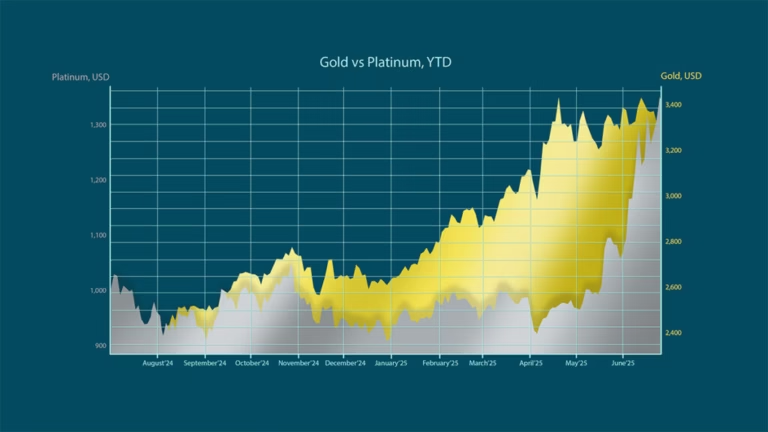
- Historical Perception: Culturally, gold has thousands of years of history as money and treasure. Platinum was only widely recognised in the last couple of centuries. While platinum did exceed gold in price for many years (for most of the 20th century and early 2000s it was pricier than gold), that dynamic changed after 2011. By 2015, gold became more expensive than platinum and has largely remained so. The reasons are the ones above, but the result is that investors now often perceive gold as the standard and platinum as an alternative metal that occasionally outperforms but often lags.
In summary, platinum is cheaper than gold today primarily because gold’s role as a financial asset keeps demand (and prices) high. Platinum’s demand is more industrial and has faced headwinds, causing its price to languish relative to gold. It’s a bit of a paradox since platinum is much rarer in the earth’s crust (some estimates say all platinum ever mined would barely fill a small room, whereas all gold would fill an Olympic pool). But markets are driven by demand: gold’s universal appeal and investor support give it a price premium. Until platinum sees a surge in demand (perhaps from new technologies like fuel cells or a resurgence in jewellery popularity) or a supply crunch significant enough to alarm the market, it may continue to be the less expensive of the two metals. That said, platinum still holds significant value, it’s just valued differently by the market right now.
A rare native platinum nugget from an alluvial deposit (Kondyor mine in Khabarovsk Krai, Russia). Platinum can occur naturally as metallic nuggets in river sands, although most platinum is mined from deep underground sulphide ores.
Where Are Platinum Mines?
The world’s platinum mines are heavily concentrated in Southern Africa, with other notable mines in Russia and North America. By far the most platinum mines (and the largest ones) are located in South Africa, within the geological treasure trove of the Bushveld Complex. In this region, numerous underground and some open-pit mines extract platinum from the Merensky and UG2 reefs. Examples of major South African platinum mining operations include Impala Platinum’s Rustenburg mine, Anglo American Platinum’s Mogalakwena mine (one of the biggest open-pit platinum mines), Sibanye-Stillwater’s Marikana mine, and Northam’s Zondereinde mine, among others. These mines collectively make South Africa the top platinum producer. The Bushveld Complex’s western and eastern limbs are dotted with shafts and pits; Implats (Impala), Amplats (Anglo American Platinum), and Sibanye are key companies operating there. In fact, the Bushveld Complex is the single largest platinum resource on the planet, and its mines account for the majority of annual global platinum output. If one asks “which country produces the most platinum?,” the answer is undoubtedly South Africa, for instance, Anglo American’s Mogalakwena mine is often cited as the world’s biggest platinum mine by production, churning out well over 400,000 ounces of platinum a year, thanks to its high-grade, large-scale ore body.
Outside of South Africa, platinum mining is more limited but still significant in a few places. Zimbabwe has the Great Dyke, a geologic feature running through the country, where mines like Zimplats (owned by Implats) and Unki (Anglo American) operate. Zimbabwe’s Mimosa mine (a joint venture) is another producer. These mines make Zimbabwe the third largest platinum source. Russia has platinum primarily from the Norilsk area in Siberia. There aren’t many dedicated “platinum mines” in Russia; instead, platinum comes from large nickel-copper mines operated by Norilsk Nickel. The Norilsk Talnakh mines are thus among the top producers of platinum (and the world’s largest producers of palladium). Historically, the Ural Mountains had some platinum placer mines, but today Russia’s platinum is mainly from Norilsk’s operations.
In North America, platinum mining is modest. Canada’s only primary platinum/palladium mine is Lac des Iles (Ontario), run by Impala Canada, which mainly produces palladium but also platinum. The Sudbury Basin (Ontario) has several big nickel mines (like Vale’s Creighton, Totten, etc.) where platinum is extracted as a by-product, these aren’t usually called platinum mines, but collectively Sudbury yields a fair bit of platinum. The United States has the Stillwater and East Boulder mines in Montana (owned by Sibanye-Stillwater), these are primary palladium-platinum mines in the J-M Reef geological formation. The Stillwater mine is notable for being the only significant platinum mine in the US, producing a few hundred thousand ounces of platinum group metals annually. It is also one of the deepest in the US and known for high-grade ore.
Additionally, recycling facilities can be thought of as urban “mines” for platinum. Especially in Europe, Japan, and North America, many companies recycle spent catalytic converters to reclaim platinum, palladium, and rhodium. While not a mine in the traditional sense, this above-ground source provides a considerable portion of platinum supply each year.
In summary, platinum mines are located mainly in: South Africa (dominant), Zimbabwe (Great Dyke), Russia (Norilsk area), and to a lesser extent Canada and the USA (select operations). The largest and most productive platinum mines are in South Africa, such as those on the Bushveld Complex that collectively produce millions of ounces per year. This concentration means any issues in South African mining (labor strikes, power outages) can affect global supply. Conversely, expansion or new projects in South Africa (or Zimbabwe) can significantly influence the market. There are ongoing exploration efforts in other countries (for instance, in recent years small platinum group metal deposits have been investigated in places like Brazil, Australia, and even Finland), but as of now, no new major platinum mining hubs have been established outside the traditional ones.
Frequently Asked Questions
What is platinum used for?
Platinum is used in catalytic converters to reduce vehicle emissions, fine jewellery due to its durability and shine, and in industrial applications like chemical production and electronics. It’s also vital in medical devices and cancer treatments, and increasingly used in hydrogen fuel cells. Its unique resistance to corrosion and high melting point make it indispensable across automotive, industrial, medical, and investment sectors.
Where is platinum found?
Platinum is found mainly in South Africa, which supplies around 70% of the global market. Other significant sources include Russia, Zimbabwe, Canada, and the United States. It’s typically mined from deep underground ore bodies or extracted as a by-product of nickel and copper mining. Smaller amounts are recovered from alluvial deposits in places like Colombia and the Ural Mountains in Russia.
Where was platinum discovered?
Platinum was first used by pre-Columbian South Americans, who crafted it into jewellery. Europeans discovered it in the 16th century when Spanish explorers in Colombia found a strange white metal they called “platina.” Its properties were formally documented in 1748 by Spanish scientist Antonio de Ulloa after observing it during an expedition. This marked the beginning of platinum’s recognition in European science.
When was platinum discovered?
Platinum was discovered in a scientific context in 1735 by Antonio de Ulloa, who studied it during an expedition to Colombia. The first European mention dates back to 1557 by Julius Scaliger, describing a metal that couldn’t be melted. Indigenous South Americans, however, used platinum centuries earlier, working it into decorative objects long before its properties were understood in Europe.
Where are platinum mines?
Most platinum mines are in South Africa’s Bushveld Complex, home to the world’s richest reserves and top-producing mines like Mogalakwena and Marikana. Zimbabwe also hosts major platinum mines along its Great Dyke. Russia produces platinum from Norilsk’s nickel-copper mines. Smaller operations exist in Canada’s Sudbury Basin and the Stillwater Complex in Montana, USA. These regions account for nearly all global platinum mining.
Will platinum go up in price?
Platinum may rise in price if supply remains tight and demand increases, especially from the automotive and green energy sectors. In 2025, it was in a supply deficit, boosting price forecasts. However, its price is volatile and depends heavily on industrial demand. A resurgence in fuel cell technology or investor interest could drive it higher, though electric vehicle growth may offset gains.
What metals are similar to platinum?
Metals similar to platinum include other platinum group metals: palladium, rhodium, iridium, osmium, and ruthenium. These share chemical properties like high corrosion resistance and catalytic activity. Palladium is the closest in appearance and use, especially in catalytic converters. In jewellery, white gold and silver resemble platinum in colour but lack its durability, purity, and tarnish resistance.
Is platinum better than gold?
Platinum is better than gold for durability, strength, and everyday wear. It’s heavier, more scratch-resistant, and securely holds gemstones, making it ideal for engagement and wedding rings. Gold is better if you’re looking for long-term investment or a metal that’s easier to sell worldwide. In short, choose platinum for lasting wear and resilience, and choose gold for financial value and ease of resale.
How is platinum formed?
Platinum forms deep underground in large igneous rock bodies through slow-cooling magma, which concentrates it into mineral-rich layers. It’s commonly found with nickel and copper ores in layered intrusions like South Africa’s Bushveld Complex. Over millions of years, geological processes pushed these deposits near the surface. Small quantities also occur in riverbeds as native platinum grains in alluvial deposits.
Can platinum tarnish?
No, platinum does not tarnish. It’s a noble metal, meaning it resists oxidation and corrosion, maintaining its natural white lustre indefinitely. Unlike silver or white gold, platinum won’t discolour or react with air or skin. Over time, it may develop a soft patina from surface wear, but this is not tarnish and can be polished back to a bright shine.
Platinum versus silver?
Platinum is rarer, denser, and more durable than silver. It does not tarnish, making it lower maintenance, and is hypoallergenic. Silver is more affordable but scratches easily and requires regular polishing due to tarnishing. While both are used in jewellery and industry, platinum is premium and long-lasting, while silver is more accessible but less robust for daily wear.
Difference between platinum and white gold?
Platinum is a naturally white, dense metal used in 95% purity, while white gold is a gold alloy mixed with white metals and coated with rhodium. Platinum retains its colour and resists wear, while white gold may yellow over time and needs re-plating. Platinum is hypoallergenic and more durable but also more expensive. White gold is lighter and more affordable.
Difference between platinum and titanium?
Platinum is a dense, precious metal known for luxury, while titanium is lightweight, strong, and more industrial. Platinum is ideal for fine jewellery, can be resized, and maintains value. Titanium is hypoallergenic, extremely durable, and less expensive but often cannot be resized. Visually, platinum is shinier and brighter; titanium has a more matte, grey finish. Each suits different needs and styles.
Why is platinum cheaper than gold?
Platinum is cheaper than gold due to lower investor demand and reliance on industrial use. Gold’s price is supported by its role as a financial safe-haven and investment asset, especially during economic uncertainty. Platinum, while rarer, depends heavily on car manufacturing and jewellery trends. With reduced diesel vehicle production and limited investor interest, platinum’s price remains lower despite its scarcity.
Can platinum rings be resized?
Yes, platinum rings can be resized by skilled jewellers using specialised tools and high-temperature welding. The process is more complex than resizing gold due to platinum’s hardness and melting point, so not all jewellers offer it. Minor adjustments, like one or two sizes up or down, are usually possible. Always consult a jeweller experienced in working with platinum to ensure a seamless result.
Does platinum hold its value?
Platinum holds intrinsic value as a rare and industrially vital precious metal, though its market price is more volatile than gold’s. It can retain significant resale value, especially in bullion form, but jewellery may resell below purchase price due to craftsmanship costs. Long term, platinum’s rarity and diverse uses support its value, though its investment appeal is not as widespread as gold’s.
Why is platinum so expensive?
Platinum is expensive due to its extreme rarity, labour-intensive mining, and vital industrial uses. Only around 170 tonnes are mined annually, mostly from South Africa, and it requires complex refining. Its unique properties, resistance to corrosion, high melting point, and catalytic ability, make it indispensable in sectors like automotive, medical, and chemical manufacturing. These factors, plus its prestige in jewellery, justify its high cost.
Are platinum rings expensive?
Yes, platinum rings are expensive due to the metal’s rarity, high density, and purity. Platinum is heavier than gold, meaning rings contain more metal by weight, and it’s typically 95% pure. It’s also harder to work with, raising manufacturing costs. While pricier than white gold or silver, platinum rings are durable, hypoallergenic, and require less maintenance, offering lasting value for long-term wear.
Interested in selling gold with the UK’s highest paying gold buyer? Visit our Sell Gold page to get a competitive valuation – we provide fully insured postage and fast payment.
For more insights and the latest gold price today, keep an eye on our live charts and blog updates.