
What Is The Chemical Symbol For Gold?
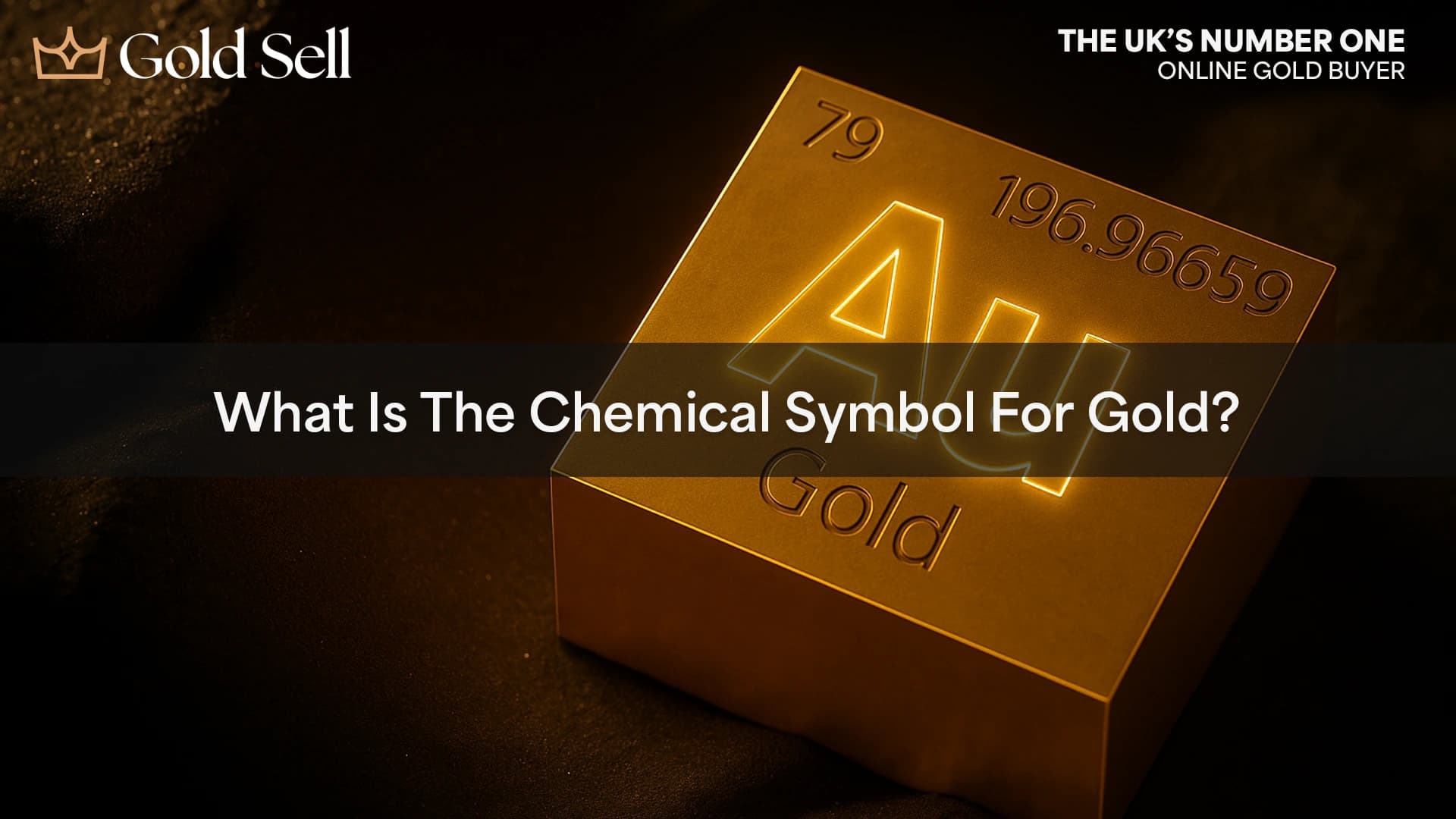
Gold’s chemical symbol is Au. The symbol “Au” comes from the Latin word aurum, meaning “gold”. This two-letter code is used globally to identify gold on the periodic table and in chemistry, where gold is the element with atomic number 79. Gold (Au) is a dense, lustrous yellow precious metal in Group 11, Period 6 of the periodic table. Its properties – heavy weight, softness, malleability and resistance to corrosion – make Au unique among elements.
Key Takeaways
- Gold’s symbol is Au: This comes from Latin aurum, meaning “gold”.
- Gold’s atomic number is 79: Every gold atom has 79 protons.
- Gold’s atomic mass is ~197 amu: Its standard atomic weight is about 196.97.
- Gold is a metal: Specifically, a dense, malleable yellow precious metal in Group 11.
- Gold’s melting point is 1064°C: It requires high temperature to melt.
- Silver’s symbol is Ag and silver’s atomic number is 47: Silver’s atomic mass is ~107.87.
What Is The Chemical Symbol For Gold?
The chemical symbol for gold is Au. Chemists use this one- or two-letter notation to represent elements, and gold’s symbol comes from its Latin name aurum. In other words, the chemical symbol for gold (Au) is derived from aurum meaning “shining dawn”. Thus when you see Au, you know it refers to gold.
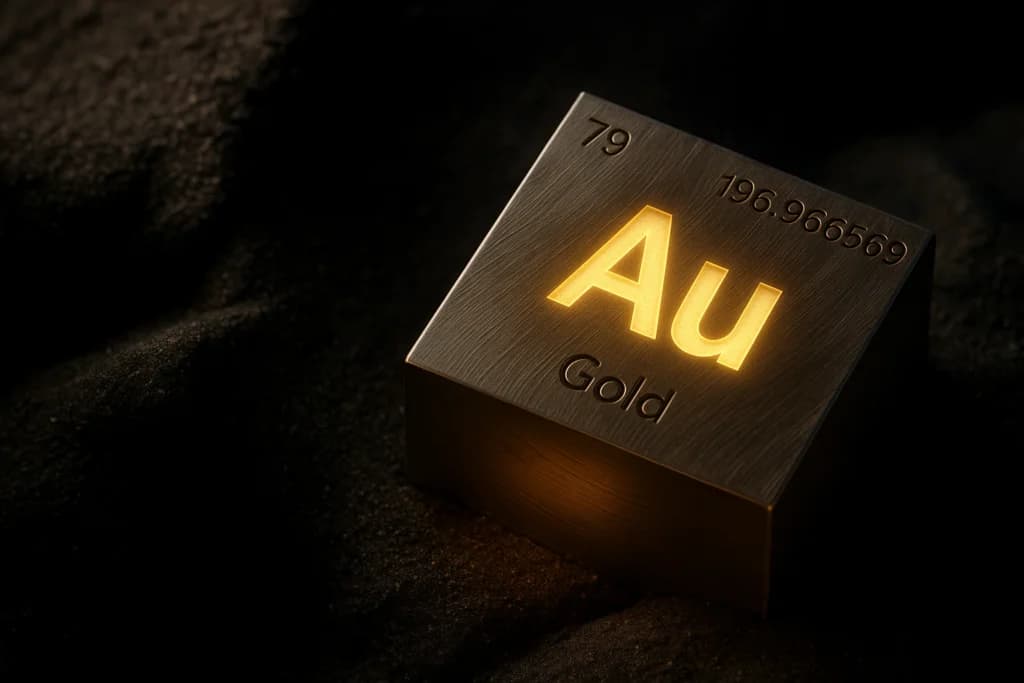
(The chemical symbol for gold is Au, derived from the Latin word aurum, meaning “shining dawn.” On the periodic table, gold has the atomic number 79 and an atomic mass of 196.966569 u)
What Is The Atomic Number For Gold?
Gold’s atomic number is 79. The atomic number of an element equals its number of protons, so every gold atom contains 79 protons in its nucleus. On the periodic table, elements are arranged in order of increasing atomic number. Gold sits at position 79, right after platinum (78) and before mercury (80). In summary, the atomic number for gold is 79, which uniquely identifies gold among all elements .
Why Is The Atomic Number For Gold 79?
The atomic number of an element is defined by the number of protons in its nucleus. Gold’s atomic number is 79 because each gold atom has 79 protons. In fact, this is why gold is element 79 on the periodic table . All gold atoms have exactly 79 protons (and usually 79 electrons in a neutral atom), so by definition its atomic number is 79. In short: gold is 79 because that many protons make it gold.
Gold Atomic Mass
Gold’s atomic mass (atomic weight) is about 197 atomic mass units (u). The most common isotope is gold-197, so the standard atomic weight is ~196.97 . Atomic mass reflects the average mass of all an element’s naturally occurring isotopes. For gold, there is only one stable isotope (Au‑197), so its atomic mass rounds to 197 u . This mass (about 3.27×10^-25 kg per atom) is consistent with gold’s place in the periodic table. In practical terms, atomic mass of gold ~197 means one mole of gold (Avogadro’s number of atoms) weighs about 197 grams.
Is Gold A Metal?
Yes – gold is a metal. In fact, gold is a dense, lustrous yellow precious metal in Group 11 (a transition/coinage metal) on the periodic table . It is chemically classified as a metal: it is malleable, a good conductor of electricity, and it typically loses electrons in reactions (forming +1 or +3 ions in compounds). Gold’s symbol Au and element name tell us it’s a chemical element, and its properties (shiny, ductile, very dense, unreactive) are those of a metal. So gold is indeed a soft, highly malleable metal.
Why Is The Chemical Symbol For Gold Au?
Gold’s symbol Au comes from the Latin word aurum (meaning “gold”). Historically, symbols often derive from Latin or Greek names. In gold’s case, aurum gave rise to Au . (The word aurum itself may refer to aurora, or “dawn”, reflecting gold’s colour.) Thus when the periodic table was standardised, “Au” was chosen as gold’s symbol. In other words, the chemical symbol for gold is Au because it’s short for Latin aurum, “shining dawn”.
What’s The Melting Point Of Gold?
Gold melts at about 1064°C (1947°F). This is the temperature at which solid gold turns to liquid. Gold’s high melting point (1064°C) means it stays solid under ordinary temperatures. For comparison, silver melts at about 962°C and copper at 1085°C. Gold’s relatively high melting point makes it useful in applications (like electronics and high-temperature coatings) where metal must remain solid under heat. In summary, the melting point of gold is roughly 1064°C.
What Is The Chemical Symbol For Silver?
The chemical symbol for silver is Ag. Silver’s symbol comes from the Latin word argentum (meaning “silver”), from the Indo-European root arg- for “white” or “shining”. So Ag is used to represent silver on the periodic table. (This parallels gold’s symbol Au from aurum.) In short, silver’s symbol is Ag, short for argentum.
What Is The Atomic Number For Silver?
Silver’s atomic number is 47. This means each silver atom has 47 protons in its nucleus. In the periodic table, silver (Ag) is element 47. (By comparison, gold is element 79.) The atomic number tells us silver’s place in the periodic table and its proton count. According to authoritative sources, “Atom number: 47”. Thus the atomic number for silver is 47.
What Is The Atomic Mass For Silver?
Silver’s atomic mass is about 107.87 amu. The standard atomic weight of silver (Ag) is 107.8682, based on its two stable isotopes (Ag‑107 and Ag‑109). This means one mole of silver atoms has a mass of ~107.87 grams. The atomic mass (or weight) is the weighted average of isotopic masses. For quick reference, silver’s atomic mass rounds to 107.87 atomic mass units.
Frequently Asked Questions
What is the chemical symbol for gold?
The chemical symbol is Au. Gold is represented by Au on the periodic table, from the Latin aurum for gold.
What is the atomic number for gold?
Gold’s atomic number is 79, meaning each gold atom has 79 protons.
What is the atomic mass of gold?
Gold’s atomic mass is about 196.97 u (often rounded to 197 amu), reflecting its single stable isotope Au‑197.
Why is the chemical symbol for gold Au?
Because Au comes from Latin aurum, “gold” or “shining dawn”. Scientists use Au to honour the Latin name.
Is gold a metal?
Yes. Gold is a metal – a dense, yellow precious metal. It’s soft, malleable, and a transition metal in Group 11.
What type of metal is gold?
Gold is a transition metal (Group 11) and is often called a precious/noble metal due to its rarity and resistance to corrosion.
Is gold an element?
Yes, gold is a chemical element. Its symbol is Au and it has atomic number 79.
How heavy is gold?
Gold is very heavy; it has a high density (19.3 g/cm³ at 20°C) and an atomic mass of ~197 amu. A cubic centimetre of gold weighs about 19.3 grams.
Why is the atomic number for gold 79?
Because atomic number equals the number of protons in the nucleus, and gold atoms contain 79 protons.
What are physical properties of gold?
Gold is dense (specific gravity ~19.3), very malleable and ductile, and has a bright yellow metallic lustre. It’s an excellent conductor of heat and electricity.
What are chemical properties of gold?
Gold is extremely inert: it does not react with air or water and resists acids. It only dissolves in strong acid mixtures (like aqua regia). Gold typically exhibits oxidation states of +1 or +3 in compounds.
What is the chemical symbol for silver?
Silver’s symbol is Ag, from Latin argentum meaning silver.
What is the atomic number for silver?
Silver’s atomic number is 47, so each silver atom has 47 protons.
What is the mass number of gold?
The mass number of gold is 197, representing its 79 protons and 118 neutrons. This stable isotope defines gold’s unique density, resistance to corrosion, and value.
Why is gold au on the periodic table?
Gold is labeled Au on the periodic table because its symbol comes from the Latin word aurum, meaning “shining dawn.” This reflects gold’s radiant colour and historic value. Periodic symbols often honour Latin or Greek roots, preserving scientific tradition and ensuring universal understanding across languages, chemistry, and the history of precious metals.
Interested in selling gold with the UK’s highest paying gold buyer? Visit our Sell Gold page to get a competitive valuation – we provide fully insured postage and fast payment.
For more insights and the latest gold price today, keep an eye on our live charts and blog updates.





