
Where Is Gold Found?
Gold is found in cosmic cataclysms and deposited in Earth’s crust, where hydrothermal, placer, and magmatic processes concentrate it into mineable deposits. From hard‑rock lode veins and river‑bed placers to enormous central‑bank vaults, this article uncovers where gold resides and how we extract it.
Key Takeaways
- Cosmic origins: Gold originates in supernovae and neutron‑star collisions, then arrived on Earth via meteorite bombardment billions of years ago.
- Geological occurrence: On Earth, gold is found in hard‑rock lode veins within quartz, alluvial/placer deposits in riverbeds and floodplains, ancient conglomerate reefs like South Africa’s Witwatersrand, and as microscopic “invisible” gold in sedimentary rocks.
- Concentration processes: Hydrothermal fluids, erosion and sedimentation, magmatic intrusions, and natural gravity separation gradually concentrate dispersed gold into rich veins and placer fields.
- Global reserves: Central banks hold about one‑fifth of all gold ever mined, with the United States leading at approximately 8,133 tonnes, followed by Germany, Italy, France, Russia, and China.
- Mining and extraction: Modern gold mining uses open‑pit, underground, and placer techniques, then processes ore by crushing, cyanide leaching, carbon‑in‑pulp, and refining to produce 99.99% pure (“999.9 fine”) gold.
Where Does Gold Come From? (Cosmic Formation)
Gold is truly an out-of-this-world element – literally forged in cosmic cataclysms long before our planet existed. Scientists believe that heavy elements like gold form during supernova explosions and especially when neutron stars collide, events so energetic that they create atoms of gold and fling them across the universe (space.com). In short, the gold in your jewellery was born in the explosive death of stars eons ago.
Later, as the young Earth formed, most of its native gold sank deep into the molten iron core due to gold’s heavy nature (sciencedaily.com). That left the Earth’s crust surprisingly depleted of gold – or it would have been, if not for a lucky cosmic delivery. Meteorite bombardment after Earth’s formation (over 200 million years later) brought a fresh supply of gold and other precious metals back to the surface (sciencedaily.com). In fact, research indicates that billions of tons of meteorites showered the early Earth, depositing gold in the crust that we can mine today. So, Earth’s mineable gold is a gift from both distant stars and space rocks!
Geological Occurrence: Where Is Gold Found On Earth?
On our planet, gold tends to hide out in specific geological settings. Here are some of the most common places and forms in which gold is found:
- Gold in Hard-Rock Veins (Lode Deposits): Many gold deposits occur in quartz veins or lodes within solid rock. Hot, gold-rich hydrothermal fluids once flowed through cracks in the Earth’s crust, cooling and precipitating gold along with quartz in narrow veins. These gold-bearing quartz veins are often found in hard rock underground. Miners seek them in old mines and mountain ranges around the world. (If you’ve seen pictures of shiny gold specks in white quartz rock – that’s lode gold!)
- Gold in Alluvial/Placer Deposits: Weathering and erosion can free gold from those hard-rock veins. Because gold is heavy and chemically inert, the particles don’t dissolve – they get carried by water and accumulate in streambeds, riverbanks, and floodplains as placer deposits. Panning for gold in a river works because dense gold settles in sand and gravel bars where the current slows. Famous gold rushes in California and the Yukon were fuelled by placer gold – nuggets and flakes washed out of mountains and concentrated in rivers over millennia.
Gold can also occur in other geological environments. For example, the world’s largest gold deposit, South Africa’s Witwatersrand Basin, consists of ancient conglomerate rock (“reef” beds) where tiny gold particles are dispersed in rock formed from ancient river sediments . There are also “invisible” gold deposits like the Carlin-type ores of Nevada, where microscopic gold is disseminated through large volumes of sedimentary rock. In short, gold is where you find it – from solid veins deep in mountains to scattered dust in stream sediments – but it generally turns up in places where geological processes have concentrated it into a rich pay streak.
How Is Gold Formed? (Geological Processes of Concentration
How does gold go from trace bits in the crust to mineable chunks in certain spots? The answer is geological concentration processes – nature’s way of collecting and depositing gold in higher grades. One major process is through hydrothermal activity. Deep underground water heated by magma can dissolve small amounts of gold from the surrounding rocks. These hot, metal-laden fluids migrate through cracks and faults; as they rise and cool, the dissolved gold precipitates (falls out of solution) and gets left behind, often lining rock fractures with veins of quartz and gold. Over millions of years, this is how rich lode deposits are formed. Later, erosion can expose these veins at the surface.
Another way gold concentrates is through weathering and placer formation. Uplift and erosion break down gold-bearing rocks, and rain and rivers wash the tiny gold particles downslope. Because gold is very dense, it resists being carried off endlessly – instead, it drops out in places where the water current slows, forming placer deposits in alluvial soil, stream gravels, or beach sands. This natural gravity separation is why panning and sluicing are effective to retrieve placer gold.
Gold can even be brought up directly with molten rock. In some magmatic processes, gold-bearing magma from the deep mantle transports gold upward. As the magma cools and solidifies into igneous rock, gold may be deposited in the cracks or pore spaces. Some gold deposits associated with ancient volcanic activity or in certain copper-porphyry systems form this way. Additionally, chemical factors play a role – for instance, gold can be transported in solution as chemical complexes (often with sulfur), and a change in conditions (like pressure, temperature, or chemical reactions with host rocks) will cause the gold to drop out of the fluid and accumulate.
The key takeaway is that gold doesn’t start out in convenient nuggets – it gets concentrated by geologic forces. Hydrothermal fluids, erosion and sedimentation, magmatic intrusion, and even biological processes in some cases, all helped gather scattered gold atoms into the minable deposits we find today. It’s geology’s version of natural selection, leaving behind rich pockets of the precious metal.
Top 10 Countries By Gold Reserves
Gold isn’t just prized by jewellers and investors – national central banks treasure it too, hoarding large gold reserves as a store of value. Governments accumulate gold bars in their vaults as part of their country’s foreign exchange reserves, often to hedge against economic instability. In fact, central banks purchase gold for various strategic reasons: to mitigate financial risk, hedge against inflation, and bolster confidence in their currencies. As of 2024, central banks worldwide collectively held about one-fifth of all the gold ever mined as official reserves. Gold’s appeal as a safe-haven asset has even driven record buying sprees in recent years (for example, central banks bought over 1,000 tonnes in 2022 and again in 2023, the highest levels in decades).
So, which countries have the most gold? According to the latest data, the United States is the biggest holder of gold reserves – about 8,133 metric tonnes – which is nearly as much as the next three countries combined. Following the U.S., the top holders are: Germany (around 3,351 tonnes), Italy (~2,452 t), France (~2,437 t), Russia (~2,336 t), China (~2,264 t), Switzerland (~1,040 t), Japan (~846 t), India (~831 t), and the Netherlands (~612 t). The chart below shows the top 10 national gold reserves as of 2024, visualised in tonnes of gold held by each country
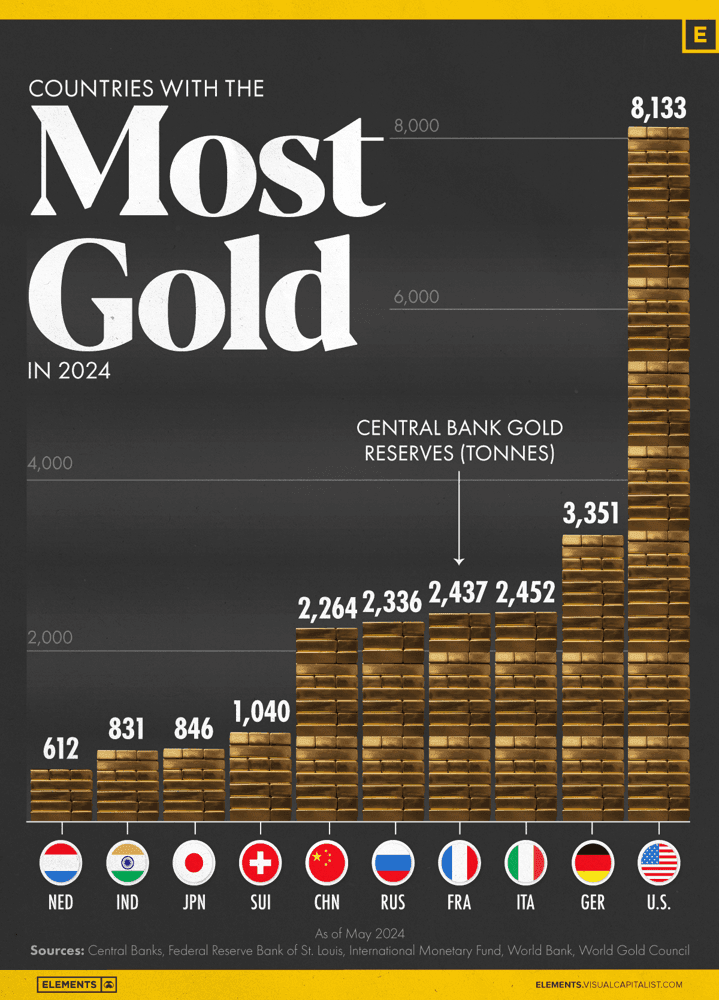
(Chart showing which countries owned the most gold as of 2024, Sources: World Gold Council and IMF data. “Tonnes” refers to metric tons of gold. As of May 2024)
These ten nations (plus the International Monetary Fund, not listed here) account for the majority of official gold holdings in the world. Countries often keep these vast gold piles in secure vaults (half of America’s gold, for example, is famously stored at Fort Knox) as an ultimate financial backstop. Central banks value gold for its stability – it’s no one’s liability and retains value when paper currencies fluctuate.
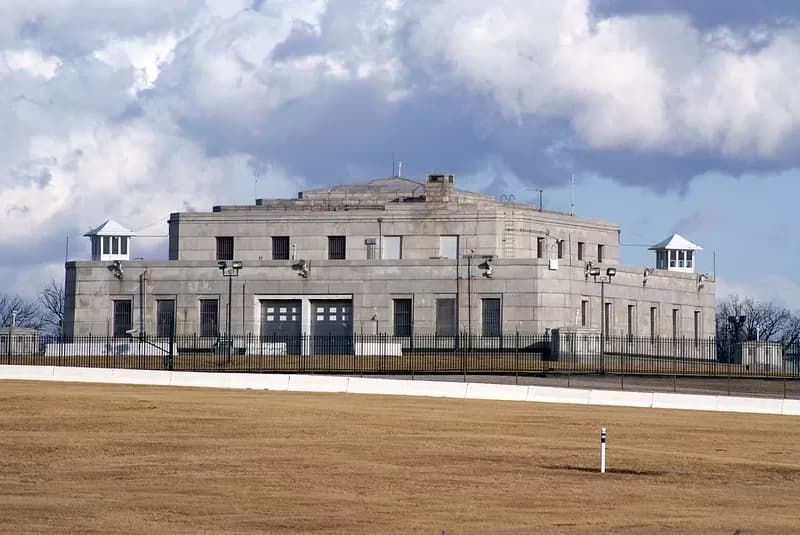
(Fort Knox – United States. Half of the countries’ gold reserves are stored here)
How Is Gold Mined?
Finding gold is one thing, but extracting it from the earth is another story entirely. Modern gold mining is an industrial-scale operation that employs different techniques depending on the type of deposit. For relatively shallow and extensive gold deposits, open-pit mining is commonly used. This involves removing huge amounts of overlying soil and rock (the “overburden”) with heavy machinery to expose the gold-bearing ore beneath. The ore is then drilled, blasted, and loaded onto giant haul trucks to be taken for processing. If you’ve seen those terraced giant pits in photos, that’s what an open-pit gold mine looks like.
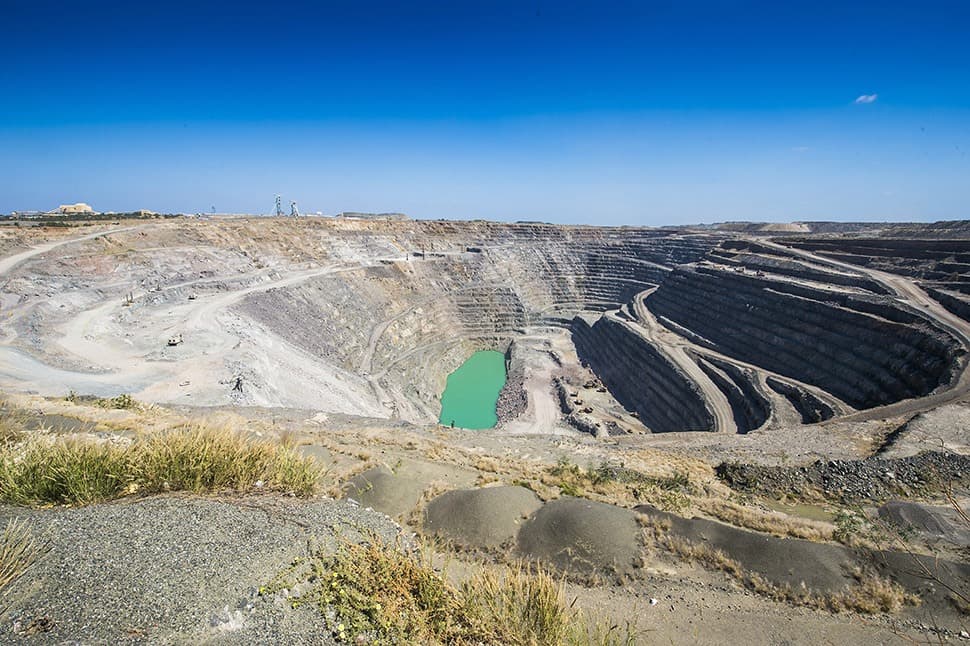
(A large open pit gold mine)
For gold deposits that lie deeper underground, or in narrow veins that aren’t suitable for open pits, miners turn to underground mining. Underground mines are a maze of shafts and tunnels excavated to reach the ore. Miners may follow a gold vein deep into the earth, digging vertical shafts and horizontal drifts, and using explosives and heavy equipment to extract the gold-rich rock. This method is more labor-intensive and costly than open-pit mining, but it’s often the only way to get at deeply buried gold. South Africa’s gold mines, for example, extend several kilometres below ground using this approach.
Not all gold comes from solid hard-rock deposits. Placer mining is the technique of mining gold from sand and gravel in river channels, floodplains, or beach deposits. This is the method famously used during gold rushes: simple tools like pans and sluice boxes can wash gold particles out of alluvial sediment. Modern placer mining at scale might use suction dredges or large wash plants to process gravel, but the principle is the same – using water to separate heavy gold from lighter materials. Placer mining is generally less disruptive (no need to blast rock), but it’s only viable in areas where nature has already concentrated gold for us.
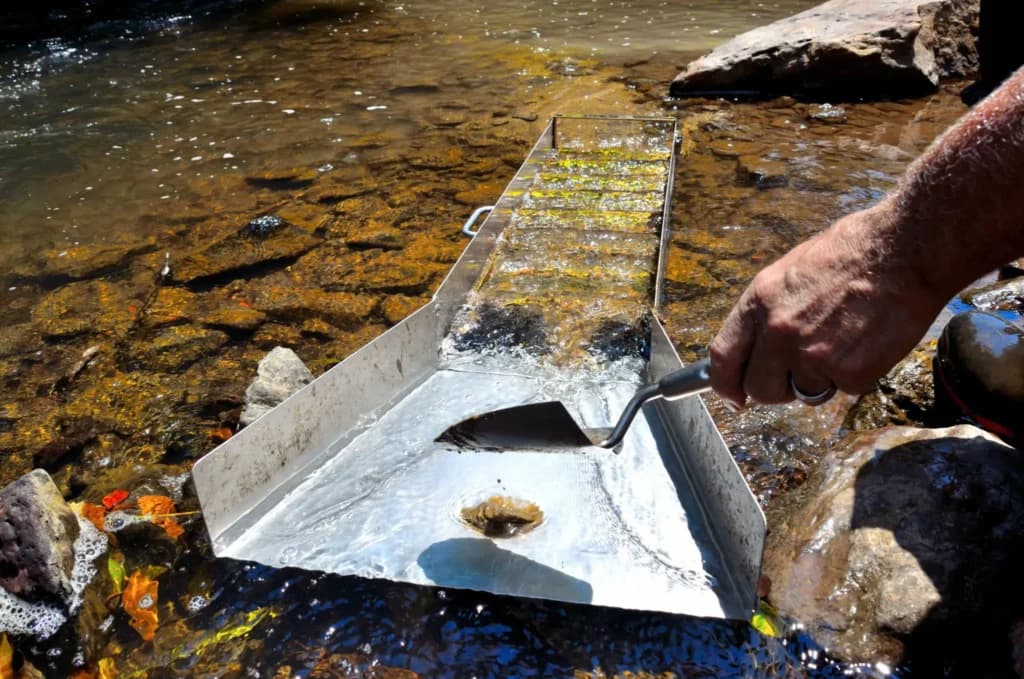
(Placer mining using a sluice box to separate gold from sediment in a shallow stream)
Once gold-bearing ore is mined, whether from an open pit or underground, the next step is processing the ore to extract the gold metal. Ore is crushed into a fine powder and then typically subjected to chemical processes. One common method is cyanide leaching, where a dilute cyanide solution is percolated through the crushed ore to dissolve gold into a liquid solution. The gold is later recovered from the solution (often by absorbing it onto activated carbon, a process called carbon-in-pulp). This technique can extract gold from low-grade ore that would be uneconomical to process by other means. However, cyanide is highly toxic, so modern mines must operate with strict environmental controls to prevent contamination. Tailings (the waste slurry left after extraction) are stored in contained ponds and monitored.
Finally, the extracted gold undergoes refining. Methods like smelting (melting the gold and separating impurities) and electrolysis are used to achieve high-purity gold (99.9% pure, known as “999.9 fine” gold). The end product might be gold dore bars (semi-pure bars poured at the mine), which are then shipped to refineries for final purification into bullion.
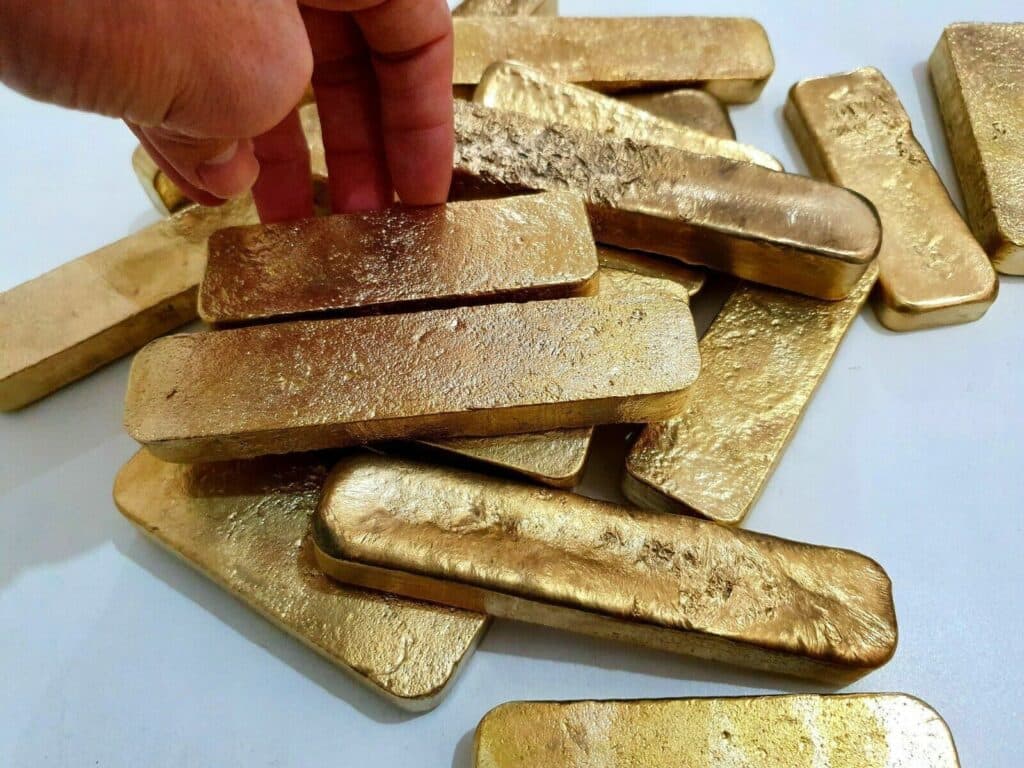
(Gold dore bars, often poured at the mine)
Throughout the mining process, there is a strong focus on safety and environmental stewardship. Modern gold mines must manage issues like land disruption, habitat impact, and the handling of hazardous materials. Regulations typically require detailed environmental impact assessments and plans for mine closure and land reclamation once mining is finished. In addition, mines are implementing new technologies to reduce their footprint, such as recycling water, using renewable energy, and more efficient ore-processing techniques. Gold mining today is a balance between maximising extraction of this valuable resource and minimising impact on the environment and local communities.
Fun Facts and Figures
Beyond the basics of where gold comes from and how gold is mined, here are a few fascinating facts about gold:
- The Most Productive Gold Source in History: The Witwatersrand Basin in South Africa has produced more gold than any other location on Earth – an estimated 40% to 50% of all gold ever mined! This massive paleo-placer deposit, discovered in the late 1800s, fuelled South Africa’s gold industry for over a century. The gold in Witwatersrand is scattered in ancient conglomerate rock layers, and over 50,000 tonnes of gold have been mined from this basin alone.
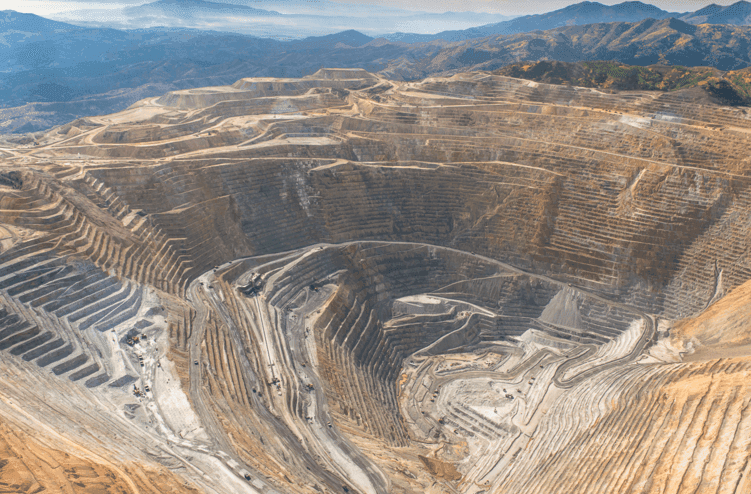
(Witwatersrand Basin, South Africa – This region has produced over 40% of all the gold ever mined in human history)
World’s Deepest Gold Mine: To see how far people will go for gold – literally – look at the Mponeng Gold Mine in South Africa. It is the deepest mine in the world, plunging about 4 kilometres (2.5 miles) below the Earth’s surface. Temperatures deep in the mine can reach 60°C (140°F), so refrigerated air is pumped down to make working conditions bearable. Miners take a long elevator ride down shafts to access the gold-bearing reef, making Mponeng arguably home to the most extreme commute on the planet!
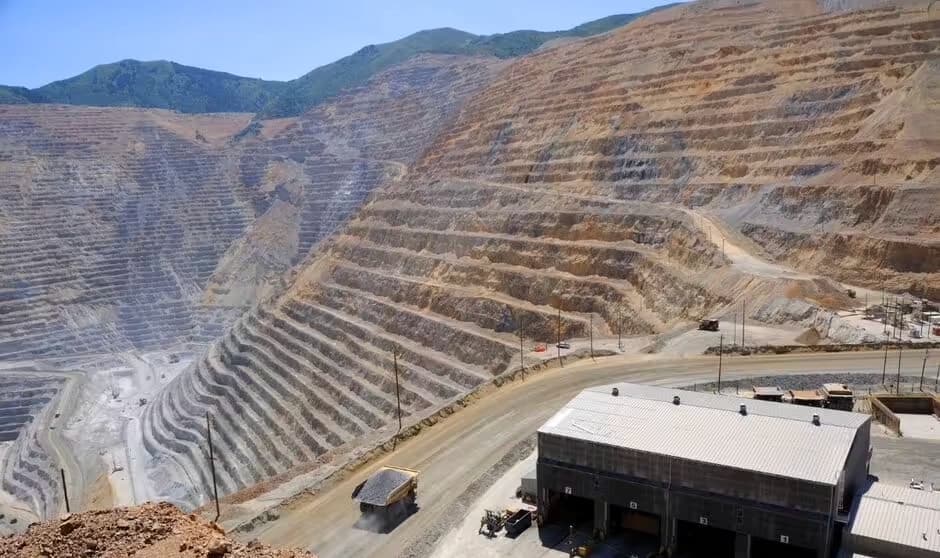
(Mponent gold mine, South Africa – Home to the world’s deepest mine)
New “Super-Giant” Gold Discovery: In 2024, geologists in China announced the discovery of a huge gold deposit in Hunan province – touted as one of the largest ever found. Initial reports estimate the Wangjialing mine area could contain up to 1,000 metric tonnes of gold (worth over $80 billion at current prices). This deposit, buried about 2 kilometres underground, instantly elevated China’s already strong gold resource base. If these estimates are confirmed, it would surpass many of the world’s biggest existing gold mines. The discovery underscores that Earth can still surprise us with major gold finds, even in the 21st century.
There’s Gold in the Oceans (But Not Enough in Your Glass): Believe it or not, the world’s oceans hold an estimated 20 million tons of gold in dissolved form. If we could extract it all, there’d be enough to give each person on Earth many kilograms of gold! However, don’t rush to boil seawater – the concentration is extremely low, on the order of parts per trillion. On average, each litre of seawater contains only about 13 billionths of a gram of gold. All that glitters in the ocean is impossibly diffuse. Over the years, many schemes were hatched to harvest ocean gold, but none have been economically feasible. For now, the sea’s vast gold treasure remains out of reach.
Gold’s journey – from cosmic alchemy in star explosions, to hiding in Earth’s crust, to glittering in our jewellery or bank vaults – is an incredible story of science, history, and human ingenuity. Whether you’re a geology buff curious about gold’s natural origins or an investor tracking where the world’s gold is held, understanding where gold is found gives a deeper appreciation for this precious metal. Gold may be rare, but it’s everywhere in our culture and technology, and knowing its backstory makes it all the more remarkable.
Frequently Asked Questions
Where is gold found?
Gold is found within rock formations in the Earth's crust, riverbeds, and stream deposits. Major gold deposits are typically located near volcanic regions and geological fault lines.
How is gold formed?
Gold is formed through intense cosmic processes, primarily during supernova explosions and neutron star collisions. These events scatter gold particles into space, eventually incorporating them into planet formation, including Earth.
How is gold mined?
Gold is mined through methods such as placer mining (extracting gold from riverbeds using water), hard rock mining (digging tunnels or shafts to reach underground gold veins), and gold panning (manual washing of sediment to separate gold flakes). Most modern extraction occurs via open-pit mining (large surface excavation) or underground mining (deep tunnels), followed by refining the gold-containing ore.
Which country owns the most gold?
As of 2025, the United States owns the most gold, holding over 8,133 tonnes in reserves—significantly more than any other country.
Where is the most gold found in the world?
South Africa’s Witwatersrand Basin historically contains the largest gold deposits in the world, having produced around 30% of all gold ever mined globally.
How do gold karats work?
Gold karats indicate purity, measured on a scale from 1 to 24. Pure gold is 24 karats. For example, 18-karat gold contains 18 parts gold and 6 parts alloy, meaning it's 75% pure gold.
Common karat conversions:
- 24-karat: 99.9% pure gold
- 22-karat: 91.6% pure gold
- 18-karat: 75% pure gold
- 14-karat: 58.5% pure gold
- 9-karat: 37.5% pure gold
How is gold refined?
Gold refining involves extracting impurities to achieve purity. The most common refining methods are the Miller process, using chlorine gas, and the Wohlwill process, using electrolysis, achieving purity levels above 99.99%.
- Miller process: Chlorine gas is passed through molten gold, separating impurities quickly to achieve about 99.5% purity.
- Wohlwill process: Gold undergoes electrolysis, resulting in purity exceeding 99.99%, though the process is slower and more costly.
Can gold be found in the UK?
Yes, gold is found in the UK, primarily in Scotland, Wales, and parts of England such as Cornwall. The Dolgellau Gold Belt in Wales and Scottish Highlands have significant historical deposits.
Can gold rust?
No, gold does not rust. Rusting refers to iron oxidation, and gold is highly resistant to oxidation and corrosion, making it a durable and valuable metal.
Interested in selling gold with the UK’s highest paying gold buyer? Visit our Sell Gold page to get a competitive valuation – we provide fully insured postage and fast payment.
For more insights and the latest gold price today, keep an eye on our live charts and blog updates.





