White Gold vs Yellow Gold vs Rose Gold
White gold, yellow gold, and rose gold are all real gold alloys distinguished by their colour and composition. White gold appears silvery-white (due to alloying with white metals and rhodium plating), yellow gold retains the classic warm golden hue of pure gold, and rose gold has a pinkish tone from copper in the alloy. Each type offers unique aesthetics, durability, and care considerations, but all have similar gold content and value.
Key Takeaways
- Composition: White gold is made by mixing pure gold with white metals (like nickel or palladium) and usually coating it in rhodium for a bright white finish. Yellow gold and rose gold are both made by alloying pure gold with copper and silver in different ratios, with rose gold containing more copper for a pink hue.
- Colour & Appearance: White gold has a lustrous silver-like colour due to rhodium plating, yellow gold displays the rich yellow of classic gold, and rose gold features a romantic pink or reddish tint. These distinct colours give white gold a modern look, yellow gold a timeless elegance, and rose gold a vintage or trendy charm.
- Durability: White gold tends to be a bit harder and more scratch-resistant than high-karat yellow gold because of its stronger alloy metals and protective rhodium layer. Yellow gold (especially 18K or higher) is softer and more prone to scratches or dents. Rose gold is quite durable, the added copper makes it the most scratch-resistant of the three in comparable purity.
- Maintenance: White gold requires periodic rhodium plating (every couple of years) to maintain its bright white colour, since the plating wears off over time. Yellow gold and rose gold are low-maintenance, they don’t need plating, and their colour remains stable; regular cleaning and the occasional polish will keep them shining.
- Value & Price: All three colours contain the same pure gold percentage at a given karat, so their intrinsic value is equivalent. Retail price differences are minimal; white gold may cost slightly more in jewellery stores due to the extra rhodium plating process, while rose and yellow gold usually cost about the same. Resale (scrap) value is based on gold content, so white, yellow, or rose gold of the same karat fetch the same price when selling by weight.
White Gold vs Yellow Gold vs Rose Gold
When comparing white gold vs yellow gold vs rose gold, it helps to break down the differences by specific factors. Below we methodically compare these gold types in terms of Colour, Alloys, Durability, Maintenance, Appearance, and Use:
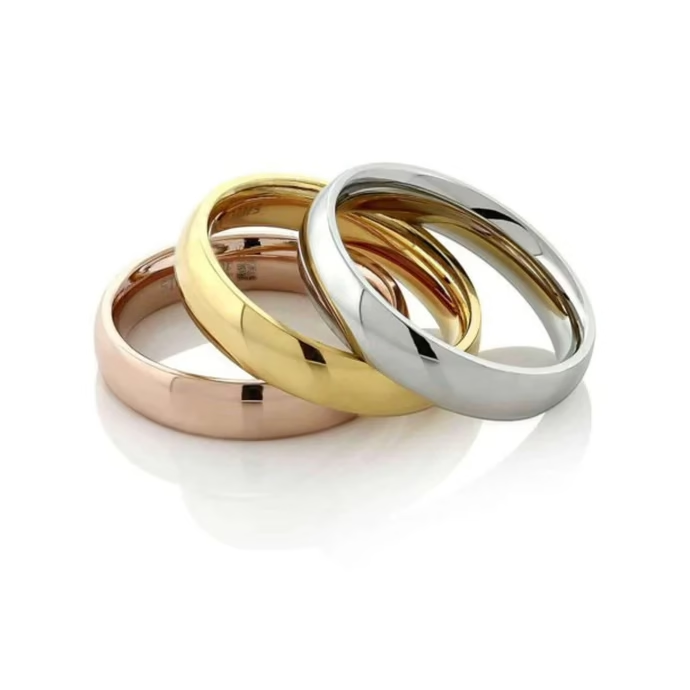
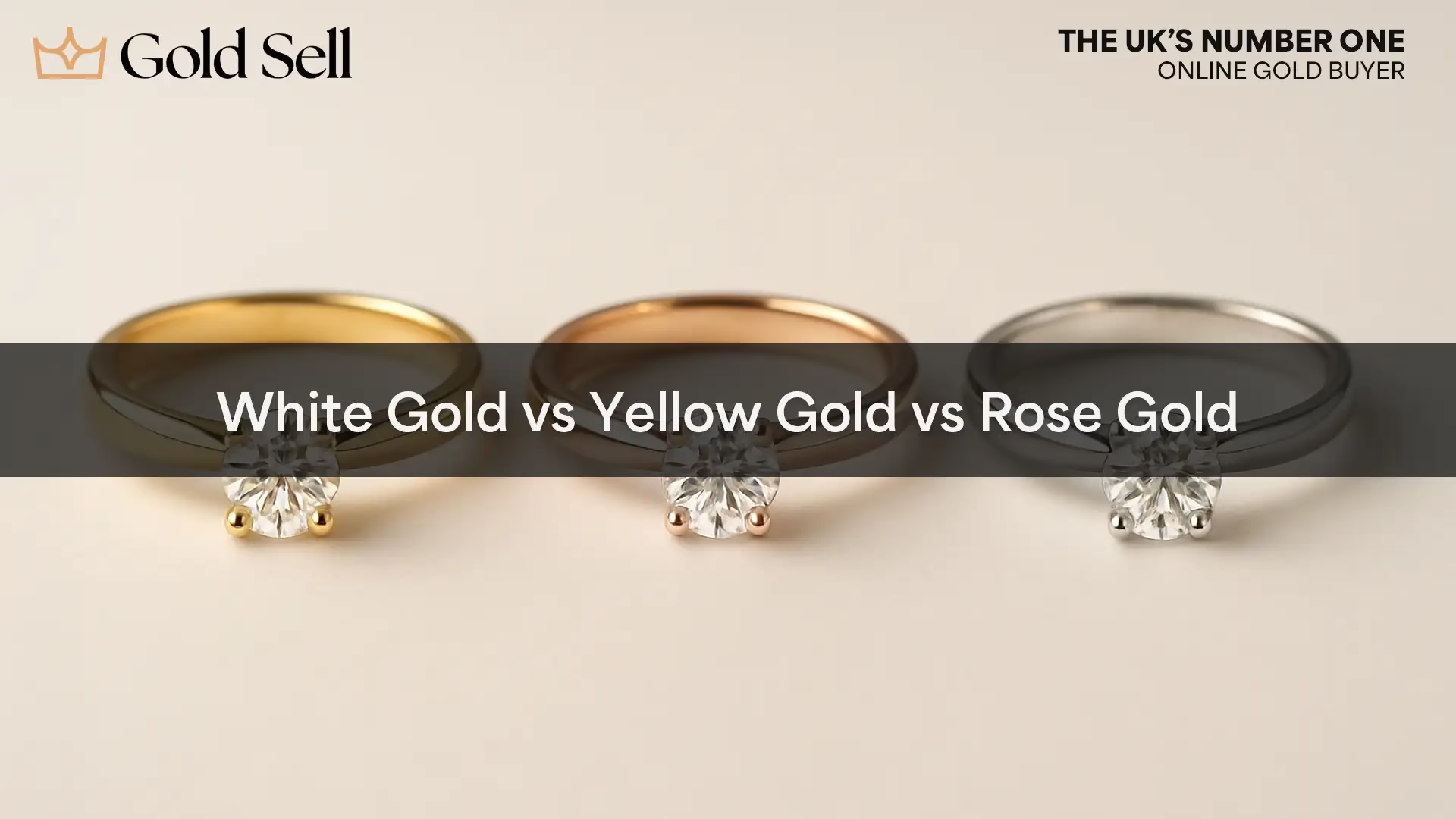
These three gold rings demonstrate how identical gold purity can look completely different once mixed with specific alloying metals. Yellow gold keeps its rich tone through a balanced mix of copper and silver, rose gold becomes pink as copper content increases, and white gold gains its pale appearance from white metals and rhodium plating. This visual contrast supports the section’s explanation that colour comes from alloy composition, not gold content.
Colour
White, yellow, and rose gold rings offer distinct colours, white gold (right) has a bright silvery sheen, yellow gold (middle) shows the traditional golden glow, and rose gold (left) displays a subtle pink tint.
- White gold: Appears bright white with a reflective, platinum-like shine thanks to rhodium plating. Without plating, the alloy itself is a pale off-white, but the rhodium gives it a brilliant chrome-like finish.
- Yellow gold: Exhibits the rich yellow colour we associate with pure gold. Its hue can vary by karat (higher karat yellow gold has a deeper yellow tone, while lower karats are a bit paler due to more alloy metals diluting the colour).
- Rose gold: Displays a pink to reddish hue. The colour intensity depends on copper content, more copper yields a deeper rosy-red tone. Rose gold’s warm pink colour stands out as uniquely romantic and has become very popular in recent years for its soft, flattering look.
Each gold colour offers a different visual appeal. White gold’s neutral silver-white tone complements colourless diamonds and suits modern styles, yellow gold’s classic glow conveys luxury and tradition, and rose gold’s pinkish cast offers a trendy vintage charm. Choosing the colour often comes down to personal preference and skin tone (cool tones tend to favour white gold, while warm or neutral skin tones can look great with yellow or rose gold).
Alloys
All three “colours” of gold are not pure gold but gold alloys, mixtures of gold with other metals. The differing alloy metals are what create the colour differences:
- White gold: An alloy of pure gold with white metals like nickel, palladium, or silver. For example, 18K white gold is about 75% gold blended with 25% white metals. Because even these alloys have a slight yellow tint, white gold jewellery is typically plated with a thin layer of rhodium (a hard, bright-white metal) to give it a shiny white colour. (Note: Nickel-alloyed white gold is common and adds hardness, but palladium-alloyed white gold is used as a nickel-free option to avoid allergies.)
- Yellow gold: An alloy of gold that maintains a yellow appearance by mixing pure gold with metals like copper and silver in proportions that don’t overpower gold’s natural colour. For instance, a common 18K yellow gold formula is 75% gold, 12.5% copper, 12.5% silver. These additions strengthen the gold (pure 24K gold is very soft) while preserving that classic yellow hue. Sometimes a bit of zinc is added as well for hardness and to fine-tune the shade.
- Rose gold: An alloy of gold that gets its pinkish colour from a high percentage of copper mixed with the gold. A typical 18K rose gold might be 75% gold, 22–23% copper, and a small fraction of silver. The copper gives rose gold its rosy-pink tone and also adds strength. The higher the copper ratio, the redder the gold will appear (e.g. “red gold” has even more copper). Rose gold contains the same amount of pure gold as yellow/white gold of the same karat and is just as “real”, the colour is simply achieved through the copper in the alloy.
Because all three are real gold alloys, the karat (purity) is what defines how much gold is in the mix. 18K gold is 75% gold in all cases, whether white, yellow, or rose. The remaining alloy metals differ, but this does not much affect the market value, it mainly affects colour, hardness, and potential for allergic reactions (for example, white gold that includes nickel can cause skin irritation in some people, whereas yellow gold and rose gold are usually nickel-free)
Durability
Durability refers to hardness and resistance to scratching, bending, or wear. Pure gold is very soft, so alloying is essential to make it usable for jewellery. The different metals used and their proportions give white, yellow, and rose gold slightly different properties:
- White gold: Generally the hardest of the three in equivalent karat, because it’s often alloyed with hard metals like nickel or palladium. White gold’s rhodium plating also adds a layer of scratch-resistance. As a result, white gold is usually more scratch-resistant than yellow gold of the same karat. For everyday wear (like rings), 14K white gold tends to be especially durable due to the lower gold, higher alloy content. Over time the rhodium layer can get fine scratches, but these can be polished or restored with re-plating.
- Yellow gold: In high karats (18K, 22K), yellow gold is relatively softer and can scratch or dent more easily. 14K yellow gold, however, has more alloy and can be harder than 18K, offering a good balance of durability and gold content. Overall, yellow gold is slightly less hard than white or rose gold alloys, so it may show wear a bit faster, especially if worn daily in 18K or above. Regular polishing can remove small scratches and restore shine.
- Rose gold: Copper is a sturdy metal, so rose gold tends to be quite durable and tough. In fact, rose gold is often noted as the most scratch-resistant among the three, since the copper in the alloy increases hardness. A 14K or 18K rose gold ring will typically withstand wear and tear at least as well as 14K white gold, if not better. It doesn’t have a soft plating layer (unlike white gold’s rhodium) so you’re dealing with the solid alloy all the way through.
In summary, none of these gold alloys are “brittle”, all are suitable for fine jewellery, but white and rose gold (especially in 14K) usually handle knocks and scratches a bit better than high-purity yellow gold. If maximum durability is a concern (for a ring worn every day, for example), 14K white or rose gold can be excellent choices for their strength. No matter the alloy, it’s wise to remove gold rings during heavy manual work to prevent undue wear.
Maintenance
When it comes to maintenance and care, white gold differs from yellow and rose gold due to its plating:
- White gold: Requires periodic maintenance to keep its colour. White gold jewellery is almost always plated with rhodium, and this thin rhodium layer will wear off over time (especially on rings or bracelets that rub against surfaces). As it wears, the piece might develop a faint yellowish tint as the gold alloy underneath starts to show. To restore the bright white look, you’ll need to have the piece rhodium replated (sometimes called “dipping”) by a jeweller. Replating is typically needed every 1–3 years, depending on how quickly the plating wears off. It’s a routine and relatively quick service (and many jewellers offer it). Aside from replating, white gold should be cleaned gently (warm soapy water or non-abrasive jewellery cleaner) and polished occasionally. Storing white gold separately is recommended to avoid scratching the rhodium surface.
- Yellow gold: Low maintenance. Since there is no plating, the colour you see is the metal itself and it doesn’t fade. Yellow gold won’t tarnish or rust. The main care it needs is occasional polishing to smooth out scratches or restore lustre if it gets dull. Over years of wear, high-karat yellow gold can develop a patina (a subtle mellowing of shine), but many find that part of its character. Regular cleaning with mild soap and water keeps it sparkling, and a professional polish can make an older piece look like new.
- Rose gold: Low maintenance as well. Rose gold’s colour is through-and-through and does not require plating or special treatment to maintain the pink hue. It does not tarnish in the way silver does, any darkening over a very long time would be due to copper’s slight oxidation, which typically just lends a warm patina rather than ugly tarnish (often considered part of rose gold’s vintage charm). If you prefer the original shiny look, a jeweller can easily polish rose gold to remove any patina or surface scratches. Day to day, cleaning rose gold with gentle soap and water and a soft cloth is sufficient. Like other gold, it’s wise to keep it away from harsh chemicals or abrasive materials.
In summary: Yellow and rose gold are pretty carefree, just keep them clean and occasionally polished. White gold needs a bit more attention because of the rhodium plating: expect to replate every couple of years to keep it looking its best. All gold jewellery should be stored in a dry, separate compartment (or soft pouch) to avoid scratching other pieces, and removed before exposure to chemicals (like in pools or cleaning agents) to protect the metal and any gemstones.
Appearance
Although colour is one aspect of appearance, there are other aesthetic factors and style considerations when choosing between white, yellow, and rose gold:
- White gold: Visually, white gold jewellery has a sleek, brilliant white sheen. New white gold can be almost indistinguishable from platinum to the untrained eye, it offers that same cool-toned, high-lustre look that makes diamonds appear colourless and bright. White gold’s neutral colour means it doesn’t introduce any tint, so it pairs beautifully with all gemstone colours. Many people choose white gold for its contemporary and elegant appearance; it gained massive popularity during the Art Deco era of the 1920s and remains the top choice for engagement ring settings today. White gold can complement cooler skin tones particularly well, and it’s often favoured for modern or minimalist designs. One thing to note: as the rhodium plating wears, an older white gold piece might show a hint of creamy off-white; some wearers don’t mind this slight warmth, but most will refresh the plating to maintain the icy white look.
- Yellow gold: Yellow gold offers a classic and luxurious appearance. It’s the colour people have associated with gold for millennia, conveying tradition and richness. In jewellery, yellow gold has a warm glow that can flatter warm and darker skin tones especially well (though it can certainly be worn by anyone). Its appearance can also enhance certain gemstones, for example, slightly tinted diamonds may appear whiter against yellow gold, as the contrast masks mild yellow in the stone. Yellow gold is often chosen for vintage-inspired or historically styled pieces, and it has seen a resurgence in fashion (helped by high-profile celebrities wearing yellow gold rings, which has inspired a trend back to this classic metal). Overall, yellow gold gives a piece of jewellery a timeless, heirloom-quality look. It’s equally at home in simple, modern designs as in ornate, vintage ones, but it will always impart that traditional elegance.
- Rose gold: Rose gold’s appearance is distinctive and romantic. The pinkish colour stands out from standard metal hues, giving jewellery a softer look. Rose gold tends to complement a wide range of skin tones, it can look especially beautiful on those with neutral or warm undertones, and it adds a nice contrast on cooler or fair skin as well (without being as stark as white or as bold as yellow). In terms of style, rose gold often evokes a vintage or artistic vibe. It was famously used in early 19th-century Russian jewellery and was popular in Victorian times, which is why it’s sometimes associated with antique styles. Today, it’s very trendy for everything from engagement rings to modern fashion jewellery, appealing to those who want something less conventional than white or yellow gold. Visually, rose gold provides a lovely backdrop to pink stones (like morganite or garnet) and creates a chic contrast with white diamonds. Its appearance is elegant with a touch of warmth and whimsy, often chosen by those who love its unique, blush-toned look.
In summary, white gold gives you a sharp, bright look that highlights gemstones and suits modern tastes; yellow gold offers classic beauty and a rich colour that exudes luxury; rose gold delivers a distinctive rosy shine that feels vintage, artistic, and romantic. These appearance differences play a big role in personal preference, there is no “best” colour universally, so it comes down to which look resonates most with you or the wearer.
Use
How are white, yellow, and rose gold used in jewellery, and in what contexts do they shine? Here’s a comparison of their common uses and popularity:
- White gold: Extremely popular for engagement rings, wedding bands, and fine jewellery of all types. Its neutral colour makes it a top choice to set colourless diamonds, about 45% of engagement rings were white gold as of a 2021 survey, making it the most common engagement ring metal (though down from an even higher share a few years prior). White gold is favoured in modern and classic designs alike. It often appears in solitaire rings, halo designs, and fancy diamond jewellery where a platinum-like look is desired without the higher cost. Because it doesn’t introduce colour, white gold is also frequently used for mountings with coloured gemstones when you want the stone’s colour to pop (e.g. sapphire or aquamarine in white gold). In addition, many two-tone pieces use white gold for parts of the design (for example, a ring might be primarily yellow gold with white gold prongs, combining the benefits of both). Overall, white gold sees very versatile use, from simple studs to elaborate necklaces, and remains a mainstay in both women’s and men’s jewellery.
- Yellow gold: The traditional favourite for many types of jewellery. Yellow gold is commonly used for wedding bands (the classic plain gold band is usually yellow gold) and has an enduring appeal for engagement rings as well, particularly among those who want a timeless or vintage look. After a period of white metals dominating, yellow gold has been regaining popularity, for instance, high-profile celebrity engagement rings in yellow gold have brought it back into vogue. Beyond rings, yellow gold is widely used in chain necklaces, bracelets, earrings, and luxury watches, often to emphasise that unmistakable “gold” look. Culturally, yellow gold is preferred in many regions and traditions (for example, in Indian and Middle Eastern jewellery, high-karat yellow gold is deeply valued and worn for celebrations). Yellow gold is also a go-to for heirloom and investment jewellery, since it’s associated with purity and value. Its uses span from delicate modern minimalistic pieces to bold, intricate vintage reproductions. In summary, yellow gold never really went out of style, it remains synonymous with fine jewellery and is especially suited for those who love that classic gold brilliance.
- Rose gold: Once somewhat rare, rose gold has become increasingly popular in the 21st century. It’s often chosen for engagement rings by people drawn to its unique colour and romantic feel, many vintage-inspired ring designs (like those featuring floral motifs or antique cuts of stones) are crafted in rose gold to enhance the vintage vibe. Rose gold is also big in fashion jewellery: you’ll see rose gold used for everything from fine wristwatches to stackable bangles and even tech accessories. It had a surge in popularity with younger consumers looking for something different from their parents’ jewellery; as a result, a lot of millennial-oriented designs and modern collections include rose gold options. Rose gold is especially fitting for retro or whimsical styles (for example, pairing rose gold with morganite or opal creates a very soft, romantic palette). In practical use, rose gold is just as suitable as other golds for everyday wear, and its durability makes it great for rings and bracelets. While it’s not as historically ubiquitous as yellow gold, today rose gold is firmly established as a fashionable choice for all kinds of jewellery.
In choosing which gold to use, consider the style of the piece, personal or cultural preferences, and even skin tone or gemstone colour as noted earlier. Yellow gold might be ideal for a design that leans classic or when you want to emphasise tradition and warmth. White gold is perfect for a modern, clean look or to complement truly colourless diamonds and cool-tone gems. Rose gold offers that dash of the unexpected and is perfect for vintage looks or a buyer who loves the rosy glow. Many people mix and match, for example, wearing a yellow gold wedding band with a white gold engagement ring for contrast, or stacking rings of different colours for a trendy look. There are no rules other than what the wearer finds beautiful!
How Is White Gold Made?
White gold is made by alloying pure yellow gold with certain white metals (typically nickel, palladium, and/or silver) and then usually plating the item with rhodium to achieve a bright white finish. In other words, white gold starts as a mixture of gold plus other metals that are silvery in colour. For example, 14K white gold contains about 58.5% pure gold and 41.5% other white metals (often nickel and copper or palladium and silver), while 18K white gold is 75% gold and 25% white metals. This alloying process removes most of gold’s natural yellow tint, yielding a metal that is pale grayish-white.
Because even the best white gold alloys have a slight off-white or light yellow tone, virtually all white gold jewellery is finished with a thin coating of rhodium (a very hard, reflective platinum-group metal). Rhodium plating gives white gold its signature chrome-like shine and completely white colour. The piece is dipped or electroplated in rhodium after being crafted. The result is a piece that looks shiny and colourless, similar to platinum. Over time this rhodium layer can wear off, revealing the faint creamy hue of the underlying alloy, at that point, the piece can be replated to restore its bright white colour.
In summary, white gold is “made” by combining gold with white metals and plating with rhodium. For instance, an 18K white gold ring might be 75% gold, 10% nickel, 10% palladium, 5% zinc (one of many possible recipes), plus the rhodium finish on the outside. The alloying is done in a crucible by melting pure gold together with the specified metals to form a uniform mixture, which is then cast or formed into jewellery. The key point is that white gold always starts from yellow gold, there’s no such thing as “white gold” coming out of the mine. It’s the blend of metals that turns yellow gold white, followed by rhodium plating to enhance the whiteness.
This method of creating white gold was developed in the 19th-20th century as a more affordable alternative to platinum. Today, white gold is very common: for example, a white gold ring is actually a yellow gold ring that’s been scientifically engineered to be white in appearance by using the right alloy metals and finish. The technical sophistication (especially the rhodium plating step) is why white gold may cost a bit more than yellow gold in stores, but fundamentally they contain the same gold, only the metals around it differ.
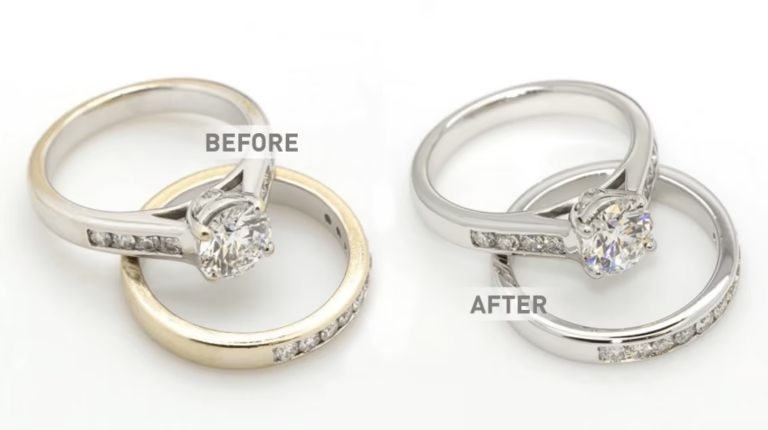
White gold is made by alloying pure yellow gold with paler metals such as palladium, nickel and silver, then rhodium plating it for extra durability and a bright white finish. In the photo, the “before” ring shows the underlying pale yellow hue of the white gold alloy as the rhodium has worn away, while the “after” ring shows the same pieces freshly replated with rhodium, restoring their crisp white shine.
How Is Rose Gold Made?
Rose gold is made by alloying pure gold with copper (and usually a bit of silver) to produce a gold alloy with a pinkish hue. Essentially, rose gold starts out as yellow gold as well, but by mixing a larger proportion of copper into the alloy, the gold takes on a warm rosy colour. For example, 18K rose gold is typically about 75% gold, 22–23% copper, and the remainder silver or zinc. The copper gives it the pink/red tone, while a small amount of silver (or sometimes zinc) is added to tone down the redness slightly and improve the alloy’s workability.
The process of making rose gold involves melting pure 24K gold and then adding the copper (and other metals) in the correct ratios. Copper has a distinct reddish-orange colour, so as it blends with yellow gold, the resulting alloy’s colour shifts from yellow towards pink. The more copper, the redder the alloy, this is why you might hear terms like pink gold, rose gold, and red gold, which all are gold-copper alloys with varying copper content. Pink gold has a bit less copper (so a lighter pink), while red gold has even more copper (a richer red tone). Rose gold is a middle ground, often defined by the classic 18K formula of 75% gold, 22.25% copper, 2.75% silver.
Importantly, rose gold is not plated, the colour is inherent in the metal mixture. Unlike white gold, which relies on plating, rose gold’s attractive colour is through and through. This also means rose gold jewellery doesn’t fade or change colour over time (aside from acquiring a slight patina, perhaps) because there’s no plating to wear off. The alloy itself is quite stable; copper can oxidise a little over years, which might deepen the colour slightly, but it doesn’t flake or tarnish like a surface coating.
As for the manufacturing process, once the metals are melted and combined, the rose gold alloy can be cast into jewellery or rolled into sheets/wire for fabrication just like any other gold alloy. The high copper content makes rose gold slightly harder than yellow gold, which is helpful for stone settings and intricate work (the pieces hold their shape well). Historically, rose gold (also known as “Russian gold”) became famous through jeweller Carl Fabergé’s creations in the 19th century, and the same basic alloying approach is used today.
In summary, rose gold is made from blending gold, copper and a small amount of silver). By starting with yellow gold and introducing copper in the mix, metallurgists create that lovely pink colour that has made rose gold so desirable. For instance, a common 14K rose gold might be about 58% gold, 38% copper, 4% silver, giving it a noticeable pink colour while retaining the required gold content. No additional plating is needed; the beautifully warm colour of rose gold is a natural result of its copper-infused recipe.
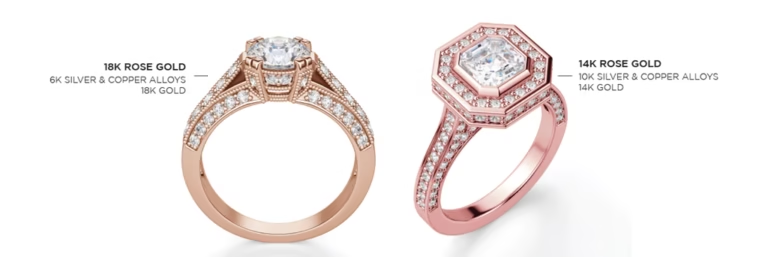
Rose gold is made by blending pure gold with copper-rich alloys, and the amount of copper determines how light, warm, or deeply pink the final metal appears. As shown here, 18K rose gold contains a lower proportion of copper than 14K, resulting in a softer blush tone, while 14K rose gold, made with more copper in the alloy, produces a richer, more vibrant pink shade.
How Is Yellow Gold Made?
Yellow gold jewellery is made by combining pure gold with other metals such as copper, silver, and often a small amount of zinc to form a more durable alloy while retaining the classic yellow appearance of gold. In other words, yellow gold used in rings, chains, etc., isn’t 24K pure gold; it’s typically 14K or 18K gold, meaning it’s 58.5% or 75% gold respectively, with the balance being alloy metals that harden the gold and adjust its colour slightly.
To make 18K yellow gold (one common standard for high-quality jewellery), metallurgists start with pure 24K gold and mix in about 25% other metals. A typical formula might be roughly 75% gold, 12.5% copper, 12.5% silver. Copper has a reddish colour and silver is white, and in these proportions they blend to support gold’s natural hue, the result is an alloy that still looks yellow, just like pure gold, but is stronger. If a bit of zinc is added, it’s usually a few percent at most; zinc can help deoxidise the melt and add hardness. For 14K yellow gold (58.5% gold), the alloy might contain proportionally more copper and silver (around 20%+ each, for example) plus perhaps a touch of nickel or zinc, yielding a slightly paler yellow but greater hardness.
The key point is that yellow gold alloys are formulated to preserve that signature golden colour. Unlike white gold or rose gold, there isn’t a huge colour shift because the alloy metals chosen (silver and copper in the right balance) essentially “cancel out”, silver gives a faint greenish tint, copper gives red, and together with gold’s yellow they produce a warm yellow alloy. Indeed, 18K yellow gold’s colour is only a bit less intense than 24K; a casual observer might not notice much difference beyond 18K being a tad lighter in tone. Lower karats like 14K or 10K will be a paler yellow (because less gold, more alloy), but they are still clearly yellow.
The process of making yellow gold is straightforward: the pure gold and alloy metals are melted together in a crucible, stirred to achieve a homogenous mixture, and then cast into ingots, sheets, or directly into jewellery moulds. The resulting metal has much better hardness than pure gold, for example, 18K yellow gold is significantly less prone to scratching or bending than 24K gold, making it suitable for daily-wear jewellery. Pure 24K gold, while richly coloured, is too soft for most jewellery, so virtually all “yellow gold” jewellery is this kind of alloyed gold.
In summary, yellow gold jewellery is made by blending gold, copper, silver, and even some zinc) in whatever proportions achieve the desired karat and strength. This alloying allows the beautiful natural colour of gold to shine through while giving the piece durability. Whether it’s a 9K gold bracelet or an 18K wedding band, the principle is the same, by adding other metals, we make gold harder and slightly adjust its hue. The end product is still yellow and unmistakably “golden,” but far more practical for daily use than pure gold would be.
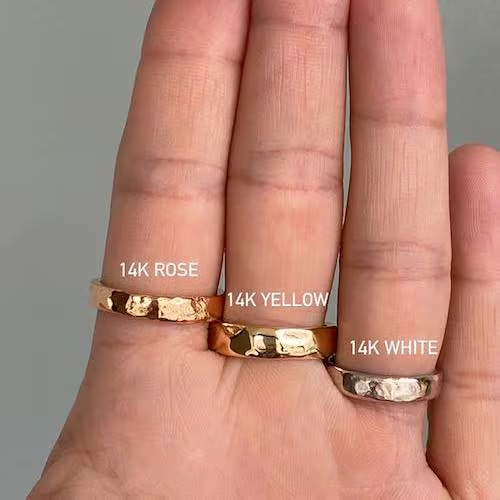
This comparison shows how the same pure gold can look completely different once alloyed with other metals. Yellow gold keeps its classic warm tone by balancing copper and silver, while adding more copper creates the pink tint of rose gold. When gold is mixed with pale metals and plated with rhodium, it becomes white gold. Jewellers carefully choose these alloying metals to achieve the exact shade and durability they want in the final piece.
Will White Gold Turn Yellow?
Yes, white gold can turn yellowish over time as its rhodium plating wears off, revealing the gold alloy underneath. This is a normal occurrence and doesn’t mean the gold is “ruined” or that it’s not real; it’s simply the natural colour of un-plated white gold coming through. Fresh white gold jewellery is usually a bright, icy white colour due to the rhodium metal plated on the surface. However, rhodium is a thin coating and with months or years of wear (depending on how rough or frequent), it gradually abrades away. When that happens, the jewellery may start to look slightly duller, with a faint warm, pale yellow or off-white tinge in areas where the plating is thinnest. People often describe it as their white gold “turning yellow.”
It’s important to note that the metal itself isn’t changing colour or tarnishing, what’s happening is you’re seeing through the remaining rhodium to the actual white gold alloy, which typically has a light yellow-grey hue. White gold is made from yellow gold mixed with white metals, so the alloy is never pure white on its own. When the plating’s gone, the ring might appear a champagne or ivory colour in spots. This can be especially noticeable on parts of a ring that get a lot of friction, like the underside of a band, or on prongs and edges.
The good news is that this yellowing is easily fixed. If your white gold ring has lost its bright white lustre, a jeweller can perform a rhodium re-plating (essentially “re-dipping” the ring). This process will coat the jewellery in a fresh layer of rhodium, restoring it to a brilliant white colour again. Re-plating is typically quick and not very expensive, often done as part of routine maintenance for rings every couple of years. Many jewellers even offer a service plan or warranty that includes free or discounted re-plating.
To slow down the yellowing process, you can take a few precautions: remove white gold jewellery before using harsh chemicals or swimming in chlorinated pools (chemicals can speed up rhodium wear or dull it), avoid heavy abrasion on the ring, and keep it clean, sometimes dirt or product build-up can make a ring look dull or slightly yellowish, even if plating is intact. But ultimately, some wear of rhodium is inevitable with daily use.
In summary, white gold will gradually lose its pure white look and show a yellow undertone as the rhodium plating wears off. This is expected and easily remedied by re-plating. It doesn’t indicate any fundamental problem with the gold, your 14K or 18K gold content is still there and valuable. Think of it as the equivalent of your car’s paint getting scratched, the material beneath is fine, it just needs a new coat to look pristine again. So if your white gold ring is looking a bit yellow, don’t worry; take it to a professional jeweller and they’ll have it gleaming “white” in no time. One common misconception is that white gold “tarnishes.” In reality, white gold doesn’t tarnish like sterling silver does, it’s the fading rhodium and exposure of the off-white gold alloy that people are seeing, not a sulphur-based tarnish. Once replated, the piece is as good as new.
White Gold vs Yellow Gold Price
From a buyer’s perspective, white gold and yellow gold jewellery of the same karat typically cost about the same, there isn’t a big inherent price difference based solely on colour. Both 18K white and 18K yellow contain 75% pure gold, so the intrinsic gold value is equal. In practice, jewellers usually price an item in white gold similarly to the same item in yellow gold. For example, many ring settings are offered at identical prices whether you choose white or yellow gold. Any slight retail price differences often come down to manufacturing: white gold may sometimes be a bit more due to the extra step of rhodium plating or if the alloy uses palladium (a costly metal) instead of nickel. But these differences are generally minor. One jeweller might charge, say, £10–£50 more for a white gold version of a ring than a yellow gold one, while another jeweller charges no difference at all, it varies, but not by much.
When it comes to scrap gold or selling your gold, white and yellow gold are worth the same per karat. Gold buyers care about gold content (karat and weight), not the colour. A 14K white gold chain and a 14K yellow gold chain of equal weight will fetch essentially the same price from a gold buyer. The small amount of alloy metals (whether it’s copper, nickel, etc.) isn’t valuable compared to the gold itself. For instance, 14K is 58.5% gold, the rest could be copper/zinc (yellow gold) or nickel/palladium (white gold), but either way you have 58.5% of the weight in pure gold. Refiners will extract the gold and maybe palladium, but typically you don’t get a premium for white gold’s palladium content unless a refiner specifically offers that. In general resale, a gold item is weighed and tested for karat, and you’re paid on the gold weight times the current gold price (minus the dealer’s margin). So, an ounce of 14K white gold scrap is worth the same as an ounce of 14K yellow gold scrap.
One caveat in retail pricing: white gold rings might include the initial rhodium plating in the price (a negligible cost) and some jewellers offer free rhodium re-plating for a period of time. However, this is more of a service inclusion than a price hike. Market trends can also play a role, if suddenly white gold is more in demand, some popular styles in white gold might sell at a premium due to popularity, not material cost. Conversely, if yellow gold is very trendy (as has been the case recently), you won’t necessarily pay more for it in materials, but high demand pieces might still command a bit more. These are marketplace factors, not inherent cost differences in the metals.
Bottom line: for equivalent items, white gold vs yellow gold price differences are minimal or none in most cases. You should choose the colour you prefer without worrying about a major cost impact. If a jeweller does charge more for one, ask why, it could be due to alloy components (e.g., palladium alloyed white gold might be slightly pricier than standard yellow gold alloy), but it’s generally not a deal-breaker amount. And if you’re selling gold, expect no difference; a gold buyer will treat them equally based on karat.
It’s also worth noting that platinum is significantly more expensive than either white or yellow gold for the same ring design. That’s why many people opt for white gold: you get the platinum look at a fraction of the price. But between gold colours themselves, the playing field is level since gold is the driving cost.
Yellow Gold vs Rose Gold Price
For a buyer, yellow gold and rose gold jewellery are usually priced about the same when karat is equal. The cost of creating rose gold isn’t higher than yellow gold, in fact, both alloys use similar inexpensive base metals (copper and silver) just in different ratios. For example, an 18K rose gold ring and an 18K yellow gold ring from the same collection will almost always be the same price. Jewellers do not typically add a premium for the pink colour. As one jewellery guide notes, “just like yellow and white gold, rose gold should also have the same price. The colour of gold doesn’t dictate the price… it’s the karat.”. So if you see a price difference, it might be due to design or inventory factors, not the metal itself.
In manufacturing, rose gold doesn’t require rhodium plating (unlike white gold), which actually makes it a bit simpler, if anything, one could argue rose gold might cost slightly less to produce than white gold. When comparing to yellow gold: copper (used in rose gold) is cheaper than silver (used a bit more in yellow gold alloys), but the difference is negligible at jewellery scale, we’re talking pennies difference per gram in raw alloy cost. Some jewellers only offer rose gold in certain karats (often 14K or 18K) and yellow gold in a range (9K, 14K, 18K, etc.), but assuming the same purity, the pricing is aligned. In today’s market, rose gold has been trendy, but that hasn’t translated into a higher price, just more selection in that colour.
From a selling/scrap perspective, the same rule applies: rose gold and yellow gold of identical karat value are worth the same. A 14K rose gold ring and a 14K yellow gold ring both contain 58.5% gold, so a gold buyer will pay for the gold content regardless of the pink or yellow hue. The alloy metals (copper in rose, silver in yellow) are of such low value relative to gold that it doesn’t materially change the melt value. So you can expect roughly equal offers whether you sell a rose or yellow gold item by weight.
One minor nuance: a specific piece could be a bit more expensive in rose or yellow if it’s not mass-produced in that colour. For instance, if a certain designer mainly makes rings in white and yellow gold, a rose gold version might be “special order” and could incur a fee. But this is case-specific and not due to raw material cost, it’s about economies of scale or extra labor. Generally, though, many jewellers now stock rose gold options readily, given its popularity.
To sum up, yellow vs rose gold prices are on par. You should choose based on colour preference rather than cost. Neither is categorically more expensive in the market. If you’re buying a wedding band, you’ll likely pay the same whether you pick rose or yellow. And if you’re selling old gold jewellery, the payout is based on karat and weight, so rose 18K scrap is equal to yellow 18K scrap value (the difference in alloy metal value is minimal and often not even accounted for by buyers). Both colours are beautiful, so you can make your decision driven by style and perhaps which matches other jewellery you have, without worrying about a big price difference.
As an extra note: unlike white gold, neither yellow nor rose gold requires ongoing plating, which means maintenance costs down the line are lower. So, you won’t have extra expenses after purchase for upkeep of colour. That’s a small cost consideration in favour of rose/yellow compared to white, but again, the upfront price of the jewellery itself remains similar.
Frequently Asked Questions
White gold or yellow gold?
White gold or yellow gold is a choice between modern white metal aesthetics and classic golden colour. White gold suits diamonds because its rhodium plating creates a bright, cool tone that enhances brilliance. Yellow gold offers a traditional warm appearance that complements vintage styles and deeper skin tones. Both metals have identical gold content at equal karats, and both are durable, long lasting, and suitable for everyday jewellery.
Yellow gold vs white gold
Yellow gold and white gold differ mainly in colour, alloy composition, durability, and maintenance. Yellow gold mixes copper and silver to keep a warm golden shade that never needs plating. White gold blends gold with pale metals such as nickel or palladium and is finished with rhodium for a bright white shine that requires periodic re plating. Both contain equal gold content at the same karat and both are strong, reliable metals for jewellery.
Rose gold vs yellow gold
Rose gold and yellow gold differ mainly in colour, alloy composition, durability, and how they wear over time. Rose gold gets its pink tone and added hardness from a higher copper content, while yellow gold uses a balanced mix of copper and silver to keep a traditional golden shade. Both are real gold alloys with identical value at the same karat, and both are suitable for everyday jewellery. The choice rests on colour preference and style.
Can white gold tarnish?
White gold cannot tarnish in the same way silver does because gold does not corrode. What people call tarnish is usually the rhodium plating wearing away which exposes the slightly warm white gold alloy beneath. This can make the metal appear dull or faintly yellow. A jeweller can restore the bright white colour by reapplying rhodium. Regular cleaning helps maintain shine but re plating is expected over the lifespan of white gold jewellery.
Is yellow gold real?
Yes, yellow gold is real gold and contains genuine pure gold mixed with alloy metals for strength. Jewellery marked 9K, 14K, 18K or 22K yellow gold holds the stated percentage of pure gold blended with copper and silver. Its warm colour is the closest to 24K gold but far more durable. Yellow gold is the traditional gold used worldwide in engagement rings, wedding bands, and heritage jewellery pieces.
Rose gold vs yellow gold?
Rose gold and yellow gold differ in colour, alloying metals, and how each wears over time. Rose gold uses more copper, which produces its pink tone and also improves hardness. Yellow gold blends copper and silver to keep a classic golden appearance that can be softer at higher karats. Both metals have equal value at the same purity and both resist tarnish well. The choice depends on whether a pink or golden colour is preferred.
How is white gold made?
White gold is made by alloying pure yellow gold with white metals such as nickel, palladium, or silver which lightens the colour. The alloy is then electroplated with rhodium, a bright platinum group metal, to create the reflective white surface associated with white gold jewellery. The rhodium provides added hardness and shine but gradually wears away which means periodic re plating is normal. Despite its colour, white gold always contains real gold.
How is rose gold made?
Rose gold is made by mixing pure gold with a high percentage of copper and a small amount of silver to create a pink toned alloy. Higher copper content deepens the colour from soft blush to rich red gold. The colour is inherent in the metal so rose gold does not require plating. This alloy is naturally durable because copper strengthens gold which makes rose gold ideal for engagement rings and everyday jewellery.
How is yellow gold made?
Yellow gold is made by blending pure gold with copper and silver in ratios that preserve a warm golden tone while increasing durability. These alloy metals strengthen the gold since pure 24K gold is too soft for rings and daily wear. For example, 18K yellow gold contains 75 percent pure gold and 25 percent alloy metals. The mixture is melted, cast, and worked into jewellery that retains a classic gold appearance.
Is rose gold real?
Yes, rose gold is real gold and contains the same percentage of pure gold as yellow or white gold of the same karat. Its pink colour comes from copper added to the alloy which strengthens the metal and improves wear resistance. Rose gold jewellery is solid throughout rather than surface coated which means its colour will not fade over time. It is widely used for engagement rings, fashion jewellery, and vintage inspired designs.
Is white gold real?
Yes, white gold is real gold that has been alloyed with pale metals such as nickel or palladium which reduce gold’s yellow tone. It is finished with rhodium plating that gives it a bright white appearance similar to platinum. The karat stamp confirms the gold content so 14K or 18K white gold contains exactly the same purity as 14K or 18K yellow or rose gold. Only the alloy metals and colour differ.
Will white gold turn yellow?
Yes, white gold can turn yellow over time because the rhodium plating that makes it bright white eventually wears off. Once the coating fades, the natural pale yellowish alloy beneath becomes visible which makes the jewellery appear less white. This is a normal process for all rhodium plated white gold. A jeweller can restore the original colour by reapplying rhodium. Regular re plating keeps white gold looking crisp and bright.
What is white gold made of?
White gold is made of pure gold alloyed with white metals such as nickel, palladium, or silver that lighten the colour. The alloy is then coated with rhodium which provides the bright white shine associated with white gold jewellery. The underlying metal is usually a soft off white tone which becomes visible as rhodium wears. Despite its colour modification, white gold remains genuine gold valued according to its karat purity.
Can rose gold tarnish?
Rose gold cannot tarnish in the same way sterling silver does because gold does not corrode. Its copper content can deepen slightly in colour over many years which creates a warm patina rather than a dark tarnish layer. This ageing effect is often considered attractive. Regular cleaning maintains brightness and professional polishing can restore the original shine. Solid rose gold will not flake or fade because its colour exists throughout the alloy.
What is yellow gold?
Yellow gold is an alloy of pure gold mixed with copper and silver to strengthen the metal while keeping the traditional golden colour. Pure 24K gold is too soft for most jewellery which is why yellow gold is produced in 9K, 14K, 18K, and 22K forms. Its warm colour resists tarnish and remains consistent throughout the metal. Yellow gold is the classic choice for engagement rings, wedding bands, and heritage pieces.
Is rose gold more expensive?
Rose gold is not more expensive than yellow or white gold of the same karat because all contain the same percentage of pure gold which determines intrinsic value. Copper, which creates the pink colour, is inexpensive so it does not increase cost. Retail prices are usually identical for rose, yellow, or white gold settings unless design factors differ. Scrap value is also equal since only the gold content matters when selling.
Does yellow gold tarnish?
Yellow gold does not tarnish significantly because gold is a non reactive metal. The alloyed copper and silver can dull slightly over long periods but this is minimal and easily removed with cleaning. High karat yellow gold remains bright and lustrous for decades without developing black or green tarnish. Even lower karat pieces only require occasional polishing. Proper storage and gentle cleaning keep yellow gold looking rich and vibrant.
Does white gold look like silver?
White gold can look like silver because both appear bright and white when polished. The rhodium plated surface on white gold creates a reflective shine similar to new sterling silver or platinum. Unlike silver, white gold does not tarnish which means it stays bright without needing frequent polishing. Over time, the rhodium can wear which reveals a softer off white tone although re plating restores the crisp white appearance.
Is white gold hypoallergenic?
White gold is not always hypoallergenic because many white gold alloys contain nickel which is a common skin irritant. Rhodium plating can temporarily prevent contact with nickel although allergies may appear once the plating wears. Nickel free white gold made with palladium offers a safer alternative for sensitive skin and is often used in higher end alloys. Anyone with metal allergies should request a nickel free white gold formulation or choose platinum.
Does white gold scratch?
White gold does scratch because all gold alloys are softer than everyday surfaces. The rhodium plating adds hardness which helps resist scratching although it cannot prevent wear entirely. Over time, small surface marks accumulate which can dull the finish. A jeweller can polish the metal and reapply rhodium to restore a mirror like shine. White gold is generally more scratch resistant than high karat yellow gold because its alloys are harder.
Interested in selling gold with the UK’s highest paying gold buyer? Visit our Sell Gold page to get a competitive valuation – we provide fully insured postage and fast payment.
For more insights and the latest gold price today, keep an eye on our live charts and blog updates.