Are Gold Sovereigns A Good Investment?
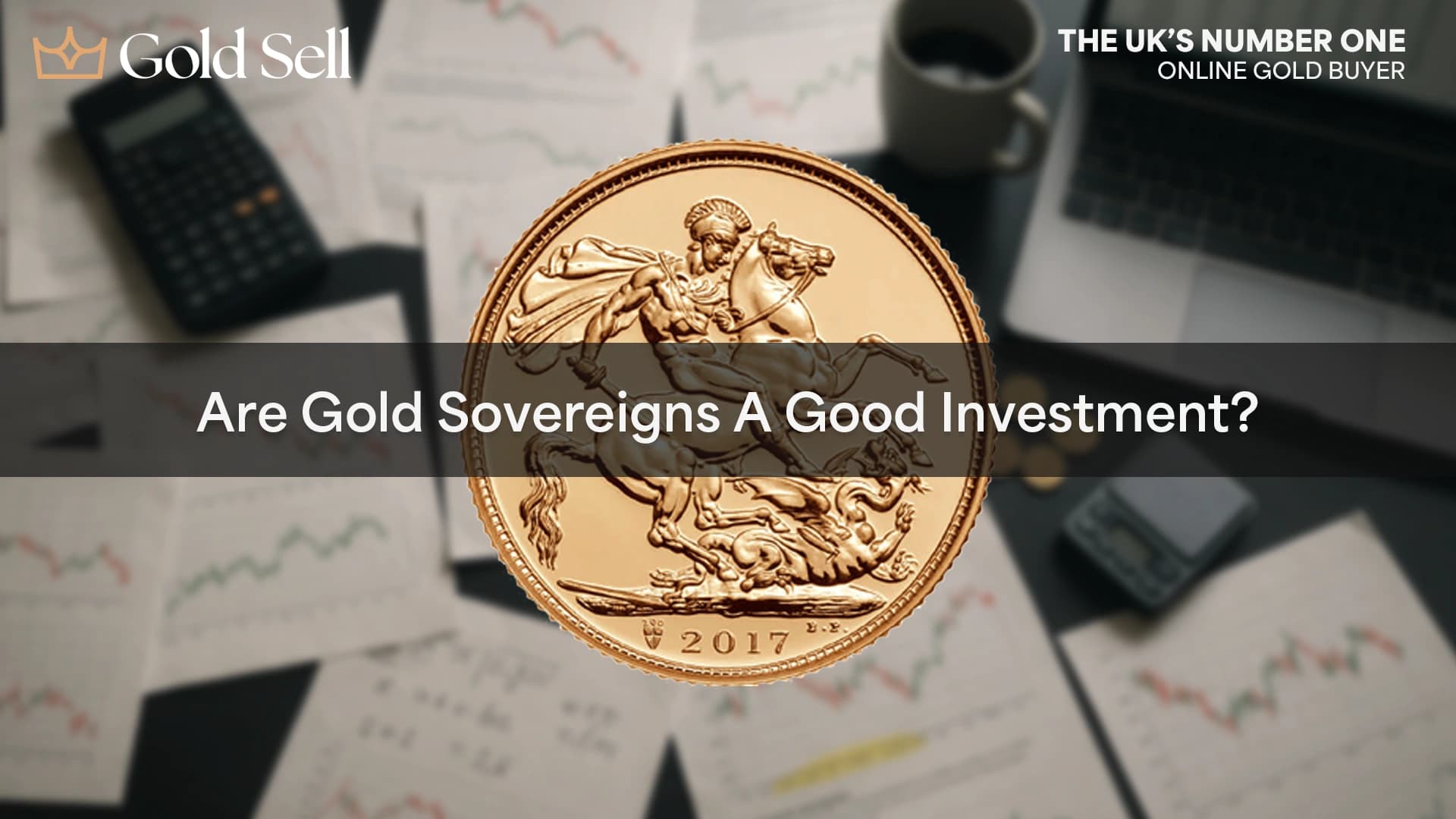
Yes – gold Sovereign coins are widely considered a good investment, especially for UK investors looking to hold physical gold. These historic £1 gold coins offer the intrinsic value of gold and unique tax advantages in the UK. In this article, we’ll explore why Sovereigns (and similar coins like Britannias) can be a great way to invest in gold, how their value has performed over time, and answer all the key questions on buying, selling, and tax aspects of gold Sovereigns.
Key Takeaways
- Gold Sovereigns are a strong gold investment: They hold permanent intrinsic value (based on ~7.32g of pure gold each) and have historically risen in price with the gold market. Unlike stocks or crypto, a Sovereign will always be worth its weight in gold, providing a stable store of wealth.
- Unique tax-free benefits for UK investors: British gold Sovereigns (and Britannias) are exempt from Capital Gains Tax because they are UK legal tender. They also qualify as investment-grade gold, so no VAT is charged on purchases. This means 100% of any profit is yours, a big advantage over gold bars or ETFs which can incur taxes.
- Easy to buy, sell and trade worldwide: Sovereigns are small (just over 1/4 troy oz) and highly recognised. Their popularity keeps dealer premiums low and makes them highly liquid – virtually any bullion dealer will buy them. You can sell one coin at a time as needed, giving flexibility that large gold bars lack.
- Potential numismatic upside: While most Sovereigns are valued mainly for gold, some older or limited issues can gain collector (numismatic) value. A Sovereign’s historical appeal or rarity can drive its price above the gold melt value, offering upside that a simple gold bar or ETF cannot provide.
- Sovereigns vs other gold options: For UK buyers, Sovereigns and Britannias are often the best coins for investment because of their tax-free status. They beat gold bars on tax and divisibility, and unlike gold ETFs or sovereign gold bonds, holding coins gives you tangible ownership with no counterparty risk. We’ll compare these options so you can decide what’s right for you.
Are Gold Sovereigns A Good Investment?
Gold Sovereign coins are generally regarded as an excellent investment for those looking to hold physical gold. They combine the safe-haven benefits of gold with unique advantages like tax exemptions and collector interest. If you’re considering investing in gold, Sovereigns (and Britannias) offer a great way to do so – even more so than gold bars in many cases.
One major reason is that British Sovereigns are exempt from Capital Gains Tax (CGT) in the UK. Because they are legal tender (£1 face value coins), any profits you make when selling Sovereigns are tax-free – you keep 100% of the gains. This is a huge perk for investors, since most other gold investments (bars, foreign coins, gold ETFs, etc.) could incur CGT if your profits exceed the annual limit. Sovereigns (and other UK coins like Britannias) neatly sidestep this, no matter how much they appreciate. They’re also VAT-free to buy in the UK, as they qualify as investment gold. In short, all the tax advantages are stacked in favour of Sovereign coins – you won’t pay VAT upfront or CGT on the back-end.
Beyond tax, gold Sovereigns have a proven track record of holding and growing value. Each coin contains 7.32 grams of pure gold (0.2354 troy oz), so its core value moves with the gold price. Over the long term, gold prices have trended strongly upwards. About a decade ago a Sovereign coin traded in the £200–£230 range (peaking at ~£203 in 2015; the last time it touched £250 was the 2011 gold-price spike). By 2023 the intrinsic value averaged ~£380 and hit ~£399 at year-end, and in April 2024 it set a new record of about £460. Today, a gold Sovereign coin is worth £726.99 based on the live gold price. That means if you had bought and held a Sovereign over the last 10+ years, the gold content alone more than doubled in worth, reflecting gold’s rise. Historically, Sovereigns have preserved wealth even through economic crises – they always have real value because of their gold content. Unlike a stock or crypto token, a gold coin can never go to zero. This reliability makes Sovereigns a popular choice for diversifying and safeguarding wealth.
Another benefit is liquidity and divisibility. Sovereigns are small, easy to store, and easy to sell worldwide. At just under 8 grams, each coin is a convenient unit – you can sell off one or two coins when you need to raise cash, rather than having to liquidate a large 1kg bar or withdraw from an ETF. All bullion dealers are happy to buy Sovereigns due to consistent demand, and private buyers love them too. In fact, Sovereigns are so sought-after that dealers sometimes pay a premium to get them from sellers (they know they can quickly resell them). The coin’s global recognition and 200+ year history mean it’s trusted everywhere. This liquidity and market depth gives investors confidence that they can easily trade Sovereigns at fair prices anytime.
Sovereigns vs gold bars: Many investors wonder whether to buy coins or bars. Gold bars (if from a reputable mint) will have the same gold content per weight, but in the UK gold bars are not CGT-exempt (since they’re not legal tender). If your gold increases in value, a large bar could trigger a capital gains tax bill when sold. With Sovereign coins you avoid that. Bars also come in larger weights, which can be less flexible – e.g. selling a 1kg bar (worth tens of thousands of pounds) is all-or-nothing, whereas the equivalent value in Sovereigns could be sold coin by coin. Sovereigns tend to have slightly higher premiums (per ounce) than a very large bar because they cost more to mint in quantity, but the difference is small and often outweighed by their convenience. In fact, Sovereigns are minted in large numbers which helps keep premiums low – you might pay on the order of 5–8% above the gold spot price for a standard Sovereign from a dealer, whereas smaller bars or some foreign coins can have higher markups. When selling, Sovereigns also fetch prices close to spot (minus a small dealer margin). And unlike a bar, certain Sovereigns might carry extra collector value – for example, an older Victorian-era Sovereign or a limited commemorative issue could appreciate beyond just gold content. Bars will only ever be worth melt value; Sovereigns have two value components (metal + potential numismatic premium).
Sovereigns vs gold ETFs: A gold ETF (exchange-traded fund) offers a “paper” way to invest in gold – you buy shares that track the price of gold, without holding the metal. While convenient, ETFs come with some ongoing fees and no tax advantage (any gains are taxable). You also rely on the financial institution; you don’t physically possess the gold. Sovereign coins give you direct, tangible ownership – no counterparty risk. You can hold them in your hand or a safe, completely outside the banking system. This is reassuring if you’re buying gold as a hedge against financial instability. Furthermore, profits on ETFs are subject to tax, whereas profits on Sovereigns are tax-free in the UK. On the other hand, ETFs are very liquid for trading and might suit short-term speculation on gold’s price. But for many, the peace of mind of holding real coins (and the enjoyment of owning a beautiful historic asset) makes Sovereigns the better long-term choice. Some investors actually do both – e.g. hold some physical Sovereigns as a core store of value, and maybe use an ETF for short-term adjustments or in tax-sheltered accounts.
Lastly, Sovereigns offer an intangible heritage value. They are pieces of history with iconic designs (St. George and the dragon) and often feature past monarchs. This can make the owning experience more rewarding than a generic gold bar or digital certificate. Collectors around the world seek out rare dates or mintmarks – if you happen to pick up a scarce Sovereign, its value could rise significantly beyond gold prices. For instance, the 1819 George III Sovereign is so rare only ~10 are known; one in decent condition sold for £186,000 at auction! We don’t recommend paying huge premiums unless you’re a knowledgeable collector, but it illustrates the potential upside. Even modern special editions (proof Sovereigns, etc.) can fetch more from collectors down the road. This blend of bullion and numismatic value is unique to coins like the Sovereign. It’s often said Sovereigns offer “the best of both worlds” – the solid gold investment plus a slice of history.
Bottom line: Yes, gold Sovereigns are a good investment. They provide a trusted, time-tested store of wealth with the bonus of being Capital Gains Tax free for UK investors. They are easy to buy, easy to sell, and have performed very well as gold has appreciated over the years. And if you enjoy history or coin collecting, you get the satisfaction of owning a classic coin that has been minted for over 200 years. Whether you’re diversifying a portfolio or starting a gold collection, Sovereigns tick a lot of boxes. In the next sections we’ll dive deeper into their value, where to buy/sell, and other common questions so you can invest with confidence.
How Much Are Gold Sovereigns Worth?
A gold Sovereign is worth essentially the value of the gold it contains – about 0.2354 troy ounces of pure gold – plus any small premium for the coin form. In most cases, an ordinary full Sovereign’s price closely tracks the current gold spot price. At a given moment, you can estimate a Sovereign’s intrinsic value (often called its melt value or scrap value) by multiplying 0.2354 oz by the prevailing gold price per ounce. For example, the live gold price per troy ounce is £3,088.06, so a Sovereign’s melt value is 0.2354 x £3,088.06 = £726.99. (In practice, dealers will quote buy/sell prices around that figure, with slight variation.)
Each full Sovereign coin weighs 7.98 grams total, of which 7.32g is pure gold (the rest is copper alloy for hardness). This has been the standard since 1817, so virtually all Sovereigns contain the same amount of gold regardless of year. As a result, most Sovereigns – unless rare or collectible – are worth just about their gold content value. They are considered bullion coins. An easy way to think of it: one Sovereign is a bit under 1/4 of an ounce of gold, so its value is a bit under 1/4 of the gold price per ounce.
In the market, you’ll notice that when you buy a Sovereign, the price may be slightly higher than the straight gold value (this is the dealer’s premium). Common Sovereign coins might retail at around 4–6% above spot for bullion investors. For example, if the melt value is £726.99, a dealer might sell the coin for around £756.07–£770.61. This premium covers the minting, distribution, and the dealer’s margin. It’s worth mentioning that these low 4–6% premiums typically apply to what dealers refer to as a ‘best value gold Sovereign’ — meaning they choose the year and condition of the coin you receive, usually from modern or common stock. If you’re looking for slightly older but still bullion-grade coins — such as a Gold Sovereign Victoria Young Head or a Gold Sovereign King Edward VII — the premium tends to rise towards 8–10% over spot. This is often because these coins, while not rare, are less common in high-grade condition, and buyers favour them for their historic appeal and visual quality, even though they’re still traded as bullion. Sovereigns actually have some of the lowest premiums among gold coins since they are so abundant and efficient to trade. Larger gold coins like 1oz Britannias can have even lower premium by percentage, and very large bars (~1kg) often have the lowest premium. Conversely, tiny coins (like a 1/10 oz) or obscure coins carry higher premiums. The Sovereign’s sweet spot of being small but widely available keeps its prices competitive for investors.
Likewise, when you sell a gold Sovereign, you might receive slightly less than the spot value – perhaps a few percent under spot – as the dealer needs a margin to cover costs and subsequently resell it. However, because Sovereigns are in high demand, the spread between buy and sell is usually narrow. All major UK bullion buyers quote live buy-back prices for Sovereigns that are very close to the metal value. For instance, you might get ~98% of spot value when selling a common Sovereign to a dealer. Always check with a couple of buyers to ensure you get a fair price.
Why don’t you get exactly spot price? The small difference accounts for the dealer’s overhead: melting or testing fees (if the coin’s purity needs verification), administration, insurance, and a profit margin. Remember, no one can buy or sell physical gold exactly at the market spot price – the spot price is a raw market number, and physical trading involves these small add-ons. But with Sovereigns, those add-ons are minimal. In fact, many “best value” pre-owned Sovereigns are often available for just a few pounds over their pure gold value, making them one of the most cost-efficient ways to buy physical gold.
Aside from gold content, certain factors can influence an individual Sovereign’s worth:
- Condition: Heavily worn or damaged Sovereigns (e.g. ex-jewellery pieces) might be bought only for melt value. Meanwhile, pristine uncirculated coins or proof versions might fetch a bit more from collectors. But generally, for common dates the difference is small – Sovereigns are durable 22 carat coins and most even circulated ones retain full gold weight.
- Year and Rarity: Most modern Sovereigns (late 19th century to now) were mass-produced. They trade interchangeably by gold weight (“a Sovereign is a Sovereign”). However, a few dates/mint marks are rare – for example, 1879 Shield-back or 1923 Sydney Mint Sovereigns can have collector premiums. If a Sovereign is rare, its price can exceed the gold value by a significant margin. Rarity is determined by mintage numbers and survival. As noted earlier, an extreme case is the 1819 Sovereign: though it’s the same size as any other, only 10 or so exist now, so collectors will pay six figures for one. Another example: a 1937 Edward VIII proof Sovereign (never released for circulation) is essentially priceless to collectors – one sold for £1 million in 2020. These are outliers; the average Sovereign you encounter will not have such rarity value, but it’s worth checking if you inherit or find an old Sovereign, just in case it’s a key date.
- Collectible Editions: Special edition Sovereigns, such as proof coins or anniversary issues, are often sold at a premium by the Royal Mint. Their value in the secondary market can include a collector premium. For example, a 1989 or 2017 proof Sovereign (with unique designs) might trade above bullion value to a collector. Generally, proof Sovereigns and commemoratives are “worth” more than spot when reselling to collectors, but if selling to a bullion dealer, you may only get melt value. We’ll discuss proof Sovereign coins in a later section.
- Half Sovereigns and others: A full Sovereign’s value is easiest to quote, but note there are half Sovereigns (approximately half the gold of a full) and even quarter Sovereigns issued recently. A half Sovereign’s worth is half a full Sovereign’s, etc. The same gold pricing principles apply – e.g. a half Sovereign contains ~0.1177 troy oz of gold, so it’s worth roughly half the full coin’s price. Often halves have slightly higher percentage premiums, but still closely follow gold’s price.
To sum up, the value of a gold Sovereign is primarily its gold melt value. As gold prices move, Sovereign prices move in tandem. When gold goes up £10/oz, a Sovereign’s intrinsic value rises about £2.35. When gold dips, the coin’s value dips accordingly (though strong collector demand can sometimes soften market dips as dealers are still buying). If you hear the term “gold Sovereign scrap price” or “gold Sovereign melt value”, that refers to this intrinsic gold content value. It’s the baseline price of the coin if you melted it down. Most Sovereigns will fetch at least this amount, if not a bit more. In contrast, a “numismatic value” refers to additional worth for rare/collectible features. For a detailed breakdown of current values — including today’s full and half Sovereign prices, plus how specific years and monarchs affect numismatic premiums — see our full guide on Gold Sovereign Prices.
As of today, with gold at £3,088.06 per ounce, a standard Sovereign’s melt value is £726.99. If you have a particularly old or rare one, it could be worth checking with a coin specialist, because you might get offers well above the gold content price in a numismatic auction. But for most investors, think of a Sovereign as roughly 1/4 oz of gold value. It’s a convenient unit that makes calculating your holdings quite straightforward. To stay up to date with the live gold price, check out our Gold Price Today page which covers the live gold price per gram for different purities as well as the live gold price per troy ounce, we update our live price display every 60 seconds, so it’s worth bookmarking the page if you’re looking for a reliable source.
Lastly, it’s worth noting that when you buy Sovereigns (or any gold) as an investment, you should factor the small buy-sell spread into your planning. This is similar to how currency exchange or stock trading works (there’s a bid/ask spread). Gold should be viewed as a medium to long-term investment; over a number of years, gold’s appreciation can far outweigh the ~3–5% entry premium. For example, gold’s price in GBP climbed ~20% in just 2020 alone – easily covering typical premiums. Over the past 20 years, gold in GBP has roughly quadrupled in value. So, the small premium you pay for a Sovereign is usually a minor factor in the long run. And with coins like Sovereigns, you’ve chosen one of the most price-efficient forms of gold (versus jewellery which might carry 20–300% markups!). In summary: a gold Sovereign’s worth = its gold content (0.2354 oz of gold) = a small market premium, plus any special collector value in rare cases.
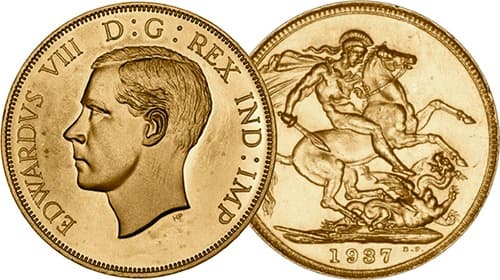
The ultra-rare 1937 Edward VIII gold Sovereign — one of only six trial coins ever produced — sold for a record-breaking £1 million, making it the most valuable British coin ever sold.
Where To Buy Gold Sovereigns?
You can buy gold Sovereigns from a variety of trusted sources – including official mints, reputable bullion dealers (online or high street), and even some banks or auction houses. The key is to buy from a reliable seller to ensure authenticity and fair pricing. Here are the most common avenues for purchasing Sovereign coins:
- The Royal Mint: As the original issuer of British Sovereigns, the Royal Mint sells new Sovereigns (bullion and proof versions) on its website and through certain outlets. Buying from the Mint guarantees authenticity. However, be aware the Royal Mint often charges a premium, especially for proof or commemorative editions. If you are strictly investing, their bullion-grade Sovereigns can be bought, but you might find better prices at dealers. The Mint is great for special sets or if you want a brand-new coin for a gift/collection.
- Authorised Bullion Dealers (UK): The UK has several well-established gold dealers where you can buy Sovereigns either online or in-store. These include companies like Chards Coin & Bullion (est. 1964), BullionByPost, Atkinsons, The Britannia Coin Company, Sharps Pixley, Hatton Garden Metals, and more. Such dealers typically offer a range of Sovereigns (current year, mixed dates, graded coins, etc.) at competitive prices. Online dealers will let you order and pay through their website, then deliver the coins insured to your door. Local coin shops or bullion shops also sell Sovereigns over the counter. Always check that the dealer is reputable – look for membership in trade associations (like BNTA in the UK) or strong customer reviews. The advantage of dealers is that you can compare premiums and stock; many have “best value” pre-owned Sovereigns which are often the cheapest way to buy physical gold.
- Coins shows and auctions: If you are after specific dates or potentially lower prices, coin fairs or auctions might be an option. Numismatic dealers or auction houses (like Spink, DNW, etc.) sometimes have bulk lots of Sovereigns. However, if you’re new, stick to well-known auctioneers to avoid counterfeit risk, and remember to factor in buyer’s premiums at auctions. This route is more for collectors seeking rare variants – for general investment, bullion dealers are simpler.
- Banks: Unlike some countries, most high-street banks in the UK do not routinely sell gold coins these days. A few banks offer gold trading accounts or will source coins for high-net-worth clients, but generally you won’t walk into Barclays or HSBC and find gold Sovereigns for sale. Instead, banks might refer you to their partnered precious metal firms. So, don’t expect to buy coins at your local bank branch; go to a dedicated gold dealer.
- Peer-to-peer marketplaces: Some people buy Sovereigns on platforms like eBay or from private sellers. Caution is strongly advised here: the market is rife with counterfeits and over-graded coins when dealing peer-to-peer. If you’re experienced and know how to authenticate coins (and the price is right), you can find deals from private sellers. But if you’re a beginner, it’s safer to purchase through reputable dealers who guarantee the coin’s authenticity. The small premium is worth the peace of mind.
No matter where you buy, do some homework on current gold prices and premiums. Check a few dealer websites to see what the going rate for a Sovereign is that day. This will help you spot if an offer is too high. Also, ensure the coin you receive is indeed what you paid for – e.g. the correct weight, year, and condition. Authentic Sovereigns have well-known specifications (22mm diameter, 22 carat gold, iconic designs). If buying online, stick to sites that offer insured delivery and a return policy. On delivery, you can weigh the coin and even have it professionally verified if you want extra assurance (though with well-known dealers this is usually not necessary).
Buying gold Sovereigns online is very popular now – it’s quick and you often get better prices due to competition. Just make sure the website is legitimate. Look for physical address, contact info, and VAT registration or company number on the site (UK dealers should display these). Also, confirm that the Sovereigns you’re buying are sold as VAT exempt (they should be, as all Sovereigns minted after 1800 of 22ct purity qualify). Reputable dealers will list prices as VAT-free for Sovereigns.
In summary, the best places to buy gold Sovereigns are from established bullion dealers or coin specialists. For example, Chards, BullionByPost, Atkinsons, GoldCore, Sharps Pixley, and The Royal Mint are all common sources in the UK market (among others). You can shop around for the lowest premium or the specific coin you want. The market for Sovereigns is very active, so take advantage of that competition. And once again – avoid any sketchy sellers or deals “too good to be true”. Sticking with trusted sources ensures you get genuine Sovereigns in the condition advertised. With a bit of due diligence, buying Sovereigns can be a smooth and safe process.
(Pro tip: When buying online, check if the dealer offers a better rate for paying by bank transfer vs card. Many offer a discount for bank payments. Also, consider buying multiple coins at once – dealers often have price breaks at quantities like 5+, 10+ coins where the premium per coin drops.)
Where To Sell Gold Sovereigns?
You can sell gold Sovereigns to any reputable coin dealer, bullion buyer, or gold buying service – the key is to shop around for the best price and a trustworthy transaction. Sovereigns are widely traded, so you have plenty of options when it comes time to sell:
- Many people consider selling their gold Sovereigns back to bullion dealers or coin shops, especially those offering “live buy-back prices” online. However, in our experience, these advertised prices often include small print — typically using the term “up to” — which gives dealers the flexibility to pay less than the stated rate. We regularly speak to customers who come to us after being disappointed when their dealer refused to honour a previously agreed buy-back price, citing reasons like condition, market movement, or stock levels. While the idea of locking in a price online may sound reassuring, it’s not always upheld in practice. If you’re thinking of selling, it’s important to deal with a company that offers transparent pricing and honours its valuations fairly and promptly — without hidden caveats. Read customer reviews published online to see if others have experienced this frustration first.
- Online Gold Buying Services: At GoldSell, we provide a trusted and easy way to sell your gold coins, jewellery, and unwanted gold from the comfort of your home with just a quick trip to the post office. We’ve partnered with Royal Mail to offer pre-paid, fully insured and tracked next day delivery, so you can send your gold to us safely and securely. Once we receive your items, our experts will assess them and contact you with a clear and competitive offer. If you accept, we process your payment the same day, often within just 20 minutes. There are no hidden fees, no pressure to sell, and no hassle. Our process is simple, secure and built around trust, which is why so many people choose GoldSell when they want a fast and fair way to turn their gold into cash.
- Auction Houses (for rare Sovereigns): If you suspect your Sovereign has significant collector value (e.g. a key date or proof set), you might consider selling via a coin auction to get competitive bidding. Auctioneers like Spink, DNW, or even eBay (for smaller items) can expose your coin to many buyers. The upside is potentially achieving a higher premium for rarities; the downside is auction fees and the time/wait involved. For a normal Sovereign, auctions aren’t necessary – a dealer will give close to melt price immediately. But for an 1817 or a proof error coin, an auction might bring out collector competition willing to pay above melt. It comes down to how special the coin is.
- Private Sale: Selling to another individual (a collector friend or through a forum) could net you a bit more than dealer price (since you cut out the middleman). For example, if gold spot is £726.99 for a Sovereign, a collector might pay you £726.99 directly, whereas a dealer might have paid between £683.37 and £697.91. However, approach private sales with caution – ensure secure payment (cash in person at a bank, or verified bank transfer) and preferably deal with people you trust. If using online classifieds, be very careful about safety and fraud.
When selling, keep in mind: Sovereigns are capital gains tax free for UK residents, so you don’t need to worry about any tax paperwork on your profits which is another reason they’re ideal to sell when the price is right. Also, no need to have the original receipt or certificate (bullion Sovereigns usually don’t have certificates anyway); the coins themselves are the assets. Just ensure they are genuine (if you bought from good sources, they should be). If your Sovereigns are rare or proof grade with boxes, including any documentation or original packaging can help maximise value.
A good strategy is to check a price comparison of a few gold buyers on the day you decide to sell. Many websites list their buying price per Sovereign openly. Some dealers even offer to beat competitors’ quotes if you show them.
The selling process (online) typically works like this: You contact the buyer and get an initial quote or lock-in price (some lock the price at current market when you commit, others pay the day’s price when received). You securely mail the coins (usually via Royal Mail Special Delivery which is insured). The buyer receives and verifies the coins, then issues payment to your bank or sends a cheque. This all can happen within 24–48 hours. Reputable gold buyers provide insured post, meaning if anything were to happen in transit, you’re covered – but use the provided materials and follow their instructions for insurance limits.
If selling in person, try to go during a time when gold prices are high (of course) and when the shop is not about to close (so they can test/verify without rush). The dealer might do a quick density test or XRF scan on a random coin to ensure authenticity. Genuine Sovereigns are well-known, so this usually isn’t an issue unless you have unusual pieces. You’ll then get paid likely via bank transfer (most don’t keep huge cash on hand) or instant payment methods. Don’t be afraid to ask multiple dealers – if you have many coins, even a £5 difference per coin adds up.
In summary, selling gold Sovereigns is straightforward: go to a bullion buyer or coin dealer, online or offline, and trade them in. Sovereigns’ popularity means there’s always a buying market. Just do your due diligence to get a competitive price and use a trustworthy service so you feel comfortable sending off your gold. Fortunately, in the UK there are many professional gold buyers that make the process safe and easy, with insured postage and prompt payment. By comparing offers and checking credentials, you can confidently turn your Sovereigns back into cash whenever you need to, knowing you got a fair deal.
Today's Live Gold Prices
To help you understand the current value of your gold, we’ve included our live gold price chart below. These prices update daily based on the latest gold spot price and are particularly useful when estimating the melt value of coins like the gold Sovereign. Many people find it easier to work out value using the 24ct price per gram rather than dividing the troy ounce rate.
Here’s how to estimate the melt value:
- Full Sovereign: Multiply the 24ct price per gram by 7.32g (the pure gold content of a full Sovereign)
- Half Sovereign: Multiply the 24ct price per gram by 3.66g (the pure gold content of a half Sovereign)
This gives you a good indication of the intrinsic gold value of your coins based on today’s live price.
Live Gold Price Per Gram
Gold price last updated:
Wednesday, 21 October 2026, 12:32.
The LBMA (London Bullion Market Association) spot price changes daily.
The prices displayed are based on the global market rate for pure 24ct gold, known as the spot price. Like all gold dealers, GoldSell pays a percentage of this rate to account for assaying, refining, secure logistics, market volatility, and handling costs. We consistently offer among the highest payout rates in the UK, with the exact percentage increasing based on the weight and purity of the gold you sell.
What Are The Best Gold Coins To Buy For Investment In The UK?
For UK investors, the best gold coins to buy are typically those that combine high gold purity with tax advantages, notably the Britannia and the Sovereign, as both are UK legal tender and thus free from capital gains tax. These two coins are the most popular choices for British gold investors because they offer maximum tax efficiency, strong liquidity, and low premiums. Let’s break down why they’re top of the list and also mention a few other coin options:
- Gold Sovereigns (Britain’s £1 coin, ~0.2354 oz of gold): As discussed throughout this article, Sovereigns are an excellent investment coin. They are CGT-free and VAT-free in the UK, meaning all your gains are tax-free. Their convenient small size makes them ideal for gradual investing – you can buy a few at a time as budget allows. Sovereigns also carry the prestige of over 200 years of history and are recognised worldwide. Premiums on bullion Sovereigns are relatively low, and the coins are durable (22 carat gold). They’re especially good for those who want fractional gold pieces or a mix of investment and collecting. Many UK investors start with Sovereigns or keep a portion of their gold in Sovereigns for diversification.
- Gold Britannias (Britain’s £100 coin, 1 troy ounce of gold): The Britannia 1oz gold coin is another top choice for UK investors. Britannias have been minted since 1987 and, since 2013, are made of 24-carat gold (99.99% pure). Like Sovereigns, Britannias are legal tender UK coins and thus exempt from Capital Gains Tax and VAT. A Britannia contains a full ounce of gold, so it’s larger and typically more expensive per coin. The benefit is you get a lot of gold in one coin with usually a very low premium over spot (often just 3–4%). Britannias are highly liquid and internationally known. They now also feature advanced security features to prevent counterfeiting. If you are investing larger sums, Britannias allow you to acquire gold efficiently ounce by ounce, while Sovereigns allow smaller increment investing. Many UK stackers accumulate Britannias for core holdings and Sovereigns for flexibility. Both coins’ CGT-free status puts them ahead of foreign coins for UK portfolios.
- Other Royal Mint coins (e.g. Queen’s Beasts, Lunar series): The Royal Mint has issued other series in gold (like the Queen’s Beasts 1oz coins, the Great Engravers series, etc.). These, when denominated in pounds sterling, also share the CGT exemption (since they are legal tender UK coins). So they can be good investments too. However, they sometimes carry higher premiums or collectible value. For pure investment, the standard Britannia and Sovereign tend to have the best liquidity and lowest spreads. But if you like variety, coins like the Gold Tudor Beasts or special £100 coins are still CGT-free options in the UK market.
- Foreign Bullion Coins (Krugerrand, Maple Leaf, American Eagle, etc.): These are globally popular gold coins – South African Krugerrands, Canadian Maple Leafs, American Gold Eagles, Austrian Philharmonics, Chinese Pandas, etc. They are all 1 oz (or available in fractions), widely recognised, and usually sold VAT-free in the UK as long as they meet purity rules. The big difference is CGT: Foreign coins are not exempt from UK Capital Gains Tax because they aren’t UK legal currency. If you sell a large holding of them at a profit above the CGT allowance, you’d owe tax. That said, if you’re investing a modest amount, you might never hit the CGT threshold – but note the allowance has been reduced recently. Many UK investors still buy some of these coins for diversification or because they like the design. For example, Krugerrands are very common and often one of the cheapest one-ounce coins. Maple Leafs (1 oz .9999 gold) are another with low premiums. If CGT is not a concern for you, these coins are fine investments too – gold is gold. Just remember, if you became a heavy investor with lots of gains, those could be taxable. Thus, from a tax planning perspective, UK coins have the edge in the long run.
- Small denomination coins vs larger: In the UK, best coins for investment often means balancing flexibility with premium. Sovereigns let you invest in small chunks; Britannias give you larger pieces. If you only have a certain budget, Sovereigns or half-Sovereigns might be best so you don’t have to save up for one big coin. If you have a lump sum to allocate, Britannias might achieve a slightly better price per ounce. It can be wise to hold some of each. Both are top-tier choices, as mentioned.
- Modern bullion vs old coins: All Sovereigns since 1817 are technically bullion grade, but some prefer newly minted coins (shiny, perfect condition), while others are happy with pre-owned Victorian/Edwardian Sovereigns. For pure investment, the “best” coin is one with low premium and no historic value attached – often dealers will sell Best Value Sovereigns, which could be any year in average condition, at a lower price. These are great for stacking. By contrast, a specific year like an 1887 Jubilee head Sovereign might cost more due to collector demand. So unless you have a collecting interest, stick to common dates or whatever is cheapest. The gold content is the same. For Britannias, modern ones (post-2013) are 24ct and have added security features, but older ones (1987–2012) were 22ct and a bit less popular now. Still, any Britannia counts as 1 oz fine gold, so it’s not a big difference – but investors tend to favour the newer 24ct Britannias from 2013 onward.
In summary, the best gold coins to buy for investment in the UK are gold Sovereigns and gold Britannias. These coins are free from both VAT and Capital Gains Tax for UK residents, which maximises your returns. They are minted by The Royal Mint to high standards, widely accepted, and easy to sell. Most importantly, they allow you to invest in gold without the tax drag that other assets might have. If you stick to those, you can’t go far wrong.
Honourable mentions: if one is interested in diversification beyond UK coins, 1 oz coins like the Krugerrand or Maple Leaf can be good (they often come slightly cheaper on the buy side). Just be mindful of the CGT difference. For many casual investors who might only ever sell a few coins, that may not matter. But if you plan to build a substantial gold portfolio, why not keep it all CGT-free by using Sovereigns/Britannias? It simplifies things.
One more consideration – liquidity and familiarity. In the UK, any dealer will instantly recognise a Sovereign or Britannia and pay top rates. They’ll also know coins like Krugerrands well. More exotic coins (say a Mexican 50 peso or a French Napoleon) are still gold but might have slightly less demand or need a knowledgeable buyer. Generally, sticking to top 5–10 world bullion coins is safest. And out of those, the two UK ones have the tax edge. Thus, they are “the best” for UK investors in most cases.
To quote the Royal Mint: “All gold bullion coins produced by The Royal Mint are classed as CGT-free investments; this includes gold Britannia coins, and gold Sovereigns…” – take advantage of that status when choosing your investment coins.
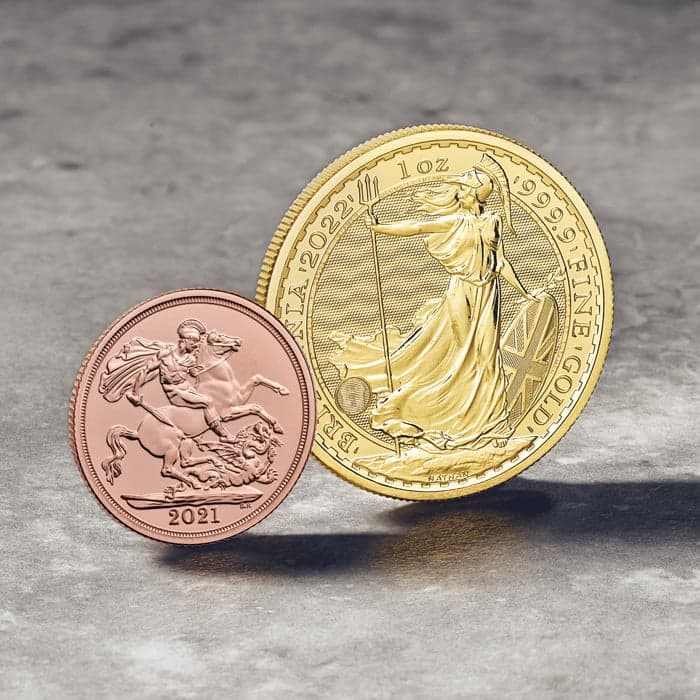
The Gold Sovereign and the 1oz Britannia are widely regarded as the best gold coins for investment in the UK. Both are exempt from Capital Gains Tax for UK residents, making them more tax-efficient than other global bullion coins like Krugerrands or American Eagles. While the Sovereign contains just under a quarter ounce of gold and is ideal for flexible selling, the Britannia offers one full ounce, making it well suited for those seeking larger value in fewer coins.
Today's Gold Sovereign Scrap Prices
The “scrap price” or melt value of a gold Sovereign is simply the value of its gold content at today’s gold rate. A full Sovereign contains approximately 7.32 grams of pure gold, which is 0.2354 troy ounces. So to find the Sovereign’s melt value, you multiply 0.2354 by the current gold price per troy ounce.
For example, as of today, gold is trading at £3,088.06 per ounce. Using that, the gold Sovereign melt value works out to be 0.2354 x £3,088.06 = £726.99. This means if you literally melted a Sovereign for its gold, the raw gold would be worth £726.99 based on today’s gold rates. In other words, £726.99 is the scrap price a refiner might pay for the coin’s gold (minus any fees) or the baseline value a bullion dealer would consider when buying the coin from you.
It’s important to note that the scrap/melt price is a base figure – when you actually sell a Sovereign, you might get a bit less (dealers often pay a few percent under melt) or even a bit more (if the coin is in high demand or has collector value). But the melt value is the fundamental floor for the coin’s worth. Gold buyers use the live gold price to continually update their Sovereign buy prices, essentially tracking this melt value in real time. Many websites will show a “gold Sovereign scrap price” that auto-adjusts with the market. The prices you see in this article, for instance, update in line with the live gold price every 60 seconds during trading hours.
For instance, when the gold price rises, the melt value of a Sovereign increases accordingly. If the gold price falls, the melt value drops too. This means the value of a Sovereign can fluctuate daily based on movements in the live gold market. At any given time, you can calculate a Sovereign’s melt value with the simple formula above.
People sometimes refer to “scrap gold Sovereigns” when talking about coins that are not collectible and would be sold purely for gold content (like a very worn coin or a common date). Dealers might lump these with other 22ct scrap gold. However, because Sovereigns are recognised, they usually aren’t literally scrapped (melted) unless in awful condition – instead they’re resold as coins. The term “scrap price” just indicates the intrinsic value.
As an investor, knowing the scrap value is useful. It tells you how much of what you paid is actual gold versus premium. For example, if you paid £756.07 for a Sovereign and the scrap is £726.99 then a 4% premium was added. If scrap rises 4%, you’ve broken even just on gold. It also helps you evaluate offers when selling – if someone offers significantly below melt, that’s not a good deal. Reputable buyers in the UK often pay around 95–98% of the gold melt value for Sovereigns, because they know they can re-sell them as coins.
To check today’s Sovereign melt value, you can look at gold price per gram: Gold per gram today (at £3,088.06/oz) is £99.28/gram (£3,088.06 / 31.103g). A Sovereign has 7.32g fine gold, so 7.32 × £99.28 = £726.99. If the 24ct gold price per gram changes, just multiply by 7.32g to get a Sovereign coin’s value.
In summary, the gold Sovereign melt value represents what the coin is worth for its gold if melted down. As of now that’s £726.99 and, of course, it changes with the global gold market. When planning to buy or sell, keep an eye on this scrap price – it’s the benchmark for fair pricing. Luckily, with Sovereigns, you’ll usually get very close to this value when selling, because they are so liquid. And when buying, you won’t pay too far above it either (especially for pre-owned coins).
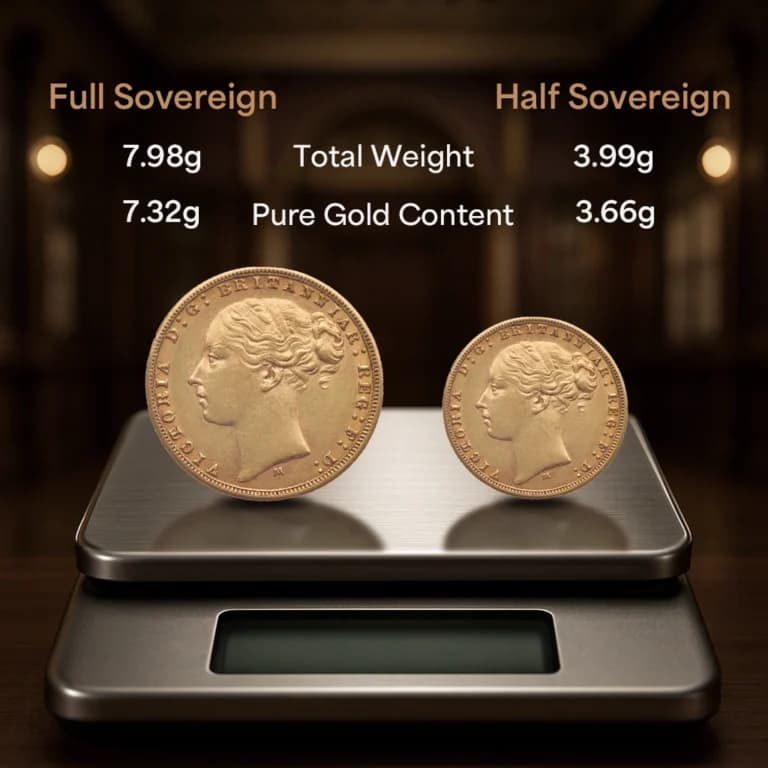
Understanding gold Sovereign weight and purity is key when calculating scrap or melt value. A full Sovereign contains 7.32g of pure gold, while a half Sovereign contains 3.66g. These consistent specifications make it easy to estimate their live melt value using today’s gold price per gram.
Are Gold Sovereigns Exempt From Inheritance Tax?
No – gold Sovereigns are not exempt from UK Inheritance Tax (IHT). They form part of your estate’s assets like any other property or investment. There’s a common misconception at times that certain coins might dodge IHT, but in the UK there are no special inheritance tax breaks for gold coins. If you pass away, the value of your Sovereigns will be included in your estate valuation, and if your total estate exceeds the IHT threshold, then those coins could be subject to inheritance tax (which is typically 40% on the value above the threshold).
The current nil-rate band (IHT-free allowance) is £325,000 for an individual, potentially up to £500,000 if a home is left to direct descendants (as of mid-2020s). Anything above that can incur 40% tax, unless left to a spouse (spouses are IHT-exempt transfers). Gold Sovereigns, unfortunately, do not enjoy a specific exemption under IHT laws. They’re treated like any other movable property or investment – be it cash, stocks, jewellery, etc.
However, there are some general ways people use gold in estate planning, though these are not exemptions per se:
- Discretion and Portability: Gold is a private asset – you don’t have to register it anywhere. Some people like that they can gift gold coins during their lifetime without leaving a big paper trail (of course, large gifts may still count for IHT if within 7 years). The portability and universally recognised value of Sovereigns can help quietly transfer wealth. But legally, if the coins are still in your possession at death, they are part of the estate and taxable.
- Gifting before death: You can gift Sovereigns to family or others while you’re alive. If you survive 7 years after the gift, they’re out of your estate for IHT. Even if you don’t, there are tapering reliefs after 3 years for larger gifts. Some people give gold coins as birthday or Christmas presents (taking advantage of the annual gift allowance of £3,000). This can gradually move wealth to heirs in a potentially IHT-free way. Sovereigns make for convenient gifts of value.
To be crystal clear: Capital Gains Tax and VAT are different from inheritance tax. Gold Sovereigns are exempt from CGT and VAT (which is hugely beneficial while you own them). But when it comes to passing them on after death, Inheritance Tax can still apply. For example, if you have £50,000 worth of Sovereigns and leave them to your children, that £50k is added to your estate value. If your estate was already above the threshold, that £50k might effectively incur £20k of IHT (40%). There’s no law saying “gold coins are excluded from IHT” – unfortunately not.
The Royal Mint and bullion industry sometimes mention that gold can be useful in estate planning since it’s not registered and can be gifted more easily than, say, property. And indeed some folks keep physical gold as a discreet store of wealth to pass on. But legally speaking, HMRC would expect IHT on it if discovered in the estate. The onus is on executors to report all assets.
So, the takeaway is: Don’t assume your Sovereigns avoid inheritance tax. They do not have an IHT exemption. Plan accordingly – either by gifting them ahead of time within allowances or by factoring them into your estate value and perhaps using life insurance or other measures to cover the potential tax.
One small consolation: If your beneficiary is a spouse or civil partner, anything you leave to them (including Sovereigns) is free of IHT. They can inherit your gold without tax. It’s only when it passes to the next generation or other beneficiaries that the tax kicks in beyond the threshold.
In summary, gold Sovereigns are treated like any other personal asset for inheritance tax purposes – there is no special exemption in UK law. It’s an area often confused with their CGT-free status, but the taxes are different. Always consult an estate planning advisor if you have substantial assets in gold; they can help utilise gift rules or trust structures if appropriate. But purely by default, HMRC will want their share of any valuable coins in an estate that crosses the limit.
What Is A Proof Sovereign?
A “proof Sovereign” is a special collector’s edition of the gold Sovereign coin, struck with an exceptional level of quality and detail by The Royal Mint. In contrast to standard bullion Sovereigns (which are made for circulation or investment), proof Sovereigns are made using polished dies and extra care to create a flawless, mirror-like finish and sharp details. They are primarily intended for collectors and commemorative purposes, not for everyday transactions.
Here’s what characterises a proof Sovereign:
- Superior minting process: Proof coins are struck multiple times (often twice) with slow pressure on specially prepared blanks. This results in frosted, intricate details on the design and a highly polished, mirror field (background). The contrast gives a beautiful cameo effect. Every element of the design appears crisp. By comparison, a bullion coin is typically struck once at higher speed, which is efficient but not as refined.
- Limited mintage: Proof Sovereigns are usually issued in limited quantities, often to mark special occasions (e.g. coronations, anniversaries, or annual proof sets). Because they’re limited edition, they come with Certificates of Authenticity and often in elegant presentation boxes. For example, The Royal Mint might release a few thousand proof Sovereigns each year or special designs only once. This scarcity can make them more valuable to collectors over time.
- Not for circulation: While proof Sovereigns are legal tender £1 coins, they are not meant to be spent. They often don’t even enter circulation because of their collectability and high premium. In fact, many proof Sovereigns don’t have a denomination written on them (Sovereigns never show “£1” on the coin anyway), but their legal tender status is mostly symbolic. People buy them to admire or as part of a collection, not to use as money.
- Cost and value: Proof Sovereigns are sold at a substantial premium above the gold content. You might pay several hundred pounds more than a normal Sovereign’s bullion value to get a new proof coin. This covers the extra craftsmanship, packaging, and limited nature. Do they hold that premium? Sometimes they do in the secondary market, especially if the coin is part of a popular series or is a particularly special design (like the 1989 proof Sovereign or the 2017 anniversary Sovereign, which became quite sought after). Other times, common proof years might only sell a bit above bullion down the line. Generally, proofs are for collectors, and a collector will pay more for a flawless coin with documentation. If you try to sell a proof Sovereign back to a normal bullion dealer, they might only pay for the gold weight unless they also deal in collectables. So, consider proofs as semi-numismatic items.
- Design differences: Proof Sovereigns sometimes feature unique designs that are not on regular circulation coins. For instance, the 1989 proof had a special design to mark 500 years since the first Sovereign; the 2017 proof had a privy mark for the 200th anniversary. These designs can make the proof coin especially attractive to collectors because they stand out from standard George-and-Dragon reverses. The obverses (portraits of the monarch) are usually the same as bullion coins, but the striking quality makes them appear much more refined.
In sum, a proof Sovereign is the “deluxe” version of the Sovereign coin – struck with exceptional quality, meant to be a collectible. They are often sold in proof sets or as individual premium coins to mark events. Many collectors enjoy assembling proof Sovereigns from each year or monarch because of their beauty and low mintages.
From an investment perspective, proof Sovereigns can appreciate in value, but they behave more like collector coins than pure bullion. Their value may depend on collector demand, condition (they should be kept pristine, ideally never removed from capsule), and rarity. Some proofs have done extremely well – e.g., the 2017 special design proof that originally sold for a few hundred pounds now fetching more due to demand. But one should not assume all proofs will gain big premiums; if many were minted or collector interest wanes, they might only be worth modestly above melt.
For most gold stackers, bullion Sovereigns are the go-to for investment, while proof Sovereigns are a way to also enjoy coin collecting. If you’re passionate about the design and the history, owning a proof coin is quite satisfying. They truly are tiny works of art – the level of detail and mirror finish can be stunning in hand.
To illustrate: a standard bullion Sovereign might have minor bag marks or a satin sheen from mass production. A proof Sovereign, by contrast, will look almost like a mirror with frosted reliefs, and come encapsulated. It’s the difference between a normal production car and a limited-edition hand-detailed model – both get you from A to B (or both contain the same gold), but one has that extra finesse.
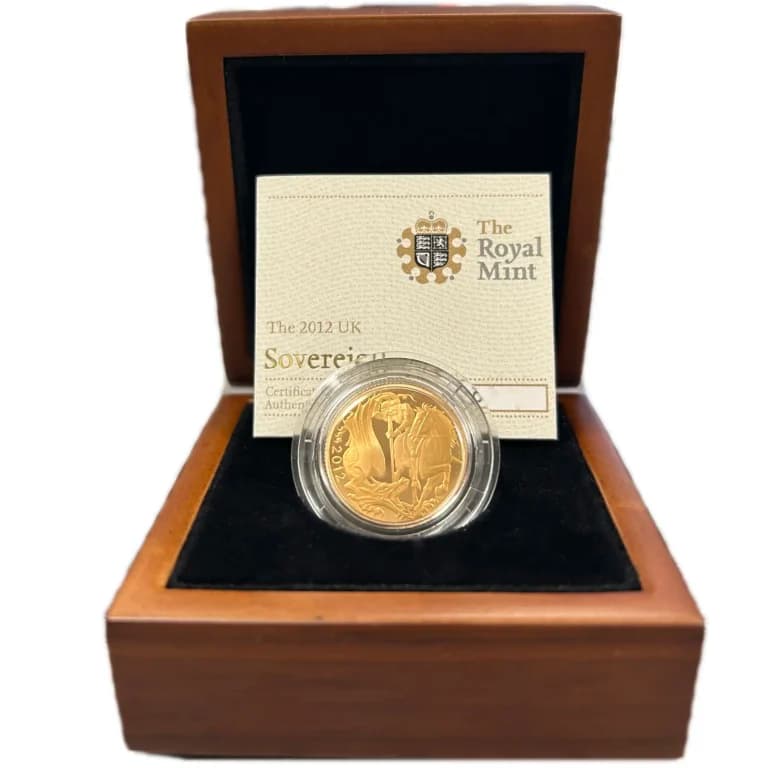
Gold proof Sovereigns, like this 2012 edition from The Royal Mint, are struck to a superior finish and typically come with a presentation box and certificate of authenticity. Unlike standard bullion coins, proof Sovereigns are favoured by collectors for their detail, mirror-like fields and limited mintage, which can command higher premiums in the market.
Frequently Asked Questions
Are gold Sovereigns a good investment?
Gold Sovereigns can be a good investment, offering tangible gold exposure, capital gains tax exemption in the UK, and potential numismatic premiums. They outperform gold bars for many, as their collectibility adds value. Unlike ETFs, they can be physically held. However, premiums and liquidity vary, so investors should weigh storage, resale, and dealer margins.
How much are gold Sovereigns worth?
Gold Sovereigns are currently worth £726.99, based on their gold content of 7.32 g and the current live gold spot price. Their value is mainly tied to the spot price of gold, but can also include a 4–6% dealer premium for standard bullion coins. Rare dates, historic editions, or collector-grade examples can command even higher prices depending on condition, mintage, and demand.
Are gold sovereigns capital gains tax free?
Yes, Sovereigns are capital gains tax‑free in the UK when sold at a profit, thanks to their status as UK legal tender bullion coins. This makes them more efficient than other bullion coins or ETFs that lack CGT exemption.
Where to buy gold Sovereigns?
Buy Sovereigns from reputable bullion dealers, the Royal Mint, and trusted online gold buyers. Always compare live spot-linked pricing, premiums, authenticity guarantees, and shipping insurance. Online dealers like us offer tracked, insured postage and transparent pricing, making home buying secure and convenient.
Where to sell gold Sovereigns?
Sell Sovereigns via trusted gold buyers, reputable dealers, auction houses, or private sales among collectors. Choose services with transparent offers, valid expertise, and fair premiums. Avoid dealers who advertise “up to” buy-back prices yet frequently refuse to honour them.
What are the best gold coins to buy for investment in the UK?
The best gold coins for UK investors are UK Sovereigns and 1oz Britannias—both are capital gains tax-exempt, highly liquid, and globally recognised. Other coins, like US Eagles or Krugerrands, can incur CGT. Sovereigns provide flexible denominations, while Britannias offer full-ounce bullion.
Gold Sovereign scrap price?
The current gold Sovereign scrap price, or melt value, is £726.99, based on 7.32 g of pure gold at today’s 24ct price per gram. For a half Sovereign, which contains 3.66 g of pure gold, the melt value is £363.50. These prices reflect the intrinsic gold content only and do not include any premiums for collectability or condition.
Are gold Sovereigns exempt from inheritance tax?
Gold Sovereigns are not automatically exempt from inheritance tax in the UK. They form part of an estate’s total value, which may be subject to IHT above the nil-rate band. However, holding them within an ISA or pension wrapper could mitigate IHT exposure.
Are gold Sovereigns legal tender?
Gold Sovereigns are legal tender in the UK with a face value of £1. However, their intrinsic gold and collector value far exceeds denomination value. That legal status ensures recognition and authenticity but they are not used for everyday transactions.
Are gold Sovereigns worth buying?
Gold Sovereigns are worth buying if you seek physical gold with capital gains tax benefits, long-term wealth preservation, and collector appeal. They combine bullion security with potential numismatic premiums. Premiums may exceed spot price slightly, but tax efficiency and liquidity often offset the extra cost.
Do gold Sovereigns go up in value?
Yes, gold Sovereigns typically go up in value over time, driven by rising gold prices and occasional numismatic demand. Their value fluctuates with the gold spot market, while limited mintages or historical designs can boost collector premiums beyond melt value.
Do gold Sovereigns hold their value?
Gold Sovereigns generally hold their value well due to consistent gold content, global demand, and tax advantages in the UK. While premiums and spot prices may vary, the gold bullion backing ensures long-term value retention.
What is the best gold Sovereign to buy?
The best gold Sovereign depends on your goals: modern bullion versions offer low premiums and ease of resale, while historic editions like Victoria Young Head or Edward VII series can fetch numismatic premiums. Balance collectability with cost and liquidity.
Which year gold Sovereign is the most valuable?
Some of the most valuable years include rare mintages like the 1937 Edward VIII trial Sovereign, with only six produced, and key dates like 1900M Victoria Young Head. Value depends on rarity, condition, and collector demand.
What is a proof Sovereign?
A proof Sovereign is a specially struck, high-quality gold coin produced by the Royal Mint for collectors. It features mirror-like backgrounds, frosted reliefs, and limited mintage. Proof Sovereigns usually carry higher premiums than bullion coins but offer superior detail and presentation.
What was the original value of a gold Sovereign?
The original Sovereign was introduced in 1489 under Henry VII, but the modern version from 1817 under George III had a face value of £1. Its value today is tied to its gold content (£726.99+) and collector demand, not its £1 denomination.
Interested in selling gold with the UK’s highest paying gold buyer? Visit our Sell Gold page to get a competitive valuation – we provide fully insured postage and fast payment.
For more insights and the latest gold price today, keep an eye on our live charts and blog updates.