Can White Gold Tarnish?
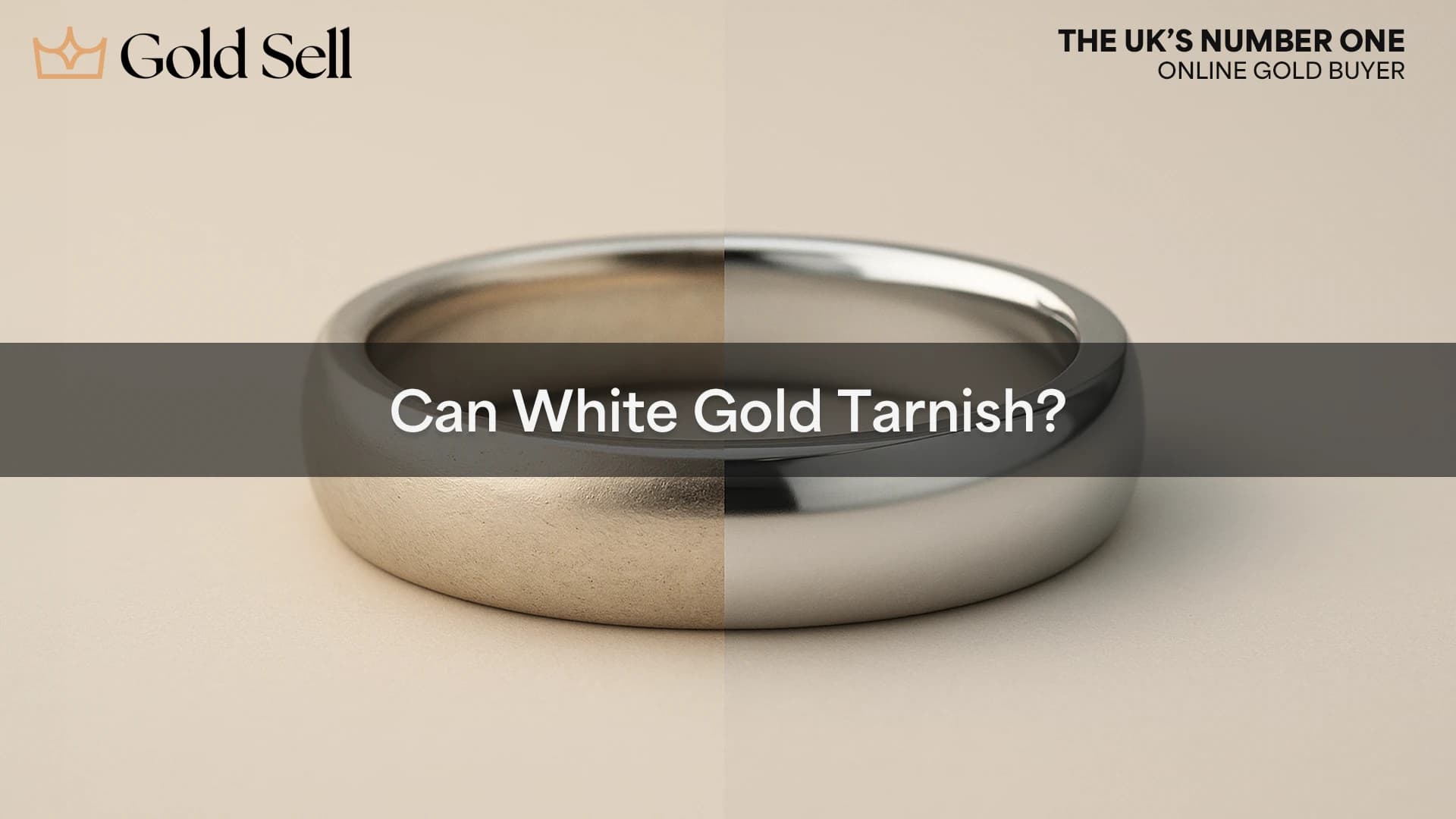
White gold is prized for its bright silvery-white shine, and many people wonder if it can tarnish or discolour over time. The short answer is no, white gold itself does not tarnish like silver – it doesn’t develop the dark patina that tarnishable metals do. However, white gold jewellery often has a rhodium plating that can wear away, causing the piece to lose its lustre or appear yellowish. In this article, we’ll explain exactly what happens to white gold over time and how to keep it looking brilliant.
Key Takeaways
- White gold doesn’t actually tarnish. Its alloys are not prone to oxidizing, so it won’t turn black or green like some metals. What people see as “tarnish” is usually the rhodium plating wearing off, revealing a slight yellow tint beneath.
- White gold can turn yellowish as it ages. Over months or years of wear, the rhodium finish can fade, making the jewellery look more yellow or dull. This is normal and not a flaw – it just means it’s time for a touch-up.
- Rhodium plating gives white gold its bright colour. Most white gold is coated with rhodium, a hard, inert metal that makes it look “icy” white and adds scratch-resistance. The underlying white gold alloy is usually a pale off-white with a hint of yellow or grey.
- Regular maintenance keeps white gold shining. Plan on replating (redipping) white gold jewellery periodically (often every 1–3 years) to restore its brilliant white surface. Avoid harsh chemicals and remove rings before swimming or cleaning to make the finish last longer.
- Cleaning white gold is easy. Gently wash your white gold pieces with warm water and mild dish soap, using a soft toothbrush to lift any dirt. Do not use silver tarnish cleaners on white gold—they can damage the rhodium layer.
- White gold vs. platinum: colour and care. White gold (especially when rhodium-plated) looks very similar to platinum but costs less. Unlike platinum, white gold’s plating needs occasional upkeep. If you prefer a warmer hue and zero plating maintenance, you can opt for unplated white gold, which has a subtle champagne tone.
Can White Gold Tarnish?
White gold is an alloy of gold mixed with “white” metals like nickel, palladium, zinc, or silver, often coated with rhodium for extra shine. Thanks to this composition, white gold itself is highly resistant to tarnishing. Tarnish is the darkening or discolouration that happens when metals like silver or copper react with oxygen or sulfur. Gold is a noble metal that doesn’t corrode or oxidise easily, and the typical metals used in white gold alloys are also not very reactive. As a result, pure white gold jewellery won’t develop a black or green tarnish layer in the way sterling silver does.
That said, many people notice their white gold rings or necklaces looking dull or developing a yellow tinge after a year or two. This isn’t “tarnish” in the traditional sense – it’s actually the rhodium plating wearing thin. White gold’s brilliant shine comes from that thin rhodium layer, and over time it can rub off with normal wear. When the rhodium fades, the slightly off-white colour of the underlying gold alloy can show through, making the piece look less white. This natural colour change is often mistaken for tarnish, but no chemical tarnishing has occurred on the gold itself.
In fact, jewellery experts confirm that white gold doesn’t tarnish. A GIA Applied Jewellery Professional explains that the “colour change many people believe is tarnish is actually the result of the jewellery’s rhodium plating fading”. Similarly, the team at Brilliant Earth notes, “Unlike silver, white gold doesn’t develop tarnish. However, its rhodium plating may wear over time, requiring periodic replating to maintain its brilliant white finish”. So the metal isn’t tarnishing or degrading; it’s just losing a cosmetic coating.
Why doesn’t white gold tarnish? It comes down to chemistry. Tarnish is essentially metal corrosion (for example, silver reacting with sulfur in the air to form black silver sulfide). Gold’s atomic structure makes it very unreactive – that’s why 24k pure gold coins and bars stay shiny forever. In white gold, the other metals in the alloy (like palladium or nickel) are chosen for their pale colour and relative resistance to corrosion. They don’t readily form oxides or sulfides either. Plus, the rhodium plating on white gold is extremely inert and corrosion-proof, acting as a shield against tarnish. So between a noble metal core and a rhodium shell, white gold jewellery is well-protected.
It’s worth noting that “white gold” is not a naturally occurring metal – it’s a man-made mix of yellow gold and white metals. Because pure gold is yellow, even a good white gold alloy has a hint of warmth. That’s why the jewellery industry started rhodium-plating white gold: to mask any yellow tint and give a bright chrome-like white look. High-street white gold jewellery is almost always rhodium-plated to resemble platinum’s colour. If you never replated a white gold ring, it would eventually appear a bit dull or creamy-coloured, especially next to a brand new piece. This change can be surprising if you expected it to stay stark white.
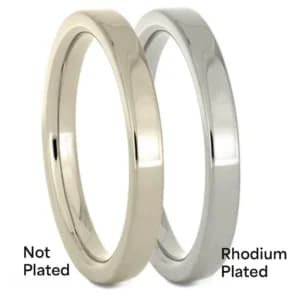
A visual comparison of unplated white gold (left) and rhodium-plated white gold (right). The natural alloy has a warmer, creamier tone, while rhodium plating gives it a bright, platinum-like finish.
UK jeweller Jodie Gearing cautions that buyers are often unaware of rhodium wear: those who purchase a white gold piece “will find it soon develops a ‘discoloured’, ‘yellowy’ patch where it wears most. This can ‘tarnish’ (excuse the pun) the whole experience, spoiling the enjoyment” of a special jewellery purchase. In other words, the only thing “tarnished” is the customer’s expectations! The gold itself remains solid; it just needs a refresh to restore its original white brilliance.
In summary, white gold metal does not tarnish or rust. If your white gold jewellery is looking off-colour, it’s likely due to normal wear on the rhodium finish or a build-up of dirt and scratches, not tarnish. Next, we’ll explore specific situations – like exposure to water – and how they affect white gold.
Does White Gold Tarnish In Water?
Water alone will not make white gold tarnish. Pure water doesn’t react with gold or its alloys, so you don’t have to worry about your ring turning colours just from getting wet. For instance, washing your hands or getting caught in the rain while wearing a white gold ring won’t harm it. White gold is also resistant to rust – it contains no iron, so it cannot “rust” in water the way steel would.
However, the context and type of water matter. While plain water is harmless, certain substances in water can affect your white gold jewellery’s appearance over time. Here are a few scenarios to be cautious about:
- Chlorinated water (swimming pools, hot tubs): Chlorine is a chemical that can attack some metals and alloys. Prolonged exposure to chlorinated pool or hot tub water can slowly erode the rhodium plating on white gold and even weaken the underlying gold alloy. In fact, studies have shown that bleach (which contains chlorine) can cause 14K white gold alloys to become brittle or discoloured with enough exposure. Always take off white gold rings before swimming in pools or using bleach cleaners. It not only protects the colour but also prevents potential structural damage to prongs or clasps.
- Saltwater (the ocean): Saltwater won’t tarnish white gold, but it’s abrasive and can dull the finish. Salt can get under gemstones and create a film, and when dried, salt crystals might scratch the rhodium layer. Also, cold ocean water can shrink your fingers slightly, making rings looser – a major cause of jewellery getting lost at the beach! So it’s wise to leave precious jewellery safe on shore.
- Mineral-rich water (shower or tap water): Hard water with lots of minerals can leave a chalky residue on your jewellery. Over time this might make a white gold ring look filmy or less shiny. It’s not tarnish – just deposits that need cleaning off. Soap, shampoos, and shower gels can also cause a dull coating on your ring. While showering with a white gold chain or ring occasionally won’t ruin it, it can speed up the loss of rhodium shine. It’s best to remove white gold jewellery before showers and baths to keep it gleaming.
In short, water itself doesn’t tarnish white gold, but the chemicals often found in water can affect it. Chlorine is the biggest culprit – even in tap water or swimming pools, chlorine will gradually eat away at the rhodium plating and can darken alloy metals. Salt and minerals can dull the surface. The safest approach is to take off your white gold pieces before swimming (especially in pools or hot tubs) and before using any cleaning chemicals. If your jewellery does get exposed, just rinse it with fresh water and dry it thoroughly.
Finally, remember to dry white gold completely after it gets wet. Storing any jewellery while it’s damp isn’t ideal, as moisture can contribute to grime buildup or, in other metals, tarnish. White gold doesn’t mind water, but keeping it clean and dry will preserve its shine.
Can White Gold Turn Yellow?
Many owners of white gold jewellery eventually notice a yellow tint appearing, especially on rings that are worn daily. The answer to “will white gold turn yellow?” is yes – over time, it often takes on a yellowish hue. But importantly, this is not the gold “changing colour” on its own. What’s happening is the rhodium plating (the ultra-white coating) is thinning out or wearing off, exposing the natural colour of the white gold alloy beneath.
White gold’s natural colour is not pure white. Because it’s made of yellow gold mixed with white metals, the resulting alloy usually has a light grey or pale yellow tone. For example, 18K white gold is about 75% gold, so a bit of that warm golden tone can peek through, often giving the metal a very light champagne colour. 14K white gold (which has less pure gold and more alloy metals) might be a bit less yellow, depending on the mix of nickel, copper, zinc, etc. But nearly all unplated white gold has some creamy off-white character – it’s rarely a stark “paper white” colour.
When new, white gold jewellery looks perfectly white because of the rhodium plating. Rhodium is bright white and reflective, masking any hint of yellow in the underlying gold. Over months or years, however, the rhodium layer on a ring (particularly on surfaces that rub against things) will start to abrade. You might first notice the edges of a ring looking a little dull or a different colour than the face. Eventually, large areas can appear a bit yellowed. This is the original white gold alloy showing through, not an outside substance on the metal.
According to Blue Nile’s jewellery experts, “white gold does not actually change colour, but as its rhodium plating wears away, the yellow undertone alloy beneath may show through”, making the piece look yellow or patchy. The key word is “undertone” – the gold itself is simply revealing its true tint. It’s not a sign of damage or low quality. In fact, “it is not bad, nor is it a sign of tarnish, it simply means that your jewellery’s rhodium plating needs to be reapplied”. Many people initially worry something is wrong with their ring when they see that yellowing – rest assured, it’s a completely normal maintenance issue.
Other factors can influence how quickly white gold turns yellow. Unique body chemistry (like particularly acidic sweat) or usage of certain cosmetics and lotions can sometimes accelerate rhodium wear. Abrasive cleaning or polishing can also strip off plating faster than gentle cleaning would. Even exposure to chlorine (as mentioned) not only can cause damage but also yellows the ring by removing rhodium. But sooner or later, all rhodium-plated white gold will need a replating to stay purely white.
The good news is that restoring a yellowed white gold piece to its bright white colour is quick and easy. A jeweller can simply clean the item and apply a fresh rhodium dip, and your ring or necklace will look brand new again. This process, often called “dipping,” usually takes an hour or two and is relatively inexpensive. Some jewellery stores even offer a rhodium plating service as part of warranty or care plans (for example, re-plating your engagement ring annually).
So yes, white gold will turn a bit yellow over time, but it’s nothing to panic about. Think of it as your jewellery telling you it’s been well-loved and is ready for a spa day at the jeweller’s. In the next section, we’ll discuss whether white gold can “fade” and what that means.
Will White Gold Fade?
The term “fade” can refer to two things: the colour fading (becoming less white) or the shine fading (becoming dull). White gold can experience both types of fading if not maintained, due to the rhodium layer wearing off and normal wear-and-tear on the metal.
Colour fading: As explained above, the bright white colour of new white gold jewellery can fade into a more yellow or grey tone over time. This is essentially the rhodium plating fading away. When about half the rhodium has worn off, your ring might look a little two-toned: patches of creamy white gold alloy showing amidst cooler white areas where rhodium remains. Eventually, if all plating wore off, the item would still be “white” gold but likely a darker white or light grey-yellow colour instead of the crisp white it started as. This colour fade is natural and reversible by re-plating. It doesn’t mean the gold alloy itself has degraded – just the surface finish has changed.
Shine fading: White gold (especially 14K or 18K) is a hard wearing metal, but it can get scratched or scuffed with daily use. Fine scratches can make a polished ring look a bit duller because they scatter light instead of reflecting it cleanly. If you notice your white gold piece losing its mirror-like shine, it may just need a good cleaning and polishing. Often, what appears to be a dull, faded look is due to a film of dirt, oils, or tiny scratches accumulated on the surface. Polishing the jewellery with a soft cloth can help restore some lustre, and a professional jeweller can buff out deeper scratches. The rhodium plating itself is quite brilliant, but once it’s partly worn, the exposed gold alloy might not be as shiny. So a combination of polishing and re-plating will fully revive a “faded” white gold item.
It’s important to realise that white gold’s fading is a gradual process. You typically won’t wake up to find your ring suddenly yellow. It might take a year or more of continuous wear before you perceive a difference in colour or brilliance. If a ring is worn occasionally, it could stay bright for several years. But high-friction pieces like rings and bracelets will fade faster than necklaces or earrings. Jewellers often note that 18K white gold might appear to fade a bit more quickly than 14K because the higher gold content (75% vs 58%) means the alloy starts with a richer yellow tone underneath – though both will eventually show colour fade in equal measure.
To illustrate, the designers at Diamond Nexus put it clearly: “Unlike other precious metals, white gold doesn’t tarnish. That said, its colour can fade thanks to the habitual wear that rubs away its rhodium coating.” In short, yes, white gold will fade in colour and shine over time, but routine care (cleaning, polishing, and re-plating when needed) will keep it looking as radiant as the day you got it.
How To Clean White Gold
Keeping your white gold jewellery clean is crucial for both appearance and longevity. The good news is that cleaning white gold is straightforward and can be done at home with simple supplies. The main goals are to remove any oils, dirt, or products that dull the shine, and to do so gently without scratching the metal or harming the rhodium finish.
Routine at-home cleaning: The safest method to clean white gold is the classic soap-and-water soak:
- Fill a small bowl with warm water (not hot) and mix in a few drops of mild dish soap (preferably detergent-free and no harsh chemicals). You want just a gentle cleaning solution.
- Place your white gold ring, necklace, or earrings in the solution and let it soak for 20-30 minutes. This loosens any debris or residues.
- Using a soft toothbrush (or a soft cloth), gently scrub the jewellery, especially in crevices or around gemstone settings. Do not use a hard brush or abrasive sponge, as that can scratch metal or scrape off plating. A baby toothbrush is a great choice.
- Rinse the piece thoroughly under clean lukewarm water to wash off any soap.
- Dry it with a soft lint-free cloth by patting (not rubbing vigorously). Make sure the item is completely dry before wearing or storing it.
This method will remove everyday dirt, oils from your skin, and any product residue, restoring a lot of the original sparkle. In many cases, people are amazed how much brighter their white gold ring looks after a simple soap bath! If the jewellery had developed a slight yellowish tinge merely from grime, cleaning might even make it look whiter (though if the yellow is from rhodium wear, cleaning won’t reverse that).
What to avoid: When cleaning white gold, steer clear of any cleaners that are not specifically made for gold or delicate jewellery. Never use “silver dip” cleaners or strong chemical solutions on white gold. Silver cleaners often contain acids or ammonia derivatives that strip oxidation from silver – those chemicals can damage or dull the rhodium plating on white gold. Also avoid abrasive substances like baking soda, toothpaste, or powdered cleaners. They are too harsh for the polished surface and can scratch gold (which is a relatively soft metal). Ultrasonic cleaners and steam cleaners can be effective for diamonds and gold, but use them with caution if your piece has gemstones that might be heat or vibration-sensitive (consult a jeweller if unsure).
Polishing cloths: A jewellery polishing cloth (typically treated with a gentle polishing compound) is a handy tool to give white gold a quick shine. Just make sure it’s meant for gold or platinum. A few swipes can remove fine smudges and restore lustre. However, if your rhodium plating is significantly worn, a polishing cloth won’t bring back the bright white colour – it’s time for a replate in that case.
Professional cleaning: Every so often, it’s wise to take your white gold pieces to a jeweller for a professional cleaning and inspection. They will use specialised solutions (or ultrasonic machines) to deep clean the jewellery, and polish the gold to a high shine. Often, jewellers will combine this with reapplying rhodium plating if needed, so your jewellery comes back truly like-new in colour and sparkle. Professional cleanings annually or biannually can greatly extend the beauty of your white gold (and the jeweller can also check for any loose stones or wear-and-tear issues while they’re at it).
In summary, clean white gold gently and regularly. A mild soap bath and soft brush keep it free of grime and looking brilliant. And remember: what’s gentle on your skin (warm water, mild soap) is usually safe for your gold. In the next sub-section, we’ll address a specific cleaning question that often comes up – using silver cleaner on white gold. For a deeper dive into at-home methods that are completely safe for your jewellery, check out our full guide on how to clean gold jewellery.
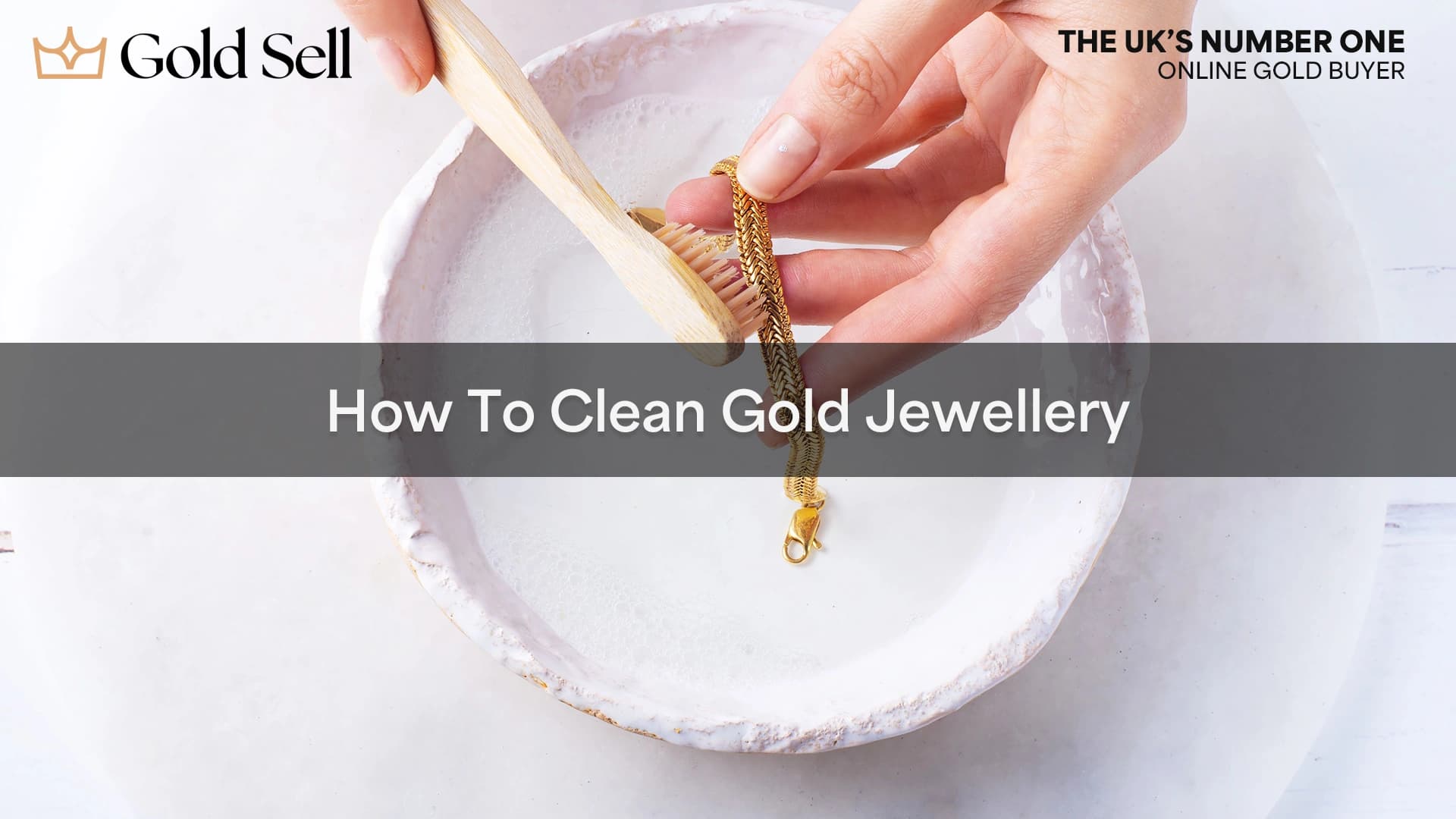
Discover easy tips on how to clean gold jewellery at home safely using simple household products. Restore shine and keep your gold jewellery sparkling!
Can I Clean White Gold With Silver Cleaner?
No – you should not use silver jewellery cleaner on white gold. Products made for cleaning tarnished silver (like silver dips or creams) contain chemicals that are formulated to strip oxidation (tarnish) from sterling silver. These chemicals, such as sulfuric acid or thiourea, are too harsh for white gold and its rhodium plating. They can eat away at the rhodium layer or cause the surface of the gold alloy to dull or pit. Instead, stick to cleaners that are labeled for gold or for all jewellery. Many general jewellery cleaning solutions (the kind that often come in a jar with a little brush) are safe for gold, platinum, and diamonds – just check that the label says they’re safe for your type of jewellery.
If you accidentally used silver cleaner on a white gold ring and noticed it looks a bit off-colour or less shiny, don’t worry. First, rinse it very well in water to remove any remaining chemicals. The dullness might be because the rhodium got partly stripped. In that case, the piece might just need a fresh rhodium plating to restore the colour. A jeweller should be able to replate and repolish it, reversing the effect of the silver cleaner. However, repeated or prolonged exposure to those cleaners could potentially cause more serious damage, so it’s best to avoid them entirely.
Bottom line: Use mild soap and water or a proper gold jewellery cleaner for your white gold. Silver polish and cleaners are great for sterling silver pieces that tarnish, but white gold doesn’t tarnish – so those products are unnecessary and harmful in this context. When in doubt, err on the side of gentle cleaning methods for any gold jewellery.
Does White Gold Change Colour?
One reassuring fact for jewellery lovers is that white gold does not fundamentally change colour over time. Unlike some metals that develop a patina or completely transform (for instance, copper turning green or silver turning black), the gold in a white gold alloy remains the same colour internally. What does change is the surface appearance due to the rhodium plating’s lifespan.
As Blue Nile explains in their education guide, “Technically, white gold does not change colour. Instead, its rhodium plating may fade over time and reveal the alloy beneath which often has a yellow undertone.” This means your 18K white gold ring is still the same 75% gold and 25% alloy it always was; none of those metals have changed or corroded. But if you look at it after a couple of years, it might appear more yellow than when you bought it, simply because you’re seeing more of the alloy’s natural colour now and less of the rhodium’s colour.
Think of it like paint on a wall – if the paint wears thin, you start to see the original wall colour showing through. The wall itself didn’t change colour; the coating changed. In the case of white gold, the “wall” (metal alloy) is a pale yellowish-white and the “paint” (rhodium) is pure white. So when the paint is new, the wall looks bright white; when the paint wears, the original hue peeks out.
So, in everyday terms, does white gold change colour? To your eyes, yes, it can look like it’s changing from white to yellowish. But metallurgically, no, the gold alloy’s colour is constant – you’re just finally seeing it after the plating diminishes. There are a couple of additional points to consider regarding colour changes:
- Uniform vs. uneven fading: Sometimes the rhodium doesn’t wear off evenly. You might notice the underside of a ring (which rubs against your palm or surfaces) turning more yellow than the top. This can give a two-tone look until you replate. It might seem like the ring is partially “changing colour,” but it’s really partial plating loss. Eventually, if the whole ring lost plating, it would look uniformly off-white (which can still be quite pretty, just less bright).
- Chemical staining: While tarnish isn’t an issue, strong chemicals can sometimes cause localised discolouration on white gold. For example, if bleach or certain cleaners contact white gold, they might leave a black or brownish mark due to a chemical reaction with alloy metals. This isn’t common, but it can happen (it’s a form of oxide forming from something in the alloy). If you ever see a strange dark spot on white gold, a jeweller can usually polish it out and replate the area. It’s not a permanent “colour change” of the gold, just a surface reaction.
- Cosmetic or environmental effects: On rare occasions, cosmetics, perfumes, or even medicinal ointments can react with metal alloys and produce slight colour changes. For instance, sulfur compounds (found in some hair products or natural hot springs) could potentially darken a white gold piece slightly. Again, this is surface-level and can be cleaned off; it doesn’t mean your white gold has changed its inherent colour.
In general, the colour you see is the colour of the outermost layer. With freshly plated white gold, the outer layer is rhodium (colour: bright white). With aged white gold, the outer layer might be the gold alloy itself (colour: off-white/yellow). If you prefer the consistent pure white colour, periodic maintenance is needed. If you don’t mind a warmer tone, you can let the rhodium wear away and still enjoy the piece as a slightly cream-coloured white gold.
To sum up: White gold’s core colour doesn’t alter, but its look will shift as the plating wears. This is expected behaviour and easily managed by replating if desired. Now, is replating truly necessary? Let’s discuss that next.
Does White Gold Need To Be Replated?
If your jewellery is rhodium-plated white gold, then yes – it will eventually need to be replated to restore its original bright white appearance. Replating isn’t an urgent “must” like a repair; rather, it’s a routine cosmetic refresher. The need arises from the fact that rhodium coating wears off over time, as we’ve detailed. Replating (also called “redipping”) is the process of applying a new rhodium layer to the piece once the old one has thinned out.
How often you need to replate can vary. Many jewellers say that white gold rings should be replated roughly every 12 to 18 months of constant wear. In practice, some people go 2–3 years before noticing enough yellowing to bother replating, while others who are very particular about a crisp white look might do it annually. High-wear items like wedding bands or everyday rings will need replating more frequently than pendants or earrings that see less friction. Ultimately, let your eyes be the guide – if the piece still looks white and shiny to you, you don’t have to plate it on a schedule. But when it starts to appear off-colour or dull, that’s a good time.
The rhodium plating process is quick and usually done by a professional jeweller or goldsmith. They will polish the item, clean it thoroughly, and then use an electroplating bath to deposit a microscopic layer of rhodium onto the gold. It typically takes only an hour or two, and many jewellers can do it in-house. The cost is relatively modest (often between £30–£60 for a ring, depending on the jeweller and region). Some jewellers include one or more free replatings when you purchase an item, or offer discounts if you bought the ring from them.
Why bother replating? Replating brings back that pristine, like-new white colour and high shine. If you love that look of freshly bought white gold, you’ll want to maintain it with replating. Additionally, rhodium is hypoallergenic and very smooth, so it can provide a protective buffer if your white gold alloy contains nickel (though note: in the UK, white gold alloys are usually nickel-free by law). Over time, if you don’t replate, there’s no immediate structural issue – your ring won’t be harmed – but it will continue to look more yellow/grey and less reflective. Some people actually prefer the softer antique-looking tone of unplated white gold, and that’s fine too (more on that in the next section).
The Gemological Institute of America (GIA) notes that rhodium plating on white gold “will wear away gradually over time, requiring the ring to be replated occasionally.” This occasional upkeep is considered normal for white gold jewellery care. It’s analogous to polishing a silver piece when it tarnishes, or re-applying a finish on a watch.
There are a few tips to extend the life of your rhodium plating so you don’t need to replate too often:
- Remove rings during rough work or gym sessions: Physical friction can wear down plating quickly. For example, gripping weights or doing gardening with rings on can scrape the rhodium off.
- Avoid contact with chemicals: Like cleaning agents, chlorine, cosmetics, or hairspray. These can slowly erode the plating or cause it to lose lustre.
- Store white gold jewellery separately: In a soft pouch or lined jewellery box. Keeping pieces from knocking into each other prevents tiny scratches (which collectively dull the finish).
- Keep it clean and polished: A clean piece has less grime that can abrade surfaces. Using a polish cloth occasionally can smooth out microscratches, though eventually professional repolishing and replating will be needed.
If you go a long time without replating and the ring turns fully yellowish, you might wonder if you can just leave it that way. Absolutely – it’s still white gold and still valuable. Replating is not “mandatory”; it’s a choice based on aesthetics. For sentimental or heirloom pieces, some people even prefer not to plate them at all, to maintain the original metal as-is. In the next section, we’ll explore what white gold looks and behaves like without any rhodium plating, and the pros and cons of going plating-free.
White Gold Without Rhodium
Modern consumers are used to white gold looking perfectly white, but that’s an illusion created by rhodium plating. Unplated white gold has a character all its own. Its colour can range from a warm white with a faint yellow blush to a steely pale grey, depending on the alloy mix and karat. Some jewellers and clients actually prefer the look of white gold without rhodium – it can be described as a vintage or natural look. Let’s compare unplated white gold to rhodium-plated white gold in terms of colour, durability, cost, and maintenance:
White gold rings made without rhodium plating have a soft, off-white hue (9K white gold often shows a faint creamy tone, while 18K may appear a darker “gunmetal” grey-white). In contrast, rhodium-plated white gold is bright, shiny, and purely white, similar to chrome or platinum. The difference is subtle in isolation but noticeable side by side.
Colour: Unplated white gold is not “yellow gold,” but you will notice a slight tint. In 9ct (37.5% gold) white gold, the colour often has a pale straw or cream tint. In 18ct (75% gold) white gold, because there’s more gold, the colour can appear darker or more greyish, almost gunmetal in tone. These nuances come from the alloy: UK 18ct white gold typically uses palladium, which gives a grey-white tone; 9ct may include some silver or copper which can lighten or warm the hue. When you see a piece of unplated white gold on its own, it still looks “white” metal — many would just think it’s a slightly warmer shade of platinum or an antiqued silver. It’s only when you compare it directly to a rhodium-plated piece or pure platinum that you see it’s less bright. Some people actually find the softer white of unplated gold more flattering on certain skin tones, as opposed to the cool stark white of rhodium.
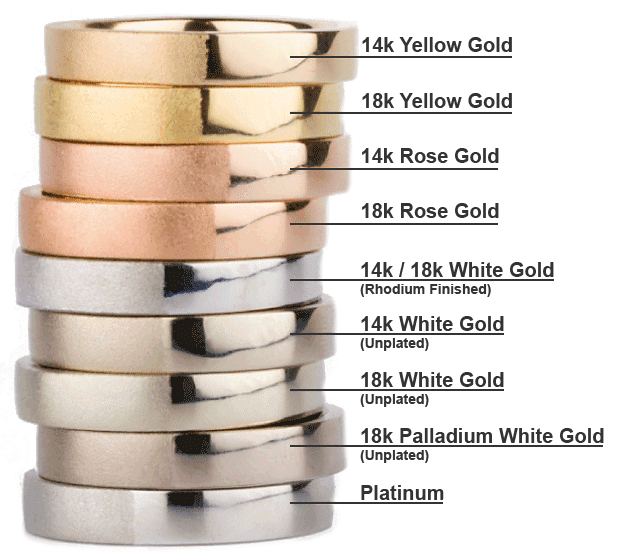
A side-by-side comparison of different gold alloys and finishes. Notice how unplated white gold appears creamier or more grey compared to rhodium-finished white gold and platinum. The visual contrast highlights how karat level and alloy mix affect the final colour and tone of white gold.
Durability: There are two aspects here: the durability of the metal itself, and the surface wear. White gold alloys are generally quite durable for jewellery – 14K and 18K white gold are hard enough to resist bends or heavy scratches, more so if they contain nickel (which hardens the alloy). Rhodium plating adds a thin hard shell that is highly scratch-resistant, so initially a plated ring might take longer to show fine scratches than an unplated one. However, because that rhodium layer is thin and brittle, once it’s scratched through, it may flake or wear in patches. With unplated white gold, any scratch is just in the metal and doesn’t reveal a different colour underneath (the scratch will be the same colour as the rest of the ring). You can buff unplated gold and it will shine up again uniformly, whereas buffing a plated ring aggressively will remove more rhodium. So, in terms of long-term appearance, unplated white gold might develop a patina of tiny scratches but can be repolished repeatedly with no issue. A plated piece will look perfect until the plating gets disturbed, then you have to replate to restore the uniform colour. Neither is “better” in durability; they just age differently. Rhodium is extremely hard, but since it’s not integrated (it’s a coating), the underlying gold’s durability is what ultimately matters for things like bending/breakage (and that is the same either way).
Cost: The cost difference between getting a ring in natural white gold vs rhodium-plated white gold isn’t huge at point of purchase – most jewellers include rhodium plating in the finished piece’s price. However, there are hidden cost considerations:
- Material cost: White gold alloy itself can be more expensive if it’s designed to be nice-looking without plating. For example, in the UK, because nickel is avoided due to allergies and regulations, white gold alloys often contain palladium, which is a pricier metal. An 18ct white gold alloy with palladium might actually cost more than 18ct yellow gold or even some platinum rings at times. So a high-quality unplated white gold might carry a slight premium. On the other hand, 9ct white gold is relatively affordable and often used without plating in artisan pieces.
- Maintenance cost: Rhodium plating is an ongoing cost if you choose to maintain it. Every year or two you might spend some money on replating. Over, say, 10 years, that could be a few hundred pounds in upkeep. Unplated white gold doesn’t require that – once made, it’s just the metal. So over the long run, you save on maintenance costs if you forego plating.
Given that, some couples choose unplated white gold wedding rings precisely to avoid the hassle and cost of continual replating. They accept the slightly less white colour as a fair trade-off for low maintenance.
Pros and cons: Here’s a quick rundown:
- Pros of Rhodium-Plated White Gold: Brilliant icy-white colour; matches well with platinum jewellery; extra-hard scratch-resistant surface (when new); covers any yellow tint and also can cover yellow gold solder joins if any; gives a very polished “luxury” look.
- Cons of Rhodium-Plated: Needs periodic replating to keep that look; can wear unevenly and look patchy if not replated in time; cannot be easily polished at home (polishing removes plating); if underlying alloy contains nickel, a person with allergy might react once plating wears off.
- Pros of Unplated White Gold: No future plating maintenance needed; unique warm white colour that some find appealing; minor scratches can be polished out without specialised re-coating; you see the “true” metal, which some purists prefer; no surprise colour changes – it’s consistent after initial wear-in.
- Cons of Unplated: Slight yellow/grey tone might not be the “white” some people expect; may appear dull next to rhodium pieces; not as instantly mirror-bright as plated; if the alloy has nickel (outside EU/UK), skin contact is continuous so any allergy would be an issue.
One interesting note: Historically, when white gold was first popularised in the 1920s, rhodium plating wasn’t the norm. Many antique Art Deco white gold rings are unplated, and they have a mellow white patina. It was only later that rhodium plating became a standard to satisfy customers wanting that platinum-like flash. Today, as Jodie Gearing mentions, some UK customers request “Rhodium-free gold”, appreciating the natural white tone and avoiding plating altogether. If you’re considering this, it’s a good idea to see unplated white gold in person (ask your jeweller if they have samples) – you might be pleasantly surprised that it still looks plenty white.
In conclusion, white gold without rhodium is a viable option with its own aesthetic charm. It tends to be a bit more creamy or grey in colour but saves you the trouble of replating. Rhodium-plated white gold, on the other hand, gives you that ultra-bright finish at the cost of some periodic upkeep. It really comes down to personal preference: do you want the “crispy” white look all the time (go with plating and maintenance), or are you okay with a softer white that ages gracefully (skip the plating)?
How Long Does White Gold Stay White?
When you first slip on a new white gold ring, it has that gorgeous pure white shine. How long can you expect it to last before you see any change? The longevity of the bright white appearance depends on the rhodium plating’s durability, which in turn depends on usage habits. In general, a rhodium plating can last about a year or more on a heavily worn ring before it noticeably fades. Many will last closer to 2–3 years if treated kindly. Let’s break down the timeline and factors:
Typical lifespan of rhodium plating: On a ring worn daily, jewellers often cite 12 to 18 months as the period in which the rhodium layer will be largely intact. After that, you might see the yellowish hints starting. On pieces like earrings or pendants that don’t rub against surfaces as much, the plating can last significantly longer – possibly many years – since friction is what really removes it. So, how long white gold stays “white” = how long the rhodium lasts before wearing off to the point you notice the change.
Individual differences: Some people report their rings staying very white for even 5 years, while others see changes within 6 months. The difference comes down to:
- Wear and abrasion: Do you wear the ring all the time, including to bed, the gym, doing housework, etc.? Constant contact will wear plating faster. Rings that rub against other rings (like a bridal set) or against tools/keyboards will lose plating sooner.
- Chemicals and sweat: If your ring is frequently exposed to swimming pools, hot tubs, cleaning agents, or if you have sweat that’s more acidic, the plating can degrade more quickly. Even one accidental dunk in bleach water can visibly dull a rhodium finish.
- Thickness of plating: In jewellery manufacturing, rhodium is typically plated just a few microns thick. Some jewellers plate slightly thicker than others or do two coats. A marginally thicker plating might last a bit longer, but it’s still very thin by necessity (if rhodium is too thick, it can crack since it’s a brittle metal). So there’s not huge variation here, but a high-quality plating job may outlast a cheaper one.
Maintenance frequency: If you want your white gold to stay white continuously, plan on annual check-ups. Some people coordinate it with their anniversary or a yearly jewellery cleaning. As soon as you notice the slightest off-colour, you can have it replated and you’ll never really see the yellow. Others wait until it’s quite yellowed so that the difference after replating is very dramatic. It’s up to personal tolerance for the off-white phase.
For a practical example: imagine you have a new white gold engagement ring. You might not need to replate it until your first or second anniversary, depending on wear. If you do it at say 18 months, it’ll look brand new again. If you skip replating entirely, by 5 years it will likely be a quite buttery-white shade rather than icy-white. There’s no harm in that; some might not even mind or notice. But if you compare it side by side with a freshly rhodium-plated ring, you’ll see the difference.
One more thing to consider is that white gold tends to stay white longer on parts of a jewellery piece that don’t get touched. For instance, the underside of a ring might yellow first (from rubbing on tables, fingers, etc.), whereas around the diamond prongs it might still look whiter. Or the outer surface of a bangle might dull before the inner part. So a piece can have variation in how white it is in different spots.
To maximise how long your white gold stays white:
- Follow the care tips mentioned: Remove during tasks, avoid chlorine, etc.
- Consider a warranty or service plan: If offered, where free replating is included. Some jewellers will do it free every year or two if you bought the ring from them.
- Polish gently with a cloth: To keep the shine, but note polishing won’t bring back whiteness if plating is gone – that needs replating.
- When plating does wear: Get it done sooner rather than later if the two-tone look bothers you. It’s a fast procedure and your jewellery will thank you for it.
In essence, white gold stays truly “factory white” for roughly a year or two of regular wear before the inevitable mellowing begins. With occasional replating, it can stay that way indefinitely. Without replating, it will gradually shift to its natural off-white colour but remain beautiful in its own right.
Frequently Asked Questions
Can white gold tarnish?
White gold itself does not tarnish in the way sterling silver does. Its metals are resistant to oxidation, so you won’t see a black or green tarnish on white gold. What people call “tarnish” on white gold is usually the yellowing that happens when rhodium plating wears off, which can be fixed by replating.
Does white gold tarnish in water?
Pure water will not tarnish or ruin white gold. However, chlorinated or salt water can harm the finish of white gold jewellery. It’s best to take off white gold pieces before swimming in pools, hot tubs, or the ocean to prevent any dulling or damage from chemicals.
Can white gold turn yellow?
Yes, white gold jewellery can develop a yellow tint over time. This happens as the rhodium plating fades, revealing the pale yellowish-white gold alloy underneath. The ring or chain isn’t “turning” yellow on its own – it’s just showing its true colour. A quick rhodium replating by a jeweller will turn it bright white again.
Does white gold plated tarnish?
White gold plated jewellery (usually meaning rhodium-plated white gold) generally does not tarnish easily. The rhodium layer protects it from oxidation and discolouration. However, if that plating wears off, any exposed metal (like the gold alloy or other base metal) could dull or tarnish. Keeping the piece clean and replated when needed will prevent tarnish.
How to clean white gold?
Clean white gold with mild soap and warm water. Soak the jewellery in a bowl of warm water with a few drops of gentle dish soap for several minutes, then softly brush it with a soft toothbrush to remove dirt. Rinse well and pat dry with a soft cloth. This simple method will safely brighten your white gold. Avoid abrasive cleaners or harsh chemicals when cleaning white gold.
Does white gold change colour?
No, the white gold metal itself doesn’t actually change its colour over time. What changes is the outer rhodium plating wearing away. As that plating fades, the jewellery may appear more yellow or dull – but the gold alloy underneath is simply showing through. The core colour of the white gold alloy remains the same; it’s the surface finish that changes.
Does white gold need to be replated?
If your white gold is rhodium-plated and you want to maintain its original bright white look, then yes – it will need periodic replating. Most people have white gold rings “dipped” in rhodium every year or two. Replating isn’t mandatory, but without it the piece will start looking more off-white or yellowish. Regular replating keeps white gold jewellery looking new.
Can white gold be dipped in platinum?
It’s not common to dip (plate) white gold in platinum. Jewellers typically use rhodium plating (a platinum-family metal) to coat white gold because rhodium provides a brilliant white shine. While platinum plating is technically possible, it offers no real advantage – it would also wear off over time and is not standard practice. Rhodium is the preferred plating for white gold items to achieve that bright white finish.
Can white gold turn black?
White gold generally does not turn black under normal conditions. However, exposure to certain chemicals (like harsh cleaning agents or sulfur compounds) can sometimes cause a dark discolouration or staining on the metal. This is rare and usually superficial. If your white gold ever appears blackened, a professional cleaning and possibly replating will restore its shiny white look. The metal itself isn’t permanently black – it’s just a surface reaction that can be removed.
Will white gold fade?
Yes, over time white gold’s brilliant colour and shine can fade slightly as the rhodium coating wears away. The piece might start to look a bit duller or more yellow than when new. This fading is gradual and simply indicates the need for a refresh. Polishing and reapplying rhodium plating will make a faded white gold item look brand new again, restoring its full white sheen.
Interested in selling gold with the UK’s highest paying gold buyer? Visit our Sell Gold page to get a competitive valuation – we provide fully insured postage and fast payment.
For more insights and the latest gold price today, keep an eye on our live charts and blog updates.