Can White Gold Turn Yellow?
Yes, white gold can turn yellow over time. White gold jewellery is plated with rhodium to give it a bright white finish, and as this plating wears away with regular use, the naturally yellowish gold alloy underneath starts to show through. This gradual change in colour is normal and doesn’t mean your jewellery is ruined. Fortunately, a quick visit to the jeweller for rhodium re-plating will restore white gold to its original brilliant white.
Key Takeaways
- Gold Alloy: White gold is yellow gold alloy mixed with white metals and coated in rhodium, so it can turn yellow as the rhodium plating wears off.
- Wear & Tear: Daily wear, contact with chemicals (like chlorine or detergents), and even skin oils gradually erode the rhodium plating, revealing the gold’s warm tone.
- No Tarnish: White gold itself doesn’t tarnish or rust, any yellowing or dullness is due to the fading rhodium layer, not the gold corroding.
- Cleaning Limits: Cleaning white gold keeps it shiny, but cleaning alone can’t prevent yellowing, only periodic re-plating brings back its bright white finish.
- Restoration: To make white gold white again, jewellers can reapply rhodium plating (often needed every couple of years) which instantly restores the silvery-white lustre.
Can White Gold Turn Yellow?
Yes, white gold can turn yellow over time. In fact, all white gold jewellery will eventually develop a yellowish tint as it ages. White gold is made from natural yellow gold mixed with white metals, and it gets its “white” appearance from a thin rhodium plating on the surface. As you wear a white gold ring or pendant day-to-day, that rhodium layer slowly wears off due to friction and exposure. When the plating thins out, the yellow-tone gold alloy beneath starts to show, making the piece look more yellowish than when you bought it. This isn’t a defect or a sign of poor quality, it’s simply the normal ageing process of white gold jewellery. The good news is that your white gold turning yellow is completely reversible. Jewellers can restore the bright white look by cleaning the piece and re-plating it with rhodium, often called “dipping,” returning your jewellery to a like-new shine. In summary, white gold can and will turn a bit yellowish over time, but regular maintenance can keep it looking brilliant white for years.
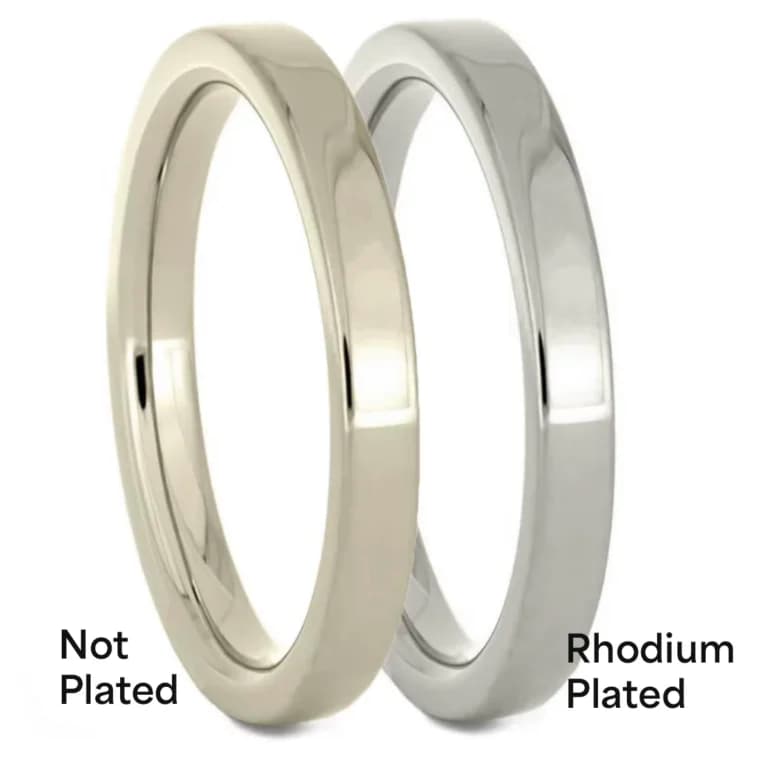
This comparison shows why white gold can appear yellow over time. The ring on the left reveals the natural, slightly yellow tone of un-plated white gold, while the ring on the right shows the bright, silvery-white colour achieved through rhodium plating. When the rhodium layer wears away, the warm tone of the underlying gold alloy becomes visible, the natural process behind white gold “turning yellow.”
Why Does White Gold Turn Yellow?
White gold turns yellow because the rhodium plating that makes it look white gradually wears away, exposing the gold alloy underneath. Remember that pure gold is yellow, mixing it with palladium, nickel, silver or other metals makes a lighter white gold alloy, but that alloy usually still has a faint yellow hue. To mask this, manufacturers plate white gold jewellery with rhodium, a hard, bright-white metal. Over time, everyday wear and tear causes microscopic scratches and friction that erode the rhodium layer. Activities like washing your hands, applying lotions, using soaps and hand sanitisers, or just rubbing against surfaces can wear down the plating. Chemicals are another culprit, chlorine in swimming pools, household cleaners, and even saltwater can accelerate the breakdown of rhodium plating. As the plating thins, the off-white or pale yellow colour of the underlying 14K or 18K gold alloy becomes visible, giving your ring that dingy yellow tint. In essence, it’s not that the gold is changing colour, it’s that you’re seeing the true colour of the metal blend once the pure-white coating wears off. Time and lack of maintenance are also factors: if you go years without re-plating, the piece will inevitably start to look yellow. The solution is simple, periodic maintenance. Having a jeweller reapply the rhodium plating every 1–3 years (depending on wear) will keep your white gold looking pristine. Think of it like adding a fresh coat of paint: the structure (gold) remains strong, but it needs a new surface finish now and then to stay truly white.
How Is White Gold Made?
White gold is not a naturally occurring metal, it’s made by alloying pure yellow gold with other white metals to achieve a paler colour. Pure 24-karat gold is very soft and intensely yellow, so jewellers mix it with stronger, whiter metals to create a more durable, lighter-coloured alloy. Common metals used in white gold alloys include nickel, palladium, silver, copper, and zinc. For example, 18K white gold is about 75% gold and 25% other metals (often palladium and a bit of silver or zinc), while 14K white gold is around 58% gold and 42% other metals. Historically, white gold became popular in the early 20th century as an alternative to platinum, during World War II, platinum was reserved for military use, so jewellers alloyed gold with nickel and silver to create a “white” metal for rings. The resulting white gold has a pale greyish-yellow tone naturally (sometimes described as a warm “champagne” tint). To give it that brilliant icy white colour consumers expect, nearly all modern white gold jewellery is plated with rhodium. Rhodium is a rare, platinum-family metal that’s extremely bright and resistant to corrosion. The rhodium plating is what makes white gold look perfectly white and shiny. It’s worth noting that the exact composition of white gold can vary, some alloys use nickel (which produces a hard, fairly white alloy but can cause allergies in some people, so it’s less used now), while higher-end alloys use palladium (which gives a greyer-white colour and is nickel-free, but is more expensive). No matter the alloy, the goal is the same: to combine gold with other metals to strengthen it and lighten its colour, then usually add a rhodium coating for that final bright white finish.
Can White Gold Tarnish?
Pure white gold does not tarnish in the way sterling silver does. Tarnishing is a chemical reaction (oxidation) that causes metals like silver or copper to develop a dull, dark film on the surface. Gold, however, is a noble metal, it’s very resistant to reacting with air or moisture. In a quality white gold alloy, the other metals (such as palladium or nickel) are also chosen for their resistance to tarnish. Additionally, the rhodium plating on white gold is inert and acts as a barrier, so when it’s intact, it prevents any tarnish on the underlying metal. That means white gold jewellery won’t turn black or green like some silver or low-purity metals might. However, white gold can appear tarnished when the rhodium plating wears off. What you’re seeing isn’t true tarnish, it’s the natural colour of the metal (a dull yellowish hue) or slight oxidation of alloy components like copper or silver if they are present in the mix. For instance, if a 9K or 14K white gold contains a bit of silver, those metals could oxidise slightly over time, potentially causing a faint dark or greenish tinge in spots (especially if exposed to harsh chemicals). But it’s quite uncommon and mild. In general, if your white gold ring looks discoloured or dull, it’s likely because the protective rhodium layer has faded, not because the gold itself has tarnished. The fix is to have it polished and re-plated, rather than trying to polish off “tarnish” as you would with silver. To recap: white gold doesn’t tarnish or turn black, but it can lose its white lustre as the plating ages.
Why Does White Gold Tarnish?
When people ask why white gold tarnishes, they usually are noticing their white gold jewellery getting dull or yellow and calling that tarnish. In reality, what’s happening is mechanical wear or minor chemical reactions, not classic tarnishing. The primary reason is the rhodium plating wearing off, as explained above, this exposes the off-white gold alloy which many mistake for tarnish. If we speak strictly, the gold in white gold doesn’t tarnish (gold atoms aren’t turning into an oxide or sulphide), but the other metals in the alloy can, under certain conditions, undergo slight surface reactions. For example, older white gold alloys that contain silver can develop a faint brown or black film because silver tarnishes when exposed to sulphur in the air (forming silver sulphide). Similarly, if a piece has copper in the alloy, exposure to chlorine (like in bleach or pool water) could create copper oxides or chlorides, which look greenish or dark. These scenarios are not typical for well-maintained jewellery, but they explain the rare cases of white gold getting a darker “tarnished” appearance (like a blackened area or green spot). The more common “yellowing” is simply wear of the plating, not a chemical tarnish. Other factors that might make white gold seem tarnished include accumulated grime (a film of dirt and oils can make it look dark or matte) or reaction with cosmetics (sometimes makeup or perfume can leave a residue that discolours the surface). In summary, white gold tarnishes only in a loose sense, it “tarnishes” by losing its rhodium coat or occasionally from alloy metals reacting. The causes of this are everyday wear, exposure to chemicals, and time. The remedy is not heavy polishing (which could remove more gold) but gentle cleaning or re-plating. By keeping your white gold clean and avoiding harsh chemicals, you minimise any tarnish-like effects. And if the colour still dulls over the years, a professional re-plating will solve the issue.
How To Clean White Gold?
Before we cover the simple step-by-step process of how to clean white gold at home, here’s a simple list of what to do, and what to avoid, when cleaning your white gold jewellery.
| What to do | What not to do |
|---|---|
Clean regularly with warm water and mild soap | Don’t use bleach, chlorine, or harsh chemical cleaners |
Rinse thoroughly to remove all residue | Don’t use abrasive materials like toothpaste or baking soda |
Dry with a soft, lint-free cloth | Don’t boil jewellery or clean over open drains |
Remove jewellery before swimming or using chemicals | Don’t leave white gold soaking in chemicals for long periods |
Store pieces separately in a soft pouch or lined box | Don’t wear multiple rings that rub together frequently |
Have jewellery professionally cleaned and re-plated periodically | Don’t attempt to polish off “yellowing” yourself — get it re-plated instead |
Cleaning white gold jewellery at home is straightforward and safe if you stick to gentle methods. Here’s a simple step-by-step guide to clean white gold without damaging it:
- Prepare a mild soapy solution: Fill a bowl with warm water (not hot) and add a few drops of mild dish soap. Mix to create a gentle cleaning solution. Avoid any harsh detergents or cleaners with bleach, just plain mild soap is best.
- Soak the jewellery: Place your white gold ring, necklace, or other item into the soapy water. Let it soak for 20–30 minutes. Soaking helps loosen any dirt, oils, or residue on the piece. (Tip: Before soaking, check for loose stones or damage. If a diamond or gem is loose, cleaning it at home could risk it falling out. In that case, get it repaired first.)
- Gently scrub crevices: After soaking, take a very soft toothbrush (or a soft jewellery cleaning brush) and gently scrub the piece. Focus on nooks and crannies like underneath prongs or around settings where grime accumulates. Use light pressure, do not scrub aggressively, as you don’t want to scratch the metal or scrape off any remaining rhodium plating. If needed, you can dip the brush in a fresh warm soapy mix to help. Optional: For stubborn grime, you might make a paste of baking soda and water and use it lightly with the toothbrush. Baking soda is a mild abrasive, so be very gentle and use it sparingly to avoid scratching (in fact, some experts caution against it altogether for gold plating, so only use this if gentle brushing doesn’t work).
- Rinse thoroughly: Once you’ve brushed the jewellery clean, rinse it under clean warm water to wash away any soap or loosened debris. It’s a good idea to plug the sink drain or rinse into a fine strainer to avoid any mishaps with jewellery disappearing down the drain. Make sure all soap is gone, as leftover soap film can dull the shine.
- Dry and polish: Gently pat the piece dry with a soft, lint-free cloth. Do not use paper towels or anything abrasive, as these can scratch the metal. After it’s dry, you can buff it lightly with a jewellery polishing cloth (a microfibre cloth or chamois) to restore shine. Pay special attention to any crevices to ensure they’re completely dry. Your white gold should now look clean and sparkly.
Most everyday grime (body oils, lotions, dust) will come off with this gentle routine, and it’s safe for diamonds and most gemstones as well. Do NOT use harsh chemicals like bleach or acetone to clean white gold, these can damage the metal and any solder or glue holding stones. Also avoid abrasive cleaners (no toothpaste or scrubbing powders) because they can scratch gold and strip rhodium plating. If the white gold has already started looking yellowish due to plating wear, note that cleaning will not bring back its bright white colour, it will just make it a clean yellowish ring. Only re-plating can fix that. For routine care, though, a gentle soap bath is the way to go. You can do this cleaning process periodically (e.g. once a month) to keep your white gold jewellery in great condition. Between cleanings, store your jewellery properly, ideally in a soft cloth pouch or a lined jewellery box, away from other pieces that might scratch it. And remember to remove white gold rings when using harsh chemicals or swimming, to help preserve that rhodium finish as long as possible.
In summary, keep it gentle. Regular light cleaning will remove oils and dirt that dull your white gold, and it won’t harm the metal or its plating. If you have any doubt or if the piece is very valuable, you can always take it to a professional jeweller for a deeper cleaning. (Jewellers often use ultrasonic or steam cleaners and then polish the piece, which can make it look brand new.) Professional cleaning is also a good opportunity for the jeweller to check that prongs and settings are secure. But for routine home care, soap, water, and a soft brush are your best friends for keeping white gold shining.
How To Get White Gold White Again
When your white gold ring or necklace has lost its icy white lustre and started looking yellow, you’re probably wondering how to make it white again. The truth is, the only way to get white gold truly white again is to have it rhodium plated (re-dipped) by a professional jeweller. No amount of home cleaning or polishing can replace the rhodium that has worn off. In fact, scrubbing harder or using silver polish can do more harm than good, it might remove more of the remaining plating. So, what does getting it white again involve? Typically, you’d take your ring to a jewellery shop (many will do this on-site). The jeweller will first polish the piece, buffing out any scratches and ensuring the surface is smooth and clean. Then the jewellery is put through a rhodium plating bath, an electroplating process that deposits a thin new layer of rhodium metal onto the gold. This process is quick (often it can be done within an hour or two) and not very expensive, many jewellers charge a reasonable fee for re-plating, often in the range of tens of pounds/dollars depending on the item and location. When you get your piece back, it will be bright white and gleaming like it was when new.
Some tips: If your white gold item is one you wear daily (like an engagement ring), expect to have it re-plated roughly every 12–18 months, or whenever you notice the yellow tint returning. High-friction pieces like rings tend to need re-plating more frequently than pendants or earrings. If you want to extend the time between needing plating, follow the care tips mentioned earlier (remove rings before heavy chores or swimming, avoid chemicals, and don’t wear multiple rings that rub together). But eventually, re-plating is normal, consider it routine maintenance for white gold, much like changing the battery in a watch.
It’s also worth noting that you cannot “turn” yellow gold into white gold without plating or remixing the metal. So if someone has a yellow gold piece they want white, the jeweller will basically do the same rhodium-plating process to coat it white (which is a temporary transformation). Rhodium plating doesn’t damage your gold jewellery; it’s just a surface treatment. The “downside” is simply that it wears off again, so it’s a recurring maintenance step. Over many years, if you repeatedly plate a ring, the jeweller usually polishes it a bit each time to prep the surface, which very slowly wears down the gold. But this happens on a microscopic level – you’d have to plate something countless times before noticing a difference in weight or thickness.
In short, to get your white gold white again, take it for rhodium re-plating. It’s a fast and routine job for any jeweller, and it will restore your jewellery’s colour completely. Once re-plated, your white gold piece will look as brilliant as a platinum piece, until, of course, that rhodium layer wears down again in a year or two, and the cycle repeats. Think of it as giving your jewellery a spa treatment to rejuvenate its glow!
Frequently Asked Questions
Can white gold turn yellow?
Yes, white gold can turn yellow over time as the rhodium plating that gives it a bright white finish wears away. The metal beneath is a gold alloy that naturally has a slight yellow tint. Everyday wear, soaps, skin oils and chemicals gradually erode this plating, revealing the warmer colour underneath. Professional jewellers can restore its white appearance through rhodium re-plating, a simple maintenance process usually needed every one to three years.
What does tarnished white gold look like?
Tarnished white gold usually looks dull, greyish, or faintly yellow rather than black like silver tarnish. It can lose its mirror-like shine and appear patchy, especially on rings or bracelets that get heavy contact. This change is often mistaken for tarnish but actually results from the rhodium plating wearing away. Cleaning may brighten it temporarily, but restoring its brilliant white colour requires professional rhodium re-plating rather than polishing or chemical silver cleaners.
How long does white gold last?
White gold jewellery can last a lifetime if cared for properly. The gold alloy itself is highly durable and resistant to corrosion, though the rhodium plating that gives it its bright white finish gradually fades with regular wear. Most people re-plate white gold jewellery every 12 to 36 months to maintain its lustre. The underlying gold remains intact indefinitely, so the jewellery’s lifespan depends mainly on maintenance and how frequently it’s worn.
Can white gold tarnish?
No, white gold itself does not tarnish because gold is a noble metal and resists oxidation. However, the metals mixed with it, such as silver or copper, can occasionally react with moisture or chemicals, leading to slight discolouration. What most people call “tarnish” is actually the rhodium plating wearing off, revealing the warmer tone of the alloy beneath. Regular cleaning and periodic rhodium re-plating keep white gold bright and tarnish-free in appearance.
How is white gold made?
White gold is made by combining pure yellow gold with white metals like palladium, nickel, or silver to create a paler, harder alloy. Because the result is still slightly yellow, jewellers apply a thin coating of rhodium to achieve the bright white shine people associate with white gold. This process not only lightens the colour but also increases scratch resistance and durability, making white gold a popular, elegant alternative to platinum jewellery.
What is white gold made of?
White gold is made from a blend of pure gold and white metals such as palladium, silver, nickel, or zinc. The mixture lightens gold’s naturally yellow hue and strengthens it for daily wear. The percentage of gold depends on purity: for instance, 18-carat white gold is 75% gold and 25% other metals. Most white gold jewellery is then coated in rhodium, which gives it that bright, silvery-white finish and added surface protection.
Can white gold scratch?
Yes, white gold can scratch because gold, even when alloyed, is a relatively soft metal. Although rhodium plating provides some scratch resistance, it can still mark from contact with hard surfaces or other jewellery. Over time, fine scratches dull the surface and wear away the plating. Professional polishing and re-plating easily restore the smooth, reflective finish. To minimise scratching, remove white gold rings during heavy work and store them separately in soft pouches.
Does white gold rust?
No, white gold does not rust because it contains no iron. Rust is a reaction between iron and oxygen, which cannot occur with gold or its alloying metals like palladium, nickel, or silver. White gold is corrosion-resistant, though exposure to harsh chemicals such as chlorine can weaken or discolour the metal over time. If cared for properly, white gold remains free from rust or corrosion throughout its entire lifespan, even with daily wear.
Does white gold fade?
Yes, white gold can appear to fade as its rhodium plating wears away. The alloy beneath has a faint yellow tone, which becomes visible over time through everyday wear, soaps, lotions, and friction. This fading is not damage to the gold itself but simply the loss of the surface coating. Cleaning can improve shine temporarily, but only professional rhodium re-plating restores the bright white finish that gives white gold its distinctive brilliance.
Should white gold tarnish?
White gold should not tarnish if properly maintained because gold is highly resistant to oxidation. However, as the rhodium plating wears away, the underlying alloy may appear dull or slightly yellow, which some mistake for tarnish. In rare cases, alloy metals such as silver or copper can darken with exposure to chemicals or moisture. Regular cleaning and periodic rhodium re-plating keep white gold jewellery looking lustrous and free from tarnished discolouration.
How to tell if white gold is real?
You can tell if white gold is real by checking for a hallmark such as 9K, 14K, or 18K stamped inside the band or clasp. Real white gold will not attract a magnet, flake, or peel like plated costume jewellery. A professional jeweller can also perform an acid or X-ray fluorescence test to confirm authenticity. Genuine white gold is solid gold alloyed with white metals, often finished with rhodium for brightness.
How to get white gold white again?
To make white gold white again, have it professionally rhodium plated. Rhodium plating restores the bright, silvery colour that fades as the original coating wears off. The jeweller will polish the piece and then apply a new rhodium layer using an electroplating process. This treatment is safe, quick, and relatively affordable, typically needed every one to three years depending on wear. Cleaning alone cannot restore true whiteness once the plating has worn away.
Does white gold go up in value?
Yes, white gold can increase in value as gold prices rise because it contains real gold, which has intrinsic worth. However, jewellery value also depends on design, craftsmanship, and condition. While white gold retains its resale value well compared to costume metals, it usually doesn’t appreciate beyond its gold content. Its true worth lies in its precious metal content, beauty, and long-term durability rather than being treated purely as an investment.
What to do when white gold turns yellow?
When white gold turns yellow, it means the rhodium plating has worn away. The best solution is to take the jewellery to a professional jeweller for re-plating. The process involves cleaning, polishing, and applying a fresh rhodium coat, instantly restoring its bright white finish. Regular re-plating keeps your jewellery looking new and protects it from wear. Cleaning can help with shine but cannot reverse the yellowing once the plating is gone.
Does coke clean gold?
Coca-Cola can remove surface dirt from some metals, but it’s not safe for white gold jewellery. Its acidity may damage gemstones, dissolve rhodium plating, or leave a sticky residue that dulls the metal. While it might slightly brighten unplated gold, it risks causing more harm than good to fine pieces. The safest way to clean white gold is using warm water, mild soap, and a soft brush or professional jewellery cleaner.
Why does white gold turn yellow?
White gold turns yellow because its rhodium plating wears away over time, revealing the natural gold alloy underneath. The base metal still contains yellow gold, so as the coating erodes, that warm tint becomes visible. Everyday friction, lotions, soaps, and chemicals accelerate this process. The yellowing doesn’t mean the metal has deteriorated. Professional rhodium re-plating restores the original bright white colour and keeps the jewellery looking radiant and freshly finished.
Does 18k white gold turn yellow?
Yes, 18 karat white gold can turn yellow as its rhodium plating wears off. Because it contains 75% pure gold, the underlying alloy has a stronger yellow tint than 14 karat white gold. Once the plating thins, this warmer tone shows through, especially on rings and everyday pieces. Regular cleaning and professional rhodium re-plating restore its white shine. Higher karat white gold requires more frequent maintenance to retain its bright, platinum-like appearance over time.
How do you get white gold from yellow gold?
White gold comes from yellow gold that has been mixed with white metals such as palladium, nickel, or silver. These alloys tone down gold’s natural yellow colour, creating a lighter, silvery hue. To achieve the bright, mirror-like whiteness people associate with white gold, jewellers finish the metal with a layer of rhodium. The combination of pale alloys and rhodium plating transforms traditional yellow gold into its distinctive white appearance.
What should you not clean jewellery with?
You should not clean jewellery with bleach, chlorine, acetone, toothpaste, baking soda, or harsh metal polishes. These substances can scratch gold, dissolve solder, or remove rhodium plating from white gold. Avoid using ultrasonic cleaners for delicate gemstones or glued settings. The safest method is warm water with mild soap, a soft brush, and a lint-free cloth. Professional cleaning is recommended for valuable pieces or when deeper restoration is needed safely.
What is the downside of rhodium plating?
The main downside of rhodium plating is that it’s temporary and needs periodic renewal. The coating typically lasts one to three years, depending on how often the jewellery is worn. Each re-plating requires light polishing, which gradually removes a tiny amount of gold from the surface. It also adds minor maintenance cost over time. Despite this, rhodium plating remains the best way to achieve a durable, bright white finish on white gold jewellery.
Interested in selling gold with the UK’s highest paying gold buyer? Visit our Sell Gold page to get a competitive valuation – we provide fully insured postage and fast payment.
For more insights and the latest gold price today, keep an eye on our live charts and blog updates.