How To Tell If Gold Is Real
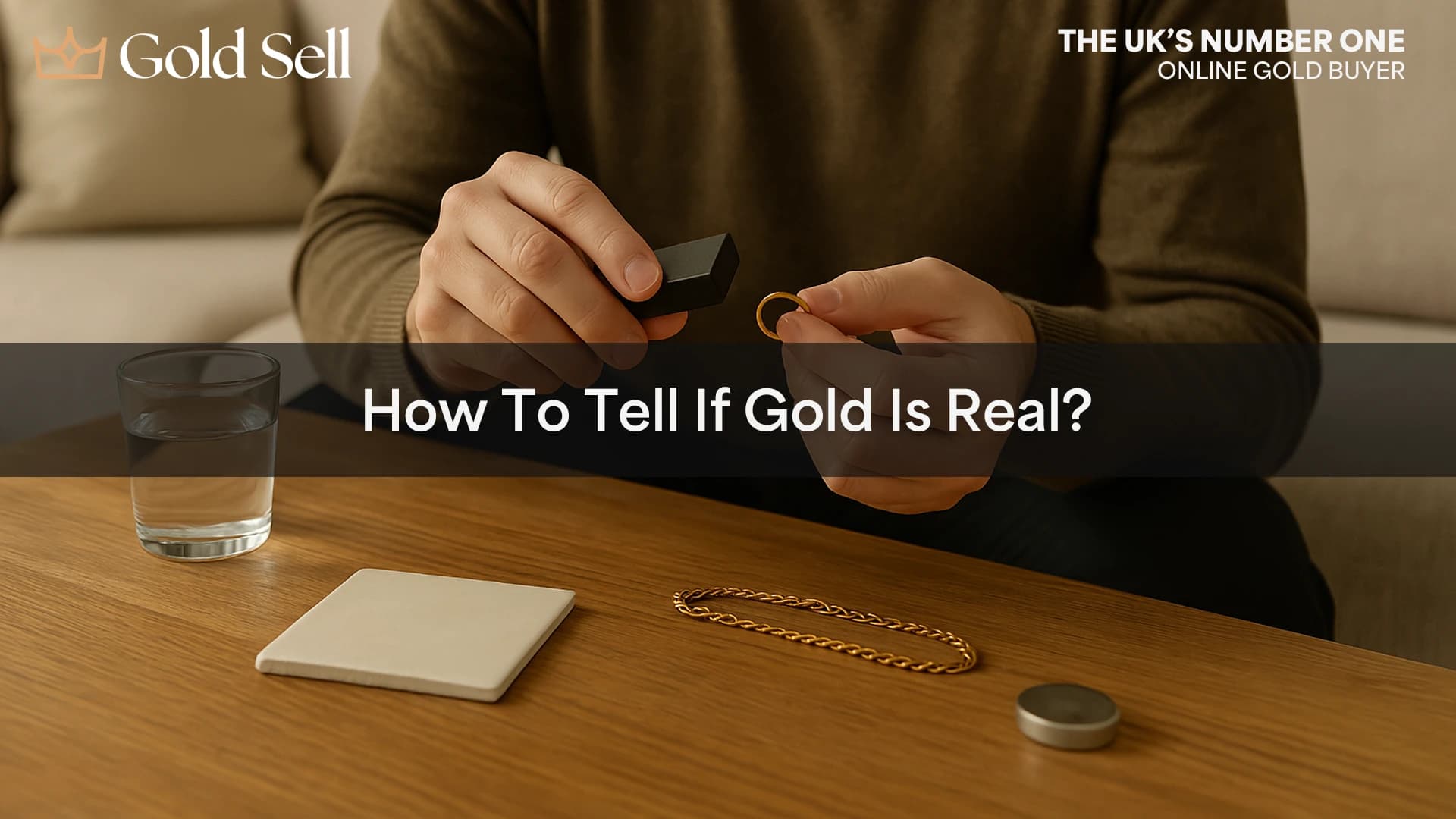
To tell if gold is real, start by inspecting for hallmarks indicating purity, such as, 14K, 18K, or 22K, or numerical stamps like 375, 585, or 750. Real gold typically has a rich yellow hue and does not tarnish easily. Conducting a magnet test can also help; genuine gold is non-magnetic and will not be attracted to a magnet.
Key Takeaways
- Hallmarks and Stamps: Look for purity markings such as 10K, 14K, 18K, 22K, 24K, or numerical stamps like 375, 585, 750, 916, or 999. These indicate the gold’s purity level.
- Visual Inspection: Real gold has a rich yellow hue and does not tarnish easily. If the item shows signs of discolouration or flaking, it may be gold-plated.
- Magnet Test: Gold is non-magnetic. If a magnet attracts the item, it’s likely not real gold.
- Ceramic Scratch Test: Scratch the gold item on an unglazed ceramic plate. Real gold leaves a gold-coloured streak, while fake gold may leave a black or dark streak.
- Professional Testing: For accurate results, consider professional testing methods like XRF (X-ray fluorescence) analysis, which can determine the exact composition of the metal.
How Do You Tell If Gold Is Real?
Gold has captured human fascination for millennia – but how do you tell if gold is real and not just a convincing fake? The good news is that authentic gold has unique properties and markings that can tip you off. Real gold (whether in coins, bars, or jewellery) is prized for its rarity, value, and distinctive characteristics, so it’s worth taking the time to verify. In this guide, we’ll walk through how to test if gold is real using simple at-home methods and professional techniques. By the end, you’ll know the signs of genuine gold vs. fake gold and feel confident checking the authenticity of your own pieces.
Why Gold Authenticity Matters: Counterfeit or fake gold items circulate in marketplaces – from gold-plated trinkets passed off as solid gold to fool’s gold minerals that only look like the real thing. Knowing how to tell if gold is real protects you from overpaying for imitations and ensures you understand the true value of your gold. Luckily, there are several easy tests and observations that can help confirm if your gold is genuine. These range from identifying gold hallmarks to simple DIY experiments (like magnet tests), as well as advanced verification by jewellers. Let’s start with the basics of gold authenticity and then explore various methods step by step.
How To Test If Gold Is Real
When it comes to how to test if gold is real, a combination of observation and simple tests can be very effective. Below are some reliable methods to check gold authenticity at home, starting with the easiest visual clues and progressing to more hands-on tests. Always exercise care when testing and avoid damaging the item – if in doubt, consult a professional. Here’s how to test if gold is real:
- Look for Hallmarks (Purity Stamps): The first step is to inspect the item for any engraved hallmarks or karat stamps. Real gold jewellery typically has small markings indicating its karat (purity) – for example, 10K, 14K, 18K, 22K, 24K or a number like 375, 585, 750, 916, 999. These numbers represent the gold content in parts per thousand (e.g. “750” means 75% gold, equivalent to 18 karats . Hallmarks are usually found in inconspicuous spots: inside ring bands, on necklace clasps, or the back of pendants. A legitimate hallmark is a strong sign the gold is real, since it indicates the piece was assayed (tested) for purity. (For a detailed guide on identifying hallmarks, see our Gold Hallmarks Explained page.) Be wary if an expensive-looking gold item has no markings at all – that’s often a red flag. Also, learn to recognise stamps that actually spell out fake gold: marks like “GP” (gold plated), “GF” (gold-filled), or “HGE” (heavy gold electroplate) indicate the item is not solid gold but merely coated.
- Visual Inspection – Colour and Wear: Examine the colour closely. Real gold has a rich yellow appearance (or white/rose hue if alloyed, as discussed later) and does not easily tarnish. If you see areas where the gold colour is flaking off or rubbing away to reveal a different metal underneath, the item is likely just gold-plated. Similarly, greenish or bluish corrosion on the surface is a sign of copper or brass beneath a thin gold layer – fake gold or low-purity alloy can leave these tell-tale signs. Real gold jewellery (especially higher karats) doesn’t turn skin green or black when worn. If wearing a ring or necklace leaves green stains on your skin, that’s usually from copper in a fake gold alloy reacting with sweat. Authentic gold is chemically inert and shouldn’t discolour your skin. (Note: even real 10K–14K gold, which contains some copper/nickel, might very rarely cause mild tarnish or skin reaction in certain conditions, but obvious green marks are a bad sign.)
- Magnet Test: One of the quickest ways to test if gold is real is the magnet test. You’ll need a strong magnet (even a fridge magnet might do for a preliminary check). Gold is not magnetic, so pure gold and most gold alloys will not be attracted to a magnet. Hold the magnet near the gold item – if it sticks or pulls toward the magnet, then you likely have a fake or at least an alloy with high ferromagnetic metal content. For example, a gold-plated steel or nickel piece will jump to a magnet, revealing it’s not real gold. However, caution: the magnet test is not foolproof. Many genuine gold items contain small amounts of other metals (like silver, copper, or zinc) which are also not magnetic. Conversely, a “non-magnetic” result doesn’t guarantee real gold if the item is made of some non-magnetic base metal. But as a rule of thumb, if an item does react strongly to a magnet, it’s not authentic gold. Use this test as an initial screening – combine it with other checks for certainty.
- Ceramic Scratch Test: Real gold leaves a distinct mark when drawn across unglazed ceramic. Find an unglazed ceramic tile or the underside of a porcelain plate (unglazed part). Gently drag or scratch a corner of the gold item on the surface. Real gold will typically leave a gold-coloured streak, whereas a fake gold or gold-plated piece may leave a dark grey or black streak. If you see a black streak, the item could be fool’s gold (pyrite) or another metal. This test can scratch the item, so do it carefully or only on a piece you don’t mind possibly scuffing. (Also, if the item is just heavily gold-plated, you might expose the base metal with this test.)
- Density (Float) Test: Gold is very dense (19.3 g/cc for pure gold). An easy home experiment is to drop the item in a cup of water. Real gold is heavy and will sink immediately, whereas many fake gold materials (or hollow, costume pieces) might float or sink slowly. For example, a real gold coin or ring will plummet straight to the bottom. If it floats, you definitely don’t have real gold. Keep in mind, though, that most metals heavier than water will sink too – so sinking doesn’t prove it’s gold, but floating proves it’s not. You can refine this test by calculating density (weigh the item and measure its volume by water displacement), but that’s an advanced step. As a quick check: no genuine gold item will hover or float in water.
- “Skin Test” for Discolouration: As mentioned earlier, real gold is non-reactive and shouldn’t cause skin discolouration. You can try holding or wearing the gold piece for a short while to see if it reacts with perspiration. Another trick is to rub the gold item in your hands or on your forehead (where skin is slightly oily) for a few minutes. If your skin develops a green or black tint, it suggests the metal has copper or nickel content and is not real gold. True gold will remain inert and leave your skin clear. (Be cautious: if you wear heavy makeup, foundation can sometimes create a black mark when rubbed against gold – that’s a different effect, not the metal itself. Clean the gold and your skin, and test again to be sure any discolouration is from the metal.)
- Nitric Acid Test (Scratch Test Kit): One of the definitive tests for gold authenticity is the nitric acid test, which is commonly used by jewellers. This involves applying a drop of acid to a small sample of the metal and observing the reaction. Real gold does not react with nitric acid – it will remain unchanged. But if the item is fake or an alloy with other metals, the spot will fizz, change colour, or dissolve. For example, a green reaction indicates presence of base metals (like copper), meaning the piece is gold-plated or low-purity. A milky colouration can indicate silver in the metal (e.g. gold over sterling silver). You can buy do-it-yourself acid testing kits that include different strength acids for 10K, 14K, 18K, etc., plus a black testing stone. The usual method is to scratch a bit of the gold onto the stone (to leave a mark of the metal), then drop acid on that mark. If the gold mark stays solid under the acid designated for a certain karat, it’s at least that purity. If it disappears, the gold content is lower than that acid’s rating. Warning: Acid can damage jewellery (and skin!) if misused, so follow instructions carefully and use protective gear. It’s best to perform acid tests on a tiny filed spot or on gold flakes, especially for valuable items – or leave this to a professional jeweller.
- Vinegar Test (Gentler Acid): If you don’t have nitric acid, household white vinegar can sometimes indicate fake gold. Place the item in a small bowl of white vinegar or drop a few drops directly on the metal. Let it sit for 5–8 minutes. Real gold will not change colour or shine – it will remain intact because vinegar (acetic acid) doesn’t affect gold. Fake gold or certain gold-tone metals, however, may darken, dull, or even tarnish (a green or brown film might appear). This occurs as the acid reacts with the oxides on copper, brass, or other alloys. While weaker than nitric acid, vinegar is a non-destructive way to test – it won’t hurt real gold, but be aware it can damage gold jewellery that has other metal components (for example, 14K gold might contain silver, which could tarnish slightly in vinegar). So use this test sparingly and rinse the item thoroughly afterward.
- Sound Test (Ping Test for Coins): Authentic gold coins have a distinct ringing sound when tapped, compared to base-metal fakes. Gently drop or tap the coin with another coin and listen: real gold coins produce a long, high-pitched ringing “ping,” while counterfeit or non-gold coins thud or have a shorter sound. There are smartphone apps that can analyse the sound of a gold coin drop to help determine authenticity. This test is mainly for coins or medallions – jewellery will not have the same ringing effect due to shape.
- Bite Test (Old Myth, use caution): You might have seen people biting a gold coin in movies to test it. Pure gold is soft (24K gold can be dented with teeth), so a real gold coin might show bite marks. However, we do not recommend biting your gold jewellery or coins – you could damage the item or your teeth! Moreover, many metals are soft (lead is even softer than gold), so a fake could also dent. This test is outdated and not very reliable. It’s better to stick with the safer methods above.
- Professional Appraisal and XRF Testing: If you’ve done the home tests and still aren’t sure, consider taking the item to a reputable jeweller or gold buyer for verification. Jewellers can perform more precise tests, often starting with the same observations (hallmarks, magnet) and then using tools like electronic gold testers or a jeweller’s touchstone and acid kit. Many professional gold buyers also use XRF analysis machines – X-Ray Fluorescence devices that can determine the metal composition in seconds without harming the item, which is what our experts use when we test your items. An XRF scan will tell you exactly what elements (% of gold, silver, nickel, etc.) are present in the piece. This is the most accurate way to confirm if gold is real and what karat it is. Some jewellers might do this for free or a small fee, especially if you’re looking to sell the gold. Having a trusted expert examine the piece is the ultimate assurance if home tests leave any doubt.
By combining several of these methods, you can be quite confident in judging gold authenticity. For example, how to tell if gold is real in a ring: you might spot a “18K” hallmark, observe no discolouration, the piece doesn’t stick to a magnet, and it passes a vinegar test – all strongly indicating it’s genuine gold. On the other hand, a chain that has no stamp, leaves your skin green, and jumps to a magnet is surely fake. Next, we’ll recap the at-home tests specifically, to answer the common question, “how do you test gold at home”?
How Do You Test Gold At Home?
Testing gold at home is easy with a few simple checks. If you’re wondering how do you test gold at home, focus on these DIY methods that don’t require fancy equipment:
1. Check for hallmarks: Look for any karat markings or purity numbers on the gold item (for example, 10K, 14K, 18K, 22K or 416, 585, 750, 916, etc.). A legit stamp is a good sign the gold is real. No hallmark at all could mean the piece isn’t real gold – though very old or small jewellery might lack a mark, so consider other tests too.
2. Do a magnet test: Use a strong magnet from around the house. Hold it near the gold piece – if the item is attracted to the magnet, it’s not real gold (gold isn’t magnetic). If there’s no reaction, that’s a positive sign, though not absolute proof, since many metals aren’t magnetic. Still, this quick test can instantly weed out some fakes.
3. Rub for discolouration: You can rub the gold item against your skin or hold it in your hand for a few minutes. Real gold won’t turn your skin colours. If you see green or black streaks on your skin, the metal is likely fake or of low purity. Also inspect the item itself for any worn-off areas showing a different metal below, which would indicate gold plating.
4. Water drop or float test: Gently drop the item into a cup of water. Genuine gold is dense and will sink straight to the bottom. If it floats or hovers, you’ve got a fake on your hands. (Any piece that actually floats is certainly not real gold.)
5. Try a scratch or vinegar test: In a safe spot, you can scratch the surface slightly or just apply a drop of white vinegar. Real gold won’t change colour. If the metal tarnishes, darkens, or the scratch reveals a different colour underneath, the item is not pure gold. Vinegar is a handy home acid test – no reaction means the gold is probably genuine.
By using these home methods, you can test gold yourself in a matter of minutes. Testing gold at home by checking hallmarks, doing the magnet check, and observing for discolouration will answer most authenticity questions. They provide a quick yes/no on whether you likely have real gold or a fake. For a conclusive result (especially for expensive pieces), you might follow up with a professional test as mentioned earlier. Remember, real gold will consistently pass all the at-home tests: it will have proper hallmarks, show no odd colour changes, not stick to a magnet, sink in water, and remain unaffected by mild acids. If your item checks all those boxes, you can be quite confident it’s the real deal.
Tips For Telling If Gold Is Real
- Know Your Karats: Real gold comes in different purities (karats). 24K is pure gold (99.9% gold), 18K is 75% gold, 14K is about 58.5% gold, and so on. If you want to tell what karat gold is, the hallmark will usually tell you (e.g. “18K” or “750” stamp means 18-karat gold. You can also have a jeweller perform a karat analysis (via acid tests or XRF) to determine the exact purity. Higher karat gold is more valuable but also softer; lower karat gold is harder due to more alloy metals. All are “real gold” as long as they contain the gold percentage they claim.
- Beware of Common Fakes: Many fake gold items are actually just cheap metals plated with a thin gold layer. These often carry markings like “GP” (gold plated) or “GE” (gold electroplate). Gold-plated jewellery can look convincing at first but will fail the tests (no hallmark of a karat, magnetic clasp, green skin stains, etc.). Another fake is “fool’s gold,” which is the mineral pyrite. Pyrite crystals have a brassy yellow look and can be mistaken for gold nuggets by the untrained eye. However, pyrite is much lighter and harder than real gold – it will shatter under a hammer (where gold would flatten) and emits a sulfur smell when struck. If you’re gold panning, real gold flakes will shine even in shade and feel heavy, whereas fool’s gold glitters only in sunlight and is brittle. These distinctions can help you tell if gold is real in raw form.
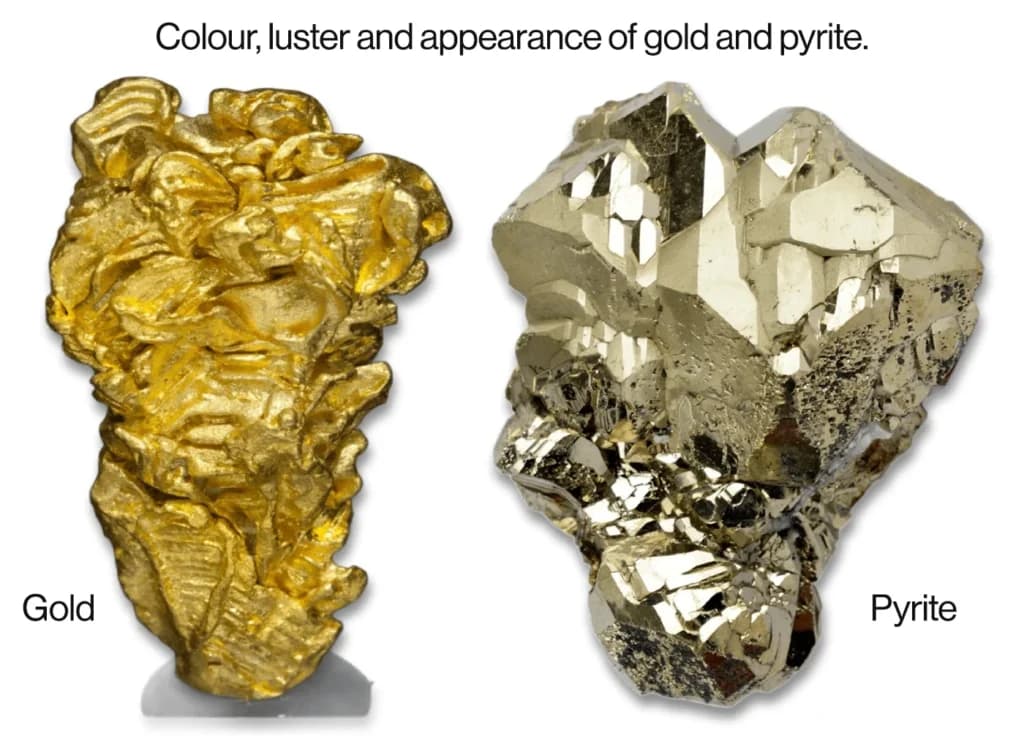
(The differences between gold and pyrite)
- Professional Certification: If you’re buying a significant gold item (like a gold bar or a high-value coin), look for assay certificates or packaging from a reputable mint. Bullion bars often come stamped with serial numbers and a certified purity (e.g. “999.9 fine gold”). Coins from government mints (like the American Gold Eagle or Canadian Maple Leaf) are guaranteed for purity. Purchasing from reputable sources reduces the worry of authenticity. But if you ever have doubts, don’t hesitate to test or have the item verified.
- Hallmark Authenticity: Note that while hallmarks are very useful, they can occasionally be faked. Unscrupulous counterfeiters might stamp “18K” on a piece of metal that isn’t gold. So, use hallmarks as one indicator but back them up with the physical tests described. In many countries (like the UK), hallmarking is tightly regulated by law – for instance, UK law requires most gold items above a certain weight to carry an official assay office hallmark. Recognising genuine hallmark symbols (and verifying with the issuing authority if needed) can further confirm your gold’s authenticity.
Now that we’ve covered various methods and tips on identifying real gold, let’s address some frequently asked questions on the topic. These Q&A will reinforce what we’ve learned and clarify specific scenarios (like telling if a gold ring or necklace is real, and whether things like white gold and rose gold count as “real” gold).
Frequently Asked Questions
How do you tell if gold is real?
Check for hallmarks (like 14K or 750), perform a magnet test (real gold isn't magnetic), and see if the item causes skin discolouration (real gold won’t). Genuine gold also doesn’t tarnish or flake, whereas fake gold usually shows wear, colour changes, or corrosion. A quick vinegar test—no reaction means it's likely genuine—also helps confirm gold authenticity.
How to test if gold is real?
First, look for hallmarks (purity stamps). Do a magnet test—real gold won't attract magnets. Check for skin reactions—real gold won't cause discolouration. A ceramic scratch test (gold streak indicates authenticity; black indicates fake) or vinegar test (real gold remains unchanged) are helpful too. For certainty, a jeweller can perform a nitric acid or XRF test.
How do you test gold at home?
At home, test gold authenticity by inspecting hallmarks, using a strong magnet (gold is non-magnetic), performing the vinegar test (real gold doesn’t change colour), checking for skin reactions (real gold won’t discolour your skin), and doing a water density test (real gold sinks quickly). These simple checks reliably identify fake gold without damaging valuable items.
How to tell if a ring is real gold?
Check the ring’s inner band for purity marks (like 10K, 14K, 18K). Real gold won’t flake or fade, attract magnets, or discolour your skin. Perform a ceramic scratch test—real gold leaves a golden streak, while fake metals leave dark marks. For certainty, get it acid-tested professionally by a jeweller.
How to tell what karat gold is?
Karat is marked directly on gold jewellery as 10K, 14K, 18K, or numeric codes like 417, 585, 750 respectively, indicating gold purity. If unmarked, a jeweller can perform an acid or XRF test to determine karat precisely. Hallmarks are usually reliable indicators of gold karat and purity.
How to tell if a necklace is real gold?
Real gold necklaces have hallmarks (check clasps or end links), won’t discolour skin, or wear down to reveal another metal. Test it with a magnet (should not attract strongly) and vinegar (should not tarnish). A jeweller’s acid test is best for definite confirmation, especially for valuable pieces.
How can I tell if jewellery is real gold?
Check for hallmark stamps indicating purity. Common hallmark locations:
- Rings: inside band
- Necklaces/bracelets: clasp or tag
- Earrings: post or back
- Watches: case back Real gold won't flake, discolour skin, or attract magnets. Perform simple tests (magnet, vinegar) at home or seek professional testing for valuable items.
Are gold medals real gold?
Typically, gold medals (like Olympic medals) aren't solid gold. Modern Olympic medals are about 92.5% silver, plated with about 6 grams of pure gold. Historically (since 1912), solid gold medals haven’t been used. Most competition medals today contain genuine gold plating over silver or bronze, not solid gold.
Is rose gold real gold?
Yes, rose gold is real gold alloyed with copper (and sometimes silver) to create a pink hue. For example, 18K rose gold contains 75% pure gold. It retains gold's value and properties (non-tarnishing, non-magnetic) but differs in colour due to its copper content.
Is white gold real gold?
Yes, white gold is real gold alloyed with white metals (nickel, palladium, silver) to give a silvery appearance. For example, 18K white gold contains 75% gold. It is often rhodium-plated for brightness. White gold is genuine gold, simply mixed with other metals to alter its colour.
Is real gold edible?
Yes, pure gold (24K) is edible because it’s chemically inert and non-toxic. Edible gold leaf or flakes are used decoratively in foods, offering no nutritional benefit. Only high-purity gold intended for culinary use is safe—never consume gold jewellery or lower-karat gold due to alloyed metals.
Is real gold magnetic?
No, real gold isn’t magnetic. Pure gold and genuine gold alloys will never attract magnets. If gold jewellery sticks strongly to a magnet, it indicates a fake or gold-plated item. A simple magnet test quickly identifies most fake gold, but combine it with other methods for accuracy.
Interested in selling gold with the UK’s highest paying gold buyer? Visit our Sell Gold page to get a competitive valuation – we provide fully insured postage and fast payment.
For more insights and the latest gold price today, keep an eye on our live charts and blog updates. Happy investing!