Is It Worth Buying 1g Gold Bars?
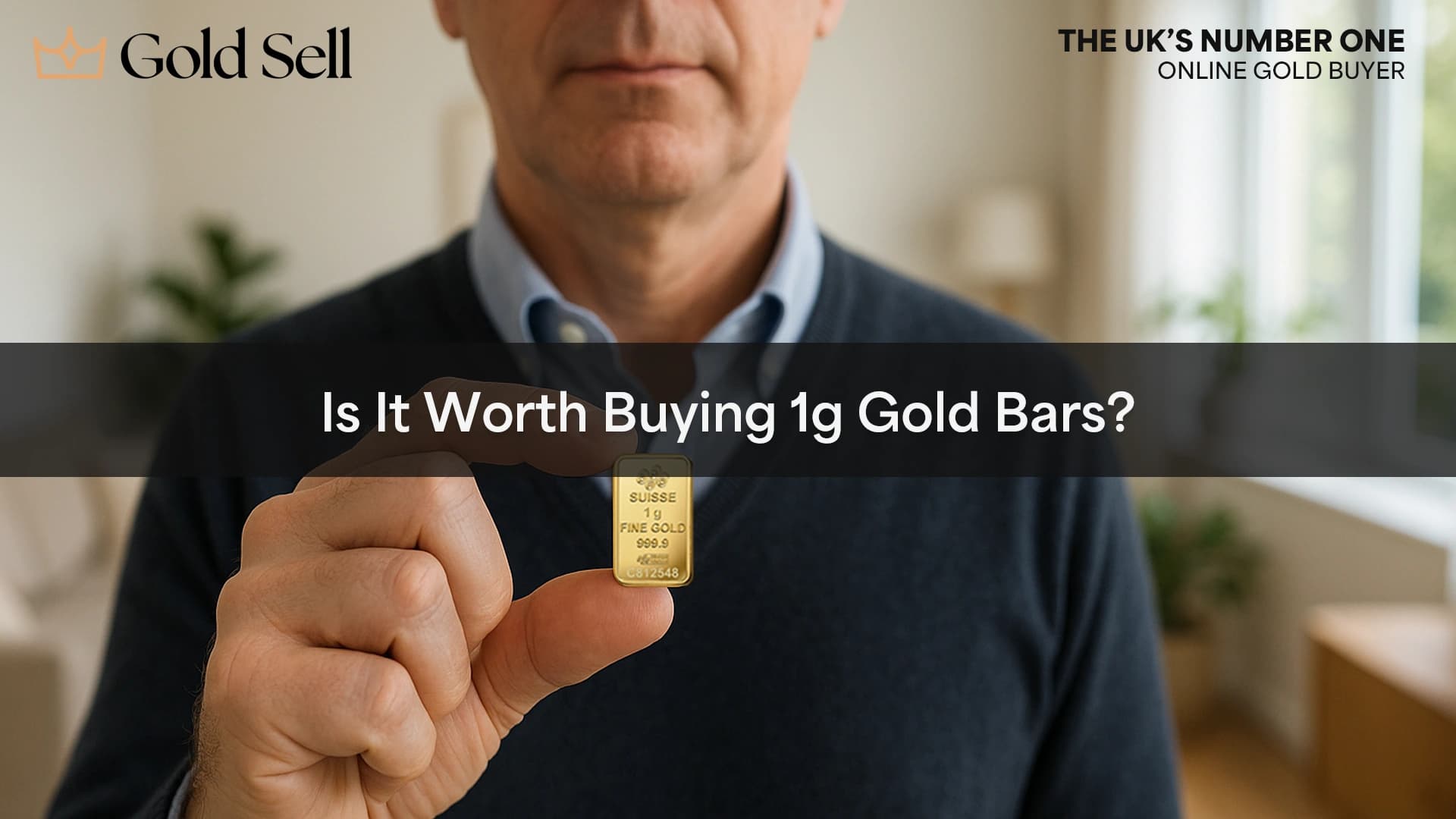
1g gold bars can be a simple way to start buying gold bullion. They offer high flexibility for small budgets, but carry relatively high premiums. Whether they’re “worth it” depends on your goals: for gradual savings or gifts, 1g bars can be useful, whereas larger bars (like 1oz or 100g) give better value per gram.
Key Takeaways
- Inflation Hedge: Gold has historically preserved wealth in times of inflation and uncertainty.
- Diversification: Including gold can reduce overall portfolio risk, as it often moves differently from stocks or bonds.
- Returns Comparison: Over the past decade UK gold gained +93% vs +13% for the FTSE 100; in early 2025 it jumped ~22% (6-month, UK), far above shares or cash.
- Savings Yield: Modern UK savings accounts yield only ~3–4%, often below inflation (around 4%), whereas gold has recently outpaced both.
- 1g Gold Bar Benefits: 1g gold bars are more liquid (easy to sell in tiny amounts) and are ideal for gifting or for those who want to try gold investment in a low-risk, affordable way.
- High Premiums: Small bars cost a much higher premium over spot (often 20–30%) than larger bars. You pay extra per gram, which eats into gains when it comes to selling.
- Tax: Gold bullion (bars or coins not officially legal tender) is subject to UK Capital Gains Tax on profits. Some British bullion coins (e.g. Royal Mint’s Britannias or Sovereigns) are exempt, but bars are not.
- Storage: Even 1g gold bars must be stored securely or insured. For very small bars this cost might be proportionally high, but they are easier to hide or distribute than large bars.
Is Gold A Good Investment
Gold is widely seen as a safe-haven asset and inflation hedge. It doesn’t pay interest or dividends, but it tends to hold purchasing power when paper currencies weaken. In today’s UK climate – with inflation around 4% and bank base rate ~4.5% – gold offers a way to protect wealth. Savers face low yields; for example, NS&I’s top easy-access rate is only ~3.3%, barely above inflation. By contrast, gold’s price has been strong: it rose ~22% in GBP over the six months to March 2025, significantly beating UK stocks (+4%) and gilts. Over the past decade gold has massively outperformed the FTSE 100 (gold ~+93% vs FTSE +13%). This highlights gold’s potential as a long-term store of value.
However, gold can be volatile and offers no income. Its recent rise may slow if interest rates stay high. Analysts warn there are no guarantees. Compare this to equities: UK shares can yield dividends (~3–5%) and have higher long-term growth on average. Cash in savings accounts is secure and easily accessible, though yields are modest. In summary, gold is useful as part of a diversified portfolio and inflation hedge, especially when other markets are shaky. But it shouldn’t replace income-generating assets or emergency cash.
How To Invest In Gold
There are many ways to gain gold exposure, each with pros and cons:
Physical Bullion (Bars & Coins)
You buy actual gold, which you hold (or store). This includes gold bars (like 1g, 10g, 1oz, etc.) and bullion coins (e.g. UK Britannias, Krugerrands.)
Pros: Tangible asset with no counterparty risk, global demand, easy to understand. Cons: You pay a premium over spot, plus storage/insurance costs. Small bars/coins are very accessible, but incur higher premiums. (The World Gold Council notes that small bars & coins make up ~2/3 of annual investment demand, reflecting their popularity despite premiums.)
Gold ETFs/ETCs
Exchange-traded funds or ETFs (like the iShares Gold Trust) and ETCs (exchange-traded commodities) allow you to invest without handling physical metal.
Pros: Trade on stock exchanges, high liquidity, tracks gold price minus a small fee (no storage hassle). Cons: You don’t own physical gold, and there is a management fee. They also carry counterparty risk, though top ones hold bullion in vaults. Globally, ETFs/ETCs account for about one-third of investment gold demand.
Gold Mining Stocks Or Funds
Buying shares of mining companies (e.g. Barrick, AngloGold) or funds of gold miners.
Pros: Potential dividends and profit leverage – a small rise in the gold price can translate to a bigger gain for gold mining stock holders. Cons: These are stocks subject to company risks, costs, and market sentiment. They often outperform physical gold when mines are profitable, but they can collapse if operations fail.
Digital Gold Or Vaulting
Online platforms (like BullionVault, GoldMoney) let you buy allocated gold stored in a vault. You own gold bars virtually.
Pros: Combines physical gold ownership with easy trading/small sizes. Cons: Still requires trust in the platform, and typically incur storage fees. Some “digital gold” crypto tokens exist too, but they add extra layers of risk.
Gold Futures/CFDs
For sophisticated investors, futures contracts or CFDs let you speculate on gold price with leverage.
Pros: High potential returns with small capital. Cons: Very risky (you can lose more than invested); not recommended for long-term conservative investing.
Is Buying Gold Bars A Good Investment?
Gold bars (bullion bars) are a classic way to hold physical gold. They are real metal you can touch, and like other bullion they tend to hold intrinsic value.
Pros: Low counterparty risk (once you own the bar, it’s your property), and generally lower premiums than coins of the same weight (coins often have numismatic or design premiums). Buying bars also avoids VAT in the UK (investment gold is VAT-exempt), and is a very liquid form of gold that dealers will buy back (though usually at below the gold spot price).
Cons: High upfront cost: even a 100g bar costs thousands of pounds. They require secure storage (home safe or vault) and insurance. Premiums: smaller bars (1g–10g) carry very high premiums per gram, whereas larger bars (1oz or 100g) are cheaper per gram. For example, UK dealers show 1g gold bars priced £121.32 (~25% above spot), 10g gold bars £1,038.51 (~7% above spot), and 1oz gold bars £3,154.66 (~4–5% above spot). (As a rule, the bigger the gold bar, the lower the premium added on top of the gold spot price.)
Tax: In the UK, all bullion bars are subject to Capital Gains Tax on any profit (above your tax-free allowance). Source: Royal Mint. (Notably, only Royal Mint bullion coins like Britannias or Sovereigns escape CGT – gold bars do not.)
In sum, gold bars can be good for long-term storing of wealth, especially in larger sizes. They avoid VAT and are easy to verify. But buying gold bars also means paying premiums and paying for storage. If you plan to sell back soon, be prepared that dealers may only offer ~95–97% of the gold spot price (some advertise buy-backs for about 96% of current gold).
Whether it’s “good” depends on your timeframe and gold prices: buy-and-hold investors will favour gold bars (or coins) and accept CGT, while short-term traders might prefer other forms of gold investment.
Is It Worth Buying 1g Gold Bars?
1g gold bars are the smallest common bullion bars. Their main benefit is accessibility: you can invest very small amounts (a few pounds at a time) and accumulate over time. They’re also highly liquid: you can sell just 1g or a few grams without needing to part with a large chunk of gold. This flexibility makes them popular as gifts (birthday money in gold) or for micro-investors.
Drawbacks: 1g gold bars carry a very high premium per gram. As of right now, UK dealers quote £121.32 for 1g of gold (while the live gold price is only £97.06/g), a premium around 25–30%. By comparison, 1oz gold bars only add ~4–5%. Thus each 1g gold bar costs much more than its melt value. That means if gold prices rise a little, the premium dampens your profit.
On resale, buyback rates for 1g bars are lower: many dealers advertise paying about £93.17 per 1g bar (around 96% of spot). They want to discourage very small-sales or recover their costs. Brand matters: widely-recognised brands (PAMP, Valcambi, etc.) fetch slightly better rates.
For storage/insurance, 1g bars don’t solve this problem – they still need to be kept safe. But they’re easy to distribute or stash individually.
In short, 1g bars are worth it if you need small amounts or want maximum flexibility. They let beginners buy gold in dribs and drabs. But if value-for-money is your goal, larger sizes (5g, 10g, 1oz) give better cost efficiency. When budgeting £100 or more, consider maybe a 5g bar instead, which cuts the premium to about 8–10%.
Gold Bar Prices
As of 29 Oct 2026 , gold prices are very high by historical standards. One troy ounce of gold stands at £3,018.82/oz, roughly double its price from 2018. The UK gold price averaged about £2,314/oz in 2025, with a 2025 peak around £2,565.30/oz (on 21 April 2025). (The lowest point so far in 2025 was ~£2,097/oz on Jan 1.) Overall, gold’s 2025 has been up ~17% year-to-date.
Using our exclusive Live Price Checker™, we’ve compiled the average retail prices for a range of gold bar weights available across the UK today. Each price is displayed alongside the live gold spot value based on the pure gold content of each bar, giving investors a clear view of typical dealer premiums. This side-by-side comparison helps highlight how premiums generally decrease with bar size, guiding smarter buying decisions.
1g gold bar: £121.32 (about 25% premium over spot).
5g gold bar: £533.81 (spot £485.29) ≈ +10% premium.
10g gold bar: £1,038.51 (spot £970.57) ≈ +7% premium.
1oz (31.1g) gold bar: £3,154.66 (spot £3,018.82) ≈ +4.5% premium.
100g gold bar: £10,161.88 (spot £9,705.71) ≈ +4.7% premium.
250g gold bar: £25,186.32 (spot £24,264.28) ≈ +3.8% premium.
In general, premiums decrease with size. Very large gold bars (1kg, 400oz) can have just ~1–3% premium, but 1g gold bars often cost 20–30% over spot.
Trend: Gold has been on an upward trend due to safe-haven demand. It hit record highs several times: in early 2024 and early 2025 it broke £2,500/oz. Analysts attribute this to inflation fears, rate-cut expectations, geopolitical uncertainty, and heavy central bank buying. Short term it can swing – for example, a dip into early 2025 (around £2,100) was followed by a quick surge to new highs by April. Overall sentiment remains bullish: some analysts forecast gold averaging $3,000/oz+ (around £2,400) or higher in coming years, but risks remain if real interest rates rebound.
Live Gold Bar Prices
Gold price last updated:
Thursday, 29 October 2026, 12:42.
The LBMA (London Bullion Market Association) gold spot price is live and refreshed every 60 seconds to reflect the real-time gold spot price.
The prices shown reflect only the bar’s pure gold content and exclude any seller’s premium, which typically adds 5–15% depending on the size of the gold bar.
Where To Buy Gold Bars In UK
UK buyers have many trusted sources:
Online Bullion Dealers: Reputable sites like BullionByPost, Atkinsons Bullion, Baird & Co, Chards, Regent Mint and Hartleys offer a wide range of gold bars with insured delivery. Check customer reviews and LBMA accreditation.
The Royal Mint: The Royal Mint sells gold bars (e.g. 1oz Britannia bars, 100g gold bars) and coins. These come in official packaging and are CGT-exempt as legal tender (coins) or simple bullion (bars).
Stockists and Shops: Some coin shops and postal office services sell gold bullion. Also check Costco UK (warehouse members) – they list gold bars (5g, 50g, 100g, 250g, 500g) at near-wholesale prices.
Local Dealers: The Birmingham Jewellery Quarter and other cities have reputable gold bullion traders and pawnbrokers. Always verify credentials and avoid hasty deals, it’s always worth working out what premium you are paying over the gold spot price before making a snap judgement.
Specialty Retailers: Companies like AngloFarEast, BullionVault (online trading vault service), or London Gold Centre may be options.
Precious Metals Exchanges: Services like BullionVault or GoldMoney let you buy allocated gold, though this is effectively an online vault.
Wherever you buy, ensure the seller is regulated or well-established. Compare prices (spot premiums), and watch out for hidden fees. Always get a receipt and certificate for authenticity.
Where To Sell Gold Bars UK
When it’s time to sell, several outlets exist:
Bullion Dealers: The same dealers above often buy back gold. Online vendors (BullionByPost, Atkinsons, Chards, etc.) typically have “Sell to Us” sections. They’ll quote a price (often slightly below spot) and offer bank transfer. Dealers will pay a bit more if you bought the bars from them originally, since they know the source.
Coin Shops/Jewellers: Many jewellery shops buy scrap gold (including bars). They can be convenient for small sales, but their rates may be lower and they may melt the gold. Always compare quotes.
Pawn Brokers: National pawnbrokers (H&T Pawnbrokers, others) will buy or lend against bullion. They provide quick cash but at lower prices.
Online Gold Buyers: Services like Lois Bullion or Hanko’s Gold advertise straightforward selling. They may not require in-person visits.
Auctions/eBay: Technically possible, but selling online privately carries risks (fraud, shipping loss). Only use secure methods.
Banks: Very few UK banks deal in physical gold sales (some may handle gold accounts or OTC deals, but not standard retail).
Important: Always get multiple quotes. Prices can vary several percent. Check reputations and fees. The Gold Bullion Co. notes many dealers buy back at “slightly reduced” rates , so doing research pays off.
Each option has trade-offs: Dealers offer safety and convenience, pawnbrokers offer speed but lower price, and private sales (auction) can yield more but require more effort and risk.
Gold Price Projection
Future gold prices are projected to range between $2,000 and $3,300 per ounce in 2025, depending on inflation, central bank actions, and global risks. Analysts’ forecasts vary widely. Factors include real interest rates, inflation, central bank demand, and geopolitical risk. Some projections are very bullish: for example, Bank of America now forecasts gold averaging around $3,060/oz in 2025 (about £2,450), while Goldman Sachs expects an end-2025 price near $3,300/oz. RBC Capital (equities team) foresees ~$2,844/oz by end-2025 under a baseline scenario. By contrast, HSBC predicts a pullback, expecting ~$2,075/oz by end-2025 (implying a drop from current highs).
In summary, forecasts range roughly $2,000–3,300/oz (about £1,600–2,600) for next year. Key influences include whether inflation stays high (supporting gold), or if central banks tighten policy faster (pressuring it). Ongoing gold purchases by China and others could push prices up, while a strong US dollar or surging real yields could cap gains. Weigh these analyst views with caution: as one RBC report notes, “current prices… are roughly in line with [2025] forecast” (RBC’s $2,844) unless a major recession/rupture occurs.
Best Gold Bars To Buy
The “best” bar depends on your strategy:
Size:
- Small amounts: 1g gold bars or 2g bars for very small budgets. Good for testing or gift-giving, but premium is high.
- Flexible savers: 5g–20g gold bars strike a balance; you can buy modest amounts with lower premium than a 1g gold bar.
- Serious investors: 1oz (31.1g) or 100g gold bars are popular for lower premium (~4–6%). They’re still reasonably easy to store/sell.
- Large investors: 250g, 500g, 1kg, or London Good Delivery (400oz ~12.4kg) bars give the lowest premium per gram (often 1–3%), but require big capital.
Brand: Stick to recognisable refiners. The top brands (LBMA-approved) include PAMP Suisse, Valcambi (Credit Suisse), Umicore, Heraeus, Metalor, Perth Mint, Johnson Matthey (classic, though no longer minted), and The Royal Mint. These carry minimal premiums and are easy to resell. Generic/unnamed bars can be cheaper, but buyers might discount them. Branded bars come with assay cards or serial numbers which boost liquidity and trust. For example, a 1oz PAMP Suisse or Umicore gold bar will fetch a small premium over London fix price and is globally accepted.
Packaging: Minted bars with certificates (e.g. Royal Mint or PAMP blister packs) may cost a bit more but reassure buyers. Cast bars (plain rectangular bars) are usually slightly cheaper.
Recommendation: For low premium and resale value, many investors favour 1oz gold bars from top mints, or 100g gold bars if you have more to spend. If you’re saving little by little, 5g or 10g bars from PAMP or Valcambi are a compromise. Avoid unfamiliar brands or decorative “collector” bars that carry collector premiums unless you’re a numismatist. The Royal Mint’s bullion bars are good quality but often carry slightly higher markup due to branding (though they are VAT-free and CGT-exempt if legal-tender coins).
Gold Bars vs Gold Coins
Gold Bars: Pure gold content with no face value. Cheaper per gram than coins (especially larger bars). VAT-free in the UK. Subject to CGT on gains when sold. Require storage or safe storage solutions.
Gold Coins: In the UK, certified gold coins (like the Royal Mint’s Britannia or Sovereign coins) carry face value and are legal tender. A key advantage is that these are CGT-exempt (as they’re British legal tender bullion coins). Many dealers also treat them as “VAT-free” investment gold. However, coins often carry higher premiums per gram than gold bars, especially collectible issues. For example, a 1oz Britannia coin or Krugerrand coin will cost more than a generic 1oz gold bar. Coins are highly liquid and easily recognised, making them easy to sell. British coins (Sovereigns, Britannias, etc.) also have numismatic appeal, which can sometimes fetch a premium if rare. The downside: if you sell such coins for bullion value (not rare collectible value), you pay CGT only on the gain above cost—which for coins from The Royal Mint is zero.
Summary: Gold bars maximise gold content vs. price (low premium, but taxable). Coins offer convenience, liquidity and CGT exemption (Britannia and Sovereign coins), but at slightly higher cost. Many UK investors use a mix: gold bars for core holdings, and some Britannia/Sovereign coins to remain CGT-free up to the allowance.
Frequently Asked Questions
Is gold a good investment?
Gold is a useful long-term hedge and portfolio diversifier. Historically it preserves value during inflation and crises. Recent performance (UK gold up ≈22% in 6 months) shows its strength. However, it pays no income and can fluctuate. As a rule, keep only a modest share (e.g. 5–15%) of wealth in gold for balance.
Is buying gold bullion a good investment?
Physical bullion (bars or coins) is attractive for those seeking safety and tangible assets. It’s easy to understand and holds intrinsic value. The downside: premiums and storage costs. It can be a good choice if you want to own real gold directly, but it usually underperforms stocks in the long run. It’s best for diversification and hedging, not for quick gains.
Is it worth buying 1g gold bars?
1g bars are worth it if you need to invest very small amounts or give gold as gifts. They allow gradual buying. However, premiums are very high for 1g. You pay ~25–30% extra per gram, which reduces profit. For bigger investments, larger bars give better value. But for casual savers, 1g gold bars are a feasible, flexible option.
How much do gold bars weigh?
Gold bars come in many sizes. The smallest common weight is 1 gram. Popular sizes include 5g, 10g, 20g, 1 ounce (31.1g), 100g, 250g, 500g, and 1kg. The standard London Good Delivery bar (for banks) weighs ~400 troy ounces (≈12.4 kg). There’s no single weight that’s standard – gold bars vary by product.
Is buying gold bars a good investment?
Gold bars can be a solid investment if held long-term. They avoid VAT and have low running costs. Good for wealth preservation, though they are taxed on gains. Bars are better value per gram than coins. However, if gold prices stagnate or you need cash sooner, the lack of yield and potential CGT mean gains might be modest. For many, a mix of gold and other assets is wiser.
Where to buy gold bars in UK?
Trusted options include online bullion dealers (BullionByPost, Atkinsons, etc.), The Royal Mint (for certified bars), and even Costco UK (for members – e.g. they list 5g–500g bars). Specialist coin shops and major pawn shops also sell gold bullion. Always use regulated sellers with good reviews and check spot price+premium. Avoid random classifieds or too-good-to-be-true deals.
What is the best gold bar to buy?
For most investors, a bar from a top refiner is best: e.g. PAMP Suisse, Valcambi (Credit Suisse), Umicore, Heraeus, Metalor, or Perth Mint. These have low premiums and are widely accepted. Choose a size that fits your budget: 1oz gold bars are very popular. If buying small, PAMP’s 5g or 10g lines are good. Avoid obscure brands. Royal Mint bars are also good quality but check the price.
Physical gold vs gold ETF?
Physical gold (bars/coins) gives you tangible ownership – no counterparty or management fee, and it’s private. It’s stable in turmoil but costs more in premium and storage. Gold ETFs/ETCs are paper securities tracking gold. They are easy to trade (like stocks) and have low premium, but carry a management fee (~0.1–0.4%/yr) and rely on the issuer. ETFs are more liquid for small trades, but some investors distrust paper gold. In short: physical is for long-term holding, ETFs for easy market exposure.
How heavy are gold bars?
Gold bars come in various weights, from 1g to 1kg and beyond. Common sizes include 1g, 5g, 10g, 1oz (31.1g), 100g, 250g, 500g, and 1kg. The standard gold bar traded by central banks, known as a Good Delivery bar, weighs about 400 troy ounces or approximately 12.4kg.
How to buy gold for investment UK?
To invest in gold in the UK, you can buy physical bars or coins through reputable dealers (online or physical stores), invest via gold ETFs/ETCs on the stock market (e.g. iShares Physical Gold ETC), or buy gold mining stocks/funds. For physical, compare dealers on price and service. For ETFs, use a brokerage to buy gold ETCs. Make sure you understand VAT and CGT: investment gold is VAT-free, and CGT applies only on gains above the allowance.
Interested in selling gold with the UK’s highest paying gold buyer? Visit our Sell Gold page to get a competitive valuation – we provide fully insured postage and fast payment.
For more insights and the latest gold price today, keep an eye on our live charts and blog updates.