What Is Capital Gains Tax?
Capital gains tax is a tax on the profit you realise when you sell an asset that has increased in value. In the UK, you benefit from a £3,000 annual CGT allowance and exemptions for UK legal‑tender gold coins, while gains on bullion, non‑UK coins, and high‑value jewellery above thresholds are taxable.
Key Takeaways
- Capital gains tax: A levy on the profit made when you dispose of an asset that has risen in value, rather than on the total sale price.
- Annual allowance: Each individual has a £3,000 tax‑free CGT allowance for 2024–25; any gains above this threshold are subject to tax.
- CGT rates: Basic‑rate taxpayers pay 18% on gains and higher‑rate taxpayers pay 24% on gains above the allowance (rates updated as of 30 October 2024).
- Exempt gold investments: UK legal‑tender gold coins (e.g., Britannias, Sovereigns) are treated as sterling currency and enjoy full CGT exemption.
- Taxable gold assets: Gold bars, ingots, and non‑UK coins are classed as chargeable assets; profits above your allowance incur CGT.
- Jewellery exemption: Personal gold jewellery sales up to £6,000 are CGT‑free as chattels; sales above £6,000 may trigger CGT on gains beyond the £3,000 allowance.
If you invest in gold, whether it’s shiny coins, bullion bars, or heirloom jewellery, it’s crucial to understand Capital Gains Tax (CGT). This tax can affect the profits you make when selling your gold at a higher price than you bought it. In this comprehensive guide, we’ll explain what CGT is, how it’s calculated in the UK, and how it specifically applies to gold investments. We’ll also highlight which gold items are Capital Gains Tax-exempt (hint: certain UK coins) and answer frequently asked questions. Let’s dive in!
What is Capital Gains Tax (CGT)?
Capital Gains Tax is, in simple terms, a tax on the profit you earn when you sell or “dispose of” an asset that has increased in value. According to HMRC, it’s the gain (increase in value) that’s taxed, not the total amount you receive for the asset. For example, if you bought an asset for £5,000 and later sold it for £7,000, your profit (or “capital gain”) is £2,000, and CGT would apply only to that £2,000 gain, not the full £7,000 sale price.
In the UK, CGT can apply to a wide range of assets, property, stocks and shares, cryptoassets, and yes, physical gold (coins, bullion, jewellery) are all potential “chargeable assets.” You won’t usually pay CGT on your main home or on certain specific assets like UK lottery winnings or ISAs (Individual Savings Accounts), but most other valuable assets are within scope. HMRC administers CGT, and you are responsible for reporting any taxable gains and paying the tax (it isn’t automatically deducted). Each tax year you have an annual tax-free allowance (also called the Annual Exempt Amount), if your total gains for the year are below this threshold, you don’t owe any CGT.
For the 2024–25 tax year, the CGT tax-free allowance is £3,000 for individuals. (This allowance has been significantly reduced in recent years, it was £12,300 up to 2022/23, then £6,000 in 2023/24, and now £3,000 in 2024/25, reflecting recent policy changes to tighten CGT rules .) If you sell gold or other assets and your total gains for the year are under £3,000, there’s no CGT to pay. But if your gains exceed the allowance, you’ll pay tax on the amount above £3,000.
How Is Capital Gains Tax Calculated In The UK?
“How much is capital gains tax?” The answer depends on your income tax bracket and the type of asset. In the UK, CGT rates are typically split into two bands, similar to income tax: one for basic-rate taxpayers and a higher rate for higher (or additional) rate taxpayers. The rate you pay on your taxable gains is determined by adding your capital gains to your other taxable income and seeing which income tax band that total falls into.
- Basic-Rate Taxpayers: If your total income (after allowances) keeps you in the basic 20% income tax band, your capital gains are taxed at the lower CGT rate. For most assets, this lower rate has historically been 10% of the gain. (Residential property had a higher 18% rate in the past, but that doesn’t affect gold.) **However, from 30 October 2024 the government increased the basic CGT rate to 18%**. This means that as we enter 2025, basic-rate taxpayers will pay 18% CGT on gains (including gold) above the allowance.
- Higher/Additional-Rate Taxpayers: If your gains push you into the higher income tax band (or you’re already a higher-rate earner), you pay the higher CGT rate on the portion of gains above the basic threshold. This rate was 20% for most assets, and was raised to 24% from 30 October 2024 onwards. In other words, in 2025 a higher-rate taxpayer will generally face 24% CGT on their taxable gains.
To summarise the 2025 CGT rates (post Autumn 2024 Budget changes): basic-rate band gains are taxed at 18%, and higher-rate band gains at 24% for all standard assets, including gold. (These rates are now aligned with the rates that already applied to residential property gains.) Before the rate change, the CGT rates were 10% and 20% respectively, so be aware of this update when planning any asset sales. Only the profit above your £3,000 allowance is taxed. For example, if you made £5,000 profit selling some gold in 2025 and you hadn’t used any of your CGT allowance, the taxable gain would be £2,000 (i.e. £5,000 minus £3,000 exemption). A basic-rate taxpayer would owe 18% of £2,000 (i.e. £360) in CGT, whereas a higher-rate taxpayer would owe 24% of £2,000 (£480).
It’s worth noting that capital gains are reported to HMRC (usually via the self-assessment tax return or a special online service for property). CGT is not automatically deducted when you sell your gold, you must calculate and report it yourself if due. If you have allowable capital losses (for example, losing money on another investment), these can be used to offset gains, reducing your CGT bill. And if you’re married or in a civil partnership, transferring assets to your spouse before sale can effectively use both of your CGT allowances, a legal way some investors minimise tax. Always keep records of purchase and sale prices for your gold investments, so you can calculate gains accurately.
Do You Pay Capital Gains Tax on Gold? (CGT for Gold Investments)
Now, how does all this apply to gold? Gold is treated like any other investment asset for CGT purposes, if you sell gold at a profit, that profit can be subject to capital gains tax. However, the tax treatment differs depending on the form of gold you own. Some gold investments are fully taxable just like shares or art, while others are specifically exempt from CGT under UK law. Let’s break down the common categories of gold investments:
Gold bars and most gold bullion are treated as taxable assets for CGT purposes, meaning any profit you make above the annual allowance is liable to tax. In contrast, certain British gold coins are exempt from capital gains tax because they are legal tender in the UK, making them especially attractive to investors seeking tax-free gains. Understanding which gold products are CGT-free can help you plan your investments more tax-efficiently.
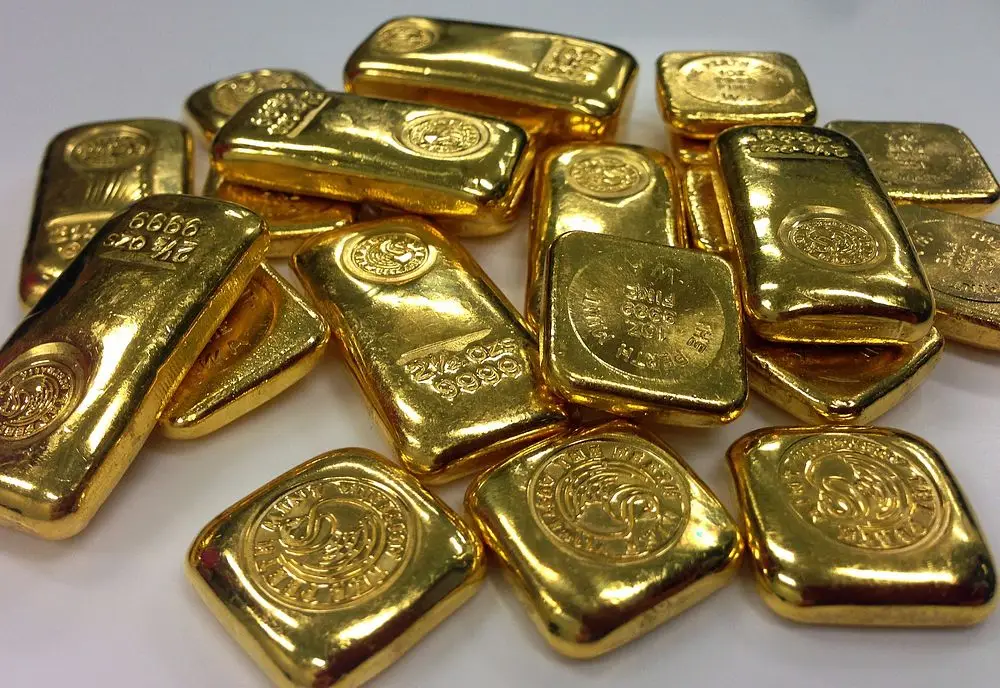
(A pile of gold bullion bars)
CGT on Gold Bars and Bullion (Taxable)
Gold bars, ingots, and other forms of physical gold bullion are not exempt from capital gains tax. Gold bullion is viewed as an investment commodity. When you sell gold bars or non-coin bullion for a profit, those gains count toward your CGT just like profits from selling stocks or any other chargeable asset. UK law does provide a VAT exemption for investment-grade gold (so you don’t pay VAT when buying pure gold bars), but there’s no blanket CGT exemption on gold bars. In short, selling gold bars at a profit can trigger CGT if your gains exceed the annual allowance. For example, if you purchase a 1kg gold bar and later sell it for £5,000 more than you paid, that £5,000 gain is potentially taxable (after using your £3k allowance).
The same goes for foreign gold coins or any gold bullion coins that are not legal tender in the UK. Popular international coins like the South African Krugerrand, US Gold Eagle, or Canadian Maple Leaf are not UK currency, they are considered chargeable assets in the UK. Any profit from selling these coins is subject to CGT (above the allowance), just as if you sold gold bars. For instance, if you sell a batch of Krugerrands and make a substantial gain, you’d need to report that and possibly pay CGT. (One small consolation: if you have modest holdings, personal possessions sold for £6,000 or less are exempt, we’ll cover this under jewellery, but it could apply to small coin sales too.)
Capital Gains Tax Exempt Gold Coins (Britannias & Sovereigns)
One of the most important (and beneficial) quirks of UK tax law for gold investors is that certain gold coins are exempt from Capital Gains Tax. Specifically, UK legal tender coins are CGT-free. HMRC cannot charge CGT on currency itself (it doesn’t tax gains in sterling currency), and Britain’s gold coins like the Britannia and the Sovereign are considered UK currency. Gold Britannia coins (e.g. 1 oz gold Britannias, which have a face value of £100) and gold Sovereign coins (£1 face value) are legal British currency, even though you’d never actually spend them at face value, their legal tender status means any profit made when you sell them is not subject to CGT.
The Royal Mint explicitly notes that all gold (and silver and platinum) bullion coins it produces are classed as CGT-free investments. This includes Britannia coins, Sovereigns, and other UK series like the Queen’s Beasts and Tudor Beasts. For example, if you bought a number of Gold Britannia coins and their value doubled over time, you could sell them and keep 100% of the profit, no CGT to pay at all, no matter how large the gain. This CGT exemption is a huge draw for UK investors: it means you can accumulate unlimited gains on these particular coins without a tax bill, making them tax-efficient gold investments.
Why are these coins CGT-free? It comes down to tax law: HMRC cannot apply Capital Gains Tax to British sterling currency. So, a Gold Britannia (denominated in pounds sterling) isn’t treated as a chargeable asset, it’s treated as money. Foreign coins like Krugerrands, on the other hand, are “currency other than sterling” and thus are chargeable assets in the UK. In plain English: UK coins = no CGT; foreign coins = CGT-liable (if you have gains over the limit).
Capital Gains Tax On Gold Jewellery - £6,000 Rule
What about gold jewellery, like gold necklaces, rings, or coins turned into jewellery pieces? These are considered tangible moveable property (or “chattels”) and have their own CGT rule. Personal jewellery can be CGT-free if the proceeds of the sale are £6,000 or less. HMRC’s guidelines state that you do not need to report or pay CGT on the sale of personal possessions (chattels) worth £6,000 or under. So, if you sell a small gold chain or a few gold earrings for, say, £3,000, any gain is automatically exempt by this rule.
If you sell gold jewellery for more than £6,000, then the gain can become taxable. In fact, there’s a marginal relief calculation for items sold for between £6,000 and £15,000, but the simple view is: expensive jewellery sales can trigger CGT. For example, imagine you inherited a gold bracelet worth £10,000 (more than it originally cost). When you sell it, because £10,000 > £6,000, you may owe CGT on the profit portion. You would calculate the gain (sale price minus original cost or probate value) and then see if it exceeds your £3k allowance. Many people won’t hit the CGT limit with personal jewellery, but high-value pieces certainly can, so don’t assume all jewellery sales are tax-free. (Also, note that your personal car is exempt from CGT no matter the value, but that’s a separate rule, selling your car or a classic car collection won’t incur CGT, whereas selling gold does.)
Do You Pay Capital Gains Tax On Gold?
To make things crystal clear, here’s a quick comparison of various gold investments and whether they are subject to UK Capital Gains Tax:
As the table shows, UK legal tender coins like the Gold Britannia and Gold Sovereign are unique in being CGT-free. Many UK gold investors prefer these coins for that reason, you could realise large profits without any tax due. On the other hand, if you’re investing in gold bars or popular international coins, you need to factor in potential CGT on your profits. That doesn’t mean you should avoid non-UK gold; it just means you might plan your sales more carefully (for example, selling gradually to use your allowance each year, or offsetting gains against any losses). In fact, some foreign coins often have lower purchase premiums (e.g. Krugerrands), so even though they’re not CGT exempt, their overall investment value can still be attractive. The key is to know the tax status of your gold beforehand.
Frequently Asked Questions
What is capital gains tax?
Capital Gains Tax is a tax on the profit you make when you sell an asset that’s increased in value. Only the gain is taxed, not the total sale price. In the UK, CGT applies to things like stocks, property, and gold investments (outside of tax-free wrappers), with a yearly tax-free allowance to protect a certain amount of gains from tax.
How much capital gains tax do I pay?
It depends on your tax bracket and the size of your gain. In the UK, basic-rate taxpayers pay 10% on most capital gains (recently rising to 18% from late 2024) and higher-rate taxpayers pay 20% (rising to 24%). You only pay CGT on gains above the annual allowance (£3,000 for 2024–25), so if your total profits stay under that, you won’t owe any CGT.
Do I pay capital gains tax on gold jewellery?
Usually not for small personal sales. Private jewellery is treated as a chattel (personal possession), so if you sell gold jewellery for £6,000 or less, it’s exempt from CGT. If you sell a very valuable piece for more than £6,000 and make a large gain beyond your annual £3k allowance, then yes, you may have to pay CGT on that profit. In practice, most everyday jewellery sales won’t incur CGT, but high-end investment-grade jewellery can.
Which gold coins are exempt from capital gains tax?
UK legal tender gold coins, such as Gold Britannias and Gold Sovereigns, are exempt from capital gains tax in the UK. These coins are considered British currency, so any profit you make when selling them is CGT-free. For example, all gold (and silver) Britannia and Sovereign coins produced by The Royal Mint can be sold without incurring any CGT, no matter how much they’ve increased in value.
Is selling gold bullion taxable?
Yes, selling gold bullion (bars or non-UK coins) can be taxable. If you sell gold bars or other gold bullion at a profit that exceeds your annual CGT allowance, you will owe capital gains tax on the gain at the applicable rate. There’s no special CGT exemption for standard gold bullion, so HMRC will treat it like any other investment asset sale. The only exception is if your profit falls within the tax-free allowance (then no tax is due).
How can I avoid capital gains tax on gold?
You can legally avoid or minimise CGT on gold by being strategic. One popular method is to buy CGT-exempt gold coins, for instance, UK Britannias or Sovereigns, so that no tax is due on their sale. Another strategy is to use tax-efficient accounts: if you invest in gold via a Stocks & Shares ISA or SIPP (pension), for example, buying gold ETFs or mining shares within an ISA, then any profits are entirely tax-free. Additionally, you can stagger sales of taxable gold over multiple years to use your annual allowances, or share ownership with a spouse to utilise two allowances. Always remember: tax avoidance is legal planning, whereas evading tax owed is not, so stick to the rules and make use of the reliefs available.
How much gold can I sell without reporting in the UK?
You can sell any amount of gold without personally reporting it, because the UK has no mandatory reporting requirement for private gold sales. Capital Gains Tax may apply only if your profit exceeds the annual CGT allowance. Dealers may conduct ID checks for high-value transactions under anti-money-laundering rules, but this does not require you to submit a report to HMRC.
Is there Capital Gains Tax on gold bullion?
Gold bullion can be subject to Capital Gains Tax when sold at a profit. The tax applies only if gains exceed your annual CGT allowance. UK-legal-tender bullion coins are exempt, which means many investors choose them to avoid CGT liabilities. Bullion bars and most non-legal-tender coins do not carry this exemption.
What coins are Capital Gains Tax-free?
Coins classed as UK legal tender are Capital Gains Tax-free. This includes gold Sovereigns and gold Britannias in all sizes. Their legal-tender status exempts them from CGT regardless of how much profit you make. Most foreign bullion coins do not share this exemption.
CGT-free meaning?
CGT-free means an asset can be sold at any profit without paying Capital Gains Tax. In the UK, this status applies to specific legally exempt items such as certain gold coins classed as legal tender. A CGT-free asset can still fluctuate in value, but any gain you realise is not taxable.
Do you pay Capital Gains Tax on gold bars?
Yes, gold bars may incur Capital Gains Tax if they are sold for a profit above the annual CGT allowance. Bars are treated as standard investment assets because they are not legal tender. CGT is calculated on your gain, not the total sale value.
Are gold Sovereigns exempt from Capital Gains Tax?
Yes, UK gold Sovereigns are exempt from Capital Gains Tax. They are classed as legal tender, which automatically places them outside CGT rules regardless of profit. This makes them popular for investors wanting tax-efficient gold exposure.
Are gold bars exempt from Capital Gains Tax?
Gold bars are not exempt from Capital Gains Tax. Because they are not legal tender, any profit realised above your annual CGT allowance may be taxable. The amount due depends on your gain and your overall tax position.
Are Krugerrands CGT-free?
Krugerrands are not CGT-free in the UK. They are South African legal tender, not UK legal tender, so they do not qualify for the UK’s exemption. Gains above your annual CGT allowance may therefore be taxed.
Is selling gold jewellery taxable in the UK?
Selling gold jewellery can be taxable if you make a profit exceeding the annual CGT allowance. Most people rarely exceed this because jewellery is typically sold for its scrap value rather than its original retail price. Personal possessions worth £6,000 or less may qualify for separate HMRC rules that limit CGT exposure.
How to avoid Capital Gains Tax on gold?
You can avoid Capital Gains Tax on gold by holding assets that qualify for CGT exemption or by keeping gains within the annual CGT allowance. UK legal-tender coins such as Sovereigns and Britannias are automatically exempt. Keeping detailed purchase records helps calculate gains accurately and avoid unnecessary tax.
Interested in selling gold with the UK’s highest paying gold buyer? Visit our Sell Gold page to get a competitive valuation – we provide fully insured postage and fast payment.
For more insights and the latest gold price today, keep an eye on our live charts and blog updates.