What Does Carat Mean In Gold?
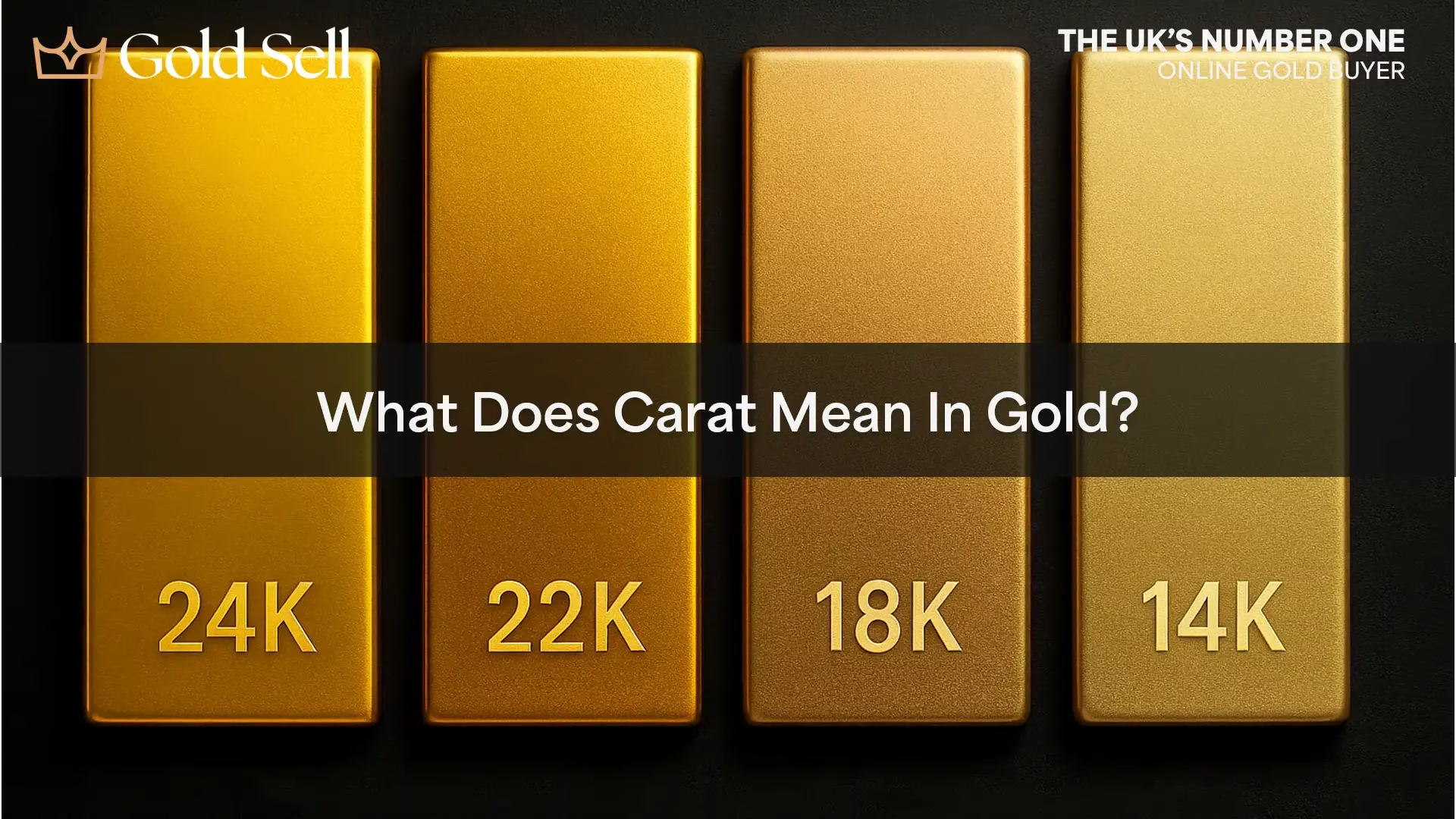
Carat in gold refers to the purity of the gold alloy, measured on a scale of 24. In practical terms, 24-carat gold is pure gold (100% gold content), whereas a lower carat like 18-carat gold is 18 parts gold out of 24 (about 75% pure) mixed with other metals. This means carat (ct) in gold is not about weight (unlike carats in diamonds); it’s all about how much of the item is real gold.
Key Takeaways
- Carat (ct) denotes gold purity: Gold carats measure the proportion of pure gold in an alloy, with 24ct being pure gold and lower carats containing a mix of gold and other metals.
- 24 Carat = ~99.9% Gold: 24ct gold is essentially 100% gold. By contrast, 18ct gold is 75% gold, 14ct is about 58.5%, and 9ct is 37.5% gold, the rest being alloy metals.
- Higher carat = Softer & More Valuable: Pure 24ct gold is very soft and bright in colour, ideal for investment bars or coins but too soft for everyday jewellery. Lower carat gold (like 14ct or 18ct) is harder and better suited for durable jewellery.
- “Best” carat depends on use: For everyday wear, many choose 14ct or 18ct gold for a balance of durability and gold content. High-purity gold (22ct–24ct) has richer colour and value but is softer and often reserved for special pieces or bullion.
- Carat vs Karat: In the UK and most countries, “carat” is used for gold purity (and also for gem weight), while in the US you may see “karat” for gold. Both mean the same purity measure (24 karats = pure gold).
What Does Carat Mean In Gold?
In gold, carat means the purity of the metal, essentially how much of the alloy is actual gold. The gold carat system divides purity into 24 parts. If gold is described as 24-carat, all 24 out of 24 parts are pure gold (100% gold with no other metals mixed in). By contrast, 18-carat gold means 18/24 parts (75%) of the metal is gold, and the remaining 6 parts (25%) are other metals like copper or silver. The higher the carat number, the greater the proportion of pure gold in the piece.
To put it into perspective, here are common gold purities: 24ct is pure gold (24/24 parts gold), 22ct is about 91.6% gold (22 parts gold, 2 parts other metals), 18ct is 75% gold, 14ct is ~58.5% gold, and 9ct is 37.5% gold. These other metals in lower carat gold (such as copper, silver, zinc, or nickel) are added to strengthen the gold and sometimes to change its colour.
It’s important to note that gold carats measure purity, not weight. Don’t confuse this with the “carat” used for diamonds and gemstones, which is a unit of weight (where 1 carat = 0.2 grams). When a gold ring is said to be 18ct, it doesn’t tell you how heavy the ring is, it tells you how pure the gold is. Historically, the karat system originated from the use of carob seeds as weights and the purity of ancient gold coins: pure gold coins were designated as 24-karat because they were as pure as gold could get. Ever since, we’ve used 24 parts as the basis, making 24k the benchmark for pure gold.
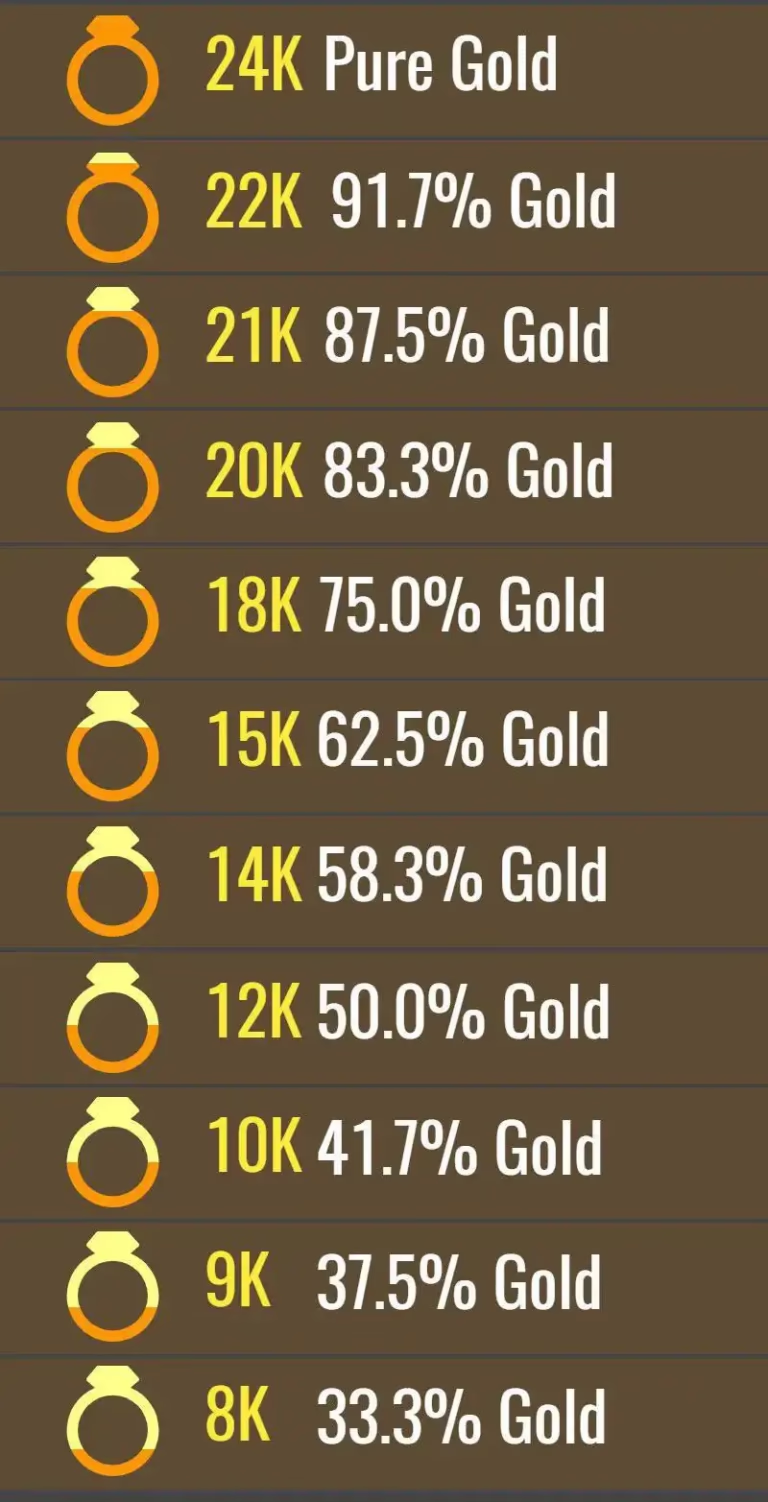
This gold purity chart shows how carat measures the number of parts gold in an item out of 24, expressed as percentages or hallmark stamps like 375 (37.5% gold) for 9ct. It helps you quickly identify the true gold content of different alloys.
What Carat Is Pure Gold?
Pure gold is 24 carat, meaning it’s composed of 24 out of 24 parts gold with no other metals included. In terms of purity, 24-carat gold is about 99.9% gold (often marked as 999 or 999.9 fine gold). This is as pure as gold generally gets in commerce, since achieving a full 100% purity is practically impossible with current technology. For example, gold of 99.99% purity (sometimes called “four nines” fine) is still considered 24ct because it’s essentially pure.
While 24ct gold is the purest form of gold, it comes with a trade-off: pure gold is extremely soft and malleable. If you were to wear jewellery made of 24ct gold, it could scratch or bend very easily just from daily wear. That’s why most gold jewellery is made from lower carat gold alloys; mixing in harder metals improves durability. Pure 24ct gold is more common in forms like gold bullion bars, coins, or very ornate jewellery that isn’t meant for rough daily use. In places where gold is bought as an investment (such as gold bars or coins like the Britannia or Canadian Maple Leaf), you’ll often find 24-carat pure gold. But for something like a ring or bracelet, 24ct gold is usually deemed too soft and can be accidentally distorted.
In summary, 24ct is pure gold, cherished for its unmatched purity and rich yellow glow. It’s the gold standard (literally) for investment-grade gold. However, because of its softness, 24ct gold is rarely used for everyday jewellery, those pieces typically use 22ct, 18ct, 14ct, etc., where the added metals make the gold sturdy enough to wear regularly. So, when you hear “pure gold,” think 24 carats of gold through and through.
How Do Carats Work For Gold?
Carats for gold work as a 24-part scaling system to measure purity, indicating how many parts out of 24 are gold in an alloy. The concept is straightforward: if an item is 1 carat gold, it’s 1 part gold and 23 parts other metals (very low purity). If it’s 24 carat, it’s 24 parts gold out of 24, effectively pure gold. Most jewellery falls somewhere in between. For instance, 18-carat gold means 18/24 parts are gold (75% purity) and the remaining 6 parts are other metals. Likewise, 14-carat gold is 14 parts gold + 10 parts other metals (roughly 58.5% gold content), and so on.
You can think of it like a pie divided into 24 slices: if all 24 slices are made of gold, you have a 24ct pie of pure gold. If only 12 slices are gold and the other 12 are, say, copper, you have a 12ct gold alloy (50% purity). The higher the number of gold slices, the more valuable (and softer) the metal will be.
Crucially, the carat system is about purity, not the size or weight of the item. Two rings of identical 18ct gold have the same gold purity regardless of one being heavier or larger; the heavier ring just contains more total gold by weight, but both are 75% pure gold by composition.
Most countries also use a numerical “fineness” or hallmark system alongside carats. You might see a tiny stamp like 375, 585, 750, 916, or 999 on gold jewellery; these numbers represent parts per thousand of gold content and correspond to carat values. For example, 375 means 9ct gold (375/1000 gold, which is 37.5%) and 750 means 18ct (750/1000 gold = 75% gold). Similarly, 916 stands for 22ct gold (91.6% pure), and 999 for 24ct. This is just another way to express the same purity information that carats convey.
In summary, gold carats work by telling you the purity of a gold item in 24ths. The system makes it easy to compare how much gold is in different alloys. And it’s standardised: no matter where you go, 18ct gold will always be 75% gold. This helps buyers and sellers understand value and quality; higher carat means more gold content, whereas lower carat means more alloy metals have been mixed in for strength or colour.
Which Carat Gold Is Best?
The “best” carat of gold depends on your needs and priorities, if you’re looking for maximum purity and value, then 24ct gold would be the highest gold content you can get. But pure gold is soft and not very practical for everyday wear. On the other hand, if you want durability and affordability for jewellery you’ll wear often, 14ct or 9ct gold might be the best choice because they’re harder and more scratch-resistant (thanks to the higher percentage of other metals).
Let’s break it down:
- 24ct (Pure Gold): Best for investments, collectibles, or very special occasion jewellery. It has a rich deep yellow colour and full gold value. Downsides: very soft, can scratch or bend easily, and is expensive. Not ideal for rings or bracelets that face wear.
- 22ct (91.6% Gold): Often used in high-end jewellery in Asia and the Middle East. It has a classic bright gold colour and is a bit more durable than 24ct, but still quite soft for rings that get daily abuse. Great for necklaces or earrings that won’t be knocked around too much.
- 18ct (75% Gold): A popular luxury jewellery standard, especially in Europe. It offers a beautiful balance, the gold content is high, giving it a rich colour and heft, but the 25% alloy metal adds more hardness than 22ct. Many consider 18ct a sweet spot for fine jewellery: it’s commonly used for engagement rings, wedding bands, and high-end watches. It is, however, more expensive than lower carats and a bit softer than 14ct.
- 14ct (58.5% Gold): Arguably the most popular choice for everyday jewellery, especially in the US and increasingly in the UK. 14ct gold strikes an excellent compromise between purity and strength. With over half gold, it still has that nice golden colour (though lighter than 18ct), but it’s significantly harder and more resistant to scratches or dents. It’s also more affordable than 18ct. For pieces like rings and bracelets that need to endure daily life, 14ct is often ideal.
- 9ct or 10ct (37.5% – 41.7% Gold): This is the most budget-friendly gold you can have while still legally calling it gold in many countries (in the UK 9ct is minimum; in the US it’s 10ct). Because it’s majority alloy metals, 9ct is much harder and very durable. It has a pale yellow tone (since there’s less gold in it) and is less valuable by weight. 9ct or 10ct gold is great for hard-wearing jewellery and for lower cost, but the colour and prestige are not as high as 14ct or 18ct.
So, which carat gold is best? It truly hinges on usage:
- If you’re buying an heirloom piece or pure investment value, 22ct or 24ct might be best.
- If it’s a fine piece of jewellery you’ll wear occasionally and cherish, 18ct gold offers luxury and a rich colour.
- For something you’ll wear daily (like a wedding ring) and you want it to last with minimal maintenance, 14ct gold is often considered the top choice for daily wear.
- If you need even more ruggedness or are on a tighter budget, 9ct gold will serve well (it’s very popular for things like affordable chains or earrings in the UK).
In essence, no single gold carat is “the best” in all situations. Each caratage is a trade-off between purity, durability, and cost. Think about what matters most to you — is it the pure glow of gold, the toughness of the metal, or the price point? Once you know that, you’ll know which carat gold is best for your purpose.
What Carat Is Rose Gold?
Rose gold isn’t defined by a single carat, it can be made in various purities (most commonly 18ct or 14ct), but what makes it “rose” is the mixture of metals. Rose gold is an alloy of gold and copper (and sometimes a bit of silver) that gives the metal a warm pink or reddish hue. In other words, rose gold refers to the colour of the gold alloy, not the purity level.
Typically, 18ct rose gold (75% gold, 25% other metals) is very popular for fine jewellery; it has enough copper to produce a noticeable rosy tint while still being high in gold content. 14ct rose gold (58.5% gold, ~41.5% other metals) is another common choice; it usually has a slightly more pronounced pink colour because it contains proportionally more copper relative to gold than 18ct does. Even 9ct rose gold exists (37.5% gold, majority copper and other metals); this tends to have a darker, almost redder tone due to the low gold/high copper mix.
For example, an 18ct rose gold engagement ring would be 75% pure gold alloyed with roughly 22.25% copper and a small percentage of silver (the silver helps tone down the redness a touch and adds hardness). The result is a gold that has a lovely pink blush colour. A 14ct rose gold piece might contain even more copper relative to gold, giving it a slightly more robust pink shade.
So, if someone asks “what carat is rose gold?”, the answer is that rose gold can be any carat, 9ct, 14ct, 18ct, etc., as long as the alloy has a substantial copper content to create that rosy colour. The most common you’ll see in jewellery shops are 14ct and 18ct rose gold. These have a nice balance of colour and durability. Rose gold in 22ct or 24ct isn’t really a thing; with such high gold content, the alloy would be very yellow and only a tiny bit pink (since there’s very little room for copper). So rose gold is basically a product of mixing metals, you choose the carat for purity and hardness, and the copper gives it the romance of that rose tint.
One more fun fact: Rose gold is sometimes called “pink gold” or “red gold” (especially 9ct, which can appear quite reddish). All these are just marketing names for gold–copper alloys of different purities. Regardless of carat, rose gold has become popular for its vintage, warm look that complements many skin tones. Whether it’s 18ct or 14ct, if you love that pinkish glow, you’re getting rose gold!
What Carat Is White Gold?
White gold is not a specific carat, but rather any gold alloy (usually 14ct or 18ct) that has a white or silvery colour. Essentially, white gold is yellow gold mixed with “white” metals such as nickel, palladium, or silver, which bleach the gold’s natural yellow hue into a pale greyish or white tone. After mixing, almost all white gold jewellery is also plated with a thin layer of rhodium (a shiny white metal) to give it a bright silver-white finish and extra durability.
So, you can have 18ct white gold (75% gold, 25% other metals) or 14ct white gold (58.5% gold, remainder other metals), etc. The carat tells you how much gold is in it, while the term white gold tells you that the alloy has been formulated and treated to look white. For example, 18ct white gold typically contains gold and a mix of palladium and silver (or sometimes nickel) in that 25% alloy portion. This combo without the usual copper results in a greyish-yellow alloy that, once rhodium-plated, looks shiny and pure white. 14ct white gold might include copper as well, but also enough nickel or palladium to achieve a pale colour before plating.
It’s important to know that white gold is not naturally paper-white on its own; the slight yellowish tint often shows through after years of wear when the rhodium plating wears off. At that point, you might notice your white gold ring looking a bit “ivory” or faintly yellow. Jewellers can usually re-plate the rhodium to restore the bright white look. This is normal maintenance for white gold items.
So to answer the question: white gold doesn’t have a single carat value. Commonly, jewellers offer 18ct white gold for higher-end pieces (like luxury rings or pendant settings) and 14ct white gold for things needing more strength or a lower price. Both will look similar (because of the rhodium plating); the difference is the gold content and slightly the weight and cost. You might also come across 9ct white gold in some items; it will have only 37.5% gold and a lot of other metal (often zinc, nickel, etc.), giving a strong white colour inherently but with much less gold in it.
In summary, white gold can be 9ct, 14ct, 18ct, etc., depending on the piece. The “white” descriptor just means the gold has been alloyed and finished to appear white. So if you see something like “18ct white gold ring,” it means the ring is 75% gold (just like 18ct yellow or rose gold would be) but has the look of a white metal, a popular choice for those who want the durability of gold with a silvery platinum-like appearance.
Frequently Asked Questions
What does carat mean in gold?
Carat in gold means the purity of the metal. It measures how many parts of a gold alloy are pure gold out of a total of 24 parts. For example, 24 carat gold is pure gold and 18 carat gold is 75 percent gold mixed with other metals for strength. The higher the carat number, the richer the gold content and the softer the metal becomes.
What carat is pure gold?
Pure gold is 24 carat. This means all 24 parts of the alloy are gold and there are no other metals intentionally added. In practice, 24 carat gold is usually around 99.9 percent pure. Its softness makes it ideal for investment bullion and coins rather than everyday jewellery. Buyers choose 24 carat gold for maximum purity, colour and long-term value retention.
What carat is a gold sovereign?
A gold sovereign is 22 carat. This means the coin contains 91.67 percent pure gold. The remaining alloy metals strengthen the coin so it can withstand handling and circulation. Although not pure gold, sovereigns are globally recognised bullion pieces and continue to track the gold price. Collectors and investors value them for their history, liquidity and precise gold content.
What carat is Indian gold?
Indian gold commonly refers to 22 carat gold. Jewellery in India is traditionally crafted in 22 carat because it preserves a rich yellow colour and high purity suitable for weddings and cultural events. This purity contains 91.6 percent gold. Some investment coins use 24 carat gold. Everyday wear pieces may also be produced in 18 carat for added durability without losing their warm appearance.
Which carat gold is best?
The best carat gold depends on how the piece will be worn. For durability and daily use, 14 carat or 9 carat is ideal because harder alloy metals resist scratches. For luxury jewellery, 18 carat is preferred for its richer colour and strong gold content. For investment or ceremonial value, 22 or 24 carat gold is typically best due to higher purity.
What carat is 375 gold?
375 gold is 9 carat gold. The number 375 is a hallmark showing the metal contains 37.5 percent pure gold with the remainder made up of alloy metals. It is commonly used for durable and budget-friendly jewellery in the UK. Despite the lower purity, 9 carat gold is strong, affordable and still legally classed as real gold under hallmarking regulations.
How do carats work for gold?
Carats work by measuring the purity of gold using a 24-part scale. Each carat represents one part of gold in every 24 parts of the alloy. For example, 24 carat gold is pure, 18 carat gold is 75 percent gold, and 14 carat gold is 58.5 percent gold. The remaining portions are alloy metals that adjust strength, durability and colour.
What carat for engagement ring?
The most popular carat for an engagement ring is 18 carat or 14 carat gold. These carats offer the best balance of beauty and durability. Eighteen carat gold is luxurious with a rich colour while still strong enough for everyday wear. Fourteen carat gold is harder and slightly more affordable. Pure 24 carat gold is too soft for a ring that is worn daily.
What carat is 999.9 gold?
999.9 gold is essentially 24 carat gold. The number 999.9 represents 99.99 percent pure gold which is one of the highest commercial purities available. It is used mainly for bullion bars and investment coins because it is too soft for jewellery. This purity offers maximum value and reflects the true spot price of gold more closely than lower-purity alloys.
What carat is rose gold?
Rose gold can be made in several carats although 18 carat and 14 carat are the most common. Rose gold is created by mixing gold with copper to produce its pink tone. Eighteen carat rose gold contains 75 percent gold with the rest mainly copper and a little silver. Fourteen carat rose gold contains less gold and appears slightly pinker because of the higher copper proportion.
What carat is white gold?
White gold is produced in different carats, most commonly 18 carat and 14 carat. It is made by blending yellow gold with white metals such as palladium, silver or nickel to create a pale colour. Most white gold is finished with rhodium plating to achieve a bright white shine. The carat number reflects how much gold is present, not the colour of the alloy.
What carat is 750 gold?
750 gold is 18 carat. The number 750 means the metal contains 75 percent pure gold with the remaining 25 percent made up of alloy metals for strength and colour. Eighteen carat gold is widely used for luxury jewellery because it offers excellent richness of colour while retaining enough durability for regular wear. It is regarded as a premium gold purity worldwide.
What carat is a Krugerrand coin?
A Krugerrand coin is made from 22 carat gold. The purity is 91.67 percent gold with copper alloy added to strengthen the coin during handling. Although 22 carat, each Krugerrand contains exactly one troy ounce of pure gold within its total weight. This makes it one of the world’s most recognised bullion coins for investors seeking gold exposure.
How is carat measured for gold?
Carat is measured by checking how many parts of the metal are pure gold out of a total of 24 parts. If all 24 parts are gold, it is 24 carat. If 18 out of the 24 parts are gold and the rest are other metals, it is 18 carat. This simple “parts out of 24” system is how gold purity is identified and labelled.
What carat is Turkish gold?
Turkish gold is most commonly 22 carat which contains 91.6 percent pure gold. This high purity is favoured for its rich colour and cultural significance. However 14 carat and 18 carat gold are also widely produced in Turkey for stronger everyday jewellery. The best way to identify Turkish gold purity is to check hallmarks such as 916 for 22ct, 750 for 18ct or 585 for 14ct.
Interested in selling gold with the UK’s highest paying gold buyer? Visit our Sell Gold page to get a competitive valuation – we provide fully insured postage and fast payment.
For more insights and the latest gold price today, keep an eye on our live charts and blog updates.