
What Is White Gold?
White gold is a popular alloy made by blending pure gold with white metals like nickel, palladium, or silver, resulting in a durable, silvery hue ideal for fine jewellery.
Key Takeaways
- White gold is a gold alloy: White gold is made by mixing pure yellow gold with white metals (like nickel, silver, palladium, or platinum) to give it a silvery-white hue. It’s real gold – typically 14K or 18K – just not 100% pure, so it retains intrinsic value and lustre.
- How white gold is made: Jewellers create white gold by alloying gold with specific white metals and often finish it with a rhodium plating for extra brightness. This process yields a strong, pale-coloured metal that looks similar to platinum.
- Tarnish and maintenance: Unlike silver, white gold does not tarnish or oxidise in the same way. However, its rhodium plating can wear off over time, causing a slight yellow tint. Occasional re-plating keeps white gold jewellery looking its best.
- Cleaning white gold: You can safely clean white gold at home with mild soap, warm water, and a soft brush. Regular gentle cleaning (every few months) will remove oils and dirt, keeping it shiny. Avoid harsh chemicals like bleach or chlorine, which can damage the finish.
- White gold vs. platinum: Platinum is a different metal – heavier, rarer, and naturally white – whereas white gold is lighter and more affordable. Platinum doesn’t require plating and is hypoallergenic, while white gold may need periodic plating and can contain allergenic nickel.
- White gold vs. silver: Silver is a pure white metal and actually the brightest metal when polished, but it tarnishes and is softer. White gold has a faint gold tint (hidden by plating) and is more durable and valuable, making it a popular choice for fine jewellery.
What Is White Gold?
White gold is a gold alloy – meaning it’s a mixture of pure gold with other white-coloured metals. In other words, white gold is not found in nature but crafted by combining yellow gold with metals such as nickel, silver, palladium, or platinum. This alloying process bleaches the gold’s natural yellow colour, giving white gold its stylish silvery hue. For example, an 18K white gold ring is about 75% gold blended with 25% white metals to appear pale. White gold was originally developed in the early 20th century as a more affordable alternative to platinum for jewellery.
In terms of appearance and perception, white gold offers the look of a “white” precious metal with the prestige of gold content. Visually, it’s similar to platinum or sterling silver, pairing beautifully with diamonds and gemstones. Many people appreciate that neutral color; a white gold setting won’t cast a yellow tint onto diamonds the way yellow gold might. In fact, white gold’s neutral backdrop can make colourless or coloured stones “pop.” It has become especially popular for engagement rings and wedding bands because of this versatility.
Importantly, white gold is real gold. Its value comes from the gold content (measured in karats) and the craftsmanship. So, a white gold necklace or ring will hold intrinsic value just like a yellow gold one. The higher the karat, the more gold it contains (and the more yellow its un-plated colour). White gold is typically sold in 9K, 14K, or 18K purity for jewellery. Because it’s real gold, white gold pieces can be resold or melted down for their gold content – for instance, you could choose to sell gold jewellery you no longer wear, or even broken pieces as scrap gold when you want to reclaim its cash value.
How Is White Gold Made
White gold is made by alloying gold with white metals. The process starts with pure 24K yellow gold, which is too soft and malleable for most jewellery. Metallurgists mix in predetermined amounts of other metals to create a more durable alloy with a whitish colour. Common alloy ingredients include nickel (a hard, silvery metal), palladium or platinum (precious metals that impart a greyish-white tone), and silver or zinc. For instance, one recipe for 14K white gold might be ~58% gold, 25% silver, 10% nickel, and the remainder copper and zinc – the exact mix can vary. A small amount of copper is sometimes added to improve workability, but not so much that it turns the alloy pink.
Once the metals are combined (melted together and homogenised), the resulting alloy has a pale grey or off-white colour. In fact, un-plated white gold often has a slight yellowish or “champagne” tint due to the underlying gold. The colour can range from a steely grey to a warm pale yellow depending on the metals used. All 18K white gold contains 75% gold, but an alloy high in palladium will look more grey-white, whereas one using mostly nickel might appear faintly yellow. (Notably, you cannot have 24K white gold – 24K is pure gold and thus bright yellow. White gold maxes out around 21K if enough palladium/platinum is included, but in practice 18K is the highest used.)
To achieve that bright, pure white shine that people expect, most white gold jewellery is rhodium plated as a finishing step. Rhodium is a hard, reflective white metal (from the platinum family). Jewellers electroplate a thin layer of rhodium onto the surface of white gold rings or chains, which gives a brilliant, platinum-like white colour. Rhodium plating masks any residual yellow tint and also adds scratch resistance. When you see a sparkling “white gold” engagement ring, its surface colour is likely actually rhodium. High-end 18K white gold alloys that use plenty of palladium may be white enough on their own that they don’t require plating, but most commercial white gold is routinely rhodium plated for that impeccable silvery look.
How does this affect maintenance? Over time (after years of wear), the rhodium layer can wear off in spots, revealing the duller off-white gold beneath. This is why a well-loved white gold ring might start to look a bit yellowish – it’s a sign the piece needs a fresh rhodium dip, not that the gold has “tarnished.” Fortunately, re-plating is straightforward and not very expensive; many jewellers offer rhodium re-plating to restore white gold to a like-new shine.
In summary, making white gold involves careful metallurgy: combining gold with specific white metals to get the desired colour and hardness, then often plating the piece with rhodium for that final gleaming white finish. The result is a beautiful, pale precious metal that retains the luxurious qualities of gold while looking stylishly modern.
Does White Gold Tarnish?
White gold doesn’t tarnish in the way silver does. Tarnish is the dark, dull film that forms on metals like silver or copper due to oxidation or sulfides reacting with the metal. Pure gold is extremely resistant to tarnishing or corrosion – that’s one reason gold stays shiny over centuries. Since white gold is largely gold, it inherits this tarnish-resistant property. You won’t find a white gold ring turning black or green as cheap metals might. In fact, if you spot a “white” metal piece that has developed a yellowish or black tarnish, it’s likely not white gold at all but perhaps silver or a base metal imitation.
That said, white gold can lose some of its white lustre over time. This isn’t a chemical tarnish on the gold itself, but rather the wearing away of its rhodium plating or accumulation of grime from everyday wear. When the rhodium layer wears off, the exposed white gold alloy may look slightly dull or yellowish. This gradual change can make people wonder if their white gold is tarnishing. The key difference is that this is easily fixed by maintenance: a quick visit to the jeweller for polishing and re-plating with rhodium will restore the piece’s brilliant white shine.
To prevent dullness or plating wear, take a little care in how you wear and clean your white gold jewellery. Avoid exposing white gold to harsh chemicals and environments that can erode metals. For example, chlorine (found in swimming pools and some cleaning products) and bleach can slowly eat away at the rhodium or alloy metals. It’s wise to remove white gold rings before using bleach-based cleaners or going into a hot tub with chlorine. Likewise, keep perfume, hairspray, and cosmetics away from direct contact with white gold, as chemicals can cause the finish to deteriorate faster. While white gold itself won’t tarnish or rust, these precautions help its plated coating last longer.
If your white gold piece does start looking a little less brilliant – maybe a faint yellow tint is appearing – don’t worry. In the next section, we’ll cover how to safely clean white gold to perk up its shine, and what to do if the issue is the rhodium wearing thin. With proper care, white gold jewellery will stay shiny and won’t tarnish like silver, maintaining its elegant appearance for many years.
How To Clean White Gold
Keeping your white gold jewellery clean is important both for appearance and for longevity. The good news is cleaning white gold at home is simple and gentle – you don’t need any fancy or harsh chemicals. Here’s a safe, step-by-step guide to clean white gold and keep it gleaming:
- Prepare a mild soap solution: Fill a small bowl with warm water (not hot) and add a few drops of mild dish soap. Stir it to create a sudsy solution. Why: Warm, soapy water helps loosen dirt and oils without harming the metal or any gemstones.
- Soak the piece: Place your white gold ring, necklace, or other item into the solution. Let it soak for about 20–30 minutes. This soaking will soften any hardened dirt or residue in crevices.
- Gently scrub with a soft brush: After soaking, use a soft-bristled toothbrush (or a jewellery cleaning brush, if you have one) to lightly scrub the jewellery. Focus on nooks, crannies, and underneath stones. Use a gentle touch – do not scrub aggressively. The mild abrasive action of the bristles will remove grime without scratching the gold. (Tip: If needed for stubborn dirt, you can make a paste of baking soda and water and very gently rub it, but be cautious – baking soda is mildly abrasive. If your jewellery is heavily embellished or you’re unsure, skip the baking soda to avoid any risk to the finish.)
- Rinse thoroughly: Transfer the jewellery to a new bowl of clean lukewarm water or hold it under running water. Rinse off all soap residue. It’s crucial to remove all cleaning solution because any leftover soap can dull the shine. (Be careful rinsing in a sink – use a strainer or plug the drain to avoid any mishaps with small pieces!)
- Dry and polish: Gently pat the piece dry with a soft, lint-free cloth. Avoid paper towels or anything abrasive for drying, as those can scratch the metal. Once it’s dry, give the jewellery a light buff with the cloth to restore shine. Microfibre polishing cloths made for jewellery work great for this final touch.
By following these steps, your white gold should look refreshed and bright. This routine is effective for removing everyday oils, fingerprints, and minor dullness. How often should you clean white gold? For jewellery you wear daily (like a wedding band or favourite pendant), a quick clean once a month or every few weeks is a good habit. Pieces worn less often can be cleaned just a few times a year or whenever you notice they’re losing their sparkle.
In addition to at-home cleaning, keep a few maintenance tips in mind:
- Avoid harsh chemicals: As mentioned earlier, chemicals like bleach, chlorine, strong detergents, or even acidic solutions (like vinegar) can damage the alloys or plating. Stick to gentle soap or jewellery cleaner specifically labeled safe for gold. If you have stones (diamonds, etc.), ensure any cleaner is safe for them too.
- Remove jewellery when appropriate: Take off your white gold pieces before swimming in chlorinated pools, using hot tubs, cleaning with chemicals, or doing heavy manual work. This prevents exposure to both chemicals and hard knocks.
- Store properly: When not wearing your white gold jewellery, store it in a soft pouch or separate compartment of a jewellery box to avoid scratches. Keeping pieces separate also prevents them from scratching each other (especially if you have platinum or other hard pieces that could rub against the gold).
- Polish and re-plate as needed: Over years of wear, even with good care, the rhodium plating on white gold will slowly wear away (particularly on rings, where friction is common). If you notice the piece isn’t as white as it used to be even after cleaning, take it to a professional jeweller. They can polish out any small scratches and re-plate the rhodium, making your jewellery look brand new again. Many people do this every 1–2 years for a ring worn daily, but it depends on wear and personal preference.
By regularly cleaning your white gold at home and following these care tips, you’ll keep your jewellery looking as radiant as the day you got it. And remember, tarnish (patina) is not an issue with white gold, so any dullness is usually just surface dirt or plating wear – both of which are fixable with proper cleaning or maintenance.
Platinum vs White Gold
White gold and platinum are often compared because they are the two most popular “white” metals in fine jewellery. At a glance, a platinum ring and a white gold ring can look nearly identical – but there are significant differences under the surface. Let’s break down how platinum vs. white gold stack up in terms of composition, durability, price, maintenance, and other factors:
- Composition: Platinum is a naturally occurring chemical element (symbol Pt) and is used in jewellery at high purity (usually 95% platinum). White gold, in contrast, is an alloy of gold (symbol Au) and other metals. So a platinum ring is mostly pure platinum, whereas an 18K white gold ring is 75% gold plus 25% other metals. This means when you buy platinum, you’re getting more precious metal content by weight compared to 18K gold.
- Durability & Weight: Platinum is dense and heavy. It’s actually more durable in the long run for jewellery because when platinum is scratched, it tends to displace rather than lose metal – it can develop a patina but the material is mostly still there. White gold is hardened by its alloy metals (nickel can make it quite hard), so it’s also very durable for everyday wear. However, when white gold is scratched or worn, tiny bits of gold alloy can be lost. In practice, both metals hold up well for rings, but platinum rings feel heavier on the hand (some like the heft, others may not). Platinum is often touted as “harder,” which it is in terms of wear resistance, but white gold with nickel can also be quite hard. Neither will bend easily under normal use. The main durability difference comes down to maintenance (see below).
- Maintenance: This is where their paths diverge. Platinum is low-maintenance: it doesn’t require plating and it won’t change colour over time. It will scratch and develop a matte grey patina (dulling of shine) with wear, which some people love for its vintage look. You can always have platinum jewellery polished to a high shine again if you prefer. White gold requires a bit more upkeep to keep that icy white colour – specifically, rhodium re-plating every few years as the coating wears off. That’s an added maintenance task (and cost) that platinum doesn’t require. On the flip side, polishing out scratches in white gold is straightforward (just like yellow gold) and when you re-plate, you essentially get a fresh surface. People sometimes say platinum doesn’t scratch as easily as gold – in truth, platinum does scratch, but the scratches look different (more like faint whitish marks due to metal displacement, rather than tiny gouges). Both metals benefit from the occasional professional polish if you want them looking like new.
- Hypoallergenic properties: Platinum is hypoallergenic – since it’s nearly pure and contains no nickel, it’s very unlikely to cause any skin reactions. This makes it ideal for those with sensitive skin or metal allergies. White gold can cause allergic reactions in some people because many white gold alloys contain nickel (a common allergen) as a strengthening agent. Not everyone is sensitive, but if you have a known nickel allergy, white gold could irritate your skin unless you get a nickel-free alloy (some white gold is made with palladium instead, but you’d have to inquire specifically). The rhodium plating on white gold can serve as a barrier between the nickel and your skin initially, but once it wears, allergy symptoms might flare up. Platinum, by contrast, is a safe bet for allergy sufferers.
- Price & Value: Platinum is more rare in the earth’s crust than gold and is also heavier (so any given ring has more grams of metal). As a result, platinum jewellery is generally more expensive upfront than the equivalent white gold piece. In fact, by weight, platinum can cost 40–50% more than white gold for a similar ring style. For example, a platinum engagement ring might be hundreds of pounds/dollars more than an 18K white gold version of the same design. However, note that an 18K white gold ring is only 75% precious metal (gold), whereas platinum is 95% precious metal – part of platinum’s higher cost is you’re getting more of the rare metal by purity. In terms of long-term value, both platinum and gold are valuable precious metals. Gold’s market price and platinum’s market price fluctuate daily. Historically, platinum often commands a higher price per ounce than gold, but this isn’t a strict rule (they can flip-flop depending on the market). If you’re thinking resale or scrap value: a white gold piece’s scrap value is based on its gold content (and gold prices), whereas a platinum piece’s value is based on platinum content. Both tend to hold value well, but remember that when you buy retail jewellery, you pay for design and labor too, which you may not fully recoup in resale. One could argue platinum has a slight edge in intrinsic value per gram, but white gold’s value is also solid because of the gold. When selling jewellery, 14K or 18K white gold will fetch roughly the same as 14K or 18K yellow gold of equal weight – it’s the gold inside that counts.
In summary, platinum vs. white gold comes down to budget and preferences:
- If you want the prestige of a rarer metal, don’t want to worry about re-plating, and don’t mind a higher price and heavier ring, platinum is fantastic.
- If you prefer a lower cost but still want that bright white look (and you’re okay with a bit of maintenance now and then), white gold is an excellent choice that offers the appearance of platinum at a better price.
Both metals are beautiful and suitable for everyday jewellery. Many people honestly can’t tell the difference by sight once jewellery is new and shiny. It often boils down to how it feels and how it wears over time.
Platinum vs White Gold Colour
When comparing platinum and white gold, colour is one area where they are very similar at first glance – but there are subtle differences in hue and how the colour holds up.
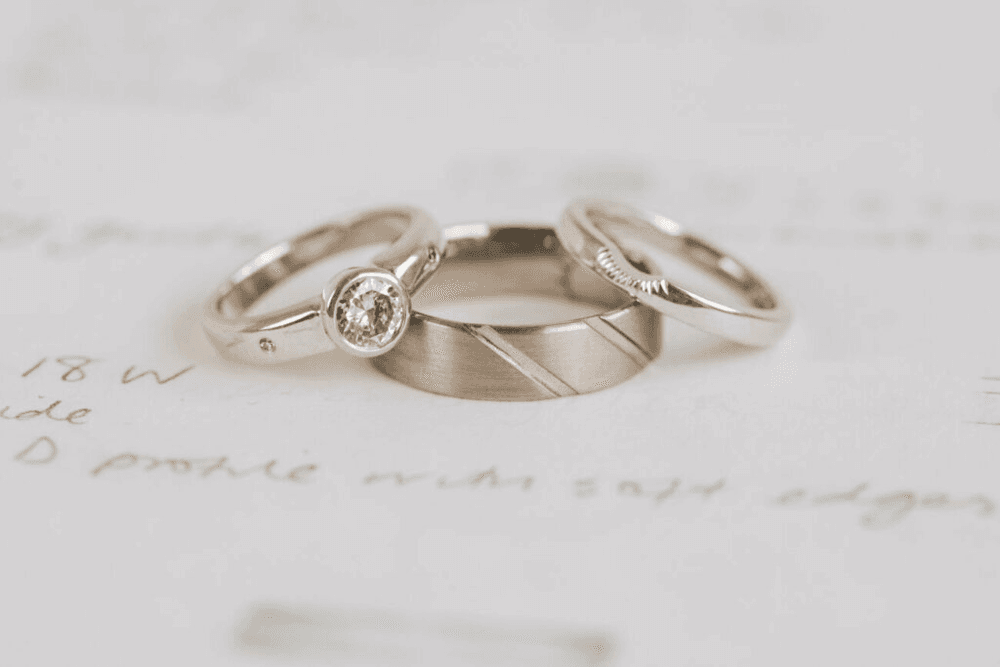
(Three rings showing the colour difference between natural white gold and plated white gold. The centre ring is an un-plated 18K white gold band with a faint warm grey tone, while the rings on either side are rhodium-plated white gold, appearing bright, silvery white (indistinguishable from platinum)
Initial colour: In their freshly polished state, a rhodium-plated white gold piece and a platinum piece will both look high-polish silvery white. It’s hard to tell apart a platinum wedding band from a well-plated white gold band just by colour. However, if the white gold were not rhodium plated, you’d notice it isn’t as purely “white” as platinum. Un-plated white gold usually has a very light yellow or greyish tint (depending on the alloy). Platinum is naturally a cool white-grey colour. Some describe platinum as having a steely white glow, whereas white gold (un-plated) might appear slightly creamier or warmer by comparison. In practice, virtually all commercial white gold is plated to look as white as platinum, so new jewellery will look identical in colour and brightness.
Wear and colour over time: Here’s where differences emerge. Platinum’s colour is solid – it’s the same colour through and through and will not change. It stays a consistent white-grey. White gold’s surface colour depends on that rhodium plating. Over a year or two of wear, the plating on high-contact areas (like the underside of a ring) might wear thin, and you’ll start to see a subtle contrast: slightly more yellowish or dull tones where the bare white gold is exposed. Essentially, a white gold ring can turn a bit yellowish over time as the plating wears off (it doesn’t “rust” or tarnish, but the underlying alloy’s colour comes through). This means every so often, to maintain a uniform bright white colour, you’ll want to get white gold re-plated. Platinum, on the other hand, never needs plating to keep its colour – it will never turn yellow. It may dull in shine (developing that patina), but it remains white.
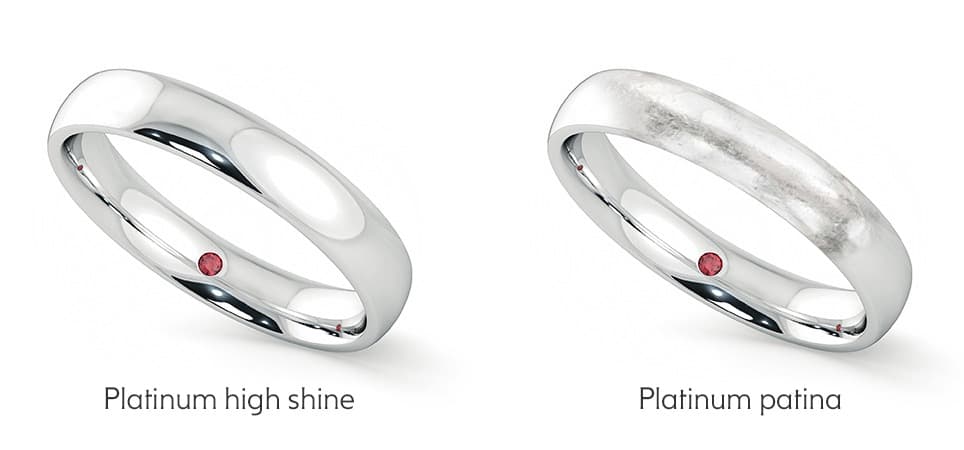
(Side-by-side comparison of platinum rings showing platinum patina and polished platinum colour with high shine finish)
Visually, when both are un-polished from wear: platinum tends to look greyer and duller (patina gives it a soft sheen, some describe it as an antique look), whereas white gold might start to show faint yellow tints in spots. If colour consistency is your priority and you don’t want to ever see a hint of yellow, platinum has the advantage of never changing hue. With white gold, the rhodium plating gives it a bright chromelike white initially – even brighter than platinum, actually, since rhodium is super shiny. But that brightness can fade until re-plated. Some jewellers note that platinum’s white is a bit more grey, while rhodium-plated white gold is a cooler, brilliant white. It’s a subtle distinction; when both are freshly polished/plated, only a trained eye might notice platinum is slightly more grey-white and white gold + rhodium is slightly more blue-white.
In summary, both platinum and white gold present a lovely white metal look. Platinum’s colour is permanent and maintenance-free (aside from polishing if you want to refresh the shine), whereas white gold’s colour is achieved by plating and will require upkeep to maintain. Many people choose white gold to get that same platinum-like colour at a lower cost, accepting the periodic re-plating as a minor inconvenience. Others prefer platinum so they never have to worry about the colour changing or any allergic reactions. Either way, in a piece of jewellery, both metals will complement diamonds and gems with a neutral, elegant backdrop.
White Gold vs Silver
At first glance, white gold and silver jewellery can look quite similar – both are shiny, white-ish metals used in rings, necklaces, and other pieces. However, white gold vs. silver have significant differences in composition, appearance, value, and care. Here’s how they compare:
- Composition & Preciousness: White gold is an alloy containing real gold (a highly valuable precious metal). Silver used in jewellery is typically sterling silver, an alloy of 92.5% silver (Ag) and 7.5% copper. Silver is also a precious metal but far more common and less expensive than gold. In terms of precious metal hierarchy, gold (even alloyed) is considered more valuable than silver. White gold’s value comes from its gold content, whereas silver’s value per gram is much lower. For perspective, an 18K white gold ring might contain a few hundred pounds’ worth of gold, while a similar sterling silver ring might have only a few pounds’ worth of silver. This is why white gold jewellery generally costs more and also holds resale value better. (As a side note, gold coins or bullion are almost always yellow gold or pure gold – white gold isn’t used for coins. Gold in forms like coins or bars can be sold at high market value – for example, one can sell gold coins or even sell gold bullion based on gold content. Silver coins/bars exist too but are far cheaper. The key point: gold content is worth more than silver content.)
- Colour and Appearance: Both metals are “white” in jewellery terms, but there are subtle differences. Silver is actually whiter and more reflective than un-plated white gold. In fact, silver is the most reflective metal – freshly polished, it’s extremely bright. White gold, as discussed, has a hint of yellow in its natural state (depending on karat). However, remember that white gold is usually rhodium-plated, giving it a very high sheen and pure white colour initially. Sterling silver has a greyish-white shine when polished. Side by side, a brand new rhodium-plated white gold piece might look a tad more “brilliant white” than silver, which can have a slightly greyer lustre. But to the untrained eye, they can be quite alike when both are shiny. Over time, however, their appearance diverges due to tarnish (for silver) and plating wear (for white gold).
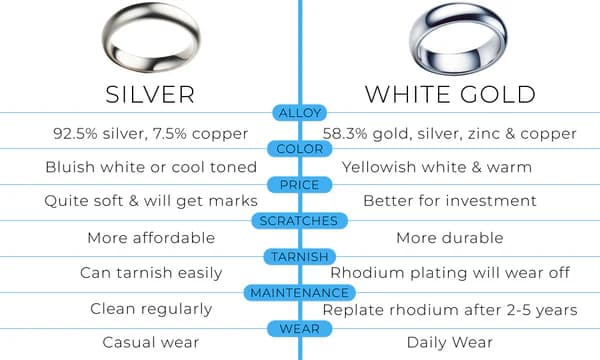
(Silver vs white gold comparison chart showing differences in alloy, colour, durability, tarnish, and maintenance for jewellery use)
- Tarnish and Oxidation: Silver tarnishes relatively quickly. Sterling silver reacts with sulfur compounds in the air (or from skin/lotions) to form silver sulfide, which is that dark tarnish. If you leave silver jewellery out, it might start to dull and then darken in a matter of weeks or months, requiring a polish to shine again. White gold does not tarnish in the same way. The gold in it is impervious to oxidation, and its other metals are chosen for low tarnish as well. That means a white gold ring can sit in a box for a year and aside from some dust or slight dullness, it won’t have a black tarnish layer. However, as noted, white gold’s rhodium plating might fade with wear, which is a different issue – it’s not tarnish, and it won’t happen just sitting in storage, only with friction and time. So in terms of maintenance, silver needs regular polishing to remove tarnish and keep it shiny. You might have to polish a silver piece every few months (or more often if you wear it a lot) because oils and air cause tarnish. White gold simply might need a gentle clean and eventually re-plating every couple of years, but you won’t be breaking out the polishing cloth frequently like you would with silver. This makes white gold lower-maintenance in day-to-day care; you generally don’t have to worry about an unsightly tarnish appearing.
- Durability & Hardness: Pure silver is quite soft, which is why sterling silver has copper – to harden it. Even so, silver jewellery is still softer than white gold jewellery. White gold’s alloy metals (especially nickel) make it harder and more scratch-resistant than silver. White gold is generally more durable than silver for items like rings or bracelets that take abuse. Silver can bend or scratch more easily, and intricate silver pieces can wear down over time. Also, silver’s surface can erode a little each time you polish off tarnish (since you’re rubbing off a microscopic layer). White gold’s hardness means it’s less likely to scratch, and since it doesn’t need constant polishing, it retains detail and weight better over the years. If you have a fine filigree design, white gold will hold up to daily wear better than silver, which might distort with rough wear.
- Colour over time: We touched on tarnish: silver can go black if not cleaned; white gold might show a bit of yellow (as plating wears). If someone absolutely cannot stand the look of tarnish or polishing, white gold would be preferable. Some people don’t mind polishing silver or even like the patina look of aged silver, but with white gold you pretty much avoid that altogether (again, aside from re-plating which is infrequent). Also note, there is such a thing as rhodium-plated silver (some jewellers plate silver to keep it shiny longer), but eventually even that plating will wear and tarnish will form on the silver beneath.
- Value & Cost: This is one of the biggest differences. White gold is significantly more expensive than silver in terms of material cost. The presence of gold (a high-value metal) means white gold jewellery typically costs several times more than a similar silver piece. For example, a plain silver chain might be £50, whereas a white gold chain of the same weight could be a few hundred pounds (because of gold content and gold’s higher price per gram). From an investment standpoint, gold is seen as a wealth store; silver is valuable but far less so per unit weight. If you were to sell your jewellery, a white gold ring will fetch a value based on its gold content (and you could sell it as scrap gold when the time comes, often for a decent sum relative to its weight). Silver jewellery, when sold secondhand or as scrap, yields very little money because silver prices are lower and the weights are usually small. Many gold buyers do purchase silver, but the payout is much smaller. For instance, you might sell scrap gold by the gram for a notable amount, but selling a handful of silver jewellery might barely buy you a nice dinner. To put it in perspective, 10 grams of 14K white gold (with about 58% gold) contains ~5.8 grams of pure gold. 10 grams of sterling silver contains 9.25g of silver. At current rates, 5.8g of gold is worth significantly more than 9.25g of silver – gold is that much more expensive. Thus, white gold pieces carry more intrinsic value. Silver is great for affordable jewellery, but white gold is chosen for more luxurious items and where lasting value is a consideration.
- Aesthetics and Usage: Silver has a very bright white look when polished – actually even brighter than rhodium-plated gold in terms of reflectivity. However, because silver tarnishes, that bright look is harder to maintain without frequent care. White gold provides a consistently shiny look with less frequent maintenance. In terms of design, both metals can be crafted into beautiful jewellery. Silver is often used for fashion jewellery or pieces where budget is a concern, while white gold is used in higher-end, fine jewellery (engagement rings, expensive watches, etc.). Silver is also a bit more bohemian or vintage in vibe for some people, whereas white gold is associated with classic fine jewellery. It’s not a hard rule – plenty of elegant pieces are made in sterling silver – but gold of any colour tends to be seen as more “luxury.”
In conclusion, while white gold and silver can resemble each other superficially, they differ in important ways. White gold offers the prestige, durability, and value of gold, along with a tarnish-free shiny appearance (with occasional plating touch-ups). Silver offers a brilliant white shine at a fraction of the cost, but needs regular polishing and is less durable. If you want jewellery that holds value and stays low maintenance, white gold is likely the better choice. If you’re on a tight budget or love changing your jewellery often, silver is a charming metal as long as you’re willing to care for it. Either way, understanding these differences helps you appreciate why a white gold ring might cost 5 times more than a similar-looking silver ring, and why it might be worth the investment for a lifelong piece.
Frequently Asked Questions
What is white gold?
White gold is real gold alloyed with white metals such as nickel, palladium, or silver, creating a silvery-white appearance. It is often rhodium plated to enhance its brightness.
How is white gold made?
White gold is made by combining pure gold with metals like nickel, palladium, or silver. This alloying process neutralises gold's natural yellow tone, resulting in a white-coloured metal, typically finished with rhodium plating for extra shine.
Does white gold tarnish?
White gold does not tarnish like silver. However, its rhodium plating can wear off over time, causing a yellowish appearance that requires occasional re-plating.
How to clean white gold?
Clean white gold using warm water, mild soap, and a soft brush. Soak briefly, gently scrub, rinse thoroughly, and dry with a soft cloth. Avoid harsh chemicals to preserve the rhodium plating.
Platinum vs white gold
Platinum is heavier, hypoallergenic, and naturally white, requiring minimal maintenance. White gold is lighter, usually cheaper, requires periodic rhodium plating, and may contain allergenic nickel.
White gold vs silver
White gold contains gold alloyed with white metals, is more durable, valuable, and doesn’t tarnish. Silver is less costly, softer, brighter when polished, but tarnishes easily, requiring frequent maintenance.
Is platinum better than white gold?
Platinum is ideal for durability, hypoallergenic properties, and low maintenance. White gold is cheaper but needs periodic rhodium plating and might cause allergies. "Better" depends on personal priorities and budget.
How to clean white gold ring?
Use mild soap, warm water, and a soft toothbrush. Soak briefly, gently brush to remove dirt, rinse with clean water, and dry with a soft cloth. Avoid abrasive cleaners and harsh chemicals.
Does white gold turn yellow?
White gold can appear slightly yellowish over time as its rhodium plating wears away. Regular cleaning helps, but eventual re-plating is needed to restore its bright white colour.
How much Is white gold worth?
White gold’s value depends on purity (karat) and weight, mirroring the market price of gold. Its worth is equivalent to yellow gold of the same purity and weight.
Is white gold more expensive than yellow gold?
White gold is usually similarly priced to yellow gold of the same karat. However, slight additional costs may occur due to alloy metals and rhodium plating.
What is white gold made of?
White gold is made from pure gold alloyed with white metals like nickel, palladium, silver, or zinc. These metals neutralise the natural yellow colour, creating a silvery-white appearance.
Is platinum harder than white gold?
Both metals are durable, but platinum is denser and handles scratches by displacement rather than material loss. White gold alloys (especially with nickel) can be equally hard or harder in terms of scratch resistance.
How to clean white gold that has turned yellow?
Yellowed white gold means its rhodium plating has worn off. Clean gently first, then have a professional jeweller re-polish and rhodium re-plate it to restore its original whiteness.
Is white gold and platinum same?
No, white gold and platinum are different. White gold is gold alloyed with white metals and plated, while platinum is a naturally white, denser, hypoallergenic metal requiring no plating.
Is white gold real gold?
Yes, white gold is real gold mixed with other metals. The karat marking (e.g., 14K or 18K) indicates its genuine gold content, just alloyed to change its colour and improve durability.
Is white gold magnetic?
Generally, white gold is not magnetic. Pure gold is non-magnetic, but depending on the alloy (especially nickel content), some white gold pieces might show slight magnetism—usually very weak or negligible.
Interested in selling gold with the UK’s highest paying gold buyer? Visit our Sell Gold page to get a competitive valuation – we provide fully insured postage and fast payment.
For more insights and the latest gold price today, keep an eye on our live charts and blog updates.





