
Is It Safe To Buy Gold Online?
Buying gold online can be safe when you stick to reputable UK dealers with SSL‑encrypted payments, clear pricing, and fully insured delivery. Buying gold online offers convenience, competitive rates, and peace of mind for investors.
Key Takeaways
- Safety Precautions: Buying gold online is secure if you choose established dealers with SSL‑encrypted checkouts, verified contact details, and tracked, insured shipping.
- Online Benefits: You gain 24/7 convenience, lower premiums thanks to reduced overheads, and access to a wider range of coins and bars than high‑street shops.
- Best Purchase Routes: Options include The Royal Mint for guaranteed authenticity, online bullion dealers for variety and value, and local shops for immediate, face‑to‑face buying.
- Investment Methods: Beyond physical bullion, gold ETFs and regulated allocated‑gold accounts provide liquidity and ease of trading, fitting different portfolio strategies.
- Product Types: Popular forms are UK legal‑tender bullion coins (Britannias, Sovereigns) with CGT exemptions, plus bars in weights from grams to kilos.
- Fraud Avoidance: Watch for red flags—no address or contact, “too good to be true” deals, or strange payment requests—and always check company registration and customer reviews.
Is It Safe To Buy Gold Online?
Buying gold online has become a common and safe practice when you take the right precautions. In the UK, reputable limited companies that sell gold bullion online offer secure payment methods (SSL-encrypted checkouts, credit/debit card protection, etc.) and fully insured delivery. Packages are discreetly shipped via tracked services like Royal Mail Special Delivery or couriers (FedEx, UPS) with insurance coverage, ensuring your gold arrives safely. In fact, it’s recommended to buy gold online from a trusted seller that offers secure and insured delivery options . Thanks to these safeguards, buying gold online can be just as safe as buying from a high-street shop – with the added convenience of shopping from home.
That said, you should be aware of common pitfalls and scams when purchasing precious metals on the internet. Red flags include websites with no physical address or contact number, unsolicited “too good to be true” offers (for example, an unknown seller emailing you a bargain gold deal), or pressure to pay via unusual methods (like bank transfers). Sticking to established dealers with a long track record and verified customer reviews is key to avoiding fraud. Always double-check that the company is a UK-registered business, read their customer feedback (e.g. Trustpilot reviews), and ensure the gold products come with authenticity guarantees (most reputable dealers source directly from mints or use XRF testing on pre-owned gold). By choosing a genuine, well-reviewed dealer, using secure payment methods, and insisting on insured delivery, you can confidently buy gold online knowing your purchase is safe.
(Secure payment methods for buying gold online — using trusted websites with encryption and buyer protection is essential for safety when you buy gold online)
Should You Buy Gold Online?
With the proper precautions in place, should you buy gold online? For many UK investors and collectors, the answer is yes – buying gold online offers several benefits over in-person options:
- Convenience: You can compare prices from multiple dealers in minutes and place an order 24/7. There’s no need to travel to a shop or bank during business hours; you can buy gold online from the comfort of home and have it delivered to your doorstep.
- Better Pricing: Online bullion retailers often have more competitive pricing than high-street jewellers or banks. Because of lower overhead and high volume, they tend to offer closer-to-market rates. You can also easily find sales or compare premiums on coins and bars across different websites to get the best deal.
- Wide Choice: When buying online, you have access to a vast selection of gold products. From newly minted coins and bars of all sizes, to vintage coins and special editions – online dealers and marketplaces stock far more variety than a small local shop. This wide choice allows you to find the exact gold coin or bar that fits your investment goals or collection.
Of course, along with these benefits come certain risks and precautions. Fraud is a concern if you stray from reputable sites – so always verify the dealer’s reputation. Read reviews and check for credentials: for example, membership in organisations like the London Bullion Market Association (LBMA) or being an established UK limited company can be good signs. It’s wise to verify the purity and authenticity of the gold upon arrival (reputable dealers will provide assay certificates or packaging from the mint).
Consider also the alternatives to buying online: Some UK banks historically offered gold coins for sale, but today few do so routinely (The Royal Mint, however, partners with banks for digital gold savings in some cases). Local coin shops and jewellery stores are an alternative if you prefer face-to-face transactions – you might inspect the gold in person and walk away with it immediately. However, local options often have higher premiums and limited selection. There’s also auctions or peer-to-peer sales, but those require expertise to avoid fakes.
In summary, buying gold online is a convenient and often cost-effective choice for most people, as long as you stick with reputable dealers. The benefits generally outweigh the drawbacks, provided you do your homework on the seller. Many experienced investors actually prefer online purchasing due to the ease and transparency – just make sure to exercise due diligence, just as you would with any significant purchase.
Best Way To Buy Gold
When it comes to the best way to buy gold, UK buyers have a few primary avenues: official government mints, online bullion retailers, and local jewellers or dealers. Each option has its pros and cons. Let’s compare these routes:
Buying Gold From The Royal Mint
One option is purchasing directly from The Royal Mint – the UK’s official mint. The Royal Mint sells gold Britannia coins, Sovereigns, and bars on its website.
Pros: You’re buying straight from the source, which guarantees authenticity and quality. All Royal Mint bullion coins are Capital Gains Tax (CGT) free for UK investors (more on that later), and you can often get newly issued designs first. The Royal Mint also offers insured delivery and even secure storage options (the “Royal Mint Vault”).
Cons: Pricing from the mint can be at a slight premium. You might pay a bit more for a Britannia coin at the Royal Mint than from a dealer, because you’re partly paying for the brand and packaging. The selection is also limited to Royal Mint products (you won’t find foreign coins like Krugerrands here). If you value absolute lowest price above all, the Royal Mint may not always be the cheapest place to buy gold compared to other outlets, but it excels in trust and heritage.
Buying Gold From Online Bullion Dealers
Many private online retailers specialise in gold bullion sales, such as BullionByPost or Chards (a long-standing UK dealer).
Pros: These dealers often have very competitive pricing and a wide range of products from various mints worldwide. You can buy not only Royal Mint coins but also South African Krugerrands, Canadian Maple Leafs, bars from popular refineries (PAMP, Heraeus, etc.), all in one place. Online dealers usually run special offers and volume discounts, so this can be the best way to buy gold if you’re seeking value. They also provide guarantees and buy-back services – for example, BullionByPost sources new coins directly from mints and will buy back your gold at competitive rates.
Cons: Since you’re not buying face-to-face, you have to rely on the dealer’s reputation. Stick to dealers with strong customer feedback and proper accreditation. Another consideration is that you’ll need to arrange secure storage yourself (either at home or via a third-party vault) unless you opt for a storage service. Overall, reputable online dealers combine good pricing with convenience, which for many is the best way to buy gold securely.
Buying Gold From Local Jewellers & High Street Stores
It’s also possible to buy gold coins or small bars from local jewellers, coin shops, or pawnbrokers on the high street.
Pros: The main advantage is the face-to-face service – you can see and hold the item before paying, and you leave with the gold in hand. A knowledgeable local dealer can provide personal advice, which might be comforting if you’re new to gold. There’s no waiting for delivery.
Cons: Brick-and-mortar shops often have higher premiums to cover their costs. The selection might be very limited (perhaps just a few Sovereigns or basic bars in stock). You may also need to travel or search around to find specific items. Additionally, not all high-street jewellers are well-versed in bullion investment; some focus on jewellery and might not offer certified investment-grade coins. If you do find a local bullion dealer with fair prices, that’s great – just ensure their pricing isn’t significantly above what you’d pay online. For most people, local shops are less about finding the cheapest place to buy gold and more about the convenience of immediacy and personal interaction.
Comparison – Pricing, Guarantees, Service: In summary, the best way to buy gold depends on your priorities:
- If trust and pedigree are most important, The Royal Mint is unparalleled (with full assurance of authenticity and CGT-free UK coins).
- If low price and variety matter, online dealers typically win (you might save a few percent on premiums and have access to a broader catalog).
- If you prefer personal service or have a small local purchase, a local jeweller/coin shop can suffice (just double-check their credibility and prices).
No matter which route you choose, ensure the seller provides authentic products and clear return/buyback policies. Many savvy investors actually use a combination: for instance, buying limited-edition coins from the Royal Mint but sourcing bulk bullion from an online dealer. Compare options and go with the source that gives you the best mix of price, security, and service for your needs.
What Is The Best Way To Invest In Gold?
Beyond the method of purchase, you might be wondering what is the best way to invest in gold overall. Gold investment can take several forms – not only buying physical coins and bars, but also “paper” or digital gold products. Here’s a quick comparison:
- Physical Gold (Bullion): This means buying actual gold coins or bars and owning them directly. The advantage is you have a tangible asset that carries no counterparty risk – its value doesn’t depend on any institution keeping a promise. Physical gold is ideal for long-term wealth preservation and can be an “insurance policy” in your portfolio. The downside is you need to think about storage (at home in a safe, or pay for a secure vault) and insurance. It’s slightly less liquid than paper gold; selling physical gold involves finding a buyer or dealer (though in practice, selling popular coins/bars in the UK is quite easy). Many investors choose physical gold for core holdings because it’s straightforward and private. UK tip: Favour Britannia and Sovereign coins for physical investment, as these are CGT-exempt (more on this in the next section), meaning any gains are tax-free.
- Gold ETFs (Exchange-Traded Funds): A gold ETF is essentially a fund that holds gold and trades on the stock market (like a share). For example, there are ETFs like iShares Physical Gold (SGLN) or Invesco Gold ETC, which track the price of gold. Pros: Extremely convenient – you can buy gold online in ETF form through a stockbroker account in seconds. It’s very liquid (you can sell anytime the market is open) and you don’t need to worry about storing metal. Cons: You don’t have physical possession of the gold. There’s a small annual management fee, and while the fund is backed by gold, you rely on the fund’s custodian to manage the bullion. Also, any profits from ETFs are subject to capital gains tax (since they’re not UK legal tender). For many, ETFs are the best way to invest in gold for short-to-medium term exposure or for inclusion in a diversified investment account (you can even hold some gold ETFs in tax-free wrappers like an ISA).
- Digital/Allocated Gold Accounts: These are offered by certain platforms (e.g., BullionVault, GoldMoney or even some fintech banking apps) where you can buy a quantity of gold which is stored in a vault under your name. You get the convenience of online trading (buy/sell instantly) combined with allocated physical gold backing. Pros: Easy and quick to trade, often low fees, and you usually can request physical delivery if needed. Cons: You must trust the platform’s reliability, and there may be storage fees. It’s a middle ground between holding your own gold and an ETF.
- Gold Funds & Mining Stocks: Instead of gold itself, you can invest in gold mining companies (through stocks or mutual funds). There are specialised gold mining ETFs and funds that invest in a basket of miners. These can offer leveraged exposure – gold mining stocks often move more dramatically than the gold price. For example, if gold prices rise significantly, a mining company’s profits (and its share price) might rise even more. Pros: Potentially higher returns and dividends. Cons: You’re taking on company and operational risks; this is not a pure gold play. Mining stocks can underperform gold during certain periods (e.g., if mining costs rise or a company has issues). This route is more for those who understand the stock market. It’s not a direct way to own gold, but rather to invest in businesses related to gold.
Most investors will decide between physical gold vs. gold securities (ETF/allocated) for their needs. There’s no single “best” way for everyone – it depends on why you are investing in gold. If your goal is a long-term safe haven and you value having the metal in hand, physical gold (coins/bars) is best. If you’re aiming to trade short-term price movements or include gold in a broader portfolio easily, an ETF or digital gold account might be the best way.
One helpful resource is to use tools and guides to plan your gold investment. For instance, our Is Gold A Good Investment? guide offers a deep dive into gold’s historical performance and various gold investment methods. It even includes our Gold Investment Calculator, which lets you project potential returns over time by factoring in past trends and inflation. Such tools can help you gauge what kind of returns to expect from gold. (For context, gold has averaged around 6-7% annual growth in GBP terms over the past decade, though with fluctuations goldsell.co.uk. Many people ask “is gold a good investment right now?” The answer is that gold can play a valuable role in diversifying your portfolio and hedging against inflation or crises. For example, spot gold prices rose by 27% in 2024, the biggest annual gain since 2010, illustrating gold’s ability to surge during times of economic uncertainty. However, gold is typically a steady long-term store of value rather than a fast-growth asset. It shines when other assets falter, but also has flat periods. The key is to decide how gold fits your investment strategy. If you do invest, many advisors suggest allocating perhaps 5-10% of your portfolio to gold for balance goldsell.co.uk – enough to provide a safety net without over-concentration.
In summary, should you invest in gold? If you seek a hedge against inflation, currency weakness, or geopolitical risk, gold is worth considering as part of your plan. The best way to invest in gold could be a mix: for example, you might buy gold online in the form of a few physical coins for long-term holding, and also hold a gold ETF in your ISA for liquidity. Use the method that aligns with your financial goals and comfort. And always stay informed – check resources like the World Gold Council for market trends, and leverage tools like GoldSell’s prediction calculator to set realistic expectations.
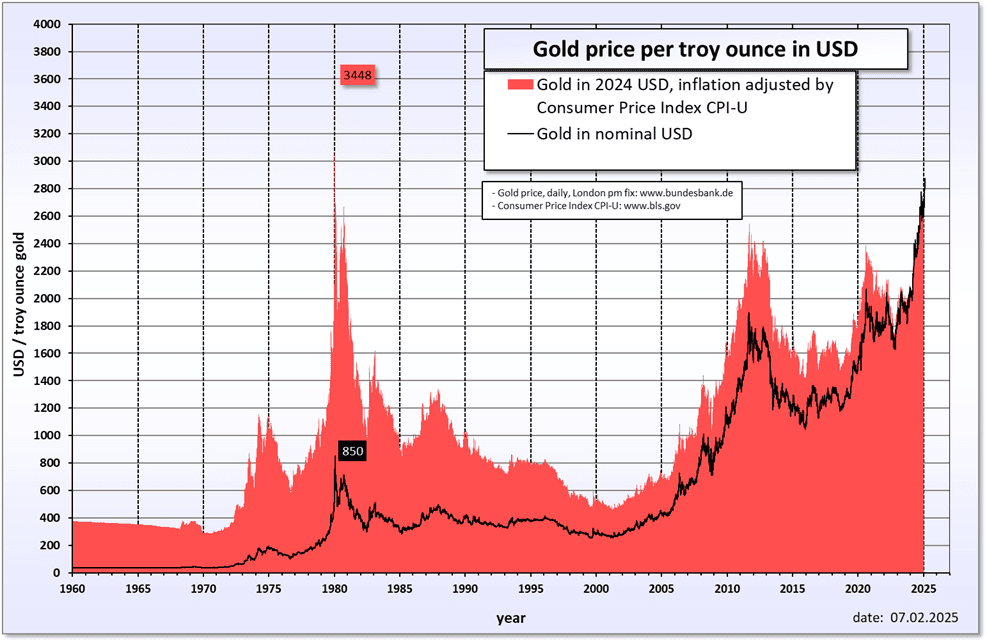
(Historical gold price trends — chart of gold’s price per ounce over decades (black line: nominal USD price, red area: inflation-adjusted). Gold’s long-term trend has been upward, providing an inflation hedge and portfolio insurance)
What Are The Different Types Of Gold You Can Buy?
“Gold” isn’t a one-size-fits-all investment – there are different types of gold you can buy, each with its own considerations. Here we’ll outline the main forms of gold available to UK buyers and their key features:
Gold Bullion Coins
Bullion coins are minted coins, made mostly or entirely of gold, valued by their gold content rather than any collectible factor. Examples include Britain’s Gold Britannia (1 oz of 24k gold, £100 face value) and Gold Sovereign (approximately 0.2354 oz of 22k gold, £1 face value), as well as international coins like the South African Krugerrand (1 oz, 22k), Canadian Maple Leaf (1 oz, 24k), and American Eagle. Bullion coins are popular for investors because they are widely recognised and easy to trade. In the UK, Britannia and Sovereign coins have a special advantage: they are exempt from Capital Gains Tax (CGT) because they are legal tender in Britain. The Royal Mint explicitly notes that all gold bullion coins it produces are CGT-free investments goldsell.co.uk, which includes Britannias, Sovereigns, and other UK-series coins. This means you could sell these coins at a profit in future and keep 100% of the gains, with no tax goldsell.co.uk. Bullion coins typically come in various sizes (common weights are 1 oz, 1/2 oz, 1/4 oz, 1/10 oz, etc., depending on the series), allowing flexibility in how much you invest.
Liquidity: Gold coins are very liquid – any bullion dealer will buy them, and you can even sell them peer-to-peer.
Premiums: You pay a premium over the gold spot price for minting and distribution – smaller denomination coins (like 1/10 oz) have higher percentage premiums than 1 oz coins. Overall, for UK investors looking at types of gold, Britannia and Sovereign coins are often recommended for their tax advantages, strong liquidity, and the balance of size vs value (a Sovereign coin, for example, is around £350 in value, making it easy to sell partially if needed, whereas a 1 oz coin is ~£1500+).
Gold Bullion Bars
Gold bars (ingots) are another straightforward form of gold. These range from tiny 1-gram bars up to large 1-kilogram bars or even larger good-delivery bars (~400 oz, typically for institutional investors). For individuals, common sizes are 1g, 5g, 10g, 1oz, 100g, 250g, etc.
Pros: Bars usually have lower premiums over spot price compared to coins, especially as the weight increases. If your goal is to accumulate the most gold for your money, bars can be the cheapest option per gram – e.g., a 100g bar often has a smaller markup than 100g worth of coins.
Cons: Bars do not have a face value and are not legal tender, so Capital Gains Tax can apply to any profits when selling (though you only pay CGT if your total gains in a year exceed the annual exemption). Also, large bars are less divisible – you can’t sell off a portion of a bar, you have to liquidate the whole bar. This can make big bars (1kg etc.) less flexible if you might need to sell in smaller chunks.
Liquidity: Small and medium bars from known refiners (with proper hallmarks and serial numbers) are easy to sell to dealers. Just ensure the bar comes with an assay certificate or is in tamper-evident packaging.
Popular gold bar brands: PAMP, Credit Suisse, Valcambi, Metalor, and in the UK the Royal Mint’s own bars. Many UK investors buy a mix of coins and bars – for example, coins for the tax benefits and flexibility, and perhaps a couple of larger bars for lower premium bulk investment.
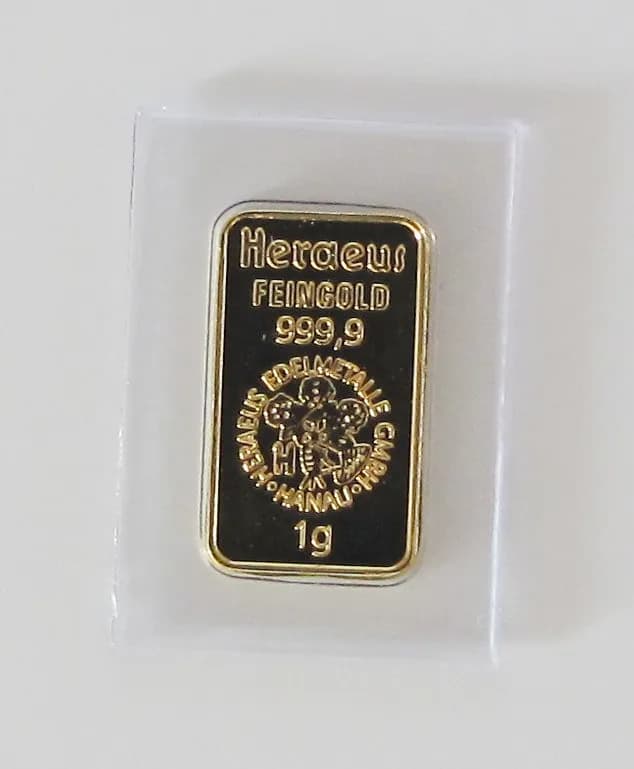
(Affordable investment gold coins and bars — a small 1-gram gold bar (Heraeus 999.9 fine gold) is one example of entry-level bullion that new investors can buy to start with gold)
Gold Jewellery and Collectible Coins
Another “type” of gold people buy is gold jewellery or collectible/numismatic coins, but these are generally not the focus for pure investment.
Gold Jewellery: When you buy a gold necklace or ring, you’re paying not just for gold content but also for craftsmanship, design, and retail markups. If you later sell it, you often only get paid for the scrap gold weight (unless it’s a designer piece with added value). Thus, jewellery is usually not an efficient gold investment (you might pay twice the gold value and only recover the gold melt value when selling). However, some individuals like the idea that they can wear their wealth, and in certain cultures gold jewellery is a traditional way to hold gold. If considering this route, ensure the item is hallmarked for purity (22k or 24k jewellery would have high gold content; 9k or 14k contain a lot of alloy metals and less gold).
Collectible Coins (Numismatics): These include historic gold coins or limited-edition proofs with collector value. Examples might be a Victorian-era gold sovereign with a rare mint mark, or a proof Britannia with a low mintage. These coins can carry significant premiums far above their gold content because of rarity, condition, or demand among collectors. While they can appreciate in value, their price movements depend more on collector markets than on the gold price. For a beginner or average investor, numismatics are not usually recommended, because you need specialised knowledge to buy/sell wisely. Stick with bullion-grade coins (modern Sovereigns, Britannias, etc.) unless you have a keen interest in coin collecting.
Gold ETFs And Digital Gold
Although not “buying gold” in the physical sense, it’s worth mentioning again as a type: you can acquire gold via financial instruments. Gold ETFs, ETCs, funds, digital accounts – these give you exposure to gold’s price without you actually handling the metal. They’ve been covered in the previous section on investing. In the context of “types of gold you can buy,” these represent the paper or electronic form of gold. You’re essentially buying a claim or share that correlates with gold’s value. This type can be useful if you prioritize liquidity or integration with your brokerage account. Just remember, if your aim is to own gold as a physical asset, an ETF is not the same as a gold coin in your hand.
In summary, the types of gold available range from physical forms (coins, bars, jewellery) to paper/digital forms (ETFs, accounts). For most UK investors, the focus will be on bullion coins and bars as the primary types to consider, due to their purity, liquidity, and investment efficiency. Each type has its pros and cons regarding tax, premiums, and ease of resale. By understanding these differences, you can decide which form of gold best suits your objectives – be it a stack of Britannia coins in your safe or some units of a gold ETF in your portfolio (or both!).
What Is The Cheapest Gold?
If you’re on a budget or simply looking for the most cost-effective way to buy gold, it’s natural to wonder what constitutes the cheapest gold. This can mean two things: the lowest cost per ounce/gram of gold, or the lowest entry price for a piece of gold. We’ll address both interpretations:
- Cheapest per unit weight: Generally, the cheapest place to buy gold (in terms of price per gram or per ounce) is through large bullion bars or high-volume orders from reputable dealers. Larger gold bars have lower manufacturing costs relative to their weight, so the premium (the percentage you pay over the raw gold spot price) is smaller. For example, a single 100g gold bar might have a premium of only a few percent over spot, whereas a 1g bar could have a premium of 10-20%. If you have substantial funds and storage is not an issue, buying a bigger bar will give you more gold for your money than buying many small pieces. Online dealers often list prices with volume breaks – e.g., buying 10 or more of a certain coin may reduce the premium. Sometimes grouped purchases (like a tube of 10 Britannia coins) come out cheaper per coin than buying just one. To find the cheapest rate, compare dealers and look at the price per gram for various products. Also consider international options: occasionally, buying from a major global dealer with lower premiums (including shipping) can save money, but for UK buyers, sticking with domestic reputable dealers is usually simpler and safer.
- Cheapest entry point: On the other hand, if by “what is the cheapest gold?” you mean the smallest amount of money to get started, then small gold coins or bars are the way to go. The absolute cheapest item in terms of price would be a tiny gold wafer – for instance, a 1 gram gold bar. As of now, 1g of gold might cost on the order of £60–£70 (though premiums on such a small piece are high percentage-wise). Another affordable option is a Gold Sovereign coin, which contains 7.32g of gold (0.2354 troy oz). Sovereigns often trade at a modest premium and currently might be around a few hundred pounds – they’re popular as an “entry-level” gold investment in the UK. A half sovereign (around 3.66g gold) is even cheaper. Modern 1/10 oz gold coins (like a 1/10 oz Britannia or Krugerrand) typically cost a bit more than a Sovereign and weigh ~3.11g. Essentially, these smaller denominations let you start investing in gold with a few hundred pounds or less. Keep in mind: While the cheapest place to buy gold in small quantities might still be an online dealer (due to competition keeping prices tight), the percentage premium on very small pieces will be higher. It’s a trade-off between affordability and efficiency.
So, if you’re optimising for lowest premium per ounce, go bigger (10 oz bar, 100g bar, or multiple ounce coins from a low-cost dealer). If you’re optimising for lowest total price, go smaller (1g, 5g, or fractional coins). In either case, make sure you buy from a reputable source so that “cheap” doesn’t become “cheap and fake”! Avoid offers that seem significantly below the current market gold price – no legitimate dealer will sell at a heavy loss, so extreme discounts are a red flag.
Pro tip: To get cheap prices, keep an eye on dealer websites for sales or secondary market items. Sometimes you can buy pre-owned gold coins/bars at a slight discount. These are still genuine gold, just maybe coins from prior years or bars with minor scratches – a great way to get gold cheaper. For example, a pre-owned Sovereign could be a few pounds less than a brand new one, making it the cheapest gold coin option for that day.
In conclusion, the cheapest place to buy gold online is typically a well-established bullion dealer offering low premiums, especially when buying in bulk. The cheapest gold product for a new investor in the UK might be a small bar or a Sovereign coin due to their lower absolute cost. As your budget grows, you can move up to larger bars or multiple coins to get better per-unit pricing. Always balance the desire for a low price with the need for authenticity and security – it’s worth paying a tiny bit more to ensure you’re dealing with a trustworthy seller.
What Gold Should I Buy?
This is a crucial question for new investors: “What gold should I buy?” The answer can vary based on your goals, but for UK investors, a few clear favorites emerge:
Britannia and Sovereign Coins – Best Gold to Buy for UK Investors: It’s hard to overstate the benefits of these two. As mentioned earlier, Gold Britannias (1 oz gold coins, or fractional Britannias in 1/2, 1/4, 1/10 oz) and Gold Sovereigns (about 0.23 oz) are tax-efficient and highly liquid. Being UK legal tender, they are exempt from Capital Gains Tax – so any profit you make on them is tax-free goldsell.co.uk. This can save you a significant amount if gold’s value rises substantially. For example, if you bought a batch of Britannias and their value doubled over time, you could sell and owe no CGT at all on the gains goldsell.co.uk. In contrast, profits on gold bars or non-UK coins (like Krugerrands, Maple Leafs, etc.) could be taxable if your gains exceed the annual exemption. This tax perk makes Britannias and Sovereigns extremely attractive – many UK investors prefer these coins for that reason.
Beyond tax, these coins have other merits. Sovereigns have a relatively low unit price (often £300–£400 each), making them convenient for gradual stacking – you can buy a Sovereign or two at a time as you accumulate. Britannias are one-ounce coins (worth over £1,500 each at recent prices), great for storing larger wealth in each coin; they also come in smaller denominations for flexibility. Both coins are produced by the Royal Mint to high purity (Britannias are 24k, Sovereigns are 22k but contain the specified gold weight) and are recognized worldwide. When deciding what gold to buy, you generally can’t go wrong with bullion coins like these as a foundation.
Gold Bars for Larger Investments: If you already have a core position in coins and want to add more with lower premiums, gold bars could be next. Bars don’t have the CGT benefit, but if you’re investing within the CGT annual allowance or a tax-sheltered account, it might not matter much. Buy bars from known manufacturers and in sizes that suit your plan (common advice: don’t buy a bar so large that you wouldn’t ever want to sell it in one go). Many investors stick to bars up to 100g or 1 oz so they can sell incrementally, but if you’re sure about holding long-term, kilo bars offer the best value.
Consider Your Exit Strategy: Ask yourself, why are you buying gold and when/how might you sell it? If you think you’ll need to sell in small portions, smaller coins (Sovereigns, quarter-ounce Britannias) make sense. If it’s a legacy or long-term holding, larger coins or bars are fine. If you are saving for a major goal, perhaps a couple of big bars might simplify storage.
Avoiding Unnecessary Premiums: The best gold to buy is usually standard bullion, not collectables. Unless you specifically want a collector’s item, steer toward common bullion products. A 2022 Britannia will hold the same value in gold as a 2025 Britannia; the year doesn’t matter much, so don’t pay extra for a special design unless you love it. The goal is to maximize gold content for your pound.
Storage and Practicality: Also consider where and how you’ll store your gold. Coins can be neatly stored in tubes or capsules; a mix of coins and small bars can fit in a home safe or safety deposit box easily. If you’re buying very large amounts (say dozens of ounces), you might explore vaulted storage, but then you could also just buy via a digital platform.
Finally, remember that gold is a long-term hold. The best gold to buy is one that you feel comfortable holding for years. UK bullion coins check that box for many, given their tax advantages and liquidity. To educate yourself further on tax considerations when selling, you can refer to GoldSell’s guide on Capital Gains Tax on Gold – knowing the tax rules can influence what form of gold is ideal for you. (For instance, that guide explains how UK legal tender gold coins like Britannias and Sovereigns are unique in being CGT-free, which is why they’re often the top recommendation.
In summary, if you’re in the UK, start with Britannias and Sovereigns as core holdings. They are truly the “all-rounders” – offering investment-grade gold, easy resale, and tax-free profits. Supplement with gold bars if you want to minimise premiums or other world coins if you want some variety (there’s nothing wrong with owning a few Krugerrands or Maples too, they’re just not CGT-free). The key is to buy from a reputable source and ensure whatever gold you choose aligns with your financial goals. By sticking to well-known bullion products, you’ll have confidence that what you buy is indeed worth its weight in gold.

(Britannia and Sovereign coins – CGT free investment gold for UK investors. (Pictured: A Gold Sovereign coin featuring St. George slaying the dragon; both Sovereigns and Britannias are exempt from Capital Gains Tax in the UK)
Frequently Asked Questions
Is it safe to buy gold online?
Yes – buying gold online is safe if you use reputable dealers and secure payment methods. Stick to well-known UK bullion websites or mints, ensure the site is encrypted (look for “https”), and opt for insured delivery. Trusted companies routinely ship gold with full insurance, so your purchase is protected.
Should I buy gold online or in person?
Buying gold online offers convenience, better pricing, and a wider selection than most in-person options. Online you can compare prices easily and order 24/7. In-person buying (e.g. at a jeweller) lets you see the item immediately but often at higher cost. For most, buying gold online from a reputable UK dealer is an efficient choice, as long as you verify the dealer’s credibility.
What is the best way to buy gold?
The best way depends on your priorities. Many UK investors find that online bullion dealers offer the best combination of price and convenience for buying gold. You can also buy directly from The Royal Mint for guaranteed authenticity (at a slight premium) or from a local coin shop for face-to-face service. Overall, the best way to buy gold is to choose a trusted source that provides genuine bullion at a competitive price with insured delivery.
What is the best way to invest in gold?
You can invest in gold by buying physical gold (like coins or bars) or through paper gold (like gold ETFs or gold accounts). For long-term holding and crisis protection, many prefer physical gold that they own outright. For ease of trading, gold ETFs or online allocated gold accounts are convenient. Often, a combination is ideal – for example, keep some physical gold as a core holding and use an ETF for additional exposure. The best way ultimately fits your investment goals and whether you value having the metal in hand or not.
What are the different types of gold to buy?
The main types of gold you can buy are bullion coins (e.g. Britannias, Sovereigns, Krugerrands), bullion bars of various weights, and to a lesser extent gold jewellery or collectible coins. You can also buy “paper” gold via ETFs or gold funds. Bullion coins and bars are the most common forms for investment purposes, with coins often favored in the UK for their tax advantages. Each type has its own pros and cons in terms of size, tax, and resale, so choose based on what fits your needs.
What is the cheapest gold to buy?
In terms of price per gram, larger gold bars (like 100g or 1kg bars) are the cheapest gold you can buy because they carry lower premiums. However, the upfront cost is high. For an affordable entry point, small gold pieces such as a 1g gold bar or a Gold Sovereign coin are among the cheapest options by total price. Keep in mind that smaller units have higher percentage fees, so if you’re looking for the cheapest place to buy gold online, compare dealers’ premiums on the size you’re interested in.
What gold should I buy as a UK investor?
UK investors are often advised to buy Gold Britannia coins and Gold Sovereigns. These are tax-free on gains, widely recognised, and easy to sell. Britannias (1 oz pure gold) and Sovereigns (~0.235 oz) are issued by the Royal Mint and offer a great balance of value and flexibility. They’re considered some of the best gold to buy in the UK. You can supplement with gold bars for lower premiums or other world gold coins for diversification, but Britannias and Sovereigns are an excellent starting point due to their unique advantages for UK buyers.
Should I buy a gold bar or coin?
Gold coins are ideal for flexibility, liquidity, and potential UK Capital Gains Tax exemption (e.g., Britannias, Sovereigns). Gold bars typically offer lower premiums per gram, especially larger bars. Coins are best for smaller investments; bars suit larger, long-term holdings.
Is buying gold jewellery a good investment?
Generally, no. Gold jewellery carries high premiums for craftsmanship and retail markups, meaning resale often returns only scrap gold value. For investment purposes, buying gold bullion coins or bars is more cost-effective, transparent, and provides better returns.
Where can I buy gold online?
Buy gold online from trusted UK retailers like BullionByPost, Chards, or directly from The Royal Mint. These reputable dealers offer secure payments, authenticity guarantees, fully insured delivery, and competitive pricing on gold bars, coins, and bullion products.
Who gives the best price for gold?
GoldSell gives you the best price for your gold jewellery and bullion. Operating exclusively online, GoldSell reduces overhead costs, passing significant savings directly to customers. The service includes convenient, safe, fully insured postage—completely free of charge.
Interested in selling gold with the UK’s highest paying gold buyer? Visit our Sell Gold page to get a competitive valuation – we provide fully insured postage and fast payment.
For more insights and the latest gold price today, keep an eye on our live charts and blog updates.





