
Is Platinum Better Than Gold?
While platinum is rarer, gold currently outshines platinum in value and popularity. Historically platinum was pricier than gold, but today gold holds a higher price per ounce, driven by safe-haven demand and market trends. In most cases, gold is considered the better investment right now due to its record high price and stability.
Key Takeaways
- Gold vs Platinum Value: Gold is more expensive than platinum today. After years of reversal, gold’s price per ounce is about triple that of platinum, making gold the more valuable metal in 2025.
- Historical Flip: Platinum used to be worth more than gold. From the 1800s until 2014, platinum often led in price. However, economic shifts and demand changes saw gold overtake platinum in recent years.
- Demand Differences: Gold’s safe-haven demand beats platinum’s rarity. Gold benefits from strong investor and central bank demand as a store of value, while platinum’s price relies on industrial uses (like car catalytic converters). This is a key reason why platinum is cheaper than gold now.
- Platinum vs Gold Price (2025): As of April 2025, gold is around $3,300/oz vs platinum at ~$960/oz. This stark platinum vs gold price gap means gold items (coins, bullion, jewellery) fetch significantly more if sold.
- Jewellery & Usage: Platinum is denser and more durable in jewellery, but gold is easier to work with. Platinum jewellery is hypoallergenic and doesn’t wear away, ideal for prongs and heirloom pieces. Gold jewellery (especially white gold) is harder and more scratch-resistant, and does not tarnish, making it a classic choice.
- White Gold vs Platinum: White gold is an alloy, platinum is pure. White gold is basically yellow gold mixed with other metals and plated to look white, offering a similar look to platinum at lower cost. Platinum is naturally white, heavier, and costs more in rings (often ~30-50% higher) due to its purity and density.
Is Platinum Better Than Gold?
When comparing platinum and gold, “better” depends on context – are we talking about investment value, rarity, or use in jewellery? Historically, platinum was considered more prestigious and was worth more than gold for over a century. In fact, from the 1800s until the 2000s, platinum commanded a higher price than gold. Platinum’s rarity (it’s about 15–20 times rarer than gold by annual production) gave it an aura of exclusivity. There were even times in the 20th century when platinum jewellery was a status symbol of greater luxury than gold.
However, today the tables have turned. Since the late 2000s, gold’s value has overtaken platinum’s. The last time platinum was more costly than gold was in 2014, and it has been cheaper ever since. So in terms of market price and investment, gold is currently “better” (more valuable) than platinum.
Why did this reversal happen? A big factor is demand. Gold is universally seen as a “safe-haven” asset – in times of economic uncertainty or inflation, investors flock to gold for stability. Central banks hold gold, and investors large and small buy gold as a reliable store of wealth. This consistent demand keeps gold prices buoyant even as supply increases. Platinum, on the other hand, is tied more to industrial demand. About half of platinum’s annual use is in car catalytic converters (to reduce emissions), and it’s also used in industry and tech. In a weak economy or when car manufacturing slows, platinum demand (and price) can drop. In essence, gold’s value is driven by financial markets and investor sentiment, whereas platinum’s value is driven by industrial needs – making platinum’s price more volatile. This helps explain why platinum is cheaper than gold now: gold’s enduring safe-haven appeal boosted its price, while platinum faced headwinds as industrial use waned (for example, the automotive industry shifting away from diesel and exploring palladium or electric technologies).
Another reason gold holds the crown is historical trust and liquidity. Gold has been treasured across civilisations for millennia – it’s literally the standard (think “gold standard”). Platinum, despite its rarity, doesn’t have the same cultural and monetary history. Gold’s long-established role means people trust it more during crises, further driving up demand and price. Platinum is precious but not proven in the same way to many investors.
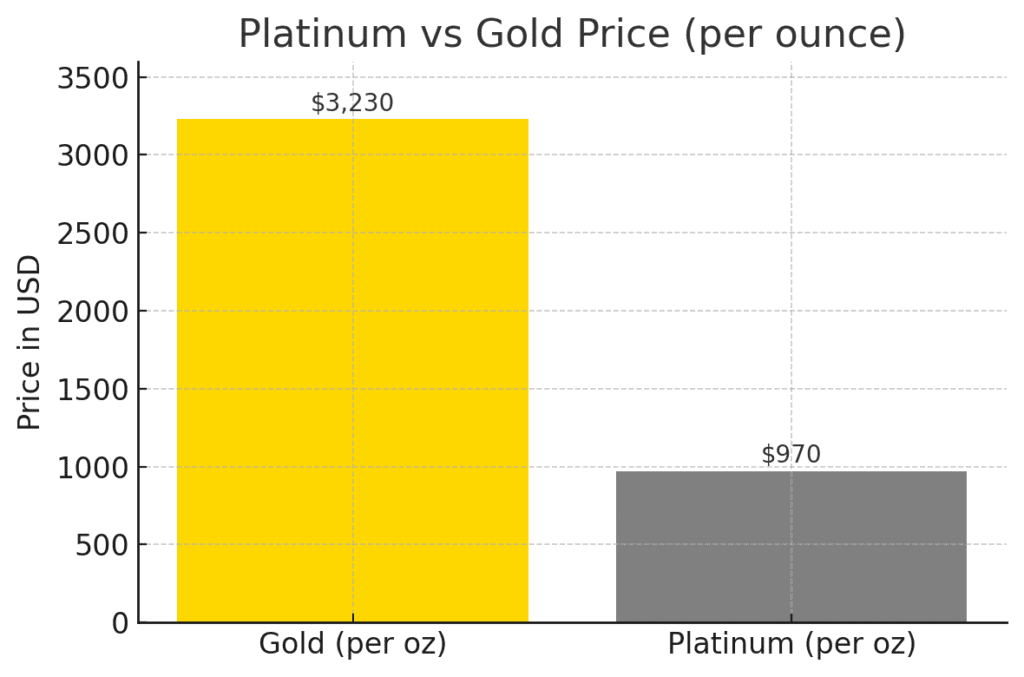
(Bar chart comparing the price of platinum vs gold per ounce in USD (April 2025), illustrating gold’s price ($3,300) far above platinum ($960)
Platinum vs Gold Price
To put things in perspective with real numbers, let’s look at the platinum vs gold price today. Gold prices are at historic highs in 2025, whereas platinum prices have remained relatively subdued. As of April 2025, gold is trading around $3,300 per troy ounce . In contrast, platinum is around $950–$970 per ounce. In other words, one ounce of gold is worth roughly 3.3 ounces of platinum in value. This gold-to-platinum ratio (about 3.3:1) is unusually high by historical standards, highlighting just how much more expensive gold is at the moment.
Such a wide price gap has practical implications. For instance, investors and sellers are capitalising on gold’s high price. Many people who want to raise cash are finding they can get strong returns if they liquidate gold holdings. Whether it’s deciding to sell gold bullion or to sell gold coins, the market is favourable for gold sellers. Gold’s high worth means that even small gold items carry significant value. By contrast, selling platinum might not yield as much because the platinum price hasn’t seen the same surge.
Bottom line: In 2025’s market, gold is generally considered the better investment and value-holding metal. Platinum isn’t “better” than gold in terms of price – in fact, gold is the one breaking records and drawing investors. However, platinum isn’t worthless by any means; it’s still a precious metal with unique qualities (and some analysts speculate platinum could be undervalued, offering future upside). But if you’re comparing which metal is “better” for value right now, gold takes the lead.
Is Platinum More Expensive Than Gold?
This question is a bit more straightforward. No – platinum is not more expensive than gold at present. In fact, gold is more expensive than platinum by a significant margin. As discussed above, gold’s price per ounce is currently roughly triple that of platinum. So if you’re asking “is gold more expensive than platinum?” – the answer is an emphatic yes.
For many years, the opposite was true: platinum traded at a premium over gold because of its scarcity and high demand in luxury jewellery and industry. But since around 2016, gold pulled ahead and has stayed on top. Today, gold’s high price (over $3k/oz) versus platinum’s lower price (under $1k/oz) means gold is the pricier metal by far.
Why does gold outrank platinum in price now? Partly because, as mentioned, gold’s demand is broader – it’s driven not just by jewellery and industry, but heavily by investment. Platinum’s demand, being more specialised, hasn’t kept up in the same way. Additionally, market perception plays a role: gold is seen as a safe asset to hold in uncertain times, so its price gets bid up. Platinum doesn’t enjoy that same level of investor hoarding.
From a practical standpoint, this means if you have gold items, they’re currently worth more per gram than similar platinum items. For example, an ounce of gold bullion could sell for more than triple what an ounce of platinum would. Even in the resale market, gold jewellery and scrap gold tend to fetch higher prices relative to platinum jewellery. Many people are taking advantage of this price difference – it’s often more lucrative to sell gold jewellery or even sell scrap gold from old or broken pieces than to sell platinum jewellery right now, simply because gold’s market price is so high.
In summary, platinum is not more expensive than gold today. In fact, gold is significantly more expensive than platinum, making it the reigning metal in terms of price. If you’re weighing the two in terms of cost or considering which to invest in based on price trends, gold currently has the upper hand.
Platinum vs White Gold
When it comes to jewellery, a common comparison is platinum vs white gold. At first glance, platinum and white gold look very similar – both are silvery-white in colour and used in high-end rings and other pieces. But there are some key differences in their composition, appearance, and durability that might influence which one you choose.
Appearance & Composition: Despite the similar colour, platinum and white gold are fundamentally different metals. Platinum is a naturally white precious metal straight from the earth in that colour. Jewellery platinum is usually ~95% pure platinum with a small mix of other metals (like iridium or ruthenium) for strength. White gold, on the other hand, is not pure gold – it’s an alloy. White gold is made by taking yellow gold and mixing it with white metals (such as nickel, palladium, or silver) to bleach its colour, and then it’s often coated in a layer of rhodium to give it a bright white shine. Without that rhodium plating, white gold typically has a very pale yellow or grey tint. This means over time, the rhodium on white gold jewellery can wear off, causing the piece to show a slight yellowish hue until it’s replated. Platinum, being true white all the way through, will never yellow – its colour is intrinsic.
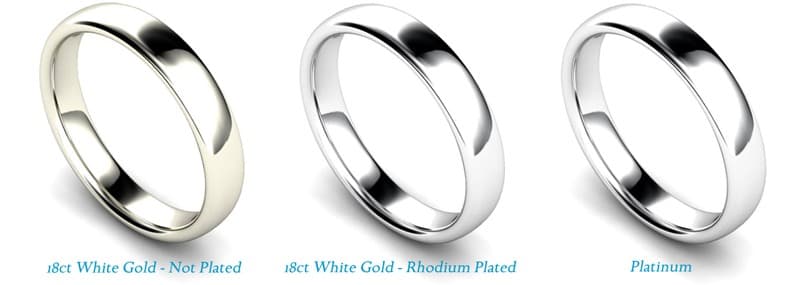
(Platinum vs White Gold rings: side‑by‑side view of unplated 18ct white gold, rhodium‑plated white gold, and platinum bands)
Durability & Hardness: Both platinum and white gold are durable enough for everyday wear, but they behave differently. Platinum is very dense and durable, which means it doesn’t wear away easily. If you had two identical rings and wore them for years, the platinum ring would likely maintain its weight and thickness better – it’s so dense that it’s resistant to being worn down. This makes platinum great for holding gemstones securely (platinum prongs are less likely to break or thin out over time). However, platinum is actually softer (in terms of scratch resistance) than 14k or 18k gold. Platinum jewellery can scratch and develop a patina (a matte, satiny finish from micro-scratches) relatively quickly. The scratches on platinum are mostly the metal getting displaced (like pushing clay) rather than lost. Many platinum enthusiasts don’t mind this patina – some even love the antique look it gives over time – and you can always have platinum repolished to shine again.
White gold, especially in 14k form, is usually harder (more scratch-resistant) than platinum because of the harder alloy metals mixed in (like nickel). It will not scratch as easily – or rather, scratches won’t show up as obviously. But when white gold is scratched, tiny bits of gold alloy are actually removed (abrasion), whereas platinum’s scratches mostly just rearrange the metal. Over many years, a white gold ring might lose a little metal from wear (and very old white gold rings can thin out and might need reinforcement). Also, remember the rhodium plating on white gold: it can wear off in a year or two of daily wear, so white gold jewellery typically needs periodic maintenance (replating) to keep its bright white shine. Platinum doesn’t require that kind of maintenance for colour, though it may need occasional polishing if you prefer it shiny rather than patinaed.
Weight & Comfort: Platinum is heavier than gold. Pick up a platinum ring and a white gold ring of the same size, and the platinum one will feel noticeably heavier – about 60% heavier than 14k gold of the same volume. Some people love that hefty feel as it seems more substantial and high-quality; others might not like the extra weight on the finger. White gold, being lighter, might feel a bit more comfortable if you’re sensitive to weight.
Hypoallergenic Qualities: Another difference – platinum is hypoallergenic. It’s pure and inert, so it rarely causes skin reactions. White gold can sometimes cause allergic reactions in people sensitive to nickel, since many white gold alloys contain nickel. (There are nickel-free white golds that use palladium instead, but nickel is common especially in older or mass-market white gold jewellery.) So for someone with metal allergies, platinum is often the safer choice for something like an engagement ring.
Cost: We’ll dive deeper into price next, but it’s worth noting here: platinum pieces usually cost more than white gold pieces. So if budget is a factor, that can influence whether platinum or white gold is “better” for you.
In summary, platinum vs white gold comes down to a trade-off between luxury and durability versus affordability and ease. Platinum is luxe, heavier, and very durable (no material lost to wear, keeps gemstones secure), but it will show a patina and costs more. White gold is more affordable and very scratch-resistant with a shiny plated finish, but it may need upkeep (replating) and can wear down slightly over decades. Both are beautiful white metals – and to the eye, a brand new platinum ring and a newly plated white gold ring will look virtually identical. The differences reveal themselves in how they age and the maintenance they require.
White Gold vs Platinum Price
When considering the price of white gold vs platinum, there are two angles: the raw metal value, and the finished jewellery cost. Interestingly, per ounce in the commodities market, pure gold is actually more expensive than pure platinum as of 2025 (gold’s at record highs). However, when you go to buy a ring, platinum rings almost always cost more than similar white gold rings. Here’s why:
- Purity & Content: Platinum jewellery is usually 90-95% pure platinum. White gold jewellery is typically 14k or 18k, meaning it’s only 58.5% or 75% gold (the rest is cheaper alloy metals). So a platinum ring has much more precious metal content by proportion. Even if gold’s ounce price is higher, the platinum piece contains a larger amount of precious metal by weight (and platinum is dense and heavy, so you’re getting more metal mass in the same volume of ring). Essentially, you need more platinum (by weight) to make the same ring compared to gold.
- Density (Weight): Platinum is about 60% heavier than 14k gold. So, for the exact same ring design, a platinum version will weigh more than a white gold version. Jewellery is often priced partly by weight of precious metal, so the platinum one costs more because it’s heavier.
- Workability: Platinum is harder to work with in manufacturing. It has a higher melting point and it’s more labor-intensive to polish and finish. Jewellers often charge a bit more for platinum work due to tool wear and the skill required. This adds to the cost of platinum pieces (though you might not see this directly, it’s baked into the price).
- Market Premium: Platinum’s rarity can also mean there’s a premium on platinum jewellery. It’s seen as a luxury option (marketed as the superior metal for milestone jewellery like engagement rings), so brands may price it higher as a premium product.
So, even though it sounds counter-intuitive, a platinum ring can cost 30-50% more than an equivalent white gold ring, despite gold’s higher base price. For example, if a 14k white gold ring costs $1,000, the same ring in platinum might be around $1,300–$1,500. One source notes that platinum settings can sometimes cost nearly double compared to white gold in identical styles. The main reasons are the higher purity and density of platinum used, and its higher labor cost.
From a value perspective: White gold is more budget-friendly, which is why it’s popular – you get the platinum “look” without the platinum price tag. Platinum is more expensive upfront, but you’re paying for a longer-lasting metal that won’t need plating and will hold up over time.
If you’re debating between the two, consider long-term costs as well. A white gold ring might require periodic rhodium replating (every couple of years, which has a small cost each time), whereas a platinum ring might need an occasional polish (also a small cost, or sometimes free at jewellers with service plans). Over decades, these maintenance costs can add up, but generally not enough to outweigh the initial price difference for most people. It’s just something to think about.
In summary on price: Platinum jewellery costs more than white gold jewellery. Even though gold (commodity) is pricey, platinum’s density and purity make platinum rings pricier than white gold rings . If you’re on a tight budget, white gold offers a great value. If you want the prestige and durability of platinum and don’t mind the extra cost, platinum is the premium choice.
Is Platinum Harder Than Gold?
The term “hardness” can be a bit confusing here, because in everyday terms we often equate hardness with durability. When asking if platinum is harder than gold, it helps to clarify what we mean:
- If by “harder” we mean more resistant to scratching or bending, then platinum is actually softer than some gold alloys. Pure 24k gold is very soft (it’s rarely used for rings), but when gold is mixed into 14k or 18k alloys (common for jewellery), it becomes harder. For instance, 14k white gold, thanks to alloy metals like nickel, is quite hard and scratch-resistant – harder than platinum. Platinum scratches more easily than 14k gold in daily wear. That might sound odd since platinum is this elite metal, but it’s true: if you wear a platinum ring and a 14k gold ring, the platinum ring will collect fine scratches (patina) faster.
- If by “harder” we mean strength or durability over time, then platinum is harder in the sense of being tougher and longer-wearing. Platinum’s density and malleability mean it doesn’t chip or crack, and it very slowly wears down. When platinum scratches, it usually just displaces the metal rather than scraping it off. Gold alloys, being a bit more brittle, can wear away little by little and are more prone to thinning out after decades. So a platinum ring is harder to wear out than a gold ring – it will hold stones more securely and you won’t lose metal from it easily.
To put it simply: Platinum is not harder than gold in terms of scratch hardness. On the Mohs hardness scale, platinum is around 4 (out of 10), while 14k gold is around 3.5–4 and 18k gold around 2.8–3. So they’re in a similar range, with some gold alloys slightly harder. You’ll see more scuffs on platinum jewellery than on equivalent gold jewellery. However, platinum is very tough and durable in the long run, often considered more durable than gold for preserving details and thickness.
In practical terms, this means platinum jewellery will scratch and develop a matte look (patina) more quickly, whereas gold jewellery (especially white or yellow gold with alloy) will stay shiny longer but actually loses tiny amounts of metal with each scratch. Neither metal is “fragile” by any means – both 18k gold and platinum will hold up to everyday wear for a lifetime if well cared for. But if you’re rough on your rings, you’ll see evidence of that roughness sooner on platinum (in the form of patina). The good news is you can always polish platinum back to a high shine; unlike with gold, polishing platinum doesn’t remove much material, so you’re not wearing it down by polishing.
So, is platinum harder than gold? Not exactly – in fact, platinum scratches easier than 14k gold. Yet platinum is often considered more durable in the sense that it stands the test of time without wearing away. It’s a bit of a paradox: platinum gets scratched up, but those scratches are just surface character that can be buffed out, and the ring stays robust. Gold alloys resist scratching a bit better on the surface, but over many years they might lose a little metal.
For most people, these differences aren’t deal-breakers either way. Both gold and platinum have been used in fine jewellery for generations and can last for decades. If you want that mirror-like look all the time and less maintenance, white gold might be better as it hides scratches longer (just needs occasional replating). If you prefer the idea of a ring aging gracefully with a patina and never worry about plating, platinum is great – you just accept the scrapes as part of its character, or get it polished if you ever want it looking new again.
Frequently Asked Questions
Is platinum better than gold?
'Better' depends on your priority: for investment value and stability, gold is better—trading around $3,300/oz versus platinum at $960/oz in April 2025—driven by safe‑haven demand. Platinum, though rarer and hypoallergenic in jewellery, lacks gold’s liquidity and broad investor appeal.
Is platinum more expensive than gold?
Platinum is no longer more expensive than gold. As of April 2025, gold trades near $3,300 per ounce compared to platinum at about $960 per ounce, making gold significantly pricier than platinum.
Why is platinum cheaper than gold?
Platinum is cheaper than gold primarily because gold enjoys strong investor and central bank demand as a safe‑haven asset, while platinum’s market relies heavily on industrial uses like catalytic converters, which fluctuate with economic cycles.
Is platinum harder than gold?
No—platinum actually scratches more easily than common gold alloys. However, it’s tougher over time, since scratches merely displace platinum rather than remove material, preserving its volume and strength.
What is the difference between white gold and platinum?
The difference between white gold and platinum lies in composition and finish: platinum is a naturally white, ~95% pure metal, whereas white gold is yellow gold alloyed with white metals and usually rhodium‑plated, requiring occasional replating to maintain its bright colour.
Is platinum white gold?
No—platinum is a distinct chemical element (Pt), while white gold is yellow gold (Au) mixed with metals like nickel or palladium and plated to appear white. They may look similar but are different materials.
How much platinum in the world?
Platinum is extremely scarce: global annual mine production is only about 170 metric tons, compared to roughly 3,300 metric tons of gold, making platinum nearly 20 times rarer by output.
Interested in selling gold with the UK’s highest paying gold buyer? Visit our Sell Gold page to get a competitive valuation – we provide fully insured postage and fast payment.
For more insights and the latest gold price today, keep an eye on our live charts and blog updates.





