White Gold vs Platinum
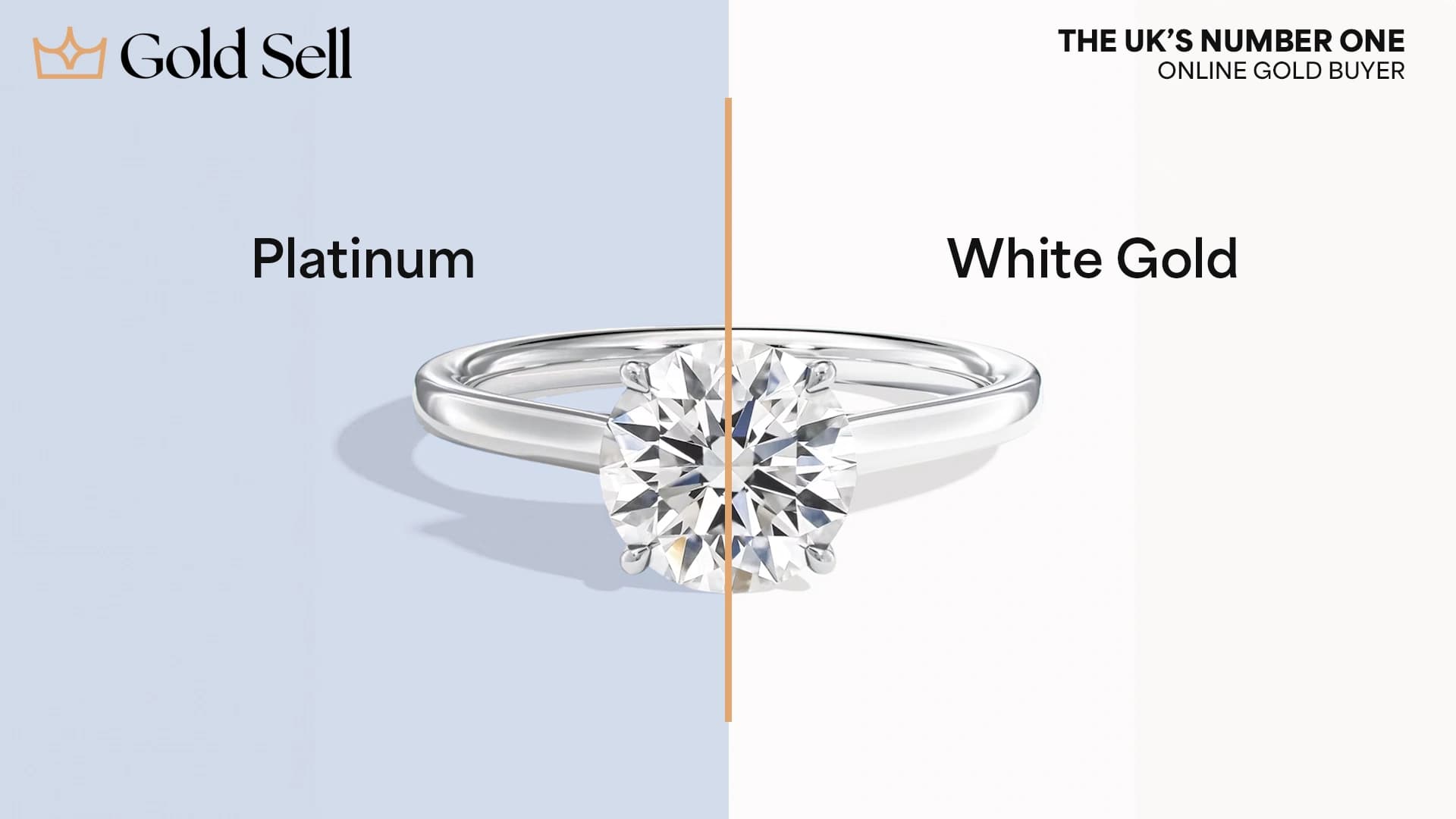
White gold and platinum may look alike, but they are very different precious metals with distinct qualities. In short, white gold is a gold alloy plated with rhodium for a bright silver colour, whereas platinum is a naturally white pure metal – each has unique pros and cons for jewellery. This article compares white gold vs platinum in composition, durability, cost, and more when it comes to white gold and platinum jewellery.
Key Takeaways
- Composition: White gold is an alloy (e.g. 75% gold + 25% other metals for 18ct) with a rhodium plating, while platinum jewellery is usually 95% pure platinum.
- Colour & Look: Both appear silvery white when new, but white gold’s rhodium plating can wear off, revealing a yellowish tint. Platinum is naturally white and develops a matte patina over time instead of yellowing.
- Durability: Platinum is dense and extremely durable – it doesn’t thin out with wear (scratches just displace metal). White gold is also durable but can lose microscopic metal when scratched and may need re-plating to stay shiny.
- Cost: Platinum is rare and was traditionally more expensive than white gold. However, fluctuations in gold and palladium prices mean platinum can sometimes be similarly priced or even cheaper than 18ct white gold in recent years.
- Hypoallergenic: Platinum is completely hypoallergenic (ideal for sensitive skin). White gold is generally safe, but if it contains nickel and the plating wears off it can trigger allergies (EU/UK jewellers often use palladium alloys to avoid nickel).
- Weight: Platinum rings are about 20–30% heavier than identical white gold rings due to platinum’s higher density. White gold feels lighter on the finger, which some prefer for comfort.
- Maintenance: White gold jewellery typically needs periodic rhodium re-plating (every 1–3 years) to restore its bright white finish. Platinum requires less upkeep – it may be polished occasionally to remove patina, but never needs plating.
White Gold Vs Platinum
White gold and platinum are popular choices for engagement rings and other jewellery, but they differ across several key factors:
Composition: White gold is not a naturally occurring metal – it’s made by mixing pure yellow gold with white metals like palladium, silver, or nickel. For example, 18-carat white gold is about 75% gold and 25% other alloys. This alloy is then usually plated with a thin layer of rhodium (a hard, bright white metal) to give it a brilliant, silvery sheen. Platinum, on the other hand, is an elemental metal (symbol Pt) that is used in jewellery at about 95% purity (often alloyed with 5% cobalt, iridium or similar for strength). In the UK, platinum jewellery is hallmarked with a “950” stamp (indicating 950 parts per thousand purity), whereas 18ct white gold will be marked “750” and 14ct with “585,” etc., reflecting their gold content.
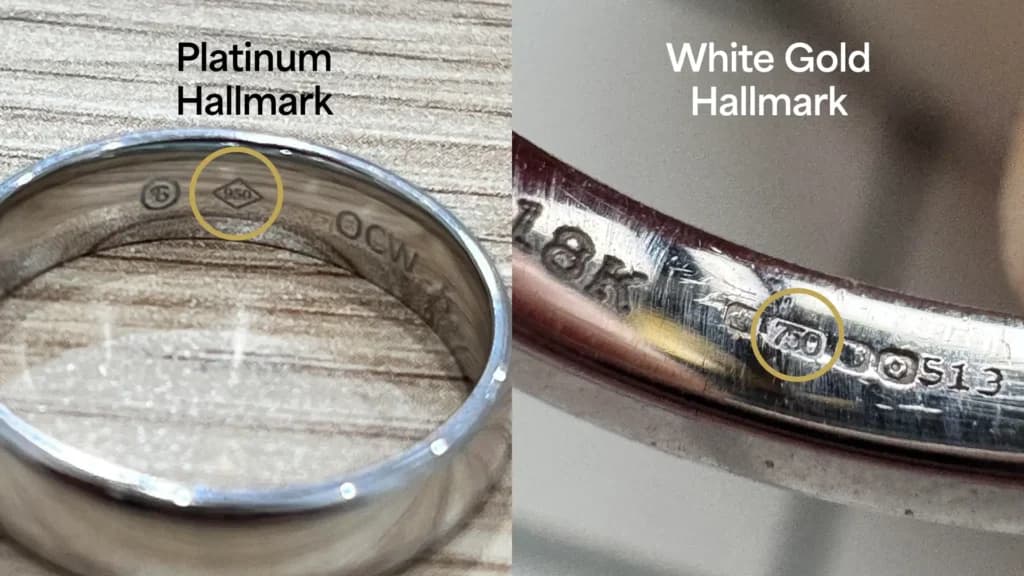
This image shows the difference between platinum and white gold hallmarks. The platinum ring features a “950” stamp indicating 95% purity, while the white gold ring is marked “750”, identifying it as 18-carat gold. These hallmarks are one of the most reliable ways to distinguish between the two metals when their colour and finish appear similar.
Colour: When first purchased, white gold and platinum pieces look virtually identical – both are bright silvery-white metals. The crucial difference is that platinum’s white colour is natural, while white gold’s colour comes from its rhodium plating. Unplated white gold actually has a light yellowish hue (because it still contains a high percentage of yellow gold). Over time, as the rhodium plating on white gold wears off with wear and tear, the jewellery can begin to show a warmer, yellow tint. Platinum does not need any plating and will not discolour or turn yellow – instead, after years of wear, platinum loses some of its high polish and develops a soft gray patina (a satin-like sheen). Many people actually appreciate platinum’s patina for the character it gives, and a quick polish will restore platinum’s original shine if desired.
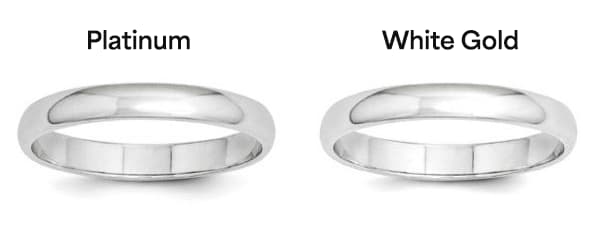
This image compares platinum and white gold rings side by side. While they appear nearly identical, platinum typically has a slightly greyer, more subdued tone, whereas white gold often has a brighter mirror finish due to its rhodium plating. Over time, white gold may yellow slightly as the plating wears, while platinum develops a soft patina. These subtle differences can help identify which metal you’re looking at, especially when the hallmark isn’t visible.
Durability & Wear: Both metals are suitable for everyday wear, but platinum is often considered more robust in the long run. Platinum is extremely durable and dense – when it is scratched or knocked, the metal tends to displace rather than be lost. This means a platinum ring does not thin out significantly over time, and prongs holding gemstones remain secure even after years of wear. White gold is also a strong metal (harder in surface hardness than platinum, so it may scratch a bit less easily), but when white gold is scratched, tiny amounts of gold alloy are actually removed from the piece. Over many years, a white gold ring can wear down or lose metal, potentially requiring re-shanking or reinforcement in the far future. In practical terms, both metals hold diamonds and gems well, but platinum’s durability gives extra peace of mind for heirloom pieces designed to last generations.
Cost: Traditionally, platinum has been more expensive than gold due to its rarity, higher purity, and heavier weight. Platinum’s density means an identical ring will weigh more in platinum than in 18k gold, and platinum’s per-gram price has often been higher than gold’s. For example, a platinum ring will weigh ~30% more than an 18ct gold ring of the same design, contributing to a higher price tag. However, the price difference between platinum and white gold isn’t as large as it once was. In recent years, the cost of gold and especially palladium (used in white gold alloys) has risen dramatically, narrowing the gap or even making some platinum rings less expensive than their white gold equivalents. It’s wise to check current prices: sometimes an 18ct white gold ring and a platinum ring might be very close in price. Keep in mind that white gold can incur additional lifetime costs for upkeep (rhodium plating), which can add up over decades. Platinum, with minimal maintenance, can be cost-effective in the long term despite a higher initial price.
Hypoallergenic Properties: If you have sensitive skin or metal allergies, platinum is generally the safer choice. Platinum used in jewellery is about 95% pure and is inherently hypoallergenic – it won’t react with skin and causes virtually no allergic reactions. White gold can also be worn by most people without issue, especially if it’s high karat or alloyed with palladium. However, some white gold contains nickel, which is a common allergen. In the UK and EU, nickel content in jewellery is tightly regulated (modern white gold alloys here often use palladium or silver instead of nickel), but vintage white gold pieces or some imported items might have nickel. If the rhodium plating on a white gold ring wears off and exposes a nickel-containing alloy, it could irritate the skin of a person with nickel allergy. In short, platinum is the most hypoallergenic metal for rings, whereas white gold is usually fine for most wearers – just ensure you know what alloy mix is used (nickel-free white gold is available for those with sensitivities).
Weight & Feel: There is a noticeable weight difference between white gold and platinum when you hold two similar rings. Platinum is a very dense metal – it’s roughly 20% heavier than 18ct gold by volume (and about 60% heavier than 14ct gold). Some wearers love the substantial heft of a platinum ring as it feels solid and significant; others may find a heavy ring less comfortable for everyday wear. White gold is lighter on the finger, which can be an advantage for people who prefer a more comfortable, barely-there feel. For example, a bold, thick band or a large ring might be more comfortable in white gold due to the weight difference. Neither choice is “better” in weight—it’s a personal comfort preference (try on rings in both metals to sense the difference).
Maintenance: Here is where white gold vs platinum differ quite a bit in day-to-day care. White gold’s lovely shine is thanks to its rhodium plating, and that plating isn’t permanent. Over time (it could be a year or several years, depending on wear), you’ll notice your white gold jewellery dulling or showing a yellow tint in areas where the rhodium has worn off. To keep it looking bright white, you’ll need to have the piece re-plated with rhodium periodically. Many jewellers recommend re-plating a frequently worn ring (like an engagement or wedding ring) about every 1 to 3 years. The cost in the UK for rhodium plating a ring is roughly £50–£100 per session, so you should factor that into the lifetime cost of a white gold ring. Platinum, by contrast, does not require plating or special coating – its colour is true all the way through and won’t change. The main maintenance with platinum is aesthetic: after some time, the metal will develop that soft patina (duller finish). If you prefer a high-gloss look, you’d need to take the ring for polishing. A jeweller can easily buff a platinum ring to mirror shine again, usually at a modest cost (sometimes jewellers include periodic polishing as a service for fine jewellery purchases). Because platinum is so durable, it can handle many polishings over its lifetime without wearing away significantly. In summary, white gold needs more routine upkeep to maintain colour, whereas platinum needs only occasional polishing to refresh its look.
What Is Platinum?
Platinum is a chemical element and a precious metal, prized for its rarity and enduring qualities. In jewellery, platinum is a naturally white metal with a beautiful lustrous grey-white colour that does not tarnish or fade. It is also extremely pure – most platinum jewellery in the UK is 950 platinum, meaning 95% platinum content. (By law, any platinum item over 0.5 grams sold in the UK must be hallmarked; the standard mark is a five-pointed pentagon with “950” inside to denote platinum.) Platinum’s purity and inertness make it hypoallergenic, so it’s an excellent choice for those with sensitive skin.
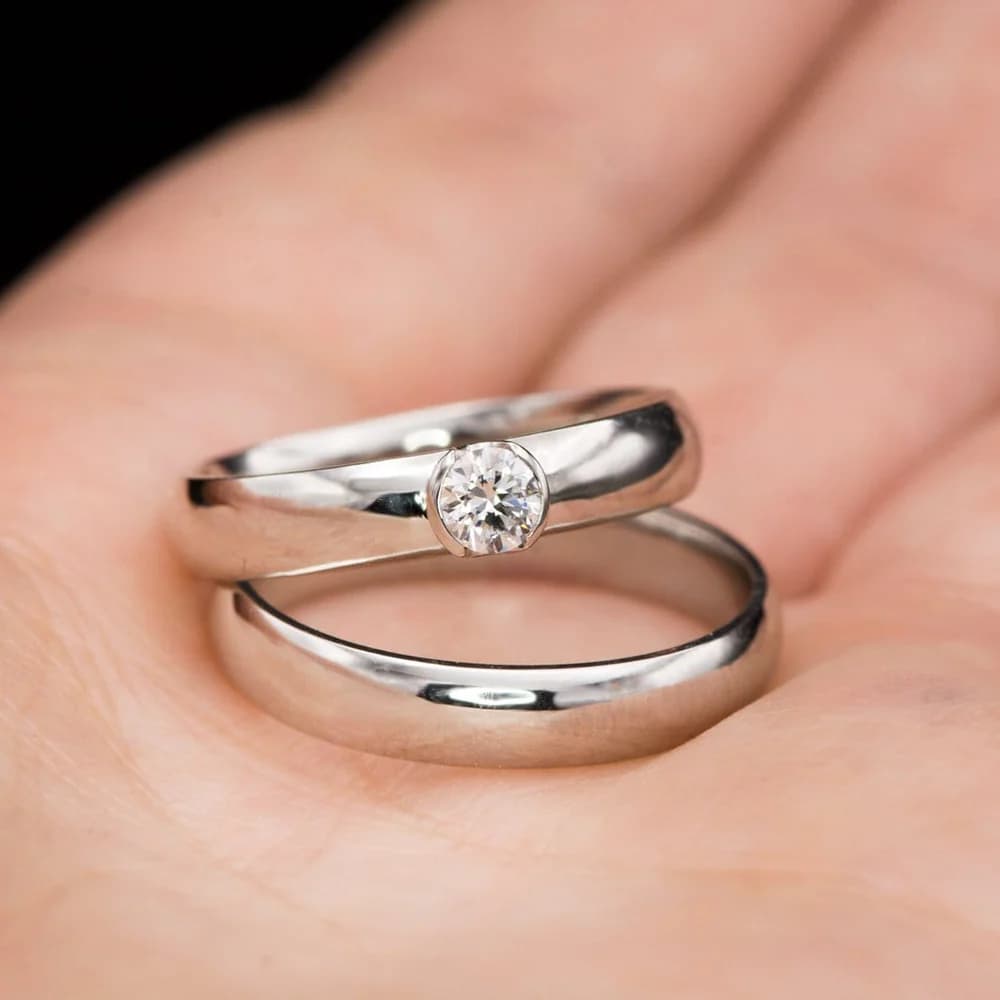
This image shows a pair of platinum rings with a naturally white, grey-silver hue – a defining characteristic of platinum colour. Unlike white gold, platinum retains this tone without fading or needing re-plating. Its purity, shown here in the bright, reflective finish, makes it hypoallergenic and ideal for everyday wear, especially in engagement or wedding rings.
In terms of physical properties, platinum is very dense and strong. It has a higher melting point and is more difficult for jewellers to work with compared to gold, which partially explains its higher cost and exclusivity. Despite its strength, platinum is somewhat softer than 18k gold in the sense that it will scratch a bit easier on the surface; however, these scratches are part of the metal’s patina and do not compromise the metal’s integrity. Platinum rings don’t wear thin or lose mass significantly over time, even after decades, making them ideal heirloom pieces.
Uses in Jewellery: Platinum’s durability and naturally white shine make it especially popular for engagement rings, wedding bands, and fine jewellery with diamonds. It securely holds gemstones and its white colour enhances a diamond’s sparkle (no worry of a yellow tint reflecting into the stone). Platinum has a luxurious reputation; historically, it was used by royalty and top jewellers for the finest pieces. (In fact, King Louis XVI of France once proclaimed platinum the only metal fit for kings!) It became widely used in jewellery in the early 20th century, especially in Art Deco designs, until wartime restrictions in the 1940s made platinum scarce. Modern jewellers continue to favour platinum for high-end designs due to its prestige and longevity.
Hallmarks and Identification: Common platinum hallmarks include “950 Pt” or just “950” stamped inside rings, sometimes accompanied by the letters “PLAT” or “PLATINUM” on older pieces. In UK-assayed pieces, you might also see the traditional hallmark symbol for platinum (a stylised orb or “sceptre” in a pentagon shape) stamped alongside the fineness mark. If you come across a piece stamped “999 Plat”, that indicates 99.9% pure platinum, but 950 is by far the most common standard for platinum jewellery due to the slight alloy added for hardness.
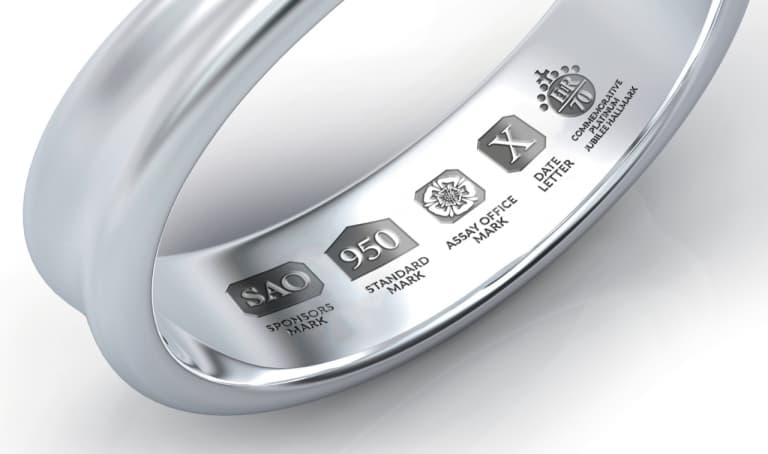
This image shows a series of platinum hallmark symbols engraved inside a platinum ring. The “950” mark confirms 95% platinum purity — the most common standard in UK platinum jewellery. It’s shown here alongside other official marks, including the sponsor’s mark, assay office mark, date letter, and commemorative marks. Together, these symbols help verify the ring’s metal content, origin, and authenticity in accordance with UK hallmarking laws.
Aside from jewellery, platinum’s properties (heavy, extremely resistant to corrosion, excellent catalyst) lend it to other uses: industrial applications like catalytic converters in cars, laboratory equipment, and even in medicine. But in the context of jewellery, platinum is cherished as an elite metal that offers both beauty and durability – it’s the go-to choice for many who want the best and are willing to invest in a piece that will last a lifetime.
Platinum Hallmark Chart
Before the fineness number, most platinum hallmarks in the UK are enclosed in a distinctive five-sided shape known as a pentagon — this identifies the item as platinum. Whether it’s marked “950”, “900”, or even “999”, the number reflects the purity of the metal as a percentage. Here’s a quick reference guide to the most common platinum hallmarks and what each one means when it comes to quality, value, and jewellery use:
| Platinum Hallmark | What It Means & Why It Matters |
|---|---|
| 999 (99.9% pure) | Almost pure platinum, often used in investment-grade bullion and high-end pieces. Rare in jewellery due to its softness. Many buyers and refiners treat this as 100% pure for valuation purposes. |
| 950 (95% pure) | The most common platinum purity for jewellery. It offers the ideal balance between durability and purity, typically alloyed with ruthenium or iridium for added strength while maintaining hypoallergenic qualities. |
| 900 (90% pure) | Common in vintage or antique platinum jewellery. Usually alloyed with cobalt, iridium, or copper to improve hardness. Slightly less valuable than 950, but still considered high-quality platinum. |
| 850 (85% pure) | Lower purity platinum, sometimes used in mass-produced or lightweight pieces. Typically alloyed with more base metals like copper or palladium. It’s still valuable but may wear slightly faster than higher purities. |
What Is White Gold?
White gold is a gold alloy that has a silvery-white appearance, achieved by combining pure gold with other white metals and usually adding a plating of rhodium. Unlike yellow gold which is found in nature, white gold doesn’t exist naturally – it was invented by metallurgists. In fact, white gold was first developed in the early 20th century (circa 1912) as a substitute for platinum, which had become scarce and expensive. By mixing gold with pale-coloured metals, jewellers could mimic the look of platinum while using less costly materials. White gold gained popularity in the 1920s as a fashionable alternative to platinum, and it remains a mainstay in modern jewellery.
Composition: Pure gold is 24 karat and has a distinct yellow colour. To create white gold, pure gold is alloyed with metals such as nickel, palladium, silver, or zinc. For example, an 18ct white gold ring is 75% gold and 25% other metal (often a mix that might include palladium or silver). A 14ct white gold piece is about 58.5% gold and 9ct white gold is 37.5% gold – the rest of the alloy is what imparts strength and a pale colour. These alloys by themselves usually have a light grey or off-white tone (some with a hint of yellow). That’s why virtually all white gold jewellery is plated with rhodium, a platinum-family metal that is extremely white and reflective. The rhodium plating gives white gold its final brilliant, chrome-like white shine. Over time, this plating can wear off, but it can be reapplied as part of routine maintenance.
Use in Jewellery: White gold became especially popular for engagement rings, wedding bands, and other pieces where a neutral white metal is desired to complement diamonds and gemstones. It offers the look of platinum but is generally more affordable (especially in lower karats) and slightly lighter in weight. White gold is also a bit harder (depending on alloy) which can make it resistant to scratches, though it doesn’t have platinum’s density. Many jewellery styles that historically were made in platinum are now commonly available in white gold – from classic solitaires to intricate vintage-inspired designs – because it appeals to a wide range of budgets while still providing a luxurious appearance.
One thing to note is hallmarks for white gold: since it is still gold, it is hallmarked based on its gold purity. In the UK, common white gold hallmarks/fineness stamps you’ll see are the same as yellow gold – e.g. “750” for 18ct, “585” for 14ct, or “375” for 9ct. You might also see karat markings like 18ct or 14ct inside a ring, sometimes accompanied by letters (like “18k WG” for 18 Karat White Gold, though not always). Legally, any gold jewellery over 1 gram must be hallmarked in the UK; the hallmark will indicate the metal and purity (white gold isn’t distinguished from yellow gold in the hallmark, since gold is gold – only the number/carats tell you the purity). So if you see a “750” stamp and the piece looks silver-coloured, that means it’s 18ct white gold.
Care and Considerations: White gold is a real, precious metal – its value comes from the gold content. However, because it’s alloyed, 18ct white gold will be a bit less expensive than 18ct yellow gold of the same weight if less pure gold is present (actually 18ct is always 75% gold by definition; cost differences come more from manufacturing or alloy metal costs). White gold’s other metals (like nickel or palladium) give it strength; for instance, 18ct white gold is harder than 18ct yellow gold, making it quite durable for rings and frequently worn pieces. On the downside, if nickel is used, it can cause allergic reactions in some people. Many jewellers now use palladium-based white gold alloys for higher-end pieces to ensure a better white colour and hypoallergenic quality.
Finally, keep in mind that white gold’s appearance will change over time as the rhodium plating wears. The underlying alloy might start to show a faint ivory or pale yellow tone in areas of high wear (like the underside of a ring). This is normal and simply signals that it’s time to get the piece polished and re-plated to bring back that like-new gleam. With proper maintenance, white gold jewellery can last for generations and remain a beautiful setting for your diamonds and gemstones.
White Gold Hallmarks
White gold hallmarks are typically stamped as three-digit numbers that correspond to the gold’s purity, often appearing inside the band of rings or on the clasps of necklaces. These marks — such as “375”, “585” or “750” — are common in the UK and help identify the gold content by parts per thousand. Below is a simple breakdown of the most common white gold hallmark numbers and what they mean in practical terms for jewellery.
| Hallmark | Purity | Gold Content |
|---|---|---|
| 375 | 9 carat | 37.5% gold (375 parts per 1000). Typically alloyed with silver, palladium, or nickel to create a pale white finish. |
| 585 | 14 carat | 58.5% gold (585 parts per 1000). Commonly mixed with copper and nickel or palladium for added strength and bright whiteness. |
| 750 | 18 carat | 75% gold (750 parts per 1000). Often alloyed with palladium or silver for a high-quality white tone, frequently rhodium-plated for brilliance. |
If you’re unsure whether your ring is white gold or platinum, one of the best ways to confirm is by checking the hallmark. Different metals have unique stamps that indicate purity and origin. To better understand these markings – especially for white gold pieces or unusual items you’ve inherited – check out our detailed guide on how to identify gold hallmarks, including a chart for foreign hallmarks and what each symbol means.
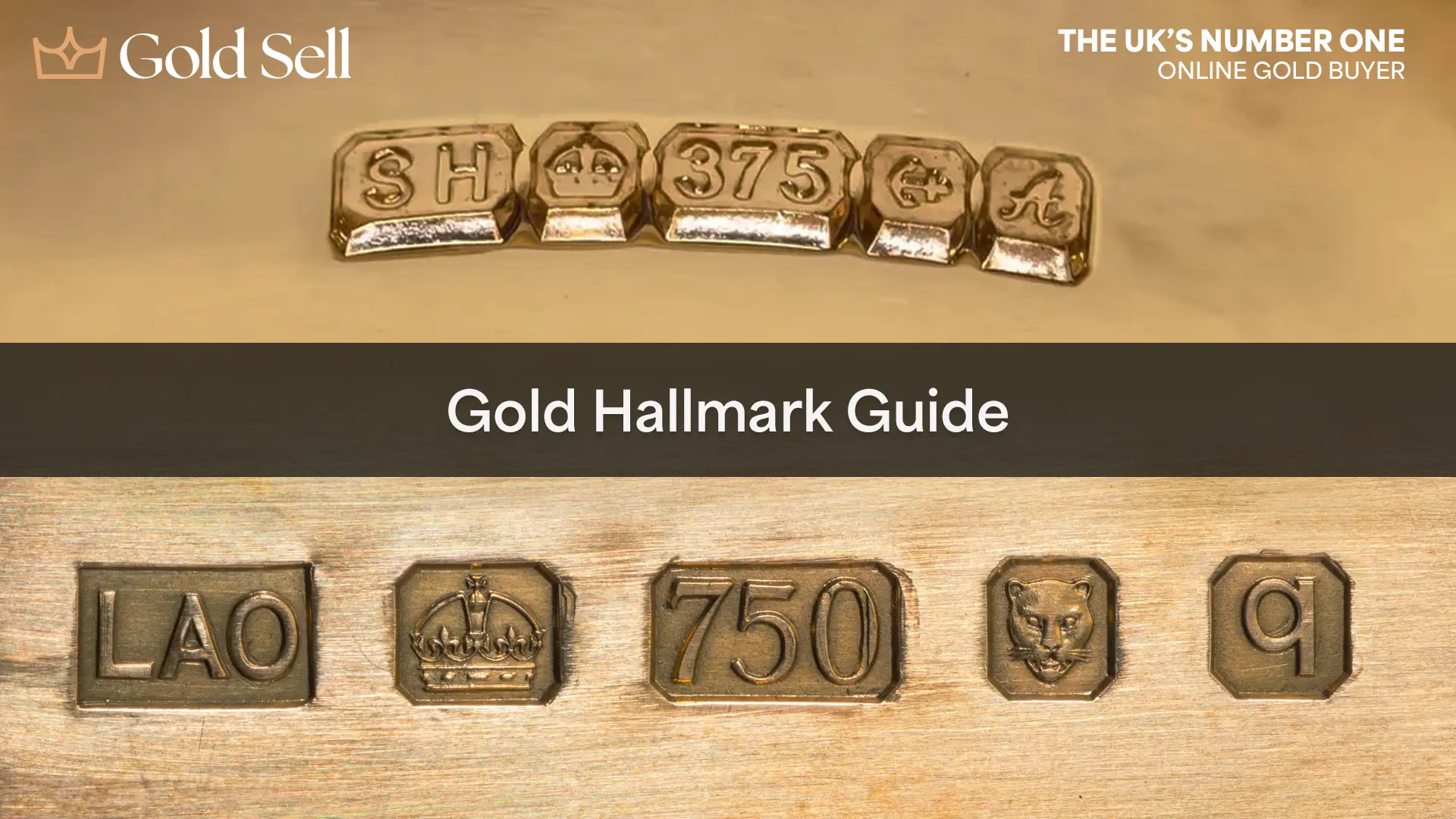
Gold Hallmarks Explained – Identify Gold Hallmarks
Learn how to identify gold hallmarks with our complete hallmark identification guide. Understand assay marks for gold on rings, coins, necklaces, and more.
Can You Tell The Difference Between Platinum And White Gold?
At a glance, it’s difficult to tell white gold and platinum apart – which is exactly why this question comes up so often. When both metals are new (or freshly polished for platinum, freshly rhodium-plated for white gold), they have a very similar bright white appearance. However, there are a few tell-tale signs experts and keen-eyed owners can look for:
- Stamp/Hallmark: The most surefire way is to check the marking on the jewellery. Platinum rings are typically marked “950”, “PT”, or “PLAT” to indicate platinum. White gold items will have gold karat marks like 18K, 14K, or a number like 750, 585, etc. For example, a ring stamped “Plat 950” or just “950” is platinum, whereas one stamped “18K” or “750” is 18ct gold (white gold in this context, given its colour). UK hallmarks use different shapes for different metals (platinum’s hallmark is in a 5-sided shape, gold’s in an oval), so a jeweller’s loupe might help identify these tiny stamps. If there’s no visible stamp, you might need a jeweller or assay office to test the metal.
- Colour Tone: There can be a subtle difference in hue. Platinum tends to have a steely-white or greyish undertone, while rhodium-plated white gold often has a slightly cooler, more mirror-bright white tone. This is very subtle, though – most people will not notice a difference in colour unless the white gold’s plating has partially worn off. If you see a hint of yellow in parts of the piece, that’s a sign it is white gold with thinning rhodium plate (platinum never turns yellow). Platinum’s patina (if it has developed) can make it look a bit more muted compared to a brand-new white gold piece, which might appear “bluer” white due to rhodium.
- Weight: If you have two similar rings, the platinum one will feel heavier. Platinum is about one-third heavier than 18ct white gold for the same volume. In practical terms, a platinum band has a solid, hefty feel in the hand. White gold is not exactly lightweight (especially 18ct is fairly dense too), but the difference is noticeable if you compare side by side. This is more apparent in larger items; for thin rings, it might be harder to discern by weight alone unless you’re experienced.
- Wear and Aging: Over time, differences become more apparent. A well-worn platinum ring will likely have a soft patina (a gentle matte finish) and any scratches will be present as faint lines that don’t cut into the metal deeply. A white gold ring worn for a long time without re-plating might show patches of yellowish colour where the rhodium has worn off, and perhaps sharper-looking scratches (since white gold is a bit harder, scratches can look more like bright streaks whereas platinum’s scratches are more of a displacement). Also, an older white gold ring might have been re-polished and re-plated, making it look brand new again – whereas an older platinum ring might have that antique patina unless polished. So if one ring has a slight antique sheen and the other is starkly bright white, the patina one is likely platinum.
- Magnet Test: This is a bit of a trick – gold (and platinum) are non-magnetic. If you have a strong magnet and something about the piece is attracted, it might indicate parts that are not precious metal. However, this is not a definitive test between white gold and platinum (both should not react). It’s more useful to detect if a piece is possibly fake or plated steel. Still, note that some white gold alloys with nickel could be very slightly magnetic if nickel content is high, but generally not strongly so. Platinum alloys have no magnetic metals typically.
In summary, without professional tools it can be challenging to distinguish platinum vs white gold just by eye, especially on new jewellery. The best practice is to look for the hallmark stamp inside the band. If you’re still unsure, a jeweller can often tell by the way the metal responds to a touchstone or by its density (they might perform a specific gravity test). But once you know what to look for – slight colour nuance, weight, and stamp – you’ll have a good chance of telling the difference between these two metals.
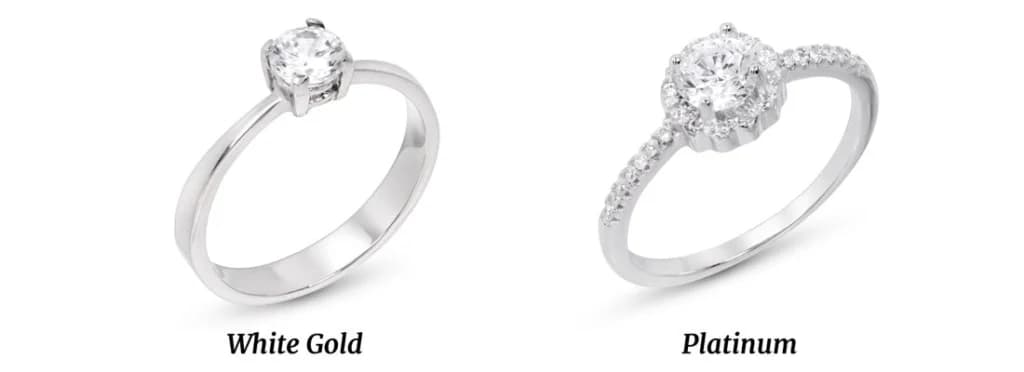
In the image above, the platinum ring (right) and white gold ring (left) look nearly identical in colour. A jeweller’s stamp inside or the weight in hand would be needed to definitively tell which is which. Visually, new white gold and platinum jewellery are almost indistinguishable to most people.
Is White Gold And Platinum The Same?
No – white gold and platinum are completely different metals, despite their similar look. White gold is made from real gold mixed with other metals, whereas platinum is a separate elemental metal. People often confuse them or think white gold is a type of platinum (or vice versa) because of the shared white colour and use in similar styles of rings. In reality, the two have different chemical compositions and properties.
To break it down: White gold contains a significant percentage of gold (yellow gold) that’s been alloyed to appear white, and its value and characteristics (like karat purity, need for plating) stem from being a gold product. Platinum is from the platinum family of metals and is used in jewellery at high purity (usually 950/1000). Platinum is naturally white, heavier, and usually costs more per gram than gold. White gold is lighter, typically less costly, but requires a bit more care (due to plating). They’re not the same metal at all – even their hallmarks differ (e.g., you’ll never see “18K” on platinum or “Plat 950” on gold).
It’s worth noting that historically, white gold was invented as an imitation for platinum during a time when platinum was scarce. That context sometimes causes people to assume white gold is “fake” platinum – but white gold is not fake; it’s simply a different alloy with its own value (it contains real gold). Conversely, platinum’s prestige and rarity set it apart as well. In summary: white gold and platinum are not the same metal and they differ in maintenance and long-term behaviour. Always check the specifics when buying jewellery so you know which metal you’re getting.
Is Platinum Better Than White Gold?
Whether platinum is “better” than white gold depends on your priorities. Platinum has several advantages over white gold: it’s more pure and hypoallergenic, extremely durable (it doesn’t wear away and will hold gemstones very securely over time), and never needs re-plating or colour maintenance. Platinum jewellery can truly last a lifetime and beyond with minimal care, which is why it’s often chosen for heirloom-quality rings. It also has a prestigious cachet – being rarer and historically more expensive, some people simply like knowing their ring is platinum.
White gold, on the other hand, has its own set of benefits. It usually comes at a lower price point for a similar style, which can be significant if you’re on a budget or want a larger diamond for the same total cost. White gold is a bit harder in terms of scratch resistance, so it might not show micro-scratches as quickly as platinum (though it will lose its rhodium plating lustre in time). It’s also lighter in weight, which some find more comfortable for everyday wear, especially with big rings. And visually, white gold is slightly more reflective when freshly plated, giving that bright “pop” to the look of a new ring.
In the UK market, white gold is more common for engagement rings and wedding bands simply because it has been the traditional choice and is generally more affordable. Many high-street jewellers carry far more white gold pieces than platinum. Platinum tends to be offered in higher-end collections and by bespoke jewellers. The cost difference, while not as dramatic as it once was, still means someone can save a few hundred pounds choosing white gold over platinum (money which could go towards a better gemstone, for example). As a result, a lot of people opt for white gold and are perfectly happy with it – it looks great and performs well if maintained.
So, which is better? Objectively, platinum is superior in terms of longevity and purity (it won’t need plating, and a platinum ring 50 years on will roughly be the same weight as when you bought it, whereas a gold ring might lose a little metal over decades). Platinum is also the better choice if allergic reactions are a concern. However, platinum is also heavier and typically pricier upfront. White gold is better if you prefer a lighter feel or want to stick to a certain budget. It’s also widely available and when maintained (rhodium re-plated as needed), it will look just as stunning.
Many jewellers would say neither metal is categorically “better” for everyone – it’s about what’s better for you. If you want the premium metal and don’t mind the cost, platinum is often recommended for engagement rings (for its durability with prongs, etc.). If you want to maximise value or prefer to not feel the weight, white gold is an excellent choice as well. In summary: platinum is often considered the high-end option and is “better” in terms of durability and care-free wear, but white gold is a close contender that offers great performance with a bit of routine maintenance. Both can be a beautiful, lasting symbol of your commitment.
Can White Gold Tarnish?
White gold is often praised for its shine, so a common concern is whether it will tarnish or lose its lustre. The answer is a bit nuanced: pure gold itself doesn’t tarnish (it’s a non-reactive metal), and since white gold is largely gold, it is fairly resistant to tarnishing. However, the other metals in the white gold alloy can be prone to minor tarnish or oxidation over a long time, and more importantly, the rhodium plating on white gold can wear away, which affects how the metal looks.
In practical terms, white gold doesn’t tarnish in the same way sterling silver does (you won’t see it turning black or green). What you might see instead is the piece starting to look a little dull or slightly yellowish. This happens because the ultra-bright rhodium layer has rubbed off in spots, revealing the off-white gold alloy beneath. That underlying alloy may also react mildly with oxygen or chemicals over time, possibly causing a slight dullness or stain in areas, but outright tarnish (like a dark corrosion) is uncommon with quality white gold. High-carat white gold (18ct) contains less of the reactive alloy metals and thus is even less likely to tarnish (aside from the plating issue).
Certain conditions can accelerate any tarnishing or discolouration in white gold: exposure to harsh chemicals is a big one. For instance, chlorine (found in swimming pools or some household cleaners) can actually cause a reaction with the copper or nickel in gold alloys, leading to darkening or even microscopic stress cracks in the metal. Cosmetics, perspiration, and pollution can also slowly affect the look of the metal. These factors might make the white gold appear a bit dingy over time if not cleaned. But typically, routine care prevents that.
To keep your white gold from looking tarnished or yellow: clean it gently and regularly, avoid prolonged exposure to chemicals (take rings off before swimming in chlorinated pools or using bleach cleaners), and plan on re-plating the rhodium every couple of years or as needed. Polishing by a jeweller can also remove any slight surface oxidation or tarnish that might be present on the alloy. As one source succinctly puts it, white gold doesn’t tarnish, but its colour can fade as the rhodium coating wears off. When you notice that fading, it’s time for a refresh at the jeweller’s. The good news is, with proper maintenance, a white gold piece can look brand new again easily – the underlying gold remains solid and untarnished, and the rhodium re-plating will cover any alloy discolouration, restoring a uniform white shine.
In summary: white gold is quite resistant to tarnish thanks to its high gold content, but it can lose its white colour as the finish wears. Regular maintenance (cleaning and re-plating) will prevent your white gold from ever looking dull or tarnished.
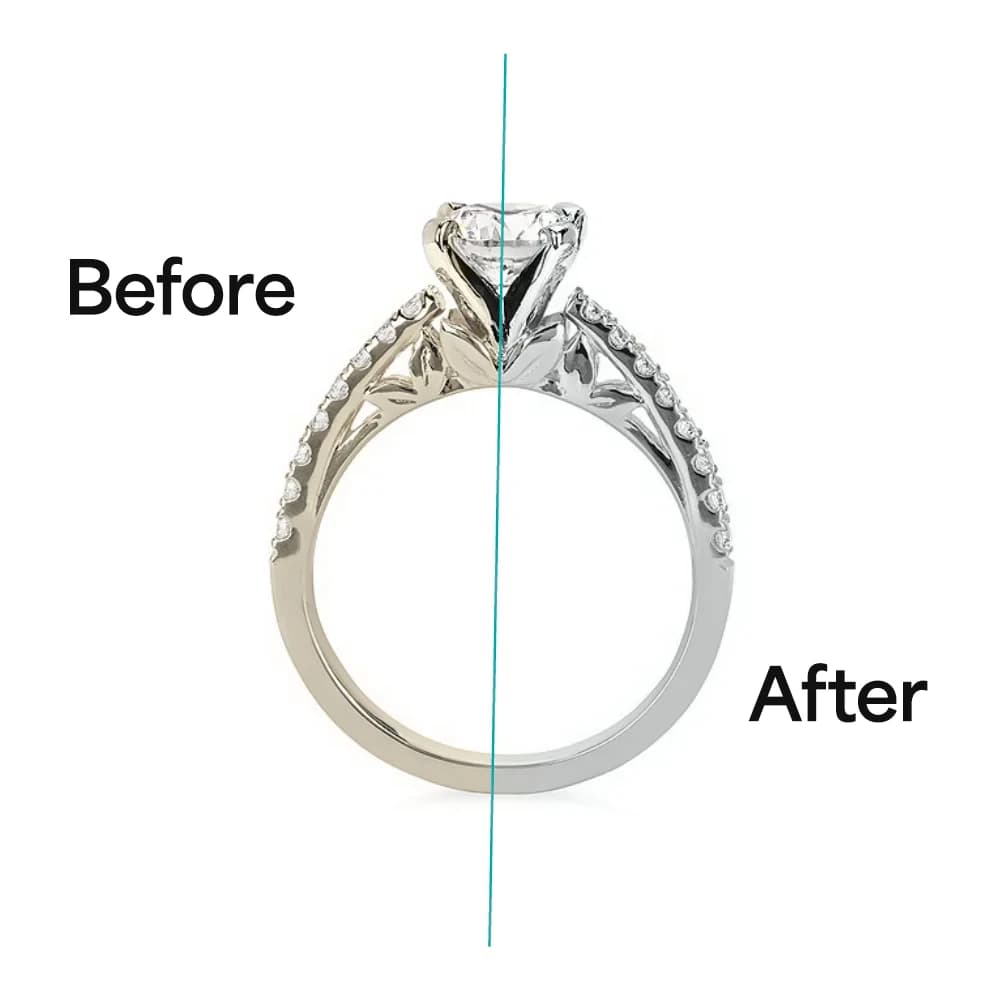
This side-by-side “before and after” image shows the transformative effect of rhodium plating on white gold. Over time, white gold’s rhodium layer fades, revealing a more yellow or grey base beneath. Replating restores its bright white lustre, making the jewellery look new again. This is a normal and reversible part of white gold care, and many jewellers offer affordable rhodium services to keep your rings sparkling.
To keep your white gold jewellery looking bright and tarnish-free, regular gentle cleaning can make a big difference. If you’re unsure how to do this safely at home, check out our simple guide on how to clean gold jewellery using common household items — ideal for restoring shine without damaging delicate rhodium plating.
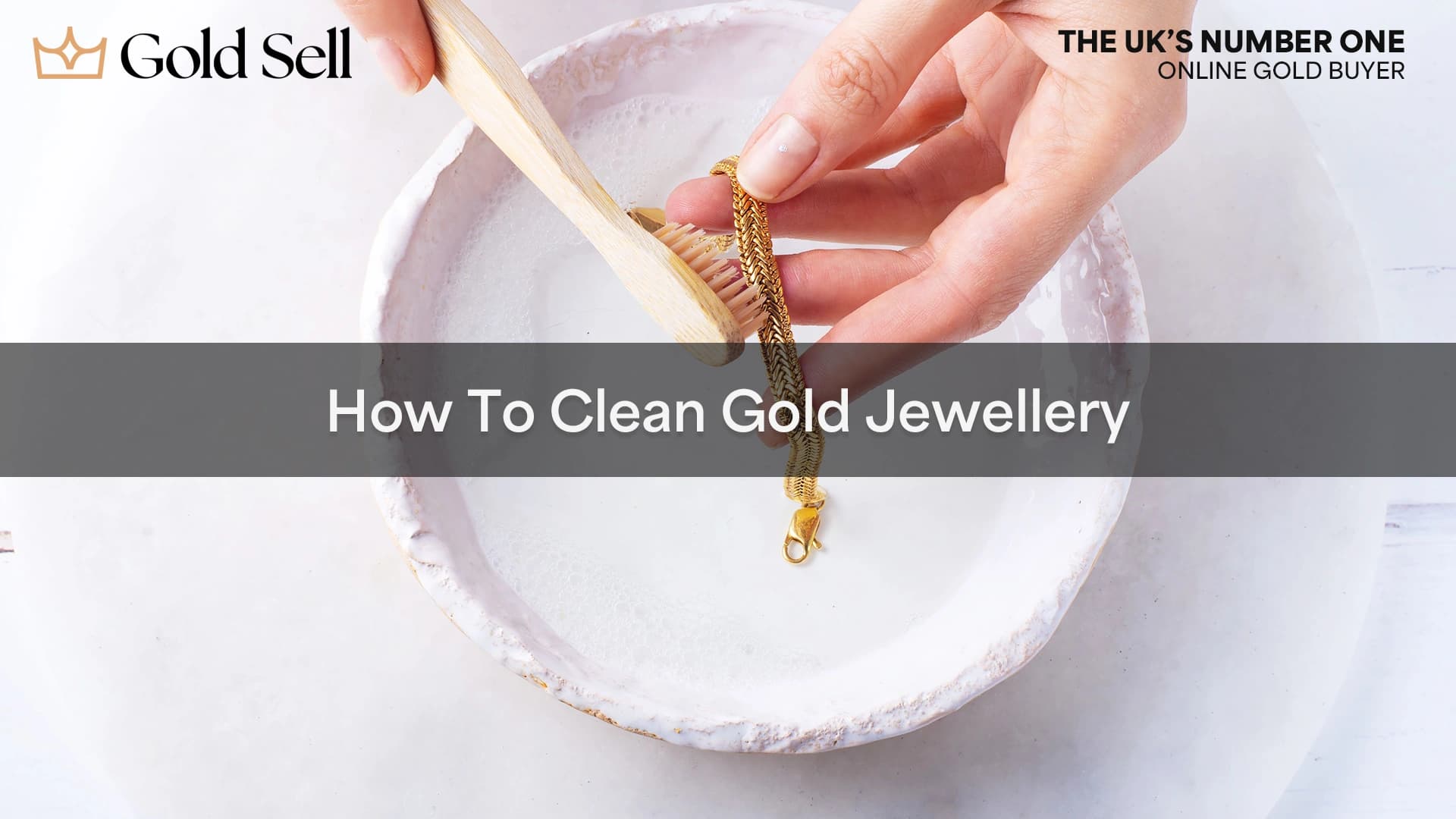
Discover easy tips on how to clean gold jewellery at home safely using simple household products. Restore shine and keep your gold jewellery sparkling!
Can Platinum Tarnish?
One of platinum’s hallmark qualities is that it does not tarnish or corrode. Platinum is a very inert metal – it doesn’t react with oxygen or most chemicals, so it won’t rust, dull, or discolour in the way some other metals do. If you put a platinum ring in a drawer for 50 years, it will be the same white metal when you take it out – no tarnish at all. This is a big reason platinum is prized for jewellery expected to last a lifetime (or generations).
However, you might hear people talk about platinum getting a “patina” over time. Platinum patina is not tarnish in the chemical sense; it’s more of a change in the metal’s surface texture. As platinum jewellery is worn, the multitude of tiny scratches and scuffs from daily life accumulate and scatter light differently, giving the metal a softer, almost frosted look. This patina is often described as a satiny or matte sheen that develops uniformly across the piece. Importantly, patina doesn’t involve any foreign substance on the metal (like oxide or sulfide tarnish on silver) – the platinum itself is just not as highly polished as it once was, due to micro-scratches.
Some people love the platinum patina; it’s seen as a vintage elegance or a testament to the ring’s journey with you. In some cultures (e.g., in Japan) platinum patina is even cherished as it symbolises the passage of time and the endurance of the material. Others prefer their platinum to look like new and may not be a fan of the patina. The great thing is, if you don’t like the patina, platinum can be polished back to a mirror finish easily by a jeweller. A quick buff on a polishing wheel will remove the microscopic scratches and restore full shine without any loss of metal integrity.
So, to directly answer: No, platinum does not tarnish. You won’t see a platinum ring turning black or greenish or developing a tarnish film – ever. What you might see after years of wear is that it’s not as glossy as day one; that’s the patina. If you prefer the high shine, occasional repolishing is all that’s needed. Another small note: because platinum doesn’t tarnish and is so stable, you can wear it in environments that would wreak havoc on other metals. For example, chlorine (from pools or bleach) that could damage gold alloys won’t affect platinum. Platinum won’t tarnish even in saltwater or if you forget to take your ring off while using household cleaners (though we still don’t recommend exposing fine jewellery to harsh chemicals regularly!).
In essence, platinum remains white and doesn’t rust or tarnish over time – its “aging” process is just developing that unique patina, which is easily managed according to your aesthetic preference.
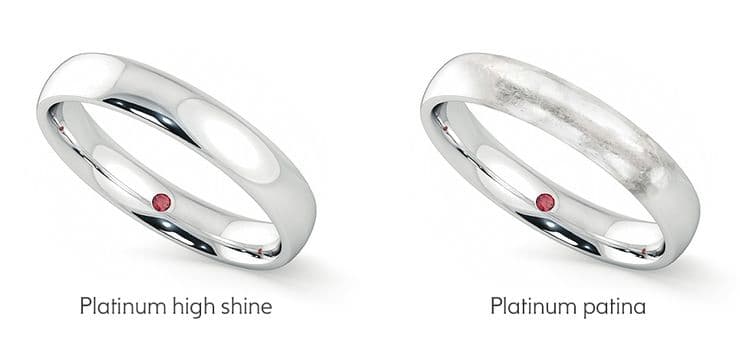
Above you can see the concept of platinum patina. The polished platinum ring (left) is bright and mirror-like, whereas the patina’d platinum ring (right) has a subdued glow. This isn’t tarnish – it’s just the metal’s surface texture changing with wear. If preferred, the patina can be removed with professional polishing, returning the platinum to a like-new shine.
Frequently Asked Questions
White gold vs platinum
White gold is a gold alloy plated with rhodium for a bright white finish, while platinum is a naturally white, denser metal used in high-purity jewellery. Platinum is heavier, more durable, hypoallergenic, and requires less maintenance. White gold is lighter, more affordable, but needs regular re-plating to maintain its colour. Both look similar when new but wear differently over time. The best choice depends on budget, wear preferences, and long-term expectations.
What is platinum?
Platinum is a naturally white, dense, and highly durable precious metal used in fine jewellery, often in 95% purity (hallmarked as “950”). It resists tarnishing, holds gemstones securely, and is hypoallergenic, making it ideal for those with sensitive skin. Platinum’s strength allows it to last for generations without thinning or degrading. It is heavier than gold and has a premium feel, often chosen for luxury engagement rings, wedding bands, and heirloom pieces.
What is white gold?
White gold is real gold alloyed with white metals such as palladium or nickel, then coated in rhodium for a brilliant white finish. Commonly used in engagement rings and fine jewellery, it combines the value of gold with the modern look of platinum. It’s lighter and more affordable than platinum but requires rhodium re-plating every 1–3 years to maintain its bright appearance. Hallmarks like “750” (18ct) or “585” (14ct) indicate purity levels.
Can you tell the difference between platinum and white gold?
You can tell the difference between platinum and white gold by checking the hallmark, weight, and how the metal wears. Platinum is heavier, has a greyer tone, and develops a soft patina over time. White gold is lighter, slightly more brilliant when newly plated, but may reveal a yellow tint as the rhodium wears off. Platinum is hallmarked “950” or “PLAT”, while white gold uses gold karat marks like “750” or “585”.
Which is better, platinum or white gold?
Platinum is better for those seeking long-term durability, minimal maintenance, and hypoallergenic wear. It’s ideal for heirloom pieces or daily rings. White gold is better if you're budget-conscious or prefer a lighter feel, but it needs regular rhodium re-plating to maintain its colour. In terms of longevity and purity, platinum wins, while white gold offers the same visual appeal for less money upfront. The right choice depends on your lifestyle and maintenance preferences.
Can white gold turn yellow?
Yes, white gold can turn yellow over time as its rhodium plating wears off, revealing the naturally off-white or yellowish gold alloy beneath. This doesn’t mean the metal is damaged—only that the finish needs refreshing. Regular wear, especially on rings, causes the plating to wear faster on high-contact areas. Replating with rhodium, typically every 12–24 months, restores its bright white colour and keeps it looking like new with minimal hassle.
Can white gold tarnish?
White gold doesn’t tarnish like silver, but its rhodium plating can wear away, exposing the slightly yellowish alloy underneath. Over time, exposure to cosmetics, sweat, and household chemicals may cause the metal to dull slightly. This isn’t true tarnish but surface wear. To maintain shine, clean your white gold gently and have it re-plated every couple of years. High-carat white gold (like 18ct) is less reactive, making tarnish even less likely.
What is patina on platinum?
Patina on platinum is a soft, matte finish that develops naturally as the metal is worn and scratched over time. Unlike tarnish, which is chemical, patina is simply displaced metal creating a frosted, antique-like sheen. Many appreciate this unique look, but it can be polished away to restore platinum’s original shine. Patina doesn’t affect durability—it’s purely cosmetic and part of platinum’s natural aging process, showcasing its journey and timeless character.
Is white gold real?
Yes, white gold is real gold. It’s made by alloying pure yellow gold with white metals like palladium, silver, or nickel to reduce the yellow tone. The finished piece is then rhodium-plated to give it a bright white appearance similar to platinum. Hallmarks like “750” indicate 18ct white gold, meaning it contains 75% pure gold. Though man-made in colour, white gold holds intrinsic value based on its gold content and craftsmanship.
Is white gold magnetic?
White gold is not magnetic. Pure gold is a non-magnetic metal, and most white gold alloys use palladium or silver, which are also non-magnetic. However, some older or lower-quality white gold may contain small amounts of nickel, which is slightly magnetic—but not strongly. If your jewellery is attracted to a magnet, it could contain other metals or be plated base metal. A proper hallmark and testing by a jeweller confirm authenticity.
Is white gold more expensive than platinum?
No, white gold is generally less expensive than platinum. Platinum is denser, purer (usually 95% platinum), and more labour-intensive to work with, which increases its cost. However, recent market shifts—like rising palladium prices used in white gold—can narrow the gap. Additionally, white gold may incur ongoing costs for rhodium re-plating. So, while cheaper upfront, white gold could cost more long-term if maintenance is needed frequently for appearance upkeep.
Is platinum more expensive than white gold?
Yes, platinum is usually more expensive than white gold due to its higher density, rarity, purity, and workability. A platinum ring will weigh more than the same ring in white gold and often requires more skilled craftsmanship. Market prices fluctuate, so sometimes high-karat white gold with expensive alloys like palladium can rival platinum in price. However, platinum is still considered the premium option for durability, longevity, and low maintenance.
Is platinum better than white gold?
Platinum is better for those wanting ultimate durability, purity, and low maintenance. It holds up well to daily wear, never needs replating, and is ideal for sensitive skin. White gold, though visually similar, requires rhodium maintenance and may wear faster over decades. Platinum is more expensive but can be cost-effective in the long run due to minimal upkeep. For heirloom or engagement rings, platinum is typically the superior long-term choice.
Platinum or white gold engagement ring?
Platinum is generally preferred for engagement rings because it’s extremely durable, naturally white, and hypoallergenic, making it ideal for long-term everyday wear. It holds diamonds securely and never requires plating. White gold is a great alternative if you’re looking for a similar look at a lower cost, though it will need periodic rhodium re-plating to maintain its bright white finish. Choose platinum for longevity, or white gold for value with some upkeep.
Is white gold pawnable?
Yes, white gold is pawnable and retains value based on its gold content and weight. Like yellow or rose gold, the purity (e.g. 18ct marked “750”) determines how much gold is in the piece. Most pawnbrokers or gold buyers will offer prices based on current market rates minus a margin. Ensure your item is hallmarked and consider getting a valuation to secure a fair price. Designer or branded pieces may fetch more.
Are platinum rings good?
Platinum rings are excellent for durability, luxury, and long-term wear. They are naturally white, hypoallergenic, and resist thinning over time, making them ideal for engagement rings and wedding bands. Platinum securely holds stones in place and won’t corrode or tarnish. Though they can develop a patina, this adds character or can be polished out. While more expensive, platinum rings are often considered premium and are ideal for daily wear and legacy pieces.
Are platinum rings expensive?
Yes, platinum rings are generally more expensive than gold rings due to platinum’s rarity, high purity (usually 95%), and density, which means more metal is needed per piece. Platinum is also harder to work with, which increases labour costs. However, it offers long-term value by being incredibly durable and low-maintenance. The upfront cost is higher, but over time, platinum can be more cost-effective due to its lasting quality and minimal upkeep.
Are platinum coins a good investment?
Platinum coins can be a good investment, especially for diversification beyond gold and silver. Platinum is rarer than gold and has industrial demand, but its price is more volatile. Coins like the Platinum Britannia or American Platinum Eagle are recognised globally. Be aware of wider bid-ask spreads and lower liquidity compared to gold. Buy from reputable dealers and store securely. Platinum’s value may rise long-term, but it suits experienced or diversified investors best.
Can I wear platinum in the shower?
Yes, you can safely wear platinum in the shower. It doesn’t rust or tarnish and is resistant to chemicals, making it ideal for daily wear. However, soap and shampoo can build up on the surface, dulling its shine over time. While this doesn’t harm the metal, regular gentle cleaning can help maintain its look. Remove if you're using strong household cleaners or exfoliants, but generally, platinum is shower-safe and low maintenance.
Can I sell a platinum ring?
Yes, platinum rings can be sold for their metal value and any gemstones included. Platinum’s high purity (usually 95%) and rarity give it strong resale value. You can sell to pawnbrokers, jewellery buyers, or online gold buyers, though prices vary depending on weight, condition, and market demand. A hallmark like “950” proves authenticity. If the ring has a designer name or diamond, it may fetch even more on resale than just melt value.
Can platinum rust?
No, platinum cannot rust. Rusting occurs when iron reacts with water and oxygen—platinum contains no iron, so it doesn’t oxidise or corrode. This makes it ideal for jewellery that’s worn every day and exposed to water, sweat, or even certain chemicals. Platinum remains stable and untarnished even in harsh environments, making it one of the most enduring metals used in jewellery. It’s a truly rust-resistant, non-reactive, and long-lasting precious metal.
Can platinum rings be resized?
Yes, platinum rings can be resized by experienced jewellers using specialised tools and platinum solder. Although platinum has a high melting point and is harder to work with than gold, resizing is common and effective. Most rings can be resized up or down by one or two sizes. More significant changes may require a full remake. Expect resizing platinum to cost slightly more than gold, but the process is safe and preserves the ring’s durability.
Can platinum scratch?
Yes, platinum can scratch, but the metal isn’t lost—it’s displaced. Over time, these scratches develop into a soft patina, a desirable matte finish for many. Unlike gold, platinum doesn’t wear away with scratches, so it remains thick and durable. This means prongs and bands stay secure even after years of wear. If preferred, scratches can be polished out by a jeweller to restore a high-gloss finish. Platinum’s resilience makes it ideal for everyday use.
Can platinum be polished?
Yes, platinum can be polished to restore its original shine. Over time, platinum develops a patina—a duller finish that some people like for its vintage character. If you prefer a bright, reflective surface, a professional jeweller can polish it using specialised tools, removing surface marks without compromising the integrity of the metal. Platinum’s density means very little material is removed during polishing, so this can be done many times throughout its life.
Can platinum be worn everyday?
Yes, platinum is perfect for everyday wear. It’s incredibly durable, hypoallergenic, and resistant to corrosion or fading. Platinum securely holds gemstones and maintains its structure over time, making it ideal for engagement rings, wedding bands, and other jewellery worn daily. It may develop a soft patina with wear, but this is cosmetic and reversible. With minimal maintenance, platinum remains beautiful and strong for decades—even with constant, daily use in all environments.
Interested in selling gold with the UK’s highest paying gold buyer? Visit our Sell Gold page to get a competitive valuation – we provide fully insured postage and fast payment.
For more insights and the latest gold price today, keep an eye on our live charts and blog updates.