
Is 9ct Gold Good?
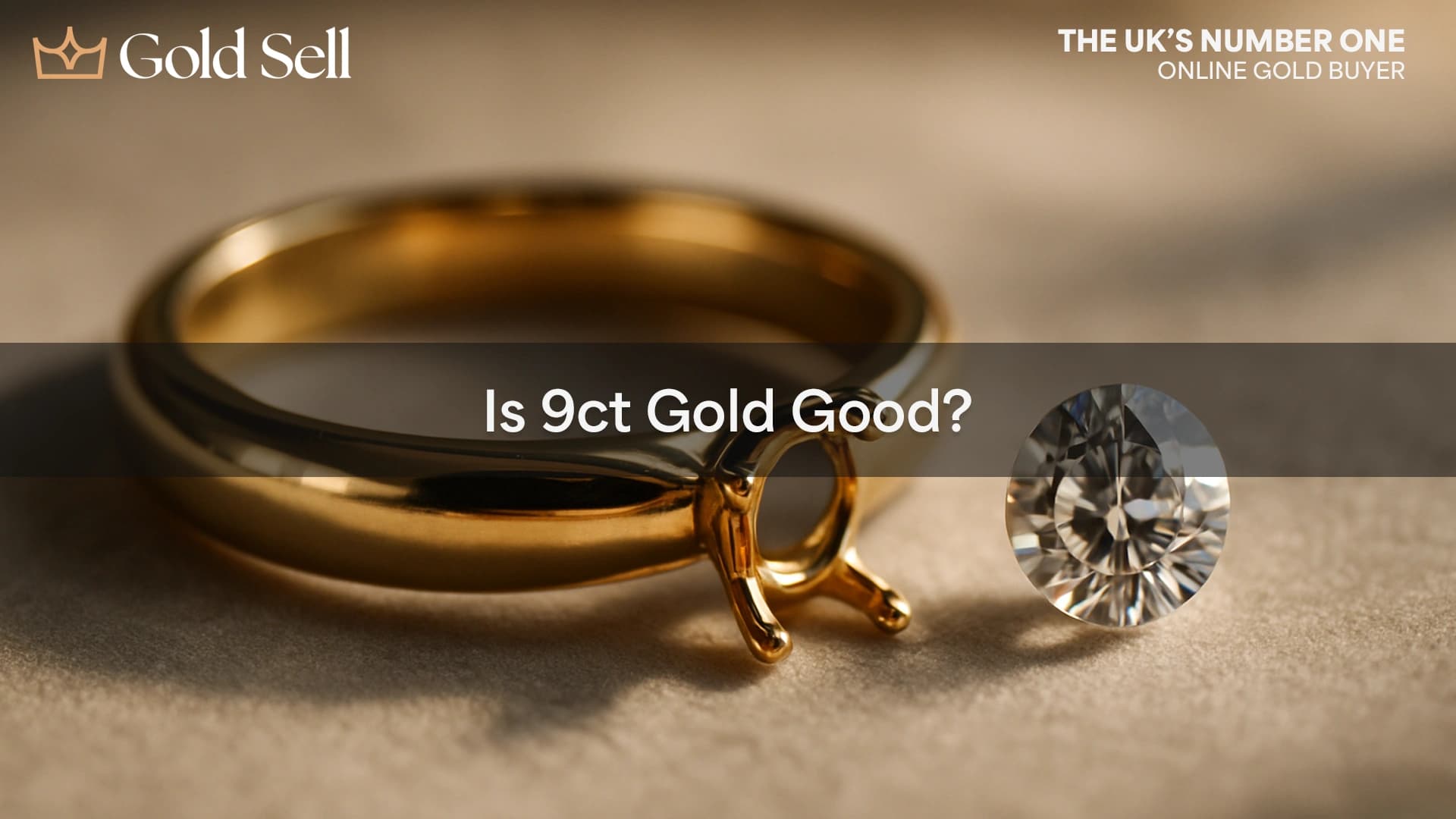
Yes – 9ct gold is a good choice for many jewellery buyers. It’s real gold that offers a durable, budget-friendly option, though it contains less pure gold than higher-karat alloys.
Key Takeaways
- 9ct Gold Composition: 9-carat gold is 37.5% pure gold alloyed with other metals (like copper, silver, zinc). This mix makes it harder and more affordable than purer gold.
- Quality & Durability: 9ct gold is genuine gold and is hard-wearing for daily wear. It scratches less easily than 18ct but can be slightly more brittle over decades.
- Tarnish & Colour: It may tarnish mildly or dull over time due to the alloy metals oxidising. However, it doesn’t rust, and regular cleaning restores its shine. Its colour is paler yellow than 18ct gold’s rich hue.
- Hypoallergenic? Pure gold is hypoallergenic, but 9ct gold’s added metals (especially nickel in some alloys) can cause irritation in sensitive skin. Many modern 9ct alloys are nickel-free to minimise allergies.
- Value: 9ct gold has significant value – about half the gold content of 18ct. At current rates, its scrap value is £37.23 per gram, so it’s definitely worth something. With gold prices at record highs, it’s a good time to sell 9ct gold for a strong return.
What Is 9ct Gold?
9ct gold is an alloy containing 37.5% pure gold, mixed with other metals. In other words, 9 out of 24 parts are gold (hence “9 karat”), and the remaining 15 parts are typically copper, silver, zinc, or other metals. This composition gives 9ct gold its strength and lower price compared to higher-karat gold. It’s widely used in UK jewellery – in fact, 9ct is the most common gold standard in Britain for rings, necklaces, and other pieces. You’ll often see a hallmark with the number “375” on 9ct gold items, confirming it’s 37.5% gold as required by UK law. The alloy metals not only make it more durable than 24ct gold (which is very soft) but also influence the gold’s colour and properties. For example, 9ct yellow gold usually includes copper and silver, giving it a light yellow tone, while 9ct white gold may include metals like nickel or palladium to appear white. Overall, 9ct gold offers an excellent balance of luxury and practicality for jewellery buyers. For a simple overview of gold hallmarks and what they mean and where to find them on common jewellery items, check out our simple, expert guide on how to identify gold hallmarks.
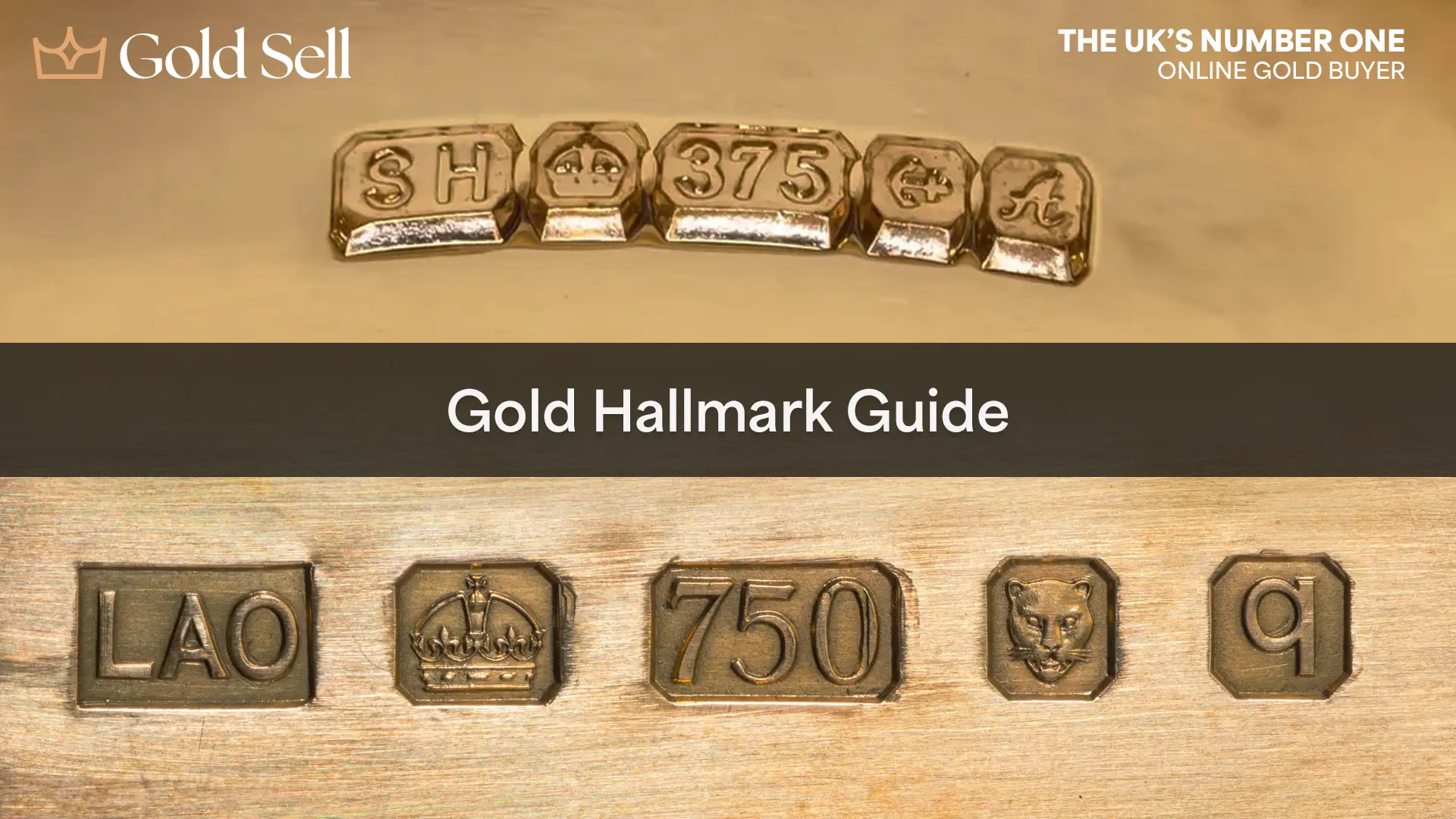
Gold Hallmarks Explained – Identify Gold Hallmarks
Learn how to identify gold hallmarks with our complete hallmark identification guide. Understand assay marks for gold on rings, coins, necklaces, and more.
Is 9ct Gold Good?
Yes – 9ct gold is a good, solid choice for jewellery due to its durability and affordability. It’s real gold (just less pure than 18ct or 24ct), and it’s actually harder and more scratch-resistant than higher-karat gold, which makes it great for everyday wear. Many people love that you get the look of gold without the hefty price tag of 18ct or higher. In fact, 9ct gold jewellery often costs roughly half as much as the same piece in 18ct gold, giving you exceptional value for money for essentially the same look.
That said, whether 9ct gold is “good” can depend on your priorities. Its lower gold content means the colour is a bit less rich yellow than higher karats, and it contains more alloy metals. Over many years, those metals can wear down a bit faster (9ct can be slightly more brittle in the long run). By contrast, 18ct gold, while softer, is denser and tends to endure knocks or heavy wear better over decades. So, for everyday-wear jewellery or a gift, 9ct gold is usually fantastic – it looks beautiful, lasts a long time, and doesn’t break the bank. But for an heirloom or investment piece, some people might prefer 18ct for its higher purity and prestige. In summary, 9ct gold is a high-quality material suitable for most jewellery purposes, offering durability and style at a lower cost than higher-carat gold.
Is 9ct Gold Real?
Absolutely. 9ct gold is real, genuine gold – just not 100% pure gold. If an item is marked as 9ct (or 9K), it means it contains real gold making up 37.5% of the alloy. In the UK and many other countries, 9ct is legally recognised as gold and will carry a hallmark (often the number “375”) to verify its gold content. This hallmarking is a strict requirement in the UK for authenticity and consumer protection, so you can trust that a stamped 9ct piece really does contain the gold it claims.
It’s important to note that 9ct gold is not the same as gold-plated jewellery. Gold-plated items have only a microscopic layer of gold on the surface, whereas 9ct gold is solid alloy throughout – there is real gold all the way through the piece. So, even though it’s less pure than 18ct or 24ct, it’s not “fake” by any means. (In fact, many engagement rings, wedding bands, and fine jewellery pieces in Britain are made of 9ct gold.)
One caveat: different countries have different standards. For instance, in the US an item must be at least 10 karat to be marketed as “gold”. That means 9ct jewellery is fairly uncommon in America. But in the UK, 9ct has been a popular and trusted gold standard for over a century. Rest assured, if your jewellery is stamped 9ct, it is real gold, with over a third of its content being pure gold.
Will 9ct Gold Tarnish?
Yes – 9ct gold can tarnish or dull over time because of the other metals in the alloy. Pure gold (24ct) doesn’t tarnish at all, but 9ct gold is only 37.5% gold and the remaining 62.5% includes metals like copper, silver, and zinc, which are prone to oxidising. When those alloy metals react with oxygen, moisture, or chemicals, they can form a slight surface tarnish or discolouration. You might notice your 9ct gold jewellery looking a bit darker, less shiny, or developing a subtle patina after a long period, especially if it’s not cleaned regularly.
Importantly, tarnish on 9ct gold is usually mild – it often just looks like a slight dulling or a hint of darkening. It doesn’t turn completely black or green in most cases (if it does, there may be unusual chemicals at play or the piece might not actually be 9ct throughout). In fact, 9ct gold tarnishes much less noticeably than sterling silver does. You might not even realise your 9ct piece has tarnished until you compare it side-by-side with a brand new or freshly polished piece and see the difference in brightness.
Several everyday factors can cause 9ct gold to tarnish or lose its lustre:
- Moisture & Humidity: Getting your gold wet a lot (e.g. frequent hand washing with a 9ct ring, or high humidity storage) can speed up oxidation and dullness.
- Sweat & Skin Oils: Our skin’s natural oils, sweat, and chemistry can gradually react with copper and silver in the alloy, causing a film or dark tone on the metal. Ever notice a ring that seems less shiny and has a slight grimy look? That’s often just accumulated tarnish mixed with body oils.
- Chemicals & Cosmetics: Things like perfume, lotion, hairspray, or cleaning products can react with the metals. Notably, chlorine (found in bleach and pools) is infamous for tarnishing and even damaging gold alloys – it can cause 9ct gold to dull or darken quicker (and in extreme cases, chlorine can weaken the metal structure). Always remove 9ct jewellery before swimming in a chlorinated pool or using harsh cleaning chemicals.
The good news is that tarnish on 9ct gold is usually easy to clean (we’ll cover cleaning in the next section). Also, everyday wear polishes the jewellery to some extent – in fact, regularly wearing a 9ct gold piece can slow down tarnishing because friction rubs off the oxidised layer. So, don’t be afraid to use your gold; just know it might need a shine-up now and then. And remember, tarnish is a natural reaction and does not mean your gold is fake or of poor quality. A quick polish and it will sparkle like new again.
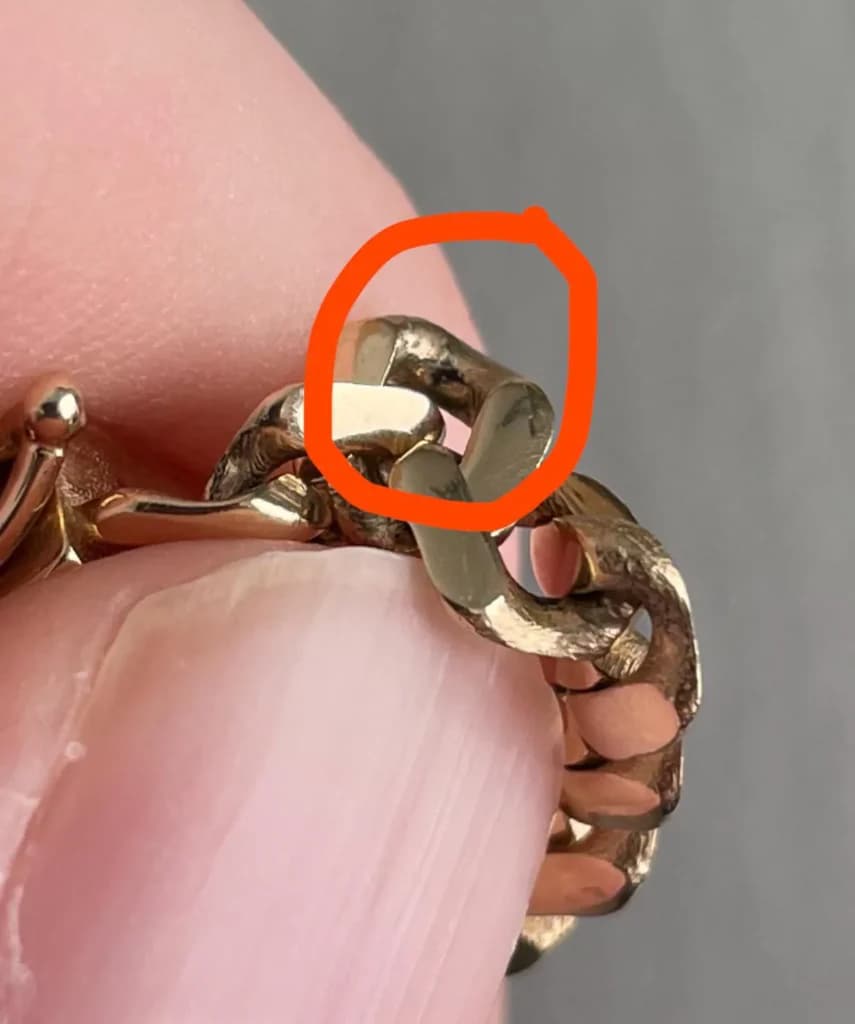
This image shows visible tarnish on 9ct gold jewellery, especially at friction points like chain links. While 9ct gold is less prone to tarnishing than silver, its higher alloy content (including copper) can still react with air, moisture, or skin oils over time—especially in everyday wear pieces like bracelets. Regular gentle cleaning and proper storage can help reduce tarnish and maintain its shine.
How Long Does 9ct Gold Last?
With proper care, 9ct gold jewellery can last a lifetime (or even become a generational heirloom). In general, gold doesn’t “degrade” or rot, so the gold in 9ct will last indefinitely. The main consideration for longevity is wear and tear on the alloy. Because 9ct is harder than purer gold, it can withstand daily wear quite well – it’s tough enough to survive decades of use. Many people have 9ct gold rings or chains from their parents or grandparents that are still in great condition.
However, there are a few nuances:
- Wear Over Time: 9ct gold is harder but also a bit less dense than 18ct, which means over very long periods (many years of constant wear), a 9ct ring might wear down a little faster than an 18ct ring. For example, the claws holding a gemstone in a 9ct gold ring might become thin sooner than in an 18ct ring. It’s a subtle difference, though – we’re talking years or decades. Regular maintenance (like checking prongs on rings) can mitigate this.
- Brittleness: The higher proportion of other metals in 9ct can make it slightly more brittle than higher karats. In practical terms, this means if a 9ct piece is subjected to a hard knock or bending, it could be marginally more likely to crack or break. 18ct gold, being more malleable, might bend where 9ct could fracture. But again, this is a minor concern for normal use; 9ct gold isn’t fragile by any means – it’s just a technical point that jewellers consider for things like very fine ring bands or intricate work.
- Conditions: If you expose any gold jewellery to harsh conditions (chemicals, manual labor, etc.), it will affect its lifespan. For instance, wearing a 9ct gold ring while doing heavy gardening or construction daily can scratch it up or wear it faster (though it would do the same, or worse, to softer 18ct).
In summary, expect decades of beauty from your 9ct gold. It’s not unusual for a 9ct wedding ring to last 20–50 years with daily wear, perhaps needing a polish or tiny repair along the way. There are accounts of people wearing 9ct rings for 50+ years continuously with only minor wear visible. If you want it to truly last generations, you might consider 18ct for something like a wedding band (since 18ct gold “holds up” slightly better over the very long term). But as long as you take reasonable care – remove rings when doing rough work, keep it clean, and have a jeweller inspect settings every few years – your 9ct gold will last and last. It is often said that 9ct gold is “for life,” and with good care, that’s true.
How To Clean 9ct Gold Jewellery?
Cleaning 9ct gold jewellery is easy and gentle: you don’t need any fancy cleaners – just mild soap, warm water, and a soft cloth or brush will do. Here’s a simple step-by-step cleaning method:
- Soak in Soapy Water: Fill a bowl with warm water and a few drops of mild dish soap. Let your 9ct gold piece soak in this solution for 5–10 minutes. The warm, soapy water helps loosen any dirt or oils.
- Gently Scrub: After soaking, use a soft toothbrush (or a very soft cloth) to gently scrub the jewellery. Pay attention to crevices or settings where grime builds up. Don’t be too rough; gentle brushing is enough to lift tarnish or dirt.
- Rinse Thoroughly: Rinse the piece under clean lukewarm water to wash off soap residue and any loosened gunk. It’s wise to plug the sink or rinse in a container – you don’t want your jewellery slipping down the drain!
- Dry and Buff: Pat dry with a soft, lint-free cloth. Give it a gentle buff to bring back the shine. Make sure it’s fully dry before storing, since moisture can contribute to tarnish.
For stubborn tarnish or built-up grime, you have a couple of options:
- Baking Soda Paste: You can make a mild polishing paste with baking soda and water. Form a paste and apply with a soft cloth to rub gently on the gold, then rinse off. This can help with light tarnish. (Be gentle and don’t use this on pieces with soft gemstones or pearls, as it’s mildly abrasive.)
- Jewellery Polishing Cloth: A special gold polishing cloth can quickly remove tarnish and restore shine. It’s a good, non-messy tool to keep on hand for quick touch-ups.
- Professional Cleaning: If your 9ct jewellery is heavily tarnished or very precious, a jeweller can clean it professionally. They might use an ultrasonic cleaner or steam cleaning and then polish it. This can make an old piece look brand new. (Many jewellers will do a basic clean for free or a small fee, especially for valuable items.)
Important: Avoid harsh chemicals or abrasive cleaners on 9ct gold. For example, do not use bleach, ammonia, or gritty toothpaste on gold – these can either corrode the alloy metals or scratch the gold’s surface. Also, if your 9ct piece has gemstones, check that your cleaning method is safe for those stones (some stones shouldn’t be soaked or put in ultrasonic cleaners). When in doubt, stick to the mild soap and water method – it’s safe and surprisingly effective for keeping 9ct gold jewellery sparkling.
Does 9ct Gold Change Colour?
9ct gold’s overall colour does not drastically change, but it can appear duller or slightly darker over time if tarnish develops. In its fresh state, 9ct yellow gold has a light yellow tone (because of the higher silver/copper content) – and that basic colour remains the same throughout the life of the piece. Unlike fashion jewellery, it won’t suddenly “turn” a completely different colour (for example, it won’t turn your skin green ordinarily, as long as it’s true 9ct gold). However, you might notice some subtle changes:
- Dull or Darkened Surface: Over months or years, a 9ct gold item can lose a bit of its shine or brightness due to tarnish and wear. A lightly tarnished 9ct gold piece might look a warmer, deeper yellow-brown in areas or just less yellow than it used to. This isn’t a permanent colour change, just a surface effect. A quick polish or clean will bring back the original golden glow.
- Comparison to New: Often, you don’t notice the colour shift until you compare your jewellery to a brand new piece. The older 9ct gold might look a touch more pale or matte next to a freshly made item – that’s usually because of microscopic scratches and tarnish from wear, which scatter light differently. Again, a professional polish can restore the original colour and lustre if desired.
- Rose and White Gold Variants: If your 9ct gold is a rose gold (alloyed with extra copper), its pinkish hue is stable, but it may deepen slightly as the piece tarnishes (copper tarnish can be a darker brownish colour). For white gold, many 9ct white gold pieces are rhodium plated to look whiter and brighter. Over time, that rhodium plating can wear off, revealing the natural off-white or pale yellow tone of the 9ct white gold beneath. So, a 9ct white gold ring might slowly start looking a bit yellowish as years go by – not because the gold itself changed colour, but because the white coating faded. The fix is simply to re-plate it with rhodium or enjoy the warmer cream colour of unplated white gold.
- Skin Discolouration: Proper 9ct gold shouldn’t permanently discolour your skin. However, if the alloy has a lot of copper, some people with acidic perspiration might notice a faint green on their skin under a ring. This is from copper salts (like the effect of cheap copper rings). It’s not common with well-crafted 9ct gold, but it can happen in rare cases. Keeping the ring clean and dry helps prevent this. Also, any black or green marks on skin can often be due to makeup or lotions causing minute particles of metal to rub off and oxidise (a phenomenon called metallic abrasion), not the gold actually changing.
In summary, 9ct gold’s inherent colour (yellow, white, or rose) remains the same, but it might lose a bit of lustre or slightly alter in tone due to tarnish or wear. Regular cleaning and the occasional professional polish will keep its colour looking like new. If you notice a big colour change, make sure the item is indeed solid 9ct gold and not plated – solid 9ct will only show subtle changes, whereas plating can wear off to reveal a different base metal colour beneath.
Is 9ct Gold Hypoallergenic?
Not always – 9ct gold is not guaranteed hypoallergenic, because it can contain metals that cause skin reactions (especially nickel). Pure gold (24ct) is a very inert, hypoallergenic metal – almost no one is allergic to pure gold. However, since 9ct gold is mostly other metals, whether it’s hypoallergenic depends on what it’s alloyed with.
- Nickel Content: The biggest culprit for jewellery allergies is nickel. If a 9ct gold alloy contains nickel (common in some white gold formulations and older yellow gold alloys), it can cause allergic reactions in people with nickel sensitivity. Symptoms include itching, redness, or a rash where the jewellery contacts the skin. In fact, white gold used to almost always have nickel, which is why some people couldn’t wear white gold earrings or rings without irritation.
- Modern Nickel Regulations: In the UK and EU, there are strict regulations (the “Nickel Directive”) that limit the use of nickel in jewellery that contacts skin. These rules pushed jewellers to use nickel-free 9ct gold alloys for most applications, especially for earrings and piercings. So today, you’ll find that many reputable jewellers offer 9ct gold that is either completely nickel-free or has only trace amounts well below allergy-causing levels. For example, some 9ct white golds use palladium or silver instead of nickel, and 9ct yellow/rose golds typically use copper and silver (neither of which are common allergens).
- Other Metals: Copper and zinc (often in 9ct gold) are generally not common allergens via skin contact. A small number of people might react to copper with a greenish skin stain or irritation, but that’s relatively rare. Silver can occasionally cause tarnish that irritates skin, but again it’s uncommon.
So, is 9ct gold safe for sensitive skin? For most people, yes – especially if you buy from UK/EU jewellers who adhere to nickel-free standards. A 9ct gold ring or necklace that’s nickel-free will usually be fine even for someone with metal allergies. If you have a known metal allergy, it’s wise to ask the jeweller about the alloy composition. For instance, if you have a nickel allergy, ensure the 9ct piece has no nickel. Many will advertise as “hypoallergenic” or “nickel compliant.” Additionally, higher-karat gold (18ct and above) by nature has less room for alloy metals, and is often recommended for very sensitive skin (18ct and 24ct are generally considered safe choices by dermatologists).
In summary, 9ct gold can be hypoallergenic, but it isn’t automatically so. Check the alloy – opt for nickel-free 9ct gold if you have sensitive skin. If you experience irritation with 9ct gold jewellery, it likely means some element in the alloy (like nickel) doesn’t agree with you. In that case, switching to a different alloy or a higher gold purity (or platinum) would solve the issue. Always look for that hallmark (to ensure it’s real gold) and any quality stamps indicating alloy composition. When chosen carefully, 9ct gold jewellery can be worn comfortably even by those with metal sensitivities.
Is 9ct Gold Magnetic?
No – 9ct gold is generally not magnetic. Pure gold is not magnetic at all, and the metals commonly alloyed with gold (copper, silver, zinc) are not magnetic either. So if you have a genuine 9ct gold chain or ring, it should not stick to a magnet. In fact, a basic magnet test is one way to screen out fake gold: if a piece claiming to be 9ct gold is strongly attracted to a magnet, that’s a red flag that it’s either not really gold or has a ferrous (iron/steel) component.
That said, you might observe a very slight magnetic response with some 9ct gold items – why? Occasionally, nickel is used in gold alloys (especially white gold), and nickel is mildly magnetic. Even in 9ct gold, the presence of nickel could cause a tiny attraction in a strong magnetic field. Gold experts note that even real 9ct gold can show a slight magnetic pull if nickel is present in the alloy. But it won’t be anywhere near the pull you’d see with a metal like steel.
In practical terms: if you hold a strong magnet next to your 9ct gold jewellery and it doesn’t move or just barely wiggles, that’s normal – it doesn’t mean it’s fake. If it jumps to the magnet or sticks firmly, then you likely have a problem (either the item is gold-plated steel or another metal). Many counterfeit “gold” items use cheap magnetic metals inside.
So, as a rule, 9ct gold is not magnetic. Don’t rely on a magnet as proof of gold (because non-magnetic doesn’t prove it’s real gold, and a slight magnetic reaction doesn’t always prove it’s fake). Instead, look for proper hallmarks and consider a professional test for certainty. But if you were curious: no, your 9ct gold shouldn’t cling to your fridge magnet! It’s one of the ways gold “acts” differently from common metals.
Is 9ct Gold Worth Buying?
Yes, 9ct gold is definitely worth buying if you want real gold jewellery at a more affordable price. It offers a sweet spot of value: you get the beauty and prestige of gold, and it’s durable enough for daily wear, but you pay much less than you would for 18ct or 22ct gold. For many shoppers, that makes 9ct gold a very smart buy. You’re not just throwing money at a high purity that you might not need for a casual piece of jewellery.
Consider the scenarios where 9ct gold shines (figuratively and literally):
- Budget-Friendly Luxury: Because it has less gold content, 9ct pieces cost significantly less than higher karats. If you’re eyeing a stylish necklace or a trendy ring, choosing 9ct can make it very budget-friendly. You could get a larger or more intricate piece in 9ct for the same price as a simpler 18ct piece. It’s real gold without the crazy price tag, which is ideal for gifting or expanding your jewellery collection.
- Everyday Wear: 9ct’s hardness means it can handle the knocks of daily life. If you want something you can wear all the time (to work, out and about, etc.) without worrying too much, 9ct is a great choice. It resists scratches better than 18ct gold, so it keeps its shine with less maintenance. For example, a 9ct gold bracelet or chain will take longer to show scuffs from regular use compared to an 18ct one.
- Variety and Style: Because it’s popular in the UK, 9ct gold jewellery comes in endless styles and designs. Whether you want classic yellow gold, romantic rose gold, or sleek white gold, there are plenty of 9ct options. You’re not limited in design choices at all. Many high-street jewellers and designers craft in 9ct specifically because it appeals to a broad market.
Are there times when 9ct might not be the preferred choice? Perhaps if you’re buying something like an engagement ring that you hope will be passed down for generations – in that case, some people opt for 18ct or platinum for tradition and maximum longevity (and 18ct has that richer colour and higher intrinsic value). Also, if you have sensitive skin and can’t confirm a 9ct piece is nickel-free, you might lean to 18ct to be safe (since 18ct is less likely to contain nickel). And as a pure investment, gold is usually bought at 24ct (bullion coins or bars). But for jewellery to wear and enjoy, 9ct is often the best bang for your buck.
In summary, 9ct gold is “worth it” for most jewellery purposes – you get a lovely, sturdy piece of real gold for a reasonable price. Just make sure you buy from a reputable source so you know you’re getting properly hallmarked 9ct gold. Given its popularity, 9ct gold also has good resale value proportionate to its gold content, so your purchase holds some value if you ever choose to sell it. It’s a practical and popular choice, which is why so many of the gold jewellery pieces sold, especially in the UK, are 9ct.
9ct Gold Price Per Gram
Live Gold Price Per Gram
Gold price last updated:
Wednesday, 21 October 2026, 12:32.
The LBMA (London Bullion Market Association) spot price changes daily.
The prices displayed are based on the global market rate for pure 24ct gold, known as the spot price. Like all gold dealers, GoldSell pays a percentage of this rate to account for assaying, refining, secure logistics, market volatility, and handling costs. We consistently offer among the highest payout rates in the UK, with the exact percentage increasing based on the weight and purity of the gold you sell.
The live price of 9ct gold is £37.23 per gram. This figure is tied directly to the live market price of pure gold. Gold is typically quoted in troy ounces, and pure 24ct gold is at £3,088.06 per ounce at the moment. Breaking that down, 24ct gold is £99.28 per gram (since one troy ounce is ~31.1 grams). Now, 9ct gold is only 37.5% pure, so its intrinsic value per gram is about 37.5% of £99.28 – which comes out to £37.23 per gram for 9ct gold.
To put it simply, if you have one gram of 9ct gold, it contains 0.375 grams of pure gold. Multiply that by the pure gold price and you get the 9ct gold value. That’s why you’ll see scrap gold dealers quoting around £33.51-£31.65 (10-15% under) per gram for 9ct gold, depending on the live gold price.
Using those numbers in context:
- Cost of 9ct Gold Jewellery: When you buy a 9ct gold piece at retail, the price factors in workmanship, brand, and taxes, so it will be more than £37.23/g. However, the base metal value sets a floor. If gold prices shoot up, new 9ct jewellery becomes more expensive too. The £37.23/g is essentially the raw material value at current rates.
- Scrap Gold Selling: If you sell 9ct gold as scrap, buyers usually pay a bit under the market price per gram (which factors in refining, storage and any overhead fees plus a small margin of profit when they resell or refine it). At GoldSell, we are the UK’s highest paying gold buyer, trusted by thousands each day who get the best price when they sell gold with us.
Why It’s a Good Time to Sell: Gold prices have been strong recently. In early 2025, gold reached near-record highs – roughly $3300/oz in USD terms (about 28% higher than the year before). These high prices mean you’ll get more money for your gold than in past years. If you have unwanted 9ct gold jewellery, the current market is very favourable to sellers. Many folks are cashing in broken chains or old rings because the payout is substantial with gold at this level.
For example, a 20 gram 9ct gold chain would fetch £744.62 at £37.23/g – whereas a few years ago, if gold was say £20/g for 9ct, that same chain would only bring £400. So the difference is big. The 9ct gold value is directly tied to global gold markets, and those markets are hot. Economic uncertainty, inflation, etc., have driven investors to gold, pushing prices up.
In summary, £37.23 per gram is 9ct gold’s intrinsic price right now. It’s a strong price, making both buying and selling of 9ct gold quite relevant. Buyers know they’re getting real gold content, and sellers can take advantage of the high rates. Always check or bookmark our live gold price per gram page before buying or selling, as it does fluctuate daily. But overall, 2025 has seen high gold values, which is great news if you’re considering selling some 9ct gold for cash.
Is 9ct Gold Worth Anything?
Yes, 9ct gold is definitely worth something – in fact, it can be quite valuable. Because it contains real gold, any 9ct gold piece has an intrinsic value based on its gold content. Remember, 9ct is 37.5% pure gold, so a 9ct item’s value is roughly 37.5% of what a pure gold item of the same weight would be worth. This often surprises people who think “only 37% gold” might be negligible, but with gold prices as high as they are today, even that 37.5% is significant.
For example, as of now, the 24ct gold price is £3,088.06 per ounce (£99.28 per gram) based on the live gold price today. That means the pure gold in 9ct (which is 37.5% of that) gives a 9ct gold value of £37.23 per gram of metal. So if you have a 9ct gold ring that weighs, say, 5 grams, its raw gold content would be worth £186.16 (5g x £37.23/g). Of course, when selling, gold buyers may pay a bit under the market price (to cover refining, etc.), but it’s still a tidy sum. In short: 9ct gold is far from worthless – it’s a real precious metal.
Some points to consider:
- Resale and Scrap Value: Jewellers, pawn shops, and gold buyers will happily buy 9ct gold. It’s usually purchased as “scrap gold” to be melted down, and you’ll typically get paid by weight. As cited above, the cost of 9ct gold per gram is in the high tens of pounds. This means all those old 9ct chains, broken earrings, or out-of-style rings in your drawer are literally worth their weight in gold (37.5% gold, to be exact). Many people gather up old 9ct pieces and sell them when gold prices rise.
- Why People Ask “Worth Anything?” Sometimes 9ct gets a bit of a snobbish dismissal by those who favour higher karats, but that’s misguided. While a 9ct piece is less valuable than an identical 18ct piece, it’s not valueless. It’s more valuable than gold-plated jewellery (which might have virtually no gold) and obviously more valuable than costume jewellery. If you have a piece of 9ct gold jewellery, you have a tangible asset.
- Comparison to 18ct: 18ct gold has twice the gold content of 9ct, so 18ct is worth roughly double per gram. That means if an 18ct ring is worth £500 in gold, a 9ct ring of identical weight would be worth about £250 in gold content. This is a straightforward proportional relationship. Knowing this can manage expectations – a small 9ct pendant won’t fetch thousands, but it could still fetch tens or hundreds of pounds depending on weight and market price.
- Retail vs Scrap: Keep in mind, if you’re asking about “worth anything” in terms of resale, the design and condition can also influence value. As scrap gold, it’s worth the melt value. But if you have a beautiful 9ct gold antique brooch, for instance, it might be worth more as jewellery than just for gold content. 9ct is a standard metal for many vintage pieces, and collectors do value them. So “worth anything” can mean either melt value (always significant) or second-hand jewellery value (also quite good for nice pieces).
In summary, 9ct gold has real monetary worth. It’s a tradable commodity. Gold buyers quote daily prices for 9ct gold, and you can easily convert 9ct items to cash if needed. With gold prices high in recent times, even the “lowly” 9ct gold is yielding impressive payouts. So don’t throw that 9ct gold item in the junk drawer thinking it’s cheap – it’s very much worth something!
9ct Gold vs 18ct Gold
When comparing 9ct vs 18ct gold, there are several key differences to consider: purity, colour, durability, allergy potential, and price. Here’s a breakdown:
- Purity & Value: 9ct is 37.5% gold, while 18ct is 75% gold. This means 18ct has double the pure gold content of 9ct. Consequently, 18ct gold is roughly twice as expensive as 9ct gold by weight. For example, 9ct is currently £37.23/g, so 18ct gold is worth £74.46/g in gold value. So, with 18ct you’re paying more for the higher precious metal content. If long-term investment or resale value is a big factor for you, 18ct might edge out 9ct since it holds more gold.
- Colour: Because of the higher gold content, 18ct yellow gold has a richer, more vibrant yellow colour than 9ct. 9ct yellow gold tends to appear lighter or more muted in hue – some call it a “paler” yellow. The difference isn’t stark side-by-side unless you have a good eye, but it’s noticeable: 18ct has that classic buttery golden glow, whereas 9ct is a soft yellow. This is due to 9ct’s larger proportion of whitish metals like silver which dilute the yellow tone. In white gold, both 9ct and 18ct are usually rhodium-plated to look equally white, but unplated 18ct white gold will appear more yellow-grey than 9ct white gold (since 18ct contains more yellow gold). For rose gold, 18ct rose is a deeper rosy hue, while 9ct rose gold can be more pink/orange due to different copper content.
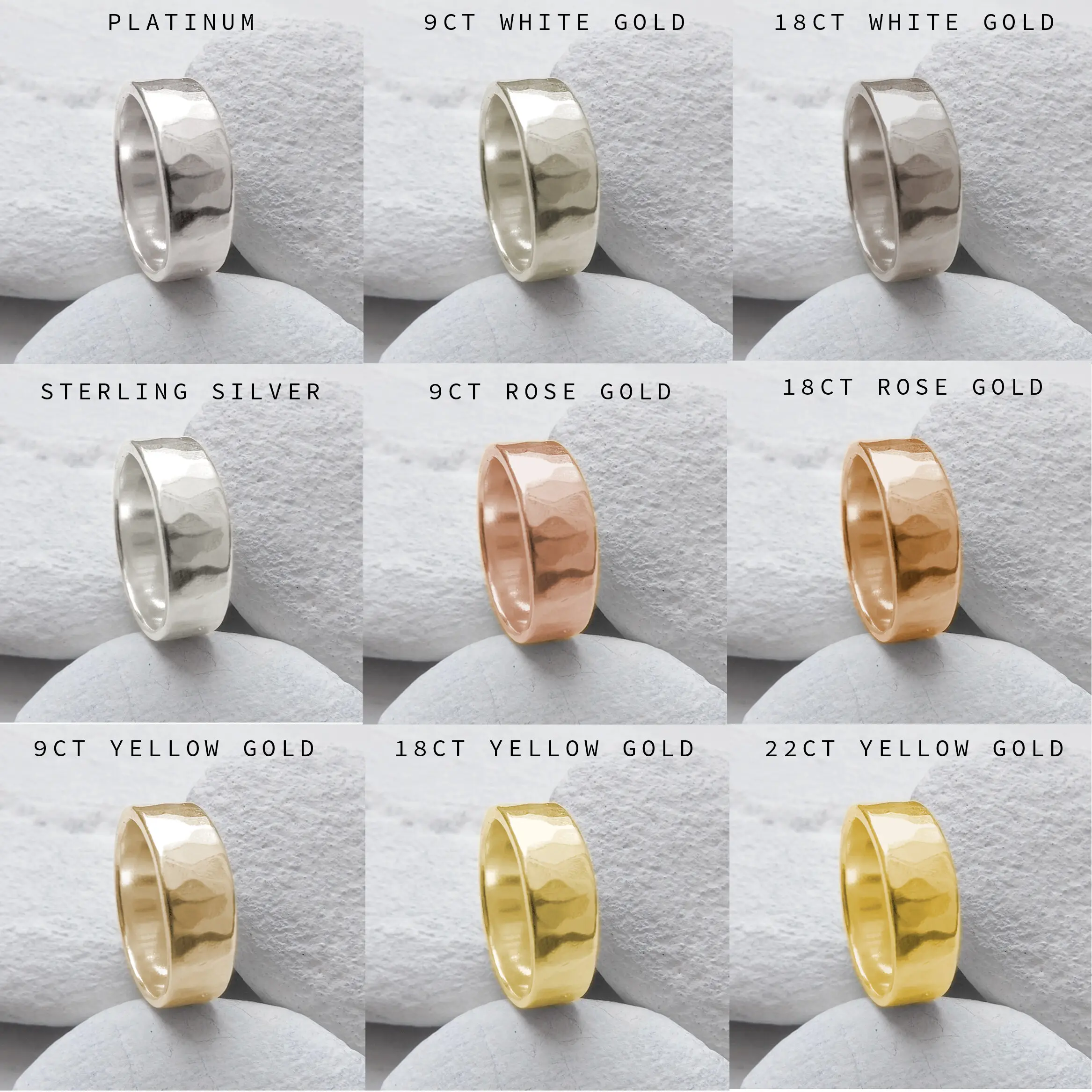
This visual shows how gold colour varies by purity and alloy mix. Higher purity golds like 18ct and 22ct yellow gold have a richer, more vibrant hue compared to the paler tone of 9ct. The same applies to rose and white gold—where 18ct options appear deeper and warmer. This chart helps buyers compare 9ct vs 18ct gold finishes and understand how metal purity affects both appearance and price.
- Durability & Hardness: Here’s an interesting part – 9ct is harder (more scratch-resistant) than 18ct, but 18ct is tougher (more resistant to stress cracks and long-term wear). In everyday terms, a 9ct ring might not get as many fine scratches as an 18ct ring because the alloy is stiffer. However, 9ct’s alloy metals can make it more brittle. Over many years, 9ct prongs or ring shanks might wear thin or crack sooner than 18ct, which is more malleable and “gives” a bit under pressure rather than snapping. For everyday jewellery: both 9ct and 18ct will last decades, but jewellers often recommend 18ct for things like engagement rings that you want to last generations, because 18ct gold “has got what it takes to hold its own” over the long term. 9ct is certainly durable (we’ve established it can last a lifetime), but 18ct might need slightly less maintenance in the very long run (less frequent prong retipping, for instance). On the flip side, if you’re very active with your hands, the extra hardness of 9ct means it will resist bending or scratching a bit better day-to-day.
- Tarnish & Care: 18ct gold is more resistant to tarnish and corrosion because it has less alloy metal that can react. 9ct, with more copper/silver, can tarnish (darken) faster and is more susceptible to things like chlorine damage. So, an 18ct ring will usually look shiny longer between cleanings, whereas a 9ct might dull down sooner and need a polish. However, cleaning both is easy, and 18ct can still dull from dirt (just that the metal itself doesn’t tarnish as readily). If you often expose your jewellery to chemicals or saltwater, 18ct might hold up better. For example, chlorine: 9ct is known to be more vulnerable to chlorine-induced brittleness.
- Hypoallergenic Properties: Because 18ct has less alloy (25% vs 62.5%), there’s less chance of metal allergies. Often, 18ct yellow gold contains only copper and silver in that 25%, with no nickel – making it quite hypoallergenic. 9ct has a higher mix of metals and, historically, was more likely to include irritants like nickel. In fact, medical advice often suggests people with sensitive skin choose 18ct or higher. That said, as noted earlier, modern 9ct alloys can be nickel-free too. But if someone has a strong metal allergy, 18ct (or platinum) is usually a safer bet to avoid any reaction.
- Weight/Density: 18ct gold is denser (because gold is a heavy metal). A same-size ring in 18ct will weigh more than in 9ct. Some people like the heft of 18ct as it feels more substantial and “solid”. 9ct, being lighter, can be more comfortable for large earrings or big necklaces, as they weigh less on the body for the same volume of metal.
- Price Consideration: With 18ct being costlier, sometimes the decision comes down to budget. For instance, wedding bands: a pair of 18ct bands might be quite expensive, whereas 9ct bands are much more affordable. Many couples go for 9ct and are perfectly happy – the rings still last and look beautiful. But others feel that for such symbolic items, the extra cost is worth it to have 18ct (which also can be advertised as more “luxurious”). It’s a personal choice; neither is “wrong.”
To sum up the 9ct vs 18ct debate:
- 18ct gold: more pure, more yellow, more prestige. Softer but more enduring in structure. Highly resistant to tarnish, less likely to cause allergies. More expensive.
- 9ct gold: more alloy, paler colour, very hard and scratch-resistant. Can tarnish a bit and potentially brittler over decades. Very popular due to affordability and toughness.
Both have their place. If you want the best of both worlds, 14ct (58.5% gold) or 15ct were historically in-between options, but in the UK 9ct and 18ct are the main choices available. For most folks, 9ct gold is perfectly fine and practical for everyday jewellery, while 18ct is sometimes reserved for special, once-in-a-lifetime pieces or for those who really appreciate the richer gold content. Always ensure whichever you choose is hallmarked correctly (375 for 9ct, 750 for 18ct in the UK) so you know you’re getting the real deal.
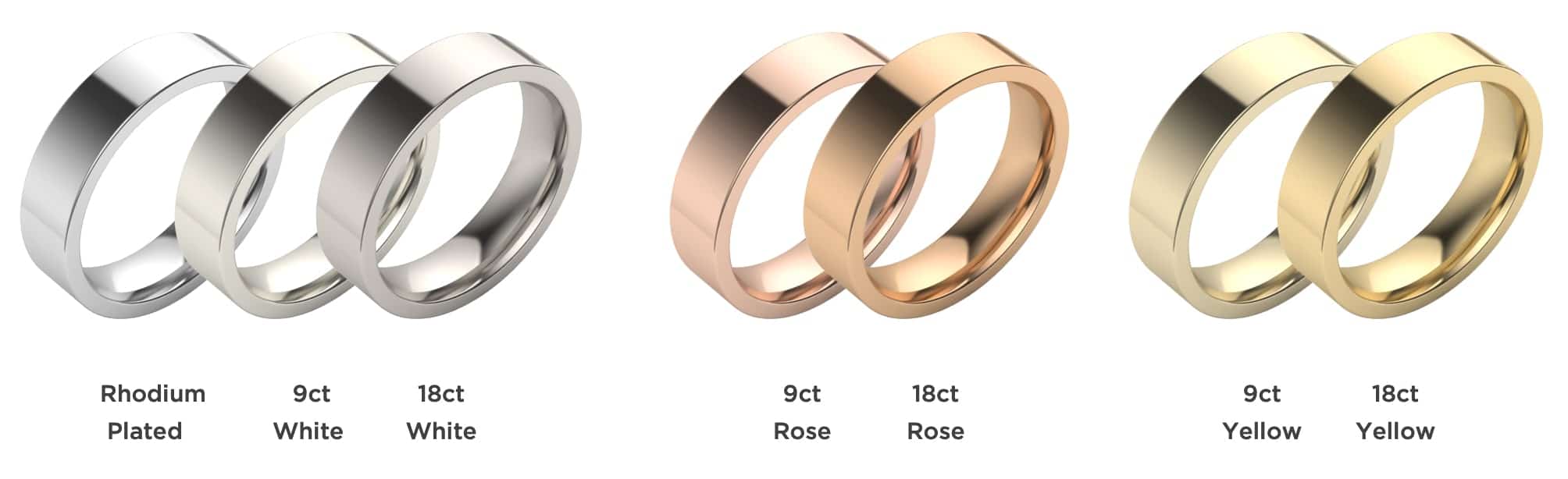
This side-by-side image highlights the colour differences between 9ct and 18ct gold across three popular gold finishes. Higher-carat golds like 18ct tend to appear richer, warmer, and deeper in colour due to a higher percentage of pure gold, whereas 9ct gold often looks lighter or cooler depending on the alloy mix. Rhodium plating on white gold enhances brightness but wears off over time, revealing the natural hue beneath—especially relevant for 9ct white gold, which leans more yellow without plating.
Frequently Asked Questions
What is 9ct gold?
9ct gold is a solid alloy that contains 37.5 % pure gold—identified by the compulsory UK “375” hallmark—blended mainly with copper, silver and zinc for hardness, paler colour and lower cost. The Hallmarking Act 1973 requires any UK item over one gram to carry this 375 mark, assuring buyers the piece meets the legal fineness standard for real gold.
Is 9ct gold good?
Yes. 9ct gold offers genuine gold at roughly half the price of 18ct while being harder and more scratch-resistant, making it excellent for everyday jewellery. Although the higher alloy content can become brittle over decades, routine inspections and cleaning keep 9ct pieces serviceable, stylish and long-lasting for most wearers who value durability and affordability in equal measure.
Will 9ct gold tarnish?
Yes—because 62.5 % of the alloy is copper and silver, 9ct gold can oxidise, leading to a mild darkening or dull finish. Tarnish is usually superficial and far lighter than sterling-silver tarnish; a quick soak in warm soapy water or a polish cloth restores full shine without harming the gold’s integrity.
Is 9ct gold real?
Absolutely. UK law recognises 9ct as real gold; each article must bear the 375 stamp, confirming 37.5 % pure gold throughout the metal—not a surface layer. Unlike plating, the gold runs through the entire piece, giving it intrinsic and resale value tied to daily bullion prices.
Is 9ct gold magnetic?
No, genuine 9ct gold is not magnetic because gold, copper and silver are non-ferromagnetic; a strong attraction suggests plating or counterfeit metal. A very faint pull can occur only if trace nickel is present in some white-gold alloys, but solid 9ct jewellery should never stick firmly to a magnet.
Is 9ct gold worth anything?
Yes—9ct gold has significant value: with pure gold at £99.28 /g, the intrinsic 9ct gold value currently sits at £37.23 per gram. Even broken clasps or single earrings add up quickly, and collectible designs fetch still higher prices. Always weigh your scrap before selling to capitalise on the strong 2025 gold price.
What is the 9ct gold price per gram today in the UK?
As of 21 Oct 2026, the live 9ct gold price per gram is £37.23 based on the live gold price as of today in the UK.
Is 9ct gold worth buying?
Yes—9ct balances durability, everyday practicality and lower upfront cost, giving buyers a handsome piece of real gold without the premium attached to higher carats. It resists scratches better than 18ct, comes in endless designs and retains decent resale value, making it a savvy entry point into precious-metal jewellery or gifts.
Is 9ct gold good for an engagement ring?
It can be. 9ct’s hardness handles daily knocks well and reduces cost, freeing budget for a larger gemstone. However, its higher alloy content can turn brittle in thin claws after decades, so jewellers often recommend 18ct or platinum for heirloom longevity. If opting for 9ct, choose substantial settings and schedule routine prong checks.
What are the differences between 9ct and 18ct gold?
9ct (37.5 % gold) is paler, harder, cheaper (£37.23 /g) and more prone to tarnish; 18ct (75 % gold) is richer yellow, softer to scratch yet structurally tougher, more hypoallergenic and worth £74.46 /g. Your choice hinges on budget, colour preference, allergy concerns and whether the item is everyday wear or a multi-generation keepsake.
Is 9ct gold hypoallergenic?
Not necessarily. 9ct may contain nickel—Europe’s top contact-allergy metal—though EU “Nickel Directive” limits release to 0.5 µg /cm²/week, and many UK jewellers now offer nickel-free 9ct alloys. Sensitive wearers should request alloy details or pick nickel-safe 9ct yellow/rose formulations or 18ct gold for peace of mind.
Can I wear 9ct gold in the shower?
You can, but it’s wiser to remove it. Pure gold tolerates water, yet shower gels, shampoos and hot chlorinated water accelerate tarnish and can weaken solder joints. Taking 9ct jewellery off before bathing preserves lustre and structural integrity, meaning fewer professional polishes and repairs long-term.
Does 9ct gold change colour?
9ct gold retains its soft yellow base, but persistent oxidation of copper and silver can give it a darker or rosy tint until polished. It will not turn green or black like base-metal costume jewellery; routine cleaning restores the original colour, keeping appearance consistent for decades.
Does 9ct gold contain nickel?
Sometimes. Traditional white-gold formulas and some yellow alloys add nickel for whiteness or strength; however, UK and EU regulations cap nickel release, and many manufacturers now advertise “nickel-free 9ct” to avoid allergic contact dermatitis. Always confirm alloy specifications if your skin reacts to nickel.
Can you wear 9ct gold every day?
Yes—its higher proportion of hard base metals makes 9ct ideal for continuous wear. With sensible care—avoiding harsh chemicals, removing before heavy labour and occasional professional inspections—9ct rings, chains and bangles routinely last for many decades of daily use while maintaining their 9ct gold value.
How to tell if 9ct gold is real?
Look first for the UK 375 hallmark; verify non-magnetism; then consult a jeweller for acid or X-ray fluorescence testing. Weight-to-size ratio and lack of flaking are further clues. These checks together confirm authenticity and ensure you own genuine 9ct, not plated or hollow gold.
Can you shower with 9ct gold?
Technically yes, but repeated exposure to soap, shampoo and chlorinated water dulls the finish, encourages tarnish and may compromise solder seams. Removing 9ct jewellery before showers or swimming pools best preserves brilliance and structural soundness, saving on professional re-polishing costs down the line.
What does 9ct gold filled mean?
Gold-filled—or rolled gold—means a thick mechanical bond of 9ct gold alloy over a base metal core, making up at least 5 % (1/20) of the item’s total weight—far more durable than electro-plating but not solid gold. It offers the look and wear of gold at lower cost, yet scrap value depends mainly on the outer layer’s weight.
How long does 9ct gold last?
Indefinitely. Gold itself doesn’t corrode, and with periodic cleaning, replating (for white gold) and inspection, 9ct jewellery regularly endures a lifetime of wear, often being passed to heirs still structurally sound and retaining notable 9ct gold value for resale or sentimental purposes.
Is 9ct gold better than 14ct?
“Better” depends on priorities: 9ct (37.5 % gold) is harder, cheaper and paler; 14ct (58.3 %) offers richer colour, higher intrinsic value and slightly more tarnish resistance, yet costs about 50 % more per gram (£57.92 /g). Choose 9ct for maximum affordability and scratch resistance; pick 14ct if you want deeper colour and higher gold content without the full 18ct price.
Interested in selling gold with the UK’s highest paying gold buyer? Visit our Sell Gold page to get a competitive valuation – we provide fully insured postage and fast payment.
For more insights and the latest gold price today, keep an eye on our live charts and blog updates.





