What Does Gold Plated Mean?
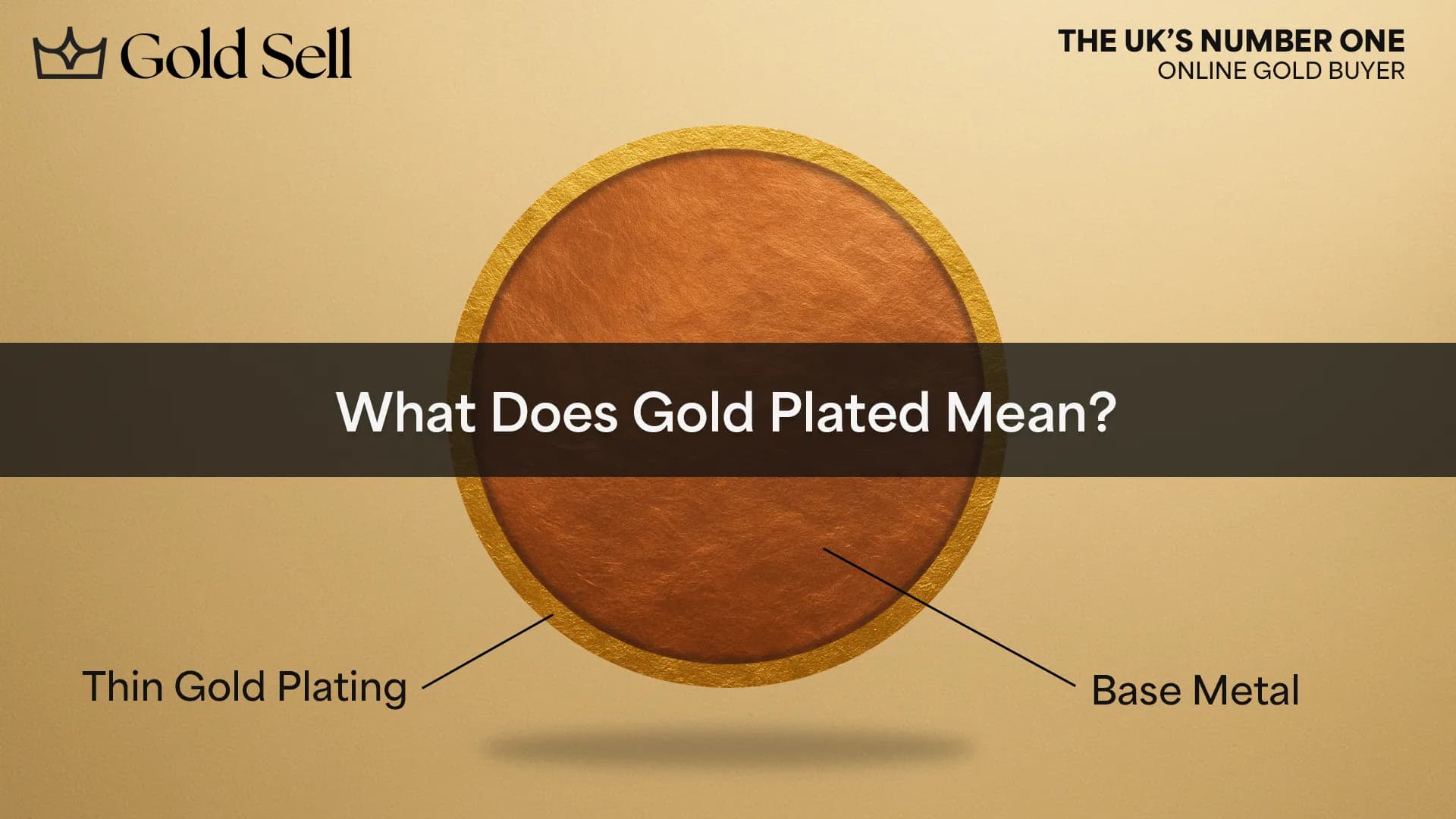
Gold plated jewellery refers to items made of a non-gold base metal that are coated in a thin layer of real gold. This gold coating is achieved through electroplating – a process that bonds a microns-thin layer of gold onto the surface of a cheaper metal. Gold plated pieces look like solid gold but cost a fraction of the price due to their minimal actual gold content.
Key Takeaways
- Definition: Gold plated means a base metal (like brass, copper, or silver) is covered with a very thin layer of real gold. It gives the appearance of solid gold without the high cost.
- Affordability vs Durability: Gold plated jewellery is budget-friendly and stylish, but the gold layer is extremely thin. It can wear off over time, especially with heavy use, exposing the base metal beneath.
- Hallmarks: Look for stamps like “GP”, “GEP”, “HGE”, or “HGP” on jewellery – these indicate gold plating (e.g. 18KGP means 18-carat gold plated). A piece stamped “925” but golden in colour is likely sterling silver with gold plating.
- Care Needs: Gold plated pieces can tarnish or fade if not cared for. Keep them dry, avoid chemicals, and clean gently to prolong the finish. They can also be replated by a jeweller to restore the gold layer if it wears off.
- Comparisons: Vermeil is a higher-quality gold plating over sterling silver (thicker gold layer), while gold filled jewellery has an even thicker gold coating (at least 5% gold by weight). Neither vermeil nor gold filled will wear out as quickly as standard gold plating.
What Does Gold Plated Mean?
Gold plated means that an item of jewellery has been coated with a thin layer of gold. The core of the piece is usually a less expensive metal – such as copper, brass, nickel, or stainless steel – which is then electroplated with gold. In electroplating, the base metal item is submerged in a gold solution and an electric current bonds a thin film of gold onto its surface. The resulting item looks just like solid gold because the exterior is real gold; however, the gold layer can be only a few microns (millionths of a meter) thick.
Gold plating was first invented in the early 19th century by Italian chemist Luigi Brugnatelli, making gold-style jewellery more accessible. By using only a tiny amount of gold, jewellers can create pieces with the luxe appearance of gold at a much lower cost than solid gold items. Visually, it’s often impossible to tell the difference between gold plated and solid gold jewellery when new. Only after some wear (or with special testing) does the underlying metal reveal itself.
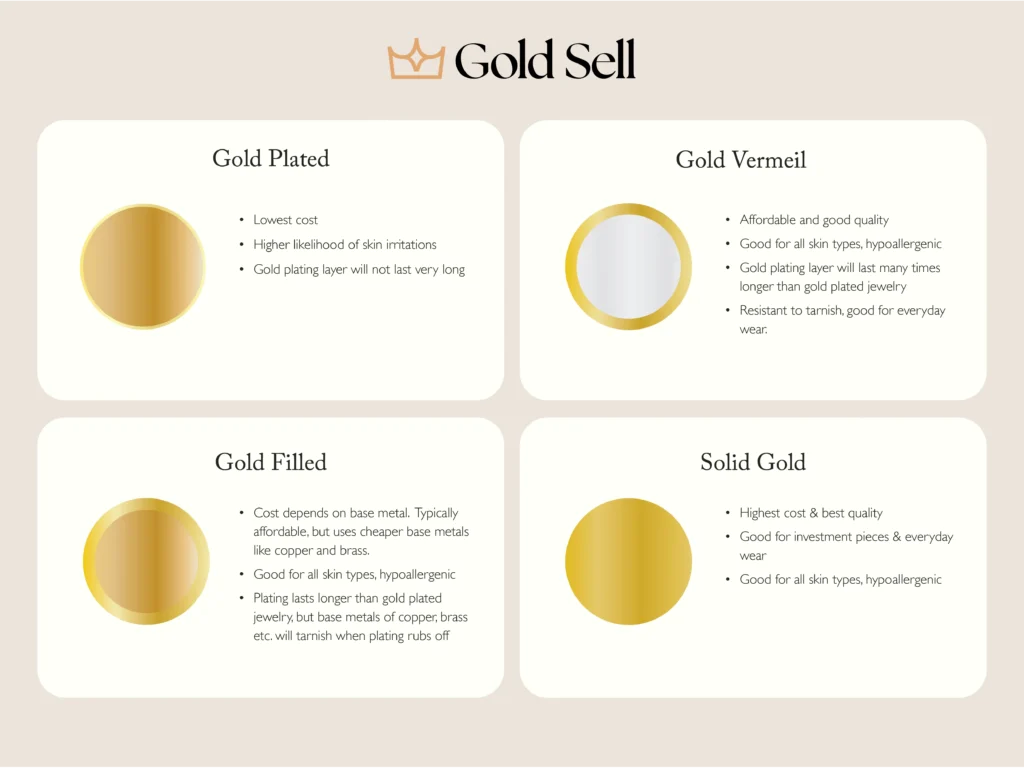
This chart highlights the key differences between gold plated, gold vermeil, gold filled, and solid gold jewellery.
Gold Plated Hallmarks
One way to identify gold plated jewellery is by special hallmarks or stamps on the metal. For example, a watch case may bear an engraving like “18k gold electroplated”, indicating it is gold plated rather than solid gold. Jewellers and manufacturers often use abbreviations to mark gold plated items. Here are some common gold plated hallmarks and their meanings:
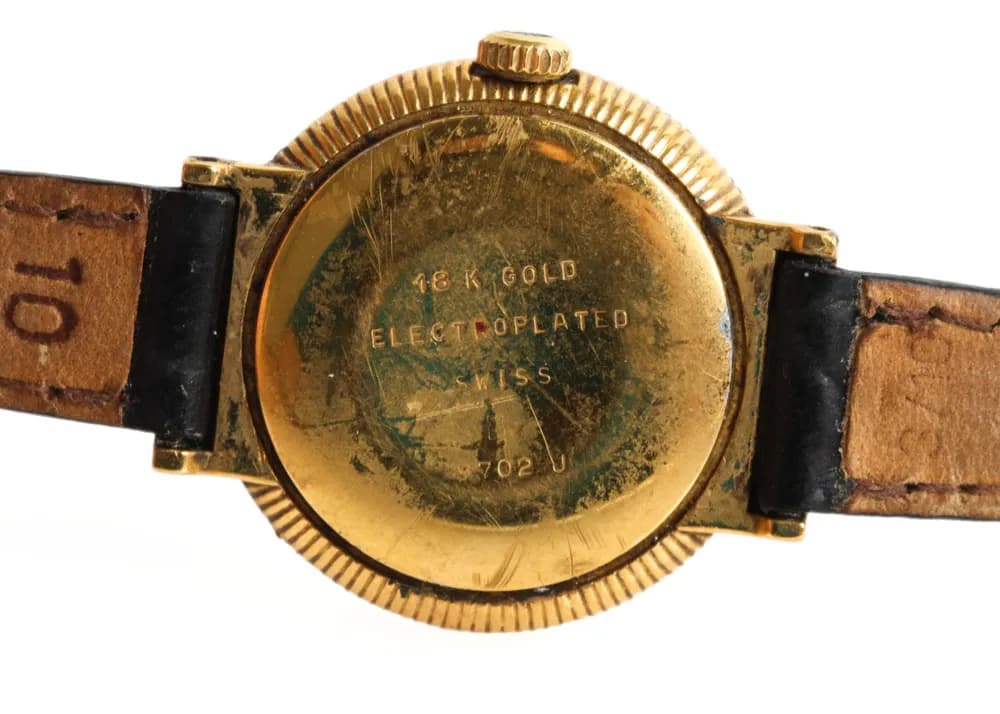
Example of an 18k gold plated hallmark stamped on the back of a watch case. The marking “18K GOLD ELECTROPLATED” indicates that the item is not solid gold but has a thin layer of 18 karat gold bonded to the surface through electroplating. This type of gold plated hallmark helps distinguish gold-plated jewellery and watches from solid gold, which is crucial for understanding value and resale potential.
Gold Plated Hallmark Chart
| Hallmark | Meaning & Notes |
|---|---|
| GP or G.P. | Gold Plated – The item has a thin layer of gold plated onto a base metal. |
| GE or GEP | Gold Electroplated – Same as gold plated; explicitly indicates electroplating was used. |
| HGE or H.G.E. | Heavy Gold Electroplate – A thicker gold plating than standard GP/GE. Traditionally at least 2.5 microns of gold is plated. |
| HGP or H.G.P. | Heavy Gold Plate – Similar to HGE; indicates a gold plated layer heavier than typical plating. |
| RGP | Rolled Gold Plate – An older term for a gold layer mechanically bonded to a base (often with ~2.5% gold by weight). |
| GF or G.F. | Gold Filled – Not just plating: a thick layer of gold (at least 5% of the item’s weight) is bonded to the metal. (Distinct from standard “plating”; see Gold Plated vs Gold Filled.) |
Gold plated items might carry both a fineness mark and a plating mark. For example, a stamp that reads “18K GP” means the piece is plated with 18‑carat gold. In the UK, if a gold-looking piece is stamped “925”, it actually means the core is 92.5% silver (sterling silver) with gold plating on top. Such items are sometimes described as “silver gilt” or gold vermeil rather than just gold. According to UK guidelines, gold plated silver must be clearly described as silver + gold plated (e.g. “18ct gold plated silver ring”) to avoid confusion. Remember that solid gold jewellery will usually be hallmarked with just a carat or purity number (such as 9ct, 14ct, 18ct, 750, 585, etc.) without any “GP” notation. If you see the tell-tale GP/GEP/HGE marks, you’re dealing with gold plating.
To learn more about what gold vermeil is, and to dive deeper into gold hallmark meanings, check out our simple, expert blog posts we’ve written on these topics
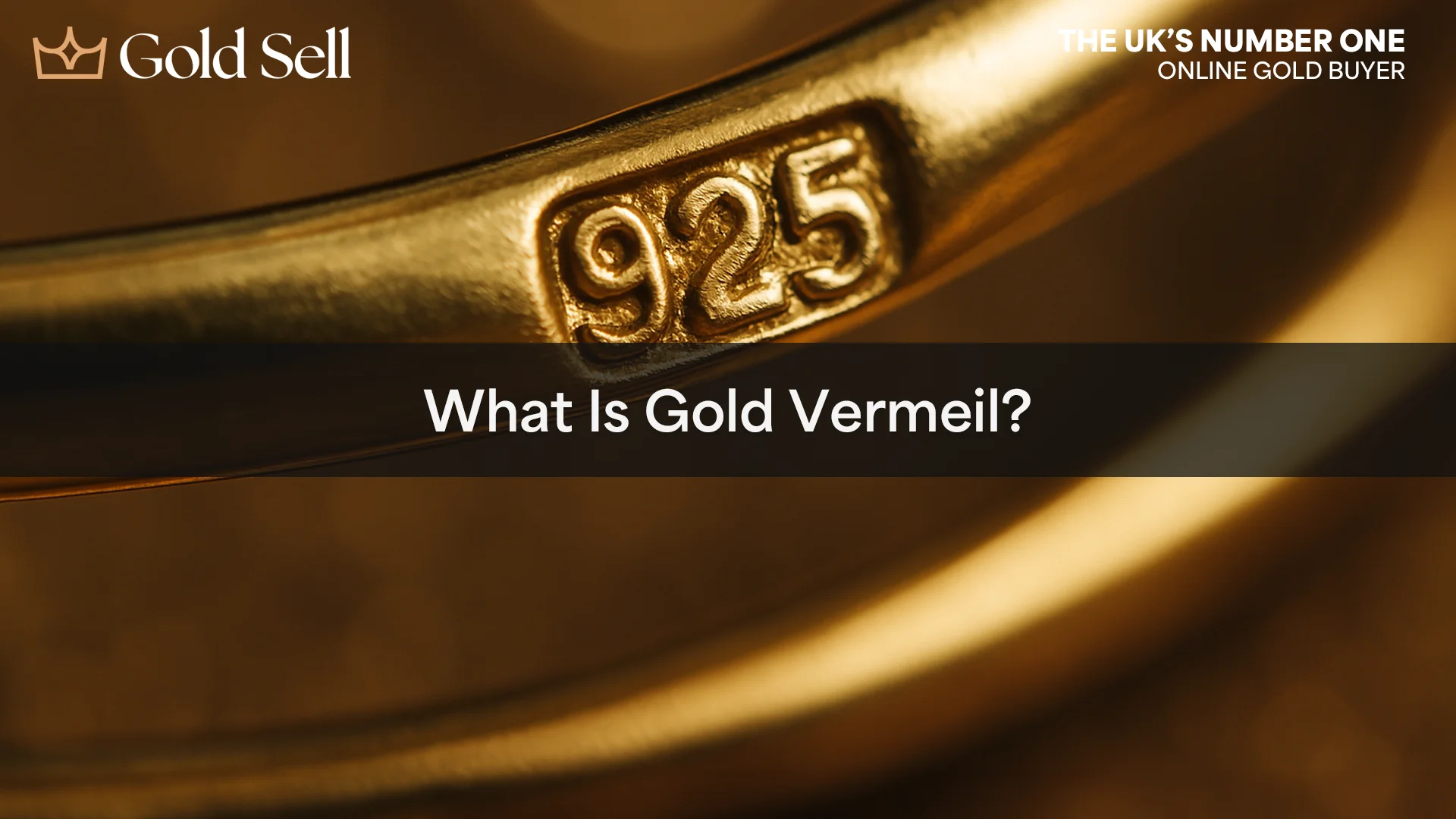
What is gold vermeil? A guide to this sterling silver jewellery with a thick gold coating. Learn its karat types, how it compares to gold plated, and care tips.
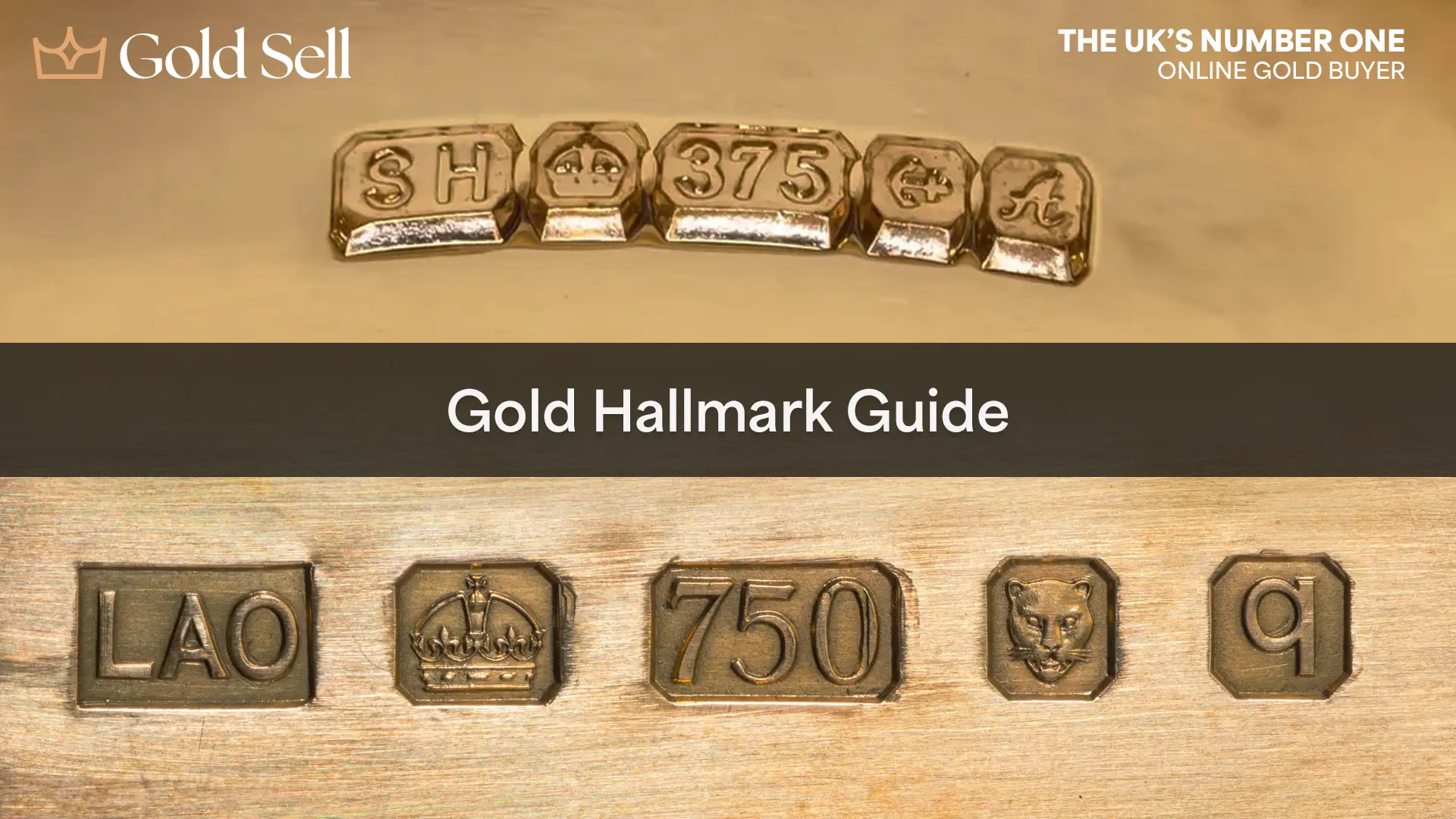
Gold Hallmarks Explained – Identify Gold Hallmarks
Learn how to identify gold hallmarks with our complete hallmark identification guide. Understand assay marks for gold on rings, coins, necklaces, and more.
Is Gold Plated Real Gold?
Many people wonder if gold plated jewellery is “real” gold or fake. The answer is: it does contain real gold, but only on its outer surface. The thin plating is genuine gold – typically ranging from 10 carat up to 24 carat purity – so the lustrous gold appearance is authentic. In that sense, gold plated items aren’t “fake gold” because the gold part is real. However, the piece as a whole is not solid gold; the bulk of the item is made of other metals. Think of it like a chocolate bar with a gold foil wrapper – the wrapper is real gold (in jewellery’s case), but what’s inside is something else.
Gold plated jewellery can absolutely look identical to solid gold to the naked eye. For instance, a well-made 18ct gold plated necklace will have the same warm yellow shine as an 18ct solid gold necklace. The difference lies in value and longevity, not appearance. Because the gold layer is extremely thin (often less than 0.05% of the item’s total metal content), gold plated pieces are much more affordable than their solid gold counterparts. This thin layer also means that the gold is more prone to wearing away or tarnishing over time, since the base metal beneath can slowly come through.
In summary, gold plated jewellery is “real gold” on the outside and base metal on the inside. It offers a budget-friendly way to enjoy the look of gold. Just be aware that it isn’t all-gold and won’t have the intrinsic value or durability of solid gold jewellery. If you’re after investment-grade jewellery or heirloom pieces, solid gold or high-percentage gold alloys are the way to go. But for fashion and fun, gold plating provides the real golden glow at a fraction of the price.
Which Gold Plated Jewellery Is Best?
Not all gold plated jewellery is created equal. The “best” gold plated pieces are those that use higher-quality materials and processes to ensure a longer-lasting finish. Here are some factors that make one gold plated item better than another:
- Base Metal: The underlying metal greatly affects quality. Gold plating over sterling silver is considered superior – this is known as gold vermeil (see more on vermeil below). Silver is a precious metal that doesn’t corrode like copper or brass, so it won’t cause as many issues when the gold layer eventually wears thin. Plating over stainless steel is also popular for durability. In contrast, plating over cheap alloys that contain nickel or copper might be more prone to tarnish or skin reactions when exposed. For example, a gold plated piece stamped “925” (plated on silver) would generally be higher quality than one with an unknown base metal.
- Thickness of Gold Layer: The thicker the gold plating, the longer it will last and the more “luxurious” it tends to be. Standard fashion jewellery might have extremely thin plating (sometimes called gold flash) around 0.17 microns or less. High-quality gold plated jewellery, on the other hand, often has plating of 0.5–2.5 microns thick. “Heavy Gold Electroplate” (HGE/HGP) items, for instance, typically have around 2.5 microns of gold which can hold up to wear much better than ultra-thin plating. If longevity is a concern, look for mentions of micron thickness or terms like “heavy plated” or “micron plated” in the item description.
- Karat of Gold Used: The karat (carat) rating of the gold plating (e.g. 14k vs 18k) affects colour and slight hardness, but not so much the durability. An 18k gold plated piece will have a richer yellow tone than a 14k plated piece (because 18k gold is 75% pure, whereas 14k is 58.5% pure and thus paler). However, higher purity gold is a bit softer. In practice, the difference in durability between 14k and 18k plating is minor compared to the importance of thickness. So, choose the karat mainly for colour preference. Many quality plated pieces use 18k or 22k for a bright gold look. Learn what makes gold yellow and how different carats affect colour.
- Plating Process & Protective Coatings: Some modern gold plated jewellery uses advanced techniques like PVD (Physical Vapor Deposition) or adds e-coating/clear lacquer over the gold. These methods can make the gold layer more resistant to scratches, sweat and water. Jewellery marketed as “waterproof” gold plated likely uses these harder plating techniques. If you want the best gold plated jewellery for everyday wear, consider pieces from reputable brands that mention durability measures such as water-proofing and sweat-proofing.
- Vermeil and Gold-Filled Options: If your goal is to get as close as possible to solid gold without the cost, consider vermeil or gold-filled jewellery instead of standard plated. Vermeil is gold plated sterling silver (with a thick gold layer; more on this below) – it’s often the highest quality “gold plated” jewellery. Gold-filled is a different technique where items have about 5% gold weight mechanically bonded; these pieces can literally last decades without wearing through the gold. Both vermeil and gold-filled cost more than ordinary plated pieces, but they are still far cheaper than solid gold and offer better durability and gold content.
In short, the best gold plated jewellery will have a good-quality base (like 925 silver or stainless steel), a thicker plating of real gold, and preferably be described with terms like “vermeil”, “micron plated” or “heavy gold plated”. High-quality plating can “go the distance” and remain beautiful for years, whereas cheaply made thin-plated trinkets might start fading or tarnishing within weeks of daily wear. It’s worth investing a bit more in well-made gold plated pieces if you want them to last.
Can Gold Plated Jewellery Tarnish?
Yes – gold plated jewellery can tarnish over time. Tarnishing means a piece loses its lustre or discolours, often darkening or spotting. Pure gold (24k) doesn’t tarnish or rust; however, remember that in gold plated jewellery the gold layer is extremely thin and the metal underneath (copper, brass, etc.) can tarnish or corrode. Over time, as the protective gold layer wears or microscopic pores in the plating allow exposure, the base metal can oxidise and seep through to the surface. This often manifests as dullness, dark spots, or a slight greenish or blackish tinge on the jewellery.
Several factors contribute to tarnish on gold plated pieces:
- Air and Moisture: Oxygen and humidity can cause many base metals to oxidise (which is essentially tarnish). The gold layer slows this down, but since it’s so thin, it may not completely prevent it. Sulphur compounds in the air (or from things like perfumes or pollution) can also tarnish metals like silver or copper beneath the gold.
- Sweat and Oils: Your skin’s sweat and natural oils are slightly acidic. Over time, these can eat away at the gold plating or react with base metals, causing tarnish or discolouration on both the jewellery and sometimes your skin.
- Chemical Exposure: Sprays like perfume, lotion, hairspray, as well as household chemicals or chlorine (from pools) can all speed up tarnishing. These chemicals can break down the gold layer or react with the base metal, leading to a dull or dirty appearance.
- Wear and Friction: Physical wear can thin out the gold layer (especially on rings or bracelets that rub against surfaces), eventually exposing the base metal in patches. Those exposed areas will tarnish quickly since they’re no longer protected by gold.
It’s worth noting that tarnish on gold plated jewellery often isn’t on the gold itself – it’s the base metal showing its colours (literally). For example, copper alloys might develop a green or brown tarnish, while nickel might darken. Sometimes tarnish can transfer to skin or clothing as a green/black smudge, which is a sure sign the plating has worn thin.
The good news is that with proper care you can delay tarnishing. In the next sections, we’ll cover specific questions on avoiding water, replating, and so on, which all tie into preventing tarnish. But as a rule of thumb: keep gold plated jewellery dry and clean to maximise its shine. Also, when not wearing it, store it in an airtight pouch or box to minimise exposure to air and moisture. Despite your best efforts, eventually tarnish or fading may occur – at that point, you can often get the piece replated to look like new again.
Can Gold Plated Get Wet?
It’s not ideal to get gold plated jewellery wet. While a few drops of water here and there won’t immediately ruin it, repeated exposure to water will speed up the loss of the gold layer and invite tarnish. Water – especially pool water (chlorine) or saltwater – can react with the metals in the jewellery. Even plain tap water can cause the thin gold plating to wear down more quickly, exposing the base metal underneath, which then oxidises and dulls.
Common scenarios:
- Showering with gold plated jewellery: The warm water, steam, soaps, and shampoos can all contribute to breaking down the gold layer over time. Soap and shampoo are chemicals that might not directly “melt” the gold, but they can leave residues or cause minor abrasion. It’s generally recommended to remove gold plated jewellery before showering. If you accidentally forget once or twice, just make sure to rinse the piece in fresh water and dry it thoroughly afterward.
- Swimming: Pools contain chlorine, which is very harsh on metals (chlorine can pit gold alloys and definitely will tarnish common base metals like copper or zinc). In the sea, salt water is also corrosive. Gold plated items can quickly tarnish or discolour if worn swimming, so it’s best to take them off before a dip in the pool or ocean.
- Washing Hands/Dishes: For rings or bracelets, frequent contact with water and detergents while washing hands or doing dishes will wear the plating faster. Remove rings if you’re going to be scrubbing or soaking in soapy water for extended periods.
If your gold plated jewellery does get wet, dry it promptly and gently. Use a soft cloth to pat dry, making sure no moisture remains in crevices. Do not use aggressive heat (like a hairdryer) as that could also affect any adhesive or stones in the piece; just air dry after patting. Keeping it dry will help maintain its shine and slow down any tarnishing.
In short, occasional splashes won’t destroy your gold plated jewellery, but long or repeated exposure to water will shorten its lifespan. Treat it like a fashion accessory – put it on after you’ve finished applying lotions or perfumes, and take it off before activities that will get it wet. Your jewellery will thank you by staying bright and beautiful for longer!
Can Gold Plated Jewellery Be Replated?
Yes, absolutely – gold plated jewellery can be replated to restore its gold shine. Replating (also called electroplating) is a service offered by many jewellers wherein they apply a fresh layer of gold over the item once the old layer has worn thin. Essentially, it’s the same process used to plate it originally. This can make a faded piece look brand new again.
Here’s what to know about replating:
- When to replate: If you notice significant patches of the base metal showing through (your piece might start looking silver-ish or coppery in spots), or if it has lost its gold colour and lustre, it might be time to replate. Some people routinely replate favourite pieces every year or two, but it depends on wear. High-wear items like rings might need it sooner than pendants or earrings.
- Replating process: A jeweller will first clean and, if necessary, polish the item to remove any surface tarnish or scratches. Sometimes a very thin layer of nickel is applied as a barrier (especially if the base is copper or brass) to help the gold adhere well. Then the piece is submerged in a gold solution and an electric current deposits a new thin layer of gold onto it. The result: your jewellery comes out with a fresh golden coat.
- Cost: The cost of replating can vary based on how much gold is used (thickness of plating), the size of the item, and the jeweller’s rates. It’s generally not very expensive for small items – for example, re-dipping a ring or pair of earrings might be quite affordable (much less than buying a new gold piece). Larger items or items requiring special handling might cost more. It’s wise to ask for a quote. If the jewellery has sentimental value, the cost is usually worth it to continue enjoying the piece.
- Frequency: There’s no strict rule; it depends how quickly the plating wears off again. If you only wear the item occasionally and take good care (keeping it dry, etc.), the new plating could last many years. If you wear it daily, you might be replating every 1-2 years. Eventually, if an item is replated many times over decades, a jeweller might mention wear to fine details (since each polishing before plating can remove a tiny bit of base metal). But generally, a piece can be replated multiple times without issue.
Tip: Always ensure you go to a reputable jeweller for replating. They should plate with the karat you want (most will use 18k for a good balance of colour/durability unless you specify otherwise). Also, if you have any metal allergies (e.g. nickel), mention this – they might use a specific process or ensure a nickel-free undercoating for you.
Replating is a fantastic way to give gold plated jewellery a longer life. Instead of tossing out a tarnished trinket, you can renew it. This is especially useful for beloved items or more expensive gold plated pieces (like vermeil jewellery or gold plated watches). It keeps them looking shiny and new.
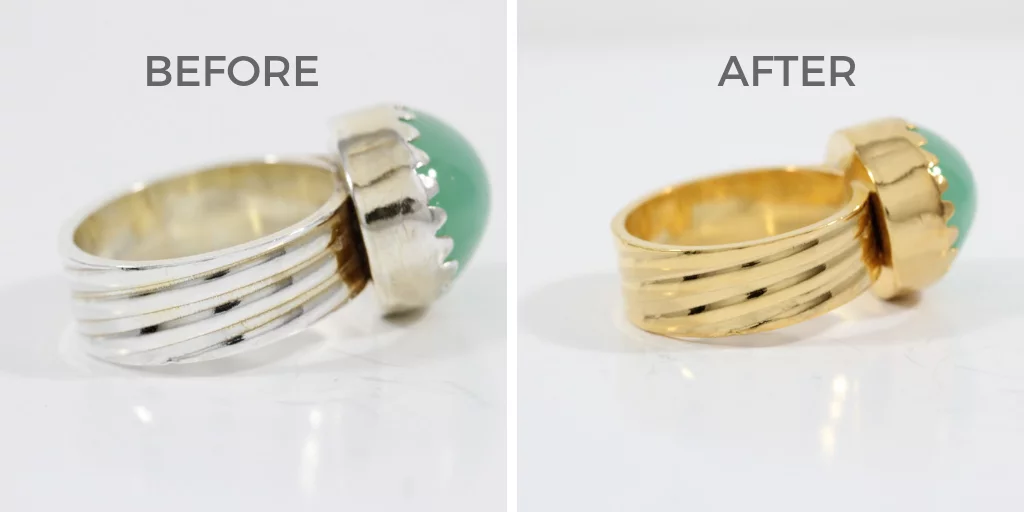
Before and after image of a ring that has undergone gold electroplating. The photo shows the transformation of the same piece of jewellery from a worn silver appearance to a fresh, gold-plated finish. This process, known as replating gold plated jewellery, restores the original look and lustre by applying a new layer of gold through electroplating—a popular method for renewing sentimental or vintage items.
Does Gold Plated Turn Green?
It can, yes. Gold plated jewellery may turn your skin green or develop greenish tarnish on the piece itself, but it’s not the gold causing it – it’s the metal underneath. The green coloration happens when metals like copper or brass (common in the base of gold plated jewellery) react with moisture, acids, or other chemicals. When the thin gold layer wears down enough to expose those metals (or even through microscopic pores in the plating), the metal can oxidise and form copper carbonate – which is green (think of the green patina on old copper statues). This can leave a green stain on your skin where it contacts the jewellery.
Specifics:
- Skin Greenness: If you wear a gold plated ring and notice your finger turning green, it’s a reaction between your skin (sweat, which contains salt and acids) and copper or brass in the ring’s core. As the base metal atoms migrate to the surface and oxidise, they can transfer to your skin. It’s often harmless, but can be unsightly. People with very acidic skin or who sweat a lot might see this sooner.
- Factors that increase greening: High humidity, heavy sweating, applying lotions or perfumes on skin that touches the jewellery, or even the pH of your skin can influence this. Lower quality plating (very thin gold layer) or pieces that are wearing out will be more prone to causing green marks.
- Nickel allergy vs Green Finger: Don’t confuse the green stain with a nickel allergic reaction. Nickel allergy causes itching and redness (and is due to your immune system reacting), whereas the green from copper/brass is just chemical staining and isn’t an allergy (though it can happen to anyone, it’s not usually accompanied by irritation).
- On the jewellery: Sometimes you might actually see a greenish tinge on parts of the jewellery itself, especially in crevices. This is tarnish/corrosion of the base metal. For example, gold plated costume earrings might get green around the posts or backs. This is a sign the plating has worn off in those areas.
How to minimise the green effect: The key is to keep the jewellery’s gold layer intact as long as possible and avoid chemical triggers. Don’t wear gold plated pieces during heavy exercise (to avoid sweat) or swimming (chlorine/salt accelerate corrosion). Put jewellery on after applying hand cream, perfume, or makeup so it’s less exposed. Wipe down the piece with a soft cloth after wearing, to remove sweat or chemicals. Storing it in a dry place helps too. If you already see hints of green tarnish on the item, you can gently clean it (see cleaning section) to remove surface deposits. Ultimately, if a piece is consistently turning you green and it bothers you, you might consider switching to higher-quality plated jewellery (e.g. vermeil or gold-filled, which use silver or have thicker gold that won’t react as easily) or solid metals.
In summary, gold plated jewellery can turn green over time, due to the base metals reacting once exposed. It’s a common issue with inexpensive fashion jewellery. The effect is generally cosmetic and can be managed with proper care or mitigated by choosing better-quality pieces. And remember, if your skin turns green, it doesn’t mean you’re turning into the Hulk – it’ll wash off and is more of an annoyance than anything harmful!
Does Gold Plated Jewellery Fade?
Yes, gold plated jewellery will fade with time – “fade” meaning the gold layer will gradually wear away, causing the appearance to dull or change. Initially, a gold plated item shines like solid gold. But because the gold coating is so thin, it can lighten, dull, or even completely disappear on high-wear areas after extended use.
Here’s what to expect regarding fading:
- Loss of shine: As the plating wears down, the jewellery might lose its vibrant yellow shine. It could start to look a bit pale or silvery in spots if the base metal (often a whitish metal or coppery colour) begins to show through. This is common on ring bands or pendant edges that rub against skin or clothing.
- Uneven colour: You might notice the gold colour is not as intense as when new. Eventually, certain areas could look more brass or copper-toned – that’s the base metal peeking out. For example, a gold plated chain might darken on the parts that constantly rub on the neck, while still looking gold in less-touched areas.
- Timeframe: The rate of fading depends on how thick the plating is and how you use the piece. A cheaply plated item (say 0.1 micron flash plating) could start fading within weeks of daily wear. A better plated item (1 micron or more) could retain its gold look for a year or several years before noticeably fading, especially if worn occasionally. As a general ballpark, gold plating might last from six months up to a few years before it starts to significantly change, under normal wear.
- Daily wear vs occasional: A gold plated ring worn 24/7 (including in shower, gym, etc.) will fade much faster than gold plated earrings that you wear once a week. Rings and bracelets get a lot of friction; necklaces and earrings are a bit more protected. So consider that when judging how long something will stay fully “gold” in appearance.
Can you prevent fading? You can slow it down. All the care tips – keeping it dry, avoiding perfumes/chemicals, not wearing during rough activities – will help preserve the gold layer. Using a soft cloth to gently polish it can bring back some shine if it dulls (just don’t use anything abrasive which will speed up wear). Eventually, though, the only remedy for a fully faded piece is to replate it (as discussed, a jeweller can put a fresh layer of gold on).
It’s important to set realistic expectations: gold plated jewellery isn’t meant to last forever, especially if it’s a thin plating. Think of it as having a “gold finish” that will wear with time. Higher-end gold plated items (like vermeil or heavy gold plated) will take much longer to fade than super cheap ones. But given enough years (or heavy use), even those will lose some of their coating. The good news is fading is gradual – your necklace won’t turn from gold to white overnight. You’ll have plenty of warning as it slowly dulls, so you can decide when it’s time for a replating or retirement.
How To Clean Gold Plated Jewellery
Cleaning gold plated jewellery properly will help it stay shiny and delay tarnishing or fading of the thin gold layer. The key is to be gentle – you want to remove oils and dirt without scrubbing off the gold. Here’s a safe and practical at-home cleaning method:
What you’ll need: Mild dish soap (a gentle detergent), warm water, a soft cloth, and a very soft toothbrush (optional).
Steps to Clean:
- Prepare a Soapy Bath: Mix a couple of drops of mild dish soap into a bowl of lukewarm water. You don’t need a lot of soap – just enough to make the water slightly soapy. Avoid any harsh cleaning solutions or chemicals; simple is best.
- Soak the Jewellery: Place your gold plated pieces in the bowl and let them soak for a few minutes (around 5 minutes is usually plenty). This soaking will loosen any dirt, dust, or oil build-up on the jewellery. Note: If your jewellery has gemstones or glued components, don’t soak for too long, and ensure the water isn’t hot (lukewarm is fine).
- Gently Clean with a Soft Brush: After soaking, take a very soft toothbrush (like a baby toothbrush or a soft jewellery brush). Gently brush the jewellery to clean tricky areas – for example, the grooves of a chain or the edges of a pendant. Use light pressure; do not scrub vigorously, as aggressive rubbing can wear away gold plating. Focus on areas like underneath a ring or the backs of earrings where grime accumulates. If the item is smooth, you might even skip the brush and just rub it lightly with your fingers or a cloth in the soapy water.
- Rinse Thoroughly: Once you’ve loosened the dirt, rinse the jewellery under clean lukewarm water to wash off any soap residue. Soap left on the piece can dull the shine, so make sure it’s fully rinsed. It might help to hold it under a gentle stream or swish it in a bowl of clean water.
- Dry Carefully: Using a soft, lint-free cloth (microfibre or a jewellery polishing cloth works well), pat the item dry. Do not use paper towels or rough towels, as these can scratch. Make sure to dry the piece completely. Moisture is the enemy of plated jewellery – any water left can lead to quicker tarnish. So get into any crevices with the corner of your cloth or let the piece air dry on a cloth after pat-drying to ensure all water evaporates.
- Polish Lightly: If you have a special gold polishing cloth (usually a soft cloth impregnated with gentle cleaners – often sold for gold or silver jewellery), you can give the piece a quick buff after cleaning to restore shine. Very light pressure, just to pick up any remaining oils. But don’t use heavy polishing compounds or abrasive jewellery cleaners on gold plated items – those are meant for solid metal and can strip the thin gold layer.
At-Home Cleaning Don’ts:
- Avoid any harsh chemicals or jewellery cleaners that are not explicitly safe for gold plated jewellery. For example, silver polish, ultrasonic jewellery cleaners, or strong jewellery cleaning dips can be too harsh for plating.
- Don’t use abrasive tools: no scouring pads, no toothpaste (a common DIY jewellery cleaner for solid gold, but too abrasive for plated), and no baking soda scrubs. These will wear off plating quickly.
- Avoid excessive rubbing. Let the soap and water do most of the work in loosening dirt.
Regular Maintenance: To keep your gold plated jewellery clean day-to-day, simply wipe it with a soft cloth after wearing, before you put it away. This removes oils and sweat that can accelerate tarnish. You don’t need to soap-clean it every time – just when it starts looking a bit dull or dirty. Perhaps once every few weeks or months, depending on wear, is fine for a deep clean.
Finally, how you store your jewellery matters too for cleanliness: Keep gold plated items in a cool, dry place, ideally in a soft pouch or a lined jewellery box, separated from other jewellery (plated pieces can get scratched if they rub against harder items). You can even put anti-tarnish strips in your jewellery box – while those are more for silver tarnish, they won’t hurt.
By cleaning gently and regularly, your gold plated jewellery will gleam and you’ll maximise that beautiful gold look for as long as possible.
Gold Plated vs Vermeil
You might have come across the term vermeil (pronounced “ver-MAY”) and wondered what is gold plated vermeil. Vermeil is essentially a premium type of gold plated jewellery. To qualify as vermeil, a piece must meet two main criteria:
- The base metal has to be sterling silver: (92.5% pure silver).
- The gold plating on top must be relatively thick: – typically at least 2.5 microns of gold plating in most standards (and usually using gold of at least 10 carat purity or higher).
In other words, gold vermeil = gold plated sterling silver, with a thick layer of gold. It’s a term that originated in France and has become a standard in jewellery for denoting higher-quality gold plated pieces. In the UK and US, to legally label something “vermeil”, it generally must have that sterling silver core and a substantial gold coating (2.5 microns is the US FTC guideline, as well as the UK common standard for heavy plating).
How is vermeil different from ordinary gold plated jewellery?
- Base Metal: Regular gold plated items can use any base metal – often brass, copper, or stainless steel. Vermeil only uses sterling silver as the base. Silver is more valuable and tends to be gentler on skin (no nickel or lead typically), so vermeil pieces are usually hypoallergenic and considered “fine” jewellery.
- Thickness of Gold: Vermeil has a thicker gold layer. Many standard plated fashion pieces have gold layers under 0.5 micron (some as thin as 0.1 micron). Vermeil by definition has about 2.5 microns or more. That’s roughly 5 to 10 times thicker plating. This thicker coat means vermeil jewellery is more durable – the gold doesn’t wear away as quickly, so it can withstand more frequent wear without fading.
- Appearance: At first glance, both vermeil and normal gold plate look the same – both are real gold on the outside. However, because vermeil often uses a thicker layer of gold (and sometimes higher karat gold like 18k or 22k), it might maintain a richer colour longer. Also, when vermeil eventually does wear, the metal beneath is silver, which tends to look greyish-white, whereas a brass base might show a yellowy or reddish hue when it peeks through thin plating.
- Cost: Vermeil is usually more expensive than standard gold plated jewellery (because of the silver content and extra gold). It’s still much cheaper than solid gold. You can think of vermeil as a nice mid-point – you pay more than costume jewellery, but you’re getting something closer in quality to fine jewellery. Many consider it the best value: real silver + a decent amount of gold, but not the cost of all-gold.
- Markings: Vermeil items might be marked with “925” (for the sterling silver content) and sometimes explicitly say “vermeil” or have the hallmark “SV” in some cases. Often, though, they’ll just appear as gold jewellery with a 925 stamp. Sellers usually clarify in descriptions if something is vermeil. (According to UK regulations, they’d describe it as “18ct gold plated silver (vermeil)” to be clear.)
Pros of Vermeil: It’s great for people who want long-lasting gold-look jewellery without paying for solid gold. Since the base is silver, even if the gold wears off a bit, you don’t get green tarnish – silver tarnish is blackish, but it can be polished and isn’t harmful. Vermeil is also often used in higher-end fashion jewellery and designer pieces, so workmanship might be better too.
Cons: You do have to pay more than the cheapest plated pieces. Also, vermeil can still eventually wear/tarnish (it’s not invincible), especially if not cared for – it’s just more resistant than standard plating. If you’re in the UK and you see “silver gilt” used, that typically refers to vermeil (gold over silver).
Gold Plated vs Vermeil – which to choose? If you have sensitive skin or want jewellery that lasts years, vermeil is worth the upgrade. For pieces like engagement-style rings or daily-wear pendants, vermeil will serve you better. For a trendy earring you only plan to wear occasionally, regular gold plated might suffice. It often comes down to budget and purpose. But now you know: vermeil is gold plated done to a fine jewellery standard, giving you more precious metal for your money. As one jeweller succinctly put it, vermeil contains a significantly thicker gold layer on a sterling silver core, whereas standard gold plated has a very thin gold coat on a cheaper base metal.
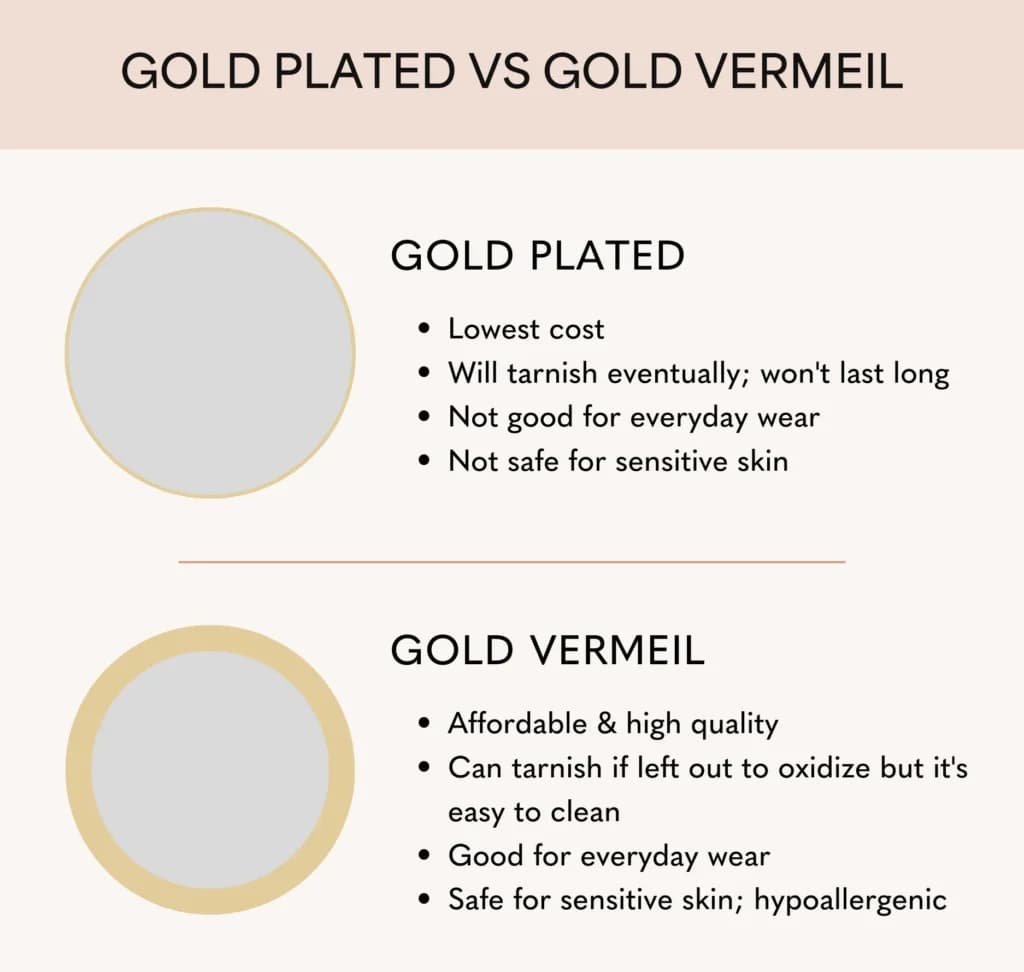
Gold plated vs vermeil jewellery comparison. This chart shows that gold plated jewellery is the lowest cost option but lacks durability and may irritate sensitive skin. In contrast, gold vermeil is more durable, hypoallergenic, and suitable for everyday wear. While both have a gold exterior, vermeil uses a thicker layer of gold over sterling silver, making it a higher quality and longer-lasting choice.
Gold Plated vs Gold Filled
It’s easy to confuse gold plated and gold filled jewellery – they sound similar, but they’re actually quite different in how they’re made and their gold content.
Gold Plated: as we know, is a thin electroplated layer of gold on a base metal. The gold typically makes up a tiny fraction of the piece’s total weight (often less than 0.05% of the weight is gold). It’s mainly a surface treatment.
Gold Filled: despite the name, isn’t “filled” with gold internally, but it has a much thicker layer of solid gold mechanically bonded to the outside of a base metal (usually brass or copper). Gold filled jewellery must contain at least 5% gold by weight (in the US standard). In practical terms, the gold layer in gold filled items is 50 to 100 times thicker than the gold layer on standard gold plated pieces. Common gold filled markings are things like “1/20 14K GF” – which means the item’s weight is 1/20th 14k gold (which is 5%).
Here are the key differences and implications:
- Manufacturing Process: Gold plated is done by electroplating (a current deposits gold onto the metal). Gold filled is made by heat-and-pressure bonding a sheet of gold onto the base metal. Think of gold filled like a “sandwich”: a layer of gold is literally laminated onto the core metal, often on both sides for things like sheets or wires, then the composite is used to create jewellery. Because of this, gold filled items have much more gold and the gold layer is more integrated into the metal.
- Durability: Gold filled jewellery is far more durable than standard gold plated. Since the gold layer is thick, it doesn’t wear through easily. Gold filled pieces do not flake off or rub off for many years; they can often withstand daily wear, even showering or exposure to perfume to some degree, without immediate ill effect (though to keep them pristine, the usual care is still recommended). People often say gold filled jewellery can last decades, even a lifetime, especially if it’s not abused. In contrast, gold plating might only last a short time before needing replating or showing wear.
- Gold Content & Value: With ~5% real gold, gold filled pieces have some intrinsic gold value (though still much less than solid gold). For instance, a heavy gold filled bangle might contain a gram or two of gold in it, whereas a gold plated bangle might contain only a few milligrams of gold – practically negligible. Don’t expect to resell gold filled for big bucks (the gold is still a small percentage), but it’s not zero like plated. Also, gold filled is usually done with 10k, 12k, or 14k gold. So a mark like “14K GF” means that 5% of the weight is 14k gold. Gold plated could be any karat (often 18k for colour).
- Allergy Considerations: Gold filled, because of its thick gold layer, is often touted as safe for people with sensitive skin – the gold layer (which is usually 14k, a relatively stable alloy) prevents most contact between skin and any irritating base metals. Until that gold layer eventually wears (which can take a very long time), you typically won’t get green stains or allergic reactions. Gold plated, with its thin layer, might expose skin to the base metal much sooner.
- Cost: Gold filled jewellery is more expensive than gold plated, but still significantly cheaper than pure gold. It tends to be mid-range. For example, a gold filled necklace might cost a bit more than a plated one from a department store, but considerably less than a solid 14k gold necklace. The price often reflects the thicker gold content and more involved manufacturing. For pieces like chains, a 14k gold filled chain will cost more than a simple plated chain, but you’re paying for longevity.
- Appearance: Visually, both can look identical out of the box – both have real gold exteriors. Over time, the gold filled will maintain the gold look much longer. Gold filled might also have a more “solid” feel in some cases because it’s often used for better-crafted jewellery.
In summary, gold filled is closer to solid gold jewellery in terms of structure: it has a robust layer of gold (5% is a lot in metallurgical terms) bonded to base metal. Gold plated is more like a gold “flash” on the surface. For the consumer, if you want something that will truly last and you can wear every day without worry, gold filled is the better choice. It can handle more wear and tear and won’t need replating – many gold filled pieces from vintage times still have their gold layer intact. Gold plated is great for pieces you might not wear daily or for trendier items where you don’t mind if the gold eventually wears off.
To put numbers to it: a gold filled item has at least 1/20 (5%) of its weight in actual gold, whereas a plated item often has less than 1/1000 (0.1%) of its weight in gold. That stark difference explains why one lasts longer. As a result, gold filled jewellery offers a fantastic middle ground – much more affordable than solid gold but more durable than plain plating.
When shopping, not every jeweller offers gold filled (it’s more common in North America for some reason, and often in things like handcrafted or artisan jewellery). In the UK, you might see it less, but it’s available. If you see “rolled gold” in vintage UK jewellery, that often refers to an old form of gold filled (sometimes lower than 5% but similar concept). Modern descriptions will use “gold filled” or abbreviations like GF.
Bottom line: If you’re debating between a gold plated vs gold filled necklace for daily wear – go gold filled if you can. If it’s between gold plated vs gold filled for a one-off fashion statement piece you’ll wear occasionally, gold plated might suffice. Each has its place, but now you understand their differences in quality and construction.
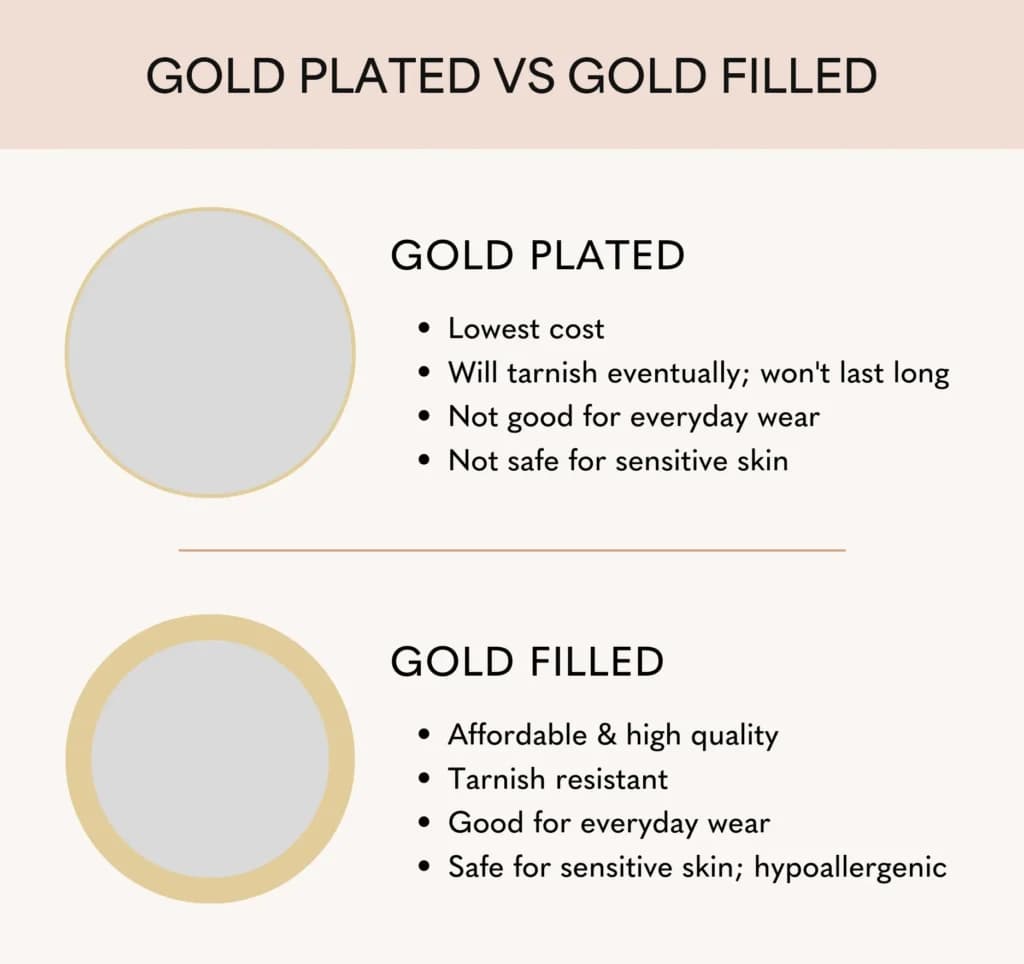
Gold plated vs gold filled jewellery comparison. This visual highlights the difference between the two finishes. Gold plated jewellery is the most affordable but wears down quickly and isn’t ideal for sensitive skin. Gold filled jewellery has a much thicker gold layer, making it more durable, tarnish-resistant, and safe for everyday wear. Understanding the distinction between gold plated vs gold filled helps buyers choose jewellery that suits their lifestyle and skin type.
Can I Sell Gold Plated Jewellery?
When it comes to selling gold plated jewellery for its material value, the unfortunate truth is it’s usually not worth very much. Gold plated items contain only a microscopic amount of gold – often a layer only a few atoms thick – so the gold content by weight is negligible. Because of this, most pawn shops or gold buyers will not pay for gold plated jewellery in terms of gold value. Its value is typically in the design or brand, not in the metal.
To break it down:
-
Intrinsic Gold Value: Let’s say you have a gold plated chain. It might look gold, but the actual gold in that chain could be, for example, 0.05% of the total weight. If the whole chain weighs 20 grams, 0.05% of that is 0.01 grams of gold – practically nothing. Even if the gold layer is thicker (heavy plated), it’s still under 1% of the weight. When you multiply that by the price of gold, it’s just a few pence or cents worth of gold. It would cost a refiner far more in chemicals and labour to extract that tiny gold than the gold is worth.
-
Refining Challenges: To extract gold from plated jewellery, you’d have to use chemical processes to dissolve the base metal and isolate the gold. This is something refiners can do, but they do it profitably only when there’s a lot of gold to be had. For solid gold jewellery or even gold filled items, sure. For plated, as mentioned, the yield is too low. Refineries often refuse gold plated items unless you literally have kilos of them to process in bulk, and even then the margins are slim.
-
Selling as Jewellery: If you want to sell a gold plated piece, you might have better luck selling it as a second-hand piece of jewellery (for someone to wear), rather than selling it for scrap. For example, a designer gold plated necklace from a known brand might fetch something on eBay or a consignment store because of its design or brand appeal – but not because it’s “gold” in terms of material value. Essentially, any resale value will come from it being a wearable piece, not from melting it down.
-
Exceptions: There are a couple of scenarios where gold plated items have some value:
- Gold Plated on Silver (Vermeil): Here, the base is sterling silver which does have intrinsic value. If you have a heavy silver item that’s gold plated, a refiner or buyer might pay for the silver content (after all, 925 silver is valuable). They won’t care about the gold plate (it’s too little), but they might treat it like a silver item. For instance, gold plated cutlery (often silver underneath) or vintage silver-gilt items could be sold for the silver.
- Electronics Gold Plating: Outside jewellery, some electronics have gold plated connectors. In large quantities, people do recycle those for gold. But for jewellery, again, you’d need an impractical amount to make refining worthwhile.
- High-end watches or items: Occasionally, a high-end gold plated watch from a luxury brand might have some resale value because of the brand, not the gold. And sometimes people confuse these as “gold watch”. But in scrap terms, even those aren’t valuable for gold content if just plated.
So, is gold plated worth anything? Sentimentally, possibly yes. Aesthetically, yes – you got the look of gold. But financially, the gold content is virtually worthless. You can’t walk into a gold dealer with a gold plated bangle and expect more than a polite decline (or maybe a pound or two if they want to toss it in a costume jewellery bin).
If you have a bunch of costume jewellery and wonder if it’s worth selling: if it’s marked GP, HGE, or similar, it’s not going to fetch money for gold. Your best bet is to sell it as a fashion lot or keep it. On the flip side, if you’re buying jewellery and see a big price on something that’s gold plated, remember that you’re paying for the design/brand, not for gold material. There’s little to no investment value in gold plated items – they don’t appreciate with gold prices.
One more angle: can you pawn gold plated jewellery? Typically, pawn shops also focus on intrinsic metal value. They love gold (solid) and silver. They usually pass on gold plated, or if they take it, it’s treated as costume jewellery. You might get a token amount if it’s a nice piece, but nothing based on gold weight.
In summary, gold plated jewellery isn’t “worth” much in raw terms. Enjoy it for what it is – affordable adornment. If you’re looking to cash in, you’ll likely be disappointed. The time to think about value is when buying: if the idea of resale or metal value later is important to you, you might opt for gold filled, vermeil, or solid gold instead.
Frequently Asked Questions
What does gold plated mean?
Gold plated means a base metal, like copper or brass, is coated with a thin layer of real gold using electroplating. This creates the appearance of solid gold without the high price. Gold plated jewellery contains only surface gold, so it’s affordable but less durable. It’s commonly stamped with hallmarks like “GP” or “GEP.” While it offers a luxurious look, the gold layer can wear away with time, especially with frequent wear or exposure to moisture.
Is gold plated real gold?
Yes, gold plated jewellery contains real gold, but only as a thin surface layer. The base of the item is made from another metal, such as brass, copper, or silver. While the outer layer is genuine gold—often 14k, 18k, or 22k—the item’s total gold content is very low. This makes gold plated jewellery more affordable than solid gold but also less valuable and less durable in the long run, especially with everyday use.
Can gold plated jewellery tarnish?
Yes, gold plated jewellery can tarnish over time. While pure gold doesn’t tarnish, the thin gold layer on plated items wears away, exposing the base metal underneath. Metals like copper or brass can oxidise, causing discolouration, dullness, or green marks on the skin. Tarnishing is accelerated by water, sweat, perfumes, and chemical exposure. Regular cleaning, dry storage, and careful handling can help delay tarnish and extend the lifespan of gold plated jewellery.
How to clean gold plated jewellery?
To clean gold plated jewellery safely at home, use warm water and a few drops of mild dish soap. Soak the piece briefly, then gently clean with a soft cloth or a very soft toothbrush. Rinse thoroughly with lukewarm water and dry with a lint-free cloth. Avoid abrasive materials, harsh cleaners, ultrasonic machines, and excessive rubbing. These can strip the delicate gold layer. Regular gentle cleaning helps maintain shine and prevents early tarnish or fading.
Gold plated vs vermeil?
Gold plated jewellery uses a very thin layer of gold over any base metal like copper or brass, making it less expensive and less durable. Gold vermeil, however, is a higher-quality option that features a thick gold layer (usually 2.5 microns or more) over sterling silver. This makes vermeil hypoallergenic, longer-lasting, and more resistant to tarnish. If you're looking for affordable, quality gold jewellery, gold vermeil is a better choice than standard gold plated.
Gold plated vs gold filled?
Gold filled jewellery contains a significantly thicker layer of real gold—at least 5% of the item’s total weight—mechanically bonded to a base metal, usually brass. It is much more durable and long-lasting than gold plated jewellery, which only has a very thin electroplated gold layer. Gold filled items can last for decades without tarnishing, making them better for everyday wear. In contrast, gold plated pieces are more budget-friendly but prone to fading and tarnish.
Are gold plated earrings good?
Gold plated earrings are a good, budget-friendly option for achieving a luxurious gold look without the cost of solid gold. They're ideal for occasional or fashion wear but may not withstand daily use due to the thin gold layer. If the base metal includes nickel or copper, they may also cause skin irritation when the plating wears off. Choosing gold plated earrings with thicker plating or hypoallergenic bases can improve both comfort and longevity.
Are gold plated earrings hypoallergenic?
Gold plated earrings can be hypoallergenic, but only if the base metal is nickel-free. The gold surface is usually safe for sensitive skin, but as the thin gold plating wears away, metals like nickel, brass, or copper may be exposed, potentially causing irritation or allergic reactions. For better skin safety, choose vermeil (gold over sterling silver) or gold plated earrings explicitly labelled as hypoallergenic and nickel-free to avoid skin sensitivity or discomfort with regular wear.
Are gold plated coins worth anything?
Gold plated coins generally have very little intrinsic value. The layer of gold is extremely thin and adds minimal metal worth, making them unsuitable for gold resale or refining. Most gold plated coins are valued for their collectability, design, or novelty rather than their gold content. Unlike solid gold coins, they don’t rise in value with gold market prices. While attractive, they’re not investment-grade and typically fetch low resale prices unless highly collectible or rare.
Are gold plated rings worth anything?
Gold plated rings are worth very little in terms of gold content. The plated layer is extremely thin and contains only a tiny fraction of real gold, which is not enough to be refined or sold as scrap. Most gold plated rings are valued based on their design, brand, or sentiment rather than their metal content. Unless sold as designer jewellery or in bulk, they have minimal resale value and aren’t considered investment pieces.
Are gold plated necklaces good?
Gold plated necklaces are good for achieving the look of solid gold at an accessible price. They’re popular for fashion wear and occasional use. However, because the gold layer is thin, daily wear, sweat, and exposure to water can cause the gold to fade or wear off over time. Choose necklaces with thicker plating or base metals like sterling silver or stainless steel for better durability. For long-term wear, vermeil or gold filled options are better.
Can I gold plate my own jewellery?
Yes, you can gold plate your own jewellery using at-home electroplating kits. These kits typically include a gold solution, electrical equipment, and cleaning tools. However, the results may not be as durable or professional as those from a trained jeweller. DIY gold plating can be fun and cost-effective for costume pieces, but for items with sentimental or monetary value, it’s safer to use a professional plating service to ensure proper adhesion and finish quality.
Can I gold plate silver?
Yes, silver can be gold plated and is one of the best base metals for gold plating. In fact, gold plated sterling silver is known as vermeil, a high-quality jewellery type that features a thick layer of gold (usually 2.5 microns or more) over 925 sterling silver. This combination offers excellent durability, resistance to tarnish, and is typically hypoallergenic. Gold plating on silver also adheres better and lasts longer than plating on base metals like brass.
Can gold plated get wet?
Gold plated jewellery can technically get wet, but it’s best to avoid it. Water, especially from showers, pools, or saltwater, can cause the thin gold layer to wear off faster and may lead to tarnishing or fading. Soaps, shampoos, and chlorine accelerate this damage. If you're wondering “can gold plated jewellery be worn in the shower,” the answer is no—removing it before bathing helps preserve its shine and extend its lifespan significantly.
Can gold plated cause allergies?
Yes, gold plated jewellery can cause allergies, especially when the thin gold layer wears off and exposes base metals like nickel, copper, or brass. These metals are common allergens and can trigger skin reactions such as itching or rashes. If you have sensitive skin, choose gold plated pieces with a hypoallergenic base metal or opt for vermeil (gold over sterling silver). Also, look for items labelled as nickel-free to minimise the risk of irritation.
Can gold plated be pawned?
Most gold plated jewellery cannot be pawned because it has very low intrinsic gold value. The thin gold coating isn’t worth refining, and pawn shops typically prefer items made of solid gold or gold filled. Some may accept gold plated pieces if they’re from designer brands or have collectible value, but you should not expect a high payout. To be eligible for pawning based on metal value, the item must contain significant real gold.
Can gold plated jewellery be melted down?
Yes, gold plated jewellery can technically be melted down, but it’s not financially worthwhile. Because only a tiny fraction of the item is real gold, the yield is negligible compared to solid gold. Refiners rarely accept individual gold plated pieces unless they’re processed in bulk. If you're asking “is gold plated worth anything,” the answer is that its melt value is extremely low—you’d need a large volume to recover a significant amount of gold.
What does gold plated look like?
Gold plated jewellery looks like solid gold because the outer surface is real gold. It has a shiny, golden appearance—often matching the colour of 14k, 18k, or 22k gold, depending on the plating used. When new, gold plated items are visually indistinguishable from real gold. However, over time the finish may dull, fade, or show spots where the base metal underneath becomes visible, especially with frequent use or improper care.
How is gold plated jewellery made?
Gold plated jewellery is made through a process called electroplating, where a thin layer of real gold is deposited onto a base metal using an electric current. The item is first cleaned, then dipped in a gold solution, and current is applied to bond the gold to the surface. This process creates jewellery that looks like solid gold but contains only a small amount of gold. It’s widely used for fashion jewellery and accessories.
Should I buy gold plated jewellery?
Yes, you should buy gold plated jewellery if you want the look of gold at an affordable price. It’s ideal for trend-driven pieces or occasional wear. However, it’s important to understand that gold plated items are less durable than solid gold or gold filled. They can fade, tarnish, or cause skin irritation if worn daily. If you want long-lasting jewellery, consider vermeil or gold filled. For style on a budget, gold plated is a great option.
Interested in selling gold with the UK’s highest paying gold buyer? Visit our Sell Gold page to get a competitive valuation – we provide fully insured postage and fast payment.
For more insights and the latest gold price today, keep an eye on our live charts and blog updates.