What Is Yellow Gold?
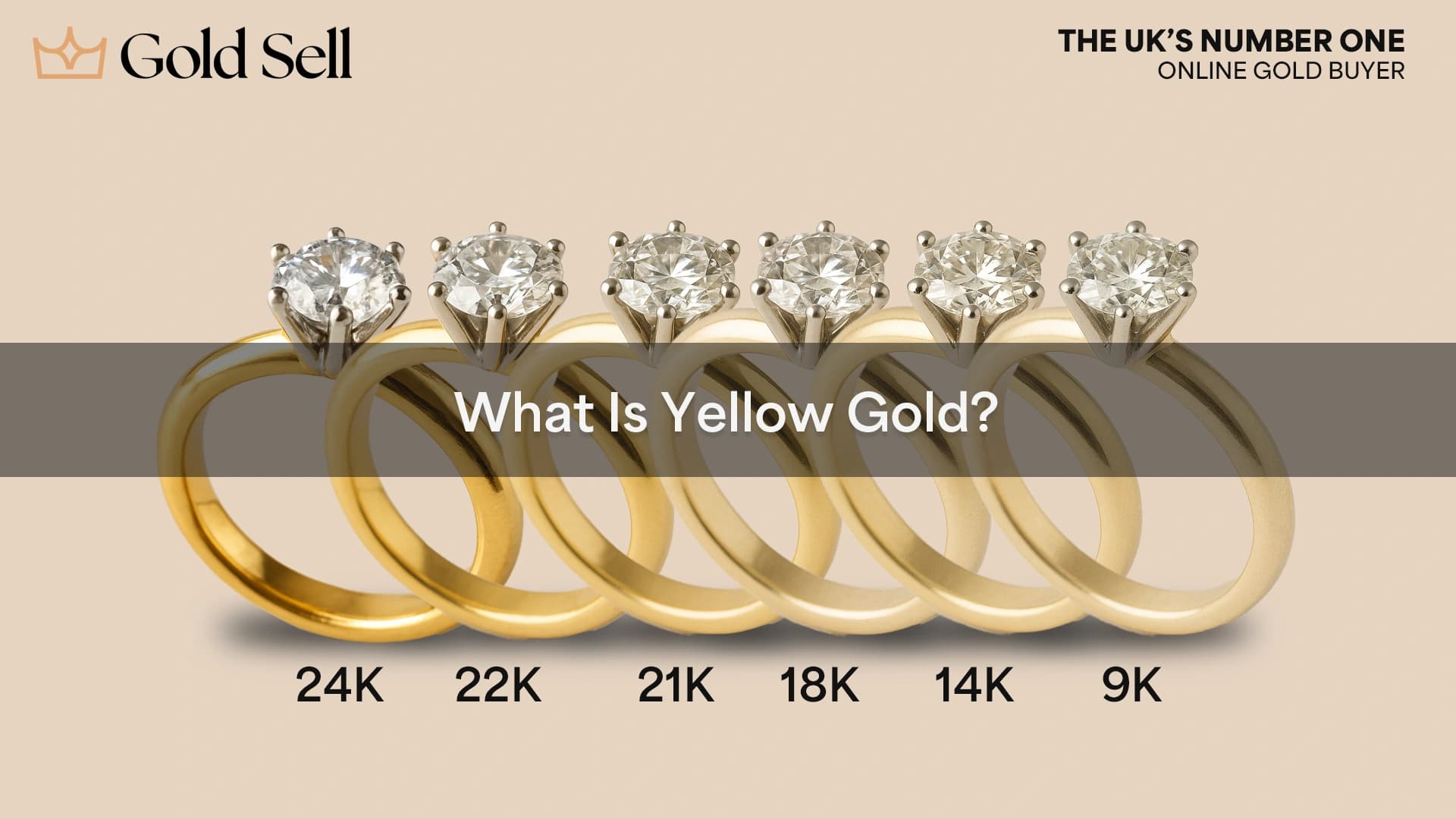
Yellow gold is a genuine gold alloy known for its classic warm yellow hue, created by mixing pure gold with other metals. In jewellery, “yellow gold” typically refers to real gold of various carats (purities) that retains gold’s natural yellow colour. It’s the traditional gold used in rings, necklaces, and coins – prized for its timeless beauty and enduring value.
Key Takeaways
- Yellow gold definition: Yellow gold is real gold metal alloyed with other metals (like copper and silver) to produce a warm yellow-coloured gold used in jewellery. It’s measured in carats (ct) indicating purity (9ct, 14ct, 18ct, etc.).
- Yes, it’s real gold: Yellow gold jewellery contains a significant percentage of pure gold (e.g. 18ct is 75% gold). As long as it’s 9ct or higher (the UK legal minimum for “gold”), it’s considered real gold.
- Tarnish & durability: Pure gold doesn’t tarnish. High-carat yellow gold resists dulling and corrosion, while lower carats (which have more alloy metals) can develop slight tarnish or patina over time. Overall, yellow gold keeps its colour and only needs occasional polishing – it doesn’t fade away.
- Yellow vs other golds: Yellow gold’s colour comes from gold itself; white gold is yellow gold mixed with “white” metals and usually rhodium-plated, giving a silvery look, while rose gold has more copper for a pink hue. Yellow gold doesn’t require plating and has a classic look; white gold offers a cool shine, and rose gold a trendy rosy tone.
- Value by purity: The price of yellow gold per gram depends on its carat. Higher carat = more gold content = higher value. Example: 24ct (99.9% gold) is £99.23 per gram, so 14ct (~58.5% gold) is £57.88, 9ct (37.5% gold) is £37.21 per gram (market prices fluctuate daily).
- Selling yellow gold: You can sell yellow gold for cash easily. GoldSell (UK’s top-paying gold buyer) offers a free Gold Pack for insured postage, a Live Price Checker™ for up-to-date rates, same-day expert valuation, instant payment, and a 7-day price lock guarantee – ensuring you get the best price for gold.
What Is Yellow Gold?
What does yellow gold mean? “Yellow gold” refers to the traditional gold used in jewellery that displays the metal’s natural golden-yellow colour. It’s called yellow gold to distinguish it from other coloured gold alloys like white or rose gold. Essentially, yellow gold means the gold alloy has a warm yellow hue – the classic look most people associate with gold. This colour comes from the dominance of pure gold in the alloy (since gold itself is yellow) and the specific mix of other metals that don’t overpower that colour. Jewellers often mention the term yellow gold when describing pieces (e.g. an 18ct yellow gold ring) to clarify it’s the gold’s natural colour, not white or rose. In summary, “yellow gold” means real gold alloyed in a way that keeps the metal’s yellow appearance, symbolising the timeless, rich colour we’ve valued for millennia.
What is yellow gold made of? Yellow gold is made of pure gold mixed with other metal alloys to strengthen it while preserving that yellow tone. In its pure form, gold (24 carat) is very soft, so it’s alloyed with metals like copper and silver (and sometimes a bit of zinc) to make it harder and suitable for jewellery. The typical composition varies by carat: for example, 18ct yellow gold is about 75% gold, with 25% other metals (often ~12.5% copper, 12.5% silver). 14ct yellow gold is ~58.5% gold, 41.5% other metals, and 9ct gold (common in the UK) is 37.5% gold, 62.5% alloys. Copper in the mix adds a warmer, rich tone, while silver brightens the gold’s colour. The balance of these alloys gives yellow gold its characteristic hue and affects its hardness. Importantly, regardless of the carat, yellow gold always contains real gold – the higher the carat, the more gold (and the richer the yellow colour), whereas more alloy metals make the gold paler and more durable. This is why 22ct or 24ct gold appears deep yellow, while 9ct gold looks lighter or “softer” yellow due to more silver content diluting the colour.
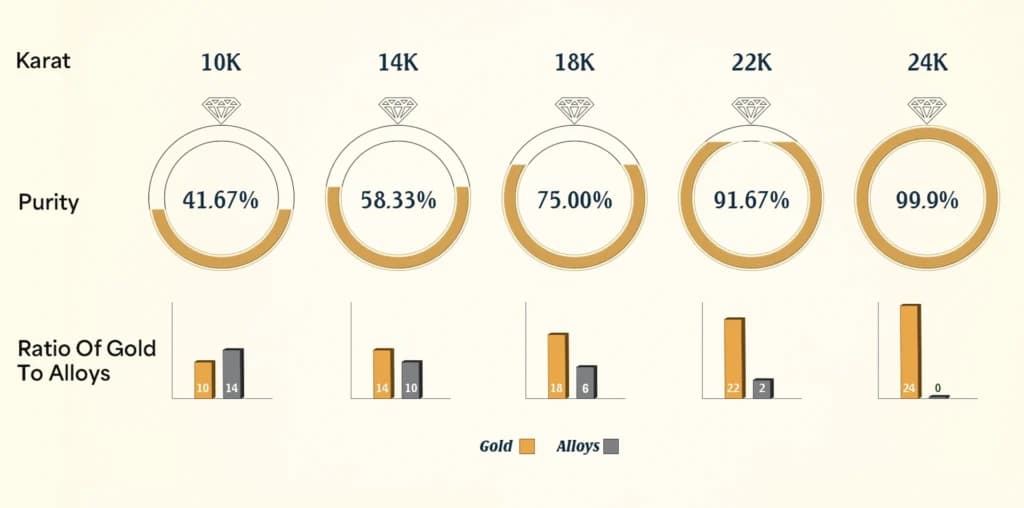
Gold purity chart showing the percentage of pure gold in common karat types. This graphic compares the most popular types of gold—10K, 14K, 18K, 22K, and 24K—illustrating their respective purity levels and gold-to-alloy ratios. 24K gold is nearly 100% pure, while lower karats contain higher alloy content to improve durability.
Is Yellow Gold Real?
Yes – yellow gold is real gold. The term simply denotes the colour of the gold alloy, not a fake or substitute. Yellow gold jewellery contains genuine elemental gold (chemical symbol Au) combined with other metals. For instance, an 18ct yellow gold ring is 75% pure gold; the remaining 25% is alloys to harden it, but it’s still sold and valued as real gold. Some people ask this question because terms like “white gold” or “rose gold” can be confusing – but all of these are real gold alloys, just with different metal mixtures for colour. Yellow gold is the original form of gold used in jewellery, so it has always been “real gold.” In the UK, any item marketed as gold must by law be at least 9 carat (37.5% gold) to be called real gold. Therefore, if you buy a yellow gold necklace or ring from a reputable jeweller, it will be real gold (check the hallmark stamp like 9ct, 14ct, 18ct, etc., which confirms the purity). The only time “yellow gold” wouldn’t be real is if it’s used just to describe colour in costume jewellery – for example, gold-toned fashion jewellery made of brass may look yellow but contains no actual gold. But true yellow gold jewellery is a genuine precious metal with intrinsic gold value, not merely gold-coloured. It’s the same gold that has been treasured for its rarity and beauty throughout history.
Can Yellow Gold Tarnish?
Pure gold is one of the least reactive metals – it does not tarnish or corrode in its pure form. However, yellow gold used in jewellery is usually not 24k pure; it’s alloyed with other metals, and those metals can tarnish or darken slightly over time. High-purity yellow gold (18ct, 22ct) is very resistant to tarnishing because it’s mostly gold. These pieces will stay bright and shiny with minimal dulling for many years, only needing the occasional polish to remove fingerprints or surface dirt. In contrast, lower carat yellow gold (9ct or 14ct), which has a higher percentage of copper, silver, or other metals, may develop a subtle tarnish or discolouration after long exposure to air, moisture, or chemicals. For example, 9ct gold (with lots of copper) can get a mild rosy or slightly brownish tint in areas after decades, due to copper oxidising. This is usually a surface effect and can be cleaned off. Regular wearing of gold keeps it shiny (the friction can actually help prevent tarnish buildup), but storing it unused in a humid environment might encourage a bit of tarnish on lower carats. The good news is any tarnish on yellow gold alloys is typically minor and easily cleaned. A gentle rub with a jewellery polishing cloth or a soak in warm soapy water will restore the shine if you notice your gold looking a bit dull. So, while yellow gold can tarnish very slightly if it’s low purity or in harsh conditions, in practice it mostly retains its lustre – especially compared to metals like sterling silver. With basic care, yellow gold jewellery will stay bright for generations.
To find out more about how to clean gold jewellery easily and without damaging your gold, check out our simple, step by step guide on how to clean gold jewellery.
Discover easy tips on how to clean gold jewellery at home safely using simple household products. Restore shine and keep your gold jewellery sparkling!
Does Yellow Gold Fade?
Solid yellow gold does not fade in colour. The rich golden colour of a gold alloy is consistent throughout the metal, so it won’t wash out or change over time. Unlike gold-plated jewellery (where a thin layer of gold can wear off, revealing base metal underneath), a solid yellow gold ring or chain is gold all the way through – there’s nothing to fade away. The colour you see today is the colour it will always be. What can happen is that the surface might get dirty or slightly scratched with everyday wear, making it look a bit less shiny. But that’s easily fixed with cleaning or polishing; the underlying yellow hue remains unchanged. High-carat yellow gold in particular keeps its bright tone for decades or more. Lower carats might dull a little due to tarnish (as mentioned above) or accumulate a patina of tiny scratches, but this doesn’t mean the gold’s colour has faded – it’s just a surface effect. One exception: if your “yellow gold” item was actually plated (say, a cheaper metal coated with gold) then that plating can indeed fade or wear off, showing a different colour beneath – but that means the piece wasn’t solid gold. In genuine yellow gold jewellery, there’s no plating to fade and the colour won’t suddenly disappear. In summary, yellow gold’s colour is enduring. Just keep it clean and occasionally buffed, and it will look as vibrant as ever.
Does Yellow Gold Change Colour?
No, under normal circumstances yellow gold will not change colour. Gold is stable and doesn’t chemically change – it won’t suddenly turn a different hue on its own. An 18ct yellow gold bracelet, for example, will remain yellow-gold colored throughout its life. However, there are a couple of rare scenarios that might make a yellow gold piece appear a different colour temporarily:
- Chemical exposure: If gold comes into contact with mercury (a rarity, but possible from a broken thermometer or certain industrial chemicals), it can form a silver-white mercury amalgam on the surface. This makes the gold look whitish until properly cleaned. Jewellers know to be very careful with mercury because of this.
- Rhodium plating: Sometimes people plate yellow gold with rhodium (a bright white metal) to give it a white gold look. If only parts were plated or the plating wears off unevenly, the jewellery might look patchy (with white areas). But this isn’t the gold itself changing colour – it’s a coating issue.
- Severe tarnish on low karat gold: In unusual cases, very low karat gold (like some old 8k or 9k items) left in a damp, salty environment for a long time could get a green or dark surface tarnish from the copper content. This can make the piece look darker or slightly greenish on the surface, but again the underlying metal is still gold-coloured – cleaning off the oxidation restores the yellow.
In everyday use, you won’t see your yellow gold ring turn colours. It stays yellow. The phrase “change colour” often applies more to metals like silver (which blackens) or copper (which greens). Gold’s inertness is a big reason it’s prized – yellow gold jewellery will remain the same colour year after year, apart from superficial staining or plating that can be remedied.
Yellow Gold vs White Gold
Colour: The most obvious difference between yellow gold and white gold is the colour. Yellow gold has the classic golden hue – rich, warm, and lustrous. White gold, on the other hand, has a silvery-white appearance, often indistinguishable from platinum or sterling silver when viewed next to yellow gold. Notably, natural white gold (without plating) actually has a light greyish-yellow tint (because it’s still ~60–75% gold which is yellow). To achieve that bright white shine, most white gold jewellery is plated with rhodium, a platinum-family metal. This rhodium plating gives white gold its chrome-like white surface. Yellow gold is not plated – its colour is the metal itself – so it always stays the same colour and doesn’t require any coating.
Composition & Metals: Both yellow and white gold are alloys of pure gold with other metals, but the alloy mix differs: Yellow gold is alloyed mainly with copper and silver (which preserve the yellow colour). White gold is alloyed with “white” metals such as nickel, palladium, or silver. For example, 18ct yellow gold might be gold + copper + silver, whereas 18ct white gold might be gold + palladium + silver (or gold + nickel + zinc). The different alloy metals are what shift the colour. In both cases, the carat denotes the same proportion of gold (18ct is 75% gold whether yellow or white), so purity is equal if carat is equal – it’s the non-gold 25% that differs.
Durability: There are some practical differences here. Pure gold is soft, so any alloy is made for strength. Yellow gold alloys (especially in lower carats like 14k or 9k) are quite sturdy and resist scratches fairly well, but high-carat yellow gold (22k) is softer. White gold alloys often turn out slightly harder than yellow gold at the same karat, particularly if nickel is used (nickel is a hard metal). The rhodium plating on white gold also adds a scratch-resistant layer. This means white gold jewellery can sometimes hold up to wear and tear a bit better and show fewer scratches, whereas yellow gold might get micro-scratches more visibly (appearing as a mellow patina that can be polished off). However, white gold’s advantage comes with a catch: rhodium plating, while hard, does wear off over time (usually after 1–2 years of daily wear, the coating thins). When that happens, the piece may start to show a creamy off-white colour (the natural alloy beneath) and you’d need to re-plate it to restore the bright white. Yellow gold doesn’t need plating, so there’s no recurring maintenance like that – just the occasional polish. In summary, white gold is initially very durable with plating but needs upkeep, whereas yellow gold might scratch a tad more easily but is lower maintenance long-term.
Hypoallergenic & Metal Allergies: If you have sensitive skin or a nickel allergy, this can be a factor. Traditional white gold often contained nickel, which can irritate skin (EU regulations now limit nickel release, and many modern white gold alloys use palladium instead to be hypoallergenic). Yellow gold alloys typically have no nickel – they use silver, copper, etc., which most people tolerate well. So, someone with a nickel allergy might do better with yellow gold (or a nickel-free white gold alloy). Both types can be made in 18k or higher, which generally are purer and less likely to cause reactions.
Aesthetics & Use Cases: Much comes down to personal style. Yellow gold has a timeless, classic look. It’s often chosen for its warm glow and how it complements certain gemstones (e.g. yellow gold can intensify the warmth of a ruby or give contrast to a diamond). It’s also culturally traditional for wedding rings in many countries. White gold offers a more contemporary, neutral look – it can make white diamonds look slightly larger or brighter due to less colour contrast, and it resembles platinum at a lower cost. White gold became extremely popular in late 20th century for engagement rings and modern jewellery designs, giving a sleek and elegant feel. For someone wanting a “silver but precious” look, white gold is ideal; for someone wanting that unmistakable “golden” look, yellow gold is the choice.
In practice, neither is “better” universally – they each have pros and cons. Yellow gold doesn’t need replating and has that pure gold allure. White gold is a bit harder and has that bright white finish (when plated) that some prefer with colourless stones or certain outfits. Price-wise they are usually similar for the same karat weight – any difference might be a slight extra cost for rhodium plating or if one alloy uses pricey palladium. So it often boils down to colour preference and how it matches your style or skin tone. Some people even mix – e.g. wear a yellow gold ring with white gold engagement ring for a two-tone look. Both hold their value based on gold content equally when selling (gold buyers pay by weight and purity, not colour).
Bottom line: Yellow gold vs white gold is largely an aesthetic decision. Choose yellow gold for a classic, vintage, or warm look (and low maintenance). Choose white gold for a modern, cool look similar to platinum, understanding it may need periodic plating. Both are real gold and will last a lifetime with proper care.
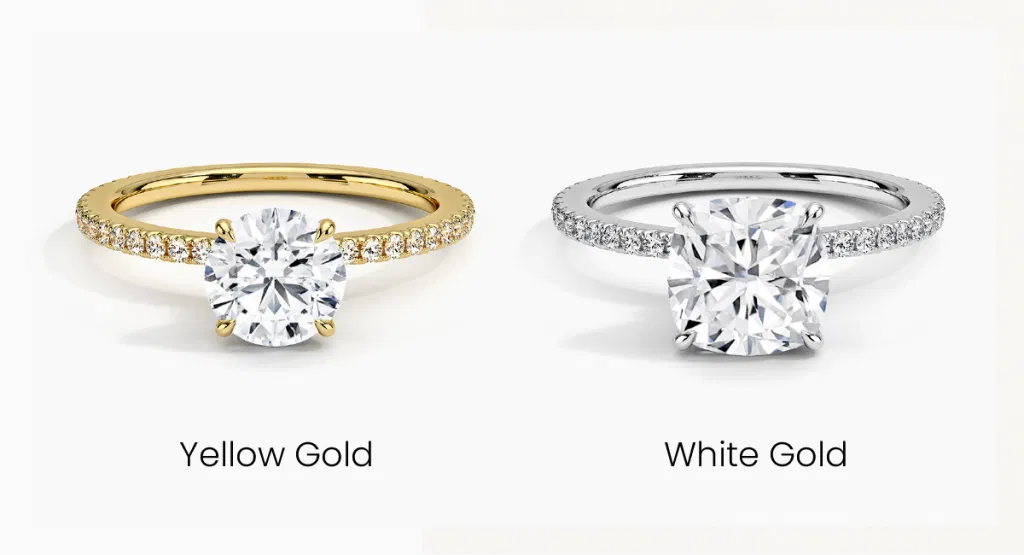
Yellow gold vs white gold – side-by-side ring comparison. Yellow gold retains its natural warm hue, while white gold has a silvery-white finish created by alloying gold with white metals like palladium and rhodium plating. The key differences between gold and white gold include colour, composition, and maintenance – white gold may require replating over time, whereas yellow gold maintains its colour. Both offer elegant, timeless options for fine jewellery.
Yellow Gold vs Rose Gold
Yellow and rose gold are like sisters – both are gold alloys with high gold content, but rose gold has a blush-pink tone due to a different mix of alloy metals. Here’s how they compare:
Colour & Composition: Yellow gold is gold alloyed mainly with silver and copper in balanced proportions to maintain a yellow colour. Rose gold is gold alloyed with a higher proportion of copper (and a bit of silver) to create a pink or rosey hue. Essentially, rose gold is gold + copper (plus sometimes small silver). For example, 18ct rose gold might be ~75% gold, ~22.5% copper, ~2.5% silver. The copper gives it that pink/red tint – the more copper, the redder the gold (hence you might hear terms like pink gold, rose gold, red gold – all are similar with varying copper levels). Yellow gold’s colour is closer to pure gold (bright yellow) whereas rose gold ranges from a soft pink to a deeper rosy red depending on the mix. Both are beautiful, but rose gold offers a distinctive modern-vintage charm thanks to its pink cast.
Durability: Rose gold is actually a bit harder and more durable than yellow gold of the same karat. This might seem surprising, but copper is a tough metal – by adding more copper, rose gold alloys tend to be slightly more rigid and scratch-resistant. For instance, 14k rose gold (which has quite a lot of copper) will generally resist wear better than 14k yellow gold. Yellow gold (especially in higher karats like 18k) is comparatively softer because it has less copper. That said, both are perfectly suitable for daily-wear jewellery; it’s not that yellow gold is weak (far from it, even 18k is strong enough for rings). It’s just that if you’re very active, a rose gold ring might get fewer fine scratches than a high-carat yellow gold ring. Rose gold’s copper content also means it can develop a warm patina over many years – some wearers love that slightly aged look, as it can deepen the character of vintage rose gold. Yellow gold, as noted, doesn’t tarnish much, so it stays more uniform in colour over time (rose gold’s patina isn’t green or ugly, just a subtle mellowing that can be polished off if desired).
Maintenance: Both yellow and rose gold are low-maintenance since neither requires plating (unlike white gold). Rose gold doesn’t need any coating; its colour is through-and-through like yellow gold. Over time, rose gold might actually darken slightly (some say “develop a patina” or a deeper colour) due to copper’s interaction with air – but this usually just lends a slight antique look and isn’t generally considered tarnish in a negative sense. Many people never notice a change. Cleaning rose gold and yellow gold is the same: gentle soap and water, and an occasional polish. One thing to note: because rose gold has copper, people with copper sensitivity might get a greenish mark or irritation (though it’s rare). In contrast, yellow gold with little to no copper (like 18k yellow which is mostly gold+silver) might be even less likely to cause any skin reaction. However, most wearers tolerate both alloys well (and neither typically contains nickel, so both are usually safe for nickel-allergy folks).
Aesthetic & Style: Yellow gold is traditional, classic, and showcases gemstones in a historically timeless way. Rose gold has had a surge in popularity in the 2010s and 2020s – it’s often described as romantic, vintage-inspired yet modern. Rose gold’s pinkish tone can flatter many skin tones, often giving a warm glow. It became very trendy for engagement rings and fashion jewellery because it’s a bit different and less common than yellow or white, yet still has that precious gold feel. Jewellers sometimes pair rose gold with morganites, pink sapphires, or even as an accent with white diamonds for a rosy warmth. Yellow gold is versatile and exudes that unmistakable “real gold” richness – great for those who want their jewellery to scream luxury and tradition. Rose gold can be a great choice if you want something a little playful or antique-looking.
Use cases: There’s a lot of overlap – any piece can be made in either colour. Engagement rings: rose gold gives a distinctive, often vintage look; yellow gold gives a classic, enduring look. Men’s rings and watches: yellow gold has been common historically, but rose gold has also become popular in high-end watches and jewellery for a touch of distinction. Sometimes designers use two-tone effects (e.g. a watch with both rose and yellow gold elements, or a ring with a white gold band and rose gold prongs, etc.) to combine colours.
Value: In terms of monetary value, yellow vs rose gold are equivalent for the same carat, since value is based on gold content. Some might think rose gold (with more copper) should cost less, but jewellery pricing doesn’t discount for that – 18k rose and 18k yellow will usually be priced similarly by weight, and when selling as scrap gold both fetch 75% of pure gold’s value per gram. So it’s purely a style choice.
To sum up, yellow gold vs rose gold comes down to colour preference and slight differences in hardness. Yellow gold offers that sunshine yellow glow and a classic vibe, while rose gold offers a trendy yet nostalgic pink glow with a bit more durability. Both are beautiful, real gold, and choosing one is a matter of which colour speaks to you (or complements your wardrobe/skin tone) more. You can’t really go wrong – some people even mix and stack rose and yellow gold rings for a multi-hue effect.
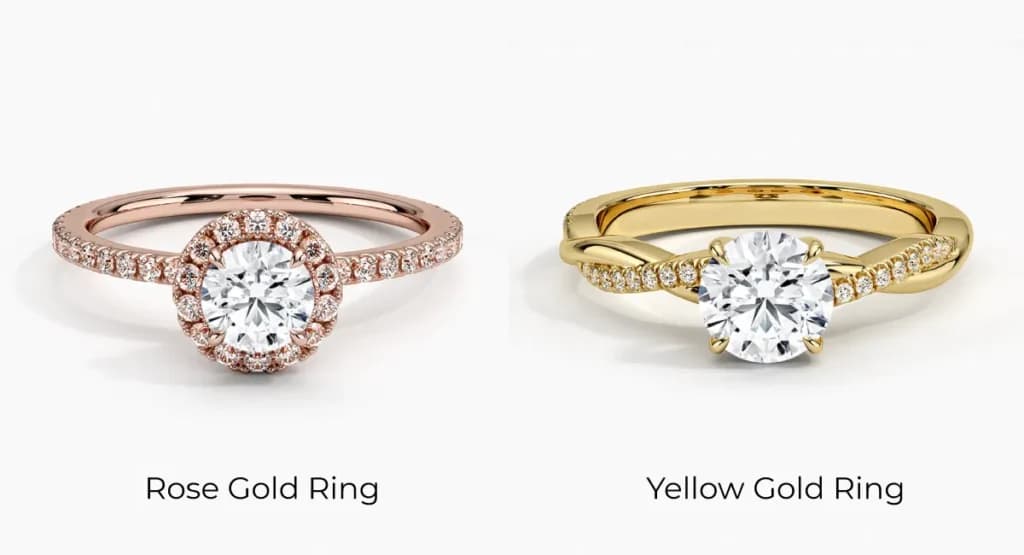
Yellow gold vs rose gold jewellery – a visual comparison. Yellow gold has a rich, classic golden hue due to its mix with metals like copper and zinc. Rose gold, in contrast, has a warm pinkish tone from a higher copper content. The key differences between gold and rose gold lie in colour, alloy composition, and style preference, with both offering distinct aesthetics in fine jewellery.
If you’re comparing yellow gold vs rose gold and want to dive deeper into what makes rose gold unique, discover the differences, how it’s made, and it’s live price, check out of expert article on ‘What is rose gold?’
What is rose gold? Discover if rose gold is real gold, yellow gold vs rose gold differences & the live rose gold price per gram.
Yellow Gold Price Per Gram
Price of yellow gold per gram depends on two main factors: its purity (carat) and the current gold market rate. Pure 24k gold is the benchmark – it’s priced at the full gold market value (often quoted per troy ounce, ~31.1 grams). If you have a lower carat gold, the price per gram will be proportionally lower because there’s less pure gold in each gram of the alloy. For example, 18k gold is 75% gold, so its price per gram is about 75% of the 24k price per gram. GoldSell provides a live price checker that displays up-to-the-minute prices for each common carat of gold, so you can see exactly what your gold is worth today per gram. Below, we outline typical prices per gram for various yellow gold purities (carats) as a general guide.
Gold price last updated:
Wednesday, 21 October 2026, 13:15.
The LBMA (London Bullion Market Association) spot price changes daily.
The prices displayed are based on the global market rate for pure 24ct gold, known as the gold spot price. Like all gold dealers, GoldSell pays a percentage of this rate to account for assaying, refining, secure logistics, market volatility, and handling costs. We consistently offer among the highest payout rates in the UK, with the exact percentage increasing based on the weight and purity of the gold you sell.
9k Gold Price Per Gram
As of 21 Oct 2026, the live 9ct gold price per gram is £37.21 based on the live gold price as of today in the UK.
9 carat gold is 37.5% pure gold (its hallmark is often “375”). Because it contains just over one-third gold, its value per gram is roughly one-third of pure gold’s price. In the UK, 9k is a common purity for affordable gold jewellery. 9k gold has the lowest price per gram among commonly traded gold purities (because it has the least gold), but it’s still valuable – at £37.21, and it goes up incrementally if the gold market rises.
14k Gold Price Per Gram
As of 21 Oct 2026, the live 14ct gold price per gram is £57.88 based on the live gold price as of today in the UK.
14 carat gold is 58.5% pure (hallmarked “585” often). That’s over half gold, so its price is accordingly higher per gram than 9k. 14k gold price per gram is roughly 58.5% of the 24k price. This carat is popular in the USA and in some continental Europe jewellery, and although 14k is not as common in UK retail (UK uses 9k or 18k more), GoldSell purchases 14k gold at a very competitive price. So if you’re selling a 14k gold chain, you’d multiply its weight in grams by the current 14k per-gram rate to estimate its base value.
18k Gold Price Per Gram
As of 21 Oct 2026, the live 18ct gold price per gram is £74.42 based on the live gold price as of today in the UK.
18 carat gold is 75% pure (hallmarked “750”). This is a high-purity gold used in most fine jewellery, so it commands a strong price per gram. 18k gold price per gram is about 75% of 24k’s price. When you sell 18k gold with us, we pay according to the live 18k gold price. Gold prices have been near record highs recently, so this figure can rise if gold continues to climb. In summary, 18k gold holds about 3/4 the value of pure gold per weight and is currently £74.42 per gram.
21k Gold Price Per Gram
As of 21 Oct 2026, the live 21ct gold price per gram is £86.82 based on the live gold price as of today in the UK.
21 carat gold is 87.5% pure (often hallmarked “875” if you come across it). 21k is not a standard hallmark in UK (22k is more common), but 21k is popular in some countries (e.g. Middle Eastern gold often is 21k). Its price per gram will be ~87.5% of 24k’s price. If you have 21k jewellery (sometimes hallmark might say “21K” or a stamp like “875”), GoldSell can value it and pay the best price for gold amongst UK gold buyers.
22k Gold Price Per Gram
As of 21 Oct 2026, the live 22ct gold price per gram is £90.96 based on the live gold price as of today in the UK.
22 carat gold is 91.6% pure (hallmark “916”). This is a common purity for high-end jewellery and gold sovereign coins, etc., especially in Indian, Asian, and Middle Eastern jewellery. 22k price per gram is about 91.6% of 24k. 22k has a rich deep yellow colour and is just slightly shy of pure gold, so its value is very close to 24k. When selling 22k items (like some gold bangles or coins), you’re getting paid for over 90% gold content. Typically, scrap gold buyers love 22k because it yields a lot of pure gold upon refining, so you should get a strong price. If you’re tracking prices, note that 22k moves almost in lockstep with the 24k spot price – so if gold goes up, the 22k per gram goes up accordingly.
24k Gold Price Per Gram
As of 21 Oct 2026, the live 24ct gold price per gram is £99.23 based on the live gold price as of today in the UK.
24 carat gold is 99.9% pure gold – essentially the market price of gold itself. 24k price per gram is the reference for all other carats. The 24k gold price changes constantly with the international gold spot price (which is often quoted in USD per ounce). The 24k price per gram you’ll see on our site is the live gold spot price per gram which is automatically updated every 60 seconds, providing an accurate up-to-date live gold price. So if you have pure gold bullion or coins, that’s the rate you’d look at. Now, pure 24k jewellery is rare (most jewellery is slightly alloyed), but some coins (like Britannias post-2013, 24k) or bars are 24k. When selling 24k gold, we pay a percentage of the spot price to cover refining and testing costs, but we have positioned ourselves as the UK’s most trusted and highest paying gold buyer thanks to our Live Price Checker™, Best Price Guarantee and transparent process which thousands of people use daily to sell gold with us. Always use our gold price per gram live price checker for the latest figure, as gold prices can move daily.
Can I Sell Yellow Gold?
Yes, you can sell yellow gold to us easily and with complete confidence. At GoldSell, we’re the UK’s most trusted and highest-paying online gold buyer—offering a service built on transparency, speed, and some of the highest gold prices in the UK.
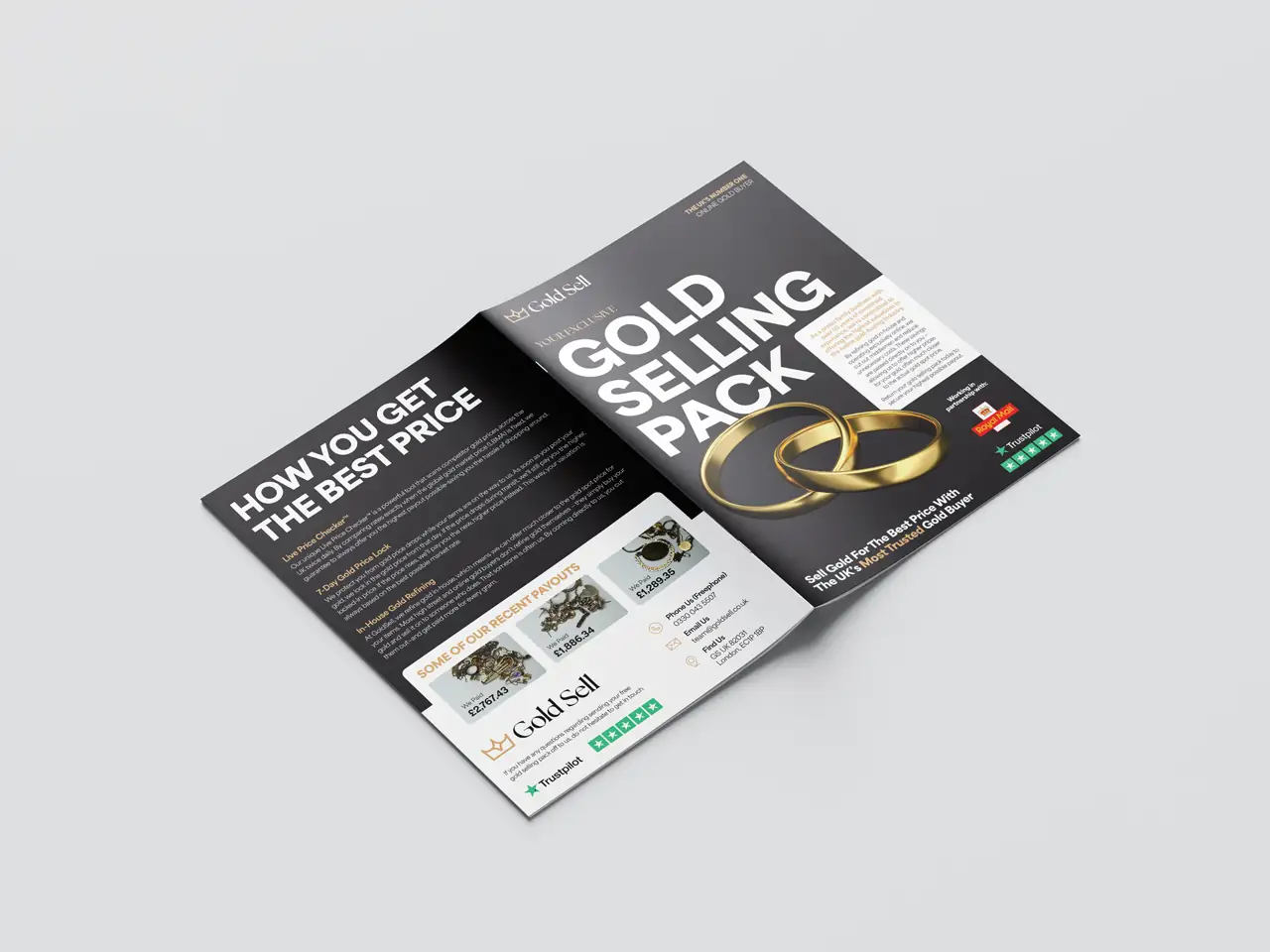
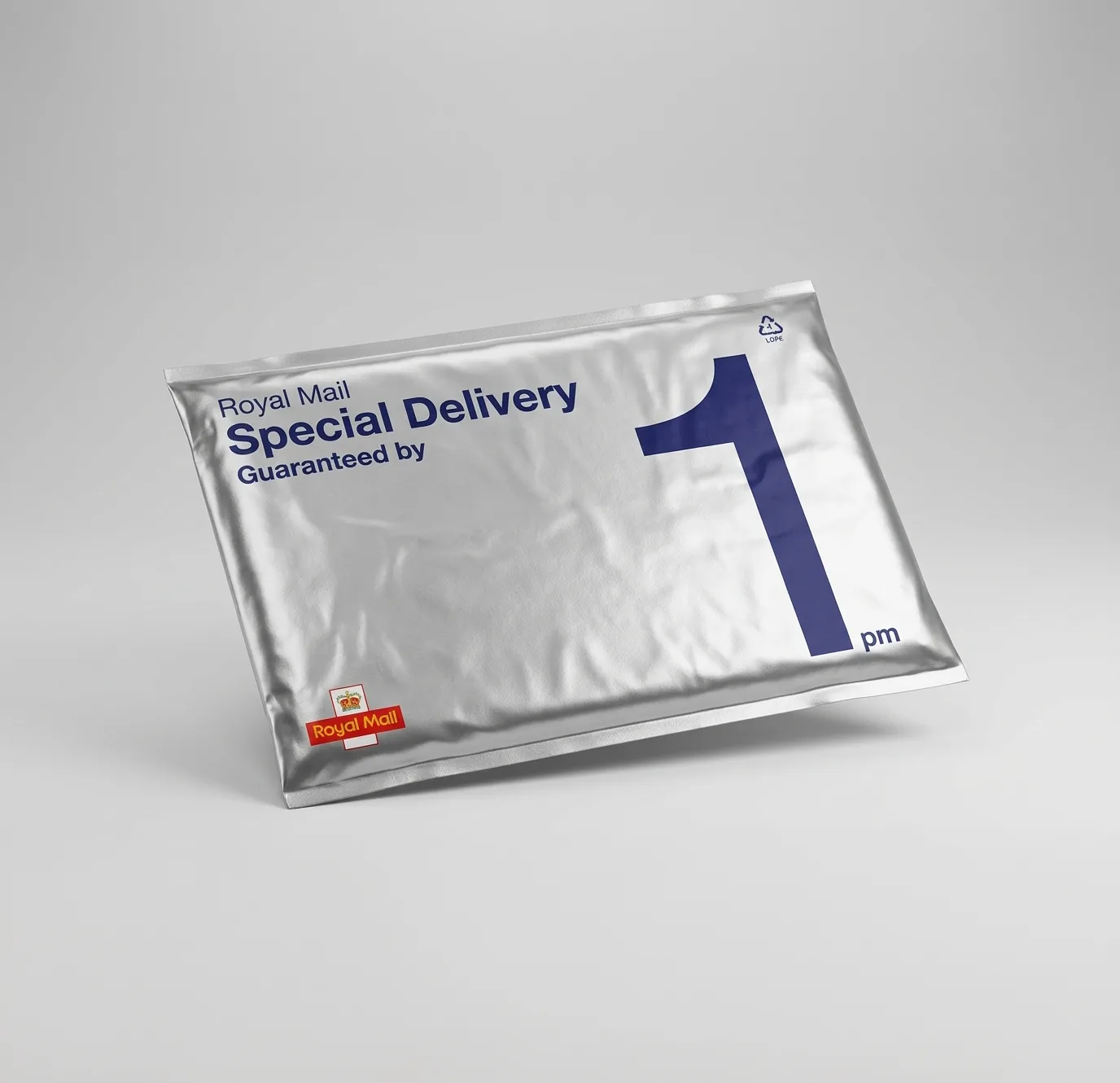
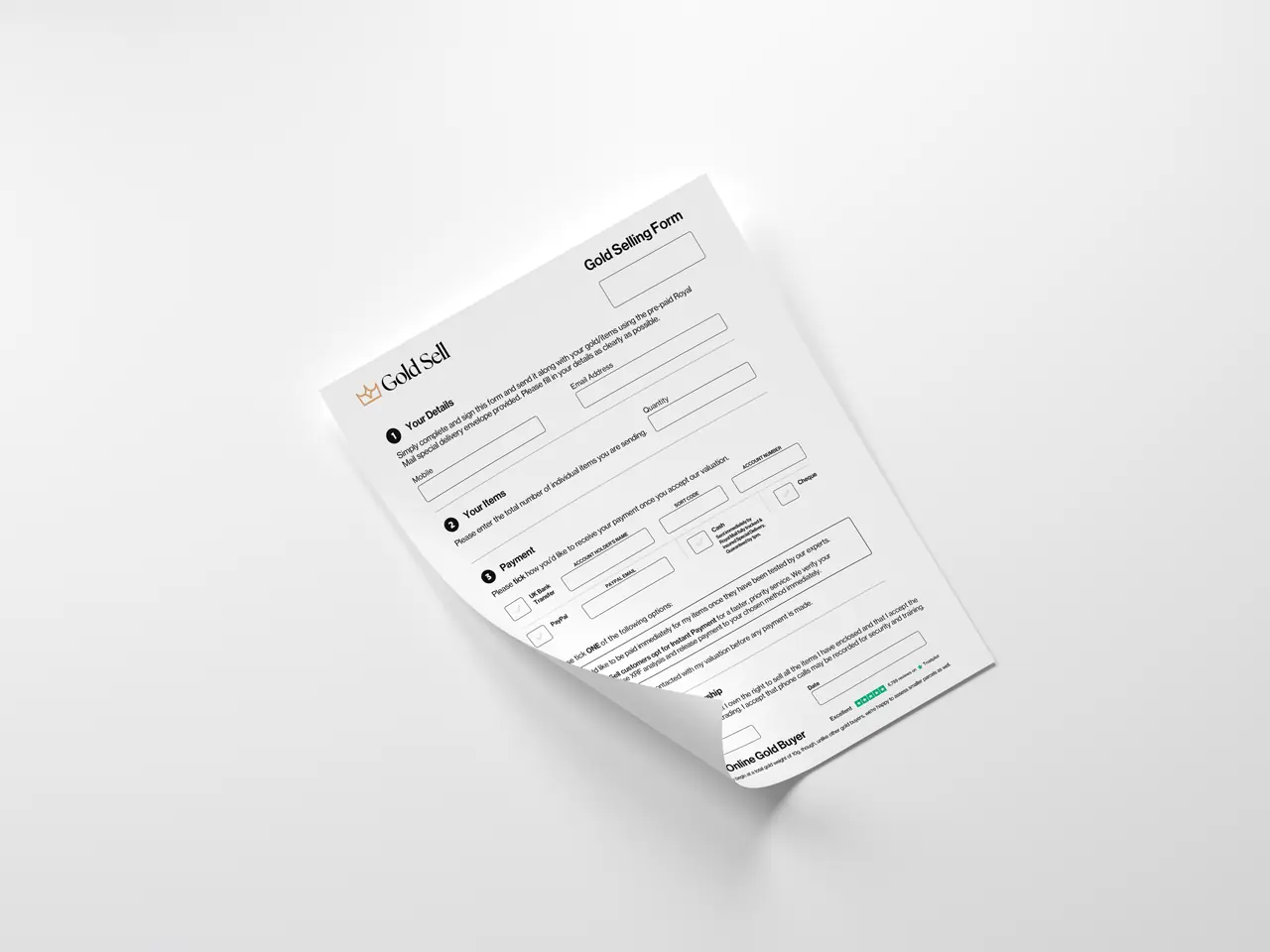
When you’re ready to sell, simply order your free Gold Selling Pack. It contains everything you need: a protective padded bag, a short valuation form to enter your preferred payment method, and a pre-paid, fully tracked and insured Royal Mail Special Delivery envelope to send us your gold securely.
Once your pack arrives with us (usually by 1pm the next working day), our in-house experts get straight to work. We use non-destructive XRF technology to accurately test each item—no guesswork, no generic estimates that local jewellers or other gold buyers sometimes provide. Every item is valued on its true gold content, regardless of condition, carat, or weight.
We’re not a middleman—we refine gold ourselves, which means no third-party fees and no unnecessary delays. This allows us to pay more than traditional jewellers or pawnshops, and ensures you receive the best price for gold, every time.
Thanks to our Live Price Checker™, we scan UK gold buyer prices twice a day—when the LMBA gold price is fixed—so we’re always offering a better price than other gold buyers. We also offer a Best Price Guarantee, meaning if you receive a higher offer elsewhere, we’ll match or beat it, no questions asked.
Once you accept our valuation, we process your payment within 20 minutes.
Still unsure? Our 7-Day Price Lock ensures you never lose out due to market dips. From the moment you send your items to the time we complete your valuation, we’ll lock in the highest gold price during that window. If the price rises, you benefit. If it falls, you’re protected.
So yes—you absolutely can sell yellow gold to us. And with GoldSell, you’ll always know you’re getting the most accurate valuation, the fastest payment, and the highest price for gold.
Frequently Asked Questions
What is yellow gold?
Yellow gold is a real gold alloy known for its classic golden colour. It’s created by mixing pure gold with metals like copper and silver to strengthen it while maintaining the yellow hue. Used widely in jewellery, yellow gold comes in different carats such as 9ct, 14ct, 18ct, and 22ct, which refer to its purity. The higher the carat, the more gold it contains, and the richer its natural yellow colour will appear.
Is yellow gold real?
Yes, yellow gold is real gold. The term refers to gold jewellery that retains gold’s natural yellow colour. It’s made by alloying pure gold with other metals like copper and silver. As long as it’s 9 carat or higher (the legal minimum in the UK), yellow gold is genuine. For example, 18ct yellow gold contains 75% real gold. It’s important to distinguish it from gold-toned costume jewellery, which contains no actual gold.
Yellow gold vs white gold
Yellow gold is alloyed with copper and silver, keeping its warm, golden colour. White gold contains white metals like nickel or palladium and is typically rhodium-plated for a silvery finish. Yellow gold is lower maintenance as it doesn’t require plating. White gold may need re-plating over time. Both are real gold with equal value by carat. The choice comes down to colour preference, upkeep, and whether you want a timeless or modern appearance.
Yellow gold vs rose gold
Yellow gold has a classic golden tone, while rose gold has a pink hue due to more copper in its alloy. Both are real gold and available in carats like 14ct or 18ct. Rose gold is often slightly harder because of copper’s durability. Yellow gold offers a traditional look, ideal for heirloom-style jewellery. Rose gold is trendy and romantic. Both hold the same value per carat and choosing between them comes down to style preference.
What does yellow gold mean?
Yellow gold means gold jewellery that has a natural, golden-yellow colour. It’s made from pure gold mixed with alloys like silver and copper that preserve its warm hue. The term helps distinguish it from white or rose gold. Yellow gold is available in various purities (carats), from 9ct to 24ct, and is known for its timeless look. It’s one of the most recognised and traditional types of gold used in jewellery and coins.
Can yellow gold be dipped in rhodium?
Yes, yellow gold can be rhodium-plated to create a white gold-like finish, although it’s not common. Rhodium is a silvery-white metal that coats jewellery to give it a bright, reflective surface. If used on yellow gold, it will temporarily hide the gold’s colour until the plating wears off, revealing the original yellow beneath. This cosmetic change is reversible and doesn’t damage the gold. Most people choose white gold instead of plating yellow gold.
Are yellow gold engagement rings in style?
Yes, yellow gold engagement rings are very much in style. They offer a timeless, elegant look that complements both vintage and contemporary designs. Yellow gold has seen a resurgence in popularity as couples seek warmer tones and classic styles. It’s especially flattering on warm skin tones and pairs beautifully with white diamonds or coloured gemstones. Many appreciate its rich, traditional feel, making it a strong contender for both new and heirloom-style engagement rings.
Can I wear 14k gold in the shower?
Yes, you can wear 14k yellow gold in the shower. It won’t rust or corrode, and water doesn’t harm real gold. However, exposure to soaps, shampoos, and chlorine may dull its shine over time or slightly tarnish the alloy metals. Regular cleaning helps maintain its lustre. To extend the life of your jewellery’s appearance, remove it before swimming or bathing, although short-term contact with water won't damage 14k yellow gold structurally.
Can I wear 14k gold everyday?
Yes, 14k gold is ideal for everyday wear. It contains 58.5% pure gold mixed with stronger metals, making it more resistant to scratching and bending than higher carats like 18k or 22k. Its balance of durability and value makes it a popular choice for engagement rings, bracelets, and daily-use necklaces. While it may develop fine scratches over time, occasional polishing restores its shine. It’s a reliable and long-lasting option for frequent use.
Can I sell 14k gold?
Yes, you can sell yellow gold to us quickly and securely. Order a free Gold Selling Pack with insured postage, and we’ll provide a same-day valuation using XRF testing for accuracy. We pay within 20 minutes of acceptance, offer a 7-day price lock, and guarantee the best price for gold with our Live Price Checker™. We refine in-house, so you get the highest payout with no middleman or fees.
What does yellow gold filled mean?
Yellow gold-filled jewellery is made by bonding a thick outer layer of yellow gold to a base metal like brass. Unlike gold plating, gold-filled items must contain at least 5% gold by weight. They’re more durable and longer-lasting than plated pieces but are not solid gold. Gold-filled jewellery provides the appearance of real gold at a lower cost and typically doesn’t tarnish quickly, making it a popular mid-range option in the gold jewellery market.
What does yellow gold symbolise?
Yellow gold traditionally symbolises wealth, power, warmth, and eternal love. Its golden colour is associated with the sun, light, and abundance. Across many cultures, yellow gold has been used in weddings, religious ceremonies, and royal adornments. It conveys timeless value and prestige. In modern jewellery, yellow gold is often chosen for its luxurious appearance and classic style, making it a powerful symbol of commitment, prosperity, and enduring relationships across generations.
What is 14k gold?
14k gold is a popular gold alloy that contains 58.5% pure gold and 41.5% other metals like copper and silver. It’s often used in rings, bracelets, and chains because it offers excellent durability and a bright, warm colour. The hallmark “585” may be stamped on 14k items. It’s harder than 18k gold but still valuable and considered real gold. 14k balances affordability, strength, and classic yellow gold appearance, ideal for daily-wear jewellery.
Why does yellow gold turn white?
Yellow gold doesn’t naturally turn white. If it appears white, it’s often due to rhodium plating applied to parts of the jewellery to change its look. As the plating wears off, the original yellow colour returns. In rare cases, mercury exposure can create a whitish surface reaction. True yellow gold maintains its colour unless externally coated or chemically altered, so if you notice a white appearance, it’s likely a result of a surface treatment or reaction.
Why is some gold so yellow?
Gold appears more yellow the higher its purity. 24k gold has the richest yellow colour because it’s nearly 100% pure. 22k and 18k also retain strong yellow tones. Lower carats like 9k and 14k look paler or less vibrant due to higher percentages of alloy metals such as silver or zinc. Some manufacturers also adjust the alloy mix to enhance or soften the yellow tone. More pure gold = deeper yellow colour.
Does yellow gold have nickel?
No, most yellow gold alloys do not contain nickel. They’re typically mixed with copper, silver, and zinc, which preserve the metal’s yellow colour and reduce the risk of allergic reactions. Nickel is more commonly found in white gold alloys. If you’re nickel-sensitive, yellow gold is generally a safer choice, especially in higher carats like 18k, which have a higher percentage of pure gold and fewer alloy metals that may cause irritation.
Does yellow gold vermeil tarnish?
Yes, yellow gold vermeil can tarnish over time. Vermeil is sterling silver coated with a thick layer of yellow gold. While the gold layer resists tarnishing, the silver underneath can oxidise if the coating wears thin or is scratched. Tarnish may appear as dark spots or dullness. To minimise this, keep vermeil dry and clean. Though not solid gold, it offers a higher-quality finish than standard gold plating and can be re-plated if needed.
Does yellow gold need to be replated?
No, yellow gold does not require replating. Its colour runs through the entire metal, unlike white gold which often needs rhodium plating. Yellow gold may scratch or dull over time, but a simple polish restores its shine. Its natural hue remains unchanged with age or wear. This makes yellow gold a low-maintenance choice for everyday jewellery, offering long-lasting beauty without the need for regular treatments or coatings.
Does yellow gold fade?
Yellow gold doesn’t fade. The gold’s colour is consistent throughout the metal and remains stable over time. It may lose surface shine due to dirt, scratches, or oxidation of alloy metals in lower carats, but this doesn’t mean the colour has faded. Cleaning or polishing restores its brightness. Only gold-plated items fade when the coating wears off, but solid yellow gold retains its rich hue indefinitely with minimal maintenance.
Does yellow gold change colour?
Yellow gold does not change colour under normal conditions. Its golden hue remains stable over time. However, lower carat yellow gold (like 9ct) may show slight surface dullness or tarnish due to the alloy metals reacting with air, moisture, or chemicals. These effects are temporary and can be polished away. Unless rhodium-plated or chemically exposed, solid yellow gold keeps its colour and lustre with basic care and cleaning.
Will yellow gold turn green?
Yellow gold itself won’t turn green, but jewellery made from lower carats like 9ct may leave green marks on the skin due to copper in the alloy reacting with sweat, lotions, or humidity. This is more of a skin reaction than a change in the jewellery. It’s uncommon with higher carat gold like 18ct. Cleaning your jewellery regularly and removing it during heavy sweating can prevent green staining on skin.
Which gold is the most yellow?
24k gold is the most yellow, as it’s 99.9% pure with no alloy metals to alter its colour. 22k gold also has a deep, rich yellow appearance. Lower carat golds like 18k or 14k are paler due to higher proportions of silver or other metals. If you want the boldest golden hue, 22k or 24k yellow gold is ideal. They’re popular in coins and traditional jewellery where maximum gold colour is desired.
Interested in selling gold with the UK’s highest paying gold buyer? Visit our Sell Gold page to get a competitive valuation – we provide fully insured postage and fast payment.
For more insights and the latest gold price today, keep an eye on our live charts and blog updates.