What Is Bonded Gold?
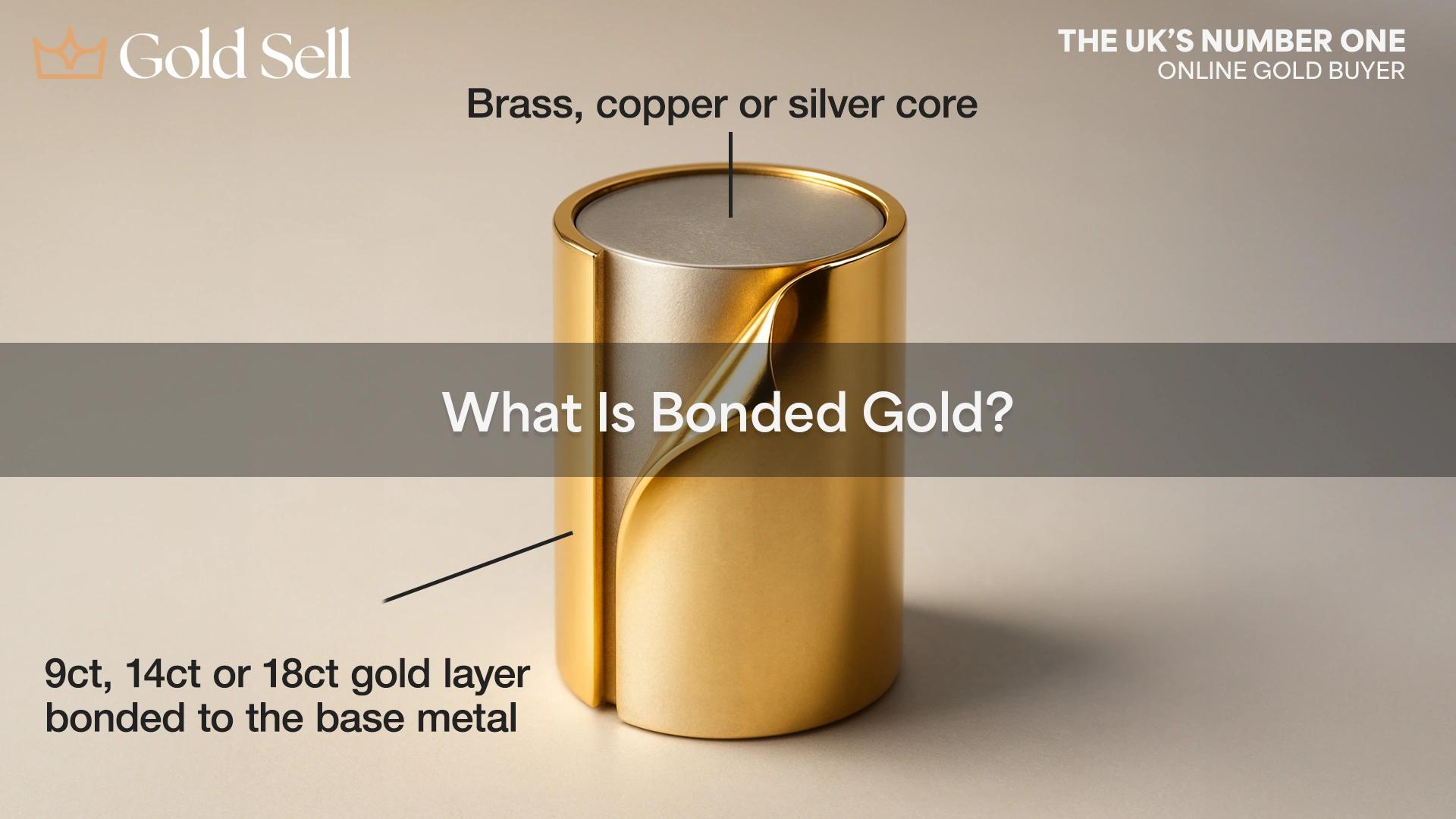
Bonded gold is a type of jewellery made by permanently bonding a layer of real gold to a base metal core. In other words, it has a thick outer sleeve of genuine gold fused onto a cheaper metal underneath, giving the appearance of solid gold at a fraction of the cost. It’s an affordable alternative to solid gold that still looks and feels like the real thing.
Key Takeaways
- Bonded gold (gold-filled): Jewellery has a thick layer of real gold mechanically bonded to a base metal (often brass or sterling silver), creating a durable piece that looks like solid gold.
- It is real gold on the outside: The gold layer is typically 9ct, 14ct, 18ct etc., so bonded gold pieces have genuine gold content – usually about 5–10% of the item’s weight is gold. However, because most of the weight is base metal, they are far less valuable than solid gold pieces of the same size.
- Bonded gold is much more durable than gold plating: The bonded gold layer is ~100 times thicker than standard plating, so it doesn’t flake off easily and can last for decades with proper care. Over time the gold can wear thin in high-friction areas, but bonded gold jewellery often lasts 10–30 years or more before the underlying metal shows.
- Gold doesn’t tarnish – and neither will bonded gold until the base metal is exposed: The thick gold coating resists tarnish and corrosion, so bonded gold jewellery stays shiny and won’t turn your skin green. Only if the gold layer wears away (after many years or heavy wear) might the base metal oxidise and cause discolouration.
- UK regulations ensure bonded gold is properly described: In the UK, the gold used must be at least 9 carat purity (375). Bonded gold items cannot be hallmarked as solid gold – if the core is silver, they get a silver hallmark (and a stamp like “18ct bonded gold” alongside it), and if the core is base metal they carry no hallmark. This prevents consumers being misled into thinking bonded gold pieces are solid gold.
What Is Bonded Gold?
Bonded gold — also known as gold-filled jewellery or rolled gold — refers to metal pieces that have a substantial layer of real gold bonded onto a core of another metal. In bonded gold jewellery, a thick sheet of gold alloy (commonly 9ct, 14ct or 18ct gold) is mechanically fused to a base metal (such as brass, copper, or sterling silver) using heat and pressure. This creates a permanent gold coating that is far thicker than typical gold plating, preventing the gold from flaking or peeling off. The bonded gold meaning, essentially, is that you’re getting an item with real gold on the outside and a sturdier metal underneath that looks the same as higher composition gold jewellery, for a fraction of the cost.
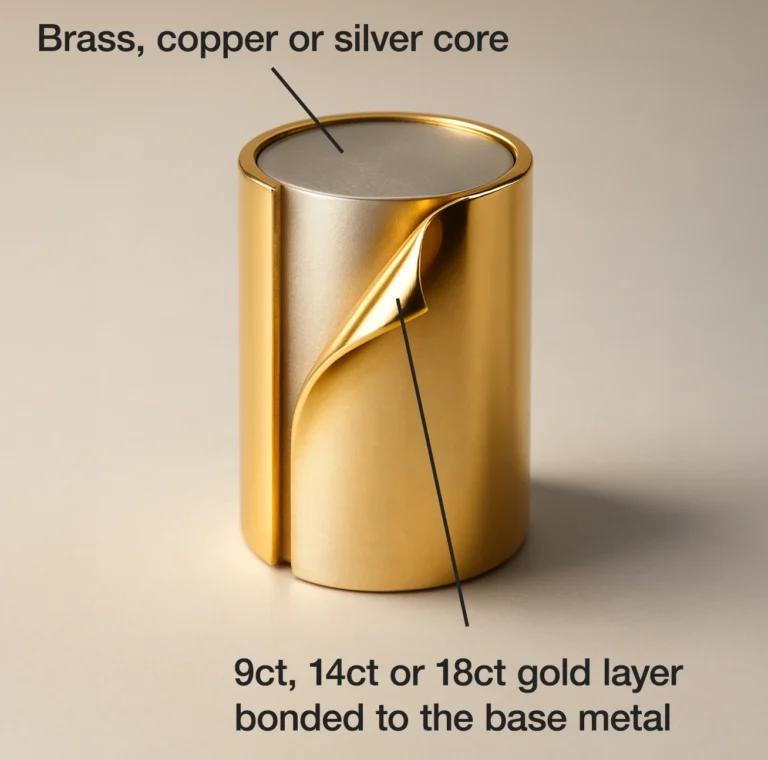
This diagram illustrates how bonded gold jewellery is made — a thick sheet of real gold (typically 9ct, 14ct, or 18ct) is permanently fused to a core metal like brass, copper, or silver. This process gives bonded gold its durability and lustrous appearance, making it a cost-effective alternative to solid gold while still using real gold on the outside.
Characteristics of Bonded Gold: Bonded gold jewellery looks virtually identical to solid gold because its outer surface is real gold. The gold layer is typically 5% or more of the item’s total weight by law (often marked as 1/20th). In fact, U.S. standards require at least 5% gold content for an item to be marketed as “gold-filled”. By comparison, most standard gold-plated pieces have less than 0.05% gold by weight. Because of this thickness, bonded gold pieces have a warm lustre and long-lasting finish similar to solid gold. Common gold purities used in bonded gold are 9ct (375), 10ct (in the US), 14ct (585), and 18ct (750). The higher the karat, the more pure gold in the layer – for example, 18ct bonded gold jewellery has a layer of 75% pure gold, giving it a rich yellow tone. However, note that in the UK any gold layer below 9ct cannot legally be called gold, so bonded gold in the UK uses at least 9ct gold alloy. In practice, many bonded gold pieces in Britain use 9ct, 14ct or 18ct gold layers.
Other terms for bonded gold: You might hear bonded gold jewellery referred to as “gold-filled,” “rolled gold,” “gold overlay,” or “gold bonded” – these are essentially the same concept with minor differences in usage. Gold-filled is the common US term, rolled gold is an older term often used for vintage items (sometimes with slightly lower gold content), and gold bonded is a newer term seen in the UK and by some brands. All describe a heavy-duty gold coating bonded onto a base metal. For instance, British guidance treats “bonded gold” and “rolled gold” the same way under hallmarking rules. No matter the name, the key point is that bonded/filled gold pieces contain a layer of real gold that is much thicker and more durable than electroplated gold.
Are there legal requirements for bonded gold thickness in the UK? Yes – to protect consumers, the UK has specific guidelines. The British Hallmarking Council clarified that bonded gold on a base metal cannot be hallmarked as gold, and if the core is sterling silver, the piece should carry a normal silver hallmark (since the item is mostly silver by weight). Any gold purity marks (like “9ct” or “18ct”) cannot be stamped alone on bonded gold; they must be immediately accompanied by terms like “bonded gold” or “rolled gold” to avoid confusion. For example, a piece might be stamped “925 & 18ct bonded gold” if it has a sterling silver core with an 18ct gold layer. Importantly, the gold layer itself must be of a recognised UK fineness (at least 375 parts per thousand). This means if an American-made piece used 10K gold (which is 416 ppt) for the outer layer, in the UK it can only be described and marked as 9 carat, since 10K is not a standard UK hallmarking fineness. These rules ensure buyers aren’t misled into thinking bonded gold jewellery is solid gold.
In summary, bonded gold jewellery gives you the best of both worlds: the look and outer wear properties of real gold, combined with the strength and affordability of a base metal core. It became especially popular during times of high gold prices (such as the early 2010s) when jewellers looked for ways to offer affordable pieces with gold’s appearance. Next, we’ll clarify common questions about bonded gold’s authenticity, durability, value, and how it compares to other gold jewellery types.
Is Bonded Gold Real?
Yes – bonded gold jewellery is made with real gold, at least on its outer surface. The gold used in bonded gold is authentic gold alloy (e.g. 9ct, 14ct, 18ct), so the part of the item you see and touch is genuine gold. For example, a bonded gold ring might have an 18ct gold layer bonded over a brass or silver core; that 18ct layer is real gold, giving the piece the same look and feel as solid 18ct jewellery.
However, only the gold layer is real gold, not the entire piece. The core beneath is a different metal (often a base metal like copper, brass or sometimes sterling silver). This means bonded gold items contain far less total gold than a solid gold item of the same size. A bonded gold piece might be around 5–10% gold by weight, whereas a solid gold piece is 100% gold alloy. So while bonded gold looks real (because it is real gold on the outside), it doesn’t carry the high intrinsic value or heft of solid gold.
Think of it this way: bonded gold is “real gold jewellery” in terms of outward appearance, but it’s not solid gold through-and-through. Everything you can see or that touches your skin is real gold, which is why bonded gold items can often pass for solid gold to the casual observer. This authenticity in appearance is a big advantage – bonded gold isn’t like cheap gold paint or fake “gold-tone” metal; it’s the real deal on the exterior.
From a value perspective, though, you should remember that bonded gold is much less valuable than the same item in solid gold, simply because most of its weight is non-gold material. For example, a thick 18ct bonded gold chain might look identical to a solid 18ct gold chain, but if you were to sell them for scrap, the bonded gold chain would only fetch the value of the small amount of gold in its outer layer (plus maybe a bit for the silver if it has a silver core). The solid chain would be worth exponentially more.
In summary, everything that matters to the wearer – the colour, the finish, the resistance to tarnish – is real gold on a bonded gold piece. It’s not “fake gold” or costume metal; it’s authentic gold that has been applied in a thick layer. Just be aware that under that gold skin is a different metal, which is how bonded gold achieves a lower price point. This combination of real gold exterior and base metal interior is what makes bonded gold jewellery an attractive option if you want the look of gold without the cost of solid gold.
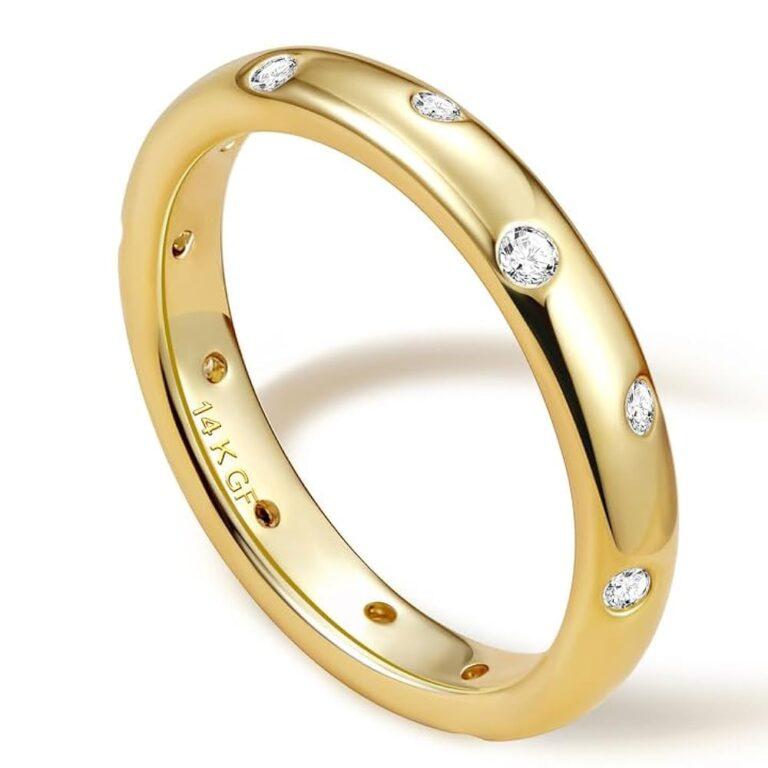
This gold filled ring is visually indistinguishable from a solid 14ct gold ring. It has the same shine, colour and finish, making it virtually impossible to tell the difference without testing. The key difference lies beneath the surface — gold filled jewellery uses a thick bonded layer of real gold over a base metal core, offering the look and feel of solid gold at a far more affordable price.
Does Bonded Gold Tarnish?
Pure gold itself does not tarnish, so the gold layer on bonded gold jewellery will not tarnish or corrode in the way that silver or brass might. This means bonded gold pieces are quite resistant to tarnishing as long as the gold surface remains intact. Under normal use, a good-quality bonded gold (gold-filled) item will keep its shine for many years without discolouration. For example, you can wear a bonded gold necklace daily and it will typically stay bright and golden, whereas a thin gold-plated necklace might start darkening or flaking within months.
However, the caveat is that bonded gold jewellery is only tarnish-resistant up until the point where the gold layer wears through. Tarnish is a surface effect that happens when base metals react with air, moisture, or chemicals. In a bonded gold item, the base metal (such as copper, brass, or sterling silver) is completely sealed under a thick layer of gold, so it can’t react or tarnish — at first. Over a long time (or if the piece is subjected to heavy wear and abrasion), some areas of the gold layer may wear thin, especially on high-contact spots like ring edges or chain links. If and when the underlying metal becomes exposed in those spots, tarnish can occur on those exposed base metal areas. For instance, if a bonded gold ring has been worn daily for years and the underside of the band has rubbed down to the base metal, that exposed spot might start to tarnish or turn skin green because the brass or copper is reacting. If you’re starting to notice dullness or dark spots on your jewellery and want to bring back its shine, check out our full guide on How To Untarnish Gold?. We cover the causes of gold tarnish, which types of gold are most resistant, and safe at-home methods to clean and restore your pieces.
It’s worth noting that even solid 9ct gold can tarnish slightly over time because 9ct gold is 37.5% gold and the rest is alloy metals (which can include copper, silver, etc.). Many people notice that lower-purity solid gold (like 9ct or 10ct) can darken or need polishing after a long period due to those other metals oxidising. But with solid gold, tarnish is usually minimal and can be polished off, since the material all the way through is gold alloy. With bonded gold, if tarnish appears it means the gold layer has worn off in that area – you’d see the tarnish of the base metal, not of the gold. At that point, polishing the tarnish off the exposed spot is possible, but you must be careful: over-polishing could remove more of the surrounding gold layer.
The good news is that quality bonded gold jewellery rarely tarnishes for a very long time. The gold layer is thick enough that casual wear won’t quickly rub it away. Many bonded gold pieces stay tarnish-free for decades if cared for properly. To maximise tarnish resistance:
- Keep bonded gold jewellery clean and dry when not in use (sweat or chemicals left on it can slowly eat away at the gold layer or sneak under edges).
- Avoid abrasive contact that could wear the gold faster (remove bonded gold rings when doing heavy manual work, for example).
- Store the jewellery in a soft pouch separate from other hard items to prevent scratches to the gold layer.
In summary, bonded gold jewellery is very resistant to tarnishing – much more so than standard gold-plated pieces – because of its thick layer of real gold that shields the base metal from the elements. It will only tarnish if that shield is compromised. So if you notice any tarnish on what was sold as “bonded gold,” it’s likely a sign that the item’s gold layer was thinner than it should be or has been worn down after many years of use. Under normal conditions, though, you can expect bonded gold to keep its bright gold look without tarnish for a long time, making it suitable for everyday wear without the constant worry of it dulling or discolouring.
Is Bonded Gold Worth Anything?
Bonded gold jewellery does have value, but not nearly as much as an equivalent piece made of solid gold. Its value can be considered in two ways: intrinsic (scrap) value and wearable (retail) value.
-
Intrinsic value (gold content): A bonded gold item contains a certain amount of gold by weight – typically around 5% of its weight, though some higher-quality pieces might have closer to 10%. For example, let’s say you have a bonded gold bangle that weighs 20 grams and is marked 1/20th 14ct GF (meaning 1/20 of it is 14ct gold). That works out to just 1 gram of 14ct gold. Based on today’s live price of £45.84 per gram for 14ct gold, the gold content in the whole bangle would be worth about £57.20 – and that’s before any refining costs are taken off. So the scrap gold value is relatively low. In contrast, a solid 14ct gold bangle weighing 20 grams would be all gold and worth £1,143.91 based on the live gold price in the UK today.
What this means is that if you try to sell bonded gold jewellery for its gold content (to a gold buyer or pawn shop), you will likely be offered a very modest sum. Many gold buyers actually refuse gold-plated or gold-filled items because the effort to extract the gold isn’t worth the small yield, unless you have them in bulk. Some specialist refiners do take gold-filled scrap, but you’d need a lot of it to make it worthwhile. In short, bonded gold is worth something for its gold, but only a small fraction of the value of solid gold of the same weight.
-
Wearable/retail value: On the other hand, bonded gold jewellery has value in terms of workmanship, design, and wearability. It’s more valuable than simple costume jewellery or standard gold-plated jewellery. A well-made bonded gold chain, for instance, will cost more than a thinly gold-plated base metal chain because it contains more gold and is crafted to last longer. People are willing to pay for bonded gold pieces due to their durability and gold exterior – they are often considered the next best thing to solid gold. For example, a bonded gold (gold-filled) necklace might retail for, say, £100, whereas a similar-looking solid gold necklace could be £500+ and a flimsy gold-plated one might be £30. So in the market, bonded gold is “worth” quite a bit to consumers looking for affordable quality.
Additionally, certain bonded gold pieces, especially vintage ones labeled “rolled gold,” might have collector or aesthetic value. And if a bonded gold item is from a designer brand or has craftsmanship value (gemstones, intricate design), its value will reflect those factors more than the gold content.
In summary, yes, bonded gold is worth something – it’s not fake or worthless. Bonded gold (gold-filled) jewellery is often viewed as a good balance of cost and quality, and you will pay a higher price for it than for gold-plated trinkets. It also retains its wear and appearance value over time; unlike cheap plated jewellery that might basically become unwearable after the gold rubs off, a bonded gold piece remains attractive and usable for many years, which gives it value to the owner. However, when comparing pure monetary worth, bonded gold is only worth a small fraction of what a similarly sized solid gold item would be worth because of the limited gold content. So if you’re buying bonded gold, do it for the look and durability at a lower price – not as an investment in gold material. And if you’re selling bonded gold, temper your expectations: you might get some cash for it, but nothing close to solid gold’s payout.
Today's Live Gold Prices
While bonded gold is excellent for durable, everyday wear, it holds minimal scrap value due to its low actual gold content, typically just 5 percent of the item’s total weight. This is why most gold buyers, including GoldSell, generally decline single gold-filled pieces. In many cases, the cost of extracting that small amount of gold outweighs its resale value.
We display live gold prices across our website to give you real-time insight into what your gold could be worth when selling. Below are the current spot prices for gold at different purities, updated every 60 seconds. This helps illustrate why bonded gold, while valuable as jewellery, is not usually suitable for investment or resale as scrap.
Live Gold Price Per Gram
Gold price last updated:
Friday, 6 November 2026, 23:09.
The LBMA (London Bullion Market Association) spot price changes daily.
The prices displayed are based on the global market rate for pure 24ct gold, known as the spot price. Like all gold dealers, GoldSell pays a percentage of this rate to account for assaying, refining, secure logistics, market volatility, and handling costs. We consistently offer among the highest payout rates in the UK, with the exact percentage increasing based on the weight and purity of the gold you sell.
Does Bonded Gold Wear Off?
Bonded gold is designed not to “wear off” easily, thanks to its thick gold layer, but given enough time and use, any gold layer will eventually wear down. The term “wear off” refers to the gold layer thinning and possibly exposing the base metal in areas of heavy friction or contact.
One of the selling points of bonded gold (gold-filled) jewellery is that it has a much thicker gold coating than gold-plated jewellery, so it can withstand years of wear. The gold layer in bonded gold is bonded by heat and pressure, making it integral to the piece rather than just sitting on top like electroplating. Under normal circumstances, you won’t see the gold simply “flaking” or “peeling” off – it’s a permanent bond. In fact, manufacturers note that the gold layer in bonded gold won’t flake or peel off at all in the way cheap plating can. This means no sudden patches of bare metal appearing out of nowhere, which is a common issue with poorly plated jewellery.
That said, bonded gold can gradually wear thin in certain spots after long-term use. High-contact areas are most susceptible:
- Rings: The underside of rings and the edges that constantly rub against fingers or surfaces may slowly lose gold over the years. A bonded gold ring might eventually show hints of the base metal at the most rubbed points (e.g. the bottom of the band).
- Chains and bracelets: Links that constantly rub against each other or a pendant bale, or bracelet sections that scrape against desk surfaces while typing, might wear faster.
- Necklaces: Generally fare well, but a heavy pendant on a bonded gold chain might cause friction at the loop. The clasp area could also wear with repeated opening/closing.
The key point is timeline. With bonded gold, we’re typically talking many years or even decades of continuous use before noticeable wearing off happens. Contrast this with standard gold plating, which might start fading or exposing base metal in mere months of daily wear. Bonded gold’s longevity is one of its biggest advantages.
When bonded gold does wear down, it’s a slow process of the gold layer thinning. The piece might start to look a bit duller in the high-wear spots (as some of the gold is worn away, exposing the less shiny base metal underneath). If the base metal is brass, you might notice a slight change in colour (brass is more reddish or brownish compared to yellow gold). If the base is silver, an exposed spot might appear a bit paler or eventually tarnish dark.
Can anything be done if it wears off? If a bonded gold piece loses too much gold in one area, you can sometimes have it re-plated with gold to restore the look. Jewellers can apply gold electroplating to cover any exposed sections, effectively reinforcing the gold layer. This is easier and cheaper than trying to re-create a bonded gold process, and it can extend the life of a loved piece. For instance, if you inherited a vintage rolled gold locket that has some wear, a jeweller could plate those worn spots and it’ll look fully gold again (albeit now partly electroplated).
Preventing wear: To delay any wearing off, treat bonded gold well. Remove rings when doing rough work, keep jewellery clean of grit (which can act like sandpaper between moving parts), and possibly rotate pieces (don’t wear the same bonded gold bracelet every single day for 10 years if you can help it – give it a break or alternate with other pieces).
In everyday terms, you can consider bonded gold as “wear-proof” for the near- and medium-term, but not literally eternal. Eventually – we’re talking a decade or more – the friction of life can thin the gold. The good news is that many bonded gold pieces maintain their full gold look for a very long time, and by the time any wearing off happens, you likely have gotten your money’s worth out of the item. And even then, the jewellery can often be rejuvenated. So while yes, bonded gold can wear off in theory, in practice it holds up far longer than most plated jewellery and provides reliable, lasting wear.
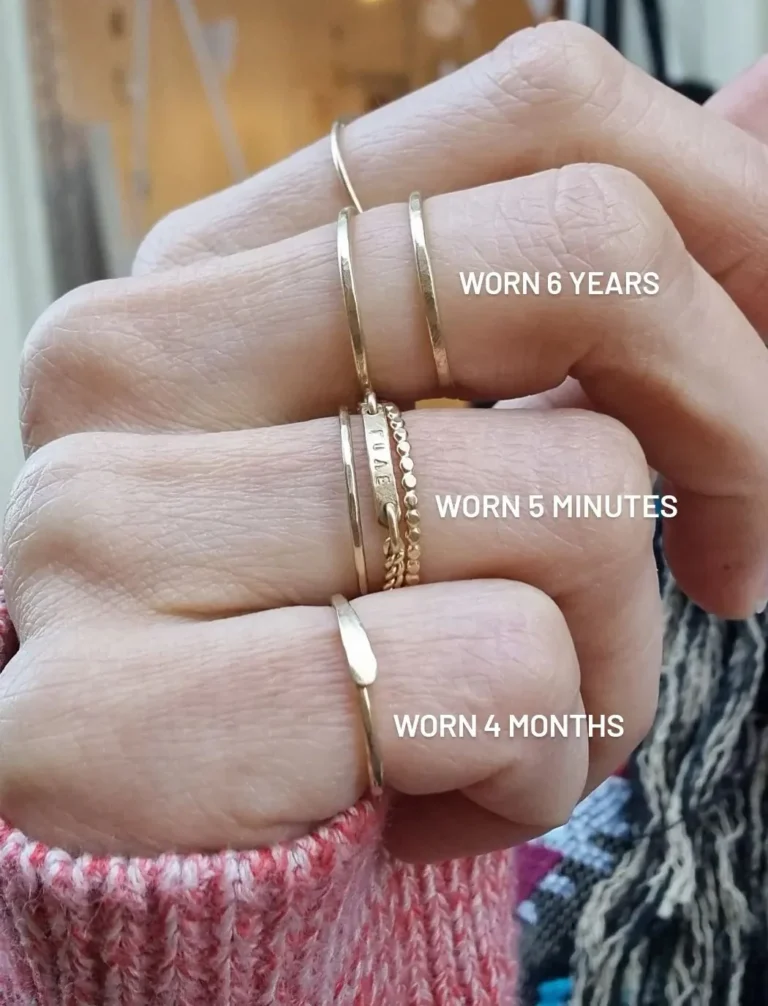
This image clearly demonstrates the long-lasting durability of bonded gold jewellery. Even after six years of regular wear, the top ring retains its gold appearance with only minor surface changes. Compared to the nearly identical shine of the ring worn for five minutes, this highlights how gold bonded pieces resist wear far better than plated alternatives, especially in high-contact areas like rings. Proper care significantly extends their lifespan.
How Long Does Gold Bonded Jewellery Last?
Gold bonded jewellery (gold-filled jewellery) is known for its longevity – it can last many years, often 10 to 30 years or more with proper care. In fact, well-made gold-filled pieces have been known to be worn for decades and even passed down to the next generation while still retaining their gold appearance.
Several factors influence how long a bonded gold piece will last:
- Thickness of the Gold Layer: By definition, gold-filled items have a thick gold layer (at least 5% of total weight). Some pieces have even more. The thicker the gold layer, the longer it will take to wear through. High-quality gold bonded jewellery with closer to 10% gold content will naturally last on the higher end of the spectrum (multiple decades).
- Frequency of Wear: A bonded gold necklace worn only on special occasions will last virtually a lifetime without issues. The same necklace worn 24/7 (even in shower and sleep) will still last a long time – likely many years – but maybe towards the lower end of the life expectancy if not cared for.
- Type of Jewellery: Items like necklaces and earrings often last longer because they don’t rub against surfaces as much. Rings or bracelets, which see more abrasion, might show wear sooner (though still far, far later than gold-plated versions would).
- Care and Maintenance: While gold bonded jewellery is durable, good care will extend its life. Avoid harsh chemicals (chlorine bleach, strong cleaning agents) which could possibly corrode the base metal at any tiny exposed point or seep in where parts join. Keep the jewellery clean and dry when possible. If it does get sweaty or wet, rinse and dry it to remove any chemicals (like salt water or chlorine). Following care advice can push the lifespan toward that 20-30 year range or more. To keep your bonded gold jewellery looking its best for decades, it’s important to clean it the right way. For safe at-home methods and expert tips, read our full guide on How To Clean Gold Jewellery – including advice for cleaning solid, bonded, and even gold plated pieces without damaging them.
To put it in perspective, many jewellers say that gold plated jewellery might only last a few months to a couple of years before the thin gold layer wears off. In contrast, gold bonded (gold-filled) jewellery can last 10-30 years and often much longer if well maintained. Some even describe gold-filled pieces as “lifetime” products in normal use. For example, a gold-filled locket from the 1970s can still be gleaming today in 2025 if it was cared for and not excessively worn.
It’s worth noting that “last” means it remains wearable and gold-looking. The jewellery doesn’t disintegrate after that time; rather, beyond a certain point (say in a few decades), you might notice a bit of fading or a need to replate if you want it perfect. But structurally, the piece will still be intact.
Real-world example: Suppose you buy a 14ct bonded gold chain today. You wear it most days, occasionally even in the shower, and you clean it once in a while. After 15 years, you might observe the clasp area has dulled or a bit of silver is peeping through on the jump ring – that’s an area of high wear. The rest of the chain still looks great. You could continue to wear it another decade; maybe at year 25 the links on the back of your neck, which rub constantly, have a slight two-tone look because some base metal shows. At that point, you might decide to get a jeweller to touch it up with plating, or you might shrug and say “hey, it’s held up amazingly for over two decades!” A gold-plated chain under the same conditions would have likely worn down to base metal in a year or two and look a lot worse.
In summary, gold bonded jewellery is built to last a very long time – often several decades. Many factors can push it to the higher or lower end of that range, but if longevity is what you’re after, bonded gold is one of the best options short of solid gold. It offers excellent durability for everyday wear, making it possible to enjoy the beauty of gold over a span of many years without needing to frequently replace your jewellery.
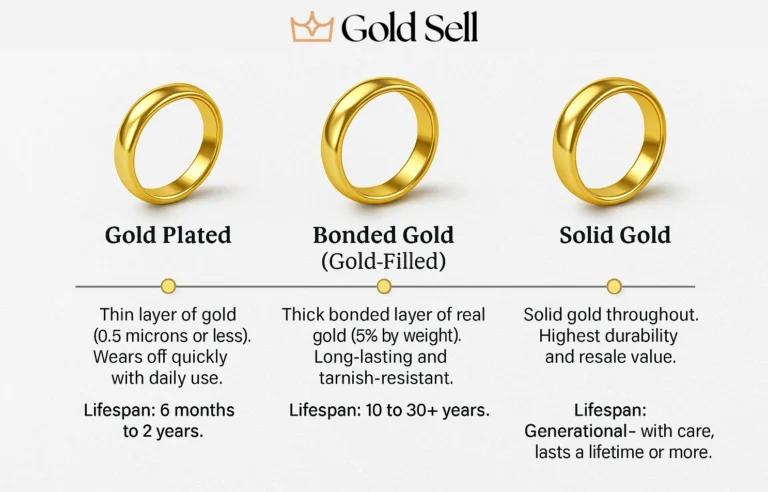
This visual compares the typical lifespan of different types of gold jewellery. While gold-plated pieces may wear out in under 2 years, bonded gold (also known as gold-filled) offers significantly more durability — lasting 10 to 30+ years with proper care. Solid gold, being gold through and through, offers the longest lifespan, often lasting generations. Use this comparison to better understand the long-term value of bonded gold jewellery.
Bonded Gold vs Gold Plated
When comparing bonded gold vs gold plated jewellery, the differences are significant in terms of how they are made, their durability, gold content, and even how they’re legally regarded. Here’s a breakdown of the differences between bonded gold and gold plated:
- Gold Layer Thickness & Content: Bonded gold (gold-filled) has a much thicker layer of gold. By definition it must be at least 5% gold by weight, often equating to a layer dozens of microns thick. Gold plated jewellery, on the other hand, typically has an extremely thin layer of gold – often just a few microns or less (commonly ~0.5 microns or even 0.05 microns in cheap plating). In percentage terms, plating might be only 0.05% gold by weight or less. This means bonded gold pieces contain roughly 100 times more gold than an equivalent plated piece.
- Manufacturing Process: Bonded gold uses a mechanical bonding process – essentially sandwiching a sheet of gold over the base metal and bonding them through heat and pressure (sometimes also with adhesives or soldering involved). This creates a permanent fusion of the metals. Gold plated items are made by electroplating, where a thin layer of gold is electrically deposited onto the base metal. Plating is simpler and cheaper, but the gold layer is not bonded as deeply – it’s more like a skin that can be worn away or peeled with rough use.
- Base Metal: Bonded gold can use various core metals – often brass or copper for many gold-filled products, or sometimes sterling silver (particularly in higher-end “gold bonded” products; some brands like to use a 925 silver core). Gold plated jewellery can be on just about any base: brass, copper, steel, nickel alloys, zinc – you name it. It can also be on silver (and if it’s thick gold on silver, that’s essentially vermeil). The key is that plating doesn’t require a precious core; bonded gold doesn’t either, but often the base is chosen for strength and compatibility since the process is more involved (you’ll often see brass or silver cores in bonded gold items).
- Durability and Lifespan: Bonded gold jewellery is far more durable. Thanks to the thick gold layer, it can handle daily wear, contact with skin, and even water or sweat without immediate issues. It won’t chip or flake, and you can expect many years of wear before any signs of wearing through. Gold plated jewellery is much less durable. The thin gold can rub off with even moderate wear – sometimes the plating starts fading in months or a year or two. Plating can also crack or peel if the underlying metal corrodes or if it’s a poor plating job. Essentially, gold plating is great for occasional or fashion pieces, whereas gold bonded is intended for long-term use.
- Tarnish and Maintenance: Because bonded gold has that thick gold outer layer, the jewellery remains tarnish-resistant. You can even get it wet (though it’s always wise to rinse and dry after exposure to pools or saltwater) – it won’t immediately tarnish or turn colour. Plated jewellery, especially if plated over base metals like copper or nickel, is very prone to tarnish once the thin gold layer wears even microscopically thin. You might notice a plated ring darkening or turning your finger green after a short time, because moisture has reached the base metal through the porous gold layer. Bonded gold generally won’t turn your skin green or black because the base metal is kept away from your skin by the gold (until the gold wears off much later).
- Hypoallergenic Properties: Many people with sensitive skin or metal allergies can wear bonded gold jewellery with no issues, because the gold layer (usually 14ct or 18ct gold) is what touches the skin, and gold is a hypoallergenic metal for most (except those rare individuals allergic to gold itself). Even if the base is brass (which contains copper/zinc), they won’t contact skin until perhaps years later when the gold wears down – and by then you’d likely notice and retire or replate the piece. Gold plated jewellery is trickier: if the base is nickel or a cheap alloy, any tiny breach in the plating can expose skin to irritating metals, causing allergic reactions or discolouration. Also, plating is often done on lower-quality bases that may include nickel, leading to more frequent skin issues. In short, bonded gold is generally more skin-friendly, whereas plated pieces can be risky for those with allergies unless specifically labelled nickel-free and one is careful.
- Legal/Marketing Differences: In markets like the UK and US, gold-filled/bonded is a regulated term (must have certain gold content), whereas “gold plated” has no strict minimum gold requirement. A piece can be sold as gold plated even if it has a negligible amount of gold. So, “gold bonded” usually implies a higher standard and is marketed as a quality step-up from plated. Retailers often highlight that gold-filled items are a long-lasting alternative to solid gold, whereas gold plated is labelled more as costume or fashion jewellery. In the UK, as mentioned, you cannot stamp a plated item with a carat mark alone; similarly for bonded gold they ensure it’s marked properly. Gold plated items on silver may be hallmarked as silver only, and base metal plated items carry no hallmark at all. Bonded gold on silver can have the “& 9ct bonded” stamp, which plated usually wouldn’t unless it’s vermeil. If you’re looking for another durable alternative that looks like solid gold but lasts far longer than standard gold plating, check out our guide on what gold vermeil is and why it lasts longer than gold plated jewellery.
- Price: Expect to pay more for bonded gold jewellery than for gold plated. Bonded gold has a significant amount more gold and involves a more complex manufacturing process (it requires careful bonding with heat/pressure, sometimes in multiple layers). Gold plating is inexpensive to do – it’s often just a quick electrochemical bath. So, a gold plated pendant might be £20 while a similar gold-filled pendant might be £80. Of course, both are still cheaper than solid gold (which might be £300 for that pendant), but bonded gold is the costlier and higher-quality option among the two.
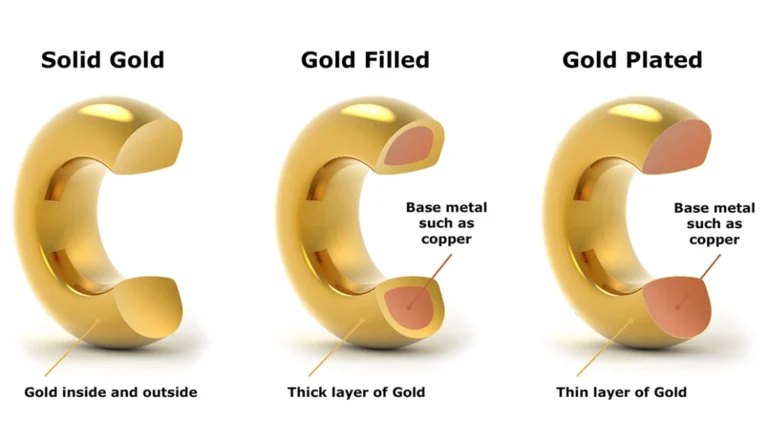
This diagram clearly illustrates the key differences between gold plated and gold filled jewellery. Gold plated items have only a thin layer of gold over base metal, while gold filled (bonded gold) jewellery features a much thicker gold layer mechanically bonded to the core, offering greater durability, longevity, and resistance to tarnishing.
To sum up, bonded gold vs plated is essentially quality vs economy:
- Choose bonded gold: if you want jewellery that lasts, looks real, and can handle regular wear without quickly losing its gold appearance. It’s a bit of an investment upfront but pays off in longevity.
- Choose gold plated: if you need something cheap for occasional use or trendy pieces you might not wear often or expect to keep for years. Just know that plated pieces are likely to wear out and tarnish relatively quickly.
In the long run, many find that spending a bit more on bonded gold is worthwhile for pieces they love, as it saves having to replace the item when the plating wears off. Bonded gold gives you peace of mind that your jewellery will stay looking gold and beautiful for a substantial time, bridging the gap between ultra-expensive solid gold and short-lived plated jewellery.
Gold Bonded vs Vermeil
Both gold bonded (gold-filled) and gold vermeil are high-quality gold-coated jewellery options, but there are some key differences between them in terms of base metal, gold thickness, manufacturing method, and durability. Let’s break down the differences between bonded gold and gold vermeil:
- Base Metal: Gold vermeil always has a base of sterling silver (92.5% pure silver) by definition. This is a hallmark of vermeil – it’s silver jewellery with a layer of gold. Gold bonded (filled) jewellery, by contrast, usually has a base of brass or copper (common in US gold-filled pieces), though it can also be made with a silver core in some cases. If a bonded gold piece uses silver as the core, it essentially overlaps with the vermeil category, but typically the term “vermeil” is used when the gold layer is applied by plating. The important distinction is: vermeil = gold on silver, via plating; bonded gold = gold on (usually) brass, via mechanical bonding.
- Gold Layer Thickness: Vermeil has a specific thickness requirement: in the US it’s at least 2.5 microns of gold plating over silver. That’s much thicker than ordinary plating, but it’s still generally less gold than gold-filled. Gold bonded/filled requires 5% of the item’s weight in gold, which for most pieces ends up being well above 2.5 microns thick (often 5–10 microns or more, depending on item size). So in most cases, gold bonded jewellery has a thicker gold layer than vermeil. For example, a heavy gold-filled bangle might have 50+ microns of gold (because it’s 1/20 of a heavy piece), whereas vermeil would be 2.5 microns regardless of the piece’s weight. However, vermeil’s gold is often higher purity (18ct or 22ct plating for rich colour), while gold-filled tends to use 12ct, 14ct, or 18ct layers.
- Manufacturing Process: Vermeil is a form of plating – the gold is electroplated onto the silver core. Gold bonded/filled is mechanically bonded – gold sheets are laminated onto the core metal with heat and pressure. This means gold-filled’s gold layer is usually more tightly bonded (almost like it’s “part” of the metal surface), whereas vermeil’s gold, while thick for plating, is still a plating and could wear in a different manner. Also, mechanical bonding usually results in a layer of gold alloy (say 14ct gold alloy bonded onto brass), whereas vermeil typically uses pure (24ct) or near-pure gold electroplated onto silver. So vermeil often has that very bright 24ct look, whereas gold-filled might be 14ct colour (a bit lighter). Both look like gold, of course, but this is a nuance.
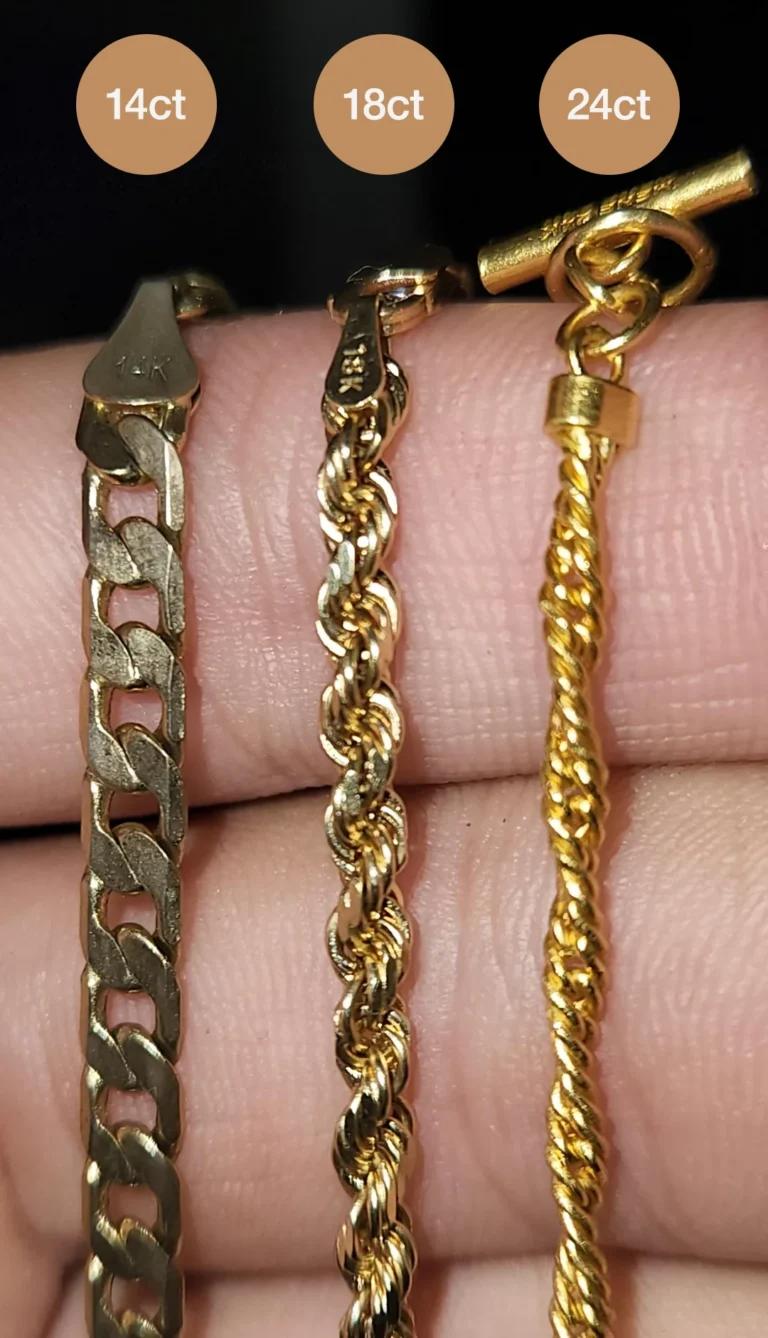
This image visually demonstrates the difference in colour between 14ct, 18ct, and 24ct gold jewellery. As gold purity increases, the colour becomes deeper and more vibrant—ranging from the subtle, slightly muted tone of 14ct to the rich, saturated yellow of 24ct. This is particularly useful when choosing between vermeil (which typically uses high-purity gold, similar in appearance to 24ct) and lower-karat gold-filled or plated jewellery, which offers a more understated finish.
-
Durability: Both gold bonded and vermeil are far more durable than standard plating, but gold bonded tends to have the edge in durability. With a thicker gold layer and a different bonding method, gold-filled pieces often can withstand more wear. Vermeil will definitely last longer than plain gold plating – many vermeil items can endure a good few years of wear before rubbing off, especially if well cared for. But the gold-filled might last even longer (remember that figure of 10–30 years). Some might say vermeil can last 1–2 years of heavy daily wear before showing wear, whereas gold-filled could last decades. This doesn’t mean your vermeil will ruin after 2 years – it could last much longer if not worn every single day or if the plating is thicker than minimum. But as a rule, bonded gold is often considered the most durable gold-coated option short of solid gold, with vermeil slightly behind. One reason: silver vs brass core – silver is softer than brass. A silver-based piece might scratch or wear a tad easier than a brass-based one. On the flip side, if a bonded gold piece uses brass, when it eventually wears, that brass might tarnish green which is less ‘nice’ than silver tarnish (black).
-
Tarnish Resistance: Out of the box, both have gold surfaces so neither tarnishes initially. Over time, if wear happens, the base metal differences matter:
- Vermeil: If the gold rubs off in spots, you have sterling silver exposed. Sterling silver will tarnish (blacken) when exposed to air and sulphur compounds. So an old vermeil item might get dark spots where silver is showing, especially if left unworn (silver tarnishes when idle with air exposure, ironically). The good news is you can polish tarnished silver spots, restoring them (though you’re polishing away more gold in the process potentially). Also, silver tarnish is a surface thing and can be cleaned.
- Bonded gold with brass/copper core: If it wears, the exposed brass can tarnish or corrode (think of old bronze or copper turning greenish). That can be a bit uglier on jewellery, and you can’t “polish” brass tarnish off a tiny exposed bit without also scrubbing gold around it. So one could argue vermeil is more forgiving when partially worn – an exposed silver bit can be cleaned and just look silver, whereas an exposed brass bit might look off-colour. However, because gold-filled might never expose until much later, it’s sort of a moot point until you really wear it down.
-
Hypoallergenic Properties: Both are good for sensitive skin, but vermeil might get a slight nod here because the base is sterling silver, which is generally hypoallergenic (except for anyone allergic to silver or the small copper content in sterling, which is rare). Gold-filled’s base is often brass – which contains copper and zinc, and in rare cases could contain trace nickel (though usually not). However, since the gold-filled gold layer is thick, skin shouldn’t touch brass for a long time, so effectively it’s also hypoallergenic. Additionally, gold-filled uses typically 14ct gold which has some alloy metals (could include silver, copper, perhaps nickel in white gold, but usually yellow gold alloys in 14ct don’t have nickel). Still, in practice both vermeil and gold-filled are considered safe for most people. If someone has a copper allergy, vermeil is safer because even if gold wears, underneath is silver (no copper except 7.5% in sterling). If someone has a nickel allergy, both are generally fine as long as the gold alloy used in filling or plating is nickel-free (which yellow gold usually is).
-
Legal Standards in UK: The UK doesn’t use the term “vermeil” in hallmarking law specifically, but it’s essentially gold plate on silver. So a vermeil piece in the UK would be hallmarked as Silver (if over 7.78g) and could be additionally described as gold plated. In the UK, bonded gold on silver is typically hallmarked as silver, with an additional descriptor indicating it is ‘bonded gold’. So from a consumer standpoint, both should be clearly marked that they are not solid gold. Vermeil often isn’t labelled as such on the item, you just see a 925 stamp and maybe a maker’s mark, and the vendor describes it as vermeil. A bonded gold on brass piece won’t have any hallmark (since brass is not precious) – it might just have a stamp like “1/20 14K GF”. So one practical difference: vermeil pieces often have a 925 stamp (because of the silver core), whereas gold-filled pieces often have a “GF” stamp with gold purity noted. If you see “925” on a gold-looking item, it’s likely vermeil; if you see “1/20 12k GF” or similar, it’s gold-filled.
-
Price and Availability: Both vermeil and gold-filled are priced between cheap plating and solid gold. Vermeil tends to be popular in fine costume jewellery, artisan jewellery, and is sometimes used for charms that can’t be made in filled form (because gold-filled material is usually only made as sheets or wires, not castable shapes). Gold-filled is popular for chains, bangles, and components like wires, because its manufacturing method suits those shapes. In terms of cost, they are often comparable, but if pressed, gold-filled might cost a bit more per piece because it usually contains more gold. For example, a pair of vermeil earrings vs a pair of gold-filled earrings might be similarly priced, but if an item is heavy, gold-filled’s 5% gold could add more cost than vermeil’s 2.5 micron plating. Also, some markets value vermeil (since it’s silver) as more “precious.”
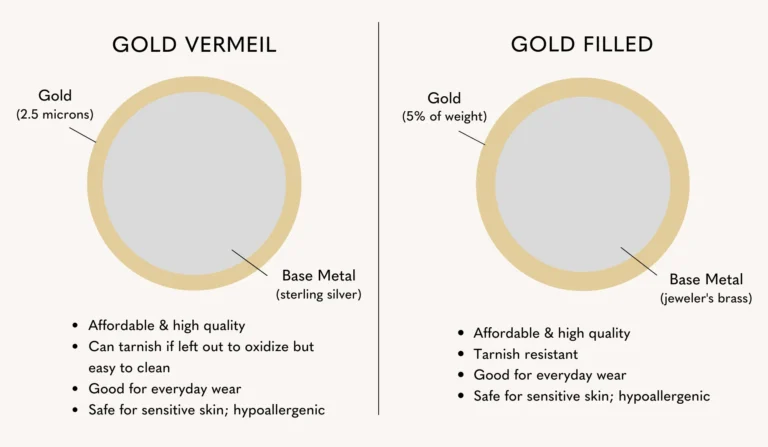
This side-by-side comparison illustrates the key differences in construction between gold filled vs gold vermeil jewellery. Vermeil features a layer of pure gold (2.5 microns thick) over a sterling silver core, offering a rich colour and hypoallergenic properties. Gold filled, by contrast, uses a thicker gold layer (5% of the item’s total weight) bonded to jeweller’s brass, making it even more durable and tarnish-resistant for everyday wear.
In summary, gold bonded vs vermeil comes down to:
- Core metal: brass (bonded) vs silver (vermeil).
- Gold content: usually more in bonded gold (by weight), vs a thick but lesser plating in vermeil.
- Durability: Bonded gold typically lasts longer under heavy wear, vermeil is very good but slightly more prone to eventually wearing since it’s just plated.
- Both are good quality options far superior to ordinary plating, and both give you that solid gold look. If you prefer an entirely precious metal piece (no base metal except precious), vermeil is essentially silver and gold only. If you prefer maximum longevity and don’t mind a non-precious core, gold-filled might be better.
From a practical standpoint: for everyday chain necklaces or bracelets, gold-filled (bonded gold) is fantastic for durability – you can wear them daily and not worry. For detailed pendants or rings with intricate designs, you might find vermeil options (since those can be cast in silver and plated) and they will serve well, just be mindful to care for them. Ultimately, both serve a similar purpose: giving you the beauty of gold without the cost of solid gold, but bonded gold leans towards durability and quantity of gold, while vermeil leans towards having a precious silver core and typically a high-karat gold finish.
Is Gold Bonded The Same As Gold Filled?
Yes – “gold bonded” is essentially the same as “gold filled.” These terms are often used interchangeably to describe the same type of jewellery. Both refer to a process where a thick layer of gold is mechanically bonded to a base metal core, creating a durable, gold-coated piece.
To break it down:
- Gold Filled: is the traditional term (especially in the US) for items that have a gold layer comprising at least 1/20th (5%) of the total weight, bonded to a base metal. For example, you’ll see stamps like “1/20 14K GF” meaning gold-filled.
- Gold Bonded: is a more general or modern term that essentially means the gold has been “bonded” onto a core. In many cases, companies or jewellers might use “gold bonded” to emphasise the bonding process and differentiate from thin plating. In practice, when people say something is gold-bonded, they usually mean it has a gold-filled level of thickness (or at least more than normal plating). The UK Hallmarking Council uses “bonded gold” in its guidance as equivalent to rolled gold or gold-filled.
There might be slight nuances in marketing: for instance, one jewellery brand might call their pieces “gold bonded” if they use a sterling silver core with thick gold, versus “gold filled” might evoke brass core. But these aren’t standardised differences – the core metal doesn’t really change the fact that if it’s a thick bonded layer, it qualifies as gold-filled by definition. Some people also use “rolled gold” (an older term) to mean the same thing as gold-filled.
To avoid confusion, just remember: both gold-filled and gold-bonded jewellery have real gold mechanically applied in a thick layer, unlike simple electroplating. In everyday conversation and in many guides (including this article), we treat them as the same type of product. If you see a vendor advertising “18ct gold-bonded chain,” you can reasonably expect it is a gold-filled chain (likely with an 18ct gold layer over a base, possibly silver or brass). Likewise, vintage jewellery labeled “rolled gold” or “gold-filled” is doing the same thing – bonding a gold layer to a base.
One minor point: The term “gold-filled” is most commonly used in the US, where it’s defined by law (Federal Trade Commission rules) how much gold must be present. The term “bonded gold” gained usage in the UK when such products started to appear more frequently, because “gold-filled” wasn’t a traditionally used term there. The British authorities basically accepted “bonded gold” as a descriptor as long as it meets similar criteria (and they enforce things like the gold has to be at least 9ct). So you could say gold bonded = gold filled = rolled gold in most practical senses.
In summary, gold bonded and gold filled mean the same thing: a thick layer of real gold pressure-bonded onto a core metal, producing a piece of jewellery that looks like solid gold but is mostly made of other metal inside. If you’re shopping and see either term, you can expect a quality piece with substantial gold content on its surface. Just remember that neither is solid gold, but both are superior to gold plating in terms of gold content and durability.
Frequently Asked Questions
What is bonded gold?
Bonded gold is jewellery made by permanently bonding a thick layer of real gold to a base metal like brass or silver. It looks like solid gold but is far more affordable. Often referred to as gold-filled, it must contain at least 5% real gold by weight. The outer gold layer is usually 9ct, 14ct or 18ct, giving the piece a durable and high-quality gold finish ideal for everyday wear.
Is bonded gold real?
Yes, bonded gold contains a layer of real gold alloy, such as 14ct or 18ct, bonded to a base metal core. While the entire item isn’t solid gold, the outer surface that touches your skin is genuine gold. This makes it look and feel like real gold jewellery at a fraction of the cost. It’s a practical, long-lasting alternative for those who want the appearance of gold without the full price of solid pieces.
Does bonded gold tarnish?
Bonded gold doesn’t tarnish as long as the gold layer remains intact, because pure gold doesn’t oxidise. However, after years of heavy use, the outer layer may wear thin and expose the base metal underneath, which can tarnish. Compared to gold plating, bonded gold is significantly more tarnish-resistant and better suited for everyday wear, but it still requires proper care to maintain its finish over the long term.
Is bonded gold worth anything?
Yes, bonded gold is worth something, especially as jewellery. It has more gold than gold-plated items and can retain its appearance for decades, making it valuable to consumers. However, its scrap gold value is low because only the outer layer is real gold. For example, a 20g bonded gold piece might contain just 1g of gold. You won’t get solid gold prices for it, but it holds higher value than fashion jewellery.
Does bonded gold wear off?
Yes, bonded gold can wear off over time, especially in high-friction areas like ring edges or chain clasps. However, because the gold layer is much thicker than gold plating, it takes many years of daily wear for this to happen. Bonded gold is designed for durability, and with proper care, most pieces remain gold-looking for decades. Unlike plating, it won’t flake off suddenly — wear is usually gradual and localised.
What is a gold bonded chain?
A gold bonded chain is a necklace made by mechanically bonding a thick layer of real gold to a base metal core, such as brass or sterling silver. This gives the chain the rich look of solid gold without the high cost. It’s far more durable than gold plating and ideal for everyday wear. Most gold bonded chains are stamped with karat markings like “14K GF” to indicate the type and thickness of gold used.
Does gold bonded jewellery fade?
Gold bonded jewellery does not fade in colour because the outer layer is real gold, which retains its colour indefinitely. However, if the gold layer wears thin over time, the base metal underneath may become visible, which could appear duller or discoloured by comparison. With proper care and avoiding harsh chemicals or friction, gold bonded jewellery maintains its vibrant gold tone for 10–30 years, making it a lasting and cost-effective alternative to solid gold.
Is gold bonded the same as gold filled?
Yes, gold bonded and gold filled are essentially the same. Both refer to jewellery with a thick layer of real gold — typically 5% of the item’s total weight — permanently bonded to a base metal using heat and pressure. The terms are used interchangeably, although “gold filled” is more common in the US and “gold bonded” is more often seen in the UK. Both are more durable and valuable than gold-plated jewellery.
How long does gold bonded jewellery last?
Gold bonded jewellery can last between 10 to 30+ years with proper care. The thick gold layer (far thicker than plating) resists tarnish, fading, and flaking, making it ideal for daily wear. The actual lifespan depends on factors like wear frequency, care, and the type of item — for example, rings may wear faster than earrings. Avoiding chemicals, abrasive surfaces, and storing pieces properly can significantly extend the life of bonded gold jewellery.
What does 18k gold bonded mean?
18k gold bonded means the outer layer of the jewellery is made from 18-karat gold (75% pure), bonded to a base metal core. This gives the piece the rich colour and lustre of 18k gold without the high price of solid 18k gold. It’s a durable and premium finish that offers better longevity and wear resistance than standard gold plating. Look for stamps like “18K GF” or “18ct bonded” to confirm authenticity.
Is gold bonded the same as gold plated?
No, gold bonded jewellery is not the same as gold plated. Gold bonded (or gold filled) has a much thicker layer of gold — at least 5% of the item’s weight — permanently bonded to a base metal. Gold plated jewellery, by contrast, has only a microscopic layer of gold applied via electroplating. This makes gold bonded far more durable, tarnish-resistant, and long-lasting than gold plated, which can wear off in just months.
What is bonded gold worth?
Bonded gold has limited resale value for its gold content because only the outer layer is real gold. For example, a 20g bonded gold chain marked 1/20th 14ct contains just 1g of 14ct gold, worth around £57.20 at today’s rate. In contrast, a solid 14ct gold chain weighing 20g would be worth £1,143.91 While bonded gold is not valuable as scrap, it is still prized for its appearance, durability, and affordability.
Can gold bonded jewellery get wet?
Yes, gold bonded jewellery can safely get wet, including during handwashing or brief exposure to water. Its thick gold layer resists tarnishing and won’t wash away like thin plating. However, frequent exposure to harsh chemicals, saltwater, or chlorine can degrade the gold layer over time. To extend its life, rinse with fresh water and dry thoroughly after swimming or showering. With proper care, water exposure won’t damage gold bonded jewellery.
Interested in selling gold with the UK’s highest paying gold buyer? Visit our Sell Gold page to get a competitive valuation – we provide fully insured postage and fast payment.
For more insights and the latest gold price today, keep an eye on our live charts and blog updates.