How To Untarnish Gold
Wondering how to get your gold jewellery shining again? The good news is that you can easily remove tarnish from gold at home. Gold itself is a noble metal that doesn’t rust or corrode easily, so when your gold looks dull or discoloured, it’s usually the alloy metals (like copper or silver) that have tarnished. With a few simple steps – think warm water, mild soap, and gentle polishing – you can safely restore your gold’s lustre. This guide will explain why gold tarnishes, how to untarnish gold, and ways to keep your jewellery tarnish-free in the long run, all in a friendly, no-fuss manner.
Key Takeaways
- Pure gold vs alloys: Pure 24-karat gold is highly resistant to tarnish, but most gold jewellery is mixed with other metals that can tarnish. Lower-karat gold (9k, 14k, 18k) contains more alloy metals (like copper, silver, zinc) and is more prone to discolouration over time.
- Why tarnish happens: Gold is an inert metal and doesn’t chemically tarnish itself. However, alloy metals react with oxygen, moisture, and sulphur compounds in air to form oxides/sulphides – that is the tarnish you see on gold jewellery. Common culprits include air pollution, sweat, perfumes, chlorine (from pools or bleach) and other everyday chemicals.
- What tarnish looks like: Tarnish on gold appears as a surface discolouration. It can be black (often from silver in the alloy forming silver sulphide), green/bluish (from copper forming patina like verdigris), or even reddish-brown spots (from copper or silver impurities oxidising – seen as “red rust spots” on high-purity gold). It’s usually a thin film on the gold’s surface – not permanent damage.
- Removing tarnish is easy: You can remove tarnish from gold at home with gentle cleaning. Soaking the gold in warm water with a few drops of mild dish soap, then softly brushing and drying, will lift most tarnish. This process is safe and effective for gold – no harsh chemicals or expensive kits needed. In short, tarnish can be removed from gold with simple household methods.
- High-karat and plated pieces: Higher-purity gold (18k, 22k, 24k) is much less likely to tarnish in daily use, maintaining its shine longer. Even so, 24k gold can occasionally develop rare “red spots” from microscopic alloy impurities. Gold-plated jewellery, on the other hand, may tarnish once the thin gold layer wears off and exposes the base metal – so it requires extra care.
- “Tarnish-free” jewellery: Non-tarnish or tarnish-free gold jewellery refers to pieces designed to resist tarnishing. Often this means they are either made of pure/high-karat gold (which barely tarnishes) or are coated with protective layers like rhodium plating (a metal that doesn’t tarnish). Gold vermeil (heavy gold plating over sterling silver) is another example – it looks like gold and won’t tarnish until the gold layer eventually wears thin. These treatments keep jewellery shining longer, though they may require maintenance (e.g. re-plating over time).
Will Gold Tarnish?
Solid gold jewellery can tarnish over time, but it depends on the gold’s purity and the metals mixed with it. Pure gold (24 karat) is extremely resistant to tarnishing – it’s one of the least reactive metals and doesn’t easily combine with oxygen or anything else. In fact, famous ancient gold artefacts like King Tutankhamun’s 3,000-year-old gold mask were found untarnished after millennia. Gold’s enduring shine is a big reason it’s valued for jewellery.
However, most jewellery isn’t pure 24k gold; it’s made of gold alloys (a mixture of gold plus other metals for strength). And the lower the karat, the more alloy metals are present – which increases tarnish potential. For example:
- 22k gold (91.6% gold) – Highly resistant to tarnish. It will retain its lustre for a long time, though in rare cases a slight dullness or patina can develop due to the small percentage of other metals. Proper care (keeping it clean and dry) usually keeps 22k jewellery bright.
- 18k gold (75% gold) – Fairly resistant, but can tarnish subtly over many years or if exposed to harsh conditions. With 25% alloy content (often copper, silver, etc.), there is some chance of tarnish or darkening, especially if the piece is frequently in contact with chemicals or perspiration. Overall, 18k gold offers an excellent balance: it’s durable and keeps its shine well, with minimal tarnish issues in normal use.
- 14k gold (58.5% gold) – Moderately prone to tarnish. Because about 41.5% of it is other metals, you may notice 14k gold jewellery slowly dulling or developing a slight stain in areas over time. It can even leave a faint green or black mark on skin in some cases (more on that later). Regular cleaning is a good idea to prevent buildup.
- 10k or 9k gold (41.7% or 37.5% gold) – These low-karat golds tarnish the most readily, since they contain more alloy metal than gold. In fact, 9k gold (common in the UK) can noticeably darken or discolour if left unworn in a humid environment for a long period. Don’t be alarmed – the gold itself isn’t deteriorating, but the high copper/silver content means tarnish (oxidation) can form on the surface. A quick polish will usually restore its colour.
It’s worth noting that white gold (which is yellow gold mixed with white metals like nickel or palladium) is usually rhodium-plated, giving it a bright, chrome-like finish that doesn’t tarnish. The underlying white gold alloy doesn’t tarnish as quickly as sterling silver either. So, white gold jewellery often stays untarnished looking until the rhodium plating wears off (after a year or two of daily wear), at which point the exposed alloy might appear a bit dull or yellowish – it can then be re-plated to look like new.
Lastly, gold-plated and gold-filled jewellery will behave differently: the pure gold layer itself won’t tarnish, but if that layer is thin, it can allow the base metal underneath to oxidise or can wear away. For example, a cheap gold-plated necklace might eventually show tarnish because the base metal (copper/brass) is bleeding through or exposed. Higher-quality gold-filled pieces have a thicker gold layer and are often marketed as “tarnish-resistant” as a result.
So, in summary: the higher the gold purity, the less likely the piece will tarnish. Pure 24k gold is essentially immune to tarnish in everyday conditions, while 14k or 9k gold may tarnish or dull over time due to the alloy metals in it. But don’t worry – even if your gold jewellery does tarnish a bit, it can always be cleaned and made shiny again (as we’ll cover below).
Want to know how different types of gold jewellery hold up over time? Check out our expert guides for a closer look at the tarnish resistance of white gold, gold vermeil, and gold plated jewellery.
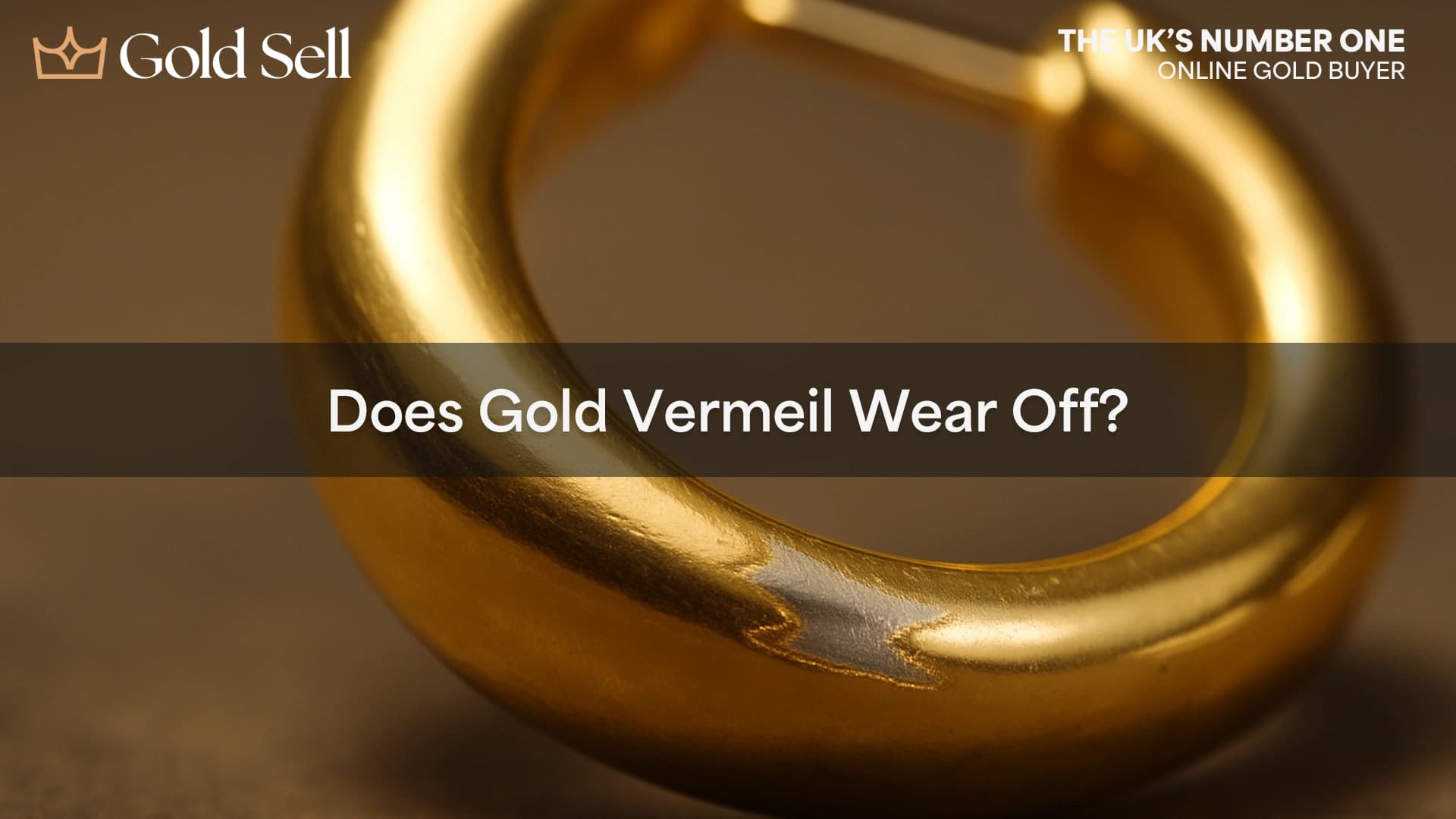
What is gold vermeil? Does gold vermeil wear off? Discover how long gold vermeil lasts, if it tarnishes, and how to keep vermeil looking like new for years.
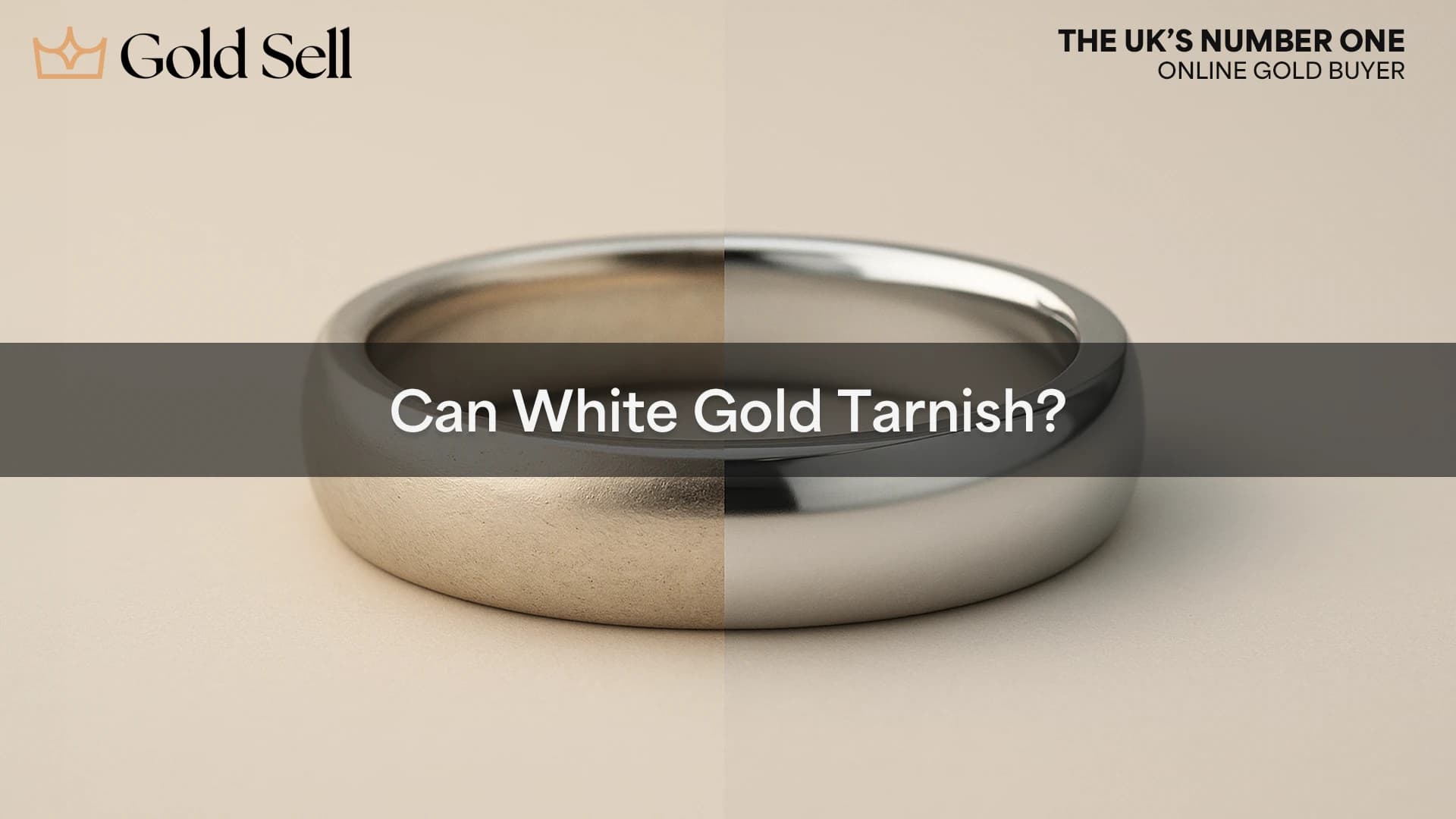
Wondering can white gold tarnish or turn yellow? Learn the truth, plus expert tips on how to clean white gold to keep it bright for longer.
Does gold plated tarnish? Discover why it happens, how to clean gold plated jewellery safely & tips to keep your gold tarnish-free for longer.
Why Does Gold Tarnish?
Gold tarnishes because of the other metals in the alloy reacting with the environment, not the gold itself. Gold is a noble metal, meaning it doesn’t readily react with most substances. It doesn’t rust, and it doesn’t easily form oxides or sulphides. For example, pure gold won’t even react with oxygen at room temperature, and it’s untouched by many acids. This chemical “inertness” is why pure gold coins or jewellery don’t tarnish or corrode for ages.
However, the alloy metals mixed into most gold jewellery – such as copper, silver, nickel, and zinc – are not so inert. They do react with chemicals in air and water. Tarnish is essentially the result of those metals undergoing a chemical reaction on the surface of your jewellery:
- Oxygen: Metals like copper and zinc will slowly oxidise when exposed to air, especially humid air. Over time, this creates a thin layer of metal oxide on the surface (for example, copper oxide is dark and can make the gold look brownish or red). Silver can oxidise too, but more often it’s sulphur that tarnishes silver.
- Sulphur compounds: Sulphur is a big tarnish culprit, particularly for any silver in the gold alloy. Tiny amounts of sulphur compounds are present in the air (more so in polluted or industrial areas) and also in things like wool, rubber, certain foods, and even your skin oils. Silver reacts with sulphur to form silver sulphide, which is the classic black tarnish you see on sterling silver. If your gold alloy has some silver, it can develop a similar dark tarnish film when exposed to sulphur over time.
- Moisture & salts: Water alone can speed up tarnish by aiding chemical reactions. And if the water contains salts or chlorine (like sweat or chlorine from a pool), the process accelerates. Sweat, for instance, contains sodium chloride (salt) and trace chemicals like urea. When sweat stays on your gold ring, the salts can induce corrosion of copper in the alloy, forming copper chloride or sulphide – which are green or black compounds. Ever had a ring that left a green mark on your finger in summer? That’s because perspiration + copper alloy = green tarnish (verdigris).
- Household chemicals: Gold’s worst enemy in the home is bleach (chlorine). Bleach can react with the copper and silver in low-karat gold alloys and cause rapid tarnishing or even deterioration. In fact, jewellers warn never to expose gold jewellery to bleach or strong cleaning agents, as they can blacken or pit the metal. Other chemicals like detergents, ammonia, or cosmetics can also contribute to tarnish over time. For example, cosmetics or lotions can create a film that traps moisture against the metal, encouraging tarnish, and some makeup contains compounds that can leave a dark residue when they abrade against gold (a form of “metallic abrasion” that looks like tarnish).
In short, gold itself remains unreactive, but the alloy metals react with air, moisture, and chemicals, leading to tarnish. The result is a dull or discoloured layer on the gold’s surface. It’s a bit like how iron rusts or copper turns green – except with gold jewellery, it’s usually much subtler and slower.
Think of tarnish as a very thin patina. Interestingly, some people like a bit of patina on certain gold items (for example, vintage gold coins can develop an orangish “toning” that collectors find attractive). But generally, for jewellery, we prefer that high polish shine.
The good news: tarnish is only on the surface. It doesn’t mean your gold is “ruined” – underneath that film, the gold metal is just fine. By cleaning off the tarnish, you’ll reveal the bright gold again. Unlike rust on iron, tarnish on gold alloys doesn’t eat away the metal significantly; it’s often just a cosmetic layer.
Now that we know why gold can tarnish (blame the copper and silver!), let’s look at what exactly tarnish looks like on gold and the different colours it can show.
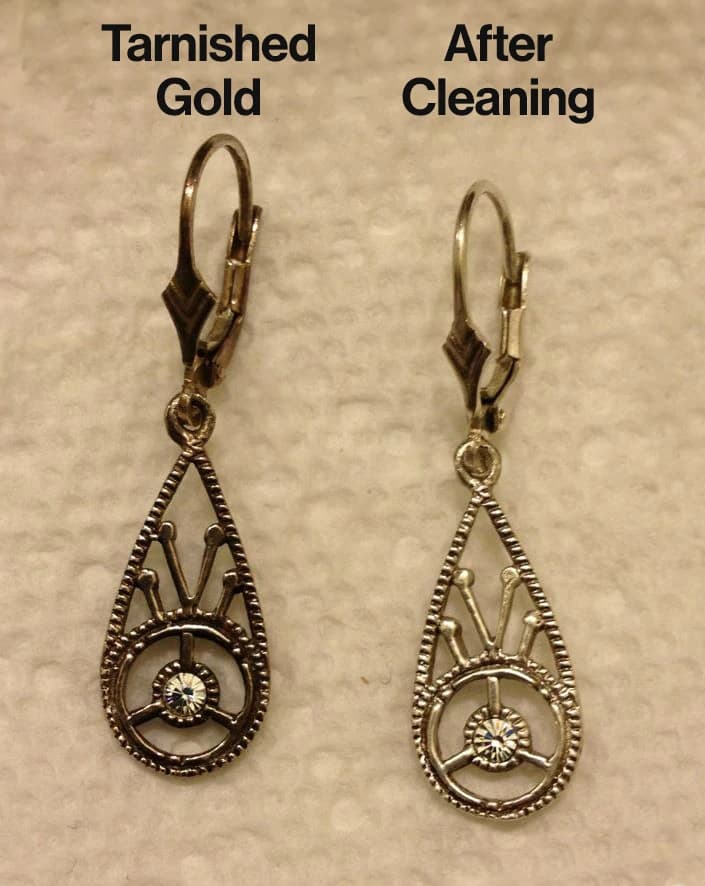
The image above clearly shows tarnish on gold (left) versus the same piece after cleaning (right). Tarnish appears as a dull, darkened layer caused by oxidation of alloy metals like silver or copper. This example highlights how simple at-home methods—like warm water, mild soap, and gentle brushing—can successfully restore shine. Understanding how to untarnish gold helps preserve its appearance without damaging the jewellery.
What Is Tarnish On Gold?
Tarnish on gold is a thin layer of corrosion or discolouration on the metal’s surface, caused by chemical reactions involving the alloy metals. It’s essentially the same phenomenon as the black film on old silverware or the green on aged copper – just happening on a gold alloy surface. Tarnish can make your gold jewellery look dull, dirty, or oddly coloured, even though the gold underneath is still fine.
On gold jewellery, tarnish can manifest in a few different colours depending on which alloy metal is reacting and what compounds form:
- Black or dark grey tarnish: This is usually due to silver or sometimes copper in the gold alloy reacting to sulphur or oxygen. Silver sulphide is jet black – just as sterling silver tarnish looks black. If your gold piece has a high silver content (common in white gold or lower-karat yellow gold), you might see a thin dark film or spots that are greyish or black. Copper can also form oxides that are dark (brown to black). For instance, a 10k gold ring (with lots of copper/silver) might develop a dirty grey-black tone in crevices. Often, black tarnish appears in areas that get less friction (like the underside of a ring or around prongs) because everyday wear might polish off light tarnish on exposed areas.
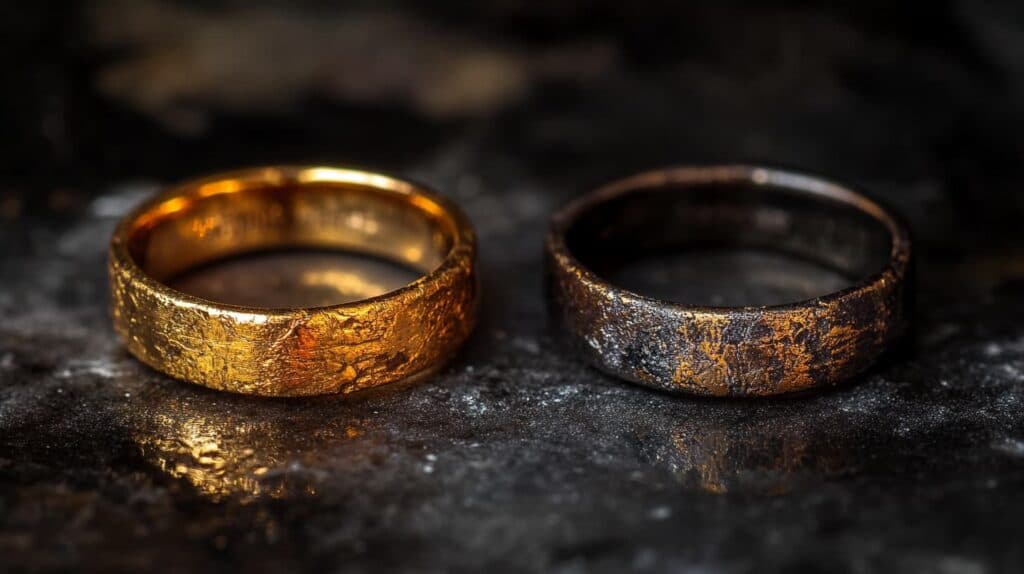
The dark discolouration on the right-hand ring is a classic example of silver sulphide tarnish on gold, often seen in lower-karat gold containing silver alloys. This blackish tarnish forms when silver in the gold reacts with sulphur compounds in the air, creating silver sulphide. It typically appears as a dark, patchy film and is one of the most common answers to the question what is tarnish on gold?—particularly in 14k and 9k pieces.
- Green tarnish: A greenish or bluish-green deposit is a telltale sign of copper corrosion, often called verdigris. If your gold alloy has copper (which 14k and 18k typically do), over time in moist air or contact with salts, it can form copper carbonate or chloride – green compounds that can show up as a green crust or stain. You might notice a green tinge on a gold chain that’s been stored improperly, or a green mark on your skin from a ring – that’s the copper salt rubbing off. Green tarnish is more common on items like gold-plated brass, because brass has a lot of copper. But even 14k gold can get a slight greenish tarnish in crevices if not cleaned for ages. (It’s usually easy to polish off.)
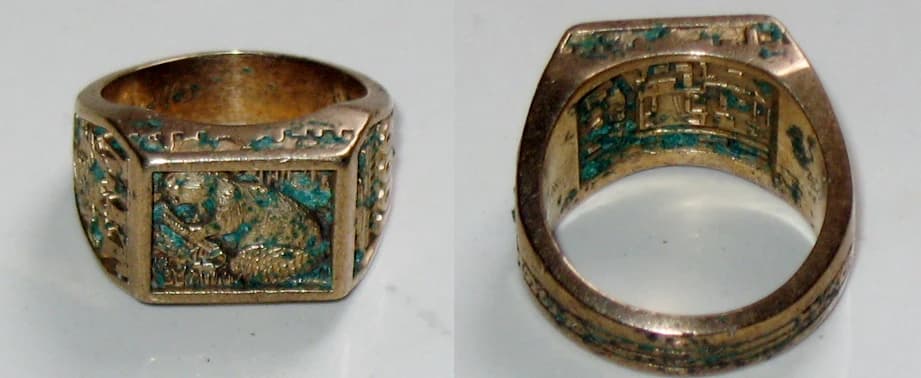
This 10ct gold ring shows vivid blue-green corrosion known as copper tarnish on gold, caused by the oxidation of copper in low-karat gold alloys. The discolouration—called verdigris—is a common answer to the question what is tarnish on gold?, especially in 9k–14k pieces where copper content is higher. This image illustrates how moisture, air, and sweat can trigger tarnish over time, especially in detailed or recessed areas of jewellery where buildup is harder to remove.
- Red or pinkish tarnish: This one can be surprising – red tarnish on gold? In some cases, tarnish or oxidation can appear reddish-orange. Copper oxide (cuprous oxide) can have a red tone, so if copper in the gold oxidises lightly, it might give a faint red blush to the metal. More commonly, “red spots” can appear on high-purity gold (like 22k or 24k coins) due to tiny copper or iron impurities concentrating and oxidising. These are sometimes called copper spots or rust spots on gold. They look like tiny reddish-brown freckles on the gold surface. Don’t worry – they can usually be cleaned or polished out, and they don’t compromise the gold (they’re just that minuscule 0.01% impurity tarnishing).
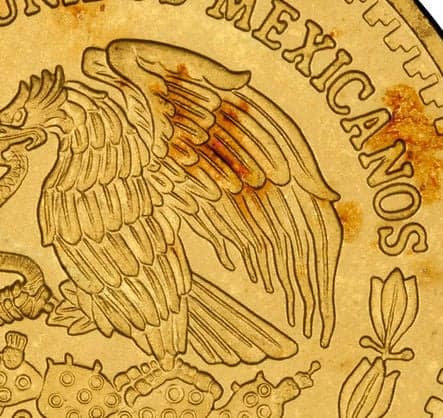
This image highlights tarnish on a gold coin, specifically the appearance of red spots on gold, which are caused by trace amounts of copper or iron oxidising at the surface. Even in high-purity coins like 22k or 24k, microscopic impurities can react with air or moisture over time, forming these reddish-brown marks. Though harmless to the gold’s value, they are a well-known phenomenon in bullion and collectible coins.
Sometimes tarnish might just make the gold look dull or dirty without a strong colour. A layer of accumulated grime, oils, and oxidation can simply tone down the brightness of gold, making 18k gold look less yellow or 9k gold look brownish. We often lump that together as “tarnish” as well – basically any loss of shine or colour change on the surface.
It’s important to distinguish tarnish from plate wear: If your gold-plated jewellery is turning a different colour, it could be that the gold layer has worn off, exposing base metal (which then tarnishes green/black). That’s not gold tarnish per se (it’s the base metal tarnishing once unprotected). For solid gold alloys, tarnish is just a surface film that can be removed.
The key thing: tarnish is superficial. It sits on top of the metal. When you notice your gold ring looking a bit off-colour, it usually just needs a cleaning to remove that tarnish layer. In the next section, we’ll outline exactly how to untarnish gold safely, so you can restore your pieces to their former gleam.
How To Untarnish Gold?
Untarnishing gold is a simple, gentle process – you don’t need fancy chemicals or a trip to the jeweller for mild tarnish. Here’s a safe at-home guide to remove tarnish from gold and get your jewellery sparkling again. We’ll use the power of warm soapy water and a soft touch, which is effective for almost all cases of gold tarnish. Follow these steps:
- Prepare a Soapy Bath: Fill a bowl with lukewarm water (enough to submerge your item) and add a few drops of mild dish soap. Stir it gently to mix. This mild soap solution will loosen dirt and tarnish without harming the gold. (Avoid harsh detergents or anything abrasive at this stage.)
- Soak the Gold: Place your tarnished gold jewellery in the soapy water. Let it soak for about 5-15 minutes. For light tarnish, a short soak softens any grime. For heavier tarnish, you can extend soaking up to 20–30 minutes. The warm, soapy water helps break down oils and may start to lift some oxidation.
- Gently Scrub (if needed): After soaking, take a soft toothbrush (or a very soft cloth) and gently brush the jewellery. Focus on any crevices or tarnished spots. Use a light hand – you’re just coaxing away the tarnish, not scrubbing like mad. An old soft-bristle toothbrush is ideal for getting into small details. If it’s a flat surface, a soft microfibre cloth can also work to rub the tarnish off. You should see the dark or greenish tarnish transferring onto the brush or cloth.
- Rinse Thoroughly: Once you’ve brushed all over, rinse the piece in clean warm water to wash away the soap and any loosened tarnish. It’s important to remove all soap residue, as leftover soap can form a film on gold. You can rinse under a gentle stream of running water or in a bowl of clean water. (Be careful – plug the drain or use a bowl if rinsing small items, so nothing gets lost!)
- Dry and Buff: Pat the jewellery dry with a soft, lint-free cloth. Cotton or microfibre works well. Gently buff the gold to bring out the shine. Do not use paper towels, as they can scratch gold, especially higher karats which are softer. If you have a gold polishing cloth (a special cloth impregnated with jeweller’s rouge or cleaner), this is a great time to give the piece a final polish. Otherwise, a clean soft cloth and a bit of elbow grease will do – you’ll see the gold glow revive as you buff it.
And that’s it – your gold should be looking much brighter! This method will remove tarnish from gold in most ordinary cases. It’s the same basic approach recommended by jewellers: warm water and mild soap are gold’s best friends for cleaning.
Can tarnish be removed from gold completely? Yes, generally any tarnish can be removed from gold jewellery. The above steps usually suffice. For very stubborn tarnish (say a piece that was neglected for decades and has heavy oxidation), you have a few options to amp up the cleaning:
- You can create a gentle baking soda paste (3 parts baking soda to 1 part water) and lightly rub it on the gold with a cloth. Baking soda is mildly abrasive, so be very gentle and avoid scrubbing on high-polish surfaces to prevent scratches. This can help lift tougher tarnish spots. Rinse thoroughly afterward.
- Alternatively, try ammonia for heavy tarnish – but with caution. A solution of 1 part clear ammonia to 6 parts water can help dissolve stubborn grime. Soak the gold for only 1 minute in the diluted ammonia, then rinse and dry. Do not use ammonia on jewellery with pearls or porous gemstones, and don’t soak for long, as ammonia can be harsh. This is usually not necessary unless the tarnish is severe.
- For gold-plated jewellery with tarnish: the soap-and-water method is safest. Do not use anything abrasive on gold plate, as you could remove the plating. If tarnish persists, it might be the base metal showing; at that point, re-plating might be needed to restore the look.
- If you’re unsure or dealing with a very valuable or sentimental piece, professional cleaning is an option. Jewellers can use ultrasonic cleaners or steam cleaners that knock off tarnish in seconds, or professionally polish the item. They can also re-plate white gold or heavily tarnished costume jewellery. However, for most day-to-day tarnish, the DIY approach above works excellently.
Reassurance: Untarnishing gold is usually easy and very forgiving. Gold is tough enough to handle a good cleaning. Just avoid rough scrubbing or strong chemicals like bleach or undiluted acids, which we already know are bad for gold alloys. Stick to mild cleaners and you won’t harm your jewellery. In fact, regular gentle cleaning prevents tarnish buildup.
After cleaning, your gold will not only be tarnish-free, but also free of oils and dirt that dull its shine. It’s so satisfying to see a faintly brown or darkened piece turn bright yellow again! In the next section, we’ll discuss which types of gold are most resistant to tarnish in the first place to address the question: What gold doesn’t tarnish?
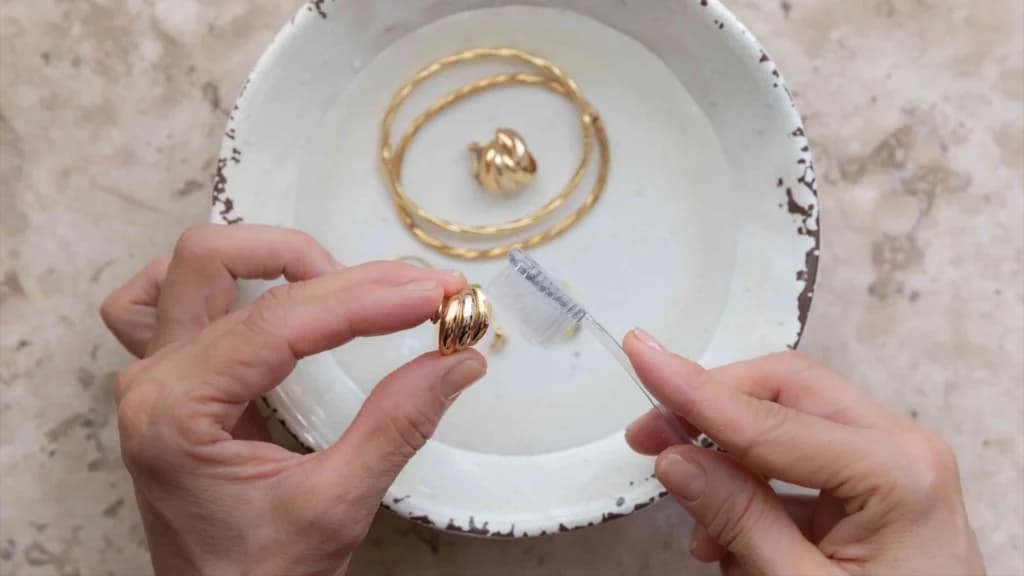
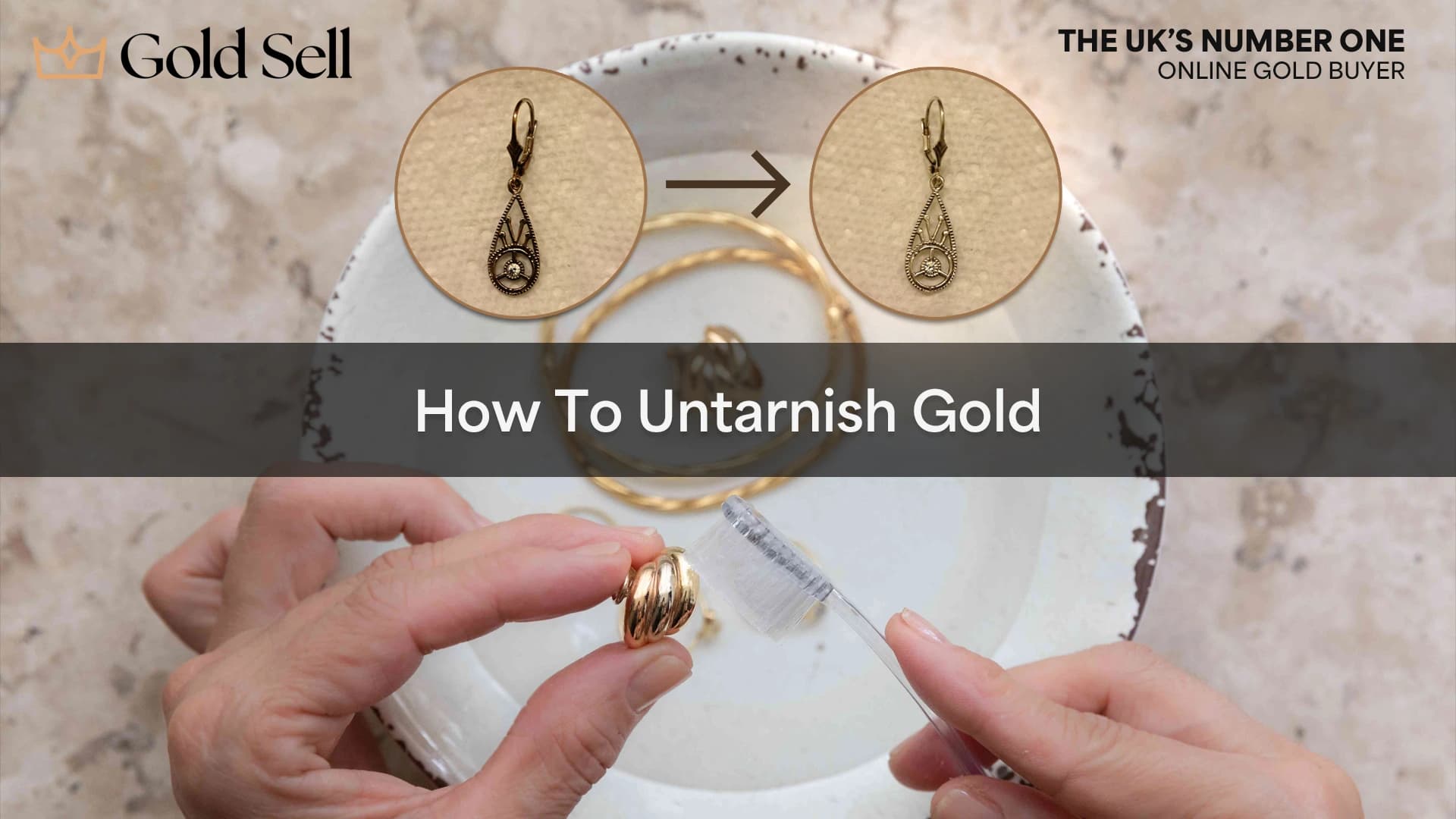
This image shows a simple and effective method to ‘untarnish’ gold using a soft-bristle toothbrush—an essential step in how to clean gold at home. Gently scrubbing with mild soap and warm water helps lift tarnish caused by oxidised alloy metals without damaging the gold. This safe, at-home technique is ideal for restoring shine to rings, chains, and other everyday gold jewellery.
What Gold Doesn’t Tarnish?
The purer the gold, the less it tarnishes – so 24k gold doesn’t tarnish in the usual sense. High-purity gold like 24 karat (99.9% gold) or 22 karat (91.6% gold) is extremely resistant to tarnishing. These contain little to no alloy metals that would oxidise. That’s why heirloom 22k bangles from grandma might still look bright decades later, and why pure gold bullion coins stay shiny unless exposed to something unusual. As a rule, pure gold is virtually tarnish-free in everyday environments.
However, note that even 24k gold can sometimes show tiny blemishes over a long time. These are the “red spots” or “copper spots” we mentioned earlier – microscopic amounts of impurity (like 0.01% copper or silver in the gold) oxidising on the surface. They are rare and usually small. For instance, a fine gold coin may develop a couple of reddish pinprick spots after years; it’s not the gold tarnishing per se, just a speck of alloy metal tarnish. Collectors know this phenomenon well, and it can be addressed by careful dipping or cleaning if desired. So, strictly speaking, 24k gold doesn’t tarnish, but its impurities might. In practical terms, you will almost never see a 24k pure gold chain tarnish or darken.
Moving down the gold purity scale:
- 22k gold: This is 91.6% gold with a balance of silver or copper. It very rarely tarnishes under normal conditions. Over many years, 22k gold might get a slight warm patina (not a dull tarnish, more like a mellowing of high shine). Any tarnish that does form would be minimal and slow because only ~8% of the metal is reactive. Many cultures (like in India and the Middle East) favour 22k for its rich colour and resistance to tarnish – pieces stay beautiful with basic care.
- 18k gold: 75% pure gold. This has 25% alloy content, which introduces some tarnish possibility. That said, 18k is still quite resistant and generally doesn’t tarnish visibly unless exposed to harsh conditions (think neglect, chemicals, or perhaps high humidity storage over a long time). If you notice tarnish on 18k gold, it’s likely in crevices or a slight dullness rather than obvious corrosion. Its higher gold content gives it more natural tarnish protection compared to 14k. Many 18k gold pieces never visibly tarnish in their owners’ lifetimes, especially with occasional cleaning.
- 14k gold: 58.5% gold, as discussed, does have enough alloy metal to tarnish. It won’t rust or turn completely black or green on its own, but it can get a thin layer of tarnish (dullness, maybe a hint of colouration) if not cleaned. Still, 14k gold is commonly worn daily without people noticing major tarnish – it’s more that it may not look as brilliant if you compare a polished piece to one that’s been in the drawer for years. Regular wear and mild cleaning keep 14k mostly shiny, but yes, it can tarnish gradually.
- 10k/9k gold: These low-karat golds tarnish the most, because less than 50% is gold. The rest is usually silver, copper, nickel, etc., which will tarnish like a penny or a piece of sterling silver would (albeit more slowly than pure copper or silver thanks to the gold content). You might notice 9k gold (common in UK) develops a brownish tint or needs more frequent polishing. It’s simply a trade-off for the affordability and strength you get with lower-karat gold. Fear not, a quick polish restores it, and the gold is still there – it doesn’t “rust away” or anything.
To summarise, in everyday terms, 18k and above can be considered “non-tarnishing” gold, especially 22k and 24k which essentially do not tarnish under normal household conditions. That’s why high-karat gold is popular for investment or heirloom jewellery – it stays shiny with minimal care. Even so, no gold alloy is 100% immune to some form of discolouration. For example, 22k or 24k pieces can get fingerprint oils and slight toning, which a gentle clean will fix. And as noted, pure gold can get those rare red spots if contaminants are present.
One more point: colour variations vs tarnish – sometimes people see their rose gold ring darken or yellow gold look “reddish” and worry it’s tarnish. Often, that’s just the natural ageing of the metal’s appearance or wear exposing underlying tones (especially in rose gold, which can darken a tad as the copper ages). It’s not the same as tarnish, and it doesn’t mean poor quality. Polishing can brighten it, but some slight colour changes can occur in older pieces even without classic “tarnish film.” High-karat gold, though, generally keeps its colour stable.
So, what gold doesn’t tarnish? Essentially, 24k gold is as tarnish-proof as it gets. 22k gold is nearly so, with minimal upkeep needed. 18k gold is very resistant, only dulling a bit over time. Lower karats (14k, 10k, etc.) will tarnish more, but are still far easier to maintain than metals like sterling silver. With any gold, a little care goes a long way to prevent tarnish from forming in the first place.
Next, we’ll explain the term “tarnish-free jewellery” – what does it mean when a product is advertised as tarnish-free or non-tarnish, and how do jewellers achieve that.
What Does Tarnish Free Jewellery Mean?
“Tarnish-free” jewellery refers to pieces designed or treated to resist the typical tarnishing process, so they stay gleaming without discolouration. In the context of gold jewellery, non-tarnish usually implies one of two things: either the metal itself doesn’t tarnish (e.g. high-purity gold or certain non-reactive metals), or the jewellery has a special coating/plating that prevents tarnish.
Here are common approaches that make gold jewellery “tarnish free”:
- Rhodium Plating: Many gold (and silver) jewellery items are plated with rhodium, a platinum-group metal. Rhodium is highly reflective, durable, and crucially does not tarnish. For example, most white gold rings are rhodium-plated to give a bright white finish and protect the alloy from tarnishing or reacting with skin. Yellow gold jewellery can also be flash-plated with a microscopic layer of 24k or rhodium to keep it extra shiny. Rhodium plating essentially seals the underlying metal away from air and moisture, so you get a tarnish-free surface. The only catch: rhodium plating isn’t permanent. It can wear off over time (especially on rings due to rubbing). A rhodium-plated piece might be “tarnish free” for a couple of years, but eventually you may need to re-plate to maintain that status. Still, it’s a brilliant solution for keeping jewellery looking pristine with minimal maintenance in the short term.
- Gold Vermeil and Heavy Gold Plating: Gold vermeil is a fancy term for sterling silver jewellery coated in a thick layer of gold (at least 2.5 microns of gold, typically 14k or 18k). These pieces look like solid gold and, importantly, as long as the gold layer is intact, they won’t tarnish – the gold outer layer doesn’t oxidise. The sterling silver underneath is prone to tarnish, but it’s not exposed to air unless the gold wears off. Good-quality vermeil can be pretty resistant to tarnish for years, making it a popular option for demi-fine jewellery marketed as “tarnish resistant.” Similarly, some costume jewellery uses stainless steel or brass with a high-quality gold plating plus a protective clear coat, aiming to be tarnish-proof. The practicality is that eventually, with heavy wear, plating can wear through or tiny pinholes might let oxidation in, and then tarnish can appear. But with occasional wear and proper care, vermeil and well-plated pieces can stay tarnish-free to the eye for a long time.
- Non-tarnish alloys: There are jewellery metals engineered to not tarnish. For instance, stainless steel and platinum are often cited as tarnish-free alternatives. Stainless steel doesn’t tarnish or rust easily (that’s why it’s “stainless”), and platinum is a noble metal like gold – it stays bright (it can dull with scratches but doesn’t form tarnish). Some modern jewellery uses titanium or tungsten which also don’t tarnish. When gold jewellery is labeled tarnish-free, it might mean it’s made of or coated with one of these stable metals. For example, “tarnish free gold earrings” could be stainless steel with a gold tone finish – they won’t turn green or black. However, in fine jewellery, this is less common; you’d simply have solid gold which we know has minimal tarnish in higher karats.
In essence, tarnish free jewellery means you shouldn’t see any discolouration or dulling over time the way you might with unprotected brass or low-karat alloys. It’s a big selling point for those who want maintenance-free shine. But it’s also a bit of a marketing term – no metal is absolutely forever untarnishing under all conditions. For example, a “tarnish-free” gold-plated necklace could still eventually tarnish if you wear it in the pool daily (chlorine will attack the base metal once exposed). Likewise, rhodium plating can give way after lots of wear, at which point the item might tarnish unless re-plated.
When you see terms like “non-tarnish gold jewellery”, check what the base material is. If it’s solid 14k or 18k gold, it means inherently it won’t tarnish much (and the ad is just highlighting that). If it’s costume jewellery, it likely has a protective coating. Some jewellers also apply an e-coating or clear lacquer to fashion jewellery to prevent tarnish – essentially sealing the metal from air. This can make cheap jewellery last longer without tarnishing, though the coating might wear off eventually.
To give some examples:
- A 18k gold necklace: mostly gold, tarnish not an issue by nature (just keep it clean).
- A gold vermeil pendant: sterling silver inside, thick 18k gold outside: won’t tarnish until perhaps years later if the gold rubs off in spots (and even then, you’d only see a small tarnish spot on the silver which you could polish and perhaps replate).
- A “tarnish free” fashion ring: could be brass with a heavy gold electroplate and maybe a rhodium top coat. It will resist tarnish much better than plain brass, but after a long time the brass might peep through and tarnish.
Longevity and practicality: Tarnish-resistant treatments like rhodium plating mean less frequent polishing and no green fingers, but they do require upkeep (rhodium on a daily ring might last 1-2 years before re-plating is suggested). Gold vermeil is great because even when it eventually tarnishes, it’s just the silver base which can be polished or re-dipped. Solid high-karat gold is the ultimate low-tarnish solution – it may cost more upfront, but it truly stays shiny with minimal effort (just the occasional wash). So, if you absolutely hate polishing jewellery, consider investing in 18k+ gold or platinum, or look for pieces explicitly labeled as tarnish-resistant and understand how they achieve it.
In summary, “tarnish free jewellery” means you can wear it without worrying about ugly tarnish stains or constant cleaning. Through noble metals, plating, or protective coatings, the piece is made to stay bright. Just remember, tarnish-free doesn’t mean maintenance-free forever – but it does mean your jewellery is built to keep its shine with very little fuss.
Frequently Asked Questions
Does gold tarnish?
Yes, gold can tarnish if it’s alloyed with metals like copper or silver, which react with air, moisture, and chemicals. While pure 24k gold doesn’t tarnish, most jewellery is made from lower-karat gold (like 9k, 14k, or 18k) that contains tarnish-prone alloys. Tarnish appears as dullness, dark spots, or slight discolouration, but it’s only on the surface and can be cleaned off easily with the right care.
How to untarnish gold?
To untarnish gold, soak it in warm water with mild dish soap, gently brush with a soft toothbrush, rinse thoroughly, and dry with a soft cloth. This method removes surface tarnish caused by alloy metals oxidising. Avoid abrasive materials or harsh chemicals like bleach. For stubborn tarnish, a gentle baking soda paste or diluted ammonia can help, but always test cautiously. Gold is durable, and most tarnish can be safely removed at home.
What is tarnish on gold?
Tarnish on gold is a thin, discoloured layer caused by the oxidation of non-gold metals like copper or silver in the alloy. It can appear black (silver sulphide), green (copper salts), or reddish (copper oxides), depending on the alloy mix. Pure gold doesn’t tarnish, but lower-karat gold can, especially in humid environments or when exposed to sweat, chlorine, or sulphur-containing substances. Tarnish is cosmetic and removable with gentle cleaning.
What metal does not tarnish?
Metals that do not tarnish include pure gold (24k), platinum, rhodium, palladium, stainless steel, and titanium. These metals are highly resistant to corrosion and oxidation, making them ideal for tarnish-free jewellery. Pure gold and platinum are noble metals, meaning they don’t react with air or moisture under normal conditions. Rhodium, used in plating, is also completely tarnish-proof, though it can wear off over time and may need reapplication to maintain its appearance.
Can 14k gold tarnish?
Yes, 14k gold can tarnish because it contains about 42% alloy metals like copper and silver, which are prone to oxidation. Over time, exposure to air, moisture, sweat, and chemicals can cause discolouration or dullness, especially in crevices or less-exposed areas. However, the tarnish is superficial and can be removed with gentle cleaning. Regular maintenance helps keep 14k gold jewellery looking bright and minimises visible tarnish buildup.
Can 18k gold tarnish?
18k gold can tarnish very mildly, as it contains 25% alloy metals such as copper or silver. While it’s much more tarnish-resistant than 14k or 9k gold, prolonged exposure to moisture, chemicals, or skin oils may cause slight dullness or dark spots over many years. That said, many people find their 18k jewellery stays bright with basic care. Tarnish that does form is usually light and easy to remove with gentle cleaning.
Can white gold tarnish?
Yes, white gold can tarnish, but the process is usually slow and subtle. The white gold alloy may dull or take on a yellowish tone once its rhodium plating wears off. This plating gives white gold its bright, tarnish-resistant finish. Once worn down, the underlying alloy—often containing silver or nickel—can oxidise slightly. Re-plating with rhodium restores the “like new” finish and keeps white gold jewellery looking untarnished and brilliant.
Can gold plated jewellery tarnish?
Yes, gold plated jewellery can tarnish once the thin gold layer wears off, exposing the base metal—often copper or brass—which reacts with air and moisture. Even before the gold wears through, microscopic pores in poor-quality plating can let oxidation occur underneath, causing dark or green spots. Higher-quality gold plating, like vermeil or gold-filled pieces, lasts longer but can still tarnish over time. Keeping plated jewellery dry and clean helps extend its life.
What does tarnish free jewellery mean?
Tarnish free jewellery refers to pieces made from or coated with metals that resist discolouration and oxidation. This includes high-purity gold, rhodium-plated gold, gold vermeil, or stainless steel. These materials form a barrier against moisture and air or are inherently non-reactive. While “tarnish free” doesn’t mean immune forever, it means the jewellery will maintain its appearance far longer than uncoated or low-quality alloys, with minimal maintenance required for long-term shine.
Can tarnished gold be restored?
Yes, tarnished gold can be fully restored with gentle cleaning methods. Tarnish only affects the surface and doesn’t damage the gold underneath. Warm water, mild soap, and a soft brush are usually enough to lift most tarnish. For stubborn stains, baking soda paste or professional polishing may be used. With proper care, even heavily tarnished gold jewellery can regain its original lustre without affecting its structural integrity or value.
What tarnishes gold?
Gold tarnishes when the alloy metals within it—like copper, silver, or zinc—react with air, moisture, sweat, chlorine, or sulphur compounds. Pure gold doesn’t tarnish, but lower-karat gold (like 9k or 14k) contains a higher percentage of these reactive metals. Common sources of tarnish include exposure to household chemicals, cosmetics, polluted air, and even body oils. Tarnish appears as dullness, dark patches, or green/black residues and is removable with proper care.
Does gold tarnish like silver?
No, gold doesn’t tarnish like silver. Silver tarnishes rapidly and visibly, turning black due to sulphur reactions. Gold, especially in higher karats, is far more resistant to tarnish. Lower-karat gold may dull or discolour over time, but not nearly as quickly or intensely as silver. Silver tarnish can develop in weeks, while gold tarnish often takes years and appears more subtly. Regular wear and basic cleaning help prevent noticeable gold tarnish.
Will fake gold tarnish?
Yes, fake gold will tarnish quickly. Fake or imitation gold is typically made from base metals like brass, copper, or nickel, which oxidise and react with moisture and air. Once the thin gold-tone coating wears off, the exposed metal will tarnish, often turning green or black. Even if well plated, fake gold jewellery lacks the durability of real gold and usually discolours with frequent wear, especially if exposed to water or sweat.
Why does white gold tarnish?
White gold tarnishes when its rhodium plating wears off, revealing the slightly yellow or greyish alloy underneath. This core metal—usually a mix of gold and white metals like nickel or palladium—can slowly oxidise, especially if it contains silver. The dull appearance that follows is often mistaken for tarnish. Re-plating the piece with rhodium restores its bright finish. While white gold tarnish is rare, proper care and occasional re-plating keep it looking pristine.
What gold doesn't tarnish?
24k gold doesn’t tarnish because it’s pure and contains no reactive metals. 22k gold is also highly resistant, with only trace alloy content. While 18k gold is very tarnish-resistant, it contains enough alloy to potentially oxidise slightly over time. Tarnish increases as purity drops—9k and 14k gold are more susceptible due to higher alloy content. For long-term shine with minimal upkeep, high-karat gold (18k or above) offers the best tarnish resistance.
Interested in selling gold with the UK’s highest paying gold buyer? Visit our Sell Gold page to get a competitive valuation – we provide fully insured postage and fast payment.
For more insights and the latest gold price today, keep an eye on our live charts and blog updates.