
White Gold Vs Silver
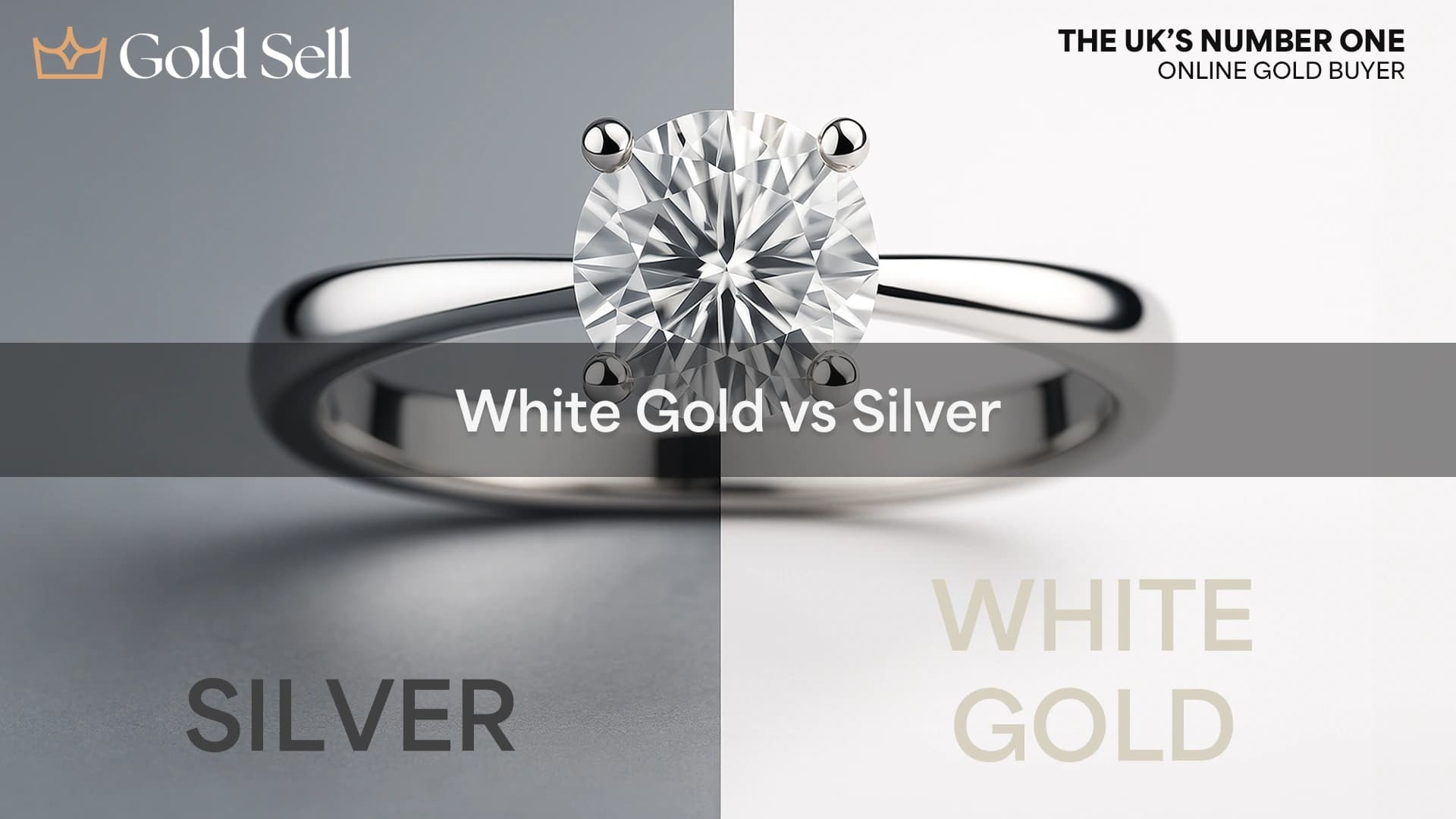
White gold and sterling silver may look alike, but they are very different in composition, value, and upkeep. In a nutshell, white gold is a gold alloy (making it more expensive and durable), whereas sterling silver is a mostly pure silver alloy that’s more affordable but prone to tarnish.
Key Takeaways
- Composition & Colour: The difference between sterling silver and white gold starts with makeup. Sterling silver is 92.5% pure silver (hence the “925” stamp), giving it a bright grey-white shine. White gold is an alloy of gold mixed with white metals (like nickel, palladium, or silver) and then rhodium-plated for a brilliant platinum-like white finish. Visually they’re similar, but unplated white gold has a warmer pale yellow-grey tint until rhodium plating is added.
- Value & Price: Is white gold more expensive than sterling silver? Yes – white gold carries a much higher price because of its gold content. Silver is relatively inexpensive (on the order of pence per gram), whereas gold costs tens of pounds per gram. Even 9ct white gold (about 37.5% gold) has significant intrinsic value compared to silver.
- Durability & Maintenance: White gold is harder and more scratch-resistant than sterling silver. It doesn’t tarnish, and its rhodium coat provides extra durability. Sterling silver is softer and will tarnish over time (developing a dark patina). Silver jewellery needs periodic polishing to restore its shine, whereas white gold generally needs less frequent maintenance – though white gold’s rhodium plating does wear off after 1–3 years on regularly worn pieces, so re-plating is required to keep it ultra-white.
- Hypoallergenic Qualities: Sterling silver is often considered hypoallergenic, since quality silver alloys usually contain copper and no nickel (nickel is a common allergen). White gold can pose allergy issues for some wearers if it’s alloyed with nickel – a problem largely avoided by using palladium-based white gold or ensuring a thick rhodium plating as a barrier.
- Longevity & Usage: White gold holds its value and lustre long-term (no tarnishing) and is favoured for fine jewellery like engagement rings or heirloom pieces. Sterling silver is more budget-friendly and great for everyday or fashion jewellery, though it requires more frequent cleaning. If cost and maintenance were no concern, white gold would generally be “better” for a long-lasting, luxury piece, whereas silver offers a classic look at a fraction of the price.
White Gold vs Silver: Differences Explained
When comparing white gold vs sterling silver side by side, several key differences emerge across color, composition, durability, cost, and care. Both metals are popular “white” (silvery-looking) choices for jewellery, but their properties and prestige differ considerably.
Composition: Sterling silver is an alloy of 92.5% silver with 7.5% copper. This centuries-old standard was even codified by King Edward I of England in 1300, requiring all silver items to meet the sterling standard of 92.5% purity. White gold, by contrast, is made from yellow gold mixed with white metals (commonly nickel, zinc, copper, silver or palladium) to bleach its color. In 18ct white gold, 75% is pure gold, while 25% is other metals to achieve a silvery hue. White gold was originally developed in the early 20th century as a platinum imitation – hence jewellers still plate most white gold jewellery in rhodium, a shiny white metal, for an extra bright finish. Essentially, the difference between sterling silver and white gold is that one is mostly silver, the other mostly gold.
Colour and Appearance: At first glance, new white gold and silver jewellery can look nearly identical – both gleam with a cool white-metal lustre. In fact, visually, white gold and silver are quite similar when polished. However, there are subtle differences. Rhodium-plated white gold tends to have a slightly cooler, high-gloss chrome sheen (similar to platinum), whereas sterling silver’s tone is a natural white-grey that can appear a tad warmer or more liquid in shine. Unplated “raw” white gold has a duller greyish hue, so jewellers plate it precisely to mimic silver’s bright white colour. Over time, their looks diverge: untended silver will tarnish (darken), while white gold may lose some rhodium brightness and show a faint yellow tinge from the gold underneath.
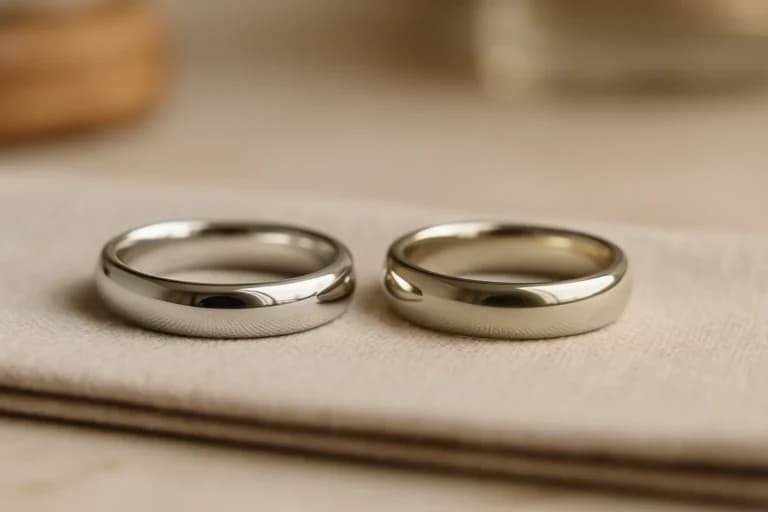
This side-by-side comparison of sterling silver vs white gold rings shows how visually similar the metals can appear at a glance, yet subtle tonal differences emerge under natural lighting. The sterling silver ring (left) exhibits a cool, mirror-like finish, while the unplated white gold ring (right) has a softer, slightly creamy tint.
Durability and Hardness: White gold is generally more robust than sterling silver. Gold itself is soft, but white gold alloys often include harder metals (like nickel) which increase strength. Sterling silver is also reasonably durable for daily wear, but it is softer (2.5–3 on Mohs hardness) and can scratch or bend a bit easier than white gold. Many people choose white gold for rings or regularly worn pieces because it withstands knocks and abrasions better. Silver works well too, but thick or reinforced designs are recommended for longevity. White gold’s surface plating also adds scratch-resistance, whereas silver (being softer) may show scuffs that then need polishing.
Tarnish and Maintenance: One major practical difference between sterling silver and white gold is how they react with air and moisture. Sterling silver tarnishes – it reacts with sulphur compounds in the air or on skin, forming a blackish layer of silver sulphide on the surface. This is why old silver might look dark or dull. The good news: tarnish is surface only and can be cleaned off with silver polish or a gentle salt bath, restoring the shine. White gold, in contrast, does not tarnish – gold doesn’t corrode or oxidise. Its rhodium plating also resists oxidation. So a white gold ring won’t turn black or green like silver can. This makes white gold lower maintenance, since you won’t be constantly polishing off tarnish. However, white gold isn’t completely care-free: over years of wear, the rhodium finish can wear thin, especially on rings. That doesn’t create tarnish, but the exposed white gold alloy might look slightly less bright (a faint creamy hue). To fix this, white gold jewellery is usually “re-dipped” in rhodium at your jeweller – typically every 1–3 years for a frequently worn ring – to renew its brilliant white surface. Replating is a straightforward maintenance task, but it’s an extra step that silver doesn’t require (since silver is the same metal all the way through and just needs polishing). In short: sterling silver needs regular cleaning to combat tarnish, whereas white gold needs periodic replating to maintain its colour – different kinds of upkeep. Not all yellowing is tarnish. If your white gold ring is starting to look dull or slightly yellow, it might not be what you think. Learn why white gold can appear dull or yellow over time — and why it’s not actually tarnish in our detailed guide.
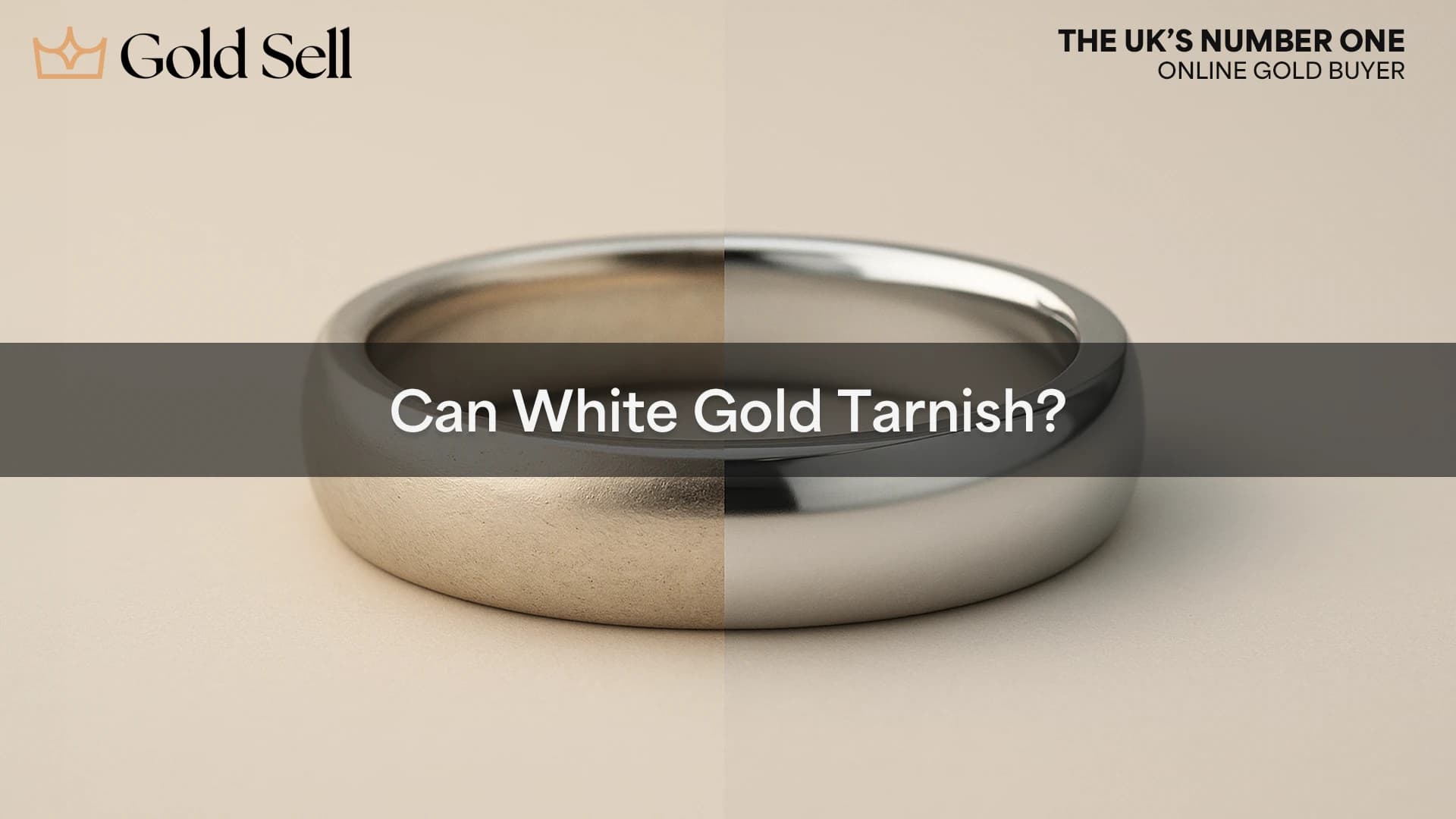
Wondering can white gold tarnish or turn yellow? Learn the truth, plus expert tips on how to clean white gold to keep it bright for longer.
Allergies: If you have sensitive skin or metal allergies, this can influence the white gold vs silver decision. Sterling silver is generally safe for most people – good quality sterling is nickel-free, so it usually doesn’t cause irritation. (Do note: cheap “silver-toned” costume jewellery may contain nickel, but genuine 925 silver does not.) White gold often contains nickel unless you specifically buy a nickel-free alloy. Many 9ct and 14ct white gold formulations include nickel as a bleaching agent to make the gold appear whiter. If you’re allergic to nickel, wearing white gold can cause redness or itching once the rhodium layer wears a bit and exposes the alloy. You can avoid this by opting for “nickel safe” white gold (some jewellers use palladium or silver instead in the mix) or ensuring a thick rhodium plate. Still, those with severe nickel allergy sometimes choose platinum or sterling silver over white gold. Silver itself can very occasionally cause a skin reaction (a tiny portion of people are allergic to silver or copper), but it’s far less common. In fact, silver is listed as a metal with hypoallergenic properties for most wearers.
Weight: One difference you might feel between the two metals is weight. Gold is a very dense metal – nearly twice as heavy as silver. An 18ct white gold ring will weigh noticeably more than an identical-sized sterling silver ring. Some enjoy the heft (it can make a ring feel more “substantial” and valuable), while others might not notice unless the piece is large. This isn’t usually a deciding factor, but it’s an interesting distinction: white gold gives more weight on the hand for the same volume of metal.
Luxury and Prestige: There’s also the intangible factor of prestige. White gold is considered a precious metal on par with yellow gold or platinum in fine jewellery. It often denotes a special piece (engagement rings, high-end watches, etc.) and carries status as a valuable material. Sterling silver is lovely but seen as more common and accessible – it’s used in everything from costume jewellery to fine tableware. Silver has been cherished for millennia (and at times in history was nearly as valuable as gold), but today gold is worth significantly more. If you’re gift-giving or marking a major life event, white gold’s cachet and lasting value might make it the preferred choice. On the other hand, silver’s affordability and classic look make it perfect for everyday chic, trend pieces, or larger statement jewellery without a sky-high price.
In summary, the difference between sterling silver and white gold comes down to material value, care needs, and personal priorities. Sterling silver offers a bright white shine at low cost, with the trade-off of occasional tarnish and slightly softer metal. White gold provides a durable, non-tarnishing finish and intrinsic value, but at a higher price and the need for eventual replating. Both metals can produce beautiful jewellery – understanding their differences helps you choose the best fit for your needs.
Does White Gold Tarnish Like Silver?
One of the most frequent questions jewellers hear is “Does white gold tarnish like silver?” The short answer is no – white gold doesn’t tarnish the way silver does. But there’s more to explain regarding what happens to each metal over time.
Tarnishing in Silver: Tarnish is a surface chemical reaction that affects sterling silver when it’s exposed to oxygen and sulphur (from the air, humidity, or even skin oils). Silver reacts to form silver sulphide, which is that dark black/brown layer you’ll see on neglected silverware or jewellery. This can happen fairly quickly in a humid or urban environment – you might notice a faint yellowing or dullness on a silver ring after just a few weeks of not wearing it, and it can progress to a blackish patina over months or years. The good news is tarnish isn’t permanent. It only affects the outermost layer of metal. With some polish (or a gentle chemical dip made for silver), the oxidised layer can be removed, revealing shiny silver beneath. Regular wearing of silver can also slow tarnish, because friction polishes the piece – many find their frequently worn silver pieces stay bright, while unworn ones darken in the jewellery box. Storing silver in airtight bags or using anti-tarnish strips in your jewellery case can also help minimise tarnish buildup.
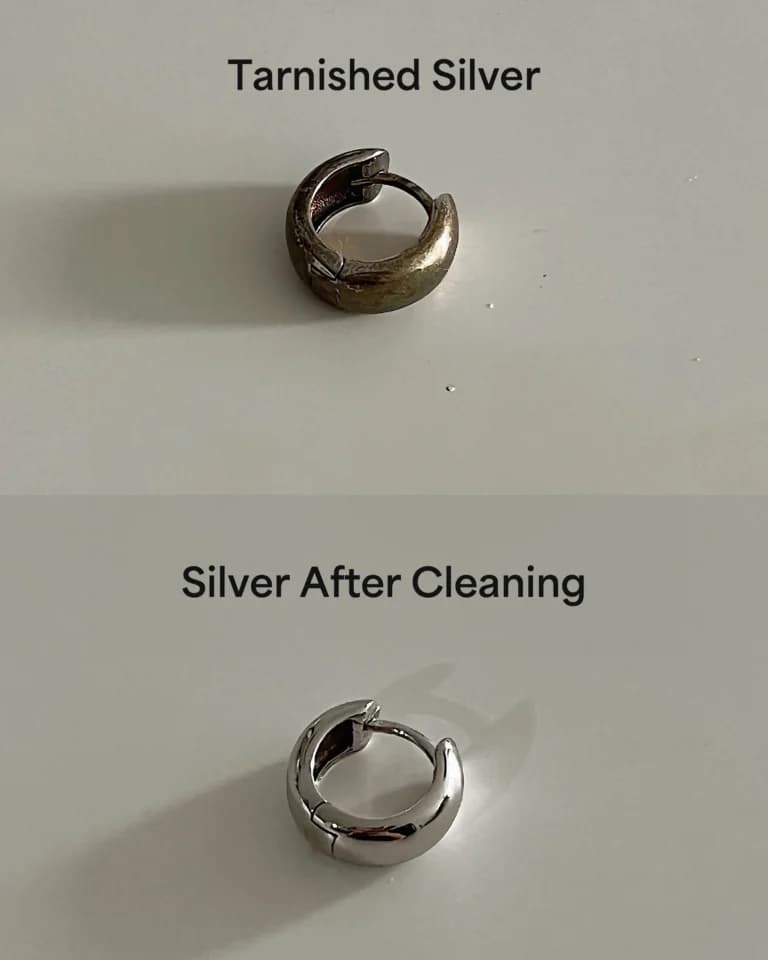
A clear visual of silver tarnish cleaning in action. The top shows a heavily tarnished silver earring darkened by oxidation, while the bottom shows the same piece after polishing — completely restored to its original bright, mirror-like finish. This highlights that silver tarnish is only surface-level and fully reversible with routine cleaning.
White Gold and “Tarnish”: In contrast, white gold does not tarnish or oxidise in the same way. Gold is a noble metal – it doesn’t rust or tarnish when exposed to air. The other metals in white gold (nickel, zinc, etc.) are more prone to oxidation, but the high percentage of gold in the alloy means any corrosion is extremely minimal and not visible on the surface. Also, white gold jewellery is coated with rhodium, which itself resists tarnish and corrosion. So you won’t see a white gold ring turn black or greenish (a common issue with silver or low-purity metals). However, white gold can lose its rhodium plating over time. This isn’t tarnish (there’s no chemical crust), but the appearance can change. As the microscopic layer of rhodium wears off, the piece might develop a slight yellow or dull undertone from the gold alloy beneath. For example, the corners of prongs or the underside of a ring might start to show a creamier white compared to the still-plated areas. This is a gradual process; how quickly it happens depends on the thickness of plating and how much wear the piece gets (rings, which rub against surfaces and skin oils, will lose plating faster than pendants or earrings). Once a white gold piece starts looking a bit off-colour, the solution is straightforward: have it replated (redipped) with rhodium at a jeweller. This will restore the bright white colour instantly. Many jewellers offer rhodium plating services, and it’s often done every couple of years as routine maintenance.
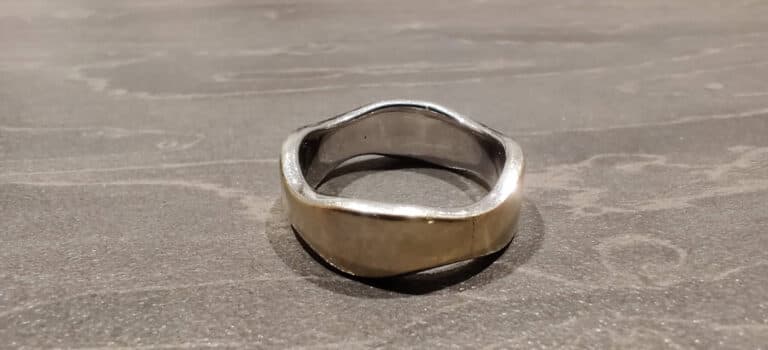
This white gold ring displays a common visual change caused by rhodium plating wear, not tarnish. As the rhodium layer thins on high-contact areas (like edges or undersides), the ring reveals its natural creamy-yellow white gold alloy beneath. While it may look like tarnish, this is simply loss of plating — easily corrected by having the ring replated with rhodium to restore its bright white finish.
Preventing and Reversing Tarnish: For silver jewellery, preventing tarnish means reducing exposure to chemicals and air. Storing silver in closed containers with anti-tarnish tabs, keeping it dry, and cleaning it after wear (to remove sweat or lotion) all help. When tarnish does appear, using a silver polishing cloth or solution will remove it. A popular home remedy is the “baking soda and aluminium foil” trick – soaking silver in warm water with baking soda and foil causes a reaction that lifts tarnish. Just be gentle to avoid scratching the silver. Silver can also be rhodium-plated for protection – some sterling silver jewellery actually comes with a thin rhodium coat to prevent tarnish, effectively giving the look of white gold. This plating can eventually wear off too, but it significantly delays tarnish.
For white gold, since it doesn’t tarnish, prevention is more about not wearing away the rhodium too quickly. Avoid overly harsh cleaners or abrasive polishing on white gold, as they can strip the rhodium layer. Gentle soap and water is usually enough to clean white gold. When you notice the finish fading, a professional replating is the only way to “reverse” that, as it’s more of a restoration than a cleaning. It’s neither difficult nor extremely expensive – many consider it akin to tuning up a car every so often to keep it running smoothly.
Durability Comparison: Tarnish itself doesn’t mean the metal is damaged – it’s a surface effect. Silver can tarnish countless times and be polished back each time; it doesn’t significantly lose material unless the tarnish is removed very aggressively. That said, polishing silver does remove tiny amounts of metal, so over many decades extremely intricate details could soften. White gold’s issue is wear of plating rather than tarnish, and when replated, the piece is like new again with virtually no metal loss. In terms of structural durability, white gold is still more resistant to scratches and bending than silver, tarnish aside. Silver’s tarnish is mostly an aesthetic maintenance hassle; it doesn’t indicate the piece is deteriorating (unless it’s truly corroding in rare harsh conditions).
Bottom Line: White gold will not tarnish like silver does. You won’t have to bust out the polishing cloth for a white gold necklace that’s gone black – it will stay shiny and white. Silver, on the other hand, will require a bit of elbow grease now and then to keep it gleaming. With routine care, both metals can look gorgeous every day. It really comes down to whether you prefer easy non-tarnishing white gold with the occasional replate, or easy-to-polish but often-tarnishing silver that’s otherwise low maintenance.
White Gold vs Silver Price
When comparing white gold vs silver price, the difference is striking — and it all begins with the raw metal value. Thanks to our live price display, you can track the current spot prices for different gold purities in real time. As of now:
- 9ct white gold price: £37.23 per gram
- 14ct white gold price: £57.92 per gram
- 18ct white gold price: £74.46 per gram
- Sterling silver price: £0.86 per gram
Live Gold Price Per Gram
Gold price last updated:
Wednesday, 21 October 2026, 12:32.
The LBMA (London Bullion Market Association) spot price changes daily.
The prices displayed are based on the global market rate for pure 24ct gold, known as the spot price. Like all gold dealers, GoldSell pays a percentage of this rate to account for assaying, refining, secure logistics, market volatility, and handling costs. We consistently offer among the highest payout rates in the UK, with the exact percentage increasing based on the weight and purity of the gold you sell.
That means even the lowest-karat white gold is over 34 times more valuable per gram than silver — and for higher purities like 18ct, that gap widens to nearly 70x. This huge price difference explains why white gold jewellery commands a premium, even for similar-looking designs.
What This Means for Jewellery Prices
- Sterling Silver (92.5%): Silver jewellery is highly affordable. A chunky silver ring weighing 10g contains around £8.00 worth of silver. Most of what you pay goes toward design, manufacturing, or branding — not the metal.
- White Gold (Various Karats): A 10g 9ct white gold ring contains £297 of metal value at current rates. That same ring in 14ct contains over £460 worth of gold, and in 18ct, nearly £600. Even basic designs cost far more due to the gold content.
Pricing Beyond the Metal
Keep in mind that jewellery prices also factor in:
- Craftsmanship:
- Design complexity:
- Gemstones or diamonds:
- Brand markup:
Still, metal value sets the baseline. White gold jewellery always starts at a much higher price point than sterling silver, and that’s before factoring in diamonds or intricate design work.
Resale and Scrap Value
Silver’s resale value is minimal — 10g of sterling silver fetches about £8.00, and many buyers won’t purchase small amounts. But 10g of 18ct white gold contains 7.5g of pure gold — worth around £446 based on current gold prices. That’s a huge difference if you ever plan to sell your jewellery. GoldSell are the UK’s highest paying online gold buyer and purchase all types of gold jewellery. We refine gold in-house, so we can pay you far more for your gold than other gold buyers. Head over to our sell gold jewellery page to sell your items in 3 simple steps.
Is White Gold Worth the Price?
If you’re buying jewellery with long-term value, heirloom potential, or durability in mind (like engagement or wedding rings), white gold is well worth the investment. It’s a luxury metal, retains value, and is more durable than silver. But if you want something fashionable, low-maintenance, and affordable, silver is a brilliant choice — especially for everyday wear or trendy pieces.
White Gold and Silver Side By Side
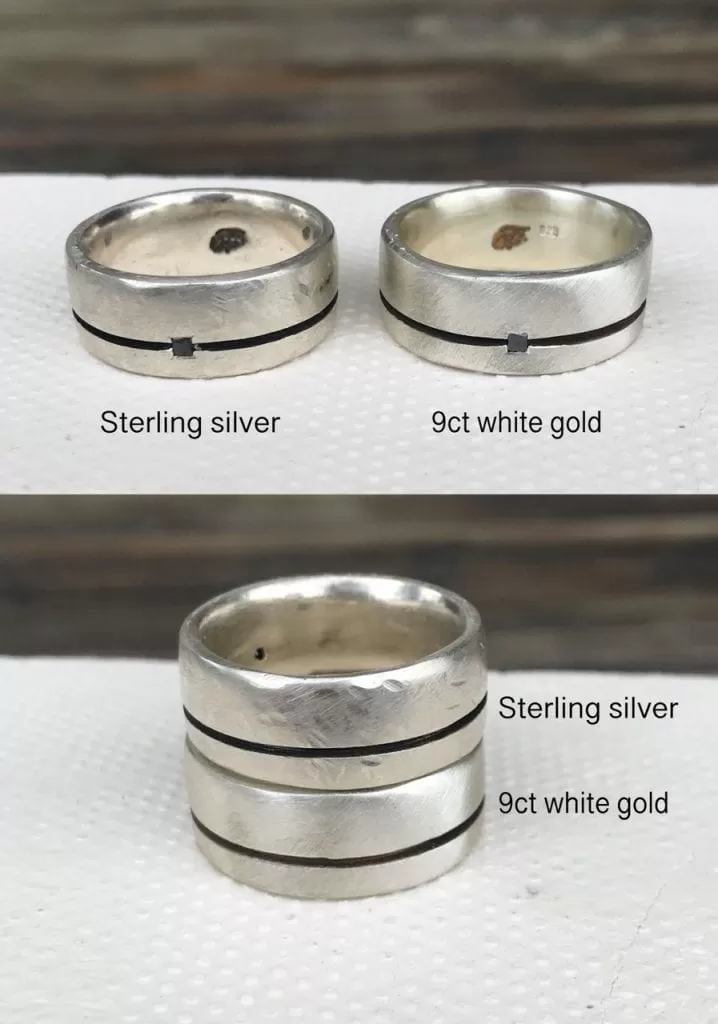
This side-by-side comparison of white gold and silver rings highlights how similar they can appear in certain finishes. Both rings have a brushed surface and identical design, but the 9ct white gold ring (right/bottom) has a slightly warmer tone compared to the cooler, greyish hue of the sterling silver ring (left/top). This visual demonstrates how white gold’s underlying gold content subtly influences its appearance, even without rhodium plating.
Visual Differences: To the naked eye, new rhodium-plated white gold and polished silver are almost identical. Any slight colour difference is usually from the underlying alloy or the polish. Silver often has a mirror-like shine with maybe a slight greyish cast. White gold’s rhodium plating gives a very pure white flash – some describe it as “icier” or more reflective. If you had several rings side by side, a trained eye might distinguish the ever-so-slightly different tone (especially if the white gold’s plating has worn a bit, it might look a touch yellowish compared to silver). But in practice, most people cannot tell a silver vs white gold ring apart just by looking, especially not from a short distance.
One way to spot the difference is by looking for hallmarks/stamps: Sterling silver pieces are usually stamped “925” or “Sterling,” while white gold rings will be stamped with their carat (like “9ct”, “14K”, “18ct”) or a hallmark number (375, 585, 750 respectively for 9ct, 14ct, 18ct in the UK). Of course, that requires finding the tiny stamp inside the band. Visually, without marks, they’re too alike to call apart confidently in most cases. Not sure what those tiny stamps inside your jewellery mean? Our expert hallmark guides make it simple. Check out our gold hallmarks explained blog post for a complete breakdown of UK and foreign gold hallmarks, and explore our silver hallmarks guide to learn how to identify silver purity stamps like “925” and beyond.
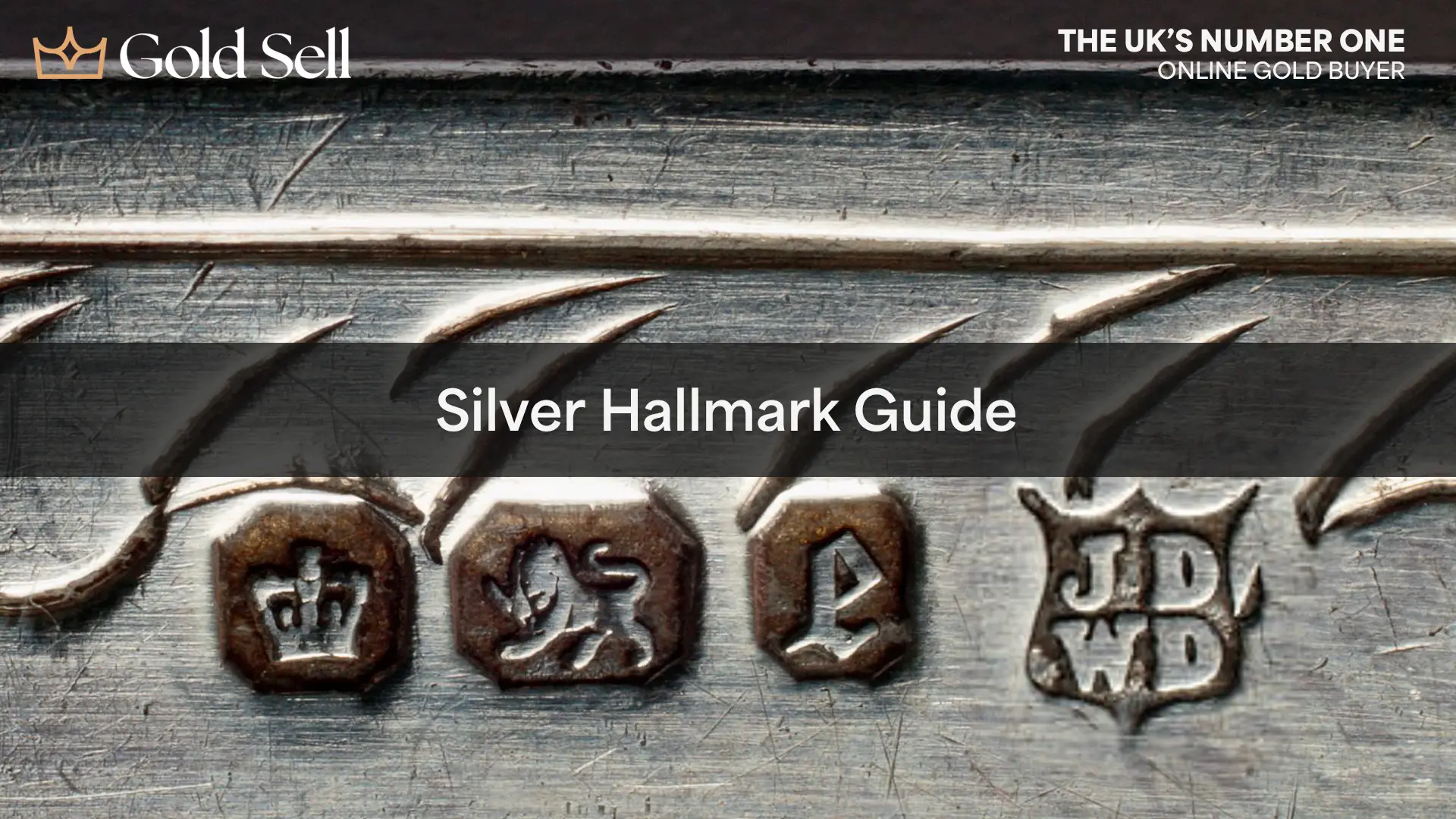
Silver Hallmarks Guide – Identify Silver Hallmarks
Ultimate silver hallmarks guide: Learn easy silver hallmarks identification with UK & foreign hallmarks explained clearly. Identify your silver items quickly!
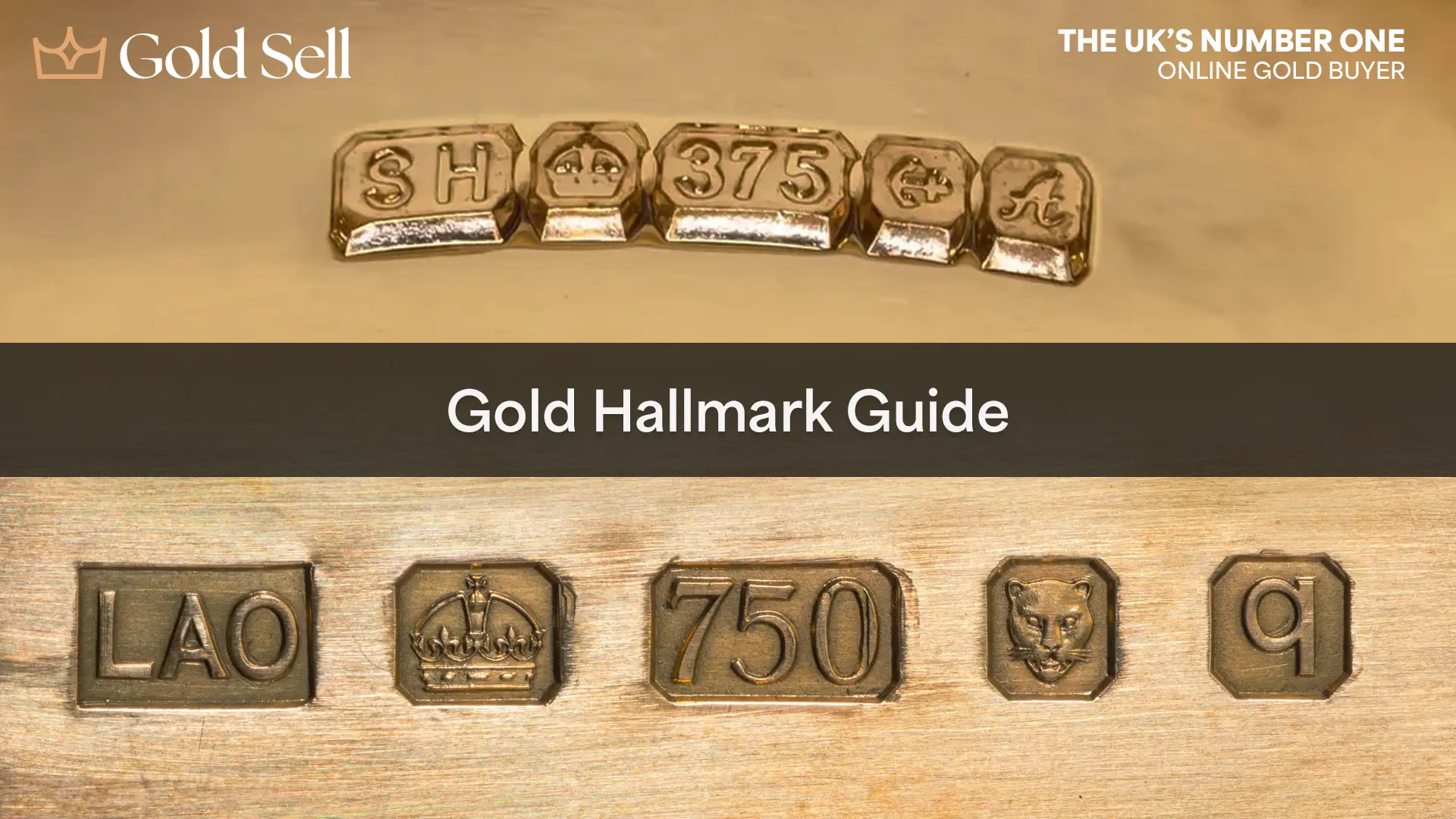
Gold Hallmarks Explained – Identify Gold Hallmarks
Learn how to identify gold hallmarks with our complete hallmark identification guide. Understand assay marks for gold on rings, coins, necklaces, and more.
Tactile and Wear Differences: If you could handle the rings side by side, you might feel that the white gold ring is heavier for its size. As mentioned, gold is denser, so a white gold ring gives a bit more heft. Some also say white gold feels “smoother” or cooler to the touch due to the rhodium plating, whereas silver can feel slightly different. But these are subtle impressions.
Over time, differences become more apparent. Silver vs White Gold after wear: Suppose you wore both rings daily for a year. The silver ring might develop some fine scratches and a bit of tarnish in crevices, needing a polish to shine fully. The white gold ring would likely lose some rhodium on contact points (edges might reveal the faint off-white gold alloy). The silver might also dull a bit if not cleaned, whereas white gold would stay fairly bright except where plating wears. Essentially, silver might darken; white gold might yellow. Polishing the silver ring would make it brand new again. Replating the white gold ring would make it brand new again. So side by side after long use, an unpolished silver ring would look darker than an un-replated white gold ring (which would look pale gold). That’s a scenario where you could tell which is which: tarnished silver versus faded white gold have different tints.
Design Considerations: Certain design details might also hint at the metal. Because silver is softer, very fine filigree or super-thin bands are less common in silver (they could bend). White gold can hold delicate designs a bit better. Conversely, large chunky statement rings are often done in silver because it’s cheaper – a massive white gold ring would be prohibitively expensive for most. So sometimes the style of a piece gives away whether it’s silver or white gold. For example, if you see a very large artisan-crafted ring with a semi-precious stone, it’s likely silver (affordable metal for a big piece). A petite ring with diamonds could be white gold or silver, but mid/high-end brands would use white gold for diamond settings.
Polish and Finish: Silver and white gold can also have different finishes. High-polish, they look alike. But sometimes silver is given an oxidised finish deliberately (to create contrast in engraved patterns – oxidised silver turns black in recesses for a vintage look). White gold is usually kept bright and never intentionally oxidised, though one could rhodium-plate it black for effect (unusual). Matte or satin finishes can be applied to both metals; again they’d look similar (a frosty grey-white). So finish isn’t a giveaway unless intentionally oxidised.
In summary, side by side there’s no obvious visual giveaway between sterling silver and rhodium-plated white gold – which is exactly why many cost-savvy buyers opt for silver lookalikes and why white gold has been so successful as a “white” jewellery metal. They match in colour and complement the same stones and outfits. The differences are under the surface (in value and maintenance). The image of white gold next to silver really drives home how alike they appear, truly requiring context or testing to distinguish. This is great for consumers – you have options at different price points for that same classic silvery look.
White Gold or Sterling Silver: Which Is Better?
After weighing all these points, you might ask: white gold or sterling silver – which is better? The truthful but unsatisfying answer is: “It depends on what you value most.” Each metal has its strengths, and the “better” choice varies by situation. Let’s break it down in a straightforward way:
- If budget is no issue and you want a piece to last a lifetime (or beyond): White gold is arguably better. It’s more durable, it won’t tarnish, and it retains intrinsic value. For something like an engagement ring or a daily-wear chain that you never take off, white gold will withstand the rigours of daily life with less upkeep (aside from an occasional replate) and carry a sense of preciousness. White gold is also usually the choice for fine gemstones; for example, diamonds are almost always set in gold or platinum because of their value and the metal’s strength (prongs in white gold are less likely to deform than in silver).
- If you’re looking for the most cost-effective option or love to amass lots of jewellery to match different outfits: Sterling silver is better for you. You can buy many more pieces of silver jewellery for the price of one in white gold. Silver is ideal for fashion-forward designs, seasonal trends, or big bold pieces (like a chunky necklace or cuff) that would be extremely expensive in gold. And modern silver jewellery can be plated with rhodium, meaning you get a tarnish-resistant, ultra-white finish similar to white gold, still at a fraction of the price.
- For sensitive skin or metal allergies: Surprisingly, sterling silver might be the safer bet if you’re avoiding nickel. Unless you ensure your white gold is nickel-free, silver has the edge of being gentle on skin for most people. However, if allergies aren’t a concern, this point won’t matter to you – both metals can be comfortable for daily wear.
- For gifting or sentimentality: White gold often “feels” more special due to its value. If you’re marking a significant occasion (21st birthday, anniversary, engagement), white gold or gold in general is traditional. Silver gifts are lovely too (and there is a tradition for silver on certain anniversaries or birthdays), but gold has that classic luxury appeal. Silver can absolutely be meaningful – especially vintage or heirloom silver – but culturally, gold is seen as a step up in luxury.
- Maintenance preferences: Consider realistically how you’ll care for the piece. If you know you won’t polish jewellery often, you might get frustrated with silver tarnishing. If you prefer a “wear and forget” approach, white gold (or platinum) suits that, as it’ll stay nice-looking with minimal day-to-day fuss. Conversely, if you don’t want to ever have to send a ring to a jeweller for replating, and you’re okay with a quick wipe of a polishing cloth at home, silver puts maintenance in your own hands. Some people actually enjoy the ritual of polishing silver – it can be satisfying to see it shine – whereas others would rather not bother at all.
So which is better? If we remove budget from the equation and assume neither metal’s cost or availability is an issue, white gold emerges as “better” for most fine jewellery purposes. It’s more robust, doesn’t tarnish, and exudes a luxury status that silver generally doesn’t. That’s why for something like an engagement ring, most would choose white gold (or platinum) over silver if cost didn’t matter. The piece will hold up to decades of wear and can be passed down, and it carries the value (both financial and emotional) we associate with gold.
However, sterling silver is by no means a “poor” choice – it’s beloved for its lustre and has been used in precious jewellery for centuries. It might be better in cases where you want lots of jewellery options, you love the pure white look (rhodium on white gold can be very slightly colder in tone than silver’s natural hue), or you simply prefer the history and craft of silverwork. Silver can also be the better choice for very large pieces (like a big cuff bracelet or statement necklace) where white gold would be astronomically priced; in silver, such pieces are attainable and still beautiful.
Bottom line: If forced to choose “which is better” in a vacuum, white gold would be considered the superior metal for jewellery due to its durability, non-tarnishing nature, and high value. But the “best” choice for you personally could be sterling silver if it aligns with your budget and how you wear and care for your jewellery. Many people actually own and enjoy both – perhaps a silver collection for fun daily wear, and a few special white gold pieces for milestone moments. By understanding the differences, you can make the best choice for each situation, and that’s the ultimate goal.
Frequently Asked Questions
White gold vs silver
White gold and silver are not the same thing. White gold is made from pure gold mixed with white metals like palladium or nickel, often rhodium-plated for brightness. Silver, by contrast, is a naturally white precious metal, typically used in its alloyed form as sterling silver (92.5% pure). They may look similar, but they are chemically and structurally very different.
Can I clean white gold with silver cleaner?
You should not use silver cleaner on white gold. Silver cleaners are often too abrasive or chemically harsh for white gold, especially rhodium-plated pieces. Use a mild jewellery cleaner specifically designed for gold, or wash gently with warm water and mild soap to avoid damaging the finish.
Does white gold look like silver?
Yes, white gold can look like silver, especially when rhodium plated. Rhodium plating gives white gold a bright, white finish similar to silver. However, unplated white gold has a slightly creamier tone, while silver has a cooler, grey-white hue. Visually, they’re very close but not identical.
Does white gold tarnish like silver?
No, white gold does not tarnish like silver. White gold is a noble metal and doesn’t oxidise or form a dark tarnish layer like silver. However, the rhodium plating on white gold can wear off over time, revealing a slightly yellowish tone, which is often mistaken for tarnish.
White gold vs silver price?
White gold is significantly more expensive than silver. As of 21 Oct 2026, 9ct white gold is worth £37.23 per gram, while silver is only £0.86 per gram. The higher gold content, prestige, and durability of white gold all contribute to its much higher cost.
Are white gold and silver the same colour?
White gold and silver are similar in colour but not the same. Rhodium-plated white gold is very bright and reflective, while sterling silver has a slightly softer, cooler grey tone. Over time, silver tarnishes and darkens, while white gold may show a faint creamy hue if unplated.
Does silver damage white gold?
No, silver does not damage white gold directly. Wearing white gold and silver together won’t cause chemical damage. However, harder metals or abrasive contact can cause wear, especially on rhodium-plated white gold. It's best to store them separately to avoid scratches.
Does white gold have silver in it?
White gold can contain silver, but not always. White gold is an alloy of gold mixed with white metals such as nickel, palladium, or sometimes silver. The exact composition varies depending on the karat and alloy recipe used by the jeweller or manufacturer.
Does white gold over silver tarnish?
Yes, white gold plating over silver can tarnish. If white gold is plated over silver, the silver underneath can tarnish if the plating wears away. This may result in dark patches appearing through the plating over time, especially on high-contact areas like rings.
Is white gold cheaper than silver?
No, white gold is much more expensive than silver. Even the lowest karat white gold (9ct) is dozens of times more valuable per gram than silver. This is due to the gold content and the added cost of alloying and rhodium plating. Silver remains the more budget-friendly option.
Is white gold silver in colour?
Yes, white gold appears silver in colour when rhodium plated. Rhodium plating gives white gold a bright, silvery-white finish. However, unplated white gold has a warmer, creamier hue due to the gold underneath. The plated appearance is what most people associate with white gold.
Is Pandora jewellery silver or white gold?
Most Pandora jewellery is made from sterling silver. Pandora is known for using 92.5% sterling silver in its pieces, often branded as “Pandora Shine” or “Pandora Rose” for their plated collections. They do not commonly use solid white gold in their standard jewellery range.
Can you dip sterling silver in white gold?
Yes, sterling silver can be plated in white gold. Jewellers can apply a thin layer of white gold over sterling silver, typically with a rhodium finish. This gives the look of white gold but is only surface-deep. Over time, the plating may wear off and reveal the silver underneath.
Interested in selling gold with the UK’s highest paying gold buyer? Visit our Sell Gold page to get a competitive valuation – we provide fully insured postage and fast payment.
For more insights and the latest gold price today, keep an eye on our live charts and blog updates.





