
Is 18ct Gold Good?
Yes, 18ct gold is widely considered a high-quality choice for fine jewellery. It contains 75% pure gold, giving it a rich colour and high value while still being durable enough for regular wear. This balance of purity and strength makes 18ct gold a popular standard for luxury pieces in the UK and around the world.
Key Takeaways
- 18ct gold = 75% pure gold: It’s a gold alloy with 18/24 parts gold (fineness .750), prized for its rich yellow hue and high value.
- Balance of luxury and durability: Offers more prestige and deeper colour than 9ct gold, yet is harder and more practical for daily wear than 24ct pure gold.
- Hallmarked “750”: In the UK, genuine 18ct gold jewellery bears a “750” stamp (or “18k”) confirming its purity.
- Minimal tarnish, easy care: Thanks to its high gold content, 18ct gold doesn’t tarnish easily. Simple cleaning (mild soapy water and a soft cloth) keeps it shining.
- Valuable but affordable vs 24ct: Being 75% gold, its market value is about 75% of pure gold’s price. The live 18ct gold price per gram is £74.48 per gram based on today’s live gold price, offering luxury at lower cost than 24ct.
Is 18ct Gold Good?
18ct gold is regarded as an excellent quality gold for most jewellery purposes. With 75% pure gold in its mix, it offers a luxurious look and high intrinsic value. Jewellers often favour 18ct for its rich colour and prestige, especially in engagement rings and premium collections. It’s seen as the “sweet spot” between higher-purity gold and practicality: 24ct (pure gold) is very soft and easily scratched, while lower carats like 9ct or 14ct trade colour and value for hardness. In fact, 18ct gold has become a standard for high-end and heirloom pieces, striking an ideal balance of beauty and durability. This alloy is hard enough to resist everyday wear yet contains enough gold to exude that deep yellow gleam associated with fine gold. Overall, if you’re looking for gold jewellery that combines lasting value with elegance, 18ct gold is a trusted, high-quality choice.
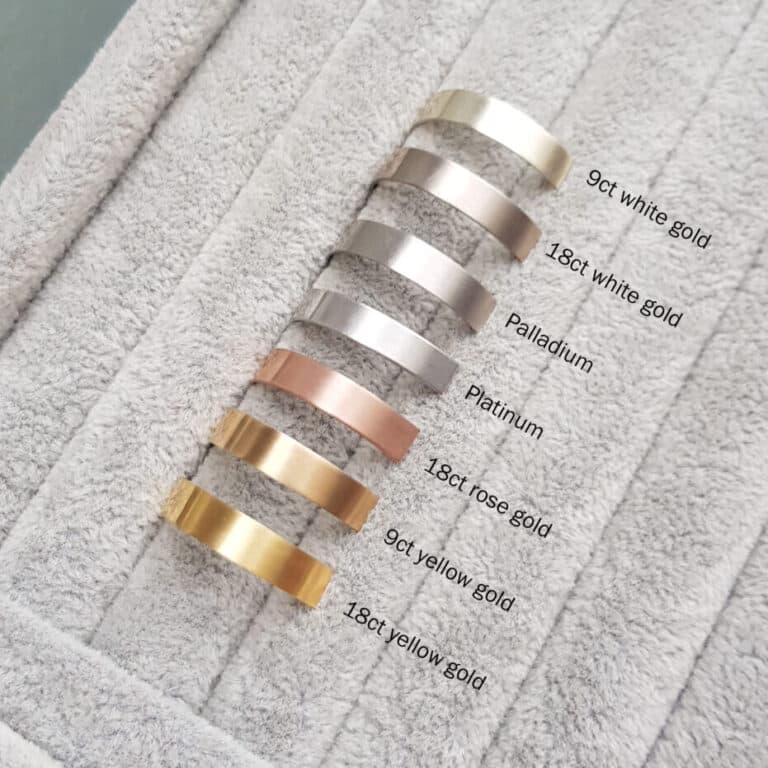
This side-by-side comparison shows the visible differences in gold colour by purity and alloy type. Notice how 18ct yellow gold appears deeper and richer than 9ct yellow gold, while 18ct white gold has a warmer tone than platinum or palladium. This visual highlights how gold purity and alloying metals affect both hue and lustre—key considerations when choosing between types of gold rings.
What Is 18ct Gold?
18ct gold (18-karat gold) is an alloy made of 75% pure gold and 25% other metals. In other words, 18 out of 24 parts are gold – hence the “18 carat” designation. The remaining 25% is typically a blend of metals like copper, silver, zinc, or palladium that strengthen the gold and influence its colour.
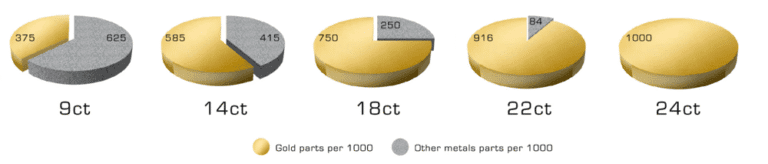
Visual comparison of gold purity in various alloys. The 18ct gold pie (centre) is about 3/4 gold (yellow) and 1/4 alloy (grey), labeled “750” for gold parts per 1000. By contrast, 9ct gold (far left) has a much smaller gold slice (375/1000), while 24ct (far right) is entirely gold (1000/1000).
Because of its specific mix, 18ct gold offers a rich golden colour closer to pure gold than lower-carat alloys. It can also be made in different shades: for example, 18ct yellow gold typically includes silver and copper for a classic warm hue, 18ct rose gold has a higher copper content giving it a rosy blush, and 18ct white gold contains white metals (like palladium or nickel) to appear silvery-white. No matter the colour, any 18ct alloy is still 75% noble gold. This composition gives 18ct gold excellent durability for jewellery – far harder than 22ct or 24ct gold – without sacrificing the luxurious look and value of high-purity gold. In summary, 18ct gold means you’re getting a piece that is three-quarters pure gold, admired for its timeless beauty and solid wearability.
18ct Gold Price Today
The live price of 18ct gold today is £74.48. Because 18ct gold contains 75% pure gold, its value rises and falls in line with the global 24ct spot price—tracking closely at three-quarters of the rate for pure gold. When gold prices climb, so does the payout you can receive for your 18ct gold items.
In 2025, gold has hit record-breaking highs—recently peaking above £83 per gram for 24ct gold. This surge is largely due to economic uncertainty, inflationary pressures, and increased investor demand for gold as a safe-haven asset. According to the London Bullion Market Association (LBMA), this is one of the strongest gold markets since 2020.
Live Gold Price Per Gram
Gold price last updated:
Wednesday, 21 October 2026, 14:15.
The LBMA (London Bullion Market Association) spot price changes daily.
The prices displayed are based on the global market rate for pure 24ct gold, known as the spot price. Like all gold dealers, GoldSell pays a percentage of this rate to account for assaying, refining, secure logistics, market volatility, and handling costs. We consistently offer among the highest payout rates in the UK, with the exact percentage increasing based on the weight and purity of the gold you sell.
Why It's a Great Time to Sell 18ct Gold
With prices near all-time highs, now is a prime opportunity to turn unwanted 18ct gold jewellery, coins, or scrap into cash. Even old or broken items can fetch significantly more today than just months ago. Selling while the market is strong means you can lock in a better return.
Here’s how GoldSell helps you make the most of today’s gold price:
- Live Price Checker: We’re the only gold buyer in the UK with a proprietary Live Price Checker™ that scans hundreds of competing gold buyers every morning and afternoon—just after the official LBMA gold fix. This ensures our payouts are always in line with, or better than, the highest rates on the market. You don’t need to shop around—we’ve already done it for you.
- 7-Day Price Lock: Once you send us your gold, the live price on the day it’s posted is automatically locked in. That means even if prices fall before your valuation is completed, we will base it on the higher, locked-in price. If the gold price increases, your offer rises too. This removes the risk of the gold price fluctuating significantly as soon as your gold leaves your hands and removes the frustration of trying to time the market.
- Best Price Guarantee: If you receive a genuine written quote from another gold buyer that beats ours, we’ll match it—no questions asked. We’re confident our prices are the most competitive in the UK, and this guarantee ensures you never walk away with less than you could have.
- Same-Day Payments: Once you accept our offer, your payment is processed immediately—typically within 20 minutes. Most customers receive their money the very same day via secure Faster Payments, giving you quick access to cash when you need it most.
- Tracked & Fully Insured Postage: We send you a free Royal Mail Special Delivery pack, which is tracked every step of the way and insured up to £2,500 for peace of mind. If your gold is worth more than that, we offer optional extra cover. Simply drop the pack at your nearest Post Office and retain your proof of postage—you’re covered from the moment it leaves your hands.
Whether you’re clearing out old jewellery or cashing in on an investment, We make it fast, fair, and convenient to sell your 18ct gold. There’s no obligation to accept, but with today’s high prices, it’s the perfect time to turn your gold into cash.
Hallmark For 18ct Gold
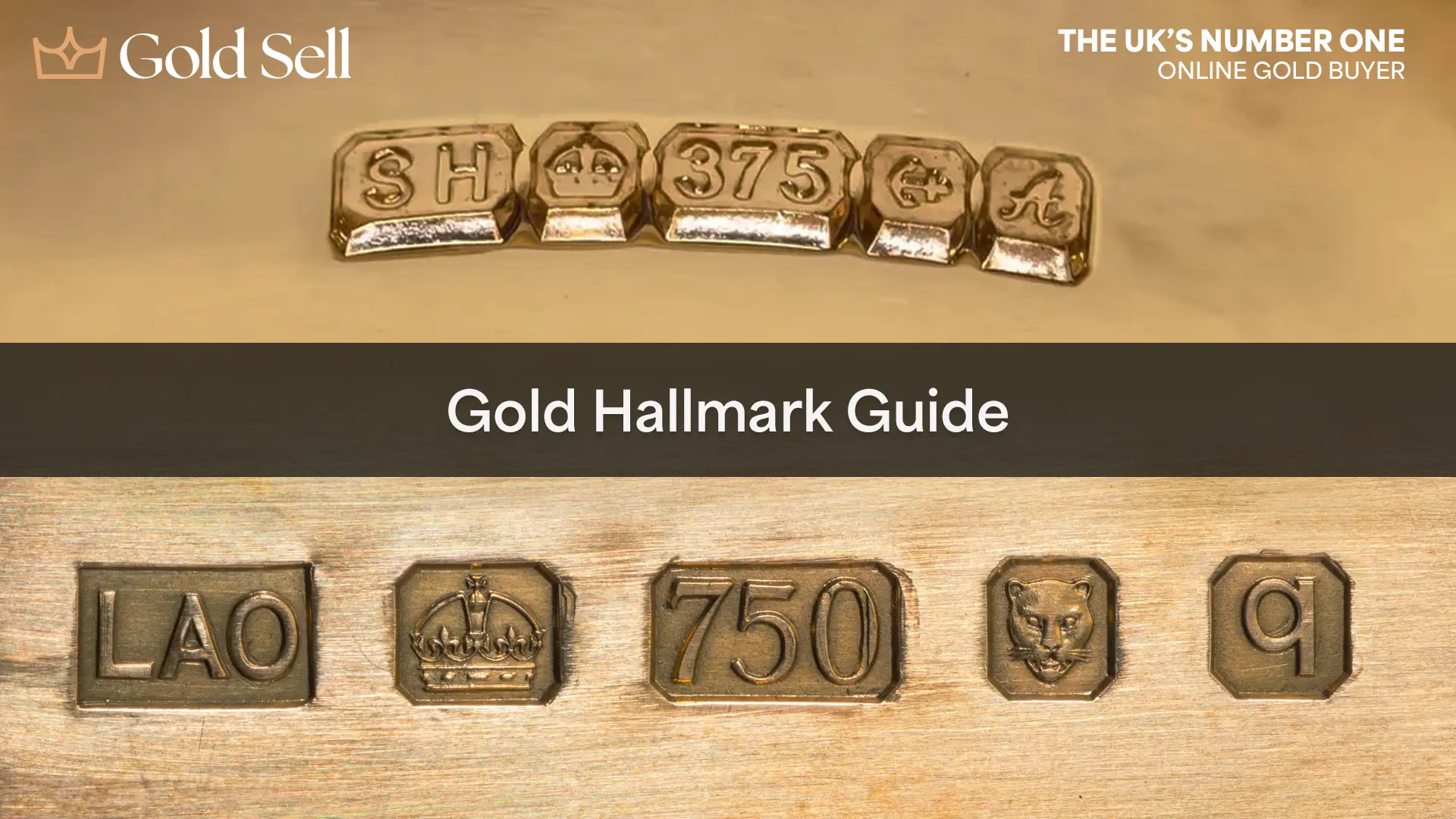
In the UK, the official hallmark for 18ct gold is the number “750,” indicating 75% gold content. You’ll typically find a tiny “750” stamp on the inside of rings or on the clasp of 18ct gold jewellery, sometimes accompanied by an “18K” or “18ct” mark. This number is the gold fineness mark (750 parts per thousand gold). It is usually placed alongside other hallmark symbols – such as the assay office mark (like a leopard’s head for London, an anchor for Birmingham, etc.) and the maker’s mark. These stamps collectively guarantee that the piece has been independently tested and verified as 18 carat gold.

Various 18ct gold hallmark stamps used in UK jewellery. The traditional hallmark (left) shows a crown beside the number 18, while newer markings (centre and right) use “750” – all certifying the item is 18-karat gold.
Hallmarks are a legal requirement in the UK for gold above a certain weight, so any authentic 18ct piece should bear this “750” (or old-style “18”) mark as proof of its purity. If you have a gold item and see a “750” stamp, you can be confident it’s 18-carat gold. Likewise, a “375” mark would mean 9ct gold, and “585” denotes 14ct – but 18ct remains one of the highest standard purity marks commonly seen in quality jewellery. Want to know more about hallmark stamps and where to find them on your jewellery? Check out our guide on how to identify gold hallmarks for a full breakdown, including UK and foreign marks.
Gold Hallmarks Explained – Identify Gold Hallmarks
Learn how to identify gold hallmarks with our complete hallmark identification guide. Understand assay marks for gold on rings, coins, necklaces, and more.
What Is 18ct Gold Vermeil?
18ct gold vermeil refers to jewellery made with a sterling silver base that is coated in a thick layer of 18ct gold. In essence, it’s a type of high-quality gold-plated jewellery: the core is 92.5% pure silver (sterling silver) and the surface is layered with 18ct gold, which is 75% pure. To be called “vermeil,” the gold layer is typically much thicker than ordinary gold plating (often at least 2.5 microns thick) and must be over a precious metal like silver – not over cheap base metal like gold plated or ‘rolled gold’ tends to be.
People choose 18ct gold vermeil to get the look of solid 18ct gold at a more affordable price. Because the outer layer is genuine 18-karat gold, vermeil pieces have the same warm colour and lustre as solid gold jewellery. The substantial gold coating also makes them more durable and longer-lasting than standard gold electroplated pieces. For example, many luxury fashion jewellers (like those producing “demi-fine” jewellery) use 18ct vermeil so customers can enjoy larger or more intricate designs without the exorbitant cost of all-gold. The underlying sterling silver means the piece has real precious metal throughout (no mystery metals), which adds value and makes it hypoallergenic compared to costume jewellery.
In summary, 18ct gold vermeil is a very good option if you want high-quality gold plating. You’re getting a thick 18ct gold layer bonded to silver, resulting in a beautiful, durable finish. Just remember that while vermeil wears well, it isn’t solid gold – over many years the gold layer could eventually fade. However, with proper care, 18ct vermeil pieces can keep their lustrous gold look for a long time and are an excellent compromise between price and appearance. For a deeper look into gold vermeil, our experts have created a guide to answer the question ‘what is gold vermeil?’, which covers tarnishing, how long gold vermeil lasts, and how it compares to gold plated jewellery.
How Much Is 18ct Gold Worth?
18ct gold’s value is roughly 75% of the value of pure 24ct gold of the same weight. Its worth at any moment depends on the live gold market price. For example, 24ct gold is currently trading at £99.31 per gram, 18ct gold (which is 3/4 pure) is therefore worth £74.48 per gram.
It’s important to note that when you buy or sell 18ct gold jewellery, other factors also affect the price: craftsmanship, brand, design, and any gemstones can add extra value above the raw gold content. Conversely, if selling for scrap, dealers might pay a percentage of the gold content value (often around 80–90% of the melt value) to cover refining costs, business overhead, insurance, storage costs and a small profit margin. But purely in terms of gold content, 18ct is 75% as valuable as 24ct gold per gram. So 18ct gold sits at the higher end of the value scale. If you’re investing in gold jewellery or selling scrap gold, knowing that 18ct commands about three-quarters of the pure gold price helps set expectations. In short, 18ct gold is very valuable – more expensive than lower carats by far – and represents a significant store of wealth in any jewellery piece.
Is 18ct Gold Better Than 9ct?
18ct gold is higher quality and more valuable than 9ct gold, but whether it’s “better” depends on your needs. The key difference is purity: 18ct is 75% gold, whereas 9ct is only 37.5% gold. This higher gold content gives 18ct gold a much richer yellow colour and greater inherent value – roughly double the gold content of 9ct gold. If you’re after luxury and longevity, 18ct shines: it’s the kind of gold used in premium jewellery and is less likely to trigger metal allergies since there are fewer base metals.
9ct gold, on the other hand, has more alloy metals (62.5% other metals), which actually makes it harder and more resistant to scratches. That can be an advantage for everyday jewellery or items that will take a lot of wear and tear. It’s also cheaper – both because it contains less gold and often has lower craftsmanship costs – so 9ct can be a budget-friendly way to get a real gold piece. However, 9ct’s colour is paler and less vibrant than 18ct due to the lower gold proportion, and it can tarnish more easily over time because of the higher copper/zinc content.
In a head-to-head: 18ct gold is superior for luxury, appearance, and investment, while 9ct gold wins on toughness and price. Many people find 18ct ideal for rings, watches, and special-occasion jewellery, whereas 9ct might be chosen for things like everyday earrings or pieces for active lifestyles. We’ve covered the comparison in detail in a separate post, but as a quick overview, 18ct offers prestige and beauty (and is generally considered “better” in quality), whereas 9ct offers durability and affordability. Your choice should consider factors like budget, how often the piece will be worn, and personal preference for colour and purity. Check out our more in depth overview of 9ct gold vs 18ct gold in our post below.
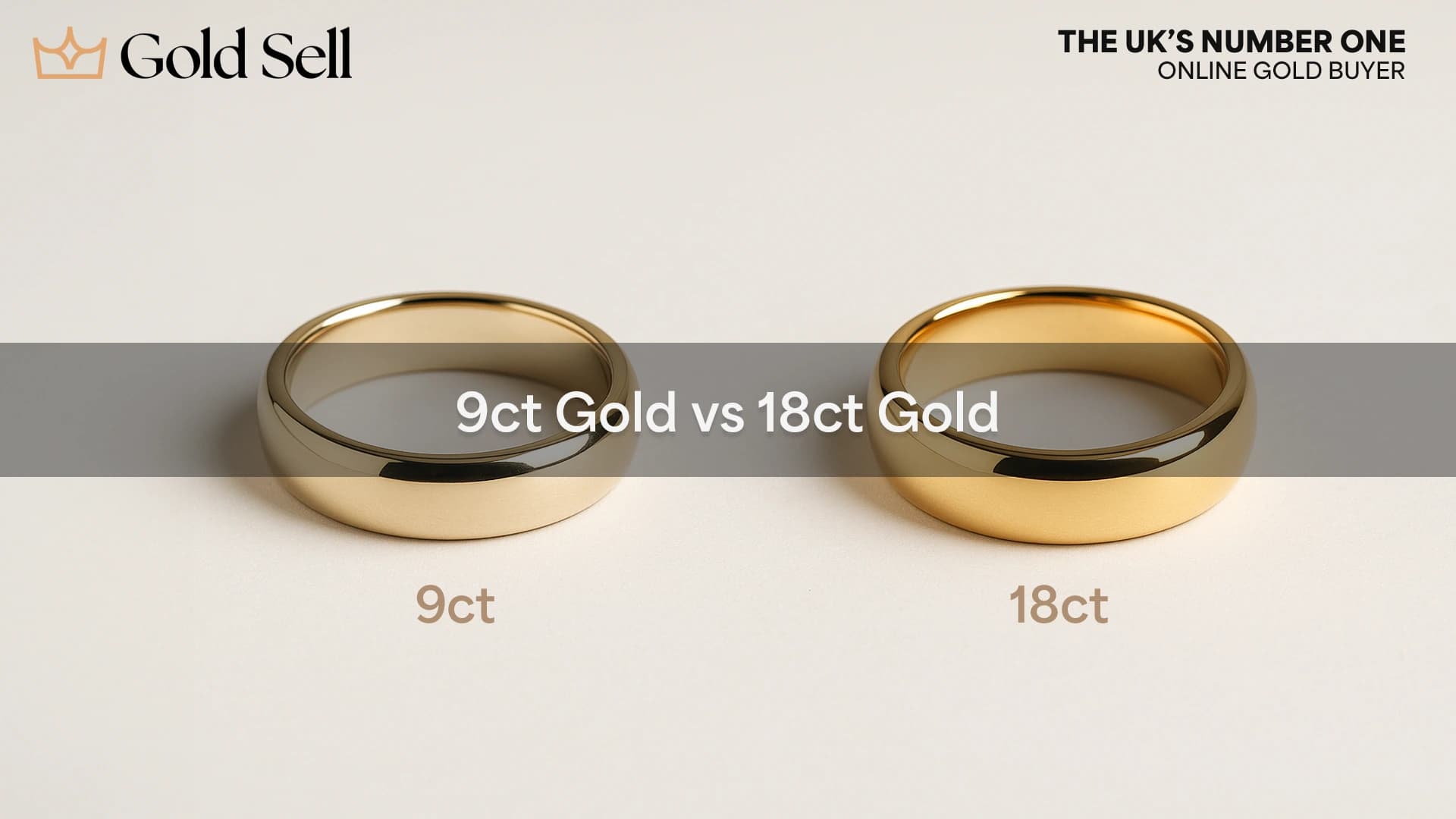
Discover the difference between 9ct gold and 18ct gold, and find out is 9ct or 18ct gold better for you. Cost, durability, colour, wear, and more explained.
Can 18ct Gold Tarnish?
Solid 18ct gold does not tarnish in the way lesser metals do – its high gold content keeps it from rusting or corroding. Pure gold is a “noble metal,” one of the least reactive elements, so it doesn’t combine with oxygen or develop tarnish (that dark or greenish film you might see on brass or silver). In 18ct gold, 75% of the metal is this non-tarnishing pure gold, which means any tarnish risk is very low. The remaining 25% of the alloy are metals that can oxidise (such as copper, silver, or nickel), but because they’re a smaller portion, 18ct gold jewellery rarely discolours noticeably. In contrast, lower carat gold (like 9ct or 14ct) contains more of those reactive metals and can tarnish more easily over time.
That said, you might observe a slight dulling or slight patina on 18ct gold after many years, especially if the piece hasn’t been cleaned and has been exposed to sweat, perfumes, or pollutants. For example, an 18ct ring stored for decades might develop a faint warm tone or the alloy components at the surface might darken a bit. This isn’t the gold itself tarnishing, but the other metals in the alloy reacting minimally. The good news is any tarnish on 18ct gold is usually superficial and easily cleaned off. A quick polish or gentle wipe with a soft cloth will typically restore an 18ct gold piece to full shine.
Also, note that 18ct white gold is often plated with rhodium (which doesn’t tarnish). Over time that rhodium can wear away, and the underlying alloy (which might contain a bit of yellowish nickel or palladium) could dull – again, not exactly tarnish in the rust sense, but it might need re-polishing or re-plating. In summary, for practical purposes, 18ct gold resists tarnishing extremely well. It might get grimy or lose a little lustre with everyday wear, but it won’t turn green or black like some base metals. Regular gentle cleaning will keep 18ct gold jewellery gleaming for generations.
How To Clean 18ct Gold
Cleaning 18ct gold at home is simple and safe – you don’t need any harsh chemicals, just mild soap, water, and a soft touch. Because 18ct gold doesn’t easily tarnish, the main goal is just to remove oils, dirt, or product residue that can make it look dull. Here’s a straightforward method to clean your 18ct gold jewellery without damaging it:
- Prepare a gentle soap bath: Fill a small bowl with warm water (not boiling hot) and mix in a few drops of mild dishwashing liquid or gentle hand soap. Stir to create a soapy solution. Avoid any cleaner with harsh chemicals or “moisturisers” – a basic detergent works best.
- Soak the gold piece: Place your 18ct gold ring, chain, etc., in the bowl and let it soak for about 5–10 minutes. This will loosen any grime. (If your jewellery has gemstones, make sure they’re OK to be submerged – hard stones like diamonds, sapphires, rubies are fine, but pearls or turquoise should not be soaked. For those, just use a cloth instead of soaking.)
- Gently scrub crevices: After soaking, take a soft-bristled toothbrush (a baby toothbrush or a jewellery cleaning brush) and gently brush the piece. Pay special attention to prongs, underneath stones, or any intricate details where dirt hides. Use a light hand – 18ct gold is durable but can still scratch if you use something too abrasive. Never use harsh abrasives like baking soda paste or toothpaste on high-karat gold; those can scratch the finish.
- Rinse thoroughly: Swish the jewellery in a bowl of clean warm water to rinse off the soap, or hold it under a gentle stream of lukewarm water. Ensure all soap is removed, as residue can dull the shine. It’s a good idea to plug the sink drain or rinse in a bowl to avoid any mishaps with small pieces slipping away.
- Dry and polish: Gently pat the item dry with a soft lint-free cloth (microfibre or a jewellery polishing cloth). Avoid paper towels or anything rough. Finally, buff it lightly with the cloth to restore shine. A proper gold polishing cloth can also help give it a brilliant finish by removing microscopic dirt and oil.
By following these steps, your 18ct gold will regain its sparkle without any damage. These methods are non-abrasive and safe for gold. In fact, they’re the same cleaning steps jewellers often recommend for all solid gold jewellery. For particularly intricate pieces or when in doubt, you can also take 18ct jewellery to a professional jeweller for ultrasonic cleaning or steam cleaning – 18ct gold can handle those methods well (unlike some costume jewellery). But for routine home care, warm soapy water and a soft brush are gold’s best friends. Regular gentle cleaning will keep your 18ct gold engagement rings, necklaces, and heirlooms looking as stunning as the day you got them.
Frequently Asked Questions
Is 18ct gold good?
Yes, 18ct gold is a high-quality option for fine jewellery. It contains 75% pure gold, offering a rich colour and strong intrinsic value. It balances luxury and durability better than 24ct (too soft) and 9ct (less gold). It’s widely used for wedding rings and high-end pieces due to its lasting shine and prestige. If you want long-term value and wearability, 18ct gold is a trusted, premium-grade choice.
What is 18ct gold?
18ct gold is an alloy made from 75% pure gold and 25% other metals like copper, silver or palladium. The “18” in 18ct refers to 18 parts out of 24 being gold. These added metals improve strength, affect colour, and make the gold more suitable for jewellery. Available in yellow, white, and rose versions, 18ct gold combines a luxurious look with practical wearability, making it a preferred standard in fine jewellery.
What is the hallmark for 18ct gold?
The hallmark for 18ct gold is “750,” which indicates that the metal is 750 parts per thousand pure gold. This hallmark is commonly found inside rings, on chain clasps, or other discreet areas of jewellery. In the UK, this mark is applied by an Assay Office following independent verification. Older British pieces may show “18ct” or “18K” instead. Hallmarking ensures the item meets legal standards for purity, confirming its 75% gold content.
What is 18ct gold vermeil?
18ct gold vermeil is jewellery made from sterling silver coated with a thick layer of 18ct gold, typically 2.5 microns or more. The base metal must be 92.5% pure silver for it to qualify as vermeil. It looks and feels like solid gold at a more affordable price and is more durable than standard gold plating. It combines quality materials, hypoallergenic properties, and gold’s visual appeal, making it popular in demi-fine jewellery.
How much is 18ct gold worth?
18ct gold is worth approximately 75% of the current market price of pure 24ct gold, based on its gold content. As of today, the 18ct gold price per gram is £74.48 based on the live gold spot price. Its price fluctuates daily with the gold market. When selling, the final price may be slightly less due to refining fees. The overall worth can also depend on craftsmanship, design, and brand if the item is a finished jewellery piece.
Is 18ct gold better than 9ct?
18ct gold is better than 9ct gold in purity, colour, and overall value, but the choice depends on personal needs. 18ct gold has 75% pure gold, giving it a rich colour and making it less likely to cause skin reactions. It’s ideal for luxury or sentimental jewellery. 9ct gold contains 37.5% gold, making it harder and more affordable, better for high-wear items. Both have their advantages depending on durability, budget, and appearance preferences.
Is 18ct gold plated good?
18ct gold plated jewellery offers the look of gold at a lower price, but its quality varies. It involves a thin layer of 18ct gold electroplated onto a base metal like brass or steel. While visually appealing, the gold layer is prone to wearing off over time, especially with regular use. It is best suited for occasional wear. Durability depends on the plating thickness—thicker layers last longer, while thinner ones fade quickly with friction.
Is 18ct gold vermeil good?
Yes, 18ct gold vermeil is considered a high-quality form of gold-plated jewellery. It uses a base of sterling silver and a thick coating of 18ct gold, giving it superior durability and a luxurious appearance. It is more valuable and long-lasting than standard gold plating and hypoallergenic due to the use of precious metals. With proper care, vermeil jewellery can retain its finish for years, offering an elegant, affordable alternative to solid gold items.
Is 18ct gold real?
Yes, 18ct gold is real gold. It consists of 75% pure gold and 25% alloy metals that enhance strength and durability. It is legally recognised as gold in the UK and many other countries, and is commonly hallmarked “750”. While not 100% pure like 24ct, 18ct gold offers a high level of gold content while being more practical for daily wear. It is widely used in quality jewellery and holds excellent intrinsic value.
Can 18ct gold tarnish?
18ct gold can develop minor surface dullness over time but does not tarnish in the traditional sense. Pure gold is a noble metal and does not corrode or oxidise. However, the 25% alloy metals—such as copper or silver—can react to air, sweat, or chemicals, causing light discolouration. This is usually cosmetic and easily removed. Regular cleaning with mild soap and a soft cloth will keep 18ct gold looking bright and lustrous for years.
Does 18ct gold plated tarnish?
Yes, 18ct gold plated jewellery can tarnish over time, especially if the base metal reacts with moisture or air after the gold layer wears off. The plating is usually thin, so daily wear, sweat, and exposure to chemicals can cause fading or discolouration. While it mimics the look of real gold, plated items require gentle handling and care. Tarnishing is more likely on cheaper plated jewellery with minimal gold thickness and reactive base metals.
Does 18ct gold vermeil tarnish?
18ct gold vermeil tarnishes much slower than standard gold plating, but it can still happen over time. The gold layer itself doesn’t tarnish, but if it wears thin, the sterling silver underneath may oxidise, leading to dark spots or dullness. Proper care—such as avoiding water, perfume, and harsh chemicals—helps preserve the finish. Vermeil jewellery can be gently polished or re-plated when necessary to maintain its gold appearance and prolong its lifespan.
Can you wear 9ct gold and 18ct gold together?
Yes, you can wear 9ct gold and 18ct gold jewellery together without any adverse effects. Both are real gold and won’t chemically react. However, 9ct gold is harder due to its higher alloy content, while 18ct is softer and more prone to scratches. Wearing them together is common and safe, though prolonged contact may cause minor wear on 18ct pieces over time. Any differences in colour or finish are mostly visual, not functional.
What does 18ct gold mean?
18ct gold means the alloy is composed of 75% pure gold and 25% other metals like copper or silver. “18ct” is short for 18 carats, which is 18 parts gold out of a total of 24. It is widely used in fine jewellery because it offers a balance between purity, colour, and durability. It is typically marked with a “750” hallmark to indicate its gold content and is considered high-quality, valuable, and long-lasting.
What does 18ct gold clad mean?
18ct gold clad refers to a non-gold base metal—often brass or stainless steel—covered with a layer of 18ct gold through mechanical bonding or electroplating. The gold layer is typically thin and can wear off over time, especially with frequent use. “Clad” is not a regulated term, so thickness can vary. It provides a gold-like appearance at a low cost, but does not carry the same value, purity, or longevity as solid or vermeil gold.
Is 18ct gold expensive?
Yes, 18ct gold is relatively expensive compared to lower carat golds due to its high gold content—75% pure gold. It costs more than 9ct or 14ct gold but is generally more affordable than 22ct or 24ct. The price also reflects its quality, rich colour, and lasting value. As of today, the 18ct gold price per gram is £74.48. Its long-term investment potential and suitability for fine jewellery contribute to its higher market value.
How to tell 9ct gold from 18ct gold?
You can tell 9ct gold from 18ct gold by examining the hallmark stamp: 9ct gold is marked “375” (37.5% gold), while 18ct gold is marked “750” (75% gold). 18ct gold also tends to have a deeper yellow colour and heavier feel due to higher gold content. If the item is unmarked, a jeweller can perform an acid or XRF test. Hallmarks are the most reliable way to distinguish between the two gold types.
How long does 18ct gold plating last?
18ct gold plating typically lasts between 6 months and 2 years, depending on how often the jewellery is worn and the thickness of the plating. Thicker coatings and proper care—such as avoiding water, sweat, and perfumes—can significantly extend its lifespan. Over time, the gold layer may fade, especially with friction or exposure to chemicals. Replating is possible once the original layer wears off, allowing the piece to regain its gold appearance.
18ct gold vermeil on silver meaning?
“18ct gold vermeil on silver” means the jewellery is made from sterling silver and coated with a thick layer of 18ct gold, typically 2.5 microns or more. The term “vermeil” requires that the base metal is precious (92.5% silver) and the gold is at least 18 carats. This combination results in jewellery that looks and feels like solid gold but is more affordable. It’s valued for durability, hypoallergenic properties, and a luxurious finish.
Interested in selling gold with the UK’s highest paying gold buyer? Visit our Sell Gold page to get a competitive valuation – we provide fully insured postage and fast payment.
For more insights and the latest gold price today, keep an eye on our live charts and blog updates.





