
How Is Gold Made?
Gold isn’t “made” on Earth in the traditional sense – it’s forged in the cosmos. In supernova explosions and neutron-star collisions, conditions become so extreme that heavy elements like gold are created. Fragments of those events (meteorites and interstellar dust) later rained down on early Earth, seeding our planet’s crust with the gold we mine today.
Key Takeaways
- Cosmic origins: Gold is literally “stardust,” formed in supernovae and neutron-star mergers.
- Earth’s gold: After Earth formed, a late veneer of meteorites delivered gold to the crust.
- Geological concentration: Hot fluids and erosion concentrate that gold into veins (lode deposits) and placer (alluvial) deposits.
- Human crafts: We turn raw gold into items (jewellery, coins, bullion) by melting and shaping, often using techniques like rolled gold, gold-filled, and gold vermeil.
- Chemical stability: Gold is a noble metal – it does not rust or corrode under normal conditions.
- High value: Its rarity and the effort required to extract it make gold extremely expensive.
Where Does Gold Come From?
Gold comes from outer space. Astronomers describe gold as “literally stardust” – it’s forged in the deaths of stars goldsell.co.uk. In a supernova (a massive star’s explosive end) or the smash-up of two neutron stars, neutrons slam into nuclei to create heavy elements like gold. These events scattered gold across the galaxy.
Billions of years ago, when Earth formed as a molten planet, any gold present sank into Earth’s core. Most of the accessible gold on Earth arrived later. Meteorites and asteroids bombarded the cooling planet, delivering extra gold and other heavy elements to the crust. In short: every ounce of gold we mine originated in space. The gold in your jewellery is made of atoms that were born in ancient star explosions and carried here by cosmic debris.
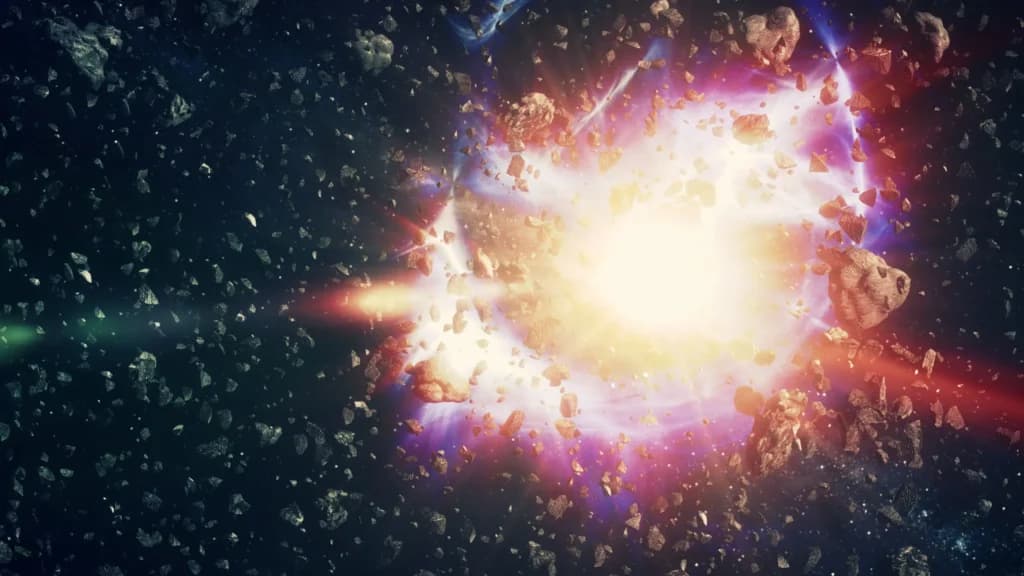
(Artist’s conception of two neutron stars merging in space, an event that creates heavy elements like gold)
How Are Gold Deposits Formed?
Gold deposits form through Earth’s geological processes. Hot, gold-bearing fluids (from magma or deep rocks) flow through cracks and fissures in the crust. As these hydrothermal fluids cool or react with other rocks, gold and quartz precipitate out and build up into veins goldsell.co.uk. Over time, plate tectonics and mountain-building events can concentrate more gold into certain rock layers. (For example, ancient sedimentary and volcanic processes created enormous deposits in South Africa’s Witwatersrand Basin.)
Meanwhile, erosion wears away exposed gold-bearing rocks. The dense gold flakes and nuggets they contain don’t travel far in water, so they settle in riverbeds and stream gravels – forming placer deposits. These alluvial deposits (where gold is found as grains and nuggets in sediment) were the first sources discovered by prospectors in California, Alaska, and elsewhere. In summary, hydrothermal activity and erosion concentrate the cosmic gold into lode veins and placer pockets.
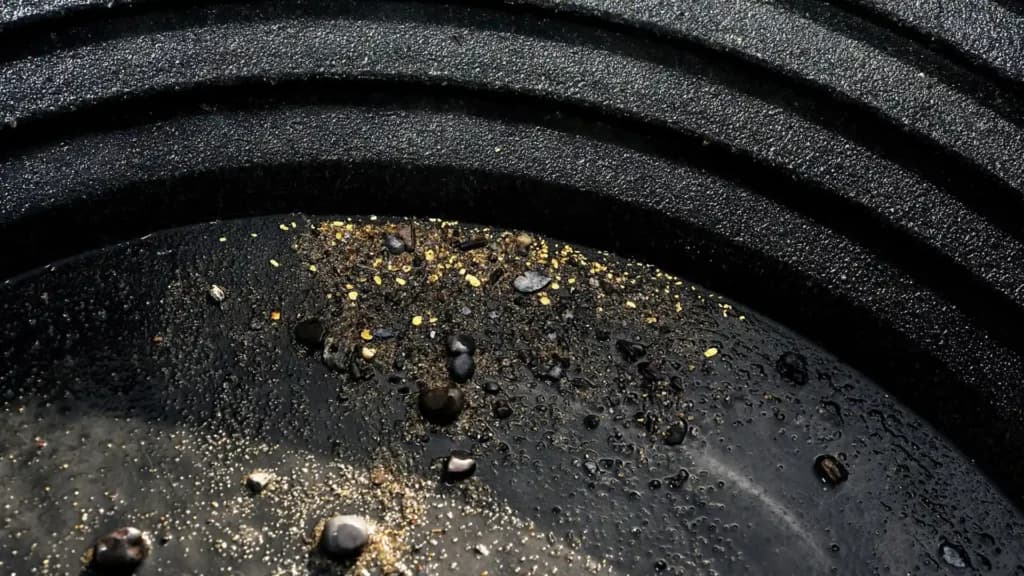
(Gold flakes in a pan showing a gold placer deposit during gold panning, illustrating where gold is from in natural river sediments)
How Is Gold Made?
While gold originates from cosmic events, the transformation of this precious metal into the jewellery, coins, and bullion we use today involves skilled craftsmanship and various manufacturing processes. From crafting intricate gold jewellery to minting coins and casting bullion bars, let’s explore how gold is made into the items we are a lot more familiar with.
How Is Gold Jewellery Made?
Gold jewellery comes in various forms, each distinguished by its composition and manufacturing technique:
- Pure Gold Jewellery (24K): Comprising 99.9% gold, 24K jewellery boasts a rich yellow hue and is highly malleable. Due to its softness, it’s often reserved for pieces not subjected to daily wear.
- White Gold: An alloy of gold combined with white metals like nickel, palladium, or silver. To achieve its lustrous finish, white gold is typically rhodium-plated. Over time, this plating may wear off, requiring re-plating to maintain its appearance.
- Rose Gold: Rose gold is created by alloying gold with copper, rose gold exhibits a pinkish-red tint. The specific shade varies based on the copper content, with higher amounts yielding a deeper red hue.
- Gold-Filled Jewellery: This involves mechanically bonding a thick layer of gold (at least 5% of the item’s weight) to a base metal, typically brass. Gold-filled pieces offer durability and affordability, making them a popular choice for quality jewellery.
- Gold-Plated Jewellery: Using electrochemical processes, a thin layer of gold is deposited onto a base metal. While more affordable, the gold layer is thinner than in gold-filled items, making it more susceptible to wear over time.
- Gold Vermeil: A high-quality option where a thick layer of gold (minimum 2.5 microns) is electroplated over sterling silver. This offers the appearance of solid gold at a more accessible price point.
For a deeper understanding of these types of gold, explore our detailed guides:
How Are Gold Bars Made?
Gold bullion bars are categorised mainly into cast and minted bars:
- Cast Bars: Produced by melting refined gold and pouring it into moulds. Once cooled, these bars are removed, cleaned, and stamped with identifying marks such as weight, purity, and serial numbers. Cast bars often have a rustic appearance and are favoured for their lower production costs.
- Minted Bars: These start as large cast bars, which are then rolled into thin sheets. Blanks are punched out, polished, and stamped with precise designs and inscriptions. Minted bars have a polished finish and are often packaged securely, appealing to investors seeking aesthetically refined products.
How Are Gold Coins Made?
Transforming raw gold into the gold coins we use involves a series of precise steps:
- Melting and Casting: Pure gold is melted down and poured into molds to form large bars or ingots.
- Rolling and Blanking: These bars are flattened into thin sheets, from which circular pieces, called blanks, are punched out—much like using a cookie cutter.
- Annealing and Cleaning: The blanks are gently heated to soften them, making it easier to stamp designs onto them. After heating, they’re cleaned to remove any residues.
- Striking: Each blank is placed between two engraved stamps (dies) and pressed with great force, imprinting detailed designs onto both sides.
- Inspection and Packaging: The newly minted coins are carefully inspected for quality. Those that pass are counted and packaged, ready to be distributed or sold.
This meticulous process ensures that each gold coin meets high standards of purity, weight, and design, making them valuable for collectors and investors alike.
For those interested in converting their gold items into cash, We offers services to:
Does Gold Rust?
No – gold does not rust. Pure gold is a noble metal, meaning it resists corrosion and oxidation. Unlike iron or copper, gold atoms do not react with water or oxygen under normal conditions. That’s why 24-karat gold stays shiny and yellow indefinitely.
However, most jewellery isn’t pure 24k gold. For example, 18k or 10k gold contains alloys like copper or silver to make it harder. Those alloy metals can oxidise or tarnish over time. If a gold alloy tarnishes (gets brownish spots), it’s from the alloyed metals, not the gold itself. In effect, pure gold doesn’t rust, but gold alloys may discolour because of their other metals.
Why Is Gold So Expensive?
Gold’s high price boils down to scarcity and demand. Only a tiny amount of gold exists in the Earth’s crust (on the order of a few grams per ton of rock goldsell.co.uk), and extracting it requires huge effort. Gold’s rarity and the effort required to gather it are exactly what make it so valuable. In other words, you have to dig or pan huge volumes of material to get a little gold.
At the same time, gold has desirable properties – it’s beautiful, does not corrode, and has a long history as money and jewellery. People want gold for investments, electronics, dentistry, and ornaments. The combination of limited supply and sustained demand drives its price upward. In short, gold remains expensive because it is both rare and universally prized.
Frequently Asked Questions
Where does gold come from?
Gold originates in space. It is created in supernova explosions and neutron star collisions, then delivered to Earth by meteorites.
How are gold deposits formed?
Gold deposits form through hydrothermal and geological processes. Hot, gold-rich fluids deposit gold into quartz veins (lode deposits), and erosion can wash gold into river gravels (placer deposits).
How is gold made?
Gold is formed in space through cosmic events and reaches Earth via meteorites. Once mined, it's refined and crafted into jewellery (like yellow, white, and rose gold), coins, and bullion bars using processes such as alloying, casting, and stamping.
What is the chemical symbol for gold?
Gold’s chemical symbol is Au, from the Latin aurum. Its atomic number is 79.
What is gold made of?
Gold is an element, so pure gold is made of gold atoms. (In jewellery, gold is often alloyed with a bit of silver or copper to increase hardness, so 18k gold is 75% gold atoms + 25% other metals.)
What is gold on the periodic table?
Gold is element Au, atomic number 79. It’s in Group 11 of the periodic table (often called the copper group) and is a transition metal.
How is gold formed in the Earth?
On Earth, gold is concentrated by geological activity. Gold-bearing fluids from the mantle or magma circulate through cracks in the crust and deposit gold into veins. Mountain-building and plate collisions can also push gold closer to the surface. Over time, weathering breaks down the rocks and creates placer deposits in rivers
How is gold melted?
Gold melts at about 1,064 °C (1,947 °F). Jewellers melt gold with high-temperature torches or furnaces, often using a crucible. Fluxes (chemicals like borax) are used to purify molten gold and help it flow and separate from impurities.
Does gold rust?
No. Gold is a noble metal and does not rust or tarnish. It is highly resistant to corrosion. (Alloyed metals in gold jewellery can corrode, but the gold itself will not.)
Why is gold so expensive?
Gold is expensive due to it's rarity and high demand. Only a tiny fraction of Earth’s crust is gold, and mining it takes great effort. Gold’s attractiveness, durability, and historical role as a wealth builder make it highly sought-after. Scarcity plus universal appeal keep its price high.
Can gold be made in a lab?
In principle, yes: nuclear transmutation can turn other elements (like mercury or bismuth) into tiny amounts of gold. However, it requires huge energy (particle accelerators or nuclear reactors) for minuscule yield. In practice, this is far more expensive than mining natural gold, so commercial lab-production of gold doesn’t exist.
How is rose gold made?
Rose gold is an alloy of gold and copper (often with a touch of silver). The copper gives it a pink or reddish hue. For example, 18k rose gold typically contains 75% gold and 25% copper (by weight).
Why is gold used for jewellery?
Gold is used in jewellery because it has a beautiful lustre and colour, it’s very malleable (easy to work into shape), and it doesn’t tarnish or corrode. Gold is also hypoallergenic and has a long tradition as a symbol of wealth and beauty. These qualities make gold ideal for treasured and lasting adornments.
Interested in selling gold with the UK’s highest paying gold buyer? Visit our Sell Gold page to get a competitive valuation – we provide fully insured postage and fast payment.
For more insights and the latest gold price today, keep an eye on our live charts and blog updates.





