How Much Is A Gold Bar Worth?
How much is a gold bar worth? A 1oz gold bar is worth £2,721.65 at today's gold price (26 Nov 2026). Every gold bar is worth its weight in pure gold multiplied by the live gold price, so a 100g bar is worth £8,750.29 and a 1kg bar £87,502.90 right now.
Key Takeaways
- Gold bar value: A bar is worth its weight in pure gold multiplied by the live gold price per gram. A 1oz bar is worth £2,721.65 today and a 1kg bar £87,502.90.
- Common sizes: Retail bars run from 1g to 1kg, with 1oz (31.1g), 50g and 100g among the most popular. Banks trade 400oz Good Delivery bars of about 12.4kg.
- Buying and selling: The price to buy a bar is its gold value plus a premium, which is highest on small bars. The price you get when you sell is a percentage of the gold value.
- Tax: Investment gold bars are free of VAT but not of Capital Gains Tax, unlike gold sovereigns and Britannias.
- Selling: Keep the bar in its assay card or with its certificate, check its gold value on the day, and sell to a buyer that tests it properly.
Below you will find the value of every common bar size, what changes it, why the price to buy and the price to sell are different, how tax works on gold bars in the UK, and how to sell a bar for a fair price.
Gold Bar Values By Size Today
Gold bars are sold in standard weights, from tiny 1 gram bars up to 1 kilogram bars for private buyers, and the large 400 ounce bars that banks trade. Most bars sold in the UK are 999.9 fine gold, which is 24 carat. This table shows the gold value of each size at today's live price:
The sum behind every line is the same: weight in grams multiplied by the price of one gram of pure gold, which is £87.50 today. Gold is weighed in troy ounces on the world market, and one troy ounce is 31.1 grams, a little heavier than the everyday ounce used for food.
So if you are asking how much a bar of gold is worth, how much 50g of gold is worth or what a 1kg gold bar is worth, find its weight on the bar or its assay card and read across. For the sizes and dimensions of each bar, see our guide to how much gold bars weigh.
These figures are gold values, sometimes called melt value. They are the starting point for any price, whether you are buying or selling, and they move every trading day with the gold market.
What A Gold Bar Is And Who Makes Them
A gold bar is refined gold formed into a rectangle and stamped with its weight, purity and the name of the refiner that made it. Bars are the simplest way to own physical gold, because almost all of what you pay for is the metal itself.
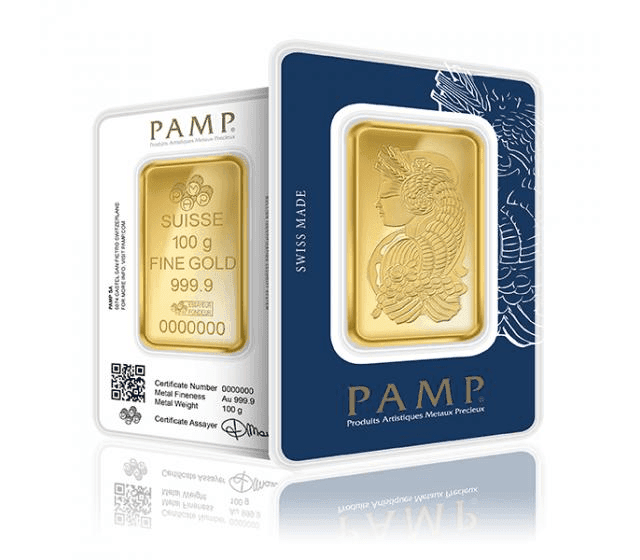
(A 100g PAMP Suisse gold bar in its sealed assay packaging. Smaller bars come in similar packaging, while larger bars are usually plain cast blocks)
There are two main kinds. Minted bars are cut from rolled gold strip and pressed, which gives them a smooth, sharp finish and often a design on the back. Most bars from 1g to 100g are minted, and they usually come sealed in a tamper-evident assay card with a certificate. Cast bars are made by pouring molten gold into a mould. They have a rougher, rounded look, and most bars of 250g and above are cast.
Bars are made by refiners and mints around the world. The best-known names are on the London Bullion Market Association's Good Delivery list, which means their large bars meet the standard the London market accepts. A bar from a well-known refiner is easier to sell, because buyers recognise its stamp and packaging, but the gold inside is valued the same way whichever name is on it.
What Decides A Gold Bar's Worth
Four things set the value of a gold bar. Two of them are fixed when the bar is made, and two change over time.
- Weight. This is the biggest factor. Double the weight and you double the gold, so you double the value. The weight is stamped on the bar, along with the refiner's name and a serial number on larger bars.
- Purity. Investment bars are almost always 999.9 fine (often written 9999), meaning 99.99% pure gold. Some larger bars are 995 fine, which is the minimum purity for a bar to count as investment gold. A bar's purity is stamped on it, so the gold content is the weight multiplied by that figure. A 1kg bar at 995 holds 995g of pure gold.
- The gold price. The spot price is the live market price of pure gold, set by trading around the world and benchmarked in London. It moves with interest rates, the strength of the pound and the dollar, demand from central banks and investors, and world events. Because the price is quoted in dollars, a weaker pound can push the value of your bar up in pounds even when gold is flat in dollars.
- Condition and paperwork. A bar in its sealed assay card or with its certificate is easier to sell, because the buyer can see the refiner, weight and purity at a glance. A scratched or loose bar still contains the same gold, but some buyers pay less for one they cannot verify. Gold bullion is exempt from UK hallmarking, so the refiner's stamp and certificate are what prove it.
A gold ingot is simply another name for a gold bar, usually a cast bar rather than a thin stamped one, and it is valued the same way. So is a gold biscuit, the name used in India and the Gulf for a small minted bar: the price for a gold biscuit is its weight times the gold price, like any other bar. You can read more about content and fineness in our guide to how much gold is in a gold bar.
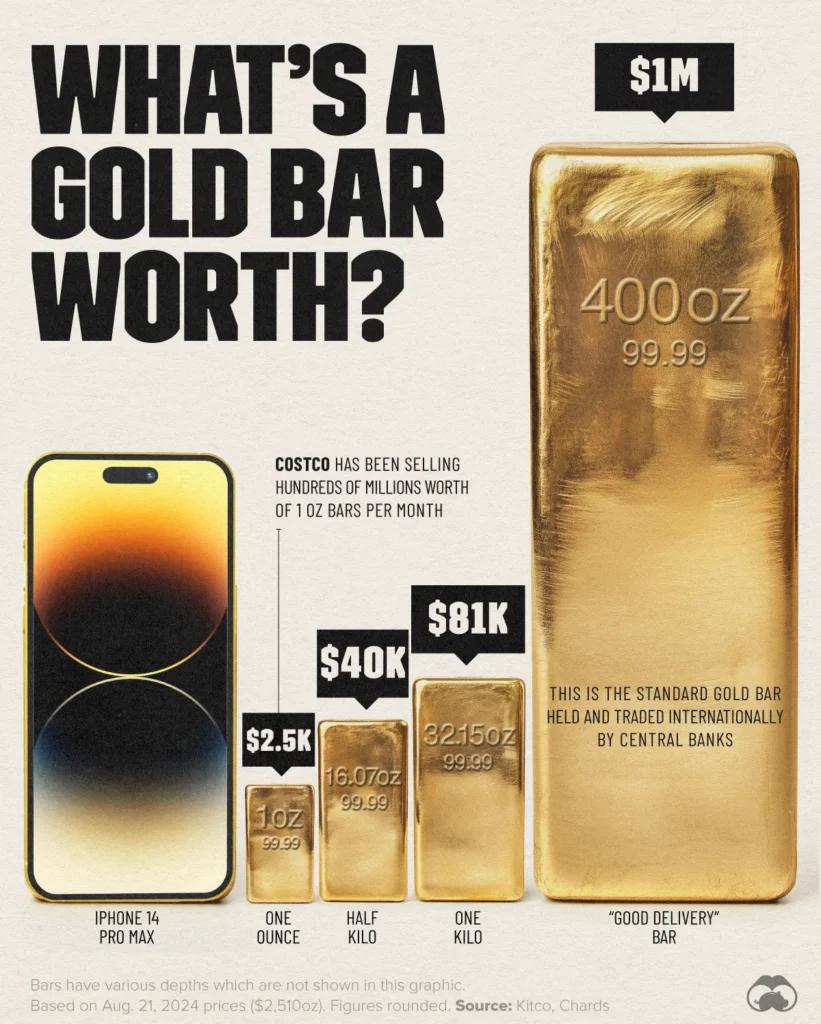
(Infographic comparing gold bar prices and weights, including the 400oz gold bar, to show how much a gold bar is worth)
Worth, Price And What You Get When You Sell
The gold value in the table is not the same as the price on a dealer's website, or the amount a buyer will pay you. Understanding the gap saves you from paying too much or selling too cheaply.
The cost of buying a gold bar is the gold value plus a premium. The premium covers refining, minting, packaging, the dealer's costs and delivery. It is much higher, as a share of the price, on small bars, because making a 1g bar costs almost as much as making a 20g bar. On a 1kg bar the premium is a small part of the total, so you get more gold for each pound you spend.
The price you get when selling is a percentage of the gold value. A buyer has to cover testing, secure handling, refining and the risk that the price moves before they sell the gold on. The premium you paid when you bought is not returned, which is why gold bars suit people holding gold for years rather than weeks.
Here is how it works for a 100g bar of 999.9 gold:
- Gold value: 100g at today's price is £8,750.29.
- Buying price: the gold value plus the dealer's premium, which varies by seller and brand.
- Selling to GoldSell: a percentage of the gold value, confirmed after testing. Like all gold buyers, GoldSell pays a percentage of the live spot price, and that percentage increases with the weight and purity of the gold you sell, so fine gold bars receive our higher rates.
- Payment: sent within 20 minutes of you accepting our valuation.
You can see how our process works on our sell gold bars page.
Working Out Your Own Bar's Value
If your bar is not a standard size, or you are not sure of its purity, you can still work out its gold value in three steps.
- Find the weight. Read it from the bar or certificate. If it is given in troy ounces, multiply by 31.1 to get grams. A 2.5oz bar, for example, is about 77.8g.
- Find the purity. Look for a number such as 999.9, 999 or 995 stamped on the bar. Multiply the weight by this figure divided by 1,000 to get the pure gold content.
- Multiply by the gold price. Multiply the pure gold content in grams by today's price for one gram of pure gold, £87.50.
So a 2.5oz bar of 999.9 gold is worth about £6,804.23 in gold today. If there is no purity stamp at all, treat the figure as unconfirmed until the bar has been tested, because unmarked bars can be lower purity, plated or fake.
The Big Bars: 1kg And 400oz Good Delivery Bars
A 1 kilogram gold bar is the largest size most private buyers own. It is smaller than a bar of soap, but far heavier, and it is worth £87,502.90 in gold at today's price. Because premiums on kilo bars are low, they are popular with people buying a large amount of gold in one go.
The bars most people picture, stacked in a bank vault, are much bigger. These are London Good Delivery bars, the standard set by the London Bullion Market Association for gold traded between banks, refiners and central banks. A Good Delivery bar holds about 400 troy ounces of gold, can range from 350 to 430 fine ounces, and must be at least 995 fine. That makes it about 12.4kg.
A standard 400oz bar of pure gold is worth about £1,088,658.58 at today's price. The exact figure for any one bar depends on its own fine weight, which is stamped on it along with its serial number and refiner.
Private sellers rarely hold Good Delivery bars, as they are traded and stored inside the professional market. If you are curious how much a block of gold that size is worth, the table above gives you the live answer.
Is A 1 Gram Gold Bar A Good Investment?
A 1g gold bar is about the size of a fingernail and is worth £87.50 in gold today. Small bars have real advantages. They are affordable, so almost anyone can start buying gold. They make good gifts. And they give you flexibility: if you own twenty 5g bars, you can sell a few when you need money rather than selling one large bar.
The downside is the premium. Because a small bar costs nearly as much to produce as a larger one, you pay much more over the gold value for each gram. Gold has to rise further before you are in profit. When you sell, a buyer pays for the gold, not the premium.
So is it worth buying 1g gold bars? For many people, small bars are a sensible way to start or to save a little each month, with larger bars making more sense once you are buying bigger amounts. We cover this in more detail in our guide to whether 1g gold bars are worth buying.
Today's Gold Price Per Gram
Gold price last updated:
The LBMA (London Bullion Market Association) spot price changes daily.
The prices displayed are based on the global market rate for gold, known as the gold spot price. Like all gold buyers, GoldSell pays a percentage of this rate to account for assaying, refining, secure logistics, market volatility, and handling costs. We consistently offer among the highest payout rates in the UK, with the exact percentage increasing based on the weight and purity of the gold you sell.
Keeping A Gold Bar's Value: Storage And Paperwork
Gold does not rust or tarnish, so a bar keeps its gold value however long you hold it. What you can lose is the easy resale that comes with a clean, well-documented bar.
Keep minted bars in their original assay card. The card shows the refiner, weight, purity and often a serial number, and a buyer can check it without handling the bar. Store larger cast bars in a soft pouch or box so they do not get scratched or dented, and avoid handling them with bare hands more than you need to.
Keep your purchase receipt with the bar. It shows what you paid, which you will need if you ever have to work out a gain for Capital Gains Tax, and it helps show where the bar came from. If you inherited a bar, a note of its value at the date of death does the same job.
Gold at home should be covered by your home insurance, and many policies set a limit for valuables, so check yours before you keep a large amount of gold in the house. For larger holdings, some people use a bank or professional vault instead.
Where Is The Best Place To Buy Gold Bars UK?
It depends on what you value most. The Royal Mint sells its own bars direct, with the reassurance of the source but usually a higher premium. Online bullion dealers offer the widest choice of refiners and sizes and the keenest premiums, and the established ones ship insured. A local jeweller or coin shop lets you see the bar before you pay, often at a higher price. Whichever you choose, compare the price with the gold value in the table above on the same day: the difference is the premium, and a smaller premium means more gold for your money. Our guide to the best place to buy gold looks at each option in more detail.
Are Costco Gold Bars A Good Investment?
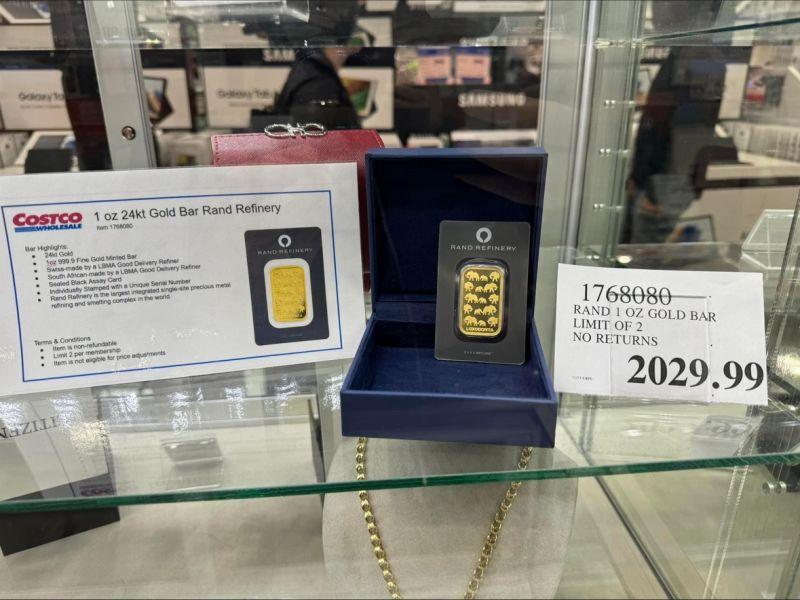
(A 1oz Rand Refinery Costco gold bar on display)
Costco UK sells gold bars to its members online, usually in a small range of sizes from well-known refiners. The bars are ordinary 999.9 investment gold, so a Costco bar of a given weight is worth exactly the same in gold as any other bar of that weight. A 20g Costco bar is worth £1,750.06 in gold today, a 50g bar £4,375.14 and a 100g bar £8,750.29.
Costco's selling prices change from time to time and are only shown to members, so the best way to judge a Costco price is to compare it with the gold value in our table on the same day. The difference is the premium you are paying. Stock tends to sell out quickly, and the range is whatever Costco has in that week rather than a choice of brands and weights.
Two points matter if you buy there. Gold bar sales are final, so they cannot be returned. And Costco does not buy gold back, so when you come to sell, you will need a gold buyer. Keep the bar in its packaging with any certificate, because that makes the sale simpler. The gold itself is the same gold you would get anywhere else, so a Costco bar is as good an investment as the gold price makes it.
Are Gold Bars Tax Free?
Partly. Gold bars are free of VAT but not of Capital Gains Tax, and the difference matters if you hold a lot of gold.
VAT. Investment gold is exempt from VAT in the UK. Under HMRC's VAT Notice 701/21, this covers gold bars and wafers of a purity of at least 995 thousandths, in a weight accepted by the bullion markets. That is why you pay no VAT when you buy a standard investment bar.
Capital Gains Tax. Gold bars are not exempt. HMRC's Capital Gains Manual (CG78305) treats sovereigns minted from 1837 and Britannia gold coins as currency, which is exempt, but a bar is not currency. If you sell a bar for more than you paid, the gain counts towards your Capital Gains Tax.
For the 2026 to 2027 tax year, the tax-free allowance is £3,000 of gains, and gains above it are taxed at 18% or 24% depending on your income, according to GOV.UK's Capital Gains Tax rates. Tax is on the profit, not the sale price, so keep the receipt from when you bought the bar. Our guides to capital gains tax on gold and to how much gold you can sell without reporting it go through the reporting rules.
This is one reason some investors prefer coins such as gold sovereigns, which are free of Capital Gains Tax. For advice on your own position, speak to an accountant or HMRC.
How To Sell A Gold Bar
Selling a gold bar is straightforward, and a little preparation helps you get the full value.
Start by finding the gold value in the table above, so you know what the bar is worth on the day. Keep the bar in its assay card or with its certificate if you have one. Do not clean, polish or remove a bar from sealed packaging, because this can make it harder to verify.
If you bought the bar privately or inherited it without paperwork, it is worth checking it is genuine before you sell. Our guide on how to tell if gold is real covers the simple checks, and any reputable buyer will test it properly.
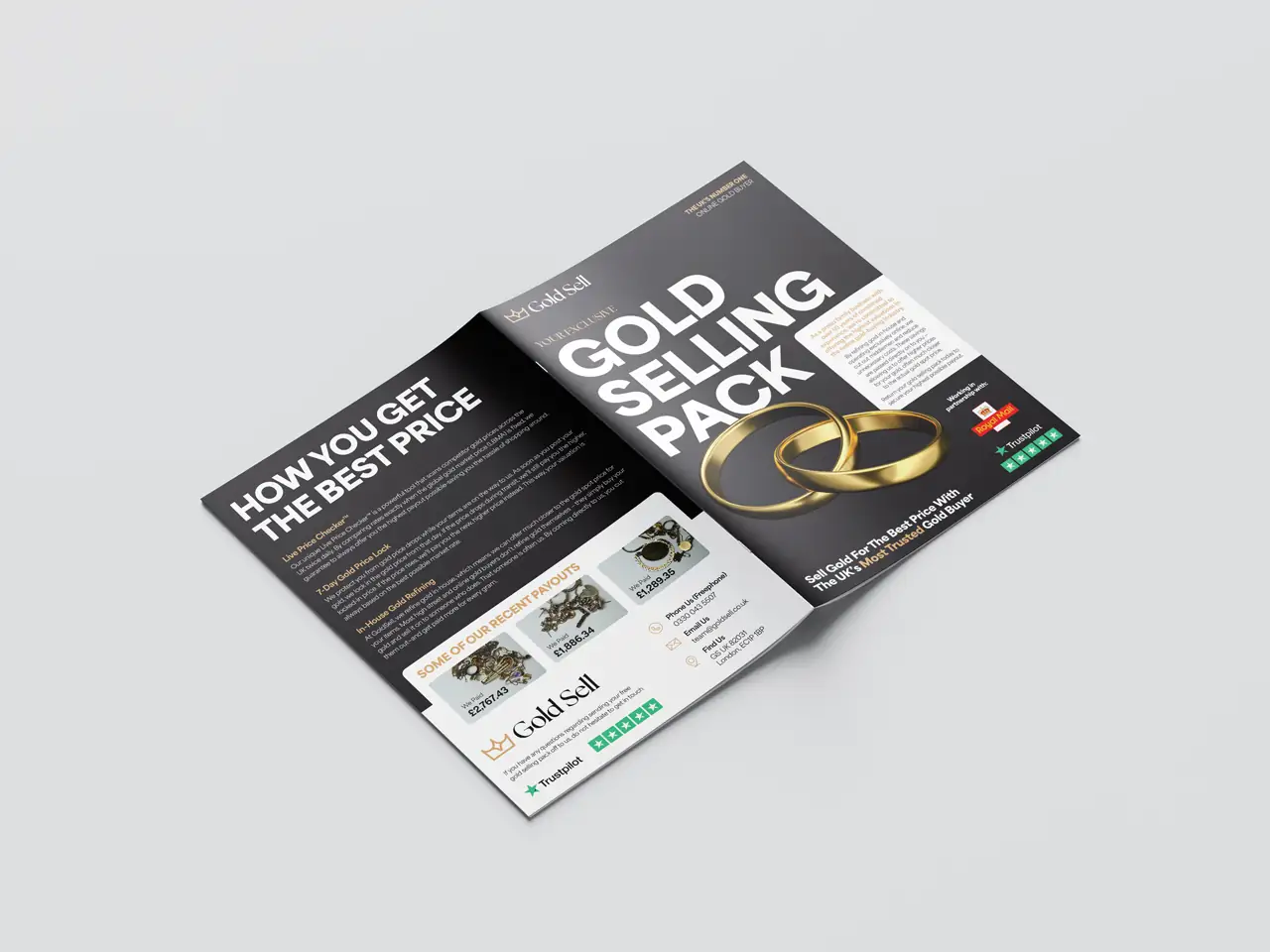
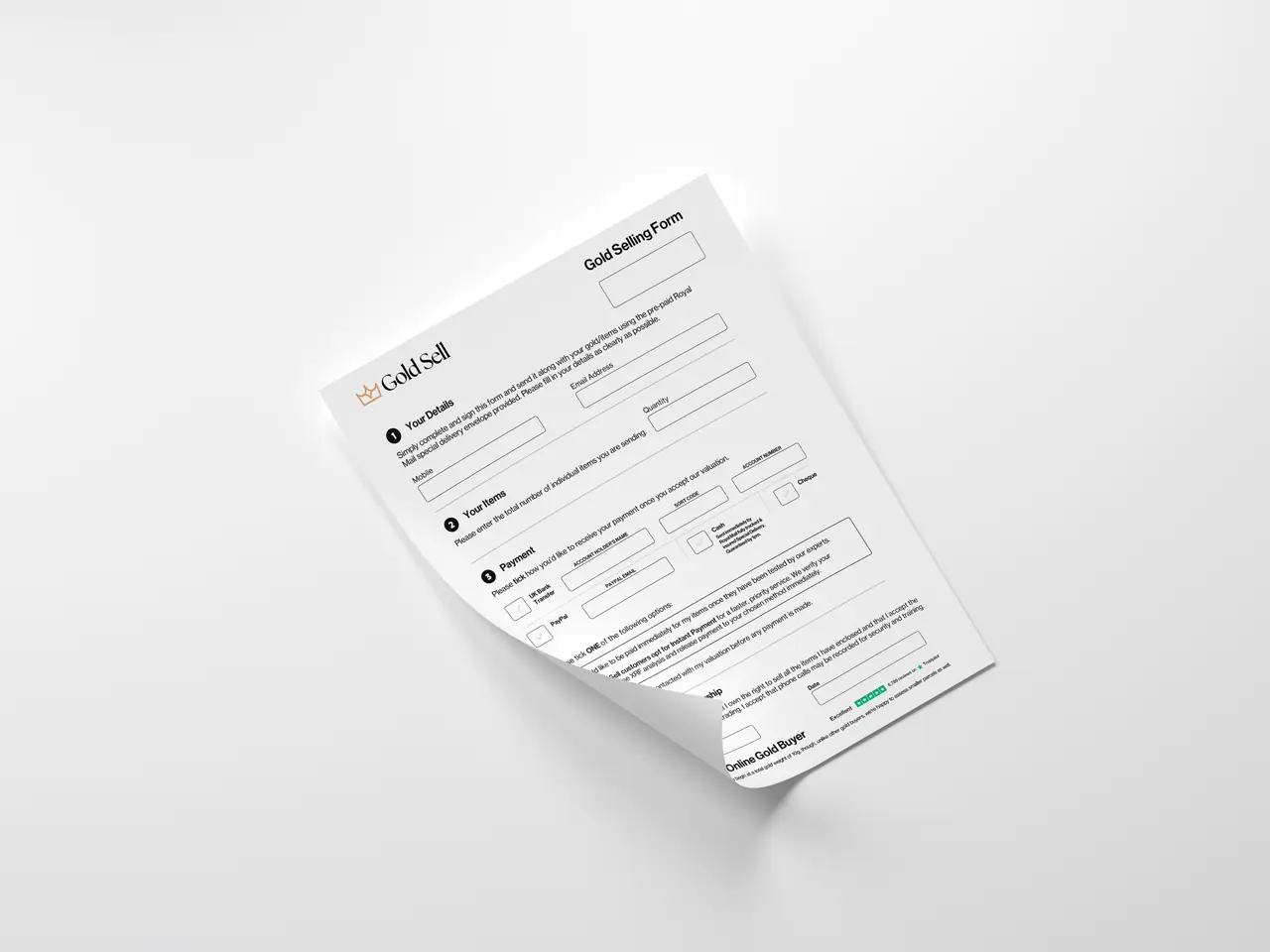
With GoldSell, you order a free Gold Selling Pack containing a pre-paid Royal Mail Special Delivery envelope. Each pack is insured up to £750 as standard, and you can raise the cover to £1,000 or £2,500 at the Post Office counter when you post, for a couple of pounds that we reimburse in full in your valuation. If you are sending more than £2,500 in value, order more than one pack and split the bars between them, so each parcel stays within its cover. If a single bar is worth more than £2,500 on its own, contact us before sending it and we will arrange a tailored, fully insured collection to suit its value.
We test every item with Trading Standards approved XRF testing, which reads the metal without melting, scratching or filing it, and we value your gold the same day it arrives. Our Live Price Checker tracks the published prices of more than 60 UK gold buyers every day, and our Best Price Guarantee means that if you have found a higher quote, we will match or beat it. If you accept our valuation, payment is issued within 20 minutes. If you do not, there is no obligation: we return your items in full, fully insured and free of charge.
The same process works for coins, jewellery and scrap gold, so you can send a bar together with other gold in one pack.
Frequently Asked Questions
How much is one gold bar worth?
It depends on the size. As of 26 Nov 2026, a 1oz gold bar is worth £2,721.65, a 100g bar £8,750.29 and a 1kg bar £87,502.90, based on the live gold price in the UK.
How much is 50g of gold worth?
50g of pure gold, such as a 50g investment bar, is worth £4,375.14 at today's price. 50g of 9ct or 18ct jewellery is worth less, because only part of its weight is gold.
How much is a 1kg gold bar worth?
A 1kg bar of 999.9 gold is worth £87,502.90 in gold today. A dealer will charge a little more to sell you one, and a buyer will pay a percentage of the gold value to buy it from you.
How much does a gold bar weigh?
Retail gold bars weigh from 1g to 1kg, with 1oz (31.1g), 50g and 100g among the most popular. The large Good Delivery bars used by banks hold about 400 troy ounces, roughly 12.4kg.
What is a gold ingot worth?
The same as a gold bar of the same weight and purity. Ingot is another name for a bar, usually a cast one, and its value is its gold weight multiplied by the live gold price.
How much does a gold bar cost to buy?
The gold value plus a premium. The premium is highest on small bars and lowest on large ones, so the cost of a gold bar per gram falls as the bar gets bigger.
Are gold bars tax free in the UK?
Investment gold bars are free of VAT, but not of Capital Gains Tax. A gain on selling a bar counts towards your yearly allowance of £3,000 for 2026 to 2027, while gold sovereigns and Britannias are exempt.
Are Costco gold bars a good investment?
A Costco bar is the same 999.9 gold as any other bar of its weight, so it is worth the same and holds its value the same way. Compare Costco's price with the gold value in our table on the day, remember that sales are final and that Costco does not buy gold back, and it can be a fair way to buy.
Why does the value of a gold bar change every day?
Because gold trades around the world almost around the clock, and its price moves with demand, interest rates and currencies. A bar's weight never changes, but the price of each gram does, so its value in pounds changes daily.
Is a gold bar worth more than gold jewellery of the same weight?
Usually, yes, when you sell. An investment bar is close to pure gold, while 9ct jewellery is 37.5% gold and 18ct is 75%. So 10g of a 999.9 bar holds far more gold than 10g of 9ct jewellery.
How do I sell a gold bar?
Check its gold value, keep its certificate or packaging, and send it to a reputable buyer. With GoldSell, you order a free pack, post your bar by insured Royal Mail Special Delivery, get a same-day valuation and are paid within 20 minutes of accepting.
Interested in selling gold with the UK's highest paying gold buyer? Visit our Sell Gold page to get a competitive valuation. We provide fully insured postage and fast payment.
For more insights and the latest gold price today, keep an eye on our live charts and blog updates.