What Does 750 Mean On Gold?
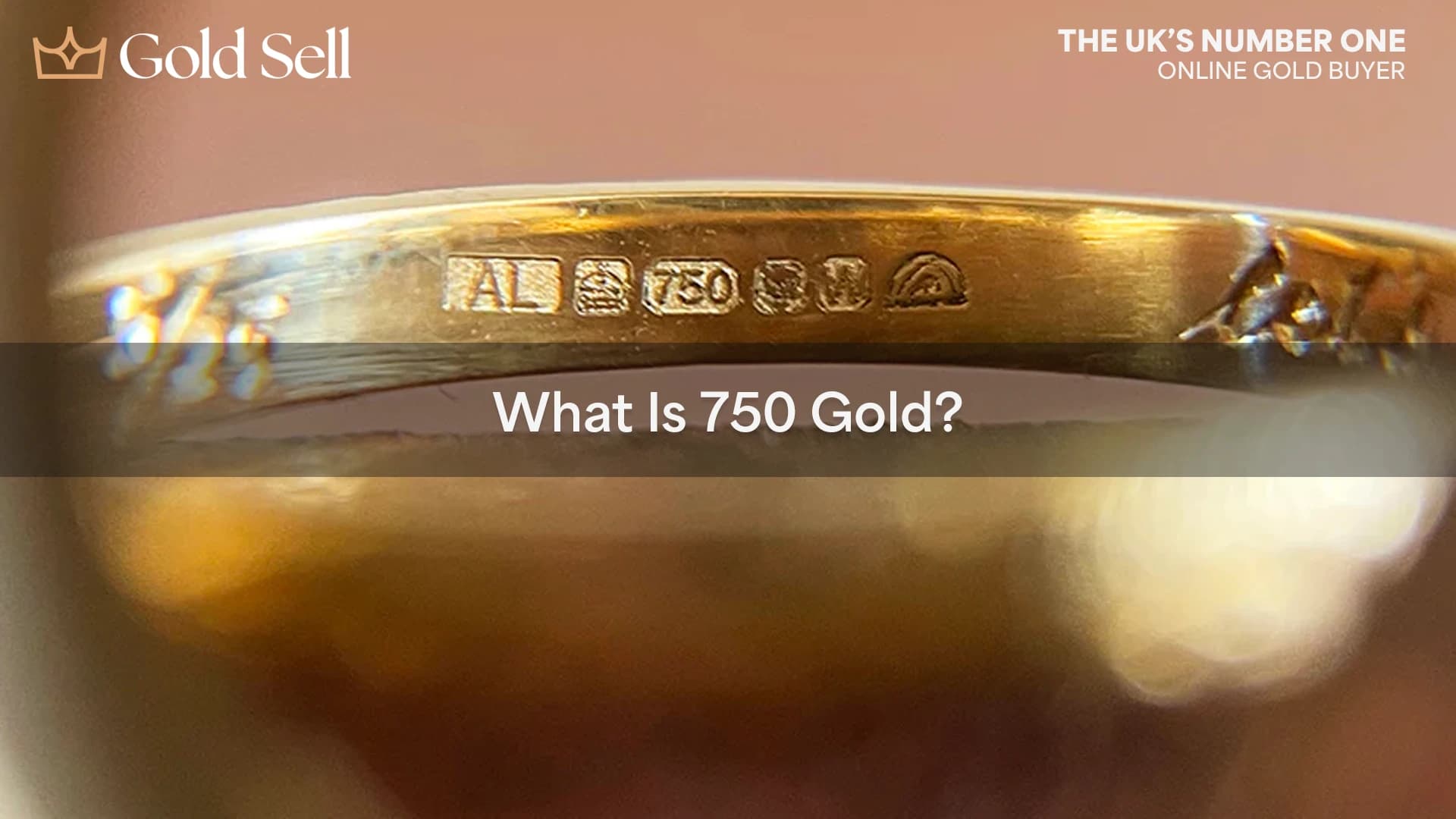
The “750” mark on gold jewellery means the piece is 75% pure gold – in other words, 18-carat gold. This numerical hallmark is a global standard for indicating gold fineness, assuring you that an item marked “750” is high-purity, 18 carat gold.
Key Takeaways
- “750” is a gold hallmark: Indicating an item is 75% pure gold (18 carat gold). It certifies the gold content in the piece.
- 18ct (750) gold is an alloy: 75% gold mixed with 25% other metals (like copper, silver, or palladium) to boost strength and influence colour, while retaining a rich golden appearance.
- 750 gold is high quality and valuable: It contains more gold than 14ct or 9ct gold alloys, is more resistant to tarnish, and is widely used in fine jewellery for its ideal balance of purity and durability.
- 750 and 18k are the same: “750” is the European hallmark for 18-karat gold; in the US you’d see “18K” stamped instead – both mean 75% gold content.
- Jewellery marked 750 is easy to pawn or sell: It’s worth roughly 75% of pure gold’s value by weight, though buyers typically pay ~80–90% of the gold’s spot price to account for refining costs.
What Does 750 Gold Mean?
The number “750” on a gold item is a hallmark indicating it is 75% pure gold, also known as 18-carat gold. In hallmarking terms, 750 is a fineness mark showing that out of 1000 parts, 750 are gold and the remaining 250 are other metals. This corresponds exactly to 18ct, since 18/24 (75%) of the alloy is gold. In other words, a “750” gold stamp guarantees the piece’s gold purity at 18 carats.
Such hallmarks are part of an international system for certifying precious metal content. In the UK, for example, all gold items above a minimum weight must be officially assayed and stamped. A legal 18ct hallmark will include the 750 mark (for 75% gold) along with an assay office symbol and maker’s mark, assuring the item’s authenticity and quality. This hallmark tells you the ring, necklace, or other piece has been tested and verified to contain 18-karat gold.
It’s worth noting that other countries use different stamp conventions for the same purity. “750” is the common European and UK notation for 18-karat gold, whereas in the US you might simply see “18K” or “18KT” stamped on the jewellery. Older British pieces sometimes had a “18ct” mark or traditional symbols (like a crown) to denote 18 carat gold, but modern hallmarking standards have largely unified around the numeric 750 stamp for clarity.
Importantly, the 750 gold hallmark does not detail the specific alloy ingredients – it only confirms the gold purity. The remaining 25% of the metal could be a mix of copper, silver, zinc, nickel, palladium, or other metals, depending on the desired colour and properties of the gold. Jewellers add these metals to pure gold to make it harder and more suitable for crafting durable objects. Thanks to this alloying, 18ct gold is very versatile: it offers the luxurious high-gold content look and feel, yet it’s sturdy enough for daily wear and detailed designs. In fact, 18ct (750) gold is a popular choice in fine jewellery worldwide – it’s regarded as a sweet spot between the soft 24ct (pure gold) and lower carat golds that trade some purity for hardness. Many engagement rings, wedding bands, and luxury watches in Europe are made of 750 gold, symbolising a blend of quality and practicality. (Italy, for example, is known for crafting much of its jewellery in 750 gold as a standard.)
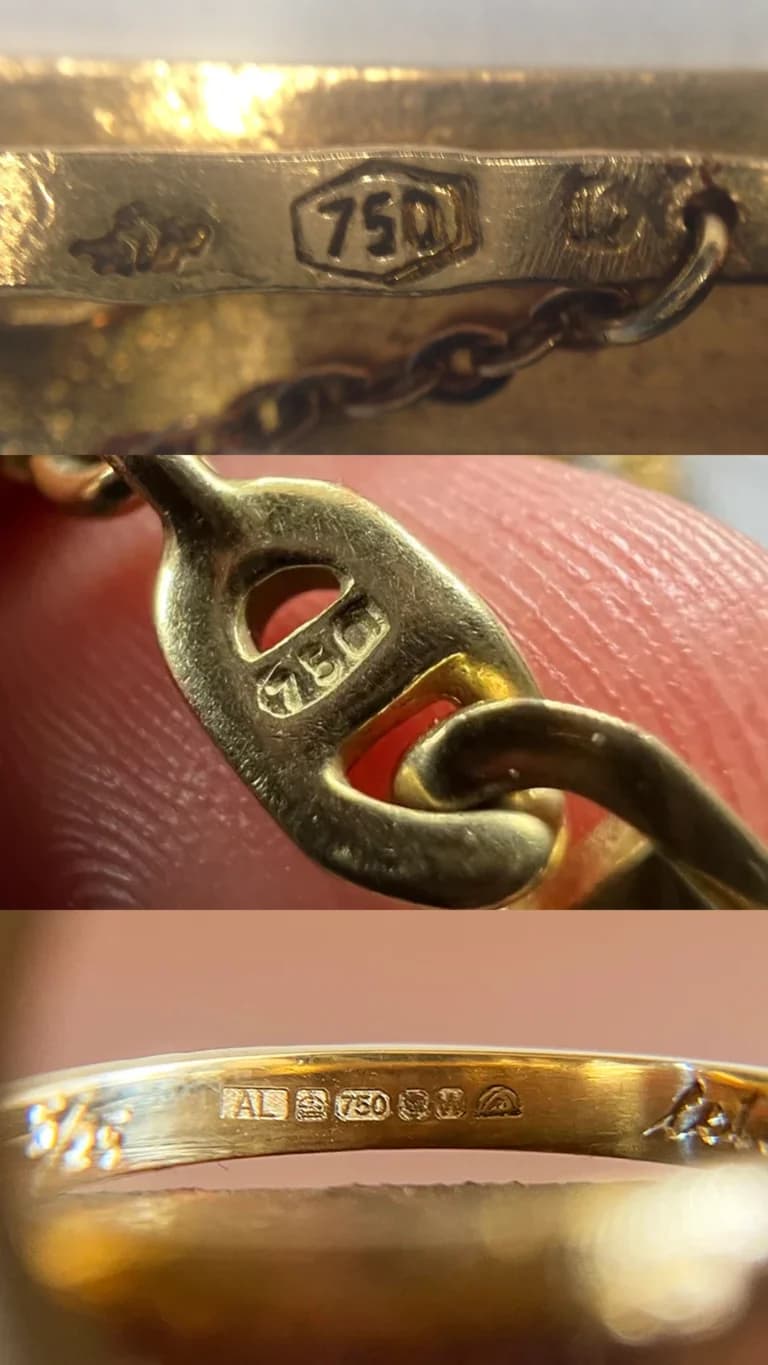
Examples of a typical 18ct gold hallmark: The “750” stamp confirms the item is 75% pure gold. These marks may appear alone or alongside other official assay symbols depending on where the jewellery was hallmarked. Recognising a genuine 750 hallmark on gold is essential when verifying authenticity, as it certifies the item’s value and gold content to buyers and sellers alike.
What Is 750 Gold?
750 gold is simply another term for 18-karat gold – a gold alloy composed of 75% pure gold and 25% other metals. In practical terms, if you melt down a 750-marked gold item, 3/4 of the material is pure gold. The remaining quarter consists of alloying metals that give 18ct gold its strength and colour variations. By blending gold with these other metals, jewellers create a metal that maintains gold’s lustrous beauty but is harder and more suitable for jewellery than 24ct pure gold.
Common alloy metals used in 18ct gold include copper, silver, zinc, nickel, and palladium. The exact mix depends on the desired colour and properties of the final alloy:
- Yellow 18ct gold: Typically contains gold mixed with silver and copper in proportions that retain a classic yellow hue (for example, a common mix might be around 75% gold, 15% silver, 10% copper). The silver content, being a “noble metal” like gold, also makes this alloy highly resistant to tarnish and very hypoallergenic.
- White 18ct gold: Made by alloying gold with white metals such as palladium or nickel (plus sometimes zinc and silver) to bleach the gold’s natural yellow colour. This produces a greyish or white alloy. Many 18ct white gold pieces are additionally plated with rhodium (a hard, shiny white metal) to give a bright platinum-like finish. The underlying gold content is still 75%. Check out our blog post How Is White Gold Made? to explore the differences between white and yellow gold, understand the white gold price, learn whether white gold can tarnish, and find out why white gold can sometimes turn yellow over time. It’s a must-read if you’re considering or already own white gold jewellery.
- Rose (red) 18ct gold: Created by adding a larger proportion of copper to the alloy (along with a bit of silver). The copper gives the gold a warm pink or rose-red tint. A typical 18ct rose gold might be 75% gold, 20–22% copper and a small balance of silver. Despite the different colour, it’s still marked “750” because the gold content remains 75%. If you’re interested in the unique colour and composition of 750 rose gold, our blog What Is Rose Gold? dives deeper into the details. Discover what rose gold is made of, current rose gold prices, how it compares in the debate of yellow gold vs rose gold, and whether rose gold tarnishes over time. It’s the perfect read if you want to understand the beauty and value behind this popular gold alloy.
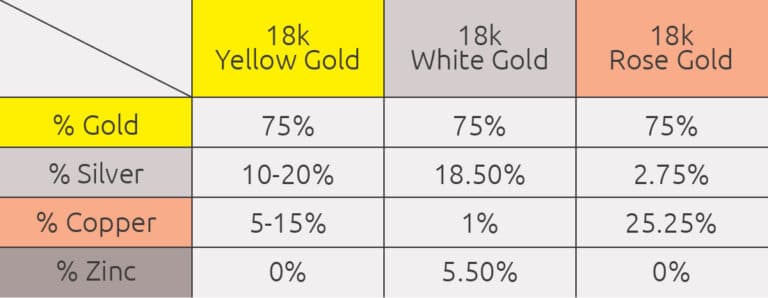
This chart highlights the key differences in alloy composition between yellow, white, and rose 18ct gold. While all contain 75% pure gold, the varying amounts of silver, copper, and zinc affect each type’s colour, tarnish resistance, and durability. For example, white gold includes zinc and is often rhodium-plated, while rose gold’s higher copper content gives it its warm pink hue but makes it slightly more prone to tarnishing over time.
All these varieties – yellow, white, rose (and even less common colours like “pink” 18ct or green gold) – contain the same 75% gold and will carry a 750 hallmark. The other metals in the mix primarily affect the jewellery’s colour and hardness, but not the purity of gold in the alloy.
The purpose of those alloy metals is not only to create beautiful colours but also to improve durability. Pure 24k gold is very soft – it can scratch or bend easily – so it’s generally not used for most jewellery. By contrast, 18k (750) gold is much harder and more wear-resistant because the added metals strengthen it. You get to enjoy a high-purity gold item without worrying that it will easily warp or wear out. In fact, the alloying metals in 18ct gold improve its resistance to scratching and even help reduce tarnishing, making it a great choice for everyday jewellery that needs to stand up to regular use.
Another advantage of 750 gold is its relative hypoallergenic quality. Gold itself is inert and unlikely to cause any skin reaction. In 18ct gold, because 75% of the alloy is pure gold, there are fewer alloy metals that might irritate the skin. Many people with sensitive skin who might react to 9ct or 14ct gold (which contain more copper or nickel) can often wear 18ct gold with no issues. (Notably, high-end 18ct white gold is often made with palladium instead of nickel to avoid nickel allergies.) With only 25% non-gold content, 750 gold minimises exposure to potentially allergenic metals and is considered a safe choice for those with sensitive skin.
Common uses: Thanks to its blend of beauty and strength, 750 gold is a favourite for fine jewellery. It’s commonly used in engagement rings, wedding bands, earrings, necklaces, and watches. The rich look of 18ct gold elevates luxury pieces, while its durability ensures those pieces last. Many heirloom and designer jewellery items are crafted in 18ct for its prestige – it’s seen as a premium standard (in contrast, 9ct or 14ct might be seen as more utilitarian or budget-friendly). In summary, 750 gold refers to the material of the piece: an 18-karat gold alloy prized for its high gold content, available in multiple colours, with the hardness to hold intricate shapes and settings. It’s the gold of choice when you want a balance between purity and practicality.
750 Gold Price Today
The current price of 750 gold (18ct) is £74.42 per gram, based on the live gold price. This is calculated from the spot price of pure 24ct gold, which today is £99.23 per gram. Since 750 gold contains 75% pure gold, its value tracks closely with the global gold market—but at three-quarters of the full price per gram.
Gold prices are currently trading near record highs, driven by a combination of global economic factors. These include ongoing inflationary pressures, geopolitical instability, continued central bank gold buying, and a strong demand for physical gold as a safe-haven asset. As of today, the 24ct spot price sits at historic highs, reflecting heightened investor confidence in gold as a long-term store of value.
This means now is an exceptionally good time to sell 750 gold. Whether it’s broken jewellery, old chains, or unwanted 18ct gold items, the high gold price translates directly into higher payouts. With gold hovering around £99.23 per gram, even small items can fetch impressive returns.
If you’re looking to get a quick and fair valuation for your 18ct gold, GoldSell makes it seamless. Trusted by thousands across the UK every single day, we are widely recognised as the UK’s highest paying online gold buyer. Our proprietary Live Price Checker™ scans competitor prices twice daily to ensure we consistently offer you the best possible payout without the need to spend time and energy visiting high street jewellers or comparing quotes.
We protect your gold valuation with our 7-Day Gold Price Lock. Your gold reaches us securely by next-day delivery, and immediately upon receiving your items, we lock in the highest gold price from the moment you sent them. This ensures that your valuation won’t be affected even if the market price drops significantly after posting, completely removing any worry about timing the market.
Most gold buyers offer low percentages of the spot price and make their money by reselling your gold at a profit elsewhere, that’s standard across the industry. What sets us apart is that we refine all gold in-house, allowing us to cut out the middlemen and offer you a higher percentage of the gold spot price right from the start.
Our live gold price display gives you a clear, up-to-date reflection of what gold per gram is trading at for different purities. Like all gold buyers, we take a small percentage to cover our costs and make a modest profit—but unlike many others, we choose to be completely transparent about it.
We may not be the UK’s biggest gold buyer, but that just means we try harder to be the UK’s highest paying online gold buyer.
Ready to sell? . It contains everything you need to get started. We receive your gold the next day, a friendly team member will contact you with your valuation that same day, and once you accept it, you’re paid within 20 minutes. It’s your money—you shouldn’t have to wait days to receive it like you do with other gold buyers.
Live Gold Price Per Gram
Gold price last updated:
Wednesday, 21 October 2026, 13:15.
The LBMA (London Bullion Market Association) spot price changes daily.
The prices displayed are based on the global market rate for pure 24ct gold, known as the spot price. Like all gold dealers, GoldSell pays a percentage of this rate to account for assaying, refining, secure logistics, market volatility, and handling costs. We consistently offer among the highest payout rates in the UK, with the exact percentage increasing based on the weight and purity of the gold you sell.
Is 750 Gold Equal To 18k?
Yes – a “750” gold hallmark is exactly the same as 18k gold in terms of purity. The number 750 represents 75.0% gold content, which is identical to the 18-karat designation (18/24 = 0.75, or 75%). In other words, if your ring is marked 750, it means it is 18 carat gold.
The terms can be used interchangeably: 18ct, 18K, and 750 all denote the same gold purity level. The difference is simply in notation. “18k” (18-karat) is commonly used in North America and often stamped on jewellery made for those markets, whereas “18ct” or a 750 stamp is more common in the UK, Europe, and internationally under the Convention on Hallmarks. But no matter the format, they all mean the item is three-quarters pure gold.
For example, you might have a necklace stamped “750” on its clasp – that is the hallmarking system’s way of saying 18k gold. Another necklace might instead be stamped “18K” or “18ct”. Both pieces contain the same proportion of gold. Regional hallmarking traditions account for these differences in labelling, but the gold itself is of equal purity.
It’s also worth clarifying spelling: karat vs. carat. In the context of gold purity, “karat” (K) and “carat” (ct) mean the same thing – 1/24th part of gold content. (British English often uses carat for gold purity, while American English uses karat to avoid confusion with the carat used for gemstone weights.) So 18k, 18kt, 18ct, and a 750 stamp all point to the very same quality of gold. There is no difference in gold content or quality – 750 gold is 18-karat gold. If you’d like to explore more about how gold purity is officially marked and what the different symbols on gold mean, take a look at our popular guide to find out how to identify gold hallmarks.
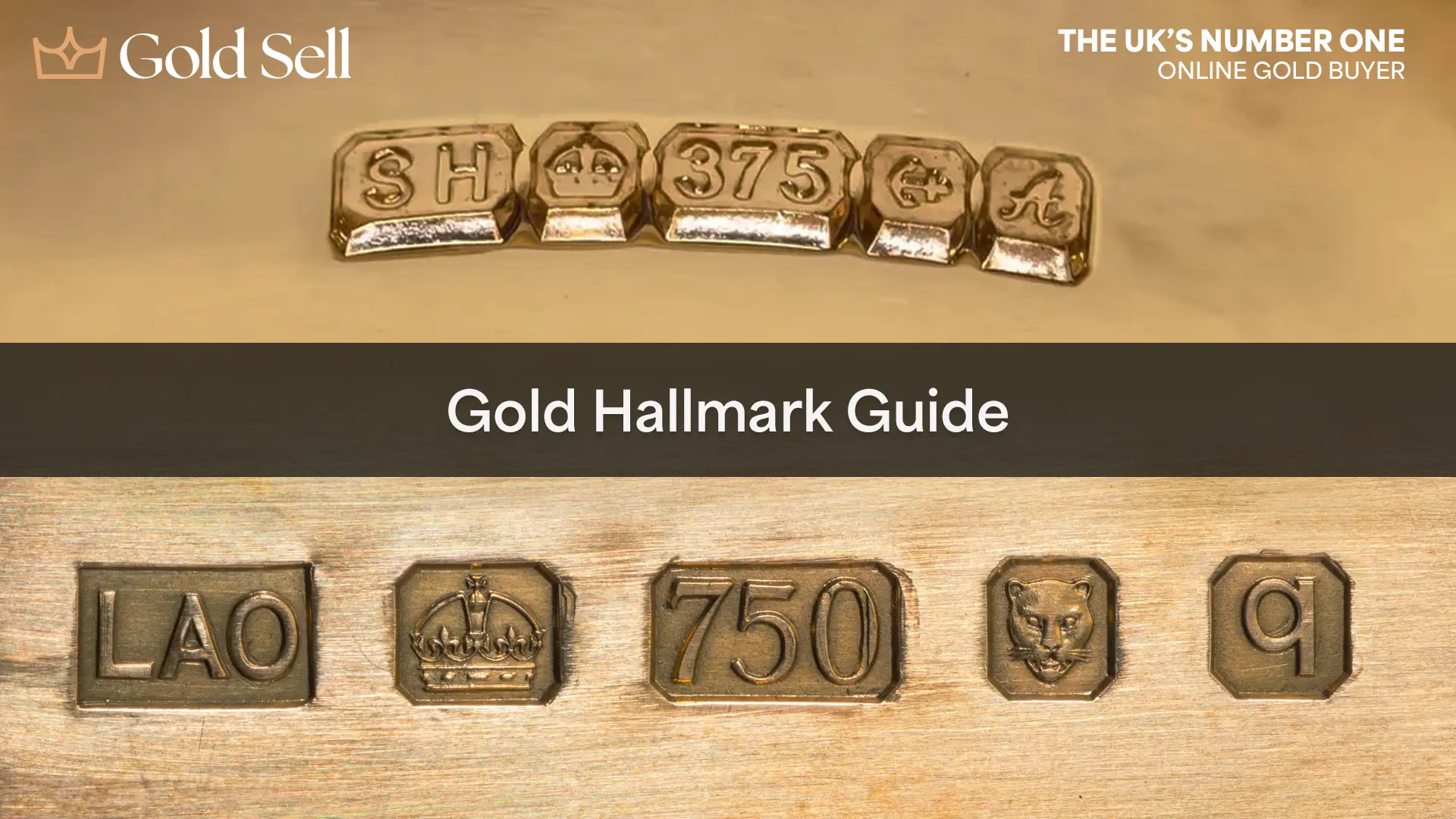
Gold Hallmarks Explained – Identify Gold Hallmarks
Learn how to identify gold hallmarks with our complete hallmark identification guide. Understand assay marks for gold on rings, coins, necklaces, and more.
How Much Gold Is 750?
A “750” marking tells you that an item is 75% pure gold by weight. That means for any given weight of the gold alloy, 75% of it is actual gold metal. In practical terms, if you had a 100-gram bar of 750 gold (18k), it would contain 75 grams of pure gold. If you have a 10 gram 18ct gold ring, 7.5 grams of that is gold, and 2.5 grams are the other alloy metals. The 750 stamp simply codifies this fraction: it’s 750 parts gold per 1000 total parts.
This 75% purity is the defining feature of 18ct gold. By comparison, other common gold purities are:
- 24ct gold – 999 or 99.9% pure (essentially pure gold)
- 22ct gold – 916/917 or ~91.6% pure
- 14ct gold – 585 or 58.5% pure
- 9ct gold – 375 or 37.5% pure
So 750 gold stands toward the higher end of the purity spectrum used in jewellery. It contains significantly more gold than 14ct or 9ct gold, which is why 18ct pieces have that deep yellow glow and high intrinsic value. Knowing “how much gold is in 750” is useful for understanding the value of a piece – three quarters of its weight is gold that can be assessed at the gold market price.
For instance, if you have an 18ct gold chain weighing 20 grams, it has 15 grams of pure gold in it (20 x 0.75). Those 15 grams of gold would be what a gold buyer is interested in (since gold is priced per gram or per ounce in the market). The remaining 5 grams are alloy metals which generally don’t add much intrinsic value. Thus, 750 gold = 75% gold content, and that ratio is key when calculating the material worth of an item or comparing it to other karats.
Is 750 Gold Good?
Yes, 750 gold is considered very good quality gold for jewellery. An 18ct gold piece offers a high level of purity (75% gold) while still being robust enough for everyday wear – a combination that makes it a top choice in fine jewellery. In the hierarchy of gold alloys, 18ct is often seen as the gold standard for balancing purity and practicality.
Because of its high gold content, 750 gold has a rich, lustrous appearance. The colour of 18ct yellow gold is a deep warm yellow, more vibrant than 14ct gold and much richer than 9ct. In fact, 18ct gold can closely resemble the glow of 22ct or even pure gold, but it comes with the benefit of better durability and a slightly lower price (since it contains less gold than 22ct). Many people appreciate that 18ct gold “looks” more like pure gold compared to lower karats – it has that luxurious gleam that one associates with high-end jewellery.
From a value perspective, 750 gold is excellent. You’re getting a piece that is 3/4 pure precious metal, which means it holds significant intrinsic value. If you ever choose to sell it, 18ct items fetch strong prices due to the high gold content (more on that in a later section). In contrast, lower karat golds have less gold and more alloys, so they are inherently less valuable per gram. Owning 18ct gold is almost like holding an investment in gold, but in the form of beautiful jewellery – it tends to hold its value well over time.
Another reason 18ct gold is favoured is its relative resistance to tarnish and corrosion. Gold itself doesn’t tarnish, and at 75% purity, there’s less room for tarnishable metals in the alloy. So, 750 gold jewellery doesn’t tarnish or dull as readily as pieces with higher base-metal content. It also often doesn’t provoke allergic reactions (as noted earlier), since it contains only 25% alloy metals and those can be chosen to minimise skin irritation. This means an 18ct gold ring or necklace will likely stay shiny and skin-friendly for years with basic care – a hallmark of quality.
In terms of durability, 18ct is a solid choice for everyday wear. It’s not as hard as 14ct or 9ct gold (which have more alloy), so you might see very slightly more scratches over many years of heavy wear compared to a 14ct piece. However, it’s still plenty durable for normal use; in fact, the difference is often minimal if the jewellery is well-made. Most people find that 18k gold pieces like engagement rings, wedding bands, and pendants stand up to daily life perfectly well. The alloy metals in 18ct gold improve its hardness enough that it doesn’t deform easily and can securely hold gemstones, etc., while the high gold content ensures a long-lasting shine.
Overall, 750 (18k) gold is regarded as a high-grade, premium material in jewellery. It’s the gold you choose when you want something special – something that looks opulent, has real value, and will endure. Many luxury brands and traditional jewellers use 18ct gold for precisely these reasons. In summary, 750 gold offers an ideal mix of beauty, value, and durability, making it an excellent choice for fine jewellery. (In fact, if you want a piece you can wear daily and still have it maintain its condition and value, 18ct “ticks all the boxes,” as one expert noted.)
Does 750 Gold Tarnish?
Solid 750 gold (18ct) is highly resistant to tarnishing. Pure gold is a noble metal, which means it doesn’t rust, corrode, or tarnish in air. With 18ct gold being 75% pure, the majority of the metal is this non-tarnishing gold. As a result, jewellery made of 750 gold will not tarnish or discolour easily at all. You won’t see an 18ct gold ring turning your skin green or the piece itself turning black – those are problems more common with lower-purity jewellery or base metals.
That said, the 18ct alloy does include 25% other metals, and some of those (like copper or silver) can tarnish or oxidise slightly over a long time. For example, copper in a rose gold alloy might deepen in colour very slowly, or silver in an alloy might get a hint of tarnish. However, because those metals are in the minority and are mixed with so much gold, any tarnish that does form is usually superficial and can be polished off. In practice, 750 gold stays bright and lustrous, especially if worn regularly (the friction from wearing can actually help keep it shining). It tarnishes far less than 14ct or 9ct gold alloys, which contain larger percentages of reactive metals.
To keep 18ct gold looking its best, you only need to do simple maintenance: occasional gentle cleaning with mild soap and water, and polishing with a soft cloth. Avoiding exposure to harsh chemicals (like bleach or strong chlorine, which can possibly attack the alloy metals) is wise, but normal everyday exposure won’t tarnish 18ct gold. For yellow and rose gold 750 alloys, the colour is solid throughout and there’s no plating to worry about.
One thing to note is with 18ct white gold. White gold is often rhodium-plated to give it an extra white, shiny surface. Over years of wear, that rhodium plating can wear off, causing the piece to appear a bit more off-white or yellowish (since the natural 18ct alloy beneath has a slight yellow tint). This isn’t the gold tarnishing – it’s the loss of plating. The solution is simply to have the jewellery re-plated with rhodium by a jeweller, and it will be bright white again. The underlying 750 gold is still fine and untarnished.
In summary, 750 gold does not tarnish in the way lesser metals do. Its high gold content keeps it impervious to rust or heavy tarnish. At most, you may see a slight dulling after many years or a patina of tiny scratches (which is normal and can be buffed to a shine). With minimal care, your 18ct gold jewellery will stay shiny and beautiful for decades without any tarnish. To learn more about how gold behaves over time, including the key difference between rust and tarnish, how tarnishing happens, and how to prevent it, check out our in-depth guide: Can Gold Get Rusty? It includes a handy chart comparing how different gold purities resist tarnish.
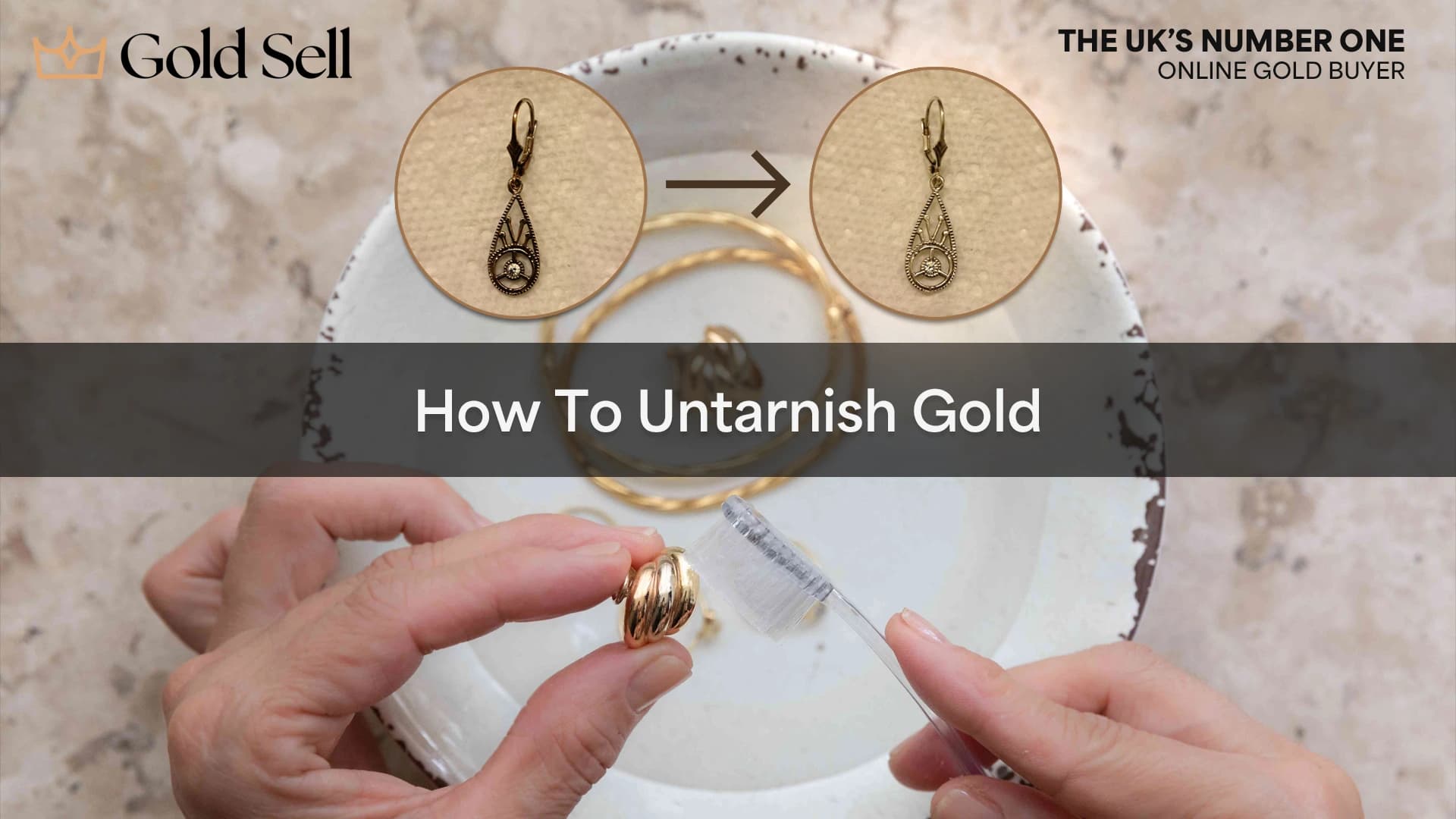
How to remove tarnish on gold safely at home and understand what causes gold to tarnish, with expert tips to restore shine and prevent tarnish on gold.
Can gold rust? Learn what tarnish really is, why it happens to gold, and how to stop gold tarnishing with simple tips to keep your jewellery looking new.
Is 750 Gold Pawnable?
Absolutely – gold marked “750” is highly pawnable and sellable because it has significant gold content and hence significant value. An item stamped 750 is 18 carat gold, meaning 75% of its weight is pure gold. This makes it desirable to gold buyers and pawn shops, who base their valuations primarily on the gold content of an item. In fact, 18ct gold is one of the highest common purities of gold used in jewellery, so you can typically get a strong price for it on the secondhand market.
When you pawn or sell 750 gold jewellery, the amount of money you receive is calculated from the gold content and the current gold market price. For example, if the market spot price of pure gold were £1000 per ounce, then one ounce of 18k gold (75% pure) would contain about £750 worth of pure gold (75% of £1000). The current price of pure gold is £99.23 per gram, which means 18ct gold is currently valued at £74.42 per gram. This gives a clear baseline for the value of your item’s gold content.
However – and this is important – no gold buyer will pay you 100% of the pure gold spot price for your 18ct gold. Buyers need to factor in refining and business costs and also make a profit. Typically, a reputable gold buyer or pawn shop might offer in the range of 80% to 90% of the gold’s spot price for an 18ct piece. In other words, if your 18ct chain has £375 of gold in it (say 10g at £37.5/g), a good offer might be around £300 for the chain. This is considered a fair payout for scrap gold. Offers can vary, so it’s wise to shop around, but something near the 80–90% range is common with established gold buyers.
Why not 100%? There are a few deductions and costs that gold buyers account for when purchasing your gold:
- Melting & refining costs: The gold buyer will likely melt down and refine the gold to resell it or craft it into something else. Refiners charge fees for extracting pure gold from the alloy as it involves very complex processes.
- Testing/Assay: Verifying the gold’s purity (through tests or XRF scanning) has associated costs and time. Buyers may use acids or electronic testers to confirm your piece is truly 18ct.
- Insurance & overhead: Businesses have expenses – from insuring shipments to storing metals securely, to paying staff and keeping the lights on. These overhead costs are factored into their buying price.
- Profit margin: The gold dealer or pawnbroker needs a small margin so they can resell the gold (either as a piece or as pure gold after refining) for a profit. This is their livelihood.
Because of these factors, the offer you receive will be a bit below the raw gold value. For instance, a buyer might pay ~85% of the gold content’s value, effectively covering their costs with the 15% difference. It’s always a good idea to get quotes from a few buyers or pawn shops to ensure you’re getting a competitive rate – and remember that if one place offers something drastically low (like 50% of spot), you can likely do better elsewhere.
On the flip side, when buying 18ct gold jewellery as a consumer, you’ll usually pay above the melt value of the gold. This is because retail jewellery prices include the craftsmanship, design, brand premium, and sometimes gemstones or other components. A beautifully made 750 gold ring, for example, is priced not just for the gold in it, but for the creativity and workmanship involved. Jewellers have their own overhead (marketing, boutique stores, artisan labour), and the retail markup ensures they cover these costs. It’s not uncommon for finished jewellery to cost significantly more than the value of the gold it contains – you’re paying for a wearable piece of art, not just raw metal.
Bottom line: 750 gold is very much pawnable and worth significant money. It’s accepted by virtually all gold buyers because of its high gold content. If you sell an 18ct item, expect a strong payout relative to lower karat gold jewellery (since there’s more gold to recover). Just keep in mind the small reduction from market value that covers the buyer’s costs. With 18ct gold being a valuable commodity, you can confidently use it as collateral for a pawn loan or sell it outright when needed – it will almost always fetch a good price due to that 75% pure gold content.
Frequently Asked Questions
What does 750 gold mean?
“750” is a hallmark number meaning the gold is 75% pure (18 carat gold). It indicates the item’s gold purity in parts per thousand. In other words, a 750 stamp on jewellery certifies it as 18ct gold with 3/4 pure gold content.
What is 750 gold?
750 gold refers to 18 carat gold – an alloy made of 75% pure gold and 25% other metals. It’s a high-purity gold used in jewellery. Any gold marked “750” has the same composition as 18ct gold, combining gold’s lustre with added strength from alloy metals.
How much is 750 gold worth?
750 gold is 18ct gold, meaning it contains 75% pure gold. Its value depends on weight and the current gold market price. Right now, the price of pure gold is £99.23 per gram, which means 18ct gold is worth £74.42 per gram. This figure represents the melt value of the gold content alone. When selling, most reputable gold buyers pay around 80–90% of this rate to cover refining, handling, and business costs.
What is 750 in gold markings?
What is 750 in gold markings? “750” is the numeric marking for 18 carat gold in the hallmarking system. It signifies 750 parts gold per 1000 parts alloy. If you see 750 stamped on a gold item, that mark is telling you the piece is 18ct gold (75% gold, 25% alloy). It’s simply the hallmark number that denotes the gold’s fineness.
Is 750 gold?
Yes – a “750” stamp on jewellery means it’s genuine gold. Specifically, it’s telling you the piece is made of 750 fineness gold, which is 18ct gold. This is not gold-plated or fake; it indicates real gold alloy. If something is marked 750, you can be confident it’s a high-purity gold item.
Is 750 gold or silver?
A “750” mark indicates gold, not silver. Silver uses different hallmark numbers (for example, sterling silver is marked 925 for 92.5% silver). So if your jewellery is stamped 750, it’s 18 carat gold. A piece of silver wouldn’t have a 750 mark – that mark is exclusive to gold purity.
Is 750 gold equal to 18k?
Yes. 750 gold is the same as 18k gold. The number “750” is just another way of saying 18-karat, since 18/24 = 75.0%. In summary, 750, 18k, and 18ct all refer to the same gold purity level. If your ring says 750 and someone else’s says 18k, both are 18-karat gold.
Is 750 gold real?
Absolutely – 750 gold is real, solid gold alloy. It contains 75% pure gold, mixed with other metals for strength. This is not to be confused with gold-plated jewellery; 750 (18ct) gold means the bulk of the item is made of genuine gold. It’s a high-quality real gold used in fine jewellery.
How much gold is 750?
“750” means 75% gold content. So in a 750 gold alloy, 75% (three-quarters) is pure gold. For example, in 100 grams of 750 gold, there are 75 grams of pure gold. The remaining 25% would be other metals that make up the alloy. This ratio defines 18 carat gold.
Is 750 gold good?
Yes, 750 gold is very good quality for jewellery. It’s 18 carat gold, which offers a rich colour and high gold content (75% pure) while still being durable. 750 gold pieces have more intrinsic value and prestige than lower carat gold. They resist tarnish better and are a popular choice for fine jewellery due to their beautiful balance of purity and strength.
Does 750 gold tarnish?
18ct gold (750) hardly tarnishes. Pure gold doesn’t tarnish, and at 75% purity, there’s little other metal in the alloy that might tarnish. Over many years you might notice a slight dulling or patina, especially if the alloy contains copper, but generally 750 gold stays shiny and does not corrode or rust. Regular gentle cleaning will keep it lustrous.
How many karat is 750 gold?
750 gold is 18 karats. The number 750 corresponds to 18 out of 24 parts being gold. So if you have jewellery marked 750, it means it’s 18 karat gold. This is a common purity for high-quality gold jewellery.
750 gold vs 18k
750 gold is 18k gold. “750” is simply the hallmark stamp indicating 18-karat purity in numeric form. Both terms describe gold that is 75% pure. So whether a ring is labeled 750 or 18k, it contains the same amount of gold and has the same quality.
Is 750 gold worth anything?
Yes, 750 gold is quite valuable. Being 75% pure gold, it has significant intrinsic worth. Gold is priced by weight and purity, so an item made of 18k gold is worth roughly 75% of the value of pure gold of the same weight. In practical terms, 750 gold jewellery will fetch a good price if sold or pawned, owing to its high gold content.
What is 750 yellow gold?
“750 yellow gold” refers to 18 carat yellow gold. It means the alloy is 75% gold, with the remaining 25% typically consisting of metals like silver and copper that give a traditional yellow gold color. The 750 stamp confirms it’s genuine 18ct yellow gold – prized for its classic warm hue and high purity.
What is 750 white gold?
“750 white gold” means 18-karat white gold. This is an alloy of 75% gold combined with white metals (such as palladium, nickel, and/or silver) to produce a silvery-white colour. It’s still 75% pure gold, just “whitened” by the other metals. 750 white gold is often rhodium-plated to enhance its bright white finish, but underneath the plating it’s an 18ct gold alloy.
Interested in selling gold with the UK’s highest paying gold buyer? Visit our Sell Gold page to get a competitive valuation – we provide fully insured postage and fast payment.
For more insights and the latest gold price today, keep an eye on our live charts and blog updates.